Skip to content
Expert-reviewed cosmetic science · Conditioner and hair mask compared · Results depend on hair type and formulation Last reviewed: 23 July 2026 Cosmetic editorial policy Ingredient-claim policy Correction policy Scalp safety Book a consultation
Persistent scalp irritation, sudden shedding, patchy hair loss or breakage close to the roots requires professional assessment.

Hair Fibre and Conditioning Intelligence

Conditioner vs Hair Mask: Differences, Benefits and Which One Your Hair Needs

Conditioners and hair masks often draw on the same ingredient families, so the difference between them is rarely as absolute as the packaging suggests. A rinse-out conditioner is generally built for routine use — slip, detangling, static control and everyday manageability. A hair mask is generally positioned as a richer, longer-contact or more damage-specific treatment, though richness varies enormously between products. The word “mask” on a label does not guarantee higher concentration or better performance. What matters more is fibre diameter, curl pattern, porosity, chemical-treatment history, buildup tendency and how your hair actually responds. Neither product treats the biological cause of hair loss.

Product Claims Audited
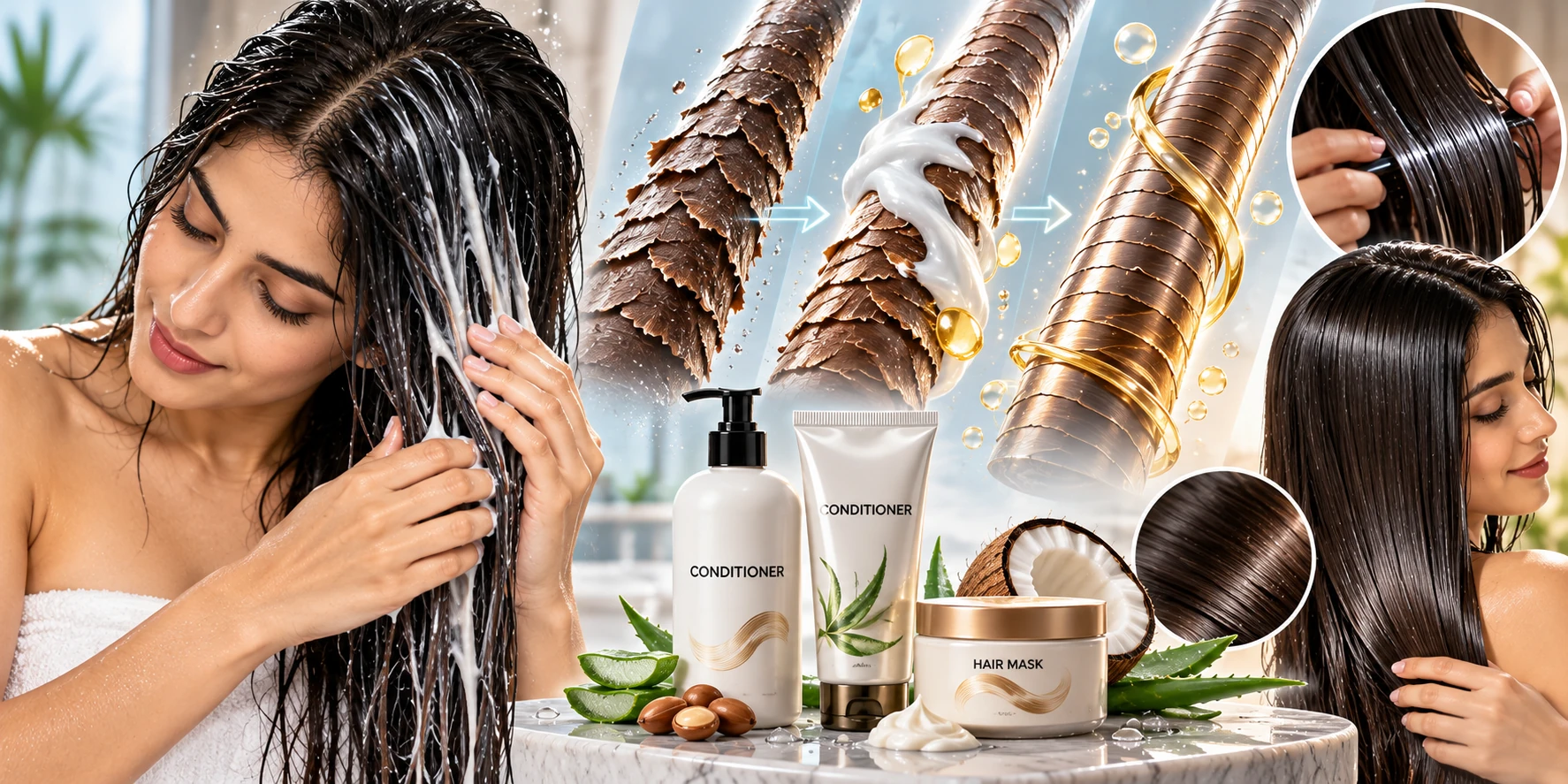
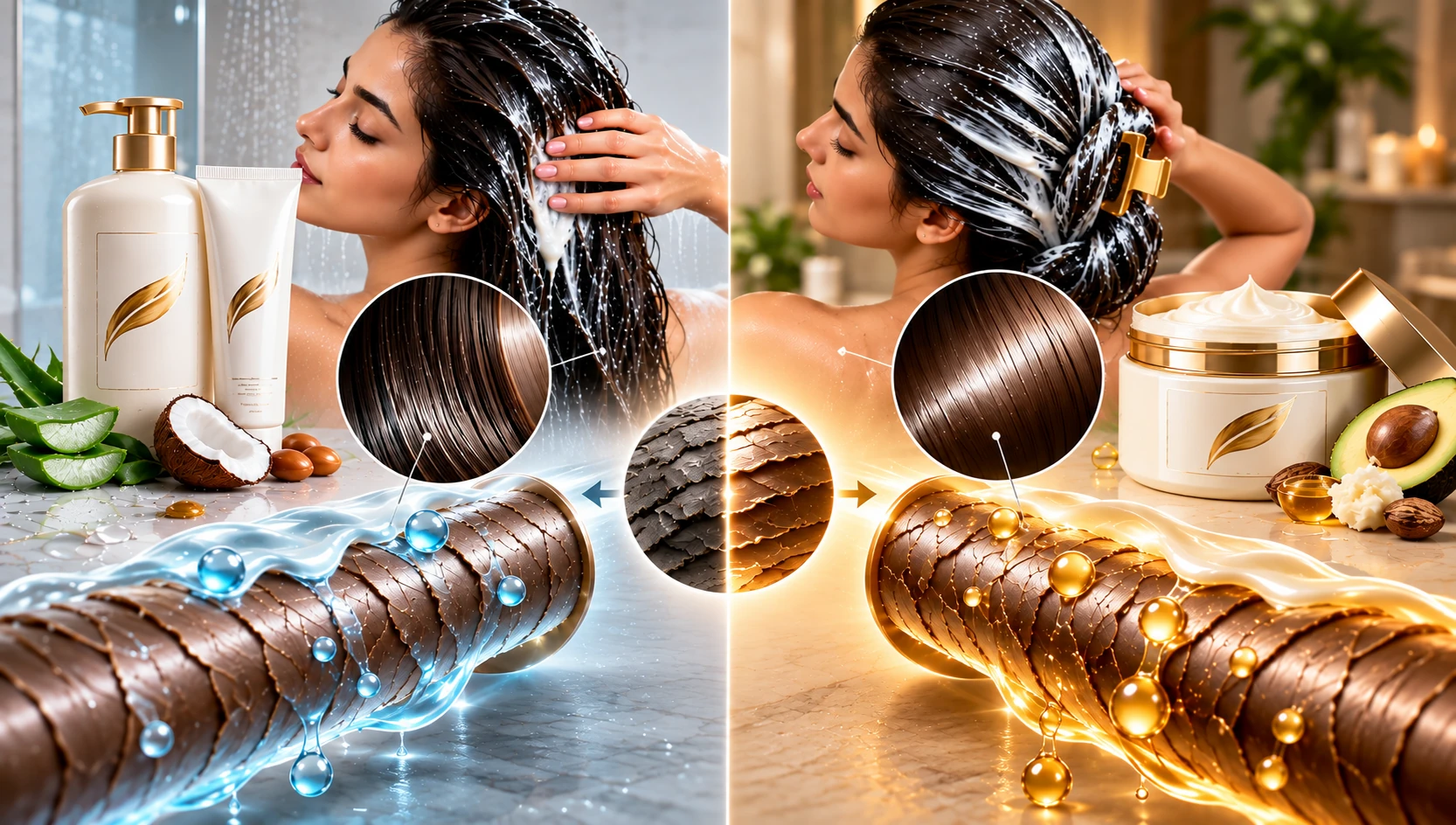
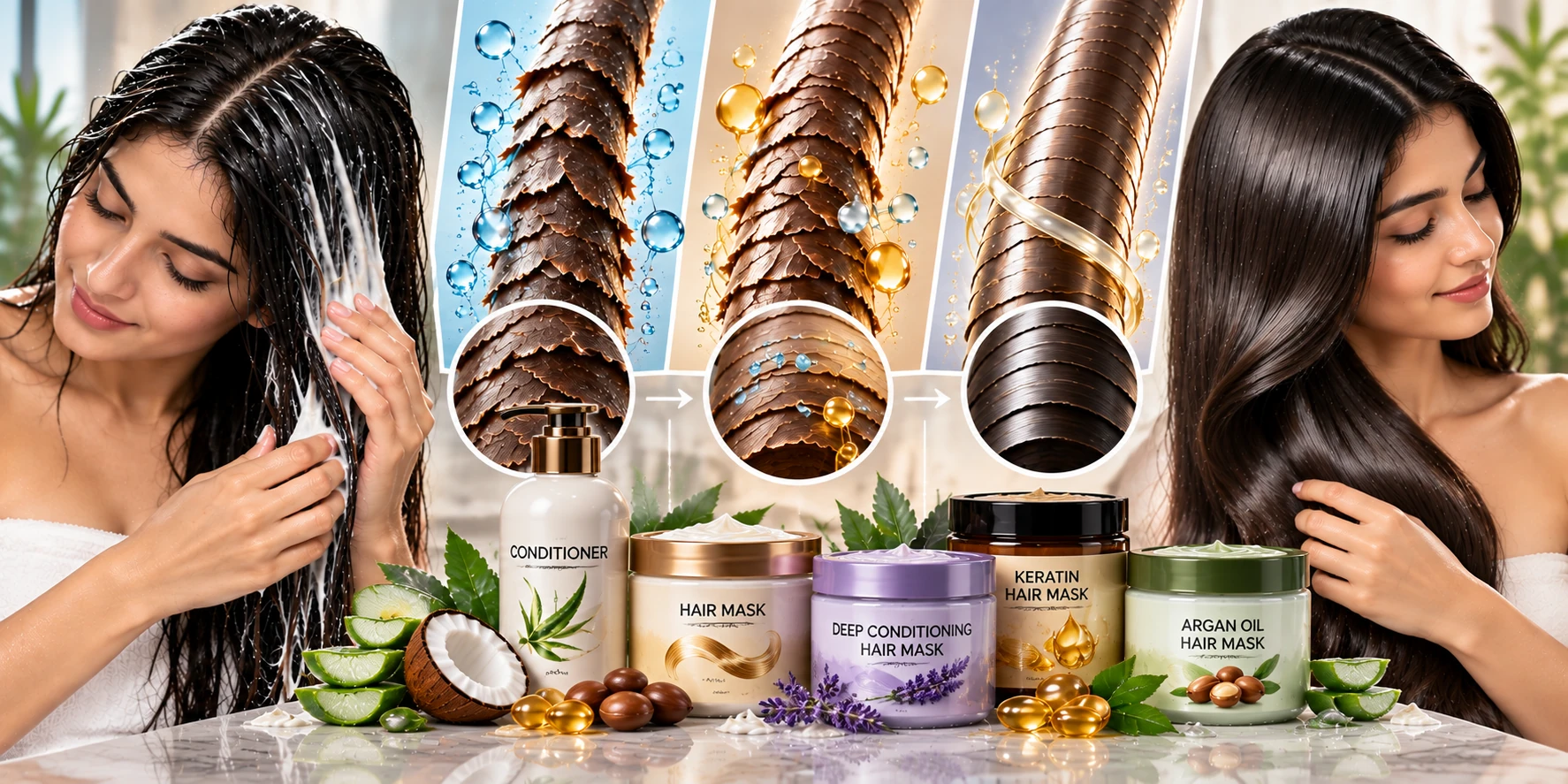
Scientific comparison of routine hair conditioner and intensive hair-mask treatment for personalised hair-fibre care
Two conditioning roles, one formulation-led decision — not a contest between categories.
Cosmetic Claims Audited

Quick Answer

Conditioner is usually a routine rinse-out product that adds slip, eases detangling and improves everyday manageability after shampooing. A hair mask is usually richer, left on longer, or targeted at a specific concern such as dryness or chemical damage — though ingredient systems frequently overlap. A mask is not automatically better. Fine or buildup-prone hair may prefer lighter conditioning, while dry, coarse or chemically treated hair may benefit from a richer treatment. The product’s instructions and your hair’s actual response matter more than the category name.

Read this first: Neither product normally treats the medical cause of hair shedding from the root. Conditioners and masks act on the hair fibre that already exists — they do not change follicle biology.

At a Glance

Conditioner and Hair Mask, Side by Side

Neither panel is ranked above the other. Use "Compare by" to highlight one consideration across both categories at once — the goal is a formulation-led decision, not a declared winner.

Conditioner

Primary purposeRoutine post-shampoo conditioning — slip, detangling, static control, everyday manageability
Typical textureUsually lighter, more fluid or lotion-like; varies widely by formula
Slip / detanglingGenerally the core design goal; cationic agents deposit rapidly on wet hair
Moisture supportHumectants and emollients common; intensity is formula-dependent
Protein contentMay contain hydrolysed proteins or amino acids; not universal
Lipids / oilsFatty alcohols and oils common at moderate levels in most formulas
SiliconesFrequently present for slip and shine; neither inherently harmful nor essential
Fine hairLighter conditioners often preferred; rich formulas can flatten fine hair
Thick hairMay need generous quantity or a richer formula for adequate distribution
Curly hairOften valued for detangling and friction reduction during wet manipulation
Colour-treated hairRoutine maintenance between washes; formula-dependent benefit
Heat-damaged hairSurface smoothing and friction reduction; does not reverse internal damage
PorosityLighter formulas often suit lower apparent porosity; response varies along the length
Typical frequencyCommonly after each shampoo, per product label
Contact timeUsually short — follow the specific product’s directions
Scalp useOften designed for lengths and ends; check the label before scalp application
Cost per useGenerally lower per application; bottle size and hair length drive real cost
Formula Dependent — Read the Label

Hair Mask

Primary purposeMore intensive or damage-specific conditioning treatment, used periodically
Typical textureOften thicker or creamier — but some masks are deliberately lightweight
Slip / detanglingOften present, though the design emphasis may be richness rather than slip
Moisture supportFrequently the headline positioning; occlusive and emollient load may be higher
Protein contentProtein or peptide positioning common; suitability is individual, not universal
Lipids / oilsButters, oils and ceramide-family ingredients more likely at higher levels
SiliconesAlso common; presence does not indicate quality in either direction
Fine hairRich masks can weigh down fine hair; lighter mask formats exist
Thick hairCoarse or dense hair may appreciate the extra emollience
Curly hairNot automatically required for every curl pattern; fine curls can lose volume
Colour-treated hairOften marketed for this use; cannot restore hair to untreated condition
Heat-damaged hairMay improve feel and combability; does not rebuild the cortex
PorosityHigher apparent porosity may tolerate richer products; not a fixed rule
Typical frequencyPeriodic — follow label; more frequent use can increase weight or residue
Contact timeLonger per label; longer than directed is not automatically better
Scalp useGenerally intended for lengths; occlusive formulas may not suit the scalp
Cost per useGenerally higher per application; quantity used per treatment is the main driver
"Mask" Is a Format, Not a Concentration Guarantee

The Core Distinction

A Hair Mask Is Not Simply “Extra-Strong Conditioner”

Both categories draw on overlapping ingredient families — cationic conditioners, fatty alcohols, silicones, oils, humectants and proteins. What differs is usually the intended intensity, contact time and frequency, not a fundamentally different chemistry. Some masks are very rich; some are lightweight. Some conditioners contain robust conditioning systems.

Routine conditioning

  • Frequent use, typically after each shampoo
  • Detangling and combability
  • Slip during wet manipulation
  • Static reduction
  • Surface smoothing of the cuticle
  • Everyday manageability

Intensive treatment

  • Longer contact time per the product label
  • Richer emollience in many (not all) formulas
  • Specific protein, lipid or bond-support positioning
  • Periodic rather than every-wash use
  • Damage-focused formula architecture
  • Greater potential for weight or residue

Hair-response decision

  • Fibre diameter (fine, medium, coarse)
  • Curl pattern and density
  • Apparent porosity along the length
  • Chemical and heat-damage history
  • Climate and humidity
  • Buildup tendency and styling routine
The ingredient list, formula architecture and hair response matter more than the word “mask” on the label.

The Hair-Fibre Conditioning Pathway

Both products act on the hair fibre that already exists. Neither changes what happens inside the follicle.

Shampoo Cleansing

Surfactants remove sebum and residue. Wet hair swells, cuticle scales lift slightly and inter-fibre friction rises.

Conditioner Deposition

Cationic conditioning agents are attracted to the negatively charged, damaged regions of the fibre surface and deposit rapidly.

Rapid surface deposition

Lubrication and Slip

Fatty alcohols, silicones and esters reduce the force needed to comb through wet hair, lowering mechanical breakage during detangling.

Reduced combing force

Mask Occlusion or Targeted Deposition

Where a richer or longer-contact treatment is used, higher emollient load or a specialised protein, lipid or polymer system may deposit differently.

Formula dependent

Rinsing and Final Fibre Feel

What remains on the fibre after rinsing determines softness, shine and manageability. Excess residue can accumulate as weight or dullness over time.

This diagram represents general formulation principles. Individual products may behave differently. Conditioners and hair masks act primarily on the existing hair fibre — they do not normally change the biological rate of hair growth or treat the medical cause of hair loss.

Abstract diagram of the hair-fibre conditioning pathway showing cuticle behaviour, conditioner deposition and hair-mask treatment
Surface conditioning, simplified — not a claim about internal fibre repair.

In Detail

Full Comparison Table

Almost every row below is formula-dependent. These are general tendencies within each category, not fixed properties — a lightweight mask and a rich conditioner will not follow the pattern.

Swipe to compare →

Conditioner and hair mask compared across purpose, ingredient systems, hair-type suitability and practical use. General cosmetic-science education — always follow the specific product's label.
ConsiderationConditionerHair Mask
Primary purposeRoutine slip, detangling, manageabilityIntensive or damage-specific conditioning treatment
Product textureUsually lighter fluid or lotion — formula dependentOften thicker cream — but lightweight masks exist
Contact timeShort; follow product labelLonger per label; longer than directed is not automatically better
Typical frequencyCommonly after each shampooPeriodic; over-use can increase weight or residue
Cationic agentsCore to most formulas (behentrimonium, cetrimonium)Also present; concentration varies by product
Fatty alcoholsCommon (cetyl, stearyl, behenyl alcohol)Common, often at higher levels
SiliconesFrequently present; not inherently harmfulFrequently present; presence indicates neither quality nor harm
OilsModerate levels typicalHigher levels more likely, though formula dependent
ButtersLess commonMore likely in richer formats
HumectantsCommon (glycerin, panthenol)Common; behaviour varies with climate humidity
ProteinsMay be present as hydrolysed protein or amino acidsOften a headline claim; suitability is individual
PeptidesLess commonly featuredSometimes featured in treatment positioning
Ceramides / lipidsSometimes includedMore likely to be a formulation focus
Bond-support ingredientsOccasionally includedFrequently marketed; claims and chemistry vary between systems
pHTypically formulated acidic to support cuticle laySame principle; check individual product
DetanglingUsually a core design goalOften present; emphasis may be on richness instead
SlipGenerally strong by designFormula dependent
Frizz controlSurface smoothing helps; humidity still mattersMay offer more emollience; not a humidity guarantee
Static reductionCationic deposition reduces static effectivelyAlso effective; formula dependent
ShineSurface alignment improves light reflectionMay be greater with higher emollient load
Breakage reductionLower combing force reduces mechanical breakageSame mechanism; no product prevents all breakage
Fine-hair suitabilityLighter formulas often preferredRich masks can flatten fine hair; lighter masks exist
Thick-hair suitabilityMay need generous quantityCoarse or dense hair may appreciate the emollience
Curly-hair suitabilityValued for detangling and friction reductionNot automatically required for every curl pattern
Coily-hair suitabilitySlip is often a priority during detanglingRicher conditioning may suit weathered lengths
Low apparent porosityLighter formulas often preferredRich products may sit on the surface and build up
High apparent porosityRoutine maintenance still valuableMay tolerate richer products; not a fixed rule
Bleached hairRoutine friction reduction between washesPeriodic richer treatment; cannot restore virgin condition
Colour-treated hairMaintenance conditioning per labelOften marketed for this use; formula dependent
Heat-damaged hairSurface smoothing and combabilityMay improve feel; does not rebuild the cortex
Oily scalpApply to lengths; check label for scalp guidanceScalp application generally not the intended use
Sensitive scalpReview fragrance, preservatives and essential oilsOcclusive formulas may worsen discomfort in some users
Scalp applicationFollow product label — many are designed for lengthsScalp use not typically intended; check label
Buildup potentialPossible with heavy formulas or inadequate rinsingHigher potential with rich or frequent use
Weight on hairLower in lighter formulasHigher risk of weighing hair down
Protein considerationPresent in some formulas; check ingredient list“Protein overload” is an informal consumer term, not a diagnosis
Overnight useNot intended unless the label permitsNot safe to assume; follow label — may increase irritation or swelling
Cost per useGenerally lower per applicationGenerally higher; quantity per treatment is the main driver
Main limitationMay be insufficient alone for highly damaged hairEvidence limited for permanent structural repair

Conditioner · The Daily Ritual

Conditioner: Routine Slip, Detangling and Hair-Fibre Protection

The most valuable thing a conditioner does is unglamorous and well evidenced: it lowers the force needed to comb through wet hair, at the moment the fibre is most vulnerable.

Why shampooed hair feels rough

Cleansing removes sebum and residue. Wet hair swells, cuticle scales lift slightly and the fibre surface becomes more negatively charged — especially in chemically or mechanically damaged regions. Fibres catch on each other, raising the force needed to comb through.

Cationic conditioning agents

Positively charged ingredients such as behentrimonium chloride, cetrimonium chloride and similar quaternary compounds are attracted to the negatively charged fibre surface. They deposit preferentially on damaged areas, which is why conditioning often feels most noticeable on the ends.

Fatty alcohols

Cetyl, stearyl and behenyl alcohol are not drying alcohols. They contribute to the emulsion structure and to the smooth, lubricated feel of the finished product.

Silicones

Dimethicone, amodimethicone and related materials can reduce combing force, improve shine and lower friction. They are not inherently harmful. Whether they suit a given person depends on hair type, quantity used, rinsing thoroughness and the rest of the routine.

Oils, esters and polymers

These contribute emollience, slip and film formation to varying degrees. Natural oils are not automatically lighter than synthetic esters — some plant oils are considerably heavier.

Humectants and proteins

Glycerin and panthenol are common humectants. Hydrolysed proteins and amino acids may be present, though not in every formula, and their presence does not make a product suitable for every hair type.

pH and cuticle behaviour

Conditioners are typically formulated on the acidic side, which supports the cuticle lying flatter against the fibre. This is a surface effect on the hair that already exists.

Wet and dry combing

Hair is most vulnerable during wet detangling. Reducing combing force is one of the clearest, best-supported cosmetic benefits of conditioning — it lowers breakage caused by grooming, which is different from reducing shedding from the follicle.

Product placement and scalp

Many conditioners are designed for lengths and ends rather than the scalp. Scalp application can add weight or, in some users, cause irritation. Check what the specific label directs.

Buildup and clarifying

Residue can accumulate with heavy formulas, generous quantities, inadequate rinsing or hard water. Signs may include loss of volume, a coated feel or dullness. Not all silicones require a harsh clarifying shampoo, and buildup should not be confused with a scalp condition.

What conditioner cannot do

It does not permanently fuse split ends, rebuild the cortex, reverse chemical damage or affect follicle biology. Split ends can be temporarily smoothed so they look and feel better — the structural split remains.

Conditioner Reality Check

Ten corrections worth carrying to the shelf

  1. Conditioner is not merely a diluted hair mask
  2. Rich conditioners can weigh down fine hair
  3. Lightweight conditioners may be insufficient for highly damaged hair
  4. Silicone is not automatically harmful
  5. Natural oils are not always lighter than synthetic emollients
  6. It can reduce grooming breakage without treating shedding from the follicle
  7. Split ends can be temporarily smoothed but not permanently fused
  8. Product placement along the length matters
  9. Scalp application can irritate or weigh down some users
  10. More product does not automatically improve results
Abstract illustration of conditioner formulation science showing cationic deposition and cuticle smoothing on the hair fibre
Routine conditioning acts on the fibre surface — slip, alignment and reduced combing force.

Hair Mask · The Periodic Treatment

Hair Mask: Intensive Conditioning with Formula-Specific Benefits

There is no regulated line between a deep conditioner and a hair mask. What you are buying is a format, a contact-time instruction and a jar — the formula underneath may be closer to an ordinary conditioner than the price suggests.

Why definitions vary

There is no universal standard separating a deep conditioner from a hair mask. Two products with the same category name can differ enormously in richness, and a mask from one brand may be lighter than another brand’s ordinary conditioner.

Richness and viscosity

Higher viscosity often reflects higher fatty alcohol, butter or polymer content. Thickness is a texture cue, not proof of active concentration or performance.

Longer contact time

Cationic deposition happens relatively quickly. Extending contact beyond the label direction does not reliably improve outcomes and may increase weight or residue.

Butters, oils and ceramide-family lipids

Shea butter, plant oils and lipid ingredients may be included at higher levels than in a routine conditioner. These improve emollience and feel; they coat and lubricate rather than restore the internal fibre.

Proteins, amino acids and peptides

Hydrolysed keratin, wheat protein, silk amino acids, rice protein and peptides may temporarily improve feel and certain strength-related properties. They do not suit every hair type or every frequency of use.

Bond-support systems

Products marketed around chemical-bond protection or restoration use varied chemistries and make varied claims. Evidence quality differs substantially between systems and should be assessed per product, not per category.

Bleached, coloured and heat-damaged hair

Chemically or thermally altered hair has genuine structural change. A mask may meaningfully improve combability, feel and appearance. It cannot restore hair to untouched virgin condition.

Fine hair and curl patterns

Fine hair can lose volume quickly with rich products. Fine curls are not exempt from this. Coarse or heavily weathered lengths may benefit more. Curl category alone does not determine what a person needs.

Frequency and overnight-use myths

More frequent use does not linearly improve results and may reduce volume or increase residue. Overnight use is not safe to assume — it may increase irritation, prolonged fibre swelling or buildup. Only follow it where the specific label permits.

What a mask cannot do

It does not restart hair growth, permanently rebuild the cortex, reverse bleaching, fuse split ends or treat a medical cause of hair loss. Improved softness is a cosmetic outcome, not evidence that structural damage has been undone.

Hair-Mask Reality Check

Ten corrections worth carrying to the shelf

  1. A mask is not automatically more concentrated than a conditioner
  2. Longer contact does not always improve performance
  3. Overnight use may increase irritation, swelling or buildup
  4. Rich masks can flatten fine hair
  5. Protein-heavy products do not suit every user
  6. Heavy oils can coat without solving underlying damage
  7. Masks primarily improve cosmetic fibre condition
  8. They do not restart or accelerate hair growth
  9. They do not permanently reverse bleaching
  10. More frequent use can reduce volume or increase residue
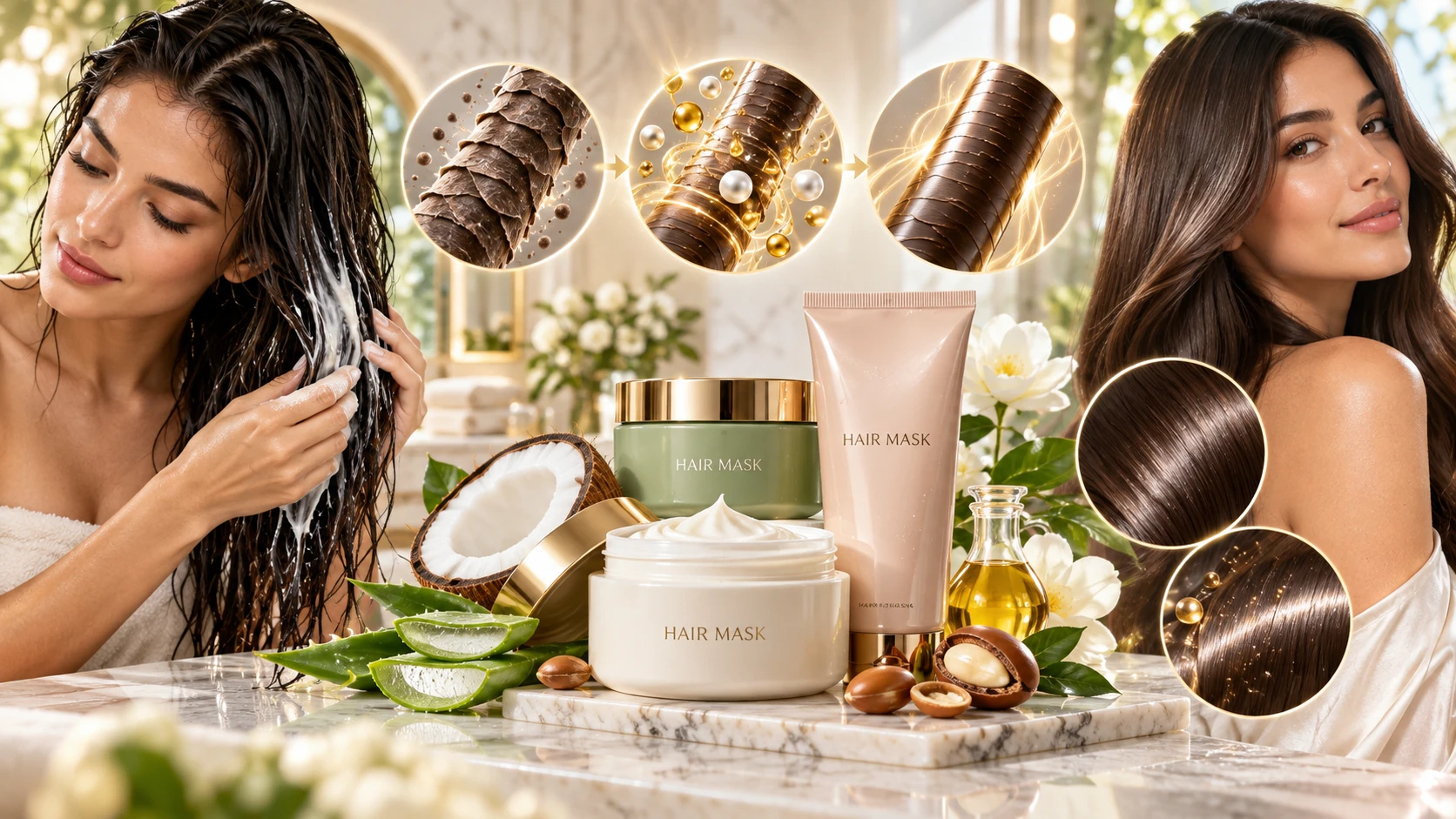
Abstract illustration of hair-mask formulation science showing richer emollient systems and layered conditioning motifs
Intensive conditioning improves feel and combability — it does not rebuild the cortex.

By Scenario

Conditioner and Hair Mask by Hair Type and Concern

These are educational starting points for building a routine — not a diagnosis of your hair, your porosity or your scalp. Individual response is the most reliable guide.

Fine Straight Hair

Why this matters
Fine fibres are easily weighed down by emollient load.
Conditioner considerations
Lighter formulas applied mainly to mid-lengths and ends often work better than heavy ones.
Hair-mask considerations
Rich masks can flatten volume; lighter mask formats or shorter contact may suit better.
Ingredients to examine
Fatty alcohol position in the list, silicone type, butter content.
What neither product can guarantee
That any product will add permanent body or thickness to the fibre.
Routine direction
Start lighter, apply sparingly, assess volume after drying.

Thick Straight Hair

Why this matters
Higher fibre volume needs adequate product distribution to be effective.
Conditioner considerations
A generous quantity, properly sectioned, matters more than switching product.
Hair-mask considerations
Richer treatments may distribute well without flattening.
Ingredients to examine
Whether the product spreads easily; slip during application.
What neither product can guarantee
That richer always equals better distribution.
Routine direction
Section the hair and distribute evenly rather than increasing frequency.

Wavy Hair

Why this matters
Waves can lose definition with weight but tangle without slip.
Conditioner considerations
Routine conditioning supports detangling without over-softening the wave.
Hair-mask considerations
Periodic use; over-frequent rich masking may loosen wave pattern appearance.
Ingredients to examine
Emollient load, film-forming polymers.
What neither product can guarantee
That a mask will change the underlying wave pattern.
Routine direction
Adjust frequency based on whether definition improves or flattens.

Loose Curls

Why this matters
Curls need lubrication for detangling but can be weighed down.
Conditioner considerations
Slip is often the priority; conditioner may be used during detangling.
Hair-mask considerations
Assess whether richness improves definition or collapses it.
Ingredients to examine
Oil and butter position, protein presence.
What neither product can guarantee
That every curl pattern needs the richest available treatment.
Routine direction
Test one variable at a time; note curl clumping and volume.

Tight Curls and Coils

Why this matters
High curl density increases friction and mechanical breakage risk during detangling.
Conditioner considerations
Slip during wet detangling is often the most valuable single benefit.
Hair-mask considerations
Weathered lengths may appreciate richer periodic conditioning.
Ingredients to examine
Slip agents, emollient balance, ease of rinsing.
What neither product can guarantee
That any product prevents all breakage during detangling.
Routine direction
Prioritise gentle detangling technique alongside product choice.

Low-Density Hair

Why this matters
Fewer fibres means visible scalp; weight reduces apparent fullness.
Conditioner considerations
Lighter conditioning helps preserve the appearance of volume.
Hair-mask considerations
Rich masks may visibly reduce fullness.
Ingredients to examine
Total emollient load; whether the product rinses cleanly.
What neither product can guarantee
That a conditioning product increases hair density or count.
Routine direction
Favour lighter formulas; reassess if hair looks flatter.

High-Density Hair

Why this matters
Product needs to reach all sections to be effective.
Conditioner considerations
Adequate quantity and sectioning matter for even coverage.
Hair-mask considerations
Richer treatment may be well tolerated across dense hair.
Ingredients to examine
Spreadability and rinse-out ease.
What neither product can guarantee
That more product compensates for poor distribution.
Routine direction
Section systematically rather than using more product overall.

Bleached Hair

Why this matters
Bleaching causes real structural change to the fibre.
Conditioner considerations
Routine friction reduction between washes reduces grooming breakage.
Hair-mask considerations
Periodic richer conditioning may improve feel and combability considerably.
Ingredients to examine
Protein presence, bond-support claims, emollient balance.
What neither product can guarantee
That any product restores bleached hair to untouched condition.
Routine direction
Expect cosmetic improvement, not structural restoration.

Colour-Treated Hair

Why this matters
Permanent colour alters the cuticle and can increase porosity.
Conditioner considerations
Maintenance conditioning after each wash per label.
Hair-mask considerations
Often marketed for this use; benefit is formula-specific.
Ingredients to examine
Whether claims are about colour retention or fibre condition.
What neither product can guarantee
That a mask prevents all colour fade.
Routine direction
Assess both hair feel and colour longevity separately.

Heat-Damaged Hair

Why this matters
Repeated thermal styling causes cumulative fibre change.
Conditioner considerations
Reduces combing force; helps prevent further grooming damage.
Hair-mask considerations
May improve feel; does not repair thermal damage internally.
Ingredients to examine
Emollient and protein balance.
What neither product can guarantee
That any product reverses heat damage.
Routine direction
Reduce heat exposure alongside any product change.

Dry Ends with Oily Roots

Why this matters
Roots and ends have different needs along the same head of hair.
Conditioner considerations
Apply to lengths and ends; check label before scalp application.
Hair-mask considerations
Focus on the ends where dryness is concentrated.
Ingredients to examine
Whether the label directs scalp use.
What neither product can guarantee
That a single product optimally serves both roots and ends.
Routine direction
Treat the length and the scalp as separate concerns.

Frizz in Humid Weather

Why this matters
Humectants can behave differently at high ambient humidity.
Conditioner considerations
Surface smoothing helps but humidity still affects the fibre.
Hair-mask considerations
Higher emollience may offer more resistance to moisture uptake.
Ingredients to examine
Humectant position, film-forming ingredients.
What neither product can guarantee
That any product guarantees frizz-free hair in all conditions.
Routine direction
Note whether frizz worsens or improves after each product change.

Frizz in Dry Weather

Why this matters
Low humidity can increase static and roughness.
Conditioner considerations
Cationic deposition reduces static effectively.
Hair-mask considerations
Richer emollience may reduce roughness.
Ingredients to examine
Cationic agents, emollient load.
What neither product can guarantee
That frizz has a single universal cause.
Routine direction
Distinguish static-driven from damage-driven frizz.

Breakage During Detangling

Why this matters
Wet hair is at its most vulnerable to mechanical damage.
Conditioner considerations
Slip is the most directly relevant benefit; use before or during detangling.
Hair-mask considerations
A longer-contact treatment may improve slip further.
Ingredients to examine
Slip agents; how easily hair combs through with the product in.
What neither product can guarantee
That any product eliminates detangling breakage entirely.
Routine direction
Change detangling technique and tools alongside product choice.

Hair Flat After Masking

Why this matters
Emollient load exceeded what this hair tolerates.
Conditioner considerations
Switching to a lighter conditioner may restore volume.
Hair-mask considerations
Reduce frequency, quantity or contact time; consider a lighter format.
Ingredients to examine
Butter, oil and heavy silicone position in the list.
What neither product can guarantee
That flatness means the mask was defective.
Routine direction
Reduce richness incrementally rather than abandoning conditioning.

Stiffness After Protein Products

Why this matters
Some hair responds to frequent protein use with a stiff or rough feel.
Conditioner considerations
A moisture-focused conditioner may improve the feel.
Hair-mask considerations
Reduce protein-containing treatment frequency and observe.
Ingredients to examine
Hydrolysed protein position in the ingredient list.
What neither product can guarantee
That “protein overload” is a medical diagnosis — it is an informal consumer term.
Routine direction
Adjust protein frequency; moisture and protein are not strict opposites.

Silicone Buildup Concern

Why this matters
Accumulation depends on silicone type, quantity, rinsing and water hardness.
Conditioner considerations
Not all silicones require harsh clarifying shampoo.
Hair-mask considerations
Rich formulas may contribute more residue.
Ingredients to examine
Silicone type; whether the formula rinses cleanly.
What neither product can guarantee
That silicones are inherently harmful, or that silicone-free means buildup-free.
Routine direction
Assess actual signs of buildup rather than avoiding a whole ingredient class.

Sensitive Scalp

Why this matters
Fragrance, preservatives and essential oils are common contact-reaction triggers.
Conditioner considerations
Apply to lengths; review the full ingredient list.
Hair-mask considerations
Occlusive formulas may worsen discomfort in some scalp conditions.
Ingredients to examine
Fragrance, essential oils, preservative system.
What neither product can guarantee
That a hair-length product is automatically appropriate for the scalp.
Routine direction
Persistent itching, burning or pustules requires medical evaluation.

Protective Styles

Why this matters
Hair is manipulated less but may accumulate residue over time.
Conditioner considerations
Product residue can build up under long-worn styles.
Hair-mask considerations
Consider how thoroughly a rich product can be rinsed.
Ingredients to examine
Rinse-out ease; residue potential.
What neither product can guarantee
That a product prevents traction-related hair loss.
Routine direction
Tension at the roots is a separate concern requiring assessment.

Swimming and Hard-Water Exposure

Why this matters
Chlorine and mineral deposits alter fibre feel and product behaviour.
Conditioner considerations
Routine conditioning after exposure supports combability.
Hair-mask considerations
Periodic richer treatment may help weathered lengths.
Ingredients to examine
Chelating ingredients; rinse-out behaviour.
What neither product can guarantee
That any conditioning product removes mineral deposits.
Routine direction
Rinse promptly after exposure; consider a chelating cleanser separately.

Ingredient Science

The Ingredient Systems Behind Both Categories

Conditioners and hair masks draw on the same ingredient families. No group below is universally good or universally bad — suitability depends on hair type, quantity, frequency and the rest of the routine.

Cationic conditioners

What it is
Positively charged quaternary compounds attracted to the negatively charged hair surface.
Why it may be included
They deposit preferentially on damaged regions and are the primary driver of slip and detangling.
Potential benefit
Core to conditioning performance in most rinse-out products.
Potential limitation
Very heavy use may contribute to residue over time in some routines.
Hair types that may appreciate it
Most hair types benefit; quantity should suit fibre diameter.
Label names you may see
Behentrimonium chloride, cetrimonium chloride, behentrimonium methosulfate

Fatty alcohols

What it is
Long-chain alcohols that are emollient, not drying.
Why it may be included
They build emulsion structure and contribute the smooth, cushioned feel of a conditioner.
Potential benefit
Improve spreadability, softness and product body.
Potential limitation
High levels can weigh down fine hair.
Hair types that may appreciate it
Coarse or dry hair often tolerates higher levels well.
Label names you may see
Cetyl alcohol, stearyl alcohol, cetearyl alcohol, behenyl alcohol

Silicones

What it is
Synthetic polymers that form a smoothing film on the fibre surface.
Why it may be included
They reduce combing force, improve shine and lower friction effectively.
Potential benefit
Well-supported reduction in mechanical damage during grooming.
Potential limitation
Some types may accumulate; rinsing thoroughness and quantity matter.
Hair types that may appreciate it
Fine hair may prefer lighter or water-soluble variants; not inherently harmful for anyone.
Label names you may see
Dimethicone, amodimethicone, cyclopentasiloxane, dimethiconol

Oils and butters

What it is
Plant or synthetic lipids providing emollience and occlusion.
Why it may be included
They soften, add slip and can reduce water uptake during washing.
Potential benefit
Improve feel and manageability; some reduce hygral swelling.
Potential limitation
Heavier oils can coat the fibre and contribute to buildup or weight.
Hair types that may appreciate it
Coarse, dry or weathered hair often appreciates them; fine hair may not.
Label names you may see
Coconut oil, argan oil, shea butter, olive oil, jojoba esters

Humectants

What it is
Water-attracting ingredients that support hydration of the fibre.
Why it may be included
They can improve softness and flexibility under suitable humidity.
Potential benefit
Support moisture retention in the fibre.
Potential limitation
Behaviour varies with ambient humidity; effects are not identical in all climates.
Hair types that may appreciate it
Most hair types; response differs between humid and dry conditions.
Label names you may see
Glycerin, panthenol, sodium PCA, propylene glycol, honey extract

Proteins and amino acids

What it is
Hydrolysed protein fragments and their building blocks.
Why it may be included
They can temporarily improve certain strength-related properties and fibre feel.
Potential benefit
May reduce breakage-related concerns in some damaged hair.
Potential limitation
Frequent use can leave some hair feeling stiff or rough; suitability is individual.
Hair types that may appreciate it
Chemically or thermally damaged hair may benefit; frequency needs testing.
Label names you may see
Hydrolysed keratin, hydrolysed wheat protein, silk amino acids, hydrolysed rice protein

Ceramides and lipids

What it is
Lipid materials related to those naturally found in the hair.
Why it may be included
They are included to support the fibre's lipid environment and surface integrity.
Potential benefit
May improve feel and reduce roughness in damaged hair.
Potential limitation
Evidence quality varies between specific ingredients and formulations.
Hair types that may appreciate it
Chemically treated or weathered hair is the usual target.
Label names you may see
Ceramide NP, ceramide AP, phytosphingosine, 18-MEA

Bond-support systems

What it is
Ingredients marketed around protecting or supporting chemical bonds within the fibre.
Why it may be included
Positioned to reduce damage during or after chemical services.
Potential benefit
Some systems have published evidence; quality varies significantly by product.
Potential limitation
Claims and chemistry differ widely; category name alone tells you little.
Hair types that may appreciate it
Bleached or chemically processed hair is the typical target.
Label names you may see
Varies by proprietary system — review the specific product's evidence

Acids and pH adjusters

What it is
Materials that set the finished product's acidity.
Why it may be included
An acidic pH supports the cuticle lying flatter against the fibre.
Potential benefit
Contributes to smoothness and shine.
Potential limitation
pH alone does not indicate overall product quality.
Hair types that may appreciate it
All hair types; relevant to how the cuticle behaves after washing.
Label names you may see
Citric acid, lactic acid, acetic acid

Fragrance and preservatives

What it is
Materials for scent and microbiological safety.
Why it may be included
Preservatives are necessary for product safety in water-containing formulas.
Potential benefit
Prevent microbial contamination; fragrance affects user experience.
Potential limitation
Both are recognised contact-sensitisation triggers in susceptible individuals.
Hair types that may appreciate it
Anyone with a sensitive scalp or known fragrance allergy should review these carefully.
Label names you may see
Parfum, fragrance, linalool, limonene, phenoxyethanol, benzyl alcohol

Context, Not Prescription

Porosity Is Useful Context — not a Complete Product Prescription

Porosity broadly describes how hair interacts with water and products. It is genuinely useful context. It is not a diagnosis, it cannot be reliably established from a home float test, and it does not by itself determine which product you need.

Home float tests are unreliable. Curl pattern, fibre diameter and chemical-treatment history all affect how hair behaves. The same head of hair often has different apparent porosity at the roots and at the ends.

Lower Apparent Porosity

Likely product preference
Lighter formulas that spread easily; products may sit on the surface rather than absorbing quickly.
Risk of weight or buildup
Higher — rich products may accumulate rather than being taken up.
Why label claims cannot diagnose this
No product can determine your porosity; a “low porosity” label claim is marketing positioning.

Higher Apparent Porosity

Likely product preference
May tolerate richer conditioning; often associated with chemical or mechanical damage.
Risk of weight or buildup
Lower than low-porosity hair, but not absent — heavy products can still accumulate.
Why label claims cannot diagnose this
“High porosity” is a description of behaviour, not a fixed hair property to be treated.

Virgin Hair

Likely product preference
Often needs less intensive conditioning; routine slip may be sufficient.
Risk of weight or buildup
Higher with rich products, since there is less damage to attract deposition.
Why label claims cannot diagnose this
Undamaged hair often responds well to simpler routines.

Bleached Hair

Likely product preference
Genuine structural change means richer conditioning is often better tolerated and more noticeable.
Risk of weight or buildup
Lower relative to virgin hair, though heavy products can still coat.
Why label claims cannot diagnose this
No product restores bleached hair to untouched condition, regardless of claims.

Heat-Damaged Hair

Likely product preference
Emollient and protein systems may improve feel; the damage itself is cumulative.
Risk of weight or buildup
Moderate; depends on formula richness and rinsing.
Why label claims cannot diagnose this
Reducing heat exposure matters more than any conditioning product.

Mixed Porosity Along the Length

Likely product preference
Roots and ends may genuinely need different treatment on the same head of hair.
Risk of weight or buildup
Applying uniformly can overload the roots while under-treating the ends.
Why label claims cannot diagnose this
This is the most common real-world situation and the reason a single answer rarely fits.
Abstract illustration of hair porosity variation and damage along the hair length for conditioning education
Porosity varies along the same fibre — which is why one product rarely suits the whole length.

Different Problems

Moisturising and Protein Treatments Solve Different Cosmetic Problems

Moisture and protein are not strict opposites, and many products contain both. The useful question is not which camp you belong to, but how your hair responds to each.

Moisture-focused products

  • Humectants such as glycerin and panthenol
  • Emollients and fatty alcohols
  • Oils and silicones
  • Conditioning polymers
  • Typically improve softness, flexibility and slip

Protein-focused products

  • Hydrolysed keratin and wheat protein
  • Silk amino acids and rice protein
  • Peptides and other hydrolysed proteins
  • May temporarily improve strength-related properties
  • Frequent use leaves some hair feeling stiff or rough

What the evidence supports

  • Protein can temporarily improve fibre feel and certain properties
  • It is not universally beneficial for every hair type
  • “Protein overload” is an informal consumer term, not a medical diagnosis
  • Many effective products contain both moisture and protein systems
  • Individual response is the most reliable guide available
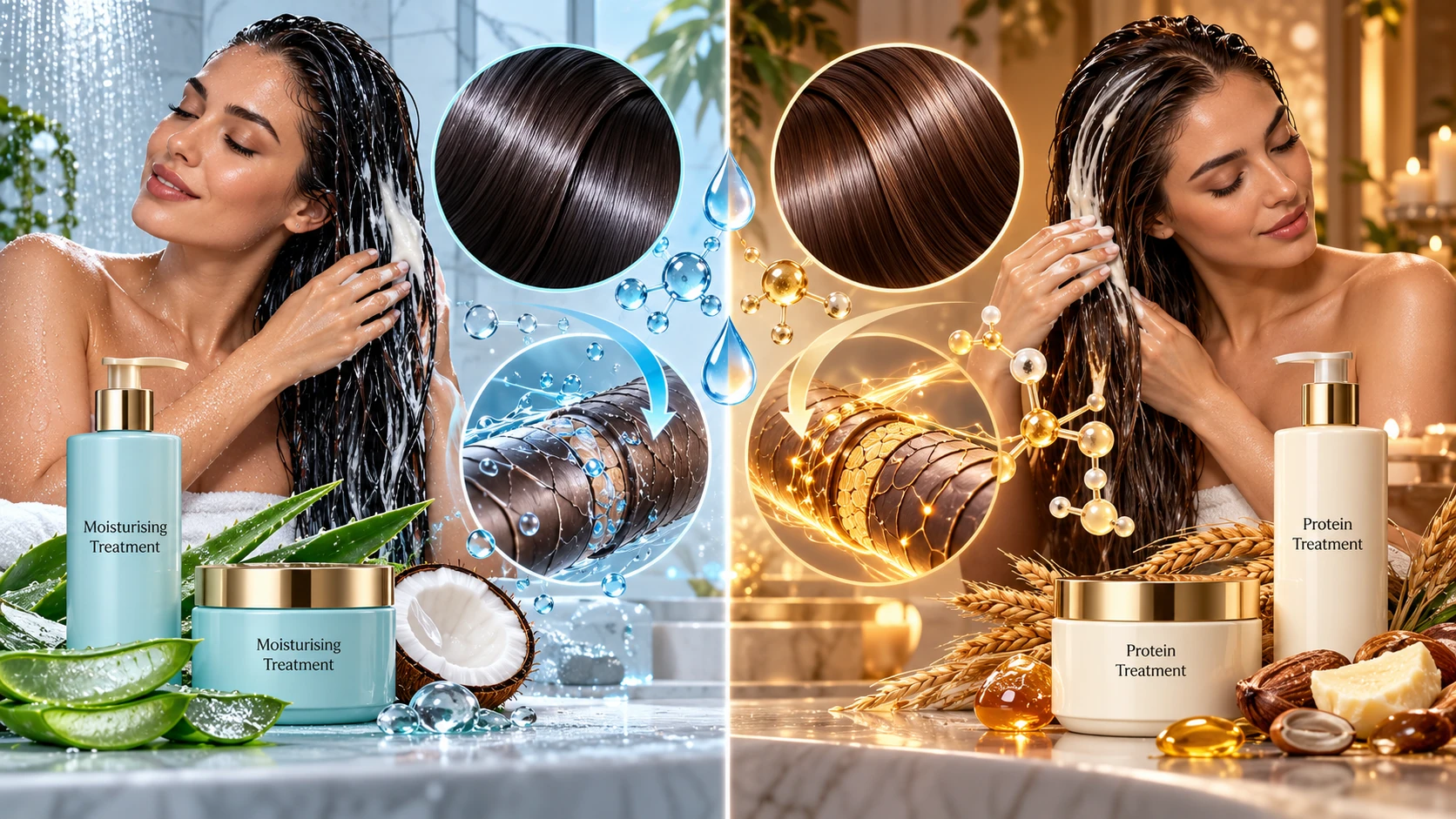
Abstract comparison of moisture-focused and protein-focused hair treatment ingredient systems
Two different cosmetic problems — frequently addressed within a single formula.

Educational Tool

Educational Conditioner–Hair Mask Routine Guide

Answer a few questions to see which considerations are most relevant to your routine. This guide does not diagnose hair damage, determine your porosity or assess the safety of any specific product.

Educational Routine Guide — Not a Diagnosis

How would you describe your hair-fibre diameter?

What is your curl pattern?

Is your hair chemically treated (colour, bleach, relaxer, perm)?

How often do you use heat styling?

How dry does your hair feel?

Do you experience frizz?

How difficult is detangling?

Do you notice breakage along the lengths?

Are your roots oily while your ends are dry?

Do you have a sensitive or reactive scalp?

Does your hair feel coated, limp or dull over time?

How often do you currently use a hair mask?

This educational guide cannot diagnose hair damage, scalp disease or determine the safety of a specific product.

Read the Ceramides Guide

Your answers stay in your browser only.

How to Apply

Application and Contact-Time Guide

Timelines vary by diagnosis, formulation, treatment route, adherence, baseline severity, individual biology and any concomitant treatment. A meaningful response cannot be judged after only a few days — standardised photographs, taken the same way each time, can help track real change.

Before starting

Apply mainly to mid-lengths and ends unless the product label directs otherwise.

Early adjustment

Distribute evenly — sectioning helps more than simply using more product.

First review

Detangle gently while the product is in, working from the ends upward.

Intermediate assessment

Follow the product’s specified contact time. Longer is not automatically better.

Longer-term assessment

Rinse according to the label — thorough rinsing reduces residue accumulating over time.

Maintenance phase

Assess how hair feels once dry, not while wet, before changing anything else.

Practical Safety

Buildup, Scalp Safety and Damage Explorer

Possible signs of accumulation

  • Loss of volume or limp curls
  • Coated, waxy or sticky feel
  • Dullness and poor water absorption
  • Faster oiliness or increased tangling

Potential contributors

  • Heavy silicones, waxes, butters or oils
  • Inadequate rinsing or excessive quantity
  • Hard water and multiple layered leave-ins
  • Styling products used alongside conditioning

What buildup is not

  • Not the same as a scalp condition
  • Flaking from product residue differs from a medical flaking condition
  • Not all silicones require a harsh clarifying shampoo
  • Silicone-free does not mean buildup-free

Reasonable steps

  • Simplify the routine before adding another product
  • Review quantity and rinsing thoroughness
  • Change one variable at a time
  • Assess hair once dry, not while wet
Persistent itching, burning, pustules, crusting or patchy hair loss requires medical evaluation. Seek prompt care for facial swelling, breathing difficulty or a severe allergic reaction rather than waiting to see whether a product change helps.

Realistic Expectations

What Conditioning Can and Cannot Change

What conditioning reliably does: reduces inter-fibre friction, lowers the force needed to comb through wet hair, reduces static, smooths the cuticle surface and improves perceived softness and shine. Lower combing force means less breakage caused by grooming — one of the clearest, best-supported cosmetic benefits.

What it does not do: conditioners and hair masks act on the hair fibre that already exists. They do not reactivate follicles, increase follicle count, treat androgenetic alopecia, stop telogen effluvium, reverse scarring alopecia or permanently heal split ends. Breakage along the length and shedding from the root are different problems with different causes.

Softer, shinier, more manageable hair is a real and worthwhile cosmetic outcome. It is not evidence that structural damage has been reversed. Assess results on dry hair over several weeks, changing one variable at a time.

Reduced Combing Force

Improved Detangling

Less Grooming Breakage

Smoother Cuticle Surface

Permanent Split-End Repair — Not Possible

Hair Regrowth — Not a Cosmetic Outcome

Label Audit

How to Read a Conditioner or Hair-Mask Label

The first five ingredients usually account for most of the formula. Reading them tells you more about how a product will behave than the words on the front of the bottle.

Label reading guide for conditioners and hair masks. Educational only — this page does not recommend or rank any product.
What to look forWhat it tells you
First five ingredientsMost of the formula by weight. Water first is normal; what follows indicates whether the product leans light or rich.
Cationic conditioner positionBehentrimonium or cetrimonium high in the list suggests a conditioning-focused formula built around slip.
Fatty alcohol positionCetyl or cetearyl alcohol high in the list indicates a richer, more cushioned texture.
Butters and heavy oilsShea butter or heavy plant oils near the top signal a rich emollient profile that may weigh down fine hair.
Silicone typePresence is not a quality signal in either direction. Type and quantity matter more than presence or absence.
Protein positionHydrolysed proteins high in the list indicate a protein-containing formula. Suitability is individual, not universal.
Fragrance and essential oilsRelevant for anyone with a sensitive scalp or known fragrance allergy.
Stated contact timeFollow it. Longer than directed is not automatically better and may increase weight or residue.
Frequency guidanceManufacturer direction based on the actual formula — more useful than a general rule about masks.
Scalp-use instructionIf the label does not direct scalp application, the product was likely designed for lengths and ends.
“Repairs damage” claimsAsk whether the claim is about how hair looks and feels, or about structural restoration. The latter is not achievable by a rinse-out cosmetic.
Conditioner and mask formulas side by sideCompare the two ingredient lists from the same brand. They are often far more similar than the price difference suggests.
Compare the ingredient list of a brand’s conditioner and its mask. If they are nearly identical, you are largely paying for the format, the contact-time instruction and the jar.

Cost and Long-Term Value

Conditioner cost drivers

  • Bottle size and quantity used per wash
  • Hair length and density
  • Wash frequency
  • Formula concentration and brand positioning

Hair-mask cost drivers

  • Jar or tube size and quantity per treatment
  • Frequency of use
  • Peptide, ceramide or bond-support positioning
  • Premium packaging and brand claims

Value beyond price

  • Correct product category for the actual concern
  • Appropriate richness for your fibre diameter
  • Transparent ingredient list and clear directions
  • Realistic claims and consistent results
  • Scalp tolerance and low wastage
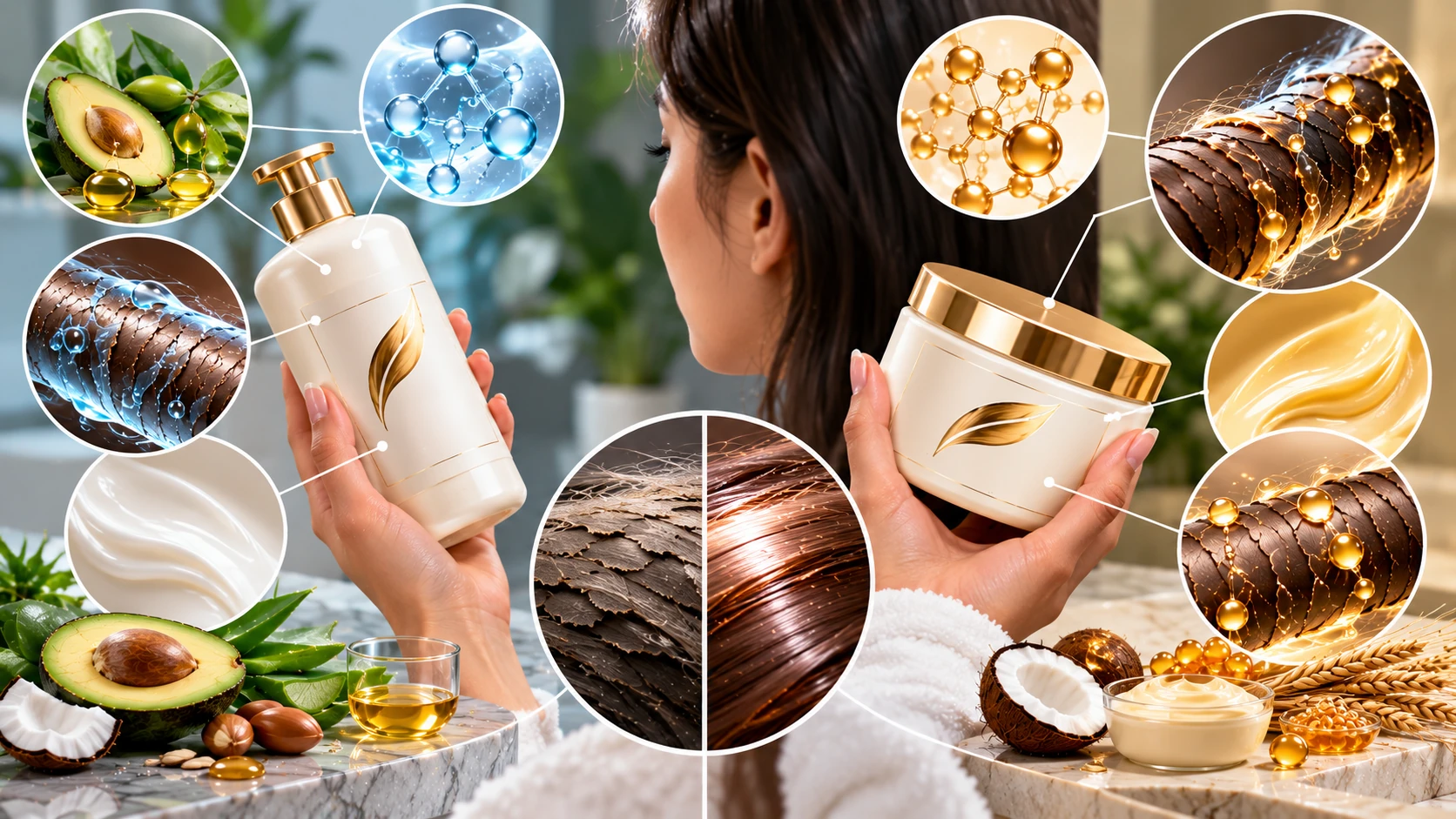
Abstract illustration of conditioner and hair-mask ingredient label comparison for consumer education
The ingredient list is more informative than the category name.

Setting the Record Straight

Myths vs Cosmetic Reality

Myth

“Hair masks are always better than conditioners.”

Cosmetic Reality

They serve different roles. A mask is a format and marketing category, not a guarantee of higher concentration or better performance for your hair.

Myth

“A mask is just stronger conditioner.”

Cosmetic Reality

Richness varies enormously within both categories. A lightweight mask can be less rich than a heavy conditioner from the same brand.

Myth

“Conditioner causes hair fall.”

Cosmetic Reality

Hair shed during washing and detangling has usually already released from the follicle. Conditioning reduces the force needed to detangle, which lowers grooming breakage.

Myth

“Hair masks make hair grow.”

Cosmetic Reality

Neither product affects follicle biology or the rate of hair growth. They act on the fibre that already exists.

Myth

“Conditioner seals split ends permanently.”

Cosmetic Reality

Split ends can be temporarily smoothed so they look and feel better. The structural split itself is not repaired by any rinse-out product.

Myth

“Masks repair bleach damage completely.”

Cosmetic Reality

Bleaching causes real structural change. A mask can meaningfully improve feel and combability but cannot restore hair to untreated condition.

Myth

“Silicones suffocate the hair.”

Cosmetic Reality

Hair is not living tissue and does not respire. Silicones reduce combing force and friction effectively. Whether they suit you depends on hair type, quantity and rinsing.

Myth

“Natural oils repair every hair type.”

Cosmetic Reality

Plant oils vary widely in weight and behaviour. Some are considerably heavier than synthetic emollients, and none repair internal structural damage.

Myth

“Low-porosity hair cannot use protein.”

Cosmetic Reality

Porosity is useful context, not a rule about ingredient classes. Individual response is more informative than a porosity category.

Myth

“High-porosity hair always needs heavy butter.”

Cosmetic Reality

Higher apparent porosity may tolerate richer products, but heavy butters are not a requirement and can still contribute to buildup.

Myth

“Protein overload is a medical diagnosis.”

Cosmetic Reality

It is an informal consumer term describing a stiff or rough feel some people notice after frequent protein use. It is not a clinically defined condition.

Myth

“Leaving a mask on overnight always gives better results.”

Cosmetic Reality

Cationic deposition happens relatively quickly. Overnight use is not safe to assume and may increase irritation, prolonged fibre swelling or buildup. Follow the specific label.

Myth

“Heat makes every mask work better.”

Cosmetic Reality

Some formulas are designed to be used with gentle warmth; many are not. This should not be assumed as a universal technique.

Myth

“Fine hair should never use a mask.”

Cosmetic Reality

Fine hair is easily weighed down by rich products, but lighter mask formats exist. Quantity, contact time and frequency can all be adjusted.

Myth

“Curly hair always needs the richest mask.”

Cosmetic Reality

Curl pattern alone does not determine what a person needs. Fine curls can lose volume and definition with rich products.

Myth

“Conditioner must be applied to the scalp.”

Cosmetic Reality

Many conditioners are designed for lengths and ends. Scalp application can add weight or, in some users, cause irritation. Check the specific label.

Myth

“Masks should replace conditioner.”

Cosmetic Reality

They typically serve different frequencies and roles. Many routines use both; some people need only one. This depends on the individual and the formulas involved.

Myth

“More product means better conditioning.”

Cosmetic Reality

Beyond the amount needed for even distribution, additional product mainly increases residue and rinsing burden rather than benefit.

Myth

“If hair feels soft, structural damage is reversed.”

Cosmetic Reality

Softness is a cosmetic surface outcome. It is a real and worthwhile result, but it is not evidence that internal fibre damage has been undone.

Myth

“Sulfate-free products never cause dryness.”

Cosmetic Reality

Sulfate-free is a statement about one surfactant class, not about a formula’s overall mildness or moisturising behaviour.

Myth

“Silicone-free products never cause buildup.”

Cosmetic Reality

Waxes, heavy butters, oils and cationic polymers can all contribute to accumulation. Removing silicones does not remove the possibility of residue.

Myth

“A premium price proves superior repair.”

Cosmetic Reality

Price reflects packaging, brand positioning, marketing and margin alongside formulation. It is not a reliable indicator of performance for your hair.

When a Product Change Is Not the Answer

Red Flags: Assess First, Adjust the Routine Second

If any of the following apply, the right first step is a dermatologist-led hair and scalp assessment — not choosing between a conditioner and a hair mask.

Sudden shedding from the root
Patchy hair loss
Scalp pain or tenderness
Pus, crusting or weeping
Severe or persistent itching
Burning sensation on the scalp
Facial swelling after product use
Breathing difficulty after product use
Hair breaking close to the roots
Severe chemical damage or gummy wet hair
Scalp burns after a chemical service
Severely matted or tangled hair
A contact reaction that persists after stopping the product
Visible scarring on the scalp
Smooth, shiny areas of scalp
Eyebrow or eyelash loss
A child with unexplained hair breakage
A product claiming permanent structural repair
A product claiming to regrow hair
Pressure to continue daily use despite irritation

Prepare for Your Visit

Conditioning Routine Checklist

Medically Reviewed

Medically Reviewed By

Dr. Amit S. Agarkar

Dermatologist, Trichologist and Hair Transplant Surgeon

Medical reviewer: Dr. Amit Agarkar, MD Dermatology Editorial role: Medical review, cosmetic-claim review and content oversight Review date: 23 July 2026 Next review date: 23 January 2027 Product affiliation: No brand sponsorship or affiliate arrangement informs this comparison

Full profile · Medical editorial policy · Correction policy · References

Medical information is periodically reviewed and may change as evidence, product labeling and regulatory guidance evolve.

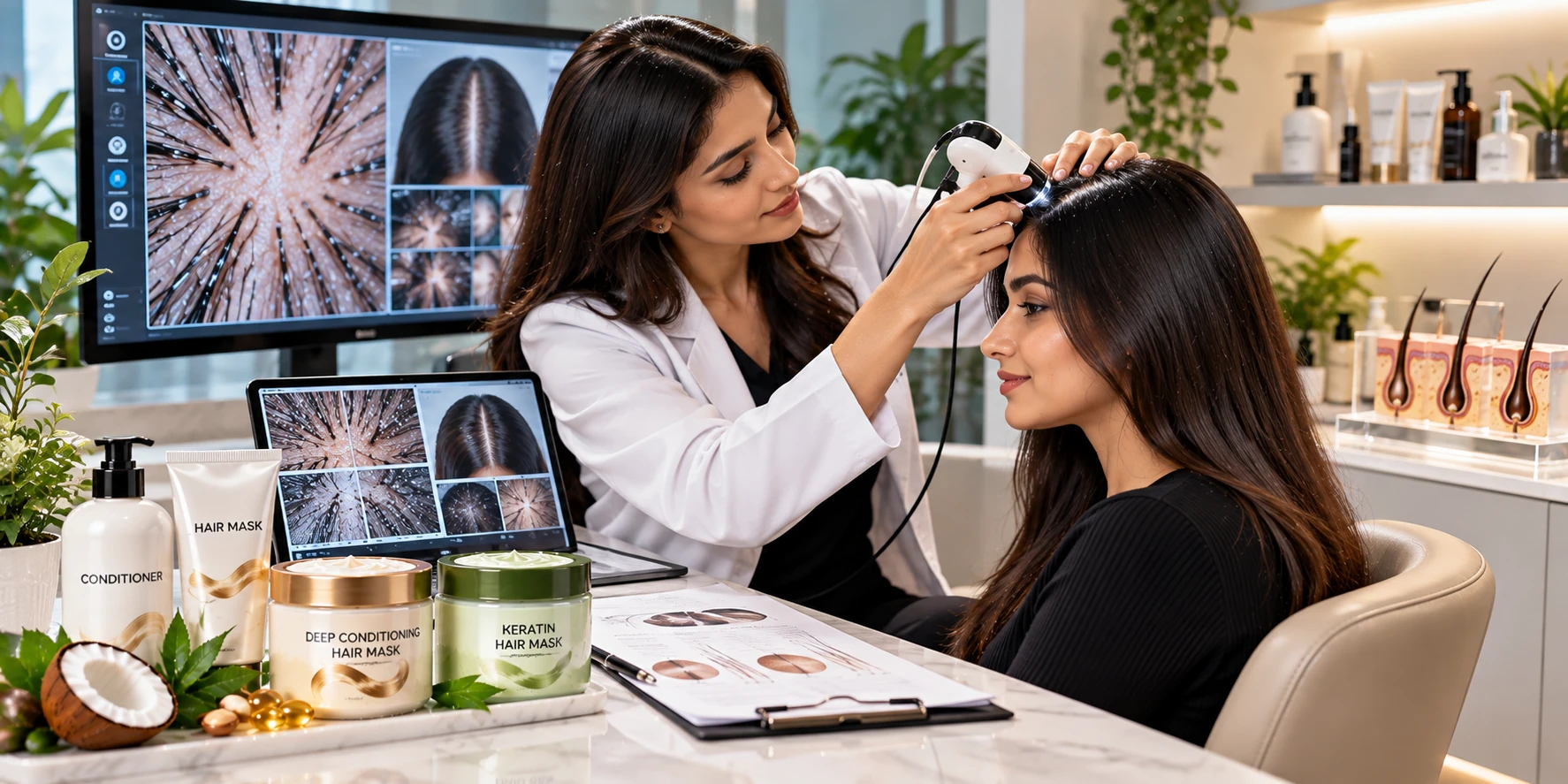
A calm expert-led haircare consultation and hair and scalp assessment environment
Assessment of the hair and scalp comes before the product choice.

Sources

Cosmetic-Science References

This list reflects the categories of authoritative source used to inform this page’s general statements. Exact citation details, article titles and access dates should be finalised and verified by the reviewing team before publication. No specific study outcomes, percentages or performance figures are fabricated anywhere on this page. Retailer blogs, influencer content and manufacturer marketing are not used as primary evidence.

  1. Hair-fibre cosmetic-science reference texts covering cuticle structure, conditioning mechanisms and combing-force measurement. Standard reference literature — verify edition
  2. Peer-reviewed reviews of cationic conditioning agents and their deposition behaviour on damaged and undamaged hair. PubMed To be cited individually
  3. Cosmetic chemistry literature on emulsion structure, fatty alcohols and rinse-out product architecture. Journal of Cosmetic Science and equivalent — verify current
  4. Research on hair-fibre damage from bleaching, permanent colour, chemical relaxing and thermal styling. PubMed To be cited individually
  5. Studies on hydrolysed protein and peptide treatments applied to hair, including effects on fibre properties. PubMed To be cited individually
  6. Silicone deposition and removal studies covering accumulation behaviour across formulation types. PubMed To be cited individually
  7. Combing-force and breakage measurement studies used to assess conditioning performance objectively. Cosmetic science literature — verify current
  8. Research on curly and textured hair, covering friction, detangling behaviour and mechanical damage. PubMed To be cited individually
  9. Contact-dermatitis literature on fragrance, preservative and essential-oil sensitisation relevant to scalp exposure. PubMed / Contact Dermatitis To be cited individually
  10. Indian Association of Dermatologists, Venereologists and Leprologists (IADVL) — clinical guidance on hair and scalp conditions. IADVL Verify current guideline
  11. American Academy of Dermatology (AAD) — patient-education resources on haircare and hair damage. AAD Verify current resource
  12. Regulatory guidance on cosmetic claims applicable to the Indian market. CDSCO cosmetics Verify current requirements

Common Questions

Frequently Asked Questions

36 questions, grouped by what you are actually trying to work out.

The Basics

Conditioner is generally a routine rinse-out product for slip, detangling and everyday manageability. A hair mask is generally positioned as a richer, longer-contact or more damage-specific treatment. Their ingredient systems frequently overlap, and richness varies enormously within both categories.

Neither is universally better. They serve different roles and frequencies. A mask is a product format, not a guarantee of higher concentration or better performance for your particular hair.

For some people with some formulas, yes. For others, a mask used at every wash adds more weight than the hair tolerates. This depends on fibre diameter, the specific formulas involved and how the hair responds.

Leaving a conditioner on longer than its label directs will not reliably convert it into a mask. Cationic deposition happens relatively quickly, and extended contact mainly risks additional residue.

Many routines use both — conditioner routinely, mask periodically. Some people do well with only one. There is no universal requirement to own both.

There is no universal technical standard separating them. The two terms overlap substantially, and the ingredient list is more informative than either name.

A leave-in is designed to remain on the hair rather than being rinsed. It is typically lighter and serves continued detangling or styling support, not intensive treatment.

Frequency & Application

Commonly after each shampoo, per the product label. Adjust based on how your hair feels once dry rather than following a fixed rule.

Follow the specific product label. More frequent use does not linearly improve results and can increase weight or residue over time.

Follow the stated contact time. Longer than directed is not automatically better and may increase weight or buildup.

Not unless the specific label permits it. Overnight use may increase irritation, prolonged fibre swelling or buildup. It should not be assumed safe or beneficial.

Many conditioners are designed for lengths and ends. Scalp application can add weight or, in some users, cause irritation. Check what the specific label directs.

Generally not the intended use. Occlusive formulas may not suit the scalp, and a scalp mask is a separate product category.

Some people do, particularly for extra slip during detangling. Whether it adds benefit or just adds weight depends on the formulas and your hair.

Some formulas are designed to be used with gentle warmth; many are not. This should not be assumed as a universal technique.

Hair Types

Very dry hair often benefits from richer conditioning, whether that comes from a rich conditioner or a periodic mask. Fibre diameter matters — fine dry hair tolerates less emollient load than coarse dry hair.

Chemically or thermally damaged hair usually benefits from both routine conditioning and periodic richer treatment. Neither restores the fibre to untreated condition.

Surface smoothing helps in both categories. Frizz driven by humidity, static and damage has different contributors, so identifying the pattern matters more than the product category.

Lighter conditioning generally suits fine hair better. Rich masks can flatten volume, though lighter mask formats exist and quantity can be reduced.

Curly hair often values slip during detangling, which conditioner provides well. Heavy masks are not automatically required for every curl pattern — fine curls can lose volume.

Slip during detangling is often the most valuable single benefit, given the higher friction involved. Weathered lengths may also appreciate richer periodic conditioning.

Lighter formulas often work better, since rich products may sit on the surface rather than being taken up. Porosity is useful context, not a complete prescription.

Higher apparent porosity may tolerate richer products, though this is not a fixed rule and heavy products can still contribute to buildup.

Bleached hair usually benefits from both. Expect improved feel and combability rather than restoration — bleaching causes genuine structural change.

Routine conditioning maintains the hair between washes; a periodic mask may be useful. Benefit is formula-specific rather than category-specific.

Ingredients & Safety

Yes, particularly with fine hair, frequent use, generous quantity or a rich formula. Loss of volume is the usual first sign.

Yes, with heavy formulas, generous quantity, inadequate rinsing or hard water. Buildup is not the same as a scalp condition.

No. Silicones reduce combing force and friction effectively. Some types may accumulate depending on quantity and rinsing, but they are not inherently harmful.

A treatment containing hydrolysed proteins, peptides or amino acids. It may temporarily improve fibre feel and certain strength-related properties, but it does not suit every hair type or frequency.

Some people notice a stiff or rough feel after frequent protein use. Reducing frequency usually addresses it. “Protein overload” is an informal consumer term, not a medical diagnosis.

It reduces the force needed to comb through wet hair, which lowers breakage caused by grooming. No product prevents all breakage.

Split ends can be temporarily smoothed so they look and feel better. The structural split itself is not repaired by any rinse-out cosmetic product.

No. Both act on the hair fibre that already exists. Shedding from the root has causes that a cosmetic conditioning product does not address.

No. Neither product affects follicle biology or the rate of hair growth.

Look at the first five ingredients, the position of cationic conditioners and fatty alcohols, whether protein is present, and the stated contact time and frequency. Compare a brand’s conditioner and mask lists — they are often more similar than the price gap suggests.

For sudden shedding from the root, patchy hair loss, scalp pain, pustules, crusting, persistent itching or burning, breakage close to the roots, or any reaction that does not settle after stopping a product.

Next Step

Choose the Formula Your Hair Needs — not the Richest Product on the Shelf

A haircare assessment can identify whether your main concern is friction, tangling, dryness, chemical damage, product buildup, scalp sensitivity or a medical hair-loss problem — then guide the choice between a lightweight conditioner, a richer mask, a protein treatment or simply a simpler routine.

Disclaimer: This page provides educational cosmetic-science information and does not replace professional medical advice, diagnosis or treatment. Conditioners and hair masks are cosmetic products that act primarily on the hair fibre that already exists; they do not normally change the biological rate of hair growth, treat the medical cause of hair loss, permanently repair split ends, rebuild the cortex or restore chemically treated hair to untreated condition. “Hair mask” is a product-format and marketing category rather than a guarantee of higher concentration or superior performance — richness and ingredient systems vary widely within both categories, and the ingredient list is more informative than the category name. Individual results depend on hair-fibre diameter, curl pattern, porosity, damage history, formulation and routine. No brand sponsorship or affiliate arrangement informs this comparison, and no product is recommended or ranked. Always follow the specific product’s label for contact time, frequency and whether scalp application is intended. Persistent scalp irritation, itching, burning, pustules, crusting, sudden shedding from the root, patchy hair loss or breakage close to the roots requires assessment by a qualified dermatologist. Content reviewed by Dr. Amit Agarkar, MD Dermatology.

Your Cart (0)

Your cart is empty

Subtotal0
DeliveryFREE
Total0
🔒 Secure📦 Free above ₹499↩ Easy returns
💬 Hi! I'm Dr. Amit — your Hair Intelligence consultant
🌿
1
🌿
Dr. Amit
Virtual Dermatologist · Hairsncares.com
Online
What are you shopping for today?
Select a category to begin
AI-powered scalp diagnosis · Hairsncares.com
📸
Scalp Analyser
Upload scalp photo · Get conditions, root cause, and matched product protocol
📷
Drop scalp photo here or click to upload
JPG, PNG, WEBP · Clear, close-up, well-lit photo

Your image is processed privately by our AI engine and saved securely with your account.