Above the Fold
Quick Answer: How Do You Know If It Is Breakage or Hair Fall?
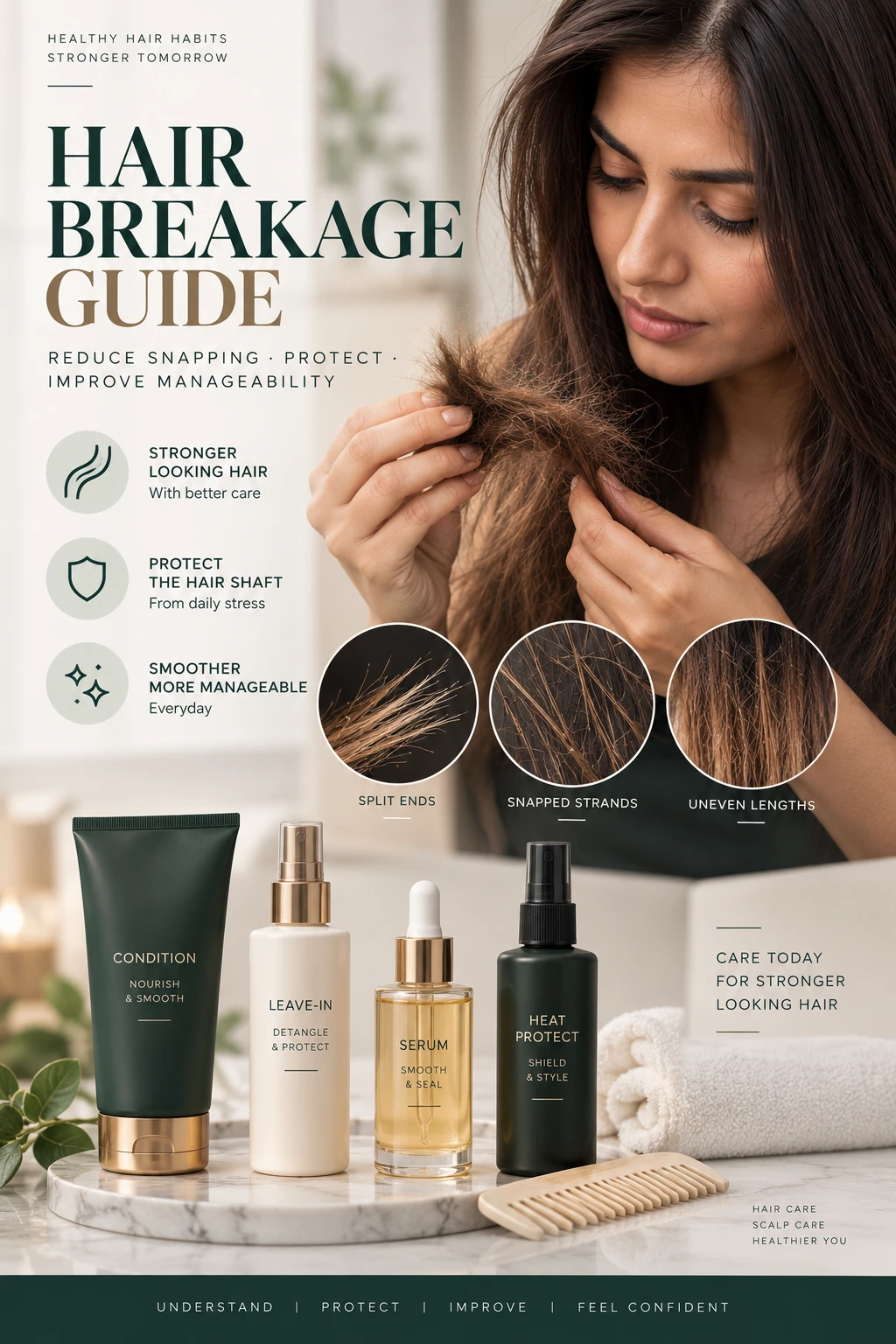
Breakage usually appears as short snapped pieces, split ends, see-through ends or uneven lengths without a root bulb. Hair fall usually appears as full-length strands shedding from the scalp. Breakage needs shaft repair, conditioning, detangling and damage prevention. Root hair fall needs cause assessment if sudden, patchy, progressive or associated with scalp symptoms.
Search Intent Alignment
What You'll Learn on This Page
- What hair breakage actually is, and how it differs from root shedding
- How to locate where hair is breaking — ends, mid-lengths, hairline, crown or nape
- What's really causing the snapping, from heat to chemicals to tight styling
- How to balance protein, moisture and bond support without overdoing any of them
- How to build a realistic, product-based breakage-control routine
- How to detangle safely without creating more breakage
- Texture-specific guidance for curly, fine, bleached and high-porosity hair
- When breakage care isn't enough and a doctor visit is the next step
Understanding the Basics
Hair Breakage Means the Strand Snaps Before It Sheds Naturally
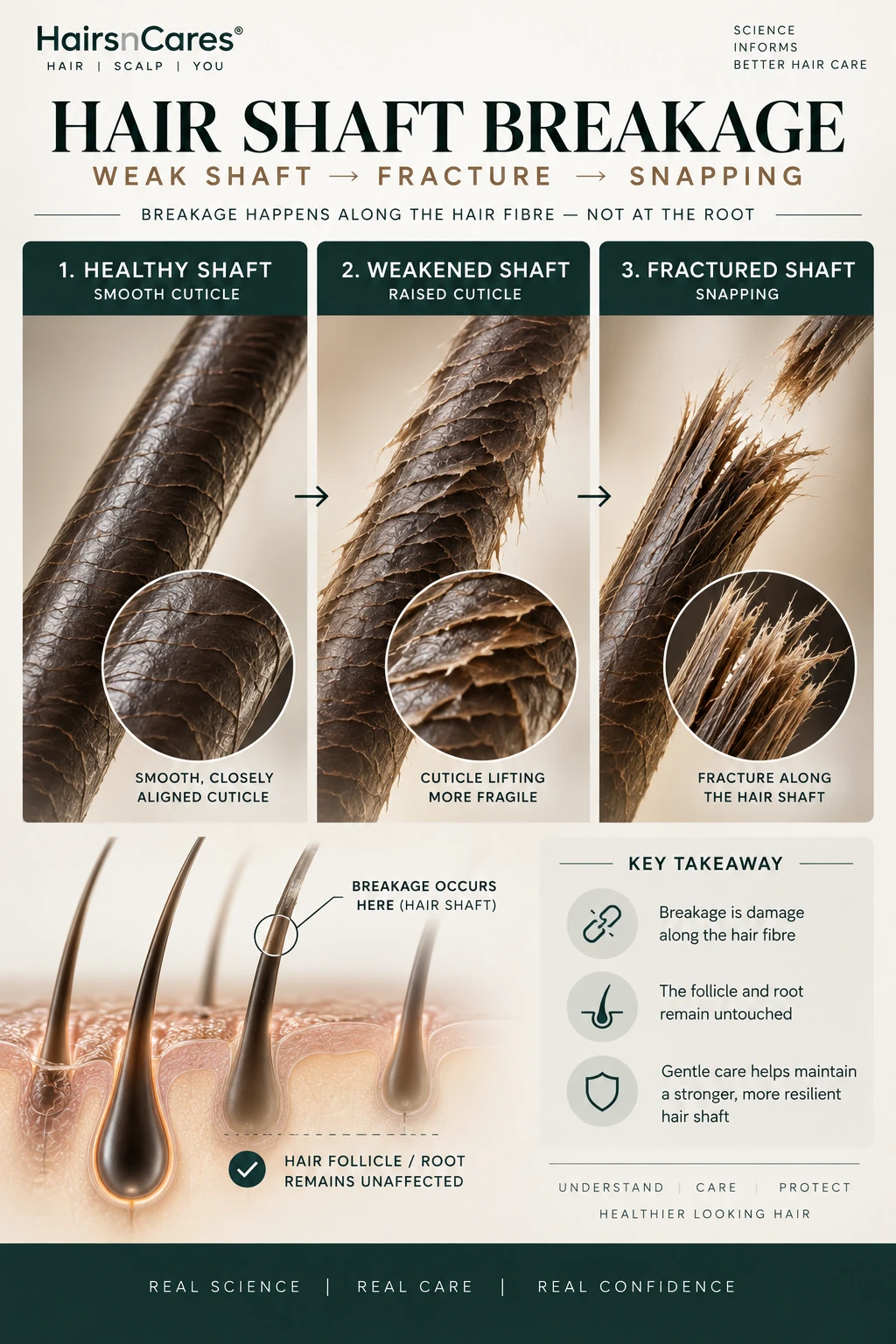
Hair breakage happens when the hair shaft becomes weak enough to snap along its length. Unlike root shedding, the hair does not fall from the follicle. Instead, it breaks at the ends, mid-lengths, front hairline, crown, nape or areas exposed to friction and styling stress.
Common signs: short broken pieces, split ends, white dots on hair ends, a frizzy halo, flyaways, rough ends, see-through ends, uneven length, hair snapping during brushing, hair breaking while straightening, tangles that become breakage, hairline baby-hair breakage, and crown breakage from styling or friction.
"Breakage can make hair look thin even when the scalp is not actively losing follicles."
Know the Difference
Snapping and Shedding Need Different Solutions
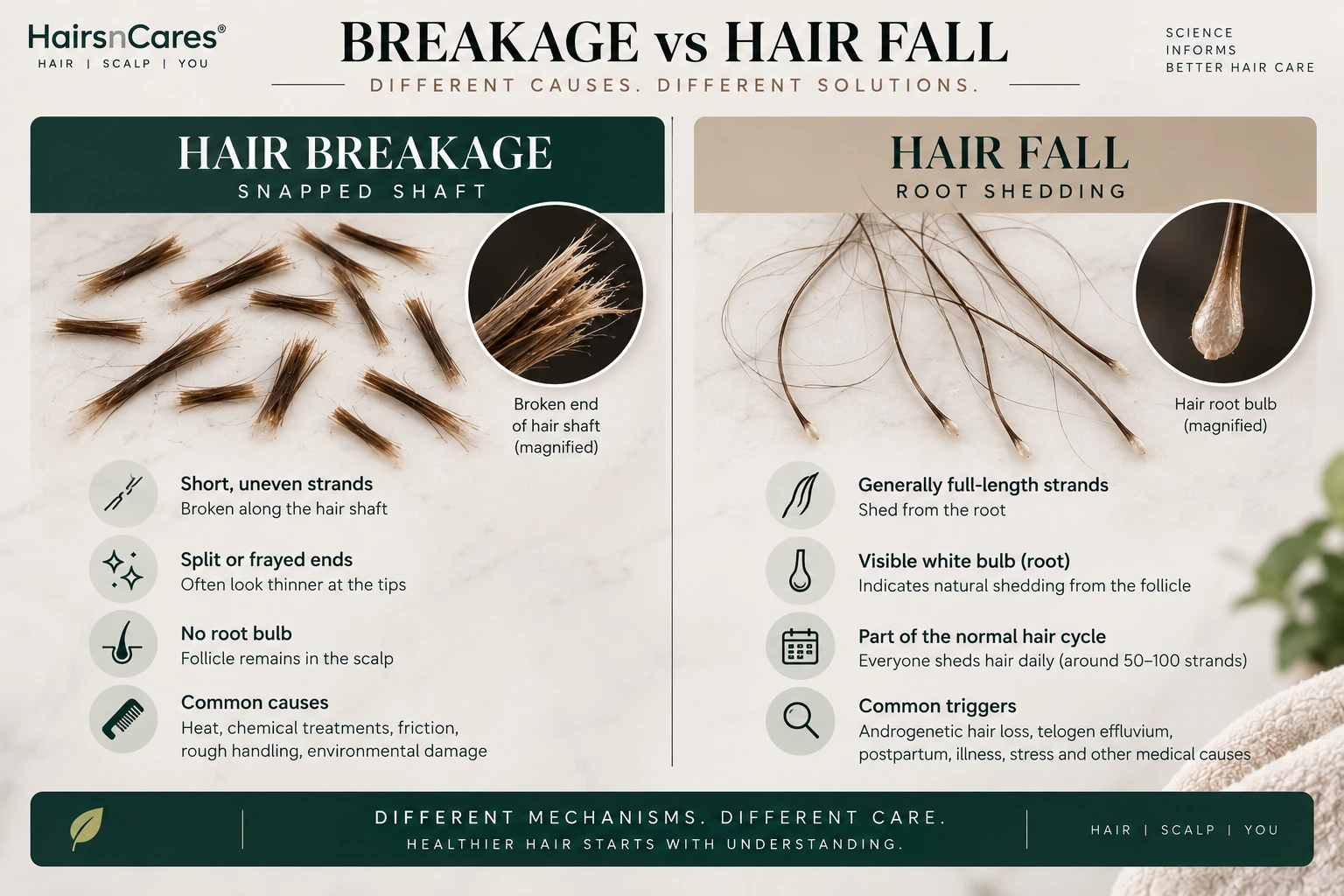
Hair breakage and hair fall are different. Breakage usually creates short snapped fragments without a root bulb. Hair fall usually involves full-length hairs shedding from the scalp and may need medical evaluation if sudden, patchy, progressive or associated with scalp symptoms.
| Feature | Hair Breakage | Hair Fall |
|---|---|---|
| Hair length | Short or uneven pieces | Full-length strands |
| Root bulb | Usually absent | May be present |
| Main location | Ends, mid-lengths, hairline, crown, nape | From scalp/root |
| Common trigger | Heat, bleach, friction, dryness, chemicals | Telogen shedding, pattern loss, deficiency, thyroid, PCOS |
| Appearance | See-through ends, frizz, flyaways | Reduced scalp density, shedding |
| First solution | Damage-control routine | Cause assessment |
| Doctor review | Needed if scalp symptoms or severe unexplained breakage | Needed if sudden, patchy or progressive |
Interactive Selector
Where Is Your Hair Breaking?
Select the zone where breakage is most visible to see likely causes and routine focus. This is a self-assessment guide, not a diagnosis.
Self-Assessment
How Severe Is the Breakage?
Level 1 — Mild Breakage
Signs:
- Light flyaways
- Few split ends
- Mild roughness
Routine:
- Conditioner, serum
- Heat protectant
- Gentle brushing
Level 2 — Moderate Breakage
Signs:
- Frequent broken pieces
- See-through ends
- Breakage while brushing
Routine:
- Weekly mask, leave-in
- Detangler, trim plan
- Reduce heat
Level 3 — Severe Breakage
Signs:
- Snapping with little tension
- Gummy or stretchy when wet
- Severe split ends
Routine:
- Stop heat and chemicals
- Bond/protein + moisture
- Professional trim plan
Level 4 — Red-Flag Breakage
Signs:
- Scalp pain, hair from root
- Patchy loss, scalp redness
- Pus, crusting
Routine:
- Medical review
- Stop irritants
- Do not self-treat
Understanding Causes
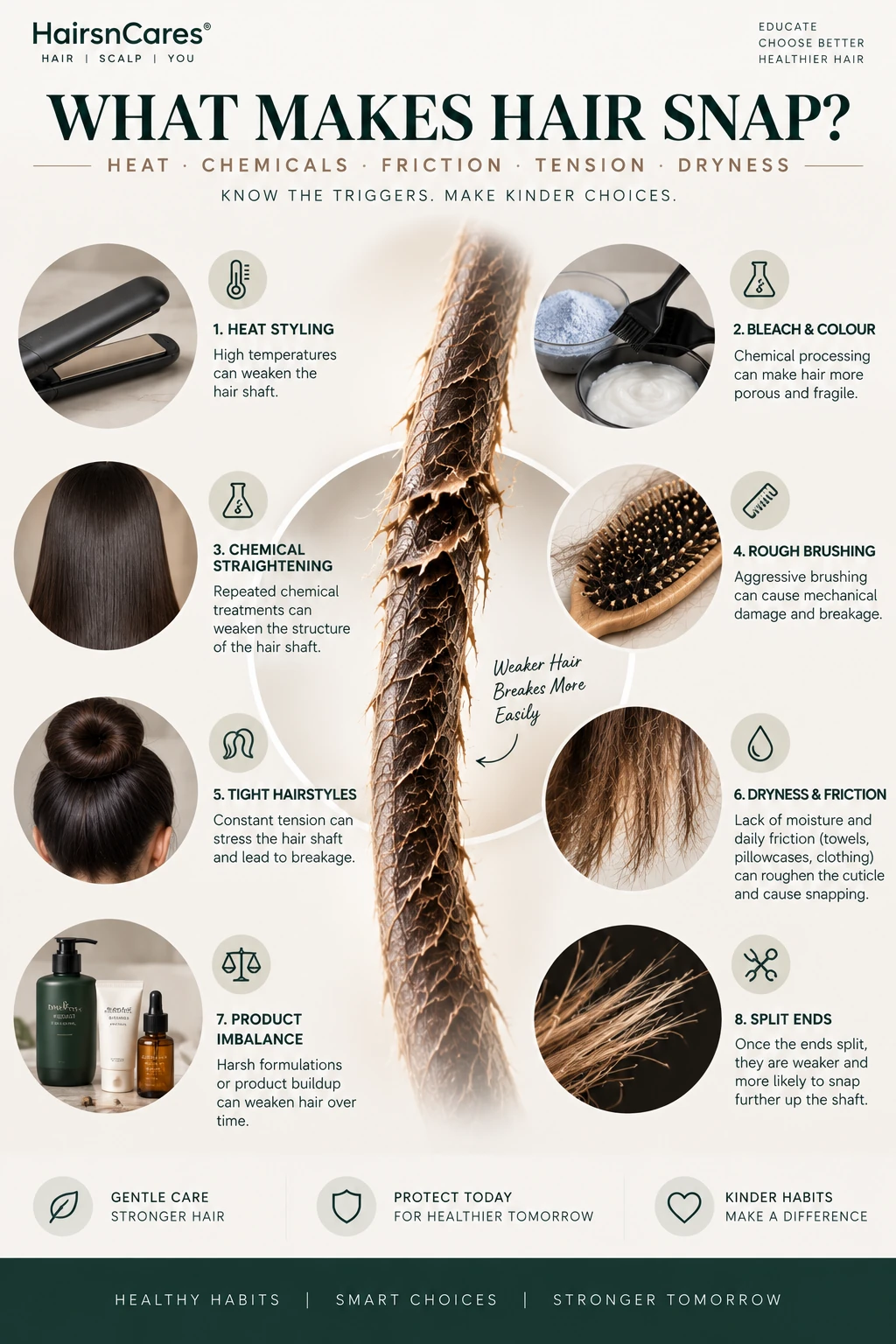
What Makes Hair Snap?
Heat Styling
Straighteners, curling irons, hot brushes and blow dryers can weaken the shaft when overused.
Bleach and Colour
Chemical lightening and colour processing can increase porosity and fragility.
Chemical Straightening
Overlapping treatments can weaken mid-lengths and edges.
Rough Brushing
Brushing from root to end through knots can snap fragile hair.
Tight Hairstyles
Tight ponytails, buns, braids and extensions may break hair or cause traction.
Dryness and Friction
Towels, pillows, helmets, collars and scarves can worsen breakage.
Product Imbalance
Too much protein, too little moisture, or harsh cleansing may increase brittleness.
Split Ends
Untreated split ends may travel upward and increase snapping.
Scalp or Medical Issues
Some scalp diseases or systemic conditions may be mistaken for breakage.
Realistic Expectations
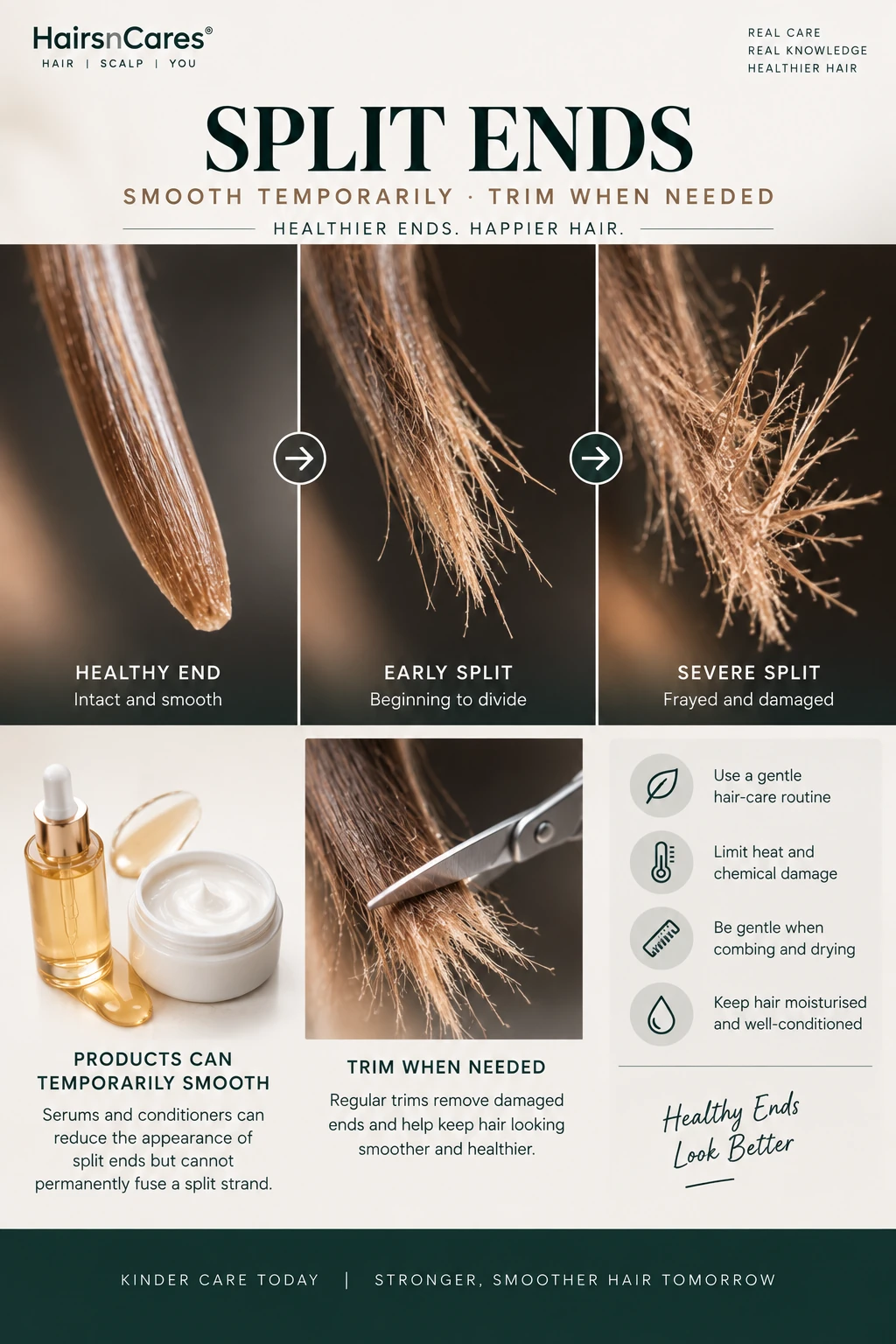
Split Ends Cannot Be Permanently Sealed
Split ends happen when the tip of the hair shaft frays or splits. Products may temporarily smooth the look and reduce friction, but they cannot permanently fuse a split strand.
Support options
- Serum
- Leave-in conditioner
- Oil on ends
- Mask
- Bond-support product where suitable
- Micro-trim or dusting
- Protective styling
- Heat reduction
"If split ends are severe, trimming is the most reliable way to remove them."
Core Repair Principle
Breakage Needs Balance, Not Product Overload
Best when hair feels:
- Dry
- Rough
- Frizzy
- Tangled, dull, stiff
Products:
- Moisturising conditioner
- Hydrating mask
- Leave-in, serum, oil on ends
Best when hair feels:
- Weak
- Limp
- Overly stretchy
- Fragile, breakage-prone
Caution:
Too much protein can make hair stiff and brittle.
Best when hair is:
- Bleached
- Heat damaged
- Chemically treated
- Snapping after processing
Caution:
Improves strength-feel and manageability; does not restore virgin hair.
Structured Routine
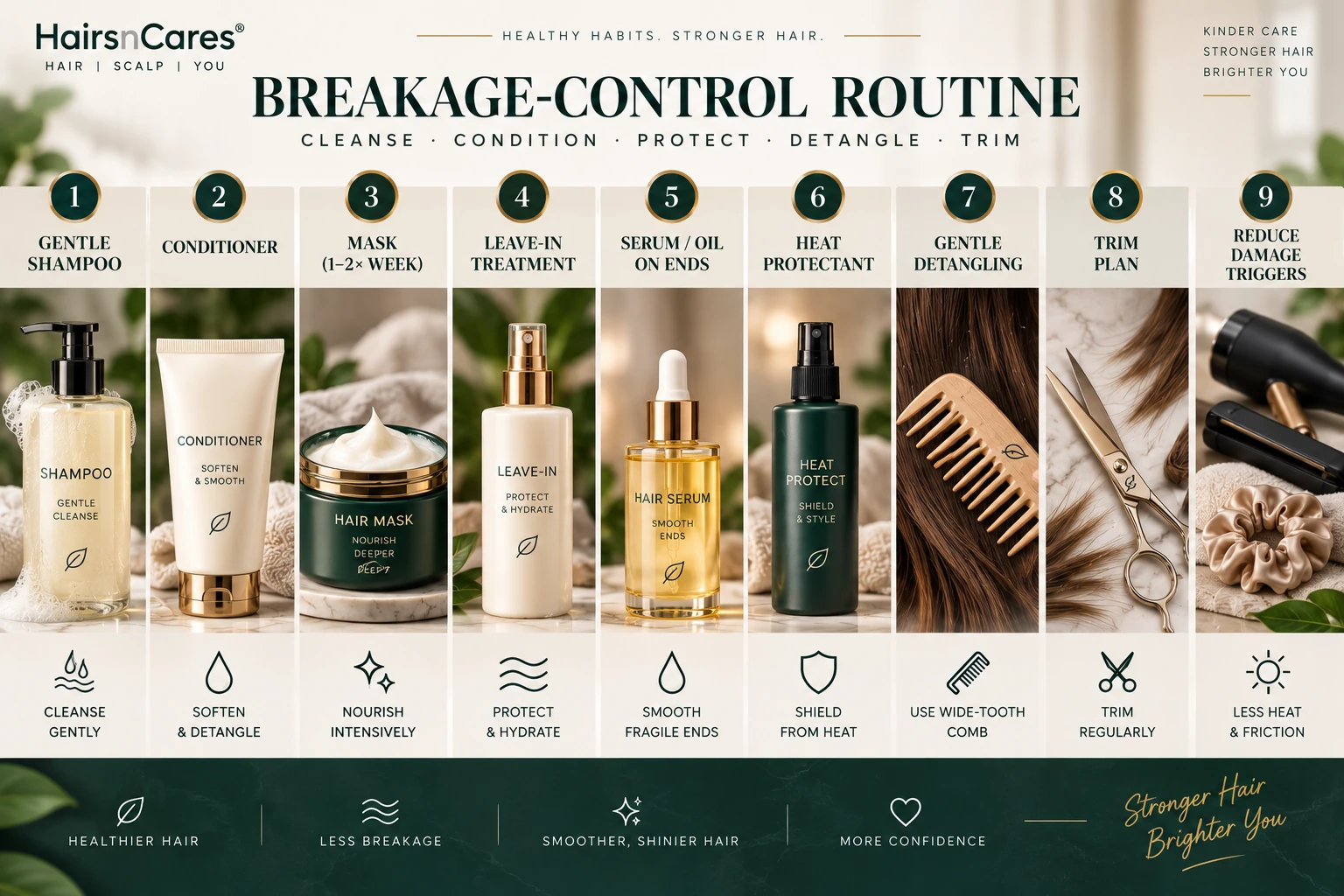
Build a Routine That Reduces Snapping
Gentle Shampoo
Clean scalp without stripping lengths.
Conditioner Every Wash
Use slip to reduce friction.
Weekly or Occasional Mask
Choose moisture, protein or bond support based on hair feel.
Leave-In Conditioner
Useful for tangles, dry ends, curls and high-porosity hair.
Serum or Oil on Ends
Reduce friction and improve shine.
Heat Protectant
Use before every hot tool session.
Detangle Safely
Start from ends, work upward, use slip.
Trim Plan
Remove severe split ends gradually if needed.
Reduce Trigger
Lower heat, loosen hairstyles, reduce friction and space chemical services.
Create a Breakage-Control Plan Based on Your Hair Story
Answer a few questions to get a suggested cosmetic-care routine. This does not diagnose medical hair loss or repair split ends permanently.
The AI Hair Breakage Routine Builder provides cosmetic routine support only. It cannot diagnose medical hair loss, repair split ends permanently or prescribe treatment.
Cleansing
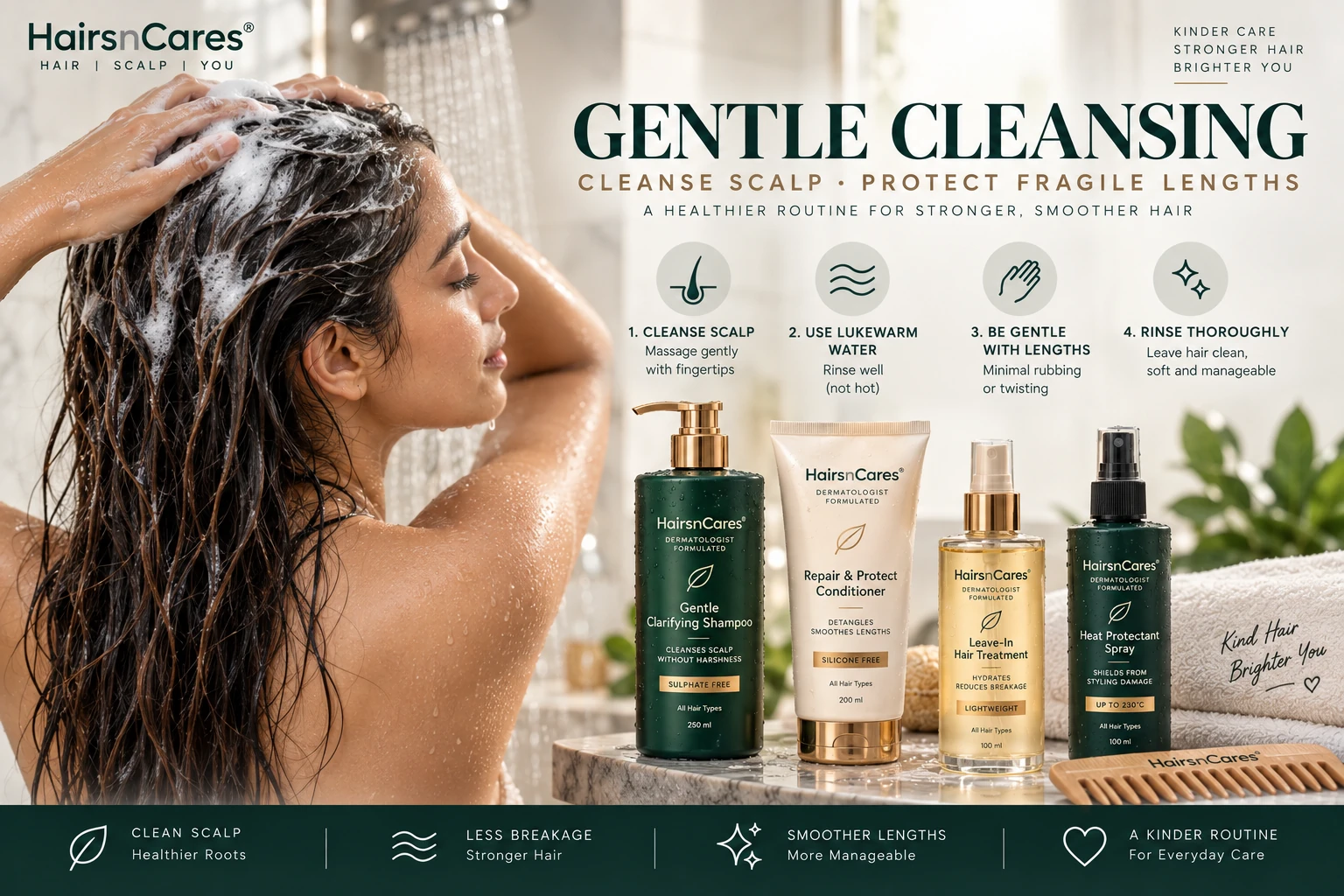
Cleanse Without Making Fragile Hair Rougher
Recommended categories
- Gentle shampoo
- Moisturising shampoo
- Colour-safe shampoo if treated
- Anti-dandruff shampoo if scalp needs it
- Clarifying shampoo only when buildup exists
Avoid
- Harsh daily cleansing
- Hot water
- Aggressive scrubbing
- Skipping conditioner
- Heavy scalp oil to hide breakage
- Ignoring dandruff or inflammation
Conditioning
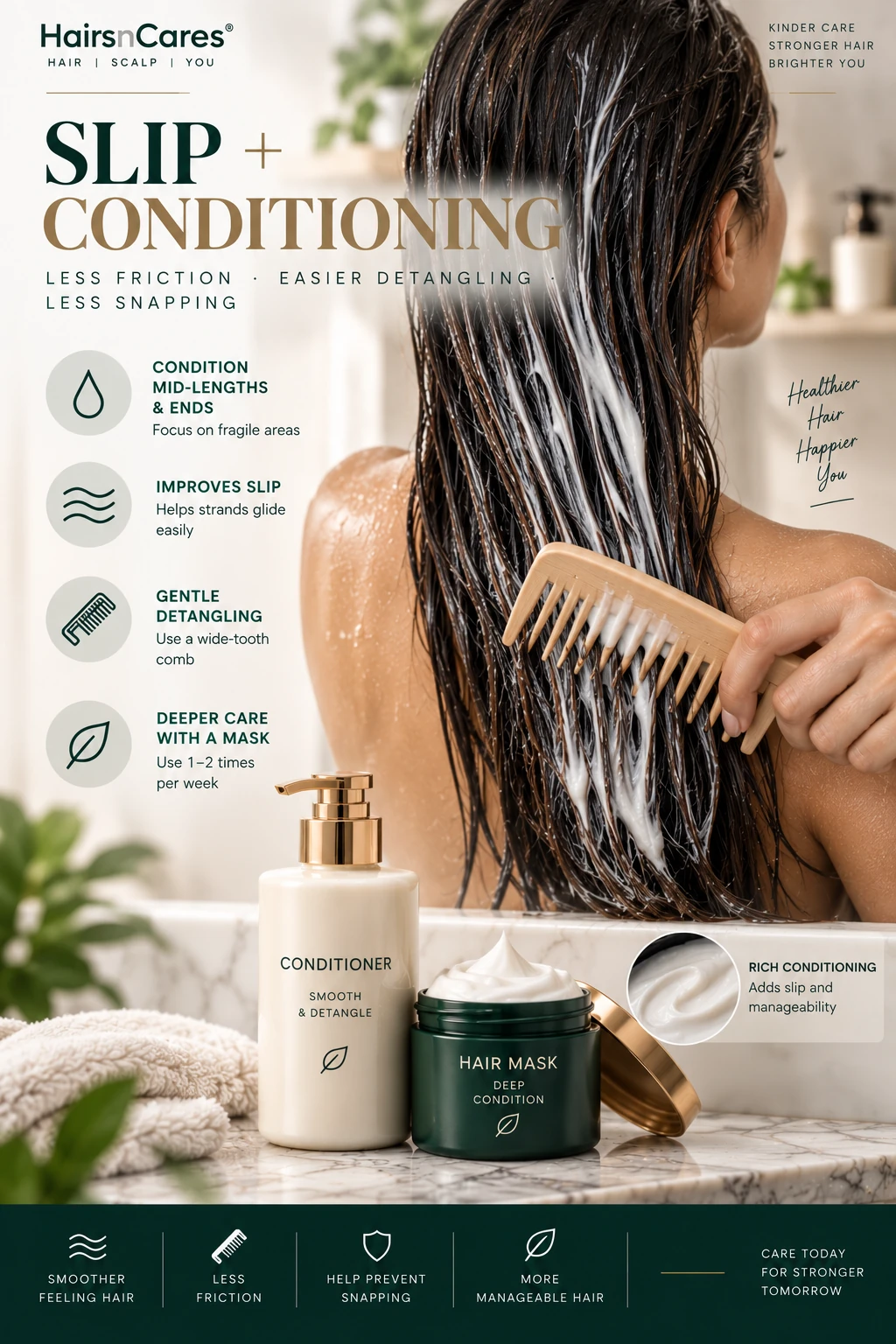
Slip Is One of the Best Breakage-Control Tools
Conditioner benefits
- Improves slip
- Reduces friction
- Smooths rough feel
- Makes detangling easier
- Reduces snapping during combing
Mask benefits
- Deeper conditioning
- Strength-feel support
- Frizz reduction
- Softness, manageability
Rules: apply mid-lengths to ends; use more on damaged zones; section dense hair; rinse thoroughly; avoid protein overload; adjust richness by hair type.
Between Washes
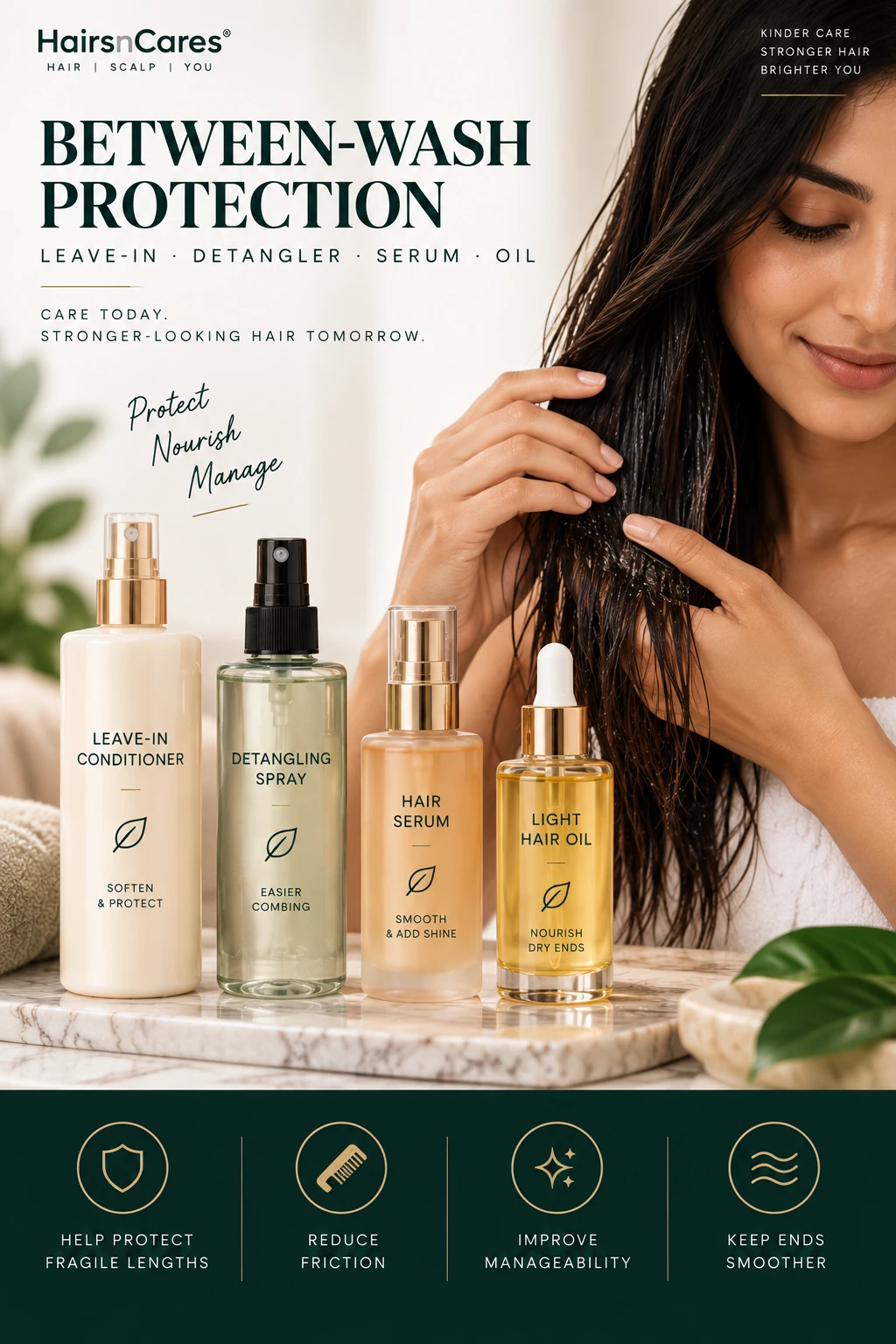
Protect Fragile Hair Between Washes
Best for:
- Tangles
- Dryness
- Curly hair
- High porosity
Best for:
- Knot-prone hair
- Dense hair
- Curly or coily hair
Best for:
- Shine
- Flyaways
- Reduced friction
Caution: use oil mainly on lengths and ends; heavy scalp oil may worsen dandruff or oily scalp; patch test if sensitive; oils do not regrow hair or repair split ends permanently.
Styling Safety
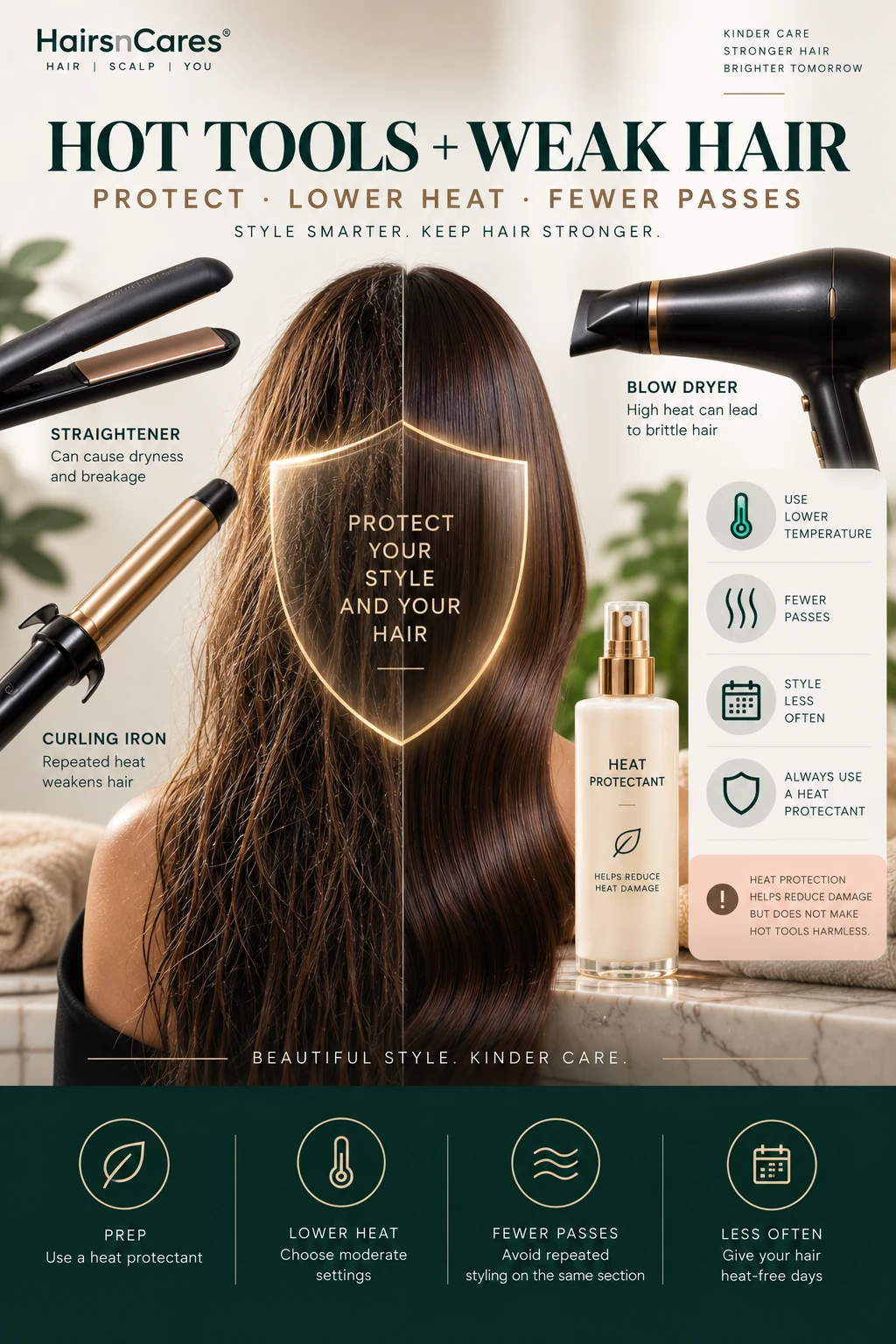
Hot Tools Can Turn Weak Hair Into Broken Hair
Heat styling can worsen split ends, brittle ends, face-framing breakage, crown breakage, frizz, roughness, dry lengths and curl pattern loss.
Rules
- Use heat protectant
- Lower temperature
- Avoid daily heat
- Avoid repeated passes
- Avoid straightening damp hair
- Protect fragile front sections
- Pause heat during severe breakage
- Use heatless styling where possible
Chemical Service Safety
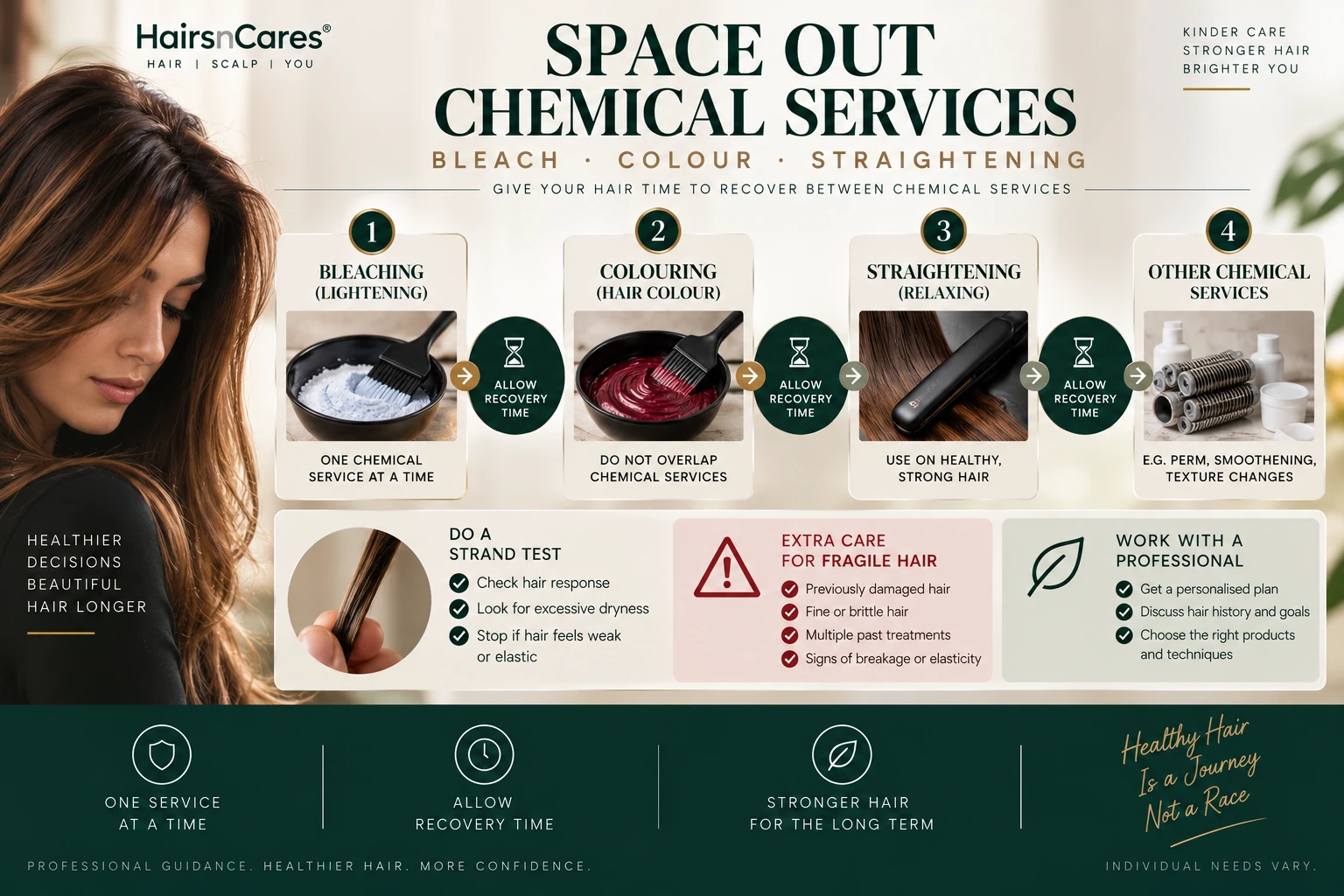
Processing Overlap Can Cause Snapping
Bleaching, highlights, colouring, rebonding, relaxing, smoothening, keratin treatments, perming, repeated salon services, overlapping chemicals and at-home chemical mistakes can all increase breakage risk.
Safety rules
- Strand test
- Avoid overlapping bleach or relaxer
- Stop if burning occurs
- Do not process already snapping hair
- Space chemical services
- Use professional guidance
- Seek medical help for scalp burns
Tension Awareness
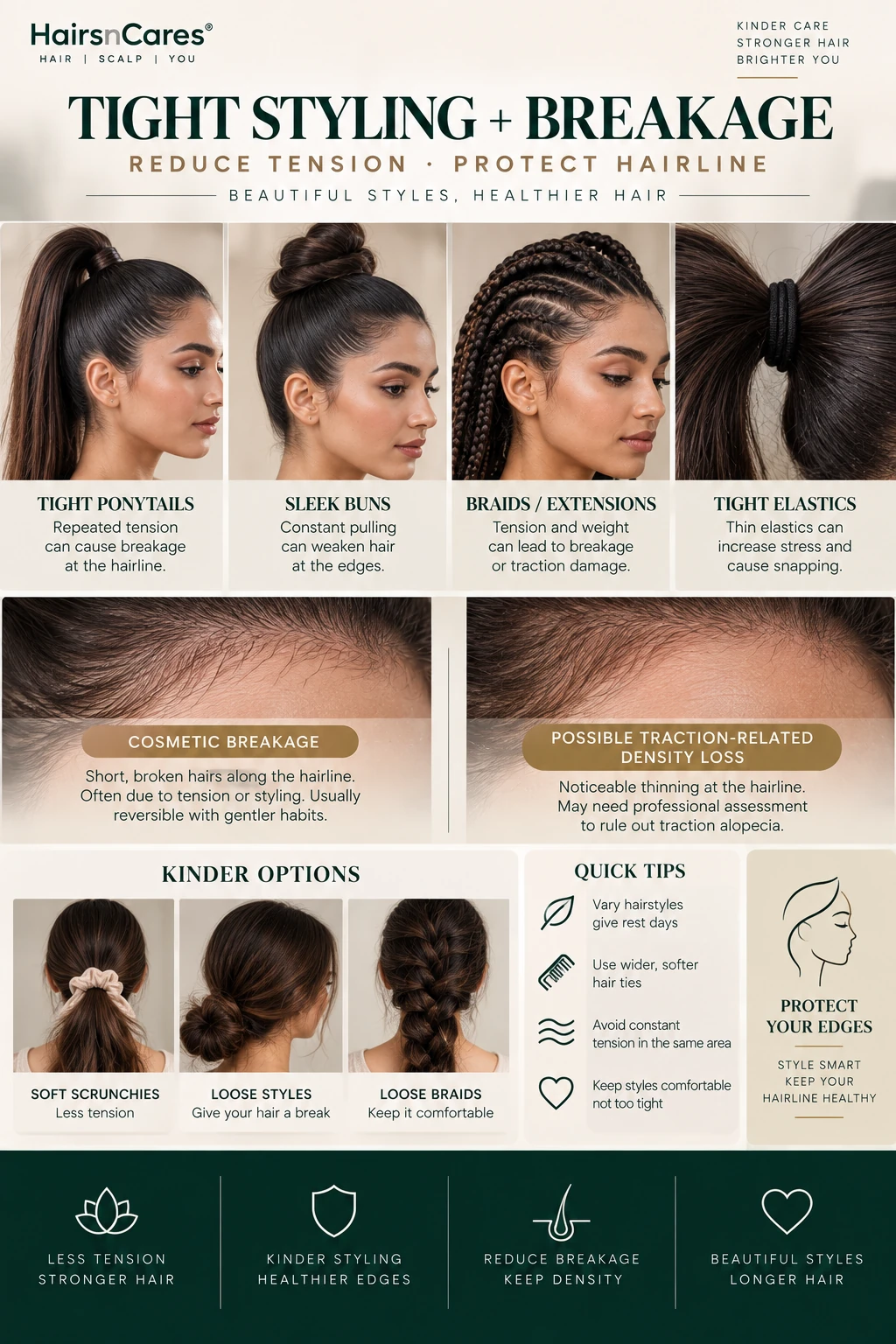
Tight Styling Can Break Hair at the Hairline
Tight ponytails, sleek buns, tight braids, extensions, clips, rubber bands, helmets, scarves, repeated parting tension and sleeping friction can all contribute to hairline and edge breakage.
Risk signs
- Broken hairline pieces
- Temple thinning
- Scalp pain, bumps
- Traction patches, receding edges
Routine
- Loosen hairstyles
- Rotate parting
- Use soft ties
- Avoid repeated tension
- Protect edges
- Medical review if temple or edge density is reducing
Texture-Specific Care
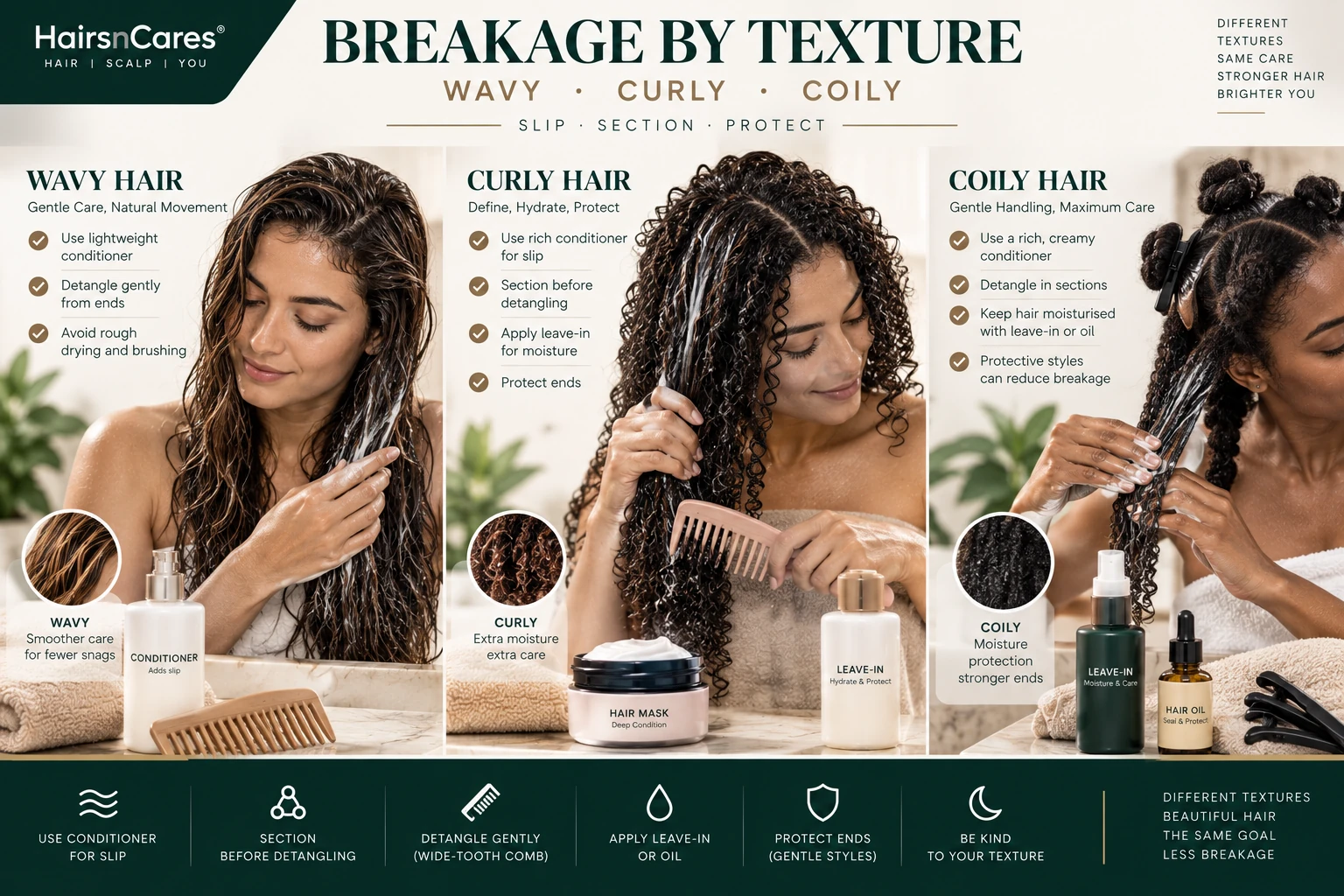
Texture Needs Slip, Sectioning and Gentle Handling
Curly, wavy and coily hair may break due to dryness, shrinkage knots, detangling friction, lack of slip, rough towels, heat stretching, tight protective styles, under-conditioning or over-manipulation.
Routine
- Detangle with conditioner
- Section hair
- Use leave-in
- Protect ends
- Avoid tight styles
- Reduce dry brushing
- Satin or silk friction reduction
- Trim knots and split ends when needed
Lightweight Control
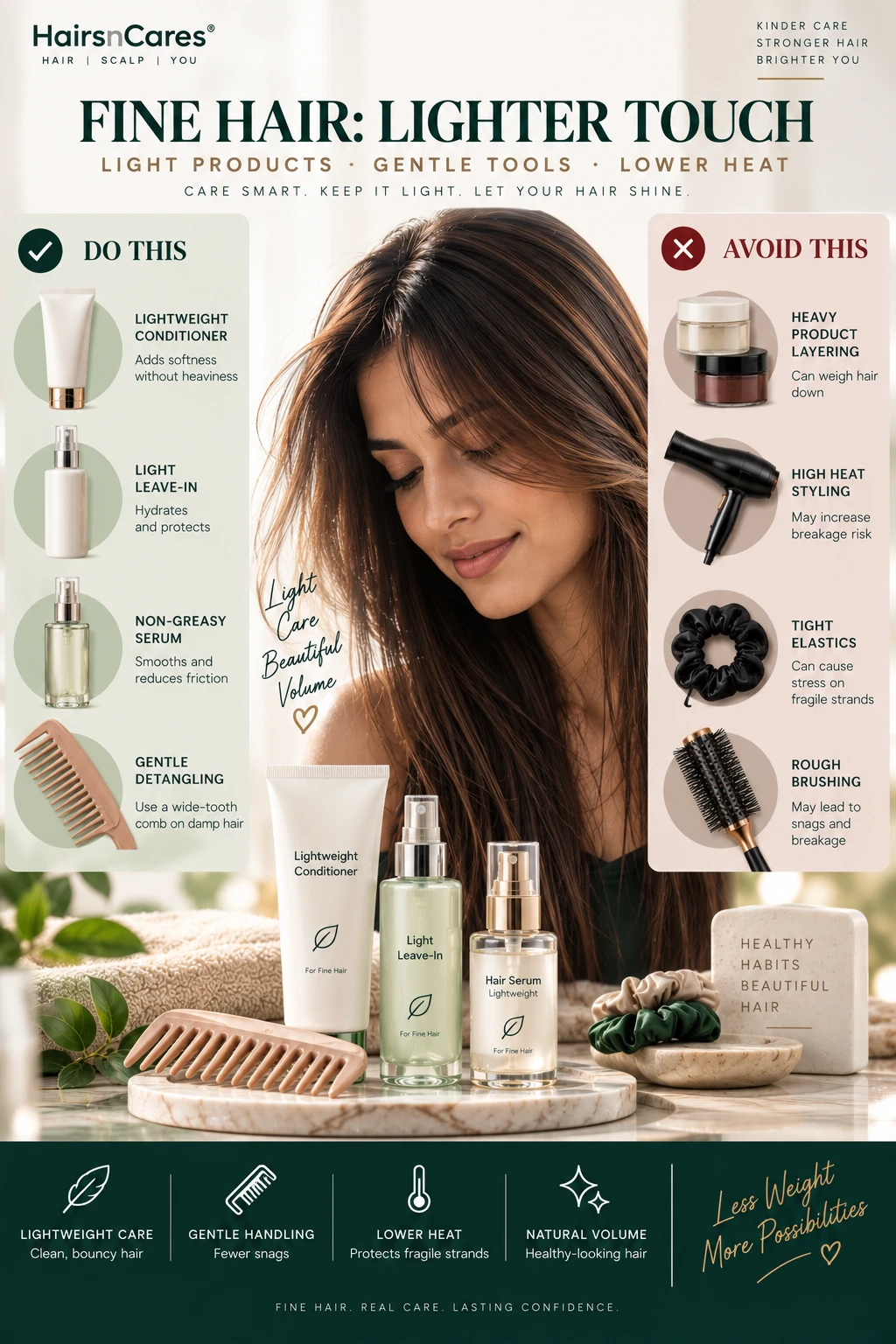
Fine Hair Breaks Easily When Products or Tools Are Too Heavy
Fine hair may need
- Lightweight conditioner
- Light leave-in
- Gentle detangling
- Lower heat
- Minimal heavy oil
- Non-greasy serum
Avoid
- Rich masks too often
- Heavy oils on lengths
- High heat
- Tight elastics
- Aggressive backcombing
Porous Hair Needs Extra Protection
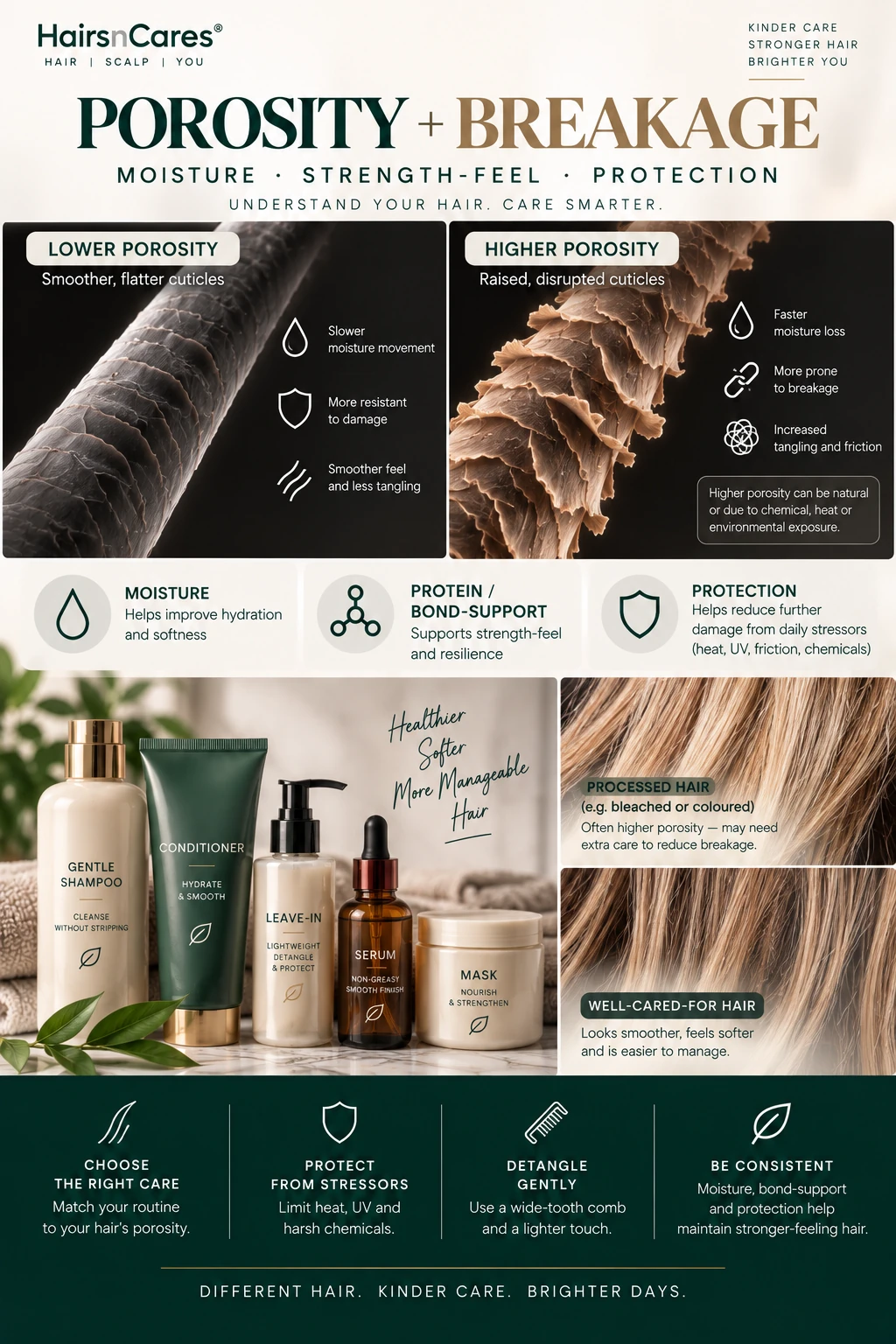
Porous Hair Needs Extra Protection
High-porosity or bleached hair may absorb water quickly, lose moisture quickly, feel rough, tangle easily, snap when wet, or feel gummy after over-processing.
Routine
- Gentle cleansing
- Moisture mask
- Protein or bond support where suitable
- Leave-in, serum on ends
- Trim plan
- Pause bleach or heat
- Professional review if gummy or snapping severely
Nutrition
Nutrition May Affect Hair Strength, but Most Breakage Is External
May contribute when present
- Low protein intake
- Iron or ferritin deficiency
- Vitamin D deficiency
- B12 deficiency
- Zinc deficiency
- Crash dieting, rapid weight loss
- Chronic illness
Most visible breakage still needs
- Conditioning
- Reduced heat
- Reduced chemical stress
- Detangling support
- Friction control
- Trim strategy
Safety: do not self-start iron; do not megadose vitamin D; Biotin is not universally needed; supplements do not repair split ends.
Ecommerce
Shop Hair Breakage Products by Cause and Hair Type
Filter by breakage cause, product type, hair type and safety preferences.
*Claims are shown only when verified on the product database; unverified claims are not displayed.
Compare Without False Repair Claims
Compare Breakage Products Without False Repair Claims
Compare up to four products on breakage cause target, moisture support, protein support and more. Products are never labelled "best" without verified criteria.
| Attribute | Product A | Product B |
|---|---|---|
| Product type | Detangling spray | Bond-support mask |
| Breakage cause target | Friction / knots | Bleach / chemical |
| Bond-support claim | Not applicable | Product information not confirmed |
| Usage stage | Before detangling | Weekly deep treatment |
AI Tool
Create a Breakage-Control Plan Based on Your Hair Story
The AI Hair Breakage Routine Builder above uses your inputs — breakage location, severity, trigger, texture and split-end level — to suggest routine categories, a protein-moisture-bond balance and a trim recommendation.
Track Realistically
Track Broken Pieces, Not Just Hair on the Floor
Track short broken hairs, split ends, see-through ends, hairline breakage, crown breakage, snapping during brushing, tangling, roughness, frizz, dryness, shine, softness, heat frequency, tight hairstyle frequency, conditioner use, mask use, trim date, shedding from root and scalp symptoms.
Do Not Self-Manage These
Do Not Treat These Signs as Cosmetic Breakage Only
- Sudden heavy root shedding
- Widening part or crown thinning
- Patchy hair loss
- Scalp pain, pus, crusting or bleeding
- Severe redness or severe dandruff with shedding
- Chemical burn or scalp swelling
- Hairline recession
- Eyebrow or body hair loss
- Fatigue, dizziness or heavy periods
- Thyroid symptoms or rapid weight loss
- Breakage with scalp symptoms
- No improvement despite reducing damage triggers
Recommend salon or professional review for severe bleach breakage, gummy hair, uneven chemical damage, severe split ends, major trim planning, or chemical service safety.
Avoid These
Mistakes That Keep Hair Breaking
Who Helps With What
Who Helps With What?
Dermatologist
- Scalp symptoms
- Sudden shedding
- Patchy loss
- Alopecia concerns
- Chemical burns
- Nutritional or medical triggers
Hair Stylist
- Trim strategy
- Breakage-friendly haircut
- Chemical service spacing
- Heat-free styling
- Detangling technique
Haircare Advisor
- Routine mapping
- Product layering
- Protein-moisture balance
- Friction reduction
- Progress tracking
Physician
- Systemic symptoms
- Anaemia
- Thyroid
- Nutritional deficiency
- Medication-related shedding
Expert Note
Breakage Needs Protection First, Repair-Look Products Second
"Hair breakage improves best when the trigger is reduced. Conditioning, masks, leave-ins, serums, oils, protein and bond-support products may improve feel and reduce friction, but repeated heat, chemical overlap, tight styling and rough detangling will continue snapping the shaft. Root shedding, scalp symptoms or progressive density loss should be assessed separately."
Reviewed by Dr. Amit Agarkar, MD Dermatology — Hairsncares
Suggested Medical References
Where to Read More From Trusted Sources
This page reflects general dermatology and cosmetic hair-science understanding. For deeper reading on hair-shaft structure, breakage, split ends and traction alopecia, these are reputable starting points — search each organisation's site directly for the most current article, since we don't want to point you to a guessed or outdated link.
- American Academy of Dermatology (AAD)Patient guides on hair damage, hair breakage and scalp health
- MedlinePlus (U.S. National Library of Medicine)Consumer-friendly overviews of hair and scalp conditions
- PubMedPeer-reviewed research on hair-shaft structure, split ends and traction alopecia
- NHS (UK National Health Service)Condition overviews for hair loss, scalp irritation and when to seek care
These are reference categories, not endorsements of specific articles. Always check the publication date and consult a dermatologist for advice specific to you.
Frequently Asked Questions
Hair Breakage Guide: FAQs
Browse by category, or open any question directly — every answer stays on the cosmetic side of the line, with medical questions pointed to a doctor.