👨‍⚕️ Ask Dr. Amit

Dermatologist-Guided Shampoo Science

Hair Shampoos for Hair Fall, Dandruff,
Oily Scalp, Dry Scalp & Scalp Care

Choose shampoo by scalp type, flakes, oiliness, itch, hair fall pattern, ingredient logic and wash frequency — from mild daily cleansers to anti-dandruff and pharma-guided scalp-care formulas.

A shampoo is a scalp cleanser first. The right formula can support scalp hygiene, dandruff control and oil balance. Active hair fall or thinning always needs diagnosis-first guidance.

👨‍⚕️ Doctor-reviewed🧴 Scalp-first selection⚗️ Ingredient intelligence❄️ Dandruff-care logic💧 Oily scalp filters🌿 Sensitive scalp options📊 Results vary⚠️ Rx caution where needed
26
Subcategories
15
Actives Covered
10
Bundle Kits
7-Step
Selection Framework

Educational product-selection guidance only. Shampoos support scalp cleansing but do not replace dermatologist diagnosis or prescription treatment. Results vary.

🤖 AI Scalp Analysis & Shampoo Matching
👨‍⚕️
Dr. Amit Agarkar
MD Dermatology · Trichologist
🫙
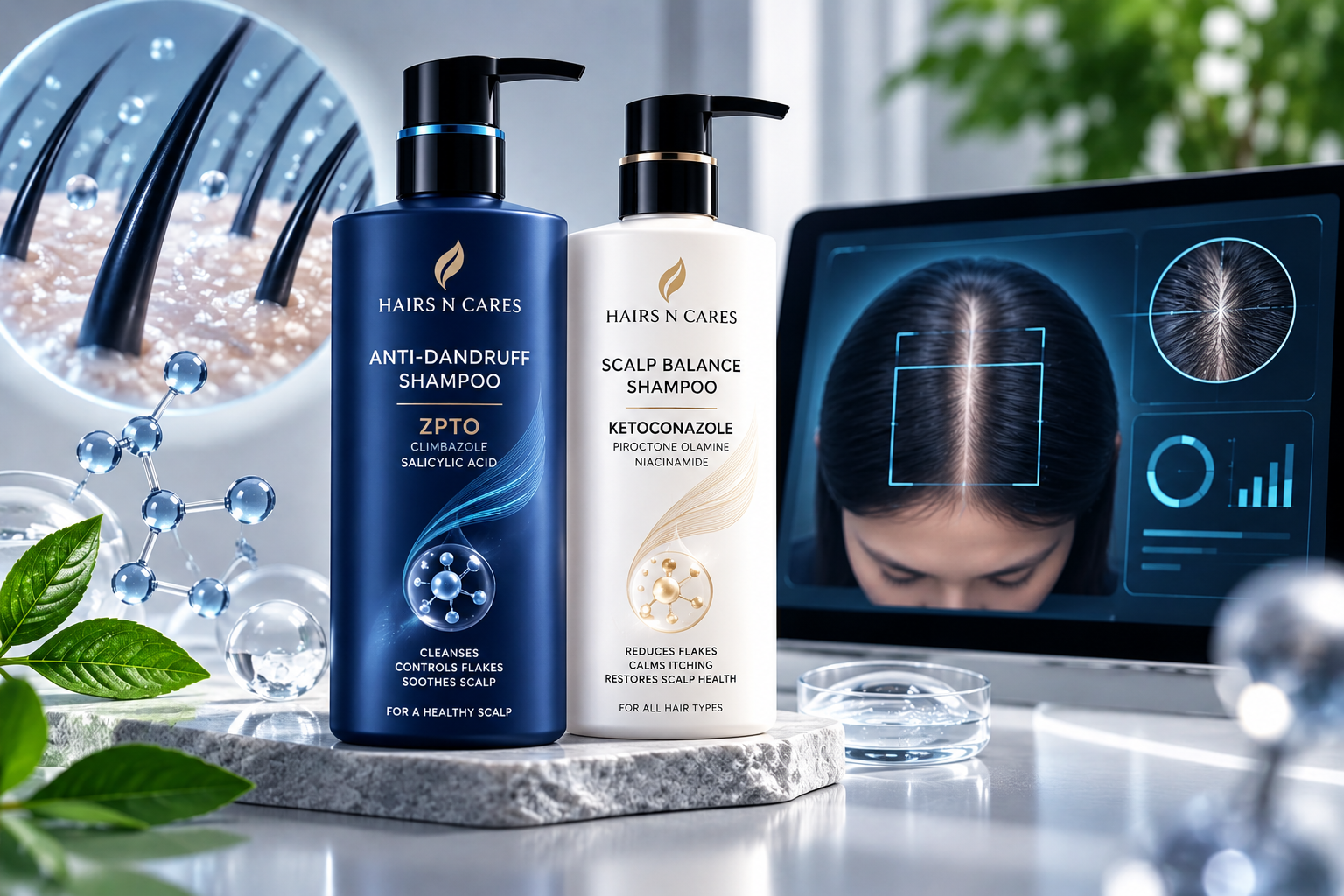
Premium shampoo bottles — scalp science, dandruff actives, AI scalp analyser dashboard
Featured Answer

Choosing the right shampoo depends on your scalp condition (oily, dry, dandruff-prone, or sensitive) and hair type (fine, thick, damaged, colour-treated). Medicated shampoos (ketoconazole, selenium sulphide, zinc pyrithione) treat specific conditions. Cosmetic shampoos (biotin, caffeine, keratin) provide temporary aesthetic benefits. No shampoo cures baldness or regrows hair. Consult a dermatologist for persistent scalp issues before cycling through products.


Best For

Anyone looking for an evidence-based overview to choose the right shampoo for their scalp condition, hair type, and daily routine.

Not a Substitute For

A dermatologist consultation for persistent dandruff, scalp disease, or hair loss. This guide helps you choose wisely — it does not replace clinical evaluation.

See a Dermatologist If

Scalp symptoms persist beyond 4–6 weeks of appropriate shampoo use, you notice hair thinning, or develop painful, bleeding, or spreading scalp lesions. Early diagnosis matters.


What You'll Learn on This Page

How to choose the right shampoo for your scalp type and hair concern

Medicated vs cosmetic shampoos — when each is appropriate

Active ingredients decoded — ketoconazole, zinc, salicylic acid, and more

Sulphate-free vs sulphate shampoos — science vs marketing

How often to wash for oily, dry, normal, and combination scalps

Shampoo for hair fall — what actually works and what is hype

A comparison framework across 15 shampoo ingredient types

Red flags that mean you need a dermatologist, not a better shampoo


Featured Snippet

Quick Answer: Which Shampoo Should You Choose?

The best shampoo depends on your scalp condition first, then hair type. Oily or flaky scalps may need anti-dandruff actives such as ketoconazole, zinc pyrithione, selenium sulphide, piroctone olamine or salicylic acid. Dry or sensitive scalps need mild, barrier-friendly cleansers. Hair fall shampoos with caffeine or biotin may support a routine but cannot treat root-level hair loss, which needs dermatologist diagnosis. Results vary.

Not medical advice. Shampoo does not replace prescription treatment for hair loss or scalp disease.

Intelligent Filter

Find the Right Shampoo for Your Scalp & Hair Goal

Filter by scalp concern, shampoo type, active ingredient, scalp type, hair type and wash frequency.

⚖️ Compare Actives📋 Add to RoutineShowing 26 categories

Browse All Categories

Shop Hair Shampoo by Subcategory

26 curated subcategories by scalp concern, active ingredient and routine format.

Anti-Dandruff Shampoo

For flakes, itch, oily scalp and dandruff-prone scalp. Targeted actives reduce flake-causing yeast and scale buildup.

KetoconazoleZinc pyrithionePiroctone olamineSalicylic acid

⚠️ Persistent dandruff needs dermatologist review.
Hair Fall Control Shampoo

Supportive scalp cleansing in hair fall routines. Wash-off product — does not replace diagnosis or medical treatment for root-level hair loss.

CaffeineBiotinPeptidesSaw palmetto

⚠️ Root-level hair loss needs dermatologist diagnosis.

Hair Growth Support Shampoo

Growth-support routines with scalp-stimulating ingredients. Position as supportive — not a guaranteed regrowth product.

CaffeineRosemaryPeptidesNiacinamide

Ketoconazole Shampoo

Antifungal scalp care for dandruff and seborrheic-prone scalp. Use as directed — doctor guidance for persistent cases.

Ketoconazole 1–2%

⚠️ Doctor guidance recommended. Not for daily use.

Zinc Pyrithione Shampoo

For dandruff-prone scalp and regular flake control routines. Well tolerated for frequent use.

Zinc pyrithione (ZPT)

Salicylic Acid Shampoo

For flaky scalp buildup, oily scalp exfoliation and scale softening. Keratolytic action helps remove buildup.

Salicylic acid

⚠️ May irritate dry or sensitive scalp.

Selenium Sulphide Shampoo

For selected dandruff and seborrheic scalp routines. Use frequency must follow label or doctor advice.

Selenium sulphide

⚠️ Use frequency as directed. Not for daily use.

Caffeine Shampoo

Supportive hair fall routine ingredient with scalp-stimulating positioning. Not a standalone cure for baldness.

CaffeineBiotin

⚠️ Supportive only — cannot treat genetic hair loss.

Mild Daily Shampoo

For gentle frequent cleansing, sensitive users and everyday scalp hygiene without barrier disruption.

Mild surfactantsAloe veraPanthenol

Sulphate-Free Shampoo

For curly hair, colour-treated hair, dry hair and users preferring gentler cleansing formulas.

Mild anionic/amphoteric surfactants

Dry Scalp Shampoo

For tight, flaky-from-dryness or sensitive scalp needing barrier-friendly, non-stripping cleansers.

CeramidesPanthenolAloe vera

Oily Scalp Shampoo

For greasy scalp, excess sebum, sweat and freshness support. Regulates oil without over-drying.

Zinc pyrithioneSalicylic acidNiacinamide

Itchy Scalp Shampoo

For itch-prone scalp from dryness, dandruff or sensitivity. Stop use and consult doctor if scalp is wounded or infected.

Piroctone olamineTea treeAloe vera

⚠️ Consult doctor for severe redness, wounds or infection.

Sensitive Scalp Shampoo

For fragrance-sensitive, barrier-compromised or irritation-prone scalp. Minimal actives, mild cleansing.

Mild surfactantsCeramidesFragrance-free base

⚠️ Patch-test. Stop if redness or burning occurs.

Clarifying Shampoo

For product buildup, styling residue and occasional deep cleansing. Use no more than once weekly.

Strong surfactantsCitric acid

⚠️ Not for daily use. May be drying for dry hair.

Hard Water Shampoo

For mineral buildup, dullness, roughness and scalp residue linked to hard water exposure.

EDTAChelating agentsCitric acid

Moisturizing Shampoo

For dry hair, roughness and frizz-prone users needing gentle, conditioning cleansing.

PanthenolGlycerinShea butter

Repair Shampoo

For heat-styled, chemically treated or rough hair. Supportive cleansing — not permanent damage reversal.

KeratinAmino acidsCeramides

⚠️ Hair-shaft support, not permanent repair.

Colour-Safe Shampoo

For dyed, highlighted, bleached or chemically treated hair. Colour-protective, low-stripping formulas.

UV filtersMild surfactantsPanthenol

Curly Hair Shampoo

For curl-friendly cleansing, moisture retention and low-stripping routines.

Gentle surfactantsAloe veraGlycerin

Volumizing Shampoo

For fine or flat hair needing lightweight cleansing and volume lift without weighing hair down.

Hydrolyzed proteinsPanthenolLightweight formula

Men's Hair Shampoo

For men with oily scalp, sweat, dandruff, styling residue or hair fall concerns. Scalp-first formula logic.

KetoconazoleZinc pyrithioneCaffeine

Women's Hair Shampoo

For dryness, frizz, hair fall, postpartum shedding support, colour care and styling damage.

CaffeineBiotinCeramides

Kids Gentle Shampoo

Gentle cleansing for children. Avoid strong actives unless directed by a paediatric dermatologist.

Ultra-mild surfactantsAloe vera

⚠️ Avoid harsh actives for children without medical guidance.

Post-Transplant Shampoo

Use only per surgeon's post-transplant protocol. Timing, pressure and formula matter during graft healing.

⚠️ NO product on transplanted scalp without surgeon clearance.

Pharma / Medicated Shampoo

Doctor-guided shampoo options for persistent dandruff, seborrheic dermatitis and scalp conditions. Prescription support where needed.

Coal tarCiclopiroxKetoconazole 2%

⚠️ Prescription-grade formulas need doctor guidance.

Active Ingredient Library

Shop Shampoo by Key Active

Each active has a different mechanism, safety profile and scalp-type suitability. Choose by science, not just label marketing.

⚗️
Ketoconazole
Antifungal Active

Antifungal scalp support for dandruff and seborrheic-prone scalp. Targets yeast that contributes to flaking and itch.

⚠️ Use as directed; doctor evaluation for severe or recurring cases.

🔵
Zinc Pyrithione
Dandruff Active

Zinc-based dandruff and flake support for regular scalp routines. Widely used and well tolerated.

🌊
Selenium Sulphide
Dandruff / Oily Scalp

Reduces dandruff-related flaking and oily scalp scaling. Use frequency must follow product or doctor guidance.

⚠️ Not for daily use; can stain hair if left on too long.

🧪
Salicylic Acid
Keratolytic / Exfoliant

Dissolves scale and softens buildup on flaky or oily scalp. Helps improve penetration of other scalp actives.

⚠️ May irritate dry or sensitive scalp. Avoid open scalp wounds.

🌿
Piroctone Olamine
Anti-Dandruff

Antifungal-like scalp active for regular anti-dandruff routines. Good option for sensitive users who react to ketoconazole.

Caffeine
Hair Fall Support

Scalp-stimulating ingredient used in hair fall support routines. Rinses off — supportive, not a standalone cure.

⚠️ Cannot treat androgenetic alopecia or medical hair loss.

🌾
Biotin
Hair Care Support

Water-soluble vitamin used in haircare. Wash-off benefit is limited. Biotin deficiency causing hair loss needs blood test and medical advice.

⚠️ Oral biotin supplements interfere with some lab tests.

🔬
Niacinamide
Scalp Barrier Support

Supports scalp skin barrier in selected formulas. Anti-inflammatory and skin-conditioning benefits.

🌱
Panthenol
Softness & Conditioning

Pro-vitamin B5 that conditions hair shaft and supports scalp comfort. Good for dry or rough hair formulas.

Keratin / Amino Acids
Hair Fiber Support

Temporary hair fiber smoothing and damage support. Cosmetic benefit washes off gradually.

🧱
Ceramides
Barrier-Like Support

Hair fiber and scalp barrier-like support in conditioning shampoos. Good for dry, damaged and colour-treated hair.

🌲
Tea Tree
Botanical Scalp Freshness

Botanical anti-microbial freshness and scalp comfort feel.

⚠️ Can irritate sensitive scalp — patch-test first.

🌱
Aloe Vera
Gentle Soothing

Light hydration, soothing feel and scalp comfort. Good for gentle or sensitive scalp routines.

🍎
Apple Cider Vinegar
Shine / Buildup Support

Cosmetic shine and pH-balancing claim. Mild buildup support.

⚠️ Avoid on sensitive, irritated or wounded scalp.

🫧
Mild Surfactants
Gentle Cleansing

Gentle cleansing agents (coco glucoside, sodium lauroyl sarcosinate) for daily or sensitive scalp routines. Low irritation potential.

Shop by Concern

Shampoo Products by Scalp Concern

Dermatologist-reviewed shampoos matched to your primary scalp concern. Safety notes included on every card.

Products coming soon

We're curating the right supportive products for this concern. In the meantime, browse the full Hairsncares shop or take the AI Hair Test for a tailored match.

Browse all products

Routine Combos

Dermatologist-Guided Shampoo Routines & Combos

Scalp-matched combinations across shampoo, conditioner, serum and treatment — built around your primary scalp concern.

Bundles coming soon

Value bundles for this concern aren't ready just yet. Browse the full Hairsncares shop to build the routine that fits your needs.

Browse all products

📍 Check Delivery to Your Pincode

Shampoo Science

What Shampoo Can and Cannot Do

Understanding the real role of shampoo prevents misplaced expectations and wrong treatment choices.

✅ Shampoo May Support
  • Scalp cleansing and hygiene
  • Oil control and sebum regulation
  • Flake reduction with appropriate actives
  • Itch support in dandruff-prone scalp
  • Product and pollution buildup removal
  • Sweat and post-workout freshness
  • Better scalp hygiene as routine foundation
  • Supportive hair fall routine step
  • Hard water mineral buildup removal (chelating)
  • Dandruff-prone scalp care consistency
  • Wash-day routine for curly, colour-treated hair
✗ Shampoo Cannot Guarantee
  • Hair regrowth or stopping genetic baldness
  • Cure for androgenetic alopecia
  • Treatment for alopecia areata
  • Cure for hormonal, PCOS or thyroid hair loss
  • Replacing minoxidil or finasteride
  • Cure for severe seborrheic dermatitis
  • Scalp infection treatment
  • Permanent split-end repair
  • Reversal of heat or chemical damage

For active hair fall, sudden shedding, patchy loss or persistent dandruff, dermatologist diagnosis is essential before choosing any shampoo.

🧬 Take AI Hair Test Before Choosing

Selection Framework

The Hairsncares 7-Step Shampoo Selection Framework

A structured approach to choosing shampoo by scalp condition, cleansing need, active ingredient and wash frequency — not trend or brand.

1
🎯
Identify Your Scalp Concern

Dandruff, oiliness, dryness, itch, flakes, buildup, sensitivity or hair fall. Name it precisely before browsing.

2
🔍
Separate Scalp from Hair-Length Problem

Shampoo is for scalp cleansing. Conditioner, mask, oil and serum address hair lengths separately.

3
⚖️
Choose Cleansing Strength

Mild for daily sensitive use. Stronger for buildup. Medicated for dandruff — use as directed, not daily unless instructed.

4
⚗️
Choose Active Ingredient

Ketoconazole/ZPT for dandruff. Salicylic acid for flakes. Caffeine for hair fall support. Mild surfactants for sensitive scalp.

5
📅
Choose Wash Frequency

Daily, alternate-day, 2–3×/week, weekly clarifying or doctor-guided medicated schedule depending on scalp type.

6
🛡️
Check Safety Needs

Pregnancy, breastfeeding, sensitive scalp, children, scalp wounds, severe irritation, Rx requirements and patch-test.

7
📊
Track Scalp Response

Monitor flakes, itch, oiliness, scalp redness, dryness and hair fall over 3–6 weeks. Switch if irritation or worsening occurs.

Need a personalised scalp-first shampoo routine?

📋 Build My Wash Routine🔬 AI Scalp Test First

How-To Guide

How to Use Shampoo Without Damaging Your Scalp Barrier

9 dermatologist-guided steps for correct shampoo use by scalp type and concern.

1
Wet Scalp Properly

Use lukewarm water and fully wet the scalp before applying shampoo. Avoid very hot water — it strips natural oils.

2
Apply to Scalp, Not Just Hair Length

Focus shampoo on roots and scalp surface, not just the hair shaft. Hair gets cleansed as the shampoo rinses through.

3
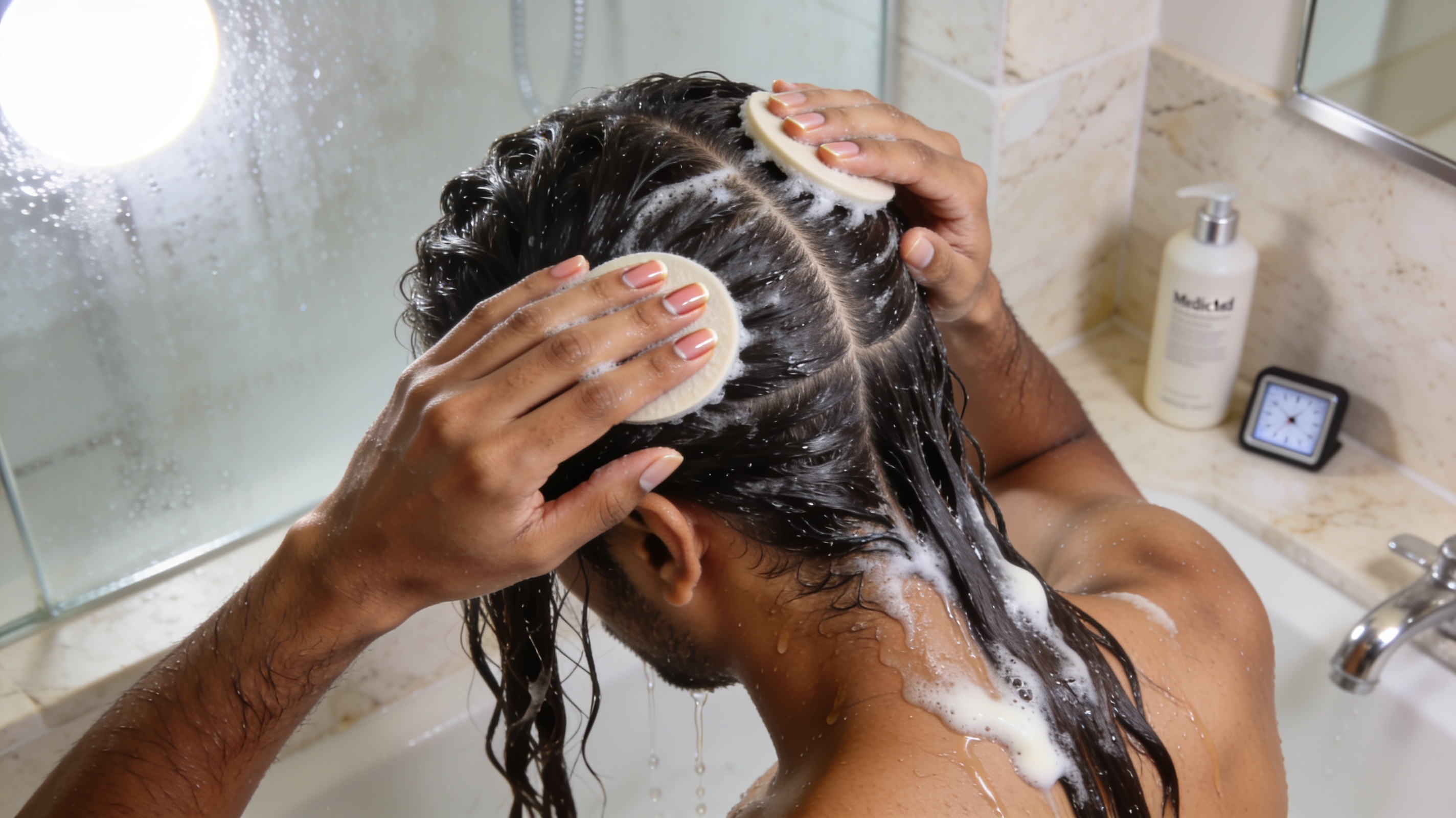
Massage With Fingertips

Use fingertip pads, never nails. Gentle circular massage improves scalp circulation and avoids microtrauma to the scalp.

4
Follow Medicated Contact Time

Anti-dandruff shampoos (ketoconazole, selenium sulphide) often need 3–5 minutes contact. Follow label or doctor advice.

5
Rinse Thoroughly

Remove all shampoo residue. Residue left on scalp can cause irritation, itch or worsen dandruff or scalp pimples.

6
Double Shampoo Only When Needed

A second shampoo is useful for heavy oil or buildup. Not always necessary and can strip the scalp if overused.

7
Condition Mid-Lengths and Ends

Avoid applying conditioner to an oily or dandruff-prone scalp. Focus on hair lengths only where needed.

8
Stop If Irritation Occurs

Stop immediately if burning, redness, pus, worsening flakes or scalp pimples develop after shampoo use.

9
Consult Dermatologist for Red Flags

Patchy loss, painful scalp, severe dandruff not responding to OTC shampoo, sudden shedding or scalp infection need medical review.

Side-by-Side

Shampoo vs Everything Else

❄️ Anti-Dandruff Shampoo
  • Contains targeted antifungal or scalp actives
  • For flakes, itch and dandruff-prone scalp
  • Use frequency depends on the active (often 2–3×/week)
  • May be drying for dry scalp if overused
  • Doctor evaluation for persistent dandruff
🌊 Mild Daily Shampoo
  • Gentle cleansing suitable for daily use
  • No targeted antifungal actives
  • Better for sensitive, dry or barrier-compromised scalp
  • Not sufficient for persistent dandruff or scalp conditions
  • Safe for post-procedure or pregnancy-friendly routines
⚗️ Ketoconazole Shampoo
  • Antifungal support for persistent dandruff
  • Often used for seborrheic dermatitis
  • Doctor guidance recommended for ongoing use
  • Not for daily use; typically 2×/week
  • Prescription strength available
🔵 Zinc Pyrithione Shampoo
  • Regular anti-dandruff routine support
  • Well tolerated for more frequent use
  • Good maintenance shampoo between ketoconazole washes
  • OTC widely available
  • First-line dandruff option for many users
💪 Hair Fall Shampoo
  • Wash-off supportive scalp cleansing
  • Contains caffeine, biotin or peptides
  • Part of a routine — not a standalone cure
  • Limited follicle contact time during rinsing
  • Does not treat genetic or medical hair loss
⚗️ Hair Growth Serum
  • Leave-on scalp treatment with longer active contact
  • May contain minoxidil, Redensyl, Procapil or peptides
  • More relevant for active follicle support
  • Prescribed or OTC depending on formula
  • Complements but does not replace medical diagnosis
🍃 Sulphate-Free Shampoo
  • Gentler cleansing preference for curly, dry or colour-treated hair
  • Lower lather, lower stripping
  • Better for hair-fiber preservation
  • May not cleanse heavily oily scalp effectively
🌊 Regular Shampoo
  • Stronger cleansing for oily scalp and buildup
  • Higher lather, more effective oil removal
  • Better for sweat, heavy product use, hard water scalp
  • May be too stripping for dry or colour-treated hair
🔄 Clarifying Shampoo
  • Removes product residue, styling buildup and excess sebum
  • Use weekly or bi-weekly — not daily
  • Can be drying with overuse
  • Good for oily or product-heavy routines
🪨 Chelating Shampoo
  • Removes mineral deposits from hard water
  • Binds calcium and magnesium buildup on scalp/hair
  • Essential for India hard-water regions
  • Use monthly or as needed based on water hardness
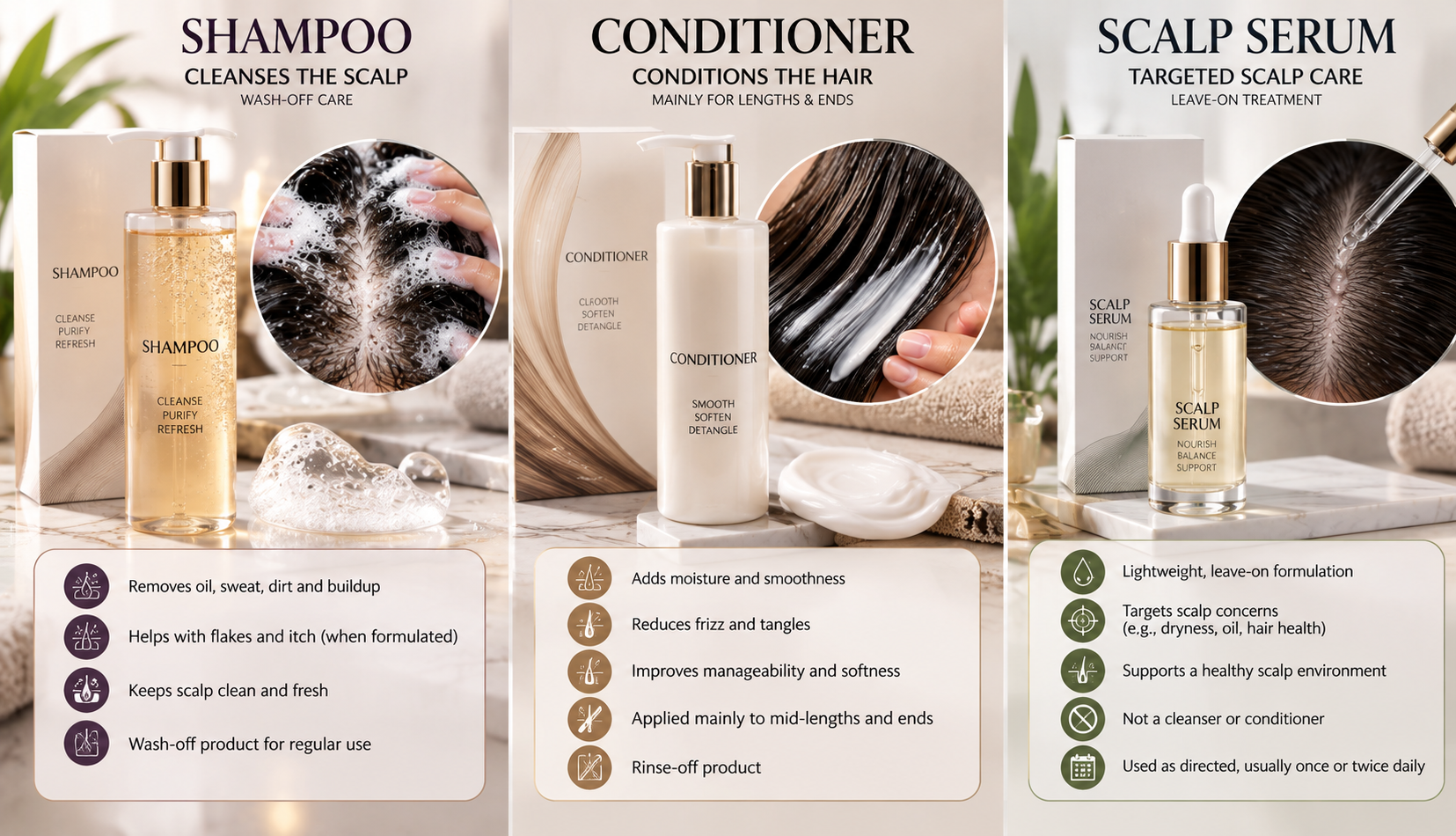
🧴 Shampoo
  • Scalp cleanser — removes oil, sweat and buildup
  • Applied at roots and scalp
  • Rinses off completely
  • Choose by scalp type and concern
💧 Conditioner
  • Hair-fiber softness, detangling and manageability
  • Applied to mid-lengths and ends — avoid oily scalp
  • Rinse-out or leave-in depending on formula
  • Choose by hair type and fiber concern

Myths vs Facts

Common Shampoo Myths — Debunked

Misleading shampoo claims are everywhere. Here is what the evidence actually shows — no overclaiming.

Myth
Anti-hair fall shampoo can stop genetic baldness
Fact

Shampoo is a wash-off product with limited scalp contact time. Androgenetic alopecia requires diagnosis and doctor-guided treatment — minoxidil, finasteride or a combination. No shampoo replaces this pathway.

Myth
More foam means a better shampoo
Fact

Foam is a by-product of sulphate surfactants — it does not indicate cleansing power or scalp safety. Sulphate-free shampoos lather less but cleanse effectively for most scalp types.

Myth
Daily shampooing always damages hair
Fact

Daily washing is appropriate for many scalp types — especially oily scalp or post-workout. Formula and technique matter more than frequency. Mild surfactant formulas are designed for daily use.

Myth
Natural shampoo is always safe
Fact

Botanical ingredients — tea tree, peppermint, eucalyptus — can irritate sensitive or compromised scalps. Natural does not mean hypoallergenic. Always patch-test new shampoos before full scalp use.

Myth
Dandruff is just a dry scalp
Fact

Dandruff is more often linked to sebum, Malassezia yeast overgrowth and scalp inflammation — not dryness. Dry scalp needs moisturising care. Dandruff needs antifungal actives. They require different treatments.

Myth
Shampoo can replace minoxidil
Fact

No shampoo replaces leave-on medically guided hair loss treatments. Minoxidil and finasteride act at the follicle level via different mechanisms. Hair fall shampoo is supportive — it complements, not replaces, treatment.

🚨 Safety First

When Shampoo Is Not Enough

Each of these symptoms needs professional dermatologist evaluation — not a different shampoo.

Sudden or severe hair fall
Patchy bald spots appearing
Painful or tender scalp
Severe itching or redness that persists
Pus, crusting or bleeding on scalp
Thick scaling or psoriasis-like plaques
Scalp wounds or open sores
Hair fall after fever, surgery or crash diet
Hair fall with PCOS or thyroid symptoms
Severe postpartum shedding
Child scalp scaling or unexplained hair loss
Burning after medicated shampoo use
No improvement after 4 weeks of correct dandruff shampoo use
Post-transplant phase — no products without surgeon clearance
👨‍⚕️
Get a Scalp Diagnosis Before Changing Shampoos

The right shampoo cannot be identified without understanding the root cause of your scalp or hair concern. Dr. Amit Agarkar offers online dermatologist consultations for hair fall, dandruff, scalp disease and post-procedure care across India.

📋 What Shampoo Actually Does

Shampoo is a wash-off scalp cleanser. It can support hygiene, dandruff management and oil control when chosen correctly. It does not treat androgenetic alopecia, alopecia areata, hormonal hair loss, scalp infection or any medical scalp condition as a standalone product. Results vary. Always patch-test new shampoos.

Powered by Intelligence

Let AI Help You Choose the Right Shampoo

AI tools are educational and do not replace dermatologist diagnosis.

🔬

AI Scalp Test

For dandruff, oily scalp, dry scalp, itching, redness and flakes — identify your scalp profile first.

Analyse My Scalp →
🔍

AI Product Finder

Choose shampoo by scalp type, active ingredient and concern. Personalised shampoo shortlist.

Find My Shampoo →
🧬

AI Hair Test

For hair fall, thinning, shedding or pattern loss confusion — know what is medical vs cosmetic.

Start AI Hair Test →
📅

Routine Builder

Plan wash frequency, shampoo–conditioner–serum scheduling around your scalp type and lifestyle.

Build My Routine →
🧪

Ingredient Decoder

Understand ketoconazole, zinc pyrithione, caffeine, salicylic acid, sulphates and surfactants.

Decode Ingredients →
📊

Progress Tracker

Track dandruff, oiliness, itch, scalp shedding and product response over 4–8 weeks.

Track Results →


Expert Answers

Frequently Asked Shampoo Questions

Honest, evidence-guided answers — no overclaiming.

Hair fall shampoos with caffeine, biotin, peptides or scalp-support ingredients may assist a hair fall routine but cannot treat root-level hair loss. Shampoo is a wash-off product with limited follicle contact time. For genuine shedding or thinning, a dermatologist evaluation is essential to identify the cause before choosing a product.

Shampoo alone cannot stop androgenetic alopecia, hormonal hair loss or medical causes of shedding. It can support scalp hygiene and may reduce breakage-related hair loss. For pattern baldness or sudden shedding, diagnosis and appropriate treatment — minoxidil, finasteride or nutritional management — are needed alongside scalp care.

Anti-dandruff shampoos with ketoconazole, zinc pyrithione, selenium sulphide, piroctone olamine or salicylic acid are commonly used. Ketoconazole works well for fungal-linked dandruff. Zinc pyrithione suits maintenance routines. For persistent or severe dandruff, dermatologist evaluation is recommended. Results vary.

Ketoconazole shampoo is used for dandruff and seborrheic dermatitis where Malassezia yeast is involved. Typically used 2 times per week or as directed by a doctor — not for daily use. Prescription-grade ketoconazole 2% may be recommended by a dermatologist for persistent or severe cases.

Yes — zinc pyrithione is a well-studied anti-dandruff active that helps reduce dandruff-causing yeast and flaking. It is generally well tolerated and can be used 2–3 times per week. For severe or persistent dandruff, ketoconazole or dermatologist evaluation may be needed.

Oily scalp shampoos with zinc pyrithione, salicylic acid, niacinamide or sebum-regulating agents help manage excess oil. Use 2–3 times per week or daily with a mild formula. Avoid heavy conditioning shampoos on oily scalp. Clarifying shampoo once weekly helps remove stubborn buildup. Results vary.

Dry scalp needs mild, barrier-friendly shampoos with ceramides, panthenol, aloe vera or gentle surfactants. Avoid harsh sulphate-based or clarifying shampoos that strip natural oils. Use 2–3 times per week. Note: dry scalp (dryness-related flaking) is different from dandruff (yeast-related flaking) and requires a different approach.

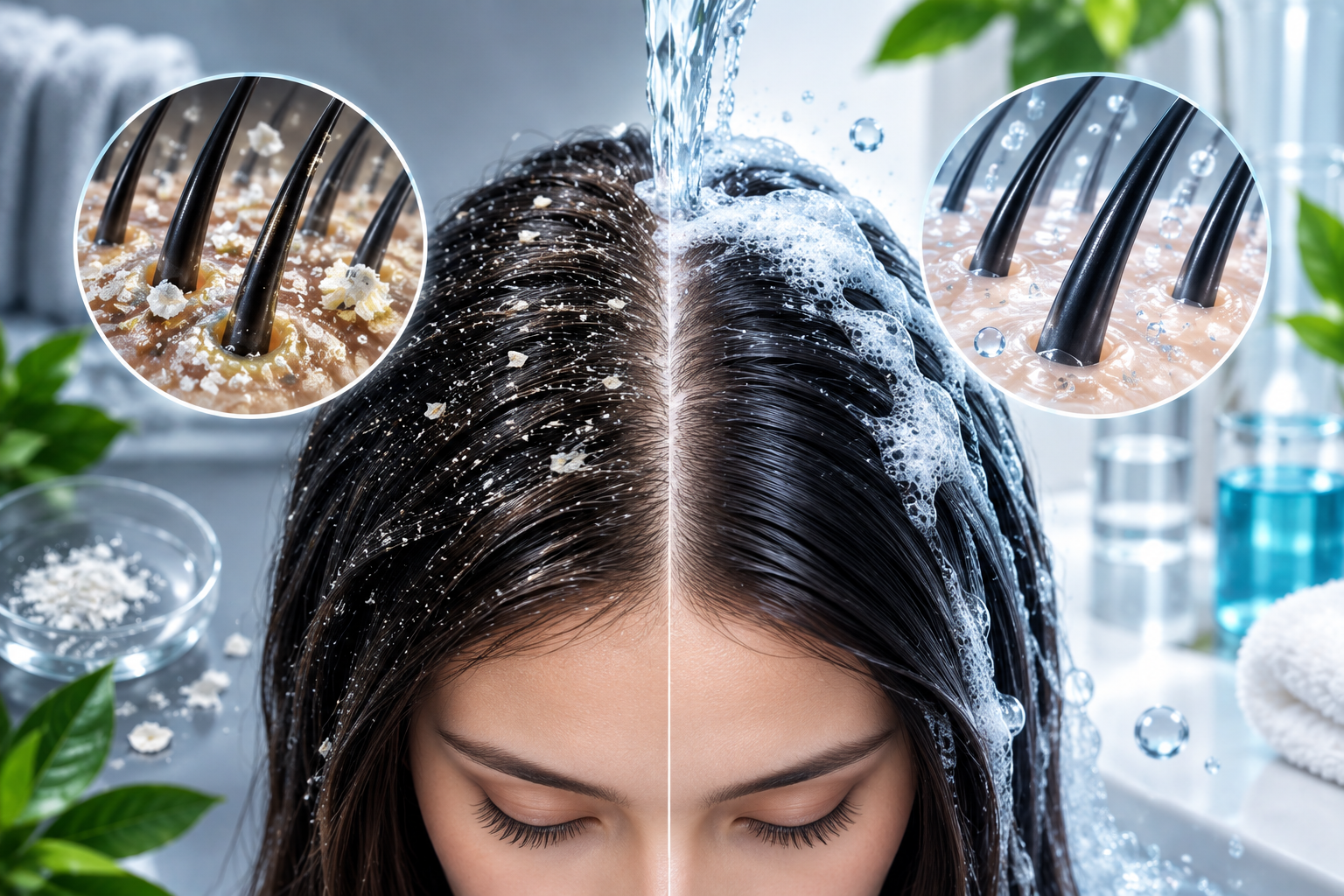
Dry scalp causes small, dry flakes from moisture loss. Dandruff involves oily, yellowish flakes linked to Malassezia yeast and scalp inflammation. The treatment differs significantly — dry scalp needs moisturising care while dandruff needs antifungal actives like ketoconazole or zinc pyrithione. A dermatologist can confirm the diagnosis.

Sulphate-free shampoos are gentler and better suited for curly, dry or colour-treated hair. They lather less but cleanse well for normal-to-dry scalp. Very oily scalp or heavy product buildup may need sulphate-containing shampoos for effective cleansing. The best choice depends on your scalp type — not marketing preference.

Most medicated anti-dandruff shampoos are not designed for daily use. Ketoconazole is typically 2×/week. Zinc pyrithione can be used more frequently. Mild OTC anti-dandruff formulas may suit 2–3×/week. Follow label instructions or your dermatologist's guidance. Daily use of strong actives can cause dryness or irritation.

Wash frequency depends on scalp type. Oily scalp may benefit from daily or alternate-day washing. Normal scalp typically 2–3 times weekly. Dry scalp may do well with 1–2 times weekly. Medicated shampoos have specific schedules. Match frequency to scalp need — there is no single universal answer.

Apply shampoo primarily to the scalp and roots where oil, sweat and buildup accumulate. Hair lengths get cleansed as shampoo rinses through. Applying shampoo vigorously to lengths causes friction and breakage. Massage gently with fingertip pads — never nails.

Chelating shampoos with EDTA, citric acid or chelating agents remove mineral deposits from hard water exposure. Use monthly or as needed based on water hardness in your area. Follow with a conditioning treatment. Particularly relevant in many Indian cities with high mineral content water. Results vary.

Caffeine shampoo is used as a supportive hair fall routine ingredient. In-vitro studies suggest caffeine may influence follicle activity, but wash-off products have limited scalp contact time. Clinical evidence is not conclusive. Caffeine shampoo is a supportive tool — not a standalone cure for genetic or hormonal hair loss.

No shampoo has proven ability to regrow hair lost from androgenetic alopecia or other medical causes. Shampoos are wash-off products rinsed off within minutes. Hair regrowth requires leave-on treatments (minoxidil), medical management and a dermatologist-confirmed diagnosis. Do not rely on shampoo alone for regrowth.

No. Medicated shampoos — ketoconazole, selenium sulphide, coal tar — are not for everyone. Not recommended for pregnant or breastfeeding women without doctor guidance, for children without paediatric advice, for daily use, or on open scalp wounds. Always follow label instructions and consult a dermatologist.

Men with hair fall should identify the cause first — androgenetic alopecia, dandruff-related shedding, stress or nutritional deficiency. Caffeine or anti-dandruff shampoos may support the routine. For genetic male pattern baldness, dermatologist evaluation with finasteride or minoxidil options is needed. Shampoo alone is insufficient for pattern hair loss.

After a hair transplant, shampoo type, pressure and timing must follow your surgeon's post-operative protocol exactly. There is no universal post-transplant shampoo recommendation. Using the wrong product or technique too early can damage grafts. Always get written instructions from your transplant surgeon before any scalp product use.

Shampoo itself rarely causes root-level hair fall. Hair seen during washing is usually already-shed telogen hair that detaches with water and friction. However, very harsh shampoos can cause scalp irritation or barrier disruption, indirectly worsening conditions. Stop and consult a dermatologist if hair fall increases significantly after a new shampoo.

Yes — mild shampoos with gentle surfactants (coco glucoside, sodium lauroyl sarcosinate) are designed for daily use without stripping the scalp barrier. Good for sensitive or normal scalp, daily gym or active lifestyle routines. They may not be strong enough for heavy oiling or active dandruff without rotating a medicated formula.

Women experiencing hair fall should identify the cause first — telogen effluvium, PCOS, thyroid, postpartum shedding or nutritional deficiency. Caffeine or biotin shampoos may support the routine as a wash step. For hormonal or medical causes, dermatologist evaluation is recommended. Shampoo alone cannot treat medical hair fall.

Consult a dermatologist for: sudden severe hair fall, patchy bald spots, painful scalp, pus or crusting, burning after shampoo, thick scalp scaling, dandruff not responding after 4–6 weeks of anti-dandruff shampoo, hair fall with PCOS or thyroid symptoms, or any scalp symptom that worsens after product use.

Your Next Step

Not Sure Which Shampoo Suits Your Scalp?

The wrong shampoo can worsen dryness, oiliness, itching, flakes or scalp irritation. Let Hairsncares help you choose by scalp type, concern, ingredient and wash routine.

All guidance is educational. For active hair fall, scalp infection or persistent dandruff, please consult a qualified dermatologist.

Medically Reviewed

Reviewed by Dr. Amit Agarkar, MD Dermatology

This page is educational and designed to help users understand product choices safely. It does not replace consultation, diagnosis or prescription by a qualified dermatologist. Results vary by individual.

Last reviewed: 25 June 2026

Your Cart (0)

Your cart is empty

Subtotal0
DeliveryFREE
Total0
🔒 Secure📦 Free above ₹499↩ Easy returns
💬 Hi! I'm Dr. Amit — your Hair Intelligence consultant
🌿
1
🌿
Dr. Amit
Virtual Dermatologist · Hairsncares.com
Online
What are you shopping for today?
Select a category to begin
AI-powered scalp diagnosis · Hairsncares.com
📸
Scalp Analyser
Upload scalp photo · Get conditions, root cause, and matched product protocol
📷
Drop scalp photo here or click to upload
JPG, PNG, WEBP · Clear, close-up, well-lit photo

Your image is processed privately by our AI engine and saved securely with your account.