🌵
Dry Scalp Comfort
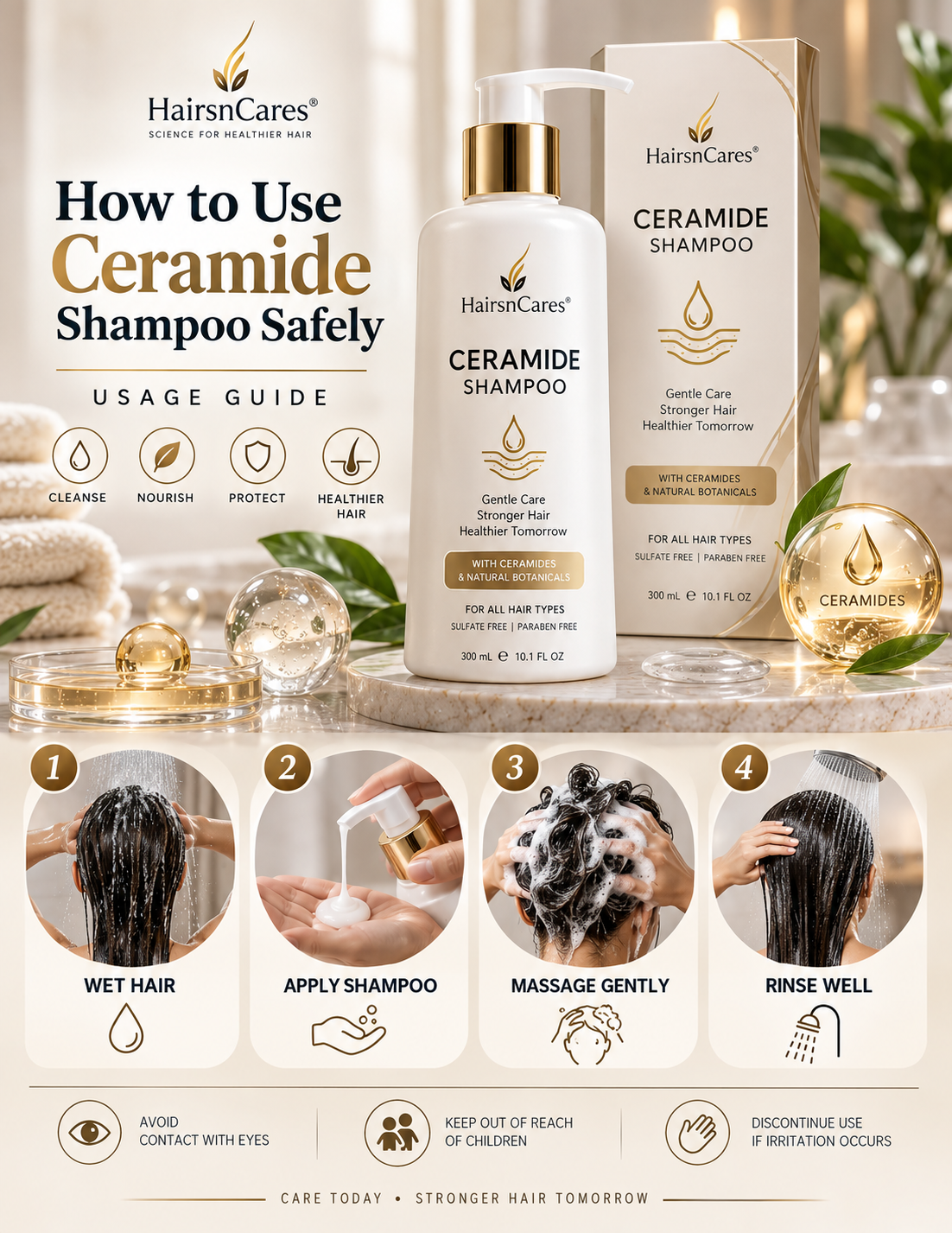
Primary indication. Ceramide shampoo's most appropriate use is for scalp that feels dry, tight or over-stripped after washing — providing a gentler cleansing experience that avoids further barrier disruption.
A dermatologist-guided guide to using ceramide shampoo (ceramides shampoo, scalp barrier shampoo) safely — including when it supports dry scalp comfort, barrier-friendly cleansing, frizzy hair, side effects, product selection, and when scalp or hair fall symptoms need medical evaluation.
What ceramide shampoo can and cannot do for damaged hair
How ceramides work as lipid barrier replenishers in the cuticle
Best hair types and damage profiles for ceramide shampoos
Ceramide shampoo vs keratin vs panthenol shampoo compared
How often to use without overconditioned buildup
Pseudo-ceramides vs natural ceramides in formulations
Why ceramide shampoo alone cannot repair severely bleached hair
When hair breakage needs professional treatment, not just product
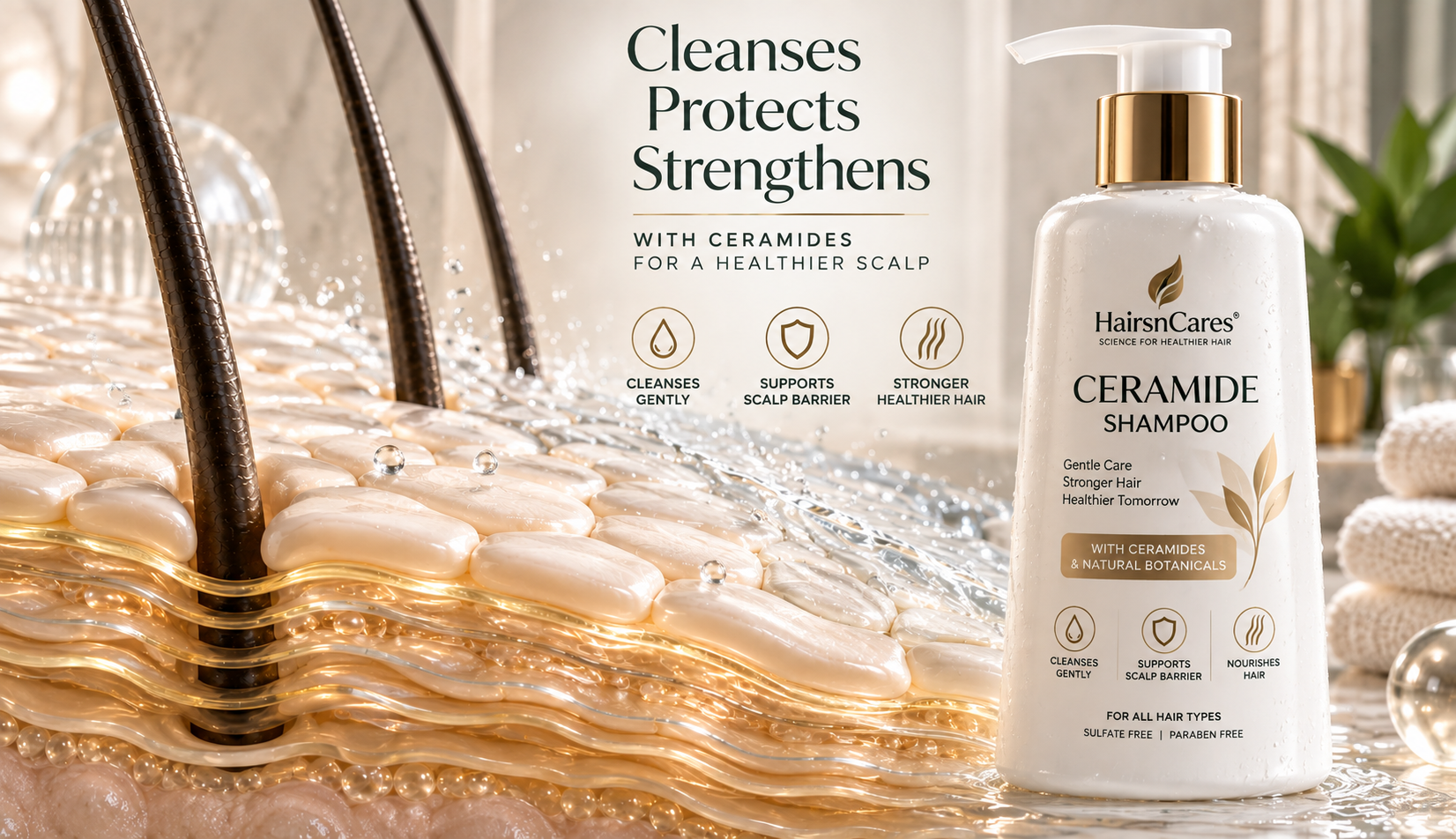
Ceramides are sphingolipid molecules — the primary structural lipids in the skin and scalp barrier. They form the "mortar" of the brick-and-mortar model of the skin barrier, holding cells together and preventing moisture loss. In haircare, ceramides are incorporated into shampoo formulations for barrier-supportive and moisturising positioning. Product labels may use "ceramide," "ceramides," "scalp barrier shampoo," "barrier repair shampoo" or "moisturising shampoo." The unique structural feature of ceramides is the lipid bilayer architecture — fundamentally different from the molecular ring structures (niacinamide, keratin helix, biotin bicyclic) and open chains (panthenol) of other ingredients in this series. See our ceramides ingredient guide →
If unsure whether your scalp flaking is dry scalp or dandruff: Take AI Scalp Test → or See a Dermatologist →

Ceramide shampoo is used in dry scalp, sensitive scalp, frizzy hair, rough hair, colour-treated hair and barrier-friendly cleansing routines. Ceramides are sphingolipid molecules that form the structural lipid layer of the skin and scalp barrier — the "mortar" between skin cells that prevents moisture loss. The most important clinical distinction for this page: dry scalp and dandruff look similar (both cause white flakes) but need completely different treatments. Dry scalp benefits from gentle, barrier-supporting cleansing. Dandruff needs anti-dandruff actives like ketoconazole or zinc pyrithione. Ceramide shampoo is appropriate for dry scalp, but cannot substitute for anti-dandruff treatment when dandruff is present. As a wash-off product, ceramide shampoo cannot cure dermatitis, eczema, psoriasis or scalp infection, and should not replace dermatologist treatment for these conditions.
Ceramide shampoo deposits lipid molecules onto the hair shaft that may help temporarily repair the cuticle barrier, reduce breakage, and improve smoothness in chemically damaged hair. It does not reverse permanent structural damage, treat hair loss, or cure scalp conditions. Best for colour-treated, heat-damaged, or chemically processed hair. Results are cosmetic and temporary — reapplication is needed.
People with colour-treated, heat-damaged, or chemically processed hair who need cuticle barrier support. Works well as a daily gentle cleanser paired with a ceramide conditioner.
Deep protein treatments for severely damaged hair, medical hair loss therapy, or scalp condition management. Ceramide shampoo repairs surface cosmetics, not underlying structure.
Hair breakage is severe despite using barrier-repair products, you notice thinning alongside breakage, or scalp irritation accompanies the damage. Rule out traction alopecia or other causes.
Ceramides are sphingolipid molecules that form the lipid bilayer of the skin and scalp barrier — the actual structural "mortar" between corneocytes (dead skin cells). This gives ceramide shampoo a unique mechanistic basis: it isn't just adding a moisturising ingredient, it is replenishing the same lipid class that the barrier is made from.
A gentle ceramide shampoo may support a less stripped, more comfortable scalp by replacing some of the lipids removed during cleansing. However, shampoo contact time is brief — meaningful barrier deposition requires leave-on products. The primary benefit is avoiding barrier disruption, not actively rebuilding it.
Ceramides may coat the hair shaft cuticle during washing, temporarily smoothing raised cuticle scales and reducing frizz. This is a cosmetic wash-off benefit similar to panthenol — renewed each wash but not permanent.
Ceramide shampoo's brief 2–5 minute contact limits how much lipid can be deposited on the scalp barrier versus a leave-on serum or moisturiser. The value is primarily in gentle cleansing that avoids stripping — not in active barrier construction that leave-on formulations can provide.
All benefits are cosmetic or scalp-comfort improvements within the wash-off context. Active scalp disease needs medical treatment regardless of shampoo choice.
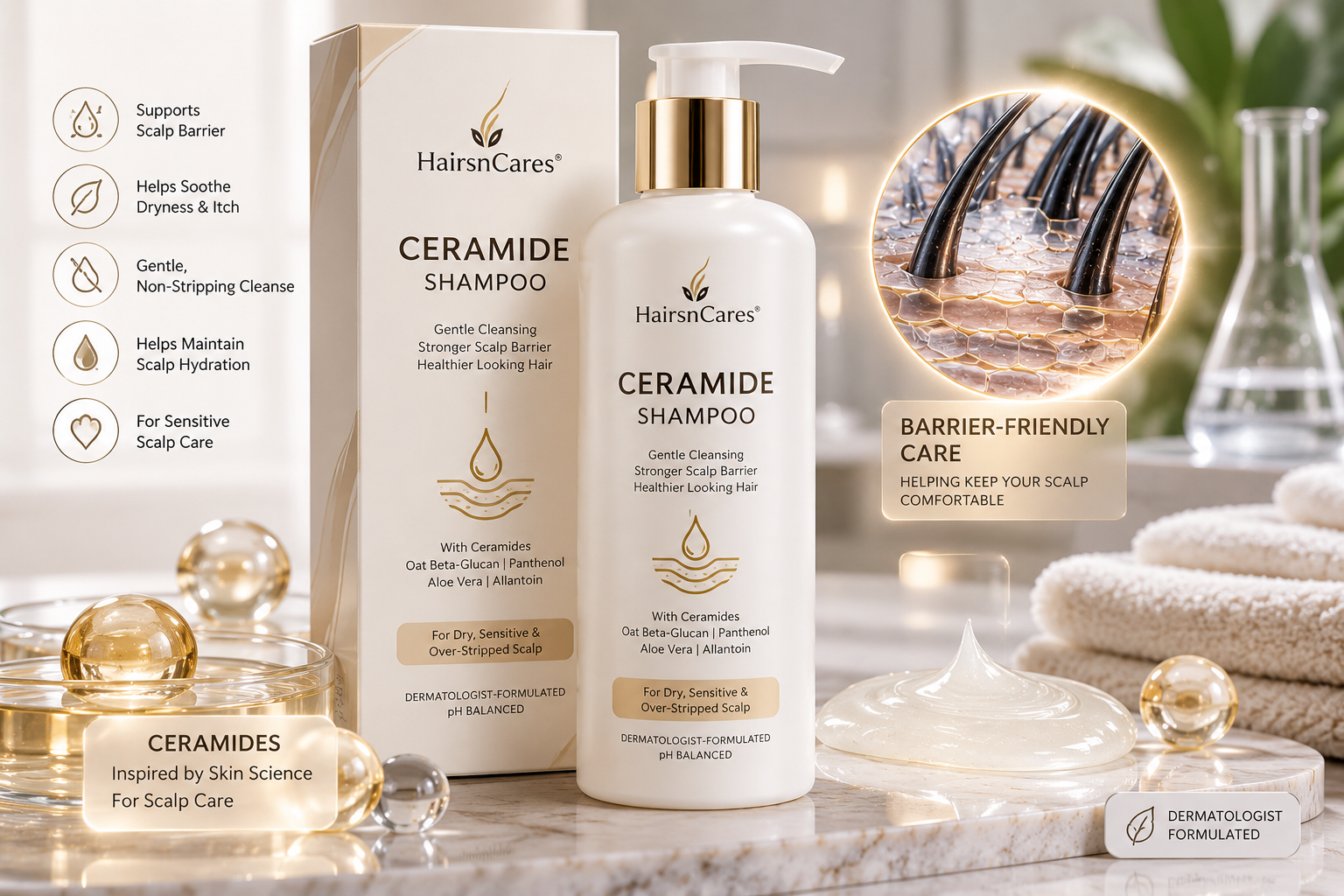
Primary indication. Ceramide shampoo's most appropriate use is for scalp that feels dry, tight or over-stripped after washing — providing a gentler cleansing experience that avoids further barrier disruption.
May suit sensitive scalp routines when the formula is fragrance-aware, mild and well-tolerated. The barrier-supportive positioning is particularly relevant for scalp that has previously reacted to harsh surfactants.
Ceramide coating of the hair cuticle during washing may support smoother hair feel and frizz reduction — particularly in dry or colour-treated hair where cuticle damage is already present.
Colour-treated hair is more porous with higher cuticle damage. Gentle ceramide formulations — especially in sulphate-free versions — suit colour-treated hair routines by avoiding stripping while supporting hair-shaft smoothness.
Can be part of a routine that prioritises scalp comfort over aggressive cleansing — particularly for users recovering from harsh product reactions or those with chronically dry scalp needing a gentler base cleanser.
AI Scalp Test assesses whether your scalp flaking is dry scalp or dandruff, checks sensitivity, oiliness and dandruff risk to recommend ceramide, niacinamide, anti-dandruff or dermatologist care.
Many patients ask whether Ceramide Shampoo alone can solve their hair concerns. The honest answer: shampoo is a wash-off product that stays on the scalp for a short time. It can support scalp cleanliness, comfort and barrier support — but it cannot treat root-level hair loss, hormonal imbalance, nutritional deficiency or conditions that need prescription treatment. A good shampoo works best as part of a complete routine, not as a standalone cure.

Primary match. Scalp that feels tight, dry or flaky from barrier disruption, over-washing, hot water or harsh surfactants — ceramide shampoo's barrier-friendly positioning is most relevant here.
Best MatchScalp that reacts to harsh shampoos with tightness, redness or discomfort — gentle ceramide formulations may provide a better tolerated cleansing routine.
Good MatchHair with cuticle damage that causes frizz, dullness or roughness — the ceramide cuticle-smoothing effect provides cosmetic texture improvement alongside gentle cleansing.
SuitableHigh-porosity, lipid-depleted hair and scalp from chemical treatments benefits from ceramide's barrier-supportive and cuticle-smoothing positioning.
SuitableDandruff needs anti-dandruff actives — ceramide shampoo cannot replace ketoconazole, zinc pyrithione or other antifungals where dandruff is the primary cause of scalp symptoms.
Anti-Dandruff FirstRich ceramide formulations may feel heavy on fine or oily hair. Lightweight ceramide formulations exist but may not provide the same level of barrier support. Match formulation weight to hair type.
Light Formula OnlyMedical conditions requiring dermatologist diagnosis and treatment. Ceramide shampoo can be a supportive gentle cleanser alongside prescribed treatment but cannot substitute for it.
Medical Treatment FirstRequires medical evaluation. Ceramide shampoo cannot address any root-level hair loss cause.
See Doctor UrgentlyNo shampoo change without surgeon clearance on a post-transplant scalp.
Surgeon ClearanceStep 1 ("Identify Your Scalp Pattern") opens with the dry-scalp-vs-dandruff distinction as the first clinical question — unique to this page in the series. Getting this correct is more important than any product choice.
Is your concern dry scalp (tight, fine white flakes, no oiliness) or dandruff (oily/yellow flakes, scalp itch, scalp odour)? Ceramide shampoo suits dry scalp. Dandruff needs anti-dandruff actives. If unsure, take the AI Scalp Test or see a dermatologist before selecting shampoo.
Use lukewarm water. Hot water disrupts the scalp lipid barrier and worsens dryness — counterproductive for ceramide shampoo's primary indication.
Focus on scalp and roots. Allow foam to run down lengths gently rather than scrubbing shampoo through dry or fragile ends.
Use fingertips. Avoid aggressive scrubbing on dry or sensitive scalp — mechanical disruption worsens the barrier disruption that ceramide shampoo is intended to address.
Remove all residue. Ceramide and conditioning product buildup on scalp can paradoxically feel greasy or heavy over time, particularly on fine or oily-tendency scalp.
Apply conditioner to mid-lengths and ends after every wash. For dry or frizzy hair, conditioner contributes more to texture improvement than shampoo. Apply to lengths only — not to scalp.
Overwashing removes natural scalp lipids and worsens dry scalp. For dry scalp, reducing wash frequency is often more effective than any shampoo change. Follow product label guidance for frequency.
For dry scalp: pair with gentle conditioner, lukewarm water and reduced wash frequency. For active dandruff: add anti-dandruff active on appropriate days — ceramide shampoo alone is not the right primary choice.
Monitor scalp comfort over 4–6 weeks. Stop and consult a doctor if burning, rash, scalp pimples, worsening flaking, worsening hair fall or bald patches appear. If dry scalp does not improve with gentle ceramide shampoo + reduced wash frequency, medical evaluation may reveal another cause (eczema, psoriasis, product allergy, hard water).
Ceramides are not just a conditioning ingredient — they are the same lipid molecules that form the scalp barrier's structural layer. This makes ceramide shampoo the most mechanistically literal barrier-support ingredient in this series. However, wash-off contact severely limits how much barrier replenishment a shampoo can provide vs leave-on formulations.
For dry scalp, reducing wash frequency to 2–3 times per week often improves comfort more than any shampoo change. Daily washing strips the natural lipid layer faster than ceramide shampoo can support it.
Burning, rash, swelling, new bald patches, scalp pain or pus. If flaking worsens or becomes oily/yellow despite ceramide shampoo, reassess for dandruff and consult a dermatologist.
The most common shampoo mistake is rushing the process. Apply to the scalp (not just hair lengths), massage gently with fingertips (never nails), follow the recommended contact time if it is a medicated shampoo, and rinse thoroughly. Incomplete rinsing is a leading cause of scalp irritation and product buildup that patients often blame on the shampoo itself.
Key principle: Follow your product label or dermatologist's advice. Frequency varies by scalp oiliness, dryness, dandruff and tolerance. For dry scalp, reducing wash frequency is often the most effective first step — before any shampoo change.
Dry scalp, sensitive scalp, barrier-friendly cleansing, hair-shaft smoothness.
Scalp barrier via B3 signalling, oily scalp balance. Scalp-focused.
Hair shaft hydration feel, frizz, softness. Hair-focused.
Humectant moisture positioning, dry hair/scalp.
Dry, curly, colour-treated hair. Low-stripping cleansing.
Dandruff/seborrheic dermatitis. Antifungal. Not for dry scalp.
Frequent washing, sensitive scalp. Non-medicated gentle cleansing.
The most common error for dry scalp: Using stronger or more medicated shampoo when the scalp flaking is actually from dryness, not dandruff. Ketoconazole or selenium sulphide on an already-dry scalp worsens barrier disruption. Correct identification of dry scalp vs dandruff is the most important step. AI Scalp Test helps differentiate these two presentations.
| Option | Best For | Main Role | Mechanism | Key Caution |
|---|---|---|---|---|
| Ceramide Shampoo | Dry scalp, sensitive scalp, hair-shaft smoothness, colour-treated hair | Barrier-lipid replenishment; gentle cleansing | Replaces scalp lipid bilayer molecules; cuticle-coating cosmetic effect | Not for dandruff; not antifungal; may feel heavy on fine/oily hair |
| Niacinamide Shampoo | Scalp barrier via B3, oily scalp balance, sensitive scalp | Barrier support through vitamin B3 signalling; anti-inflammatory positioning | Niacinamide activates ceramide synthesis and barrier repair pathways | Not antifungal; scalp-focused more than hair-shaft focused |
| Panthenol Shampoo | Dry hair, frizz, hydration feel, softness | Humectant moisture-film on hair shaft | Open-chain humectant; attracts and binds moisture to hair shaft | Hair-shaft focused more than scalp-barrier focused; no antifungal |
| Hyaluronic Acid Shampoo | Hydration feel positioning, dry hair/scalp | Humectant water-retention positioning | Large HA molecule stays on surface; wash-off limits effectiveness | Formula-dependent; newer positioning with limited rinse-off data |
| Sulphate-Free Shampoo | Dry, curly, colour-treated hair | Gentle cleansing by using milder surfactants | Avoids barrier disruption rather than actively repairing it | May not cleanse oily or dandruff scalp adequately |
| Ketoconazole Shampoo | Dandruff, seborrheic dermatitis, oily scalp yeast | Antifungal — targets Malassezia yeast | Azole antifungal; disrupts yeast cell membrane synthesis | May worsen dry scalp if misused for dryness without dandruff diagnosis |
| Leave-On Scalp Serum (Ceramide) | Meaningful scalp barrier repair beyond wash-off | Extended contact time for barrier building | Ceramides penetrate and replenish barrier with longer contact | Not a shampoo; separate step after washing |
| Dermatologist | Persistent dry scalp, dandruff, eczema, psoriasis, hair fall | Diagnosis — dry scalp vs dandruff distinction and treatment planning | Clinical diagnosis prevents misuse of wrong shampoo type | Essential when scalp symptoms persist despite 4–6 weeks of correct routine |
Unique series note: This is the only page in the series with a "Leave-On Scalp Serum (Ceramide)" as a VS comparison row — acknowledging that leave-on ceramide formulations are more effective for actual barrier repair than the wash-off shampoo version, and directing users toward a more complete approach. The VS table also includes a "Mechanism" column rather than "Evidence Position" for this page, because ceramide's mechanism (lipid bilayer replenishment) is its most distinctive feature vs other barrier/hydrating actives.
All products are supportive wash-off shampoos for dry scalp, sensitive scalp and barrier-friendly cleansing. Not standalone treatments for dandruff, scalp disease or medical hair fall. Prices on individual product pages.
Our AI Scalp Test differentiates dry scalp from dandruff, assesses sensitivity, oiliness, flake type, scalp redness and hair fall patterns to determine whether ceramide shampoo, niacinamide shampoo, anti-dandruff actives or dermatologist evaluation is the correct first step for your scalp.
AI screening only. Does not diagnose, prescribe or replace dermatologist evaluation.
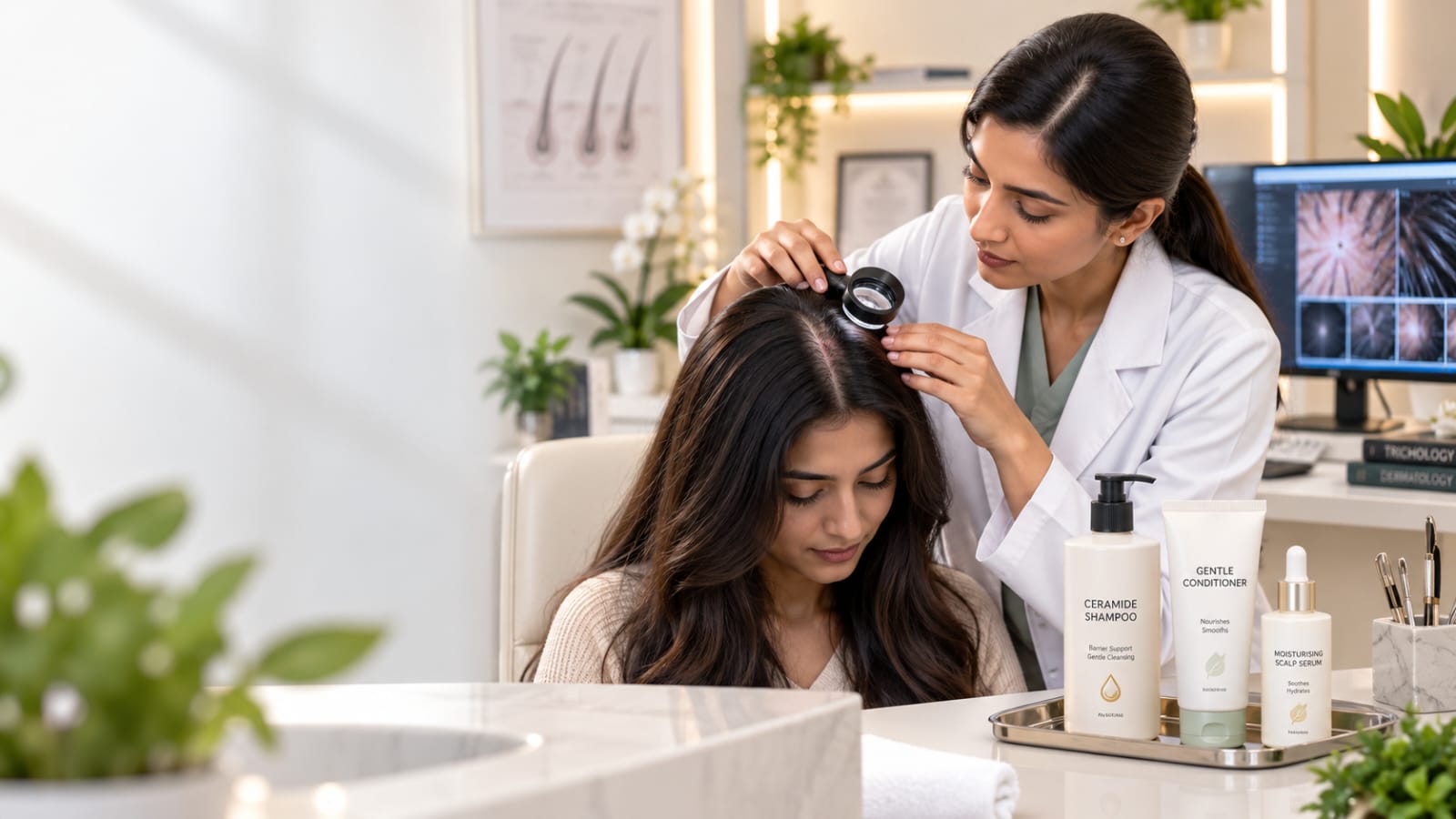
Stop immediately. May indicate contact allergy to ceramide formulation ingredients, fragrance or preservatives. Consult before resuming any shampoo.
Stop and seek medical attention. Possible allergic reaction to shampoo ingredients.
If flaking worsens or becomes oily/yellow after starting ceramide shampoo, this signals dandruff — not dry scalp. Anti-dandruff actives are needed, not more ceramide shampoo.
Folliculitis or contact reaction. Stop and consult a dermatologist before resuming.
If ceramide shampoo makes scalp feel greasy or heavy despite correct use, the formula is too rich for your scalp type. Switch to a lighter formulation.
Rinse immediately with water. Seek medical attention if irritation persists.
These presentations need dermatologist evaluation — not a different shampoo.
Dandruff or seborrheic dermatitis — needs ketoconazole, zinc pyrithione or other anti-dandruff actives.
Possible scalp psoriasis — requires dermatologist diagnosis and prescription treatment.
Medical red flag — pain is never a normal response to shampoo or dry scalp.
Alopecia areata, scarring or tinea — urgent dermatologist evaluation.
Androgenetic alopecia or other medical hair loss — needs diagnosis and treatment.
Possible contact dermatitis, eczema, psoriasis or scalp infection — medical evaluation.
No shampoo changes without explicit surgeon clearance.
May indicate widespread contact allergy requiring allergy testing (patch test).
Scalp inflammation contributing to hair loss — needs diagnosis, not ceramide shampoo.
If you notice increased itching, redness, burning, pimples on the scalp, or worsening flakes after using ceramide shampoo — stop immediately. These are not signs of “scalp detox” or “purging.” They may indicate irritation, allergy, contact dermatitis or worsening of an existing scalp condition. Consult a dermatologist before resuming.
Ceramide shampoo regrows hair.
Ceramide shampoo may support scalp comfort and hair smoothness, but it is not a hair-regrowth treatment. It works on the scalp barrier and hair shaft surface — not on hair follicle biology.
Ceramide shampoo cures dandruff.
Dandruff (seborrheic dermatitis) is caused by Malassezia yeast — it needs antifungal treatment (ketoconazole, zinc pyrithione). Ceramide shampoo has no antifungal properties and cannot substitute for anti-dandruff treatment.
Dry scalp always means barrier damage.
Scalp flaking can be from dandruff, eczema, psoriasis, product buildup, hard water or over-washing — not all are barrier damage. Correct diagnosis determines the right treatment. The dry-scalp-vs-dandruff distinction is critical.
Barrier shampoo can replace dermatologist treatment.
Barrier-friendly shampoos support routine comfort but do not replace medical treatment for eczema, psoriasis, infection or medically-indicated hair loss. Dermatologist evaluation is needed when symptoms persist.
More moisturising shampoo is always better for dry scalp.
Rich ceramide or moisturising formulas may feel heavy, greasy or flat on fine or oily-tendency scalps. Formula weight must match scalp type. Reducing wash frequency often helps dry scalp more than changing to a richer shampoo.
If scalp burns after ceramide shampoo, it is detox.
Burning is not detox. It is a warning sign — contact reaction, allergy or irritant response. Stop the product and seek medical advice if burning, rash or swelling occurs after any shampoo.
Doctor-Reviewed Resources
Still unsure whether ceramide shampoo is right for your scalp?
Ask a Hair Doctor →Use real authority URLs only. All external links open in a new tab.
AAD clinical guidance on dandruff and seborrheic dermatitis — the condition most commonly misidentified as dry scalp. Establishes the anti-dandruff actives (ketoconazole, zinc pyrithione) that ceramide shampoo cannot replace when dandruff is present.
AAD guidance on dry skin and barrier disruption — the skincare basis for ceramide's role in barrier support. The same barrier biology applies to scalp skin, establishing the mechanistic basis for ceramide shampoo's dry scalp positioning.
AAD evidence on hair loss evaluation — confirming that ceramide shampoo is not a hair loss treatment and when medical evaluation is needed for hair fall associated with scalp conditions.
Search PubMed for peer-reviewed literature on ceramide in dermatology and haircare, scalp barrier lipid composition, dry scalp vs dandruff differentiation, seborrheic dermatitis treatment and scalp ceramide levels in atopic conditions.
Ceramide shampoo (ceramides shampoo, scalp barrier shampoo, barrier repair shampoo, moisturising shampoo) is a supportive wash-off shampoo used in dry scalp, sensitive scalp, scalp comfort, barrier-friendly cleansing, frizzy hair, rough hair and colour-treated hair routines. It does not diagnose, treat, cure or prevent dandruff, seborrheic dermatitis, eczema, psoriasis, scalp infection, medical hair loss, baldness, alopecia, PCOS-related hair fall, thyroid-related hair fall, postpartum shedding, nutritional deficiency hair fall or medication-related shedding. It should not replace conditioner, masks, leave-on scalp care, ketoconazole, zinc pyrithione, anti-dandruff actives, topical prescription treatments, minoxidil, finasteride, PRP, GFC, nutritional correction, hair transplant care or dermatologist evaluation when indicated. Use as per product label or doctor guidance. Stop if irritation, allergy symptoms, buildup heaviness or scalp worsening occurs. This guide has been reviewed by Dr. Amit Agarkar, MD Dermatology, Hairsncares.
The AI Scalp Test differentiates dry scalp from dandruff or seborrheic dermatitis, checks sensitivity, oiliness and flake type to recommend whether ceramide shampoo, niacinamide shampoo, anti-dandruff actives or dermatologist evaluation is your most appropriate next step.
Your cart is empty