❄️
Dandruff Control Support
Ketoconazole may help reduce oily, greasy flakes in dandruff-prone scalps where yeast factors are involved — used correctly, at the right frequency, with appropriate contact time.
A dermatologist-guided guide to using ketoconazole shampoo safely — including when it helps, how long to leave it on, how often to use it, side effects, product selection, and when scalp flakes need medical evaluation.
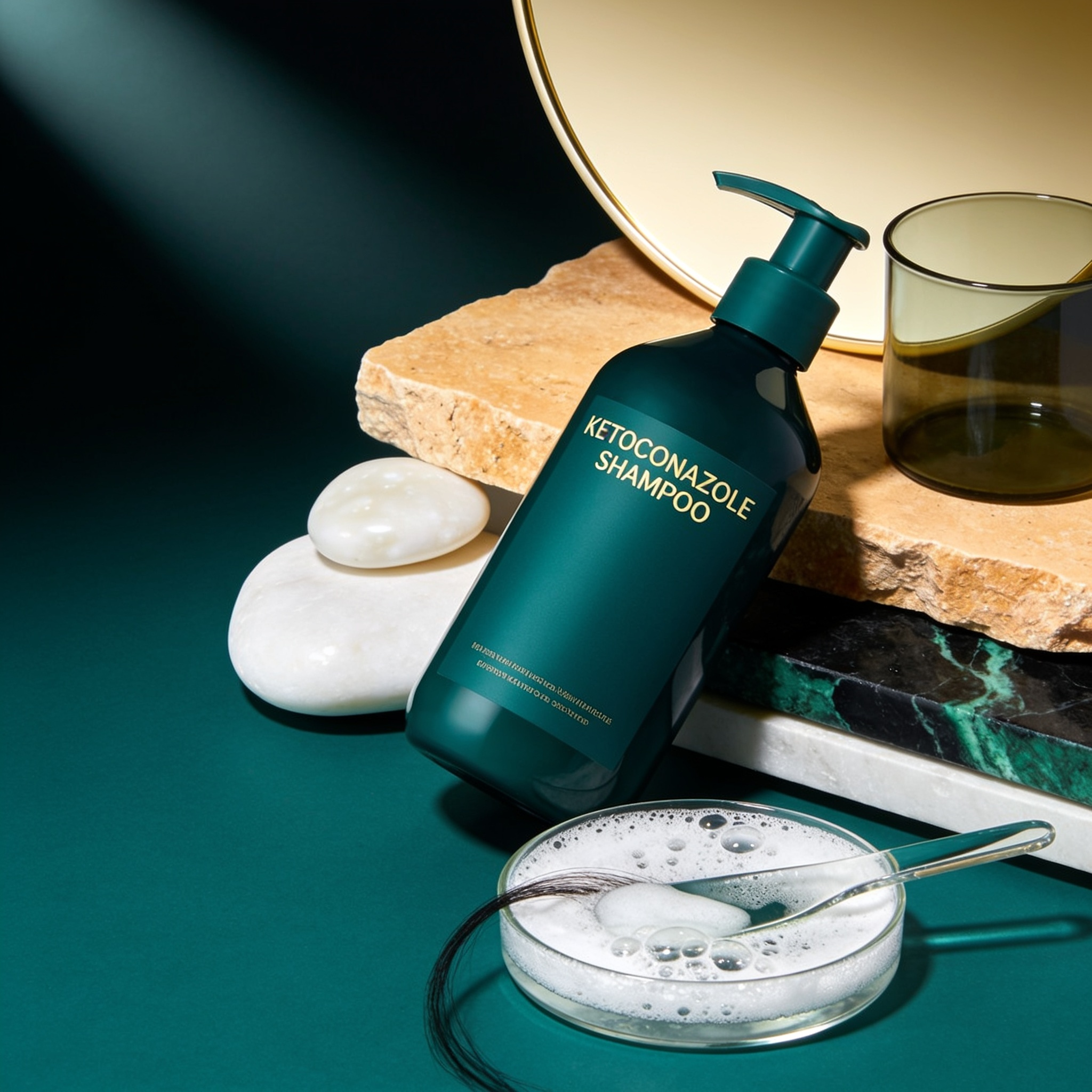
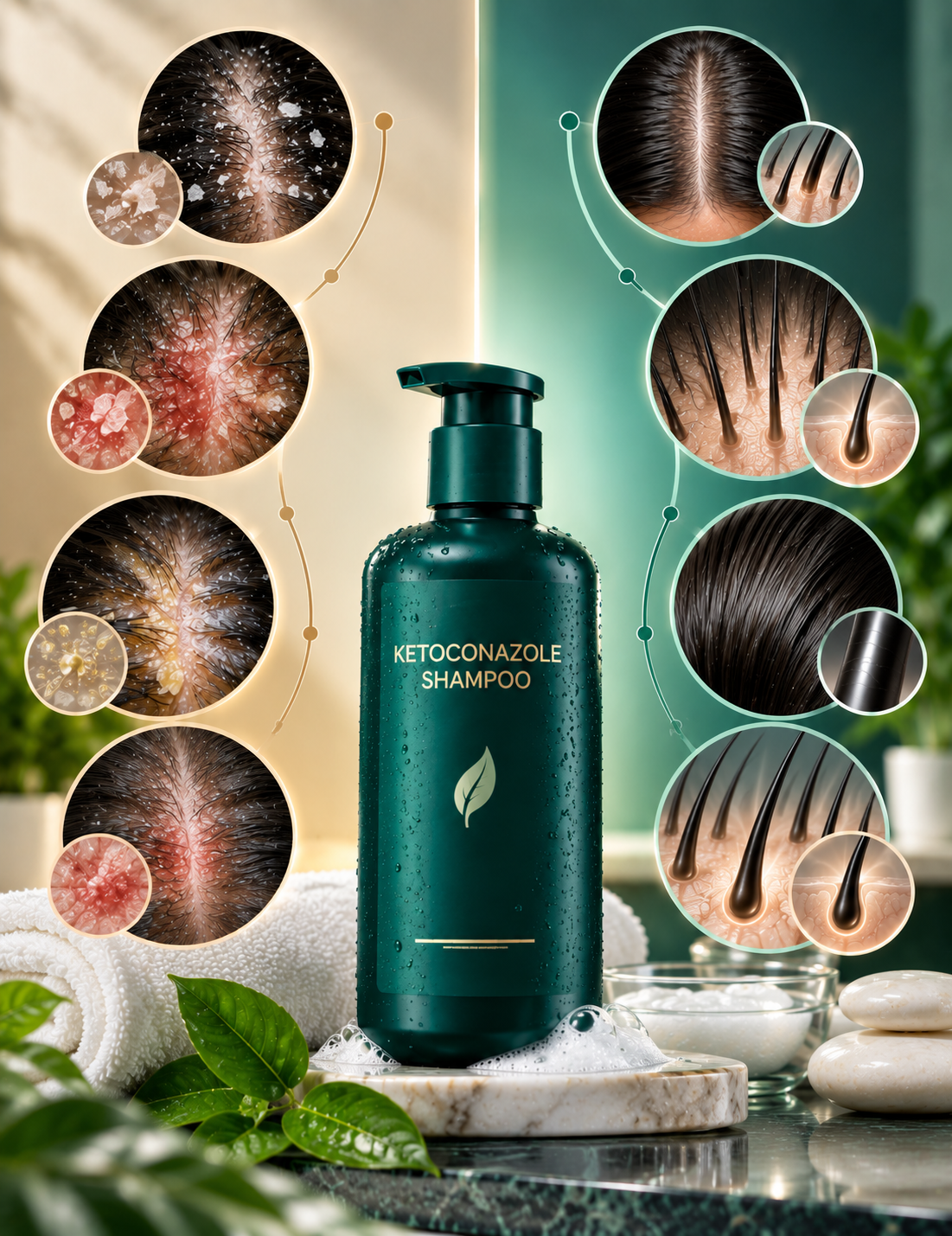
Ketoconazole shampoo is a medicated antifungal shampoo commonly used in dandruff and seborrheic dermatitis routines where Malassezia yeast overgrowth and scalp inflammation may contribute to flaking, itching and greasiness. The 1–2% topical formulation is evidence-supported for seborrheic dermatitis in dermatology guidelines (AAD; NCBI Bookshelf). It can be useful when used correctly, but it is not a cosmetic daily shampoo for everyone and is not a cure for every type of scalp flaking, hair fall or scalp disease. Persistent flakes, thick crusting, scalp pain, pus, bleeding, bald patches, sudden shedding, psoriasis-like plaques, child scalp scaling or symptoms after a hair transplant require proper medical evaluation — not self-treatment with medicated shampoo.
What ketoconazole shampoo can and cannot do for dandruff
How ketoconazole works as an antifungal agent against Malassezia
Prescription-strength (2%) vs OTC (1%) ketoconazole — differences
Ketoconazole vs zinc pyrithione vs selenium sulphide compared
Correct usage frequency — too much can dry the scalp
Ketoconazole for androgenetic alopecia — what the studies show
Side effects — dryness, irritation, and rare liver warnings
When antifungal shampoo is not enough and you need oral treatment
Ketoconazole shampoo is a medicated antifungal shampoo commonly used for dandruff and seborrheic dermatitis where Malassezia yeast and scalp oiliness contribute to flaking and itching. It helps reduce flaking, itching and scalp greasiness in suitable users when used with the correct frequency and contact time.
It is not a daily cosmetic shampoo for everyone, not a guaranteed hair fall treatment, and not a replacement for dermatologist care when symptoms are severe, recurrent or atypical.
Key distinction: Not all flakes are dandruff. Dry scalp, psoriasis, eczema, fungal infection, product buildup and scalp conditions can look similar but need different treatment. If in doubt — consult a dermatologist rather than self-treating with medicated shampoo.
Ketoconazole shampoo is a clinically proven antifungal that reduces Malassezia yeast overgrowth responsible for dandruff and seborrheic dermatitis. Available as 1% OTC or 2% prescription. Some studies suggest mild anti-androgenic properties that may complement hair loss treatment. It does not regrow hair on its own or cure chronic seborrheic dermatitis permanently. Use 2–3 times per week; overuse causes scalp dryness.
People with confirmed dandruff or seborrheic dermatitis looking for a first-line medicated shampoo. Also used as an adjunct in androgenetic alopecia treatment plans.
Oral antifungal treatment for severe seborrheic dermatitis, minoxidil or finasteride for hair loss, or dermatologist management of psoriasis. Ketoconazole treats surface yeast, not all scalp conditions.
Dandruff does not improve after 4 weeks of regular use, you develop thick plaques or scaling (possible psoriasis), or scalp condition worsens. Resistant cases may need prescription-strength or combination therapy.
Dandruff and seborrheic dermatitis can involve Malassezia yeast overgrowth on an oily scalp, contributing to inflammation, flaking and itching. Ketoconazole is an imidazole antifungal that may help reduce this yeast load when used correctly.
By acting on the yeast component of scalp flaking, antifungal shampoo may help reduce the recurrence and severity of oily, greasy flakes and scalp itch in suitable users — but only where fungal factors are actually involved.
Unlike cosmetic shampoos, medicated anti-dandruff shampoos often require a short leave-on contact time before rinsing to allow the active ingredient to work on the scalp. Rinsing immediately reduces effectiveness. Follow the product label or dermatologist's advice.
Dandruff and seborrheic dermatitis frequently relapse after treatment is stopped. A maintenance plan — using medicated shampoo periodically or rotating with mild shampoo — may help manage recurrence under dermatologist guidance.
Benefits apply only when scalp symptoms are consistent with yeast/fungal-linked dandruff or seborrheic dermatitis. Atypical symptoms require professional diagnosis.
Ketoconazole may help reduce oily, greasy flakes in dandruff-prone scalps where yeast factors are involved — used correctly, at the right frequency, with appropriate contact time.
Commonly used in seborrheic dermatitis routines where scalp oiliness, itching and greasy yellowish flakes are present. Evidence-supported for this indication at 1–2% concentration.
May help relieve itching linked to dandruff and seborrheic dermatitis — but persistent itch without obvious dandruff, painful itch, or itch with redness or pus requires dermatologist diagnosis.
Better suited to oily scalps with yellowish/greasy flakes than dry scalp with fine white flakes. Dry scalp flaking can worsen with medicated anti-dandruff shampoo if the underlying cause is not oiliness or yeast.
Ketoconazole shampoo works best when used as a medicated leave-on treatment, not rinsed off immediately like a cosmetic shampoo. Correct contact time is essential for efficacy.
Not sure if ketoconazole, zinc pyrithione, salicylic acid or mild shampoo is right for your scalp? Our AI Scalp Test evaluates flake type, oiliness, itch, sensitivity and risk factors before recommending.
Many patients ask whether Ketoconazole Shampoo alone can solve their hair concerns. The honest answer: shampoo is a wash-off product that stays on the scalp for a short time. It can support scalp cleanliness, comfort and antifungal — but it cannot treat root-level hair loss, hormonal imbalance, nutritional deficiency or conditions that need prescription treatment. A good shampoo works best as part of a complete routine, not as a standalone cure.
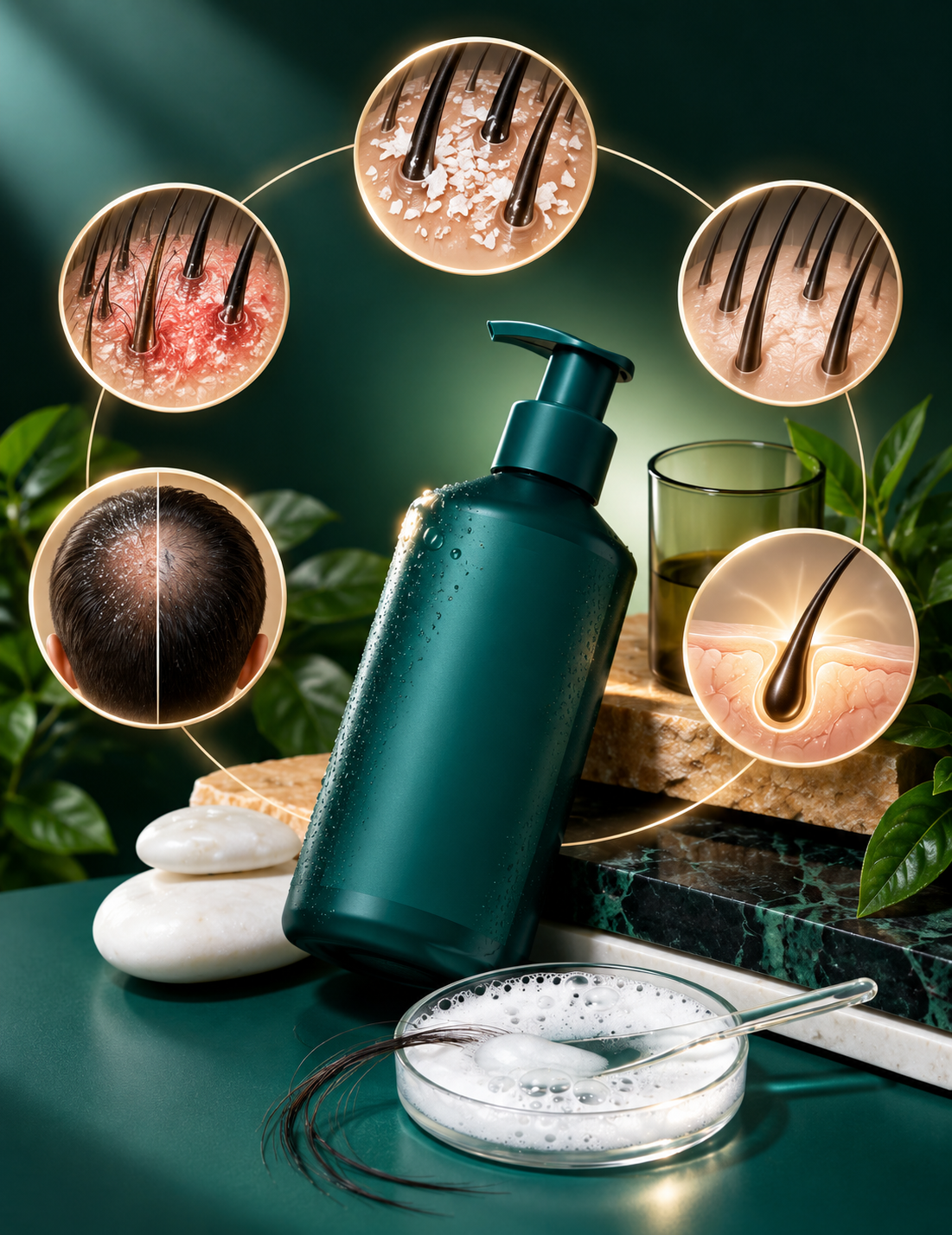
Greasy, yellowish flakes on an oily scalp — ketoconazole is well-matched for this presentation where yeast involvement is likely.
Best MatchScalp seborrheic dermatitis with redness, oily flakes and itch — ketoconazole is evidence-supported for this indication under correct use.
Evidence-SupportedDandruff that returns after regular shampoo use — ketoconazole or a medicated rotation may help manage recurrence.
Good MatchKetoconazole can dry and irritate an already dry or sensitive scalp. Use with caution and low frequency; monitor response carefully.
Use CautionAsk your obstetrician or dermatologist before using medicated anti-dandruff shampoo during pregnancy or breastfeeding.
Medical ClearanceAvoid stacking irritating scalp products without dermatologist guidance. Timing and spacing of scalp actives matters.
Seek GuidanceDry scalp flaking is different from oily dandruff. Ketoconazole may worsen dryness on a scalp where yeast is not the primary cause.
Not IdealNever use medicated shampoo on a post-transplant scalp without explicit surgeon clearance. Graft protection is paramount.
Surgeon ClearanceThese are medical red flags requiring dermatologist evaluation — not anti-dandruff shampoo management. Consult a doctor immediately.
See DoctorDo not: combine ketoconazole shampoo with minoxidil, steroid lotions, scalp acids, multiple medicated products or post-transplant care without dermatologist guidance.
Use ketoconazole for oily/yeast-linked dandruff or seborrheic dermatitis. If your flakes are dry and white, or accompanied by pus, pain or patchy hair loss, consult a dermatologist first.
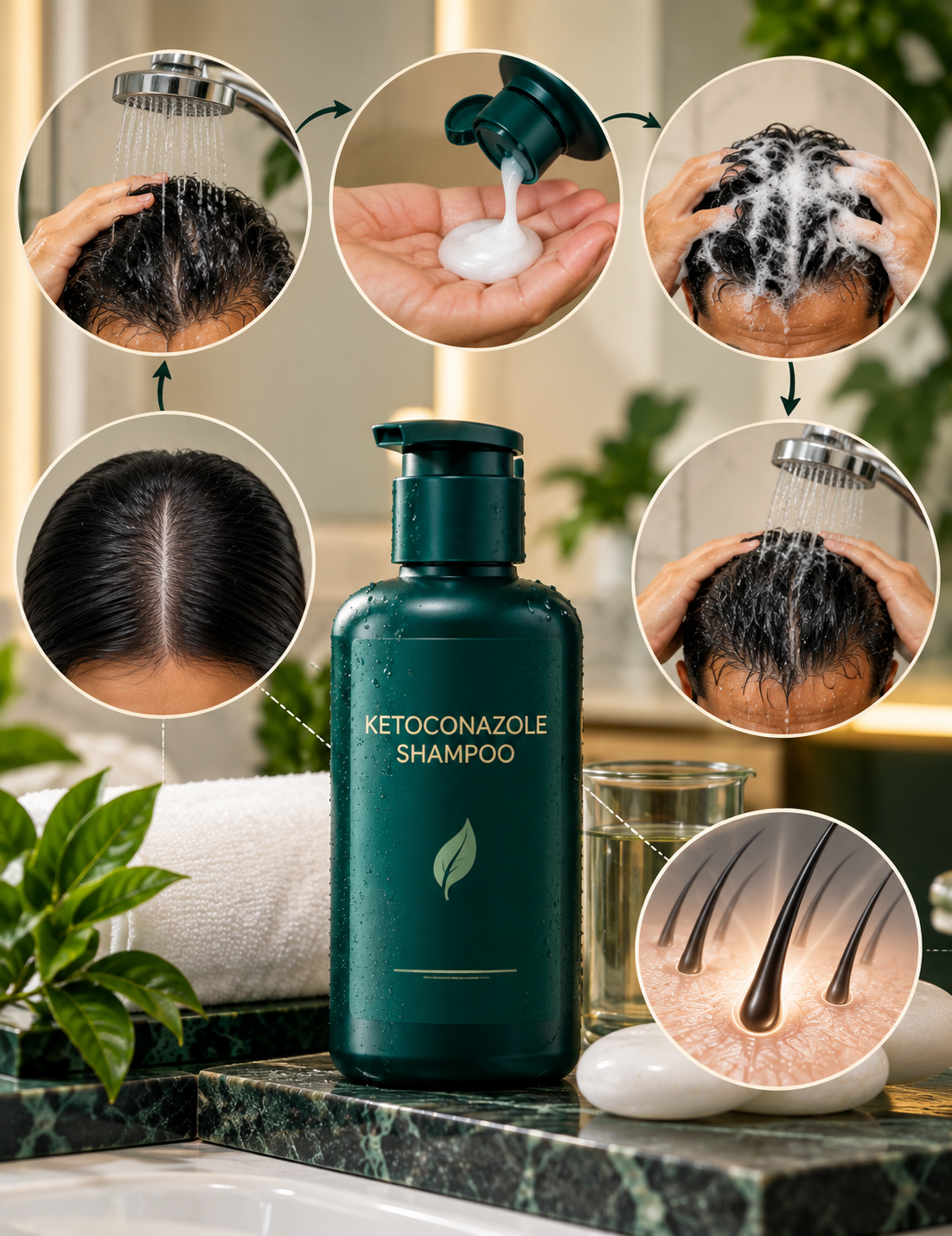
Use lukewarm water to fully wet scalp and hair before applying. Hot water can irritate an already inflamed scalp and worsen itching.
Focus shampoo on roots and scalp, not hair lengths. Dandruff and seborrheic dermatitis are scalp conditions — saturating hair lengths with medicated shampoo adds irritation risk without benefit.
Use gentle circular movements with fingertips, never nails. Scratching active scalp flakes can worsen inflammation and risk secondary infection.
Leave on for the product label or doctor-recommended contact time before rinsing. Rinsing immediately reduces antifungal efficacy. Contact time is a key difference between medicated and cosmetic shampoo use.
Remove all shampoo residue to reduce dryness, irritation and barrier disruption risk. Incomplete rinsing is a common cause of scalp sensitivity.
If hair feels dry after ketoconazole shampoo, use a lightweight conditioner only on mid-lengths and ends — not on the scalp. Conditioner on an oily or dandruff-prone scalp can counteract the shampoo's effect.
Follow product label or dermatologist advice. Do not use daily unless specifically advised. Most routines use ketoconazole shampoo 1–2 times weekly during an active course, reducing for maintenance.
Monitor scalp after each use. Stop and consult a doctor if burning, redness, rash, swelling, worsening flakes, scalp pimples, pus or increased hair shedding occurs.
Burning, severe redness, rash, swelling of face or eyes, pus, painful scalp, worsening flakes despite correct use, or sudden significant hair shedding. Consult a dermatologist before resuming medicated shampoo.
The most common shampoo mistake is rushing the process. Apply to the scalp (not just hair lengths), massage gently with fingertips (never nails), follow the recommended contact time if it is a medicated shampoo, and rinse thoroughly. Incomplete rinsing is a leading cause of scalp irritation and product buildup that patients often blame on the shampoo itself.
Key principle: Follow your product label or dermatologist's advice. Frequency and contact time vary by shampoo strength, formulation, scalp condition and individual tolerance. There is no single universal prescription.
Often available OTC for dandruff support depending on region/product availability. Follow label frequency and contact time.
Typically prescription/doctor-guided for persistent or moderate-to-severe seborrheic dermatitis. Use only as directed by your doctor.
Ketoconazole combined with zinc pyrithione, salicylic acid, aloe or conditioners — follow product label; individual tolerances vary.
Mild daily or sulphate-free shampoo on non-medicated wash days to support scalp barrier and prevent dryness from overuse.
Overuse caution: Using medicated shampoo too frequently can cause scalp dryness, irritation, barrier disruption and increased sensitivity. More is not better — follow the guidance provided with your product.
| Active | Best For | Main Role | Scalp Type | Key Caution |
|---|---|---|---|---|
| Ketoconazole | Yeast-linked dandruff, seborrheic dermatitis | Antifungal — targets Malassezia | Oily to normal; avoid very dry scalp | Not daily for everyone; follow label/doctor |
| Zinc Pyrithione | Mild-to-moderate dandruff, maintenance | Anti-dandruff, antimicrobial | Most scalp types; often gentler | May not address severe fungal load alone |
| Selenium Sulfide | Oily dandruff, recurrent flakes | Antifungal, anti-dandruff | Oily scalp; avoid sensitive/dry scalp | Can dry hair; odour; discolouration risk |
| Salicylic Acid | Scalp buildup, thick flakes | Keratolytic — exfoliates flake build-up | Flaky to oily scalp; caution on sensitive | Not antifungal alone; can over-dry |
| Piroctone Olamine | Dandruff-prone scalp, maintenance | Anti-dandruff, antimicrobial | Most scalp types; often well-tolerated | Less clinical evidence vs ketoconazole |
| Coal Tar | Thick scaling, psoriasis-like conditions | Slows scalp cell turnover | Doctor guidance required | Smell, staining, photosensitivity, irritation |
| Mild Daily Shampoo | Non-medicated wash days, barrier support | Scalp hygiene, barrier maintenance | All scalp types | Not antifungal; not a dandruff treatment |
All actives are scalp care options. The right choice depends on your dandruff type, scalp condition, sensitivity and medical history. A dermatologist can advise the best approach for your specific scalp.
All medicated shampoos require correct use. Follow product label or dermatologist instructions. These are not hair regrowth treatments. Prices available on individual product pages.
Before recommending ketoconazole shampoo, our AI Scalp Test evaluates your flake type, scalp oiliness, itch severity, redness, sensitivity, hair fall pattern, and medical history to match you with the right anti-dandruff approach — or flag when a dermatologist is needed first.
AI screening only. Does not diagnose, prescribe or replace dermatologist evaluation. Red-flag symptoms trigger immediate doctor referral.
Significant burning or worsening redness after shampoo use — stop immediately and do not resume without medical guidance.
Skin rash, swelling of the scalp, face or eyes after ketoconazole shampoo use may indicate allergic reaction. Stop and seek medical attention.
Pus-filled bumps, boils or thick crusting on the scalp are signs of possible infection requiring proper diagnosis — not self-treatment with anti-dandruff shampoo.
Pain on the scalp during or after shampooing is a red flag. Painful scalp can indicate infection, folliculitis or other conditions needing medical care.
Bald patches or patchy hair loss are not dandruff — they may indicate alopecia areata, fungal infection or other conditions requiring specialist evaluation.
A sudden increase in hair shedding requires dermatologist evaluation to identify the cause — continuing medicated shampoo alone is not appropriate management.
Ask your obstetrician or dermatologist before using medicated anti-dandruff shampoo during pregnancy or breastfeeding. Medical guidance is required.
Medicated anti-dandruff shampoo in children requires doctor guidance. Child scalp scaling can have different causes requiring proper diagnosis.
Never use medicated shampoo on a post-transplant scalp without explicit surgeon clearance. Protect graft survival by following your surgeon's post-procedure protocol.
Scalp psoriasis and eczema are distinct diagnoses from dandruff and need appropriate treatment. Self-treating with ketoconazole shampoo may not help and could irritate an eczema-prone scalp.
If you notice increased itching, redness, burning, pimples on the scalp, or worsening flakes after using ketoconazole shampoo — stop immediately. These are not signs of “scalp detox” or “purging.” They may indicate irritation, allergy, contact dermatitis or worsening of an existing scalp condition. Consult a dermatologist before resuming.
Ketoconazole shampoo grows hair.
Ketoconazole may improve scalp condition in dandruff-prone users, which can support a healthier scalp environment. But it is not a proven standalone hair-regrowth medicine and should not replace evidence-based hair loss treatment.
All scalp flakes need ketoconazole.
Using it more often means faster results.
Overuse can irritate the scalp, disrupt the skin barrier and cause dryness. Correct frequency matters more than increased use. Follow product label or dermatologist guidance.
It should replace all my other shampoos.
Most routines alternate ketoconazole shampoo with a mild daily shampoo on non-medicated wash days. Using medicated shampoo exclusively can cause dryness and barrier disruption over time.
Dandruff is just poor hygiene.
Dandruff involves multiple factors — scalp oiliness, Malassezia yeast, inflammation, climate, stress, hormones and scalp sensitivity. It is a scalp condition, not a hygiene failure.
If ketoconazole fails, nothing will work.
A dermatologist can assess whether ketoconazole is failing due to incorrect use, wrong diagnosis, resistant yeast or a different scalp condition — and can rotate actives, add prescriptions or diagnose what's really happening.
Doctor-Reviewed Resources
Still unsure whether ketoconazole shampoo is right for your scalp condition?
Ask a Hair Doctor →The following resources represent authority dermatology guidance. Do not fabricate citations. Use real authority URLs only — AAD, MedlinePlus, NCBI Bookshelf, Mayo Clinic, NHS or peer-reviewed journals. All external links open in a new tab.
The AAD notes dandruff shampoos can help mild-to-moderate seborrheic dermatitis. Guidance on treatment options, active ingredients and when to see a dermatologist for persistent or severe scalp symptoms.
NCBI Bookshelf notes topical 1–2% ketoconazole is evidence-supported for seborrheic dermatitis, with wash-off use commonly employed. Covers mechanism, evidence and use guidance.
Authoritative guidance on hair loss types, causes and evidence-based treatments — essential context for understanding that ketoconazole shampoo is not a hair loss treatment.
Comprehensive dermatology reference on seborrhoeic dermatitis — including clinical features, treatment options, antifungal shampoo use and when medical evaluation is needed.
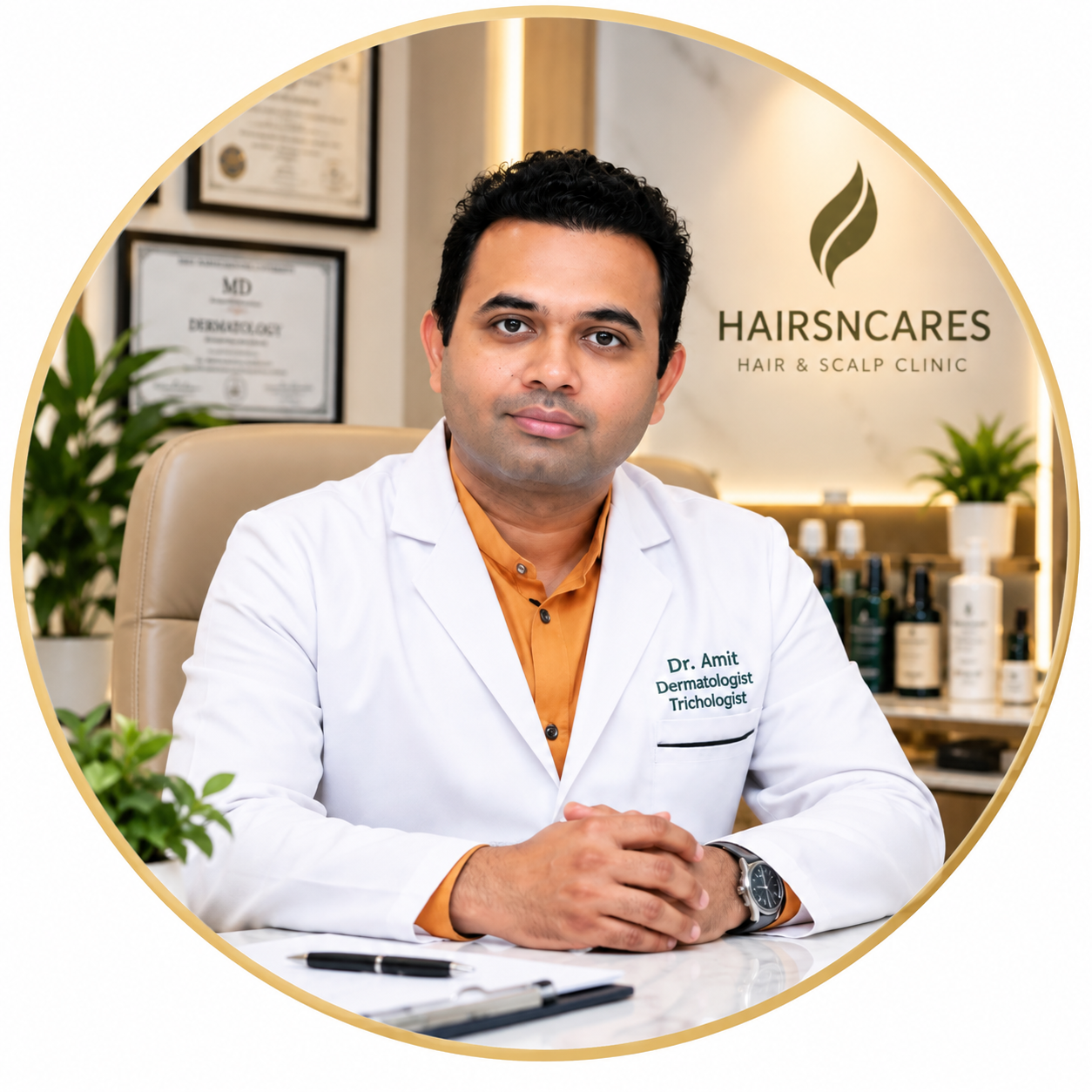
Ketoconazole shampoo is a medicated antifungal shampoo used in dandruff and seborrheic dermatitis routines where yeast/fungal factors contribute to scalp flaking and itching. It does not diagnose, treat, cure or prevent all scalp diseases or medical hair loss. It should not replace dermatologist evaluation for severe dandruff, painful scalp, pus, crusting, bald patches, sudden shedding, scalp psoriasis, eczema, infection, PCOS-related hair fall, thyroid-related hair fall, postpartum shedding or medication-related hair fall. Use frequency and contact time should follow product label or dermatologist guidance. Stop if irritation, burning, rash, swelling or allergy symptoms occur. This guide has been reviewed by Dr. Amit Agarkar, MD Dermatology, Hairsncares.
Take the AI Scalp Test to find your match — or consult a dermatologist for personalised guidance on ketoconazole shampoo, contact time and frequency.
Your cart is empty