Hair Loss: Causes & Treatment
Dermatologist-led overview of how hair loss is evaluated and the evidence behind common treatments.
View AAD reference ›A sudden spike in shedding is alarming — handfuls in the shower, hair all over the pillow. The most common reason is acute telogen effluvium, where a trigger weeks or months earlier — an illness or fever, major stress, surgery, rapid weight loss or childbirth — pushed many hairs into the shedding phase. Often the trigger was about two to three months ago. It is usually temporary, but it isn't always harmless, so the right move is to map the trigger, support recovery, and get assessed if it's heavy or persistent.
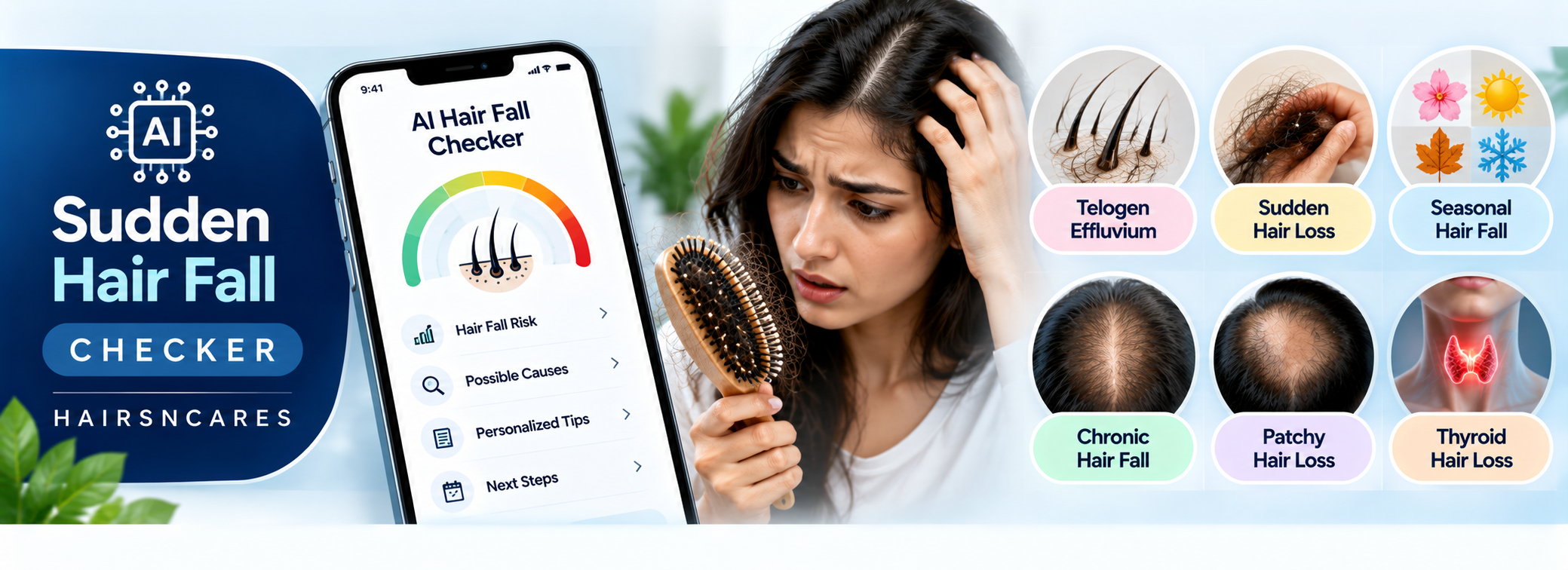
Illustrative sample only. AI screening helps guide decisions and does not replace a dermatologist's diagnosis.
A sudden increase in shedding is most often acute telogen effluvium — a temporary reaction where a trigger pushes many hairs into the shedding phase at once. The classic clue is timing: the shedding usually appears about two to three months after the trigger, such as an illness or high fever, major stress, surgery, rapid weight loss or childbirth. It normally recovers over several months once the trigger passes. But sudden hair fall is not always harmless — thyroid changes, deficiency, a drug reaction or the onset of alopecia areata can look similar. So the sensible steps are: map what happened a couple of months ago, support your hair and health, and see a dermatologist if shedding is heavy, persistent, patchy or comes with other symptoms.
A sudden spike in shedding often follows a trigger weeks to months earlier, but severe or persistent shedding needs assessment.
AI Summary
Sudden hair fall is one possible hair-loss pattern or trigger. The right next step depends on whether hair is shedding from the root, breaking from the shaft, thinning in a pattern, falling suddenly, persisting for months or appearing in patches.
This page is educational and screening-oriented. It does not diagnose, prescribe or guarantee results. Use the AI Hair Test to organise symptoms, and consult a dermatologist if symptoms are severe, persistent, patchy, painful or progressive.
Best next step: identify the pattern, check likely triggers, review red flags, then choose a routine, product pathway or doctor consultation safely.
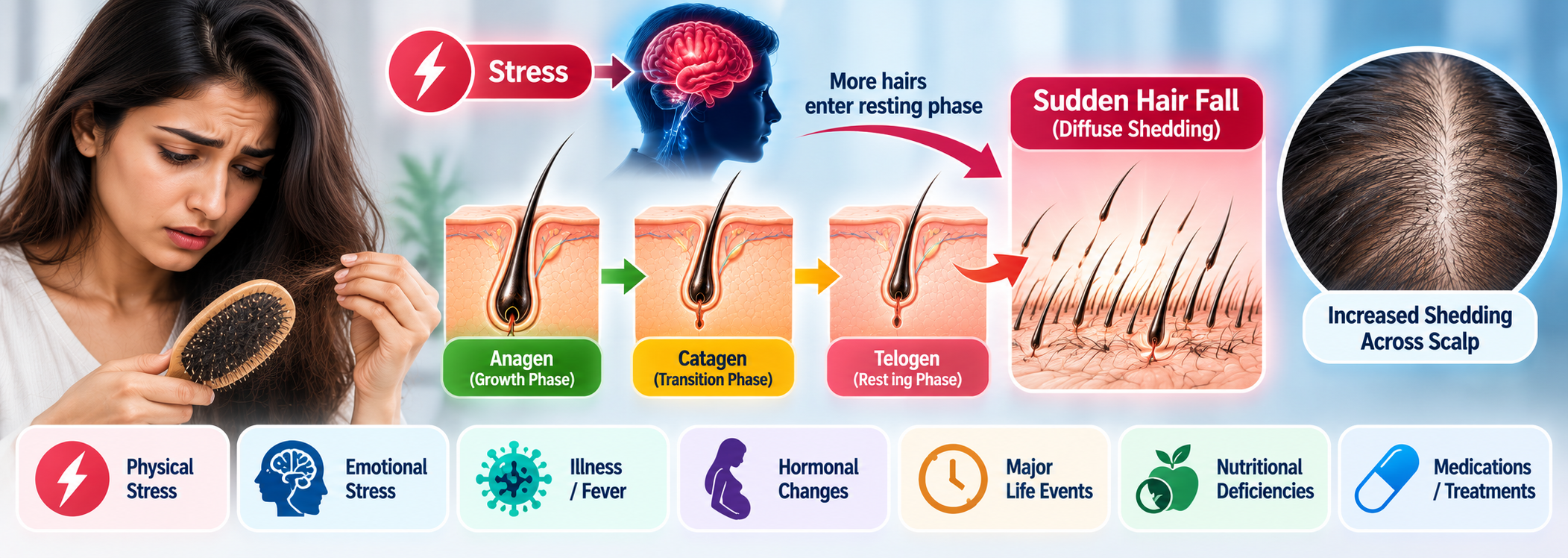
Sudden hair fall is a rapid, noticeable jump in how much hair you shed over a short period — suddenly seeing handfuls when you wash or brush, or far more hair than usual on your pillow and clothes. It is usually diffuse (spread across the whole scalp) rather than in patches.
The most common cause is acute telogen effluvium, a temporary reaction in which a trigger pushes an unusually large number of hairs into the resting and shedding phase at once. The hallmark is the delay: the shedding often shows up about two to three months after the trigger, which is why the cause can feel mysterious until you look back. The good news is that the follicles are not damaged, so it usually recovers over months once the trigger passes.
That said, sudden shedding is not always harmless. Occasionally it reflects a thyroid change, a significant deficiency, a medicine, or the onset of another condition such as alopecia areata. So the smart approach is to identify the likely trigger, support recovery, and get assessed if the shedding is heavy, persistent, patchy or comes with other symptoms.
Hair suddenly shedding? Map the likely trigger in 90 seconds.
Check My SheddingThese features describe sudden shedding and help your dermatologist judge what's happening.
A clear, recent jump in daily shedding
Handfuls of hair when washing or brushing
More hair on the pillow, clothes and floor
Diffuse thinning across the whole scalp
Full-length hairs with a small white bulb (shedding)
A trigger event around 2–3 months earlier
A thinner ponytail than before
Short regrowth hairs at the hairline (recovery sign)
No bald patches or scalp scarring (reassuring)
Recognise these signs? Screen them and get a tailored next step.
Screen My SymptomsAcute telogen effluvium usually traces back to one of these, around two to three months before the shedding began. Think back to that window.

Infections, viral illness or a high fever can trigger a wave of shedding.
Typical delay: ~2–3 months
A serious life event, accident or bereavement can tip hairs into shedding.
Typical delay: ~2–3 months
The physical stress of surgery is a recognised trigger.
Typical delay: ~2–3 months
Sudden calorie or protein restriction stresses the hair cycle.
Typical delay: ~2–3 months
Postpartum shedding is a common, usually temporary form.
Typical onset: ~2–4 months after
Some medicines can trigger shedding — never stop them without advice.
Action: ask your doctor
Thyroid changes or low iron can present as sudden shedding.
Action: consider testing
Occasionally the start of alopecia areata or another cause.
Action: dermatologist if patchy
Spotted your trigger? The checker confirms the fit and flags anything that needs care.
Map My TriggerUnderstanding the timeline takes a lot of the fear out of sudden shedding.
Illness, fever, major stress, surgery, rapid weight loss or childbirth. At this point your hair usually looks normal.
Many hairs that entered the resting phase are now released together, so you suddenly notice heavy shedding — often without realising it links back to the trigger.
Once the trigger has passed, the heavy phase usually settles over weeks to a few months. Short regrowth hairs may appear at the hairline.
Because hair grows slowly, visible recovery of density takes several months. If shedding continues beyond ~6 months, it may be becoming chronic or have another cause — get assessed.
Want to track your recovery against this timeline? Set a baseline today.
Start TrackingAcute telogen effluvium (ATE) is the temporary, diffuse shedding behind most sudden hair fall. Normally only a small share of hairs are in the resting (telogen) phase at any time; a trigger can push a much larger share into that phase together, so a couple of months later they shed at once. It can look dramatic — but the follicles are healthy and primed to regrow.
Because it is self-limiting, ATE usually improves on its own once the trigger resolves, helped by good nutrition, stress and sleep management, and gentle haircare. The main job is to identify and address the trigger and be patient through recovery. It is reassuring that ATE does not normally cause baldness or scarring, but persistent or unusually heavy shedding still deserves a check, because other causes can overlap.
Think it's acute telogen effluvium? Confirm the fit and learn the recovery steps.
Telogen Effluvium GuideMost sudden shedding is acute telogen effluvium — but not all. These are worth excluding, especially if shedding is heavy, persistent or unusual.
Want these checked properly? A dermatologist can assess and test where needed.
See a DermatologistScreen First
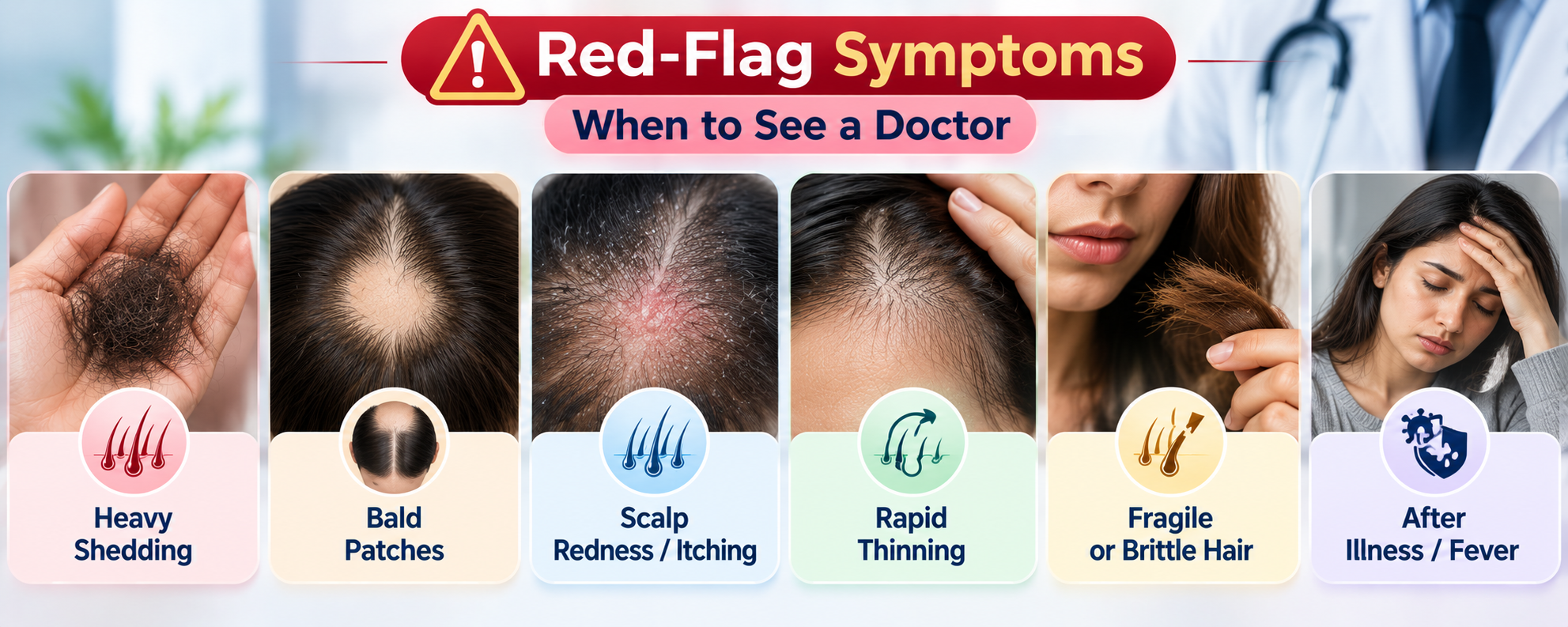
Much sudden shedding is temporary acute telogen effluvium — but please see a dermatologist if any of the following apply rather than assuming it will simply pass.
These support your hair gently while acute telogen effluvium settles. Supportive products do not treat underlying medical causes, and prescription items are doctor-guided.

Where deficiency is confirmed, under medical advice.
Not sure which fits you? The Product Finder matches support to your result.
Open Product FinderBrowse AllSample selection. Prices, ratings and availability shown are placeholders.
These products offer gentle, supportive care during a phase of sudden shedding and a healthy recovery routine. They do not treat the underlying medical causes of hair fall such as thyroid disease, deficiency or pattern loss, and no product or supplement is guaranteed to regrow hair. Supplements help mainly where a deficiency is confirmed by testing. If shedding is very heavy, lasts beyond a few months, is patchy, or comes with other symptoms, see a dermatologist rather than relying on products. Prices, ratings and availability are placeholders to be populated dynamically. Results vary.
Before adding to cart, confirm the likely trigger and rule out red flags.
Check FirstShop All ProductsA gentle routine that supports recovery while acute telogen effluvium settles. Use active or prescription items only under dermatologist guidance, and avoid them in pregnancy or breastfeeding unless a doctor advises.
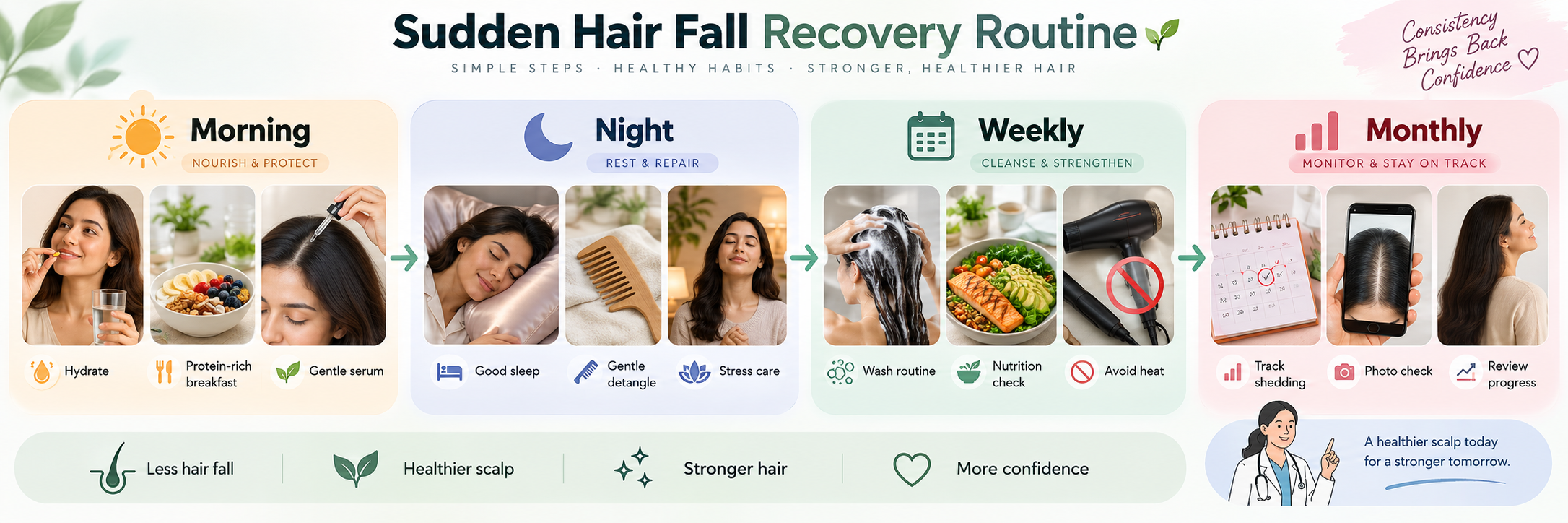
Know that acute shedding is usually temporary; panic-buying rarely helps.
Gentle shampoo on wash days; supportive serum if you wish.
Manage stress and sleep — both support the hair cycle.
Photograph density; note whether shedding is easing.
Balanced, protein-adequate meals; avoid crash dieting.
If suspected, ask a doctor to check iron, vitamin D and thyroid.
Only for a confirmed deficiency, under medical advice.
Recheck levels and progress as your doctor advises.
Don't over-wash; be gentle and pat dry.
Avoid tight styles, harsh chemicals and excess heat.
Wide-tooth comb; work gently from the ends up.
Silk pillowcase and soft ties reduce added breakage.
Growth-support shampoo as new hairs come through.
Supportive serum; consistency matters more than intensity.
Watch for regrowth fringe at the hairline.
Track density; review with a doctor if not recovering by ~6 months.
Want a routine built around your result? Generate a personalised plan in minutes.
Build My RoutineEvidence labels are a simple guide: strong, moderate, supportive or mainly cosmetic. Rx marks prescription items; the rose tag flags pregnancy/lactation caution.
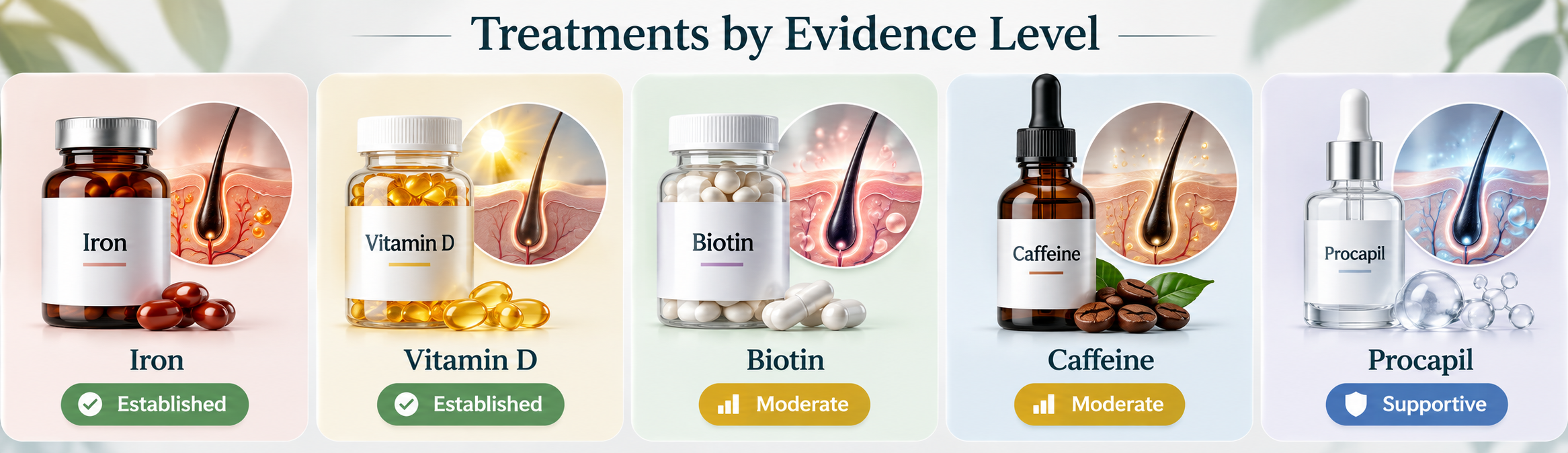
Pregnancy & breastfeeding note: Sudden shedding after childbirth is common and usually temporary. Avoid Minoxidil in pregnancy or breastfeeding unless a doctor advises, and take supplements only on medical advice.
Low iron is a recognised contributor to shedding.
Best for: confirmed low ferritin.
Caution: take only after testing, under medical guidance.
Related productsDeficiency is linked to increased shedding.
Best for: confirmed deficiency.
Caution: correct after testing; avoid excess.
Related productsAdequate protein supports the hair growth cycle.
Best for: low-protein or crash diets.
Caution: aim for a balanced diet first.
Related productsLow B12 can contribute, especially on vegetarian diets.
Best for: confirmed low B12.
Caution: test before supplementing.
Related productsA mineral involved in hair tissue health.
Best for: confirmed low zinc.
Caution: excess can be harmful; test first.
Related productsA B-vitamin involved in hair structure.
Best for: confirmed deficiency.
Caution: limited benefit without deficiency; can affect lab tests.
Related productsA common topical haircare ingredient.
Best for: supportive cosmetic use.
Caution: evidence is limited.
Related productsA cosmetic complex studied for follicle support.
Best for: supportive density.
Caution: supportive, not a cure.
Related productsA cosmetic active marketed for density.
Best for: supportive density.
Caution: evidence is limited.
Related productsA botanical with some small-study interest.
Best for: supportive cosmetic use.
Caution: patch test; dilute; can irritate.
Related productsAntifungal shampoo supporting a healthy scalp.
Best for: oily or flaky scalp with shedding.
Caution: follow directed use; ask a doctor if pregnant/nursing.
Related productsFor pattern loss, not routine acute shedding; doctor-guided.
Best for: overlapping pattern loss.
Caution: prescription; not in pregnancy/breastfeeding.
Related productsThinking about supplements or actives? Test for deficiencies and get assessed first.
Ask a DermatologistAll Ingredients"When someone tells me their hair is suddenly pouring out, my first question is: what happened about two to three months ago? An illness, a fever, surgery, a crash diet, a baby, a big stress? Far more often than not, that's the answer — acute telogen effluvium — and it recovers on its own once the trigger has passed. The panic itself doesn't help. But I never tell anyone sudden shedding is automatically harmless: if it's very heavy, drags on past a few months, comes in patches, or there are other symptoms, we check the thyroid, iron and the scalp. Map the trigger, support the hair, and get assessed if anything doesn't fit."
Shedding heavy or not settling? Book a dermatologist assessment.
Consult Dr. Amit's TeamCurated supportive combinations for a shedding phase. Timelines are general estimates; results vary and are not guaranteed.

Prefer a kit tailored to you? Build a custom plan from your screening result.
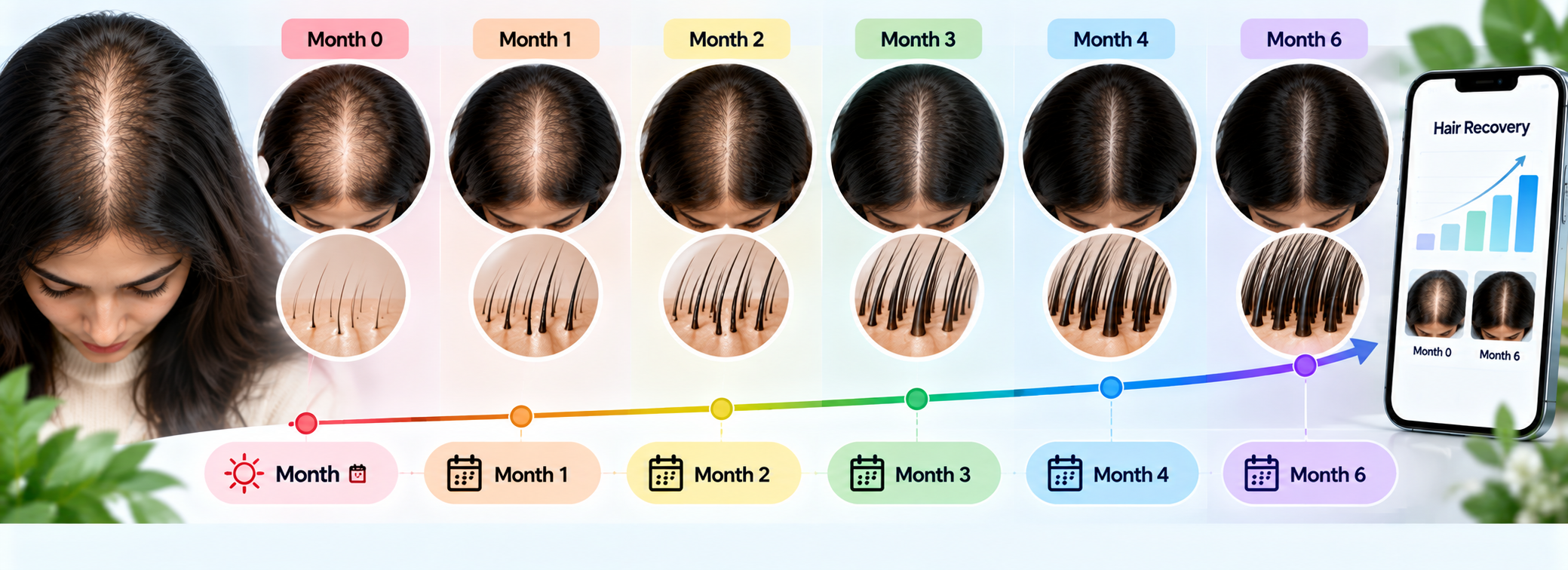
Build a Custom KitTake the CheckerAcute shedding eases and then density rebuilds slowly. Tracking shows the turning point — and flags if it isn't settling within a few months.
These references are provided for patient education and do not replace a dermatologist’s diagnosis or individual medical advice.
Dermatologist-led overview of how hair loss is evaluated and the evidence behind common treatments.
View AAD reference ›Patient-education summary of common causes of hair loss and when to seek medical care.
View MedlinePlus reference ›Searchable index of peer-reviewed research on sudden, recent hair shedding.
Search PubMed ›Independent systematic reviews assessing the evidence behind hair-loss interventions.
View Cochrane Library ›Diagnosis Pathway
Hair loss treatment should start by identifying the pattern. Pattern thinning, diffuse shedding, patchy loss, sudden shedding and hair breakage need different next steps.
May suggest androgenetic alopecia or DHT-related pattern hair loss. Often gradual and progressive.
Androgenetic Alopecia →May relate to telogen effluvium, deficiency, thyroid, illness, stress, postpartum phase or diffuse pattern loss.
Diffuse Hair Thinning →Often follows a trigger weeks to months earlier, but sudden shedding should not be dismissed if severe or persistent.
Sudden Hair Fall →Persistent shedding needs cause-finding: chronic TE, thyroid, deficiency, medicines, hormones or pattern loss.
Chronic Hair Fall →Patchy loss may be alopecia areata, fungal infection or scarring alopecia and should be dermatologist-led.
Patchy Hair Loss →Breakage is shaft damage, not root shedding. It needs damage repair and styling changes, not root-hair-fall treatment.
Breakage vs Hair Fall →Cause Map
DHT-related follicle miniaturisation causing gradual pattern thinning in men and women.
Read Guide →Diffuse shedding after triggers such as fever, COVID, stress, childbirth, surgery, dieting or deficiency.
Read Guide →Iron, vitamin D, thyroid and nutritional issues can contribute to diffuse shedding and chronic hair fall.
Supplement Safety →Round bald patches need dermatologist diagnosis because causes and treatments differ greatly.
Patchy Hair Loss →Stress, rapid weight loss, illness, smoking and alcohol may contribute, but rarely act alone.
Stress Hair Loss →Breakage from heat, chemicals, friction or styling is different from root hair fall.
Breakage vs Hair Fall →Red Flags
Short-term shedding after a known trigger can be tracked with photos, routine consistency and symptom notes.
Use the AI Hair Test to organise pattern, duration, triggers, scalp symptoms and next-step direction.
Hair fall lasting more than 6 months, worsening crown thinning, a widening parting or unclear shedding needs evaluation.
Patchy loss, scalp pain, pus, crusting, bleeding, scarring-looking skin, sudden severe shedding or child scalp scaling needs prompt medical review.
Timeline
Fever, COVID, stress, surgery, childbirth, crash dieting or major illness may push hairs into the shedding phase.
Shedding may become noticeable after a delay, often once the original trigger already feels over.
Supportive care, trigger correction, nutrition and scalp comfort help recovery, but timelines vary.
Heavy, persistent, patchy or progressive loss should be checked rather than assumed harmless.
Assessment
Low ferritin can contribute to diffuse shedding. Iron should be taken only after testing and doctor advice.
Thyroid imbalance can cause diffuse shedding and needs medical management, not hair products alone.
Vitamin D, protein intake and nutritional history may matter, especially after dieting or illness.
Dermoscopy or scalp examination helps separate pattern loss, shedding, inflammation, fungal causes and scarring risks.
Comparison
| Feature | Pattern Hair Loss | Telogen Effluvium | Hair Breakage |
|---|---|---|---|
| Main sign | Receding hairline, crown thinning, widening parting | Diffuse shedding from all over the scalp | Short broken strands, split ends, roughness |
| Timeline | Gradual and progressive | Often starts after a trigger | Linked to damage, heat, chemicals, friction or styling |
| Root bulb? | May shed miniaturised hairs | Shed hairs often have a root bulb | No root bulb; the shaft snaps |
| Best next step | AI Hair Test + dermatologist review if progressive | Find the trigger + correct the cause | Damage-repair routine + styling changes |
Sudden Shedding
A sudden increase in shedding is often telogen effluvium following a trigger weeks to months earlier, but sudden loss can also be alopecia areata or, rarely, a reaction to a medicine, so severe, patchy or persistent sudden loss should be assessed rather than dismissed.
AI-Guided Next Step
Screen hair fall pattern, duration, triggers, scalp symptoms and next-step direction.
Take AI Hair Test →Explore product directions based on cause, scalp type and safety needs after screening.
Find Products →Build a realistic routine for shedding, pattern thinning, scalp support or breakage.
Build Routine →Track shedding, density, parting, crown and treatment response over time.
Track Progress →Product & Routine Pathway
Supportive shampoos, serums and routines for shedding-related concerns. Products do not cure hair loss.
View Hair Fall Products →Cosmetic serums, deficiency-guided supplements and selected doctor-guided active pathways.
View Growth Products →For dandruff, itching, oiliness or inflammation-linked shedding, scalp care may be the first step.
View Scalp Care →If the issue is shaft snapping rather than root shedding, focus on damage repair and styling changes.
View Damage Care →
Explore More
External links open in a new tab for education. They are not endorsements and do not replace a consultation.
Next Step
Hair loss can come from pattern thinning, telogen effluvium, deficiency, thyroid, stress, post-viral shedding, rapid weight loss, scalp inflammation, patchy alopecia or hair shaft breakage. Start with screening, then choose the right routine or doctor review.

Question not answered here? Ask Dr Amit for instant guidance or book a consultation.
Ask Dr AmitConsult a DoctorTake a breath — most sudden shedding is acute telogen effluvium and recovers once the trigger passes. Use the Hairsncares AI Sudden Hair Fall Checker to map the likely trigger, support your hair through recovery, and get assessed if it's heavy, persistent or unusual.
Your cart is empty