Hair Care & Washing
American Academy of Dermatology guidance on healthy hair care and washing frequency.
View AAD reference →High-porosity hair absorbs water and products quickly but may lose moisture just as fast. It is often linked with damage, colouring, chemical treatments, heat styling, roughness, frizz and breakage. A good high-porosity routine should focus on moisture retention, repair-support, sealing, frizz control and gentle handling. Product availability depends on the Hairsncares database and stock. Results vary.
Routine in 5 steps
Hair-type routines support appearance and scalp comfort, not hair-loss cures. AI tools screen, not diagnose; results vary.
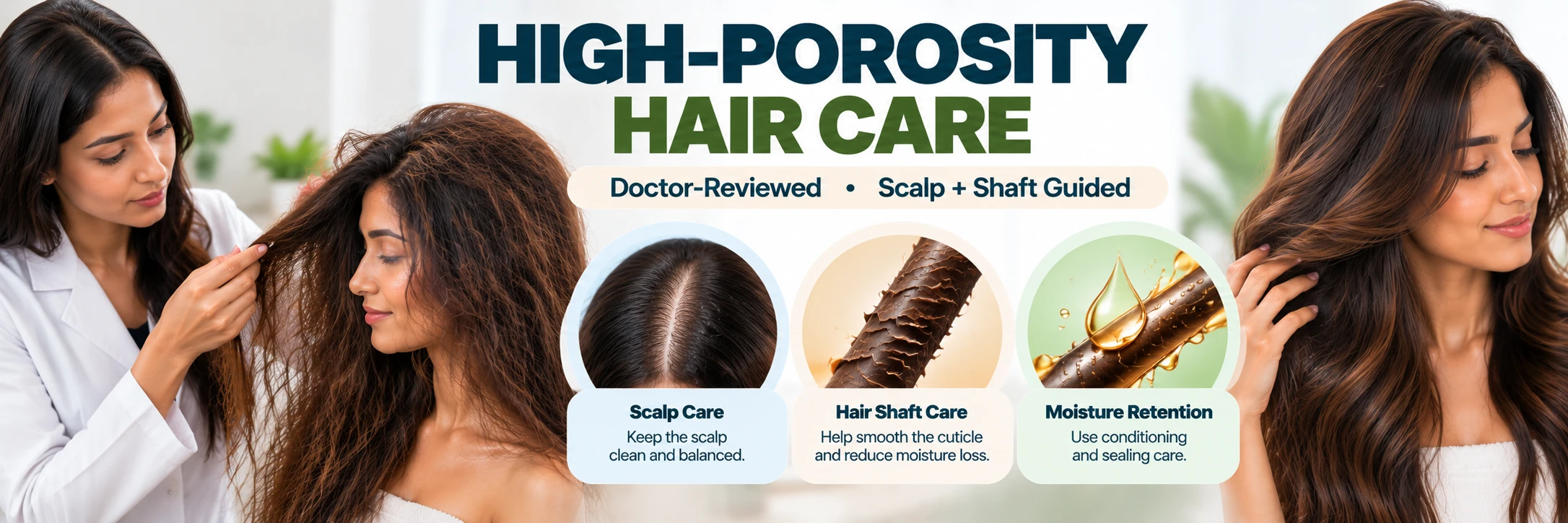
The best high-porosity hair routine usually includes a gentle moisturising shampoo, a rich conditioner, a leave-in conditioner or serum, a suitable oil on the lengths to support sealing, and a weekly repair or hydration mask. High-porosity hair often needs more conditioning than low-porosity hair, but scalp symptoms still need separate assessment. Cosmetic support; results vary.
Not sure what your high-porosity hair needs? Build a routine in a couple of minutes.
Understanding how high-porosity hair behaves helps you pick products that support it without weighing it down or drying it out.
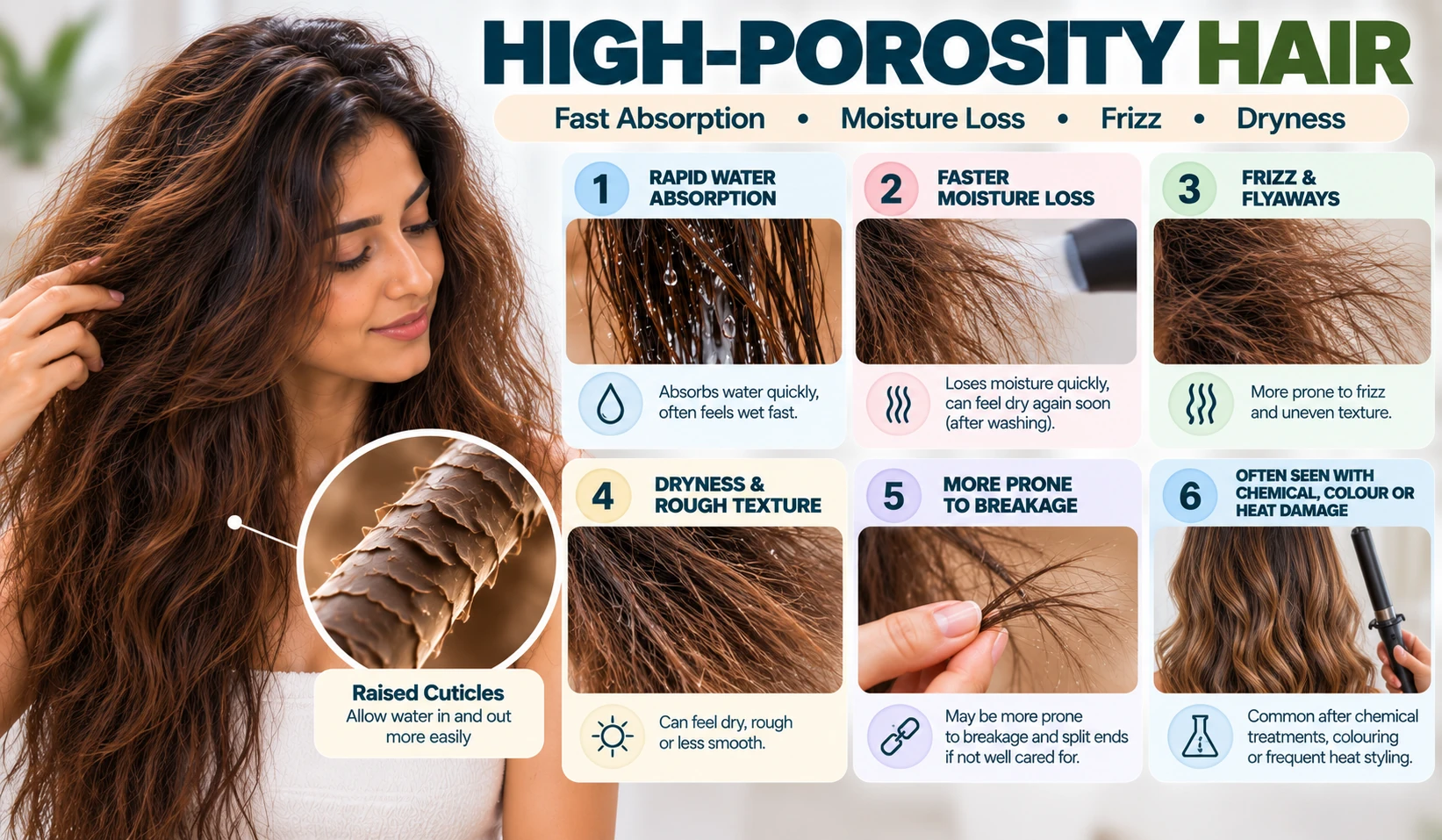
High-porosity hair soaks up water and products fast.
It also loses that moisture just as fast.
Raised cuticles frizz easily, especially in humidity.
Hair feels dry and rough as moisture escapes.
Damaged, porous hair is more prone to breakage.
Usually linked with colour, chemical or heat damage.
Moisture needs sealing in, plus repair support.
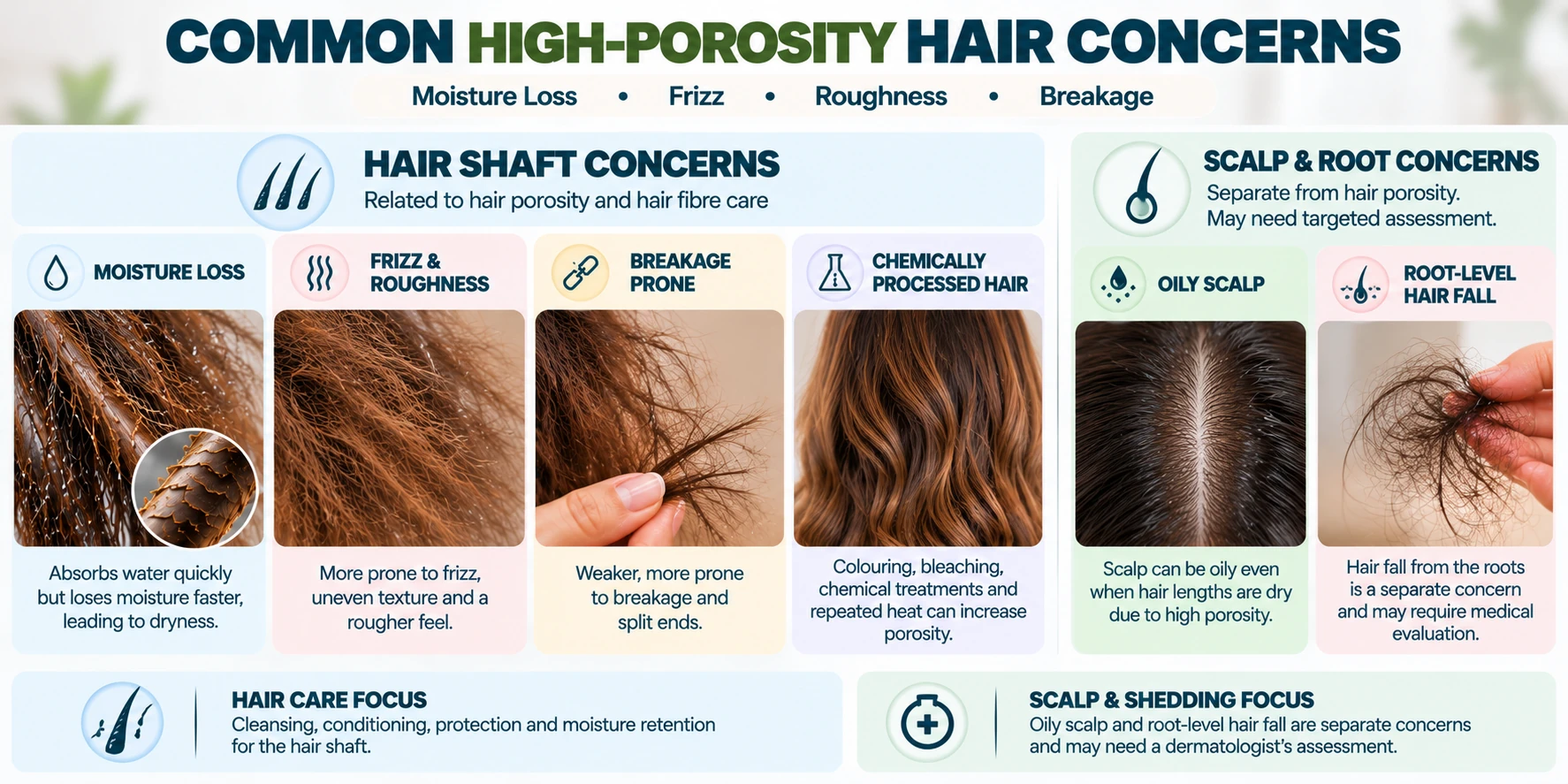
Each concern has a suggested product pathway. Match by your scalp and hair, screen first, and see a doctor for red flags.
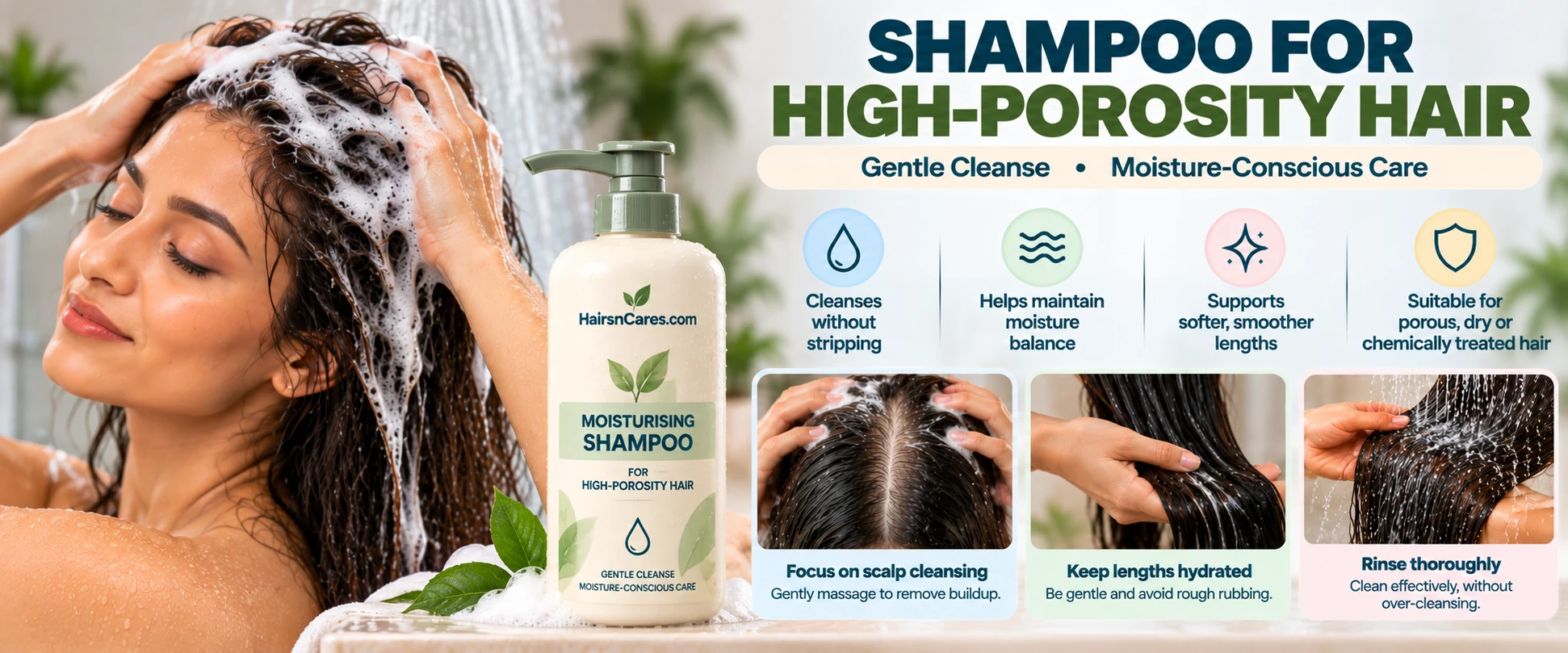
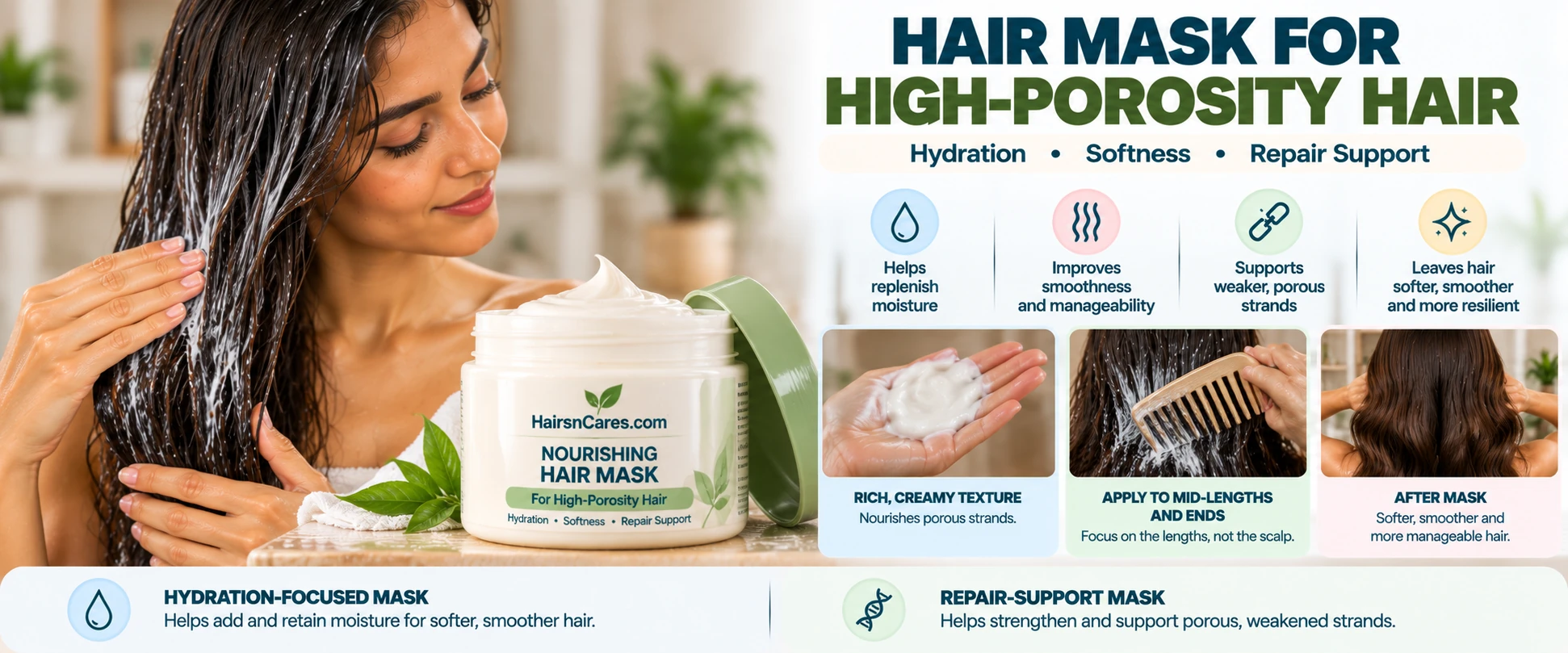
A routine should match your scalp and hair, not just your hair type. Screen first.
A flexible 7-day template — adjust wash frequency to your scalp. Cosmetic support; results vary.
Want this personalised? Build it around your scalp type and concern.
Build My Weekly RoutineTrack My Hair Progress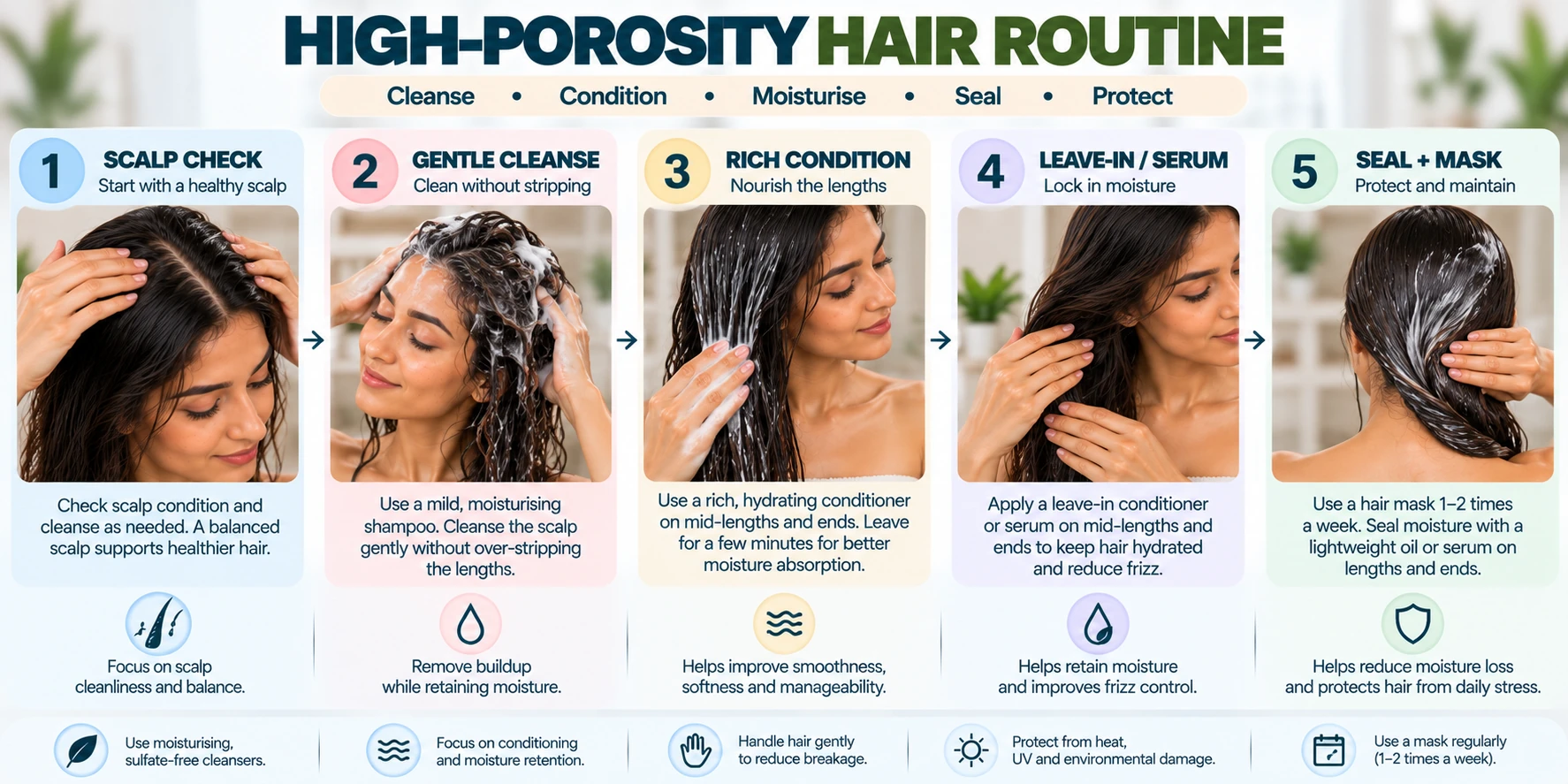
Helpful where they suit your scalp and hair. Actives and oils still need tolerance checks.
Not banned — just easy to overdo. Patch-test actives and keep heavy products off a problem-prone scalp.
Representative picks across the product guides above. All prices, ratings, discounts and stock are dynamic placeholders from the live catalogue. These products support manageability, hydration and scalp comfort — they do not change your natural hair type, cure a scalp disease or treat hair loss. Match exact products to your scalp and concern via screening. Results vary.
Not sure which products suit your hair and scalp? Match products to your type in 2 minutes.
Take AI Hair TestBrowse All ProductsAsk a Hair DoctorThe builder considers your scalp type, hair concern, wash frequency, oil tolerance, serum preference, styling-tool use, colour or chemical history, hair-fall duration and pattern, gender, age, life stage and any PCOS/thyroid or recent illness to assemble a routine with a doctor-consult flag. It does not diagnose or prescribe.
Shown where product data exists. Bundles combine suitable products matched to your scalp and hair concern.
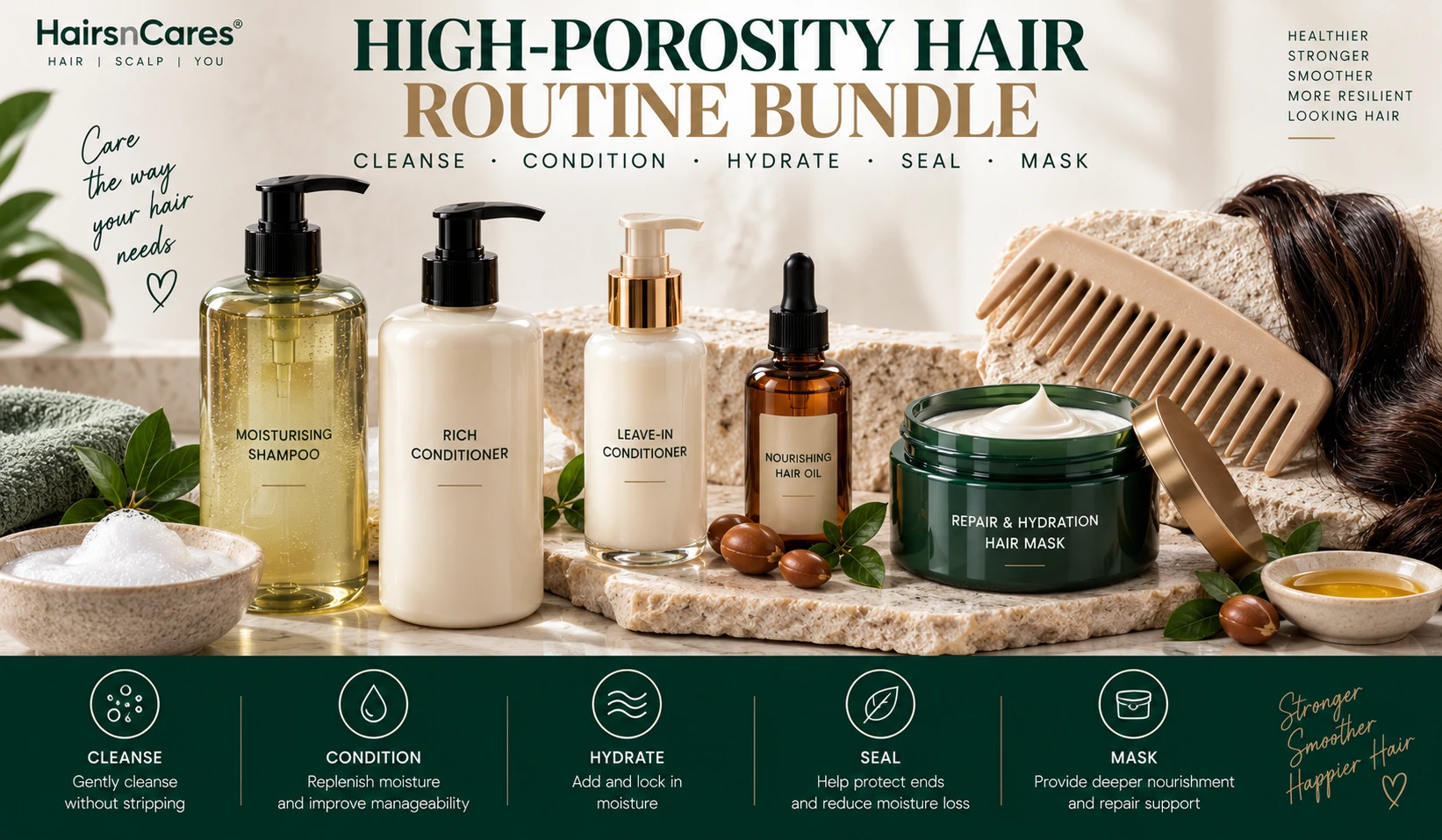
Build a bundle into a routine and track how your hair responds.
Common missteps that flatten, grease up, dry out or damage high-porosity hair — or miss a medical cause.
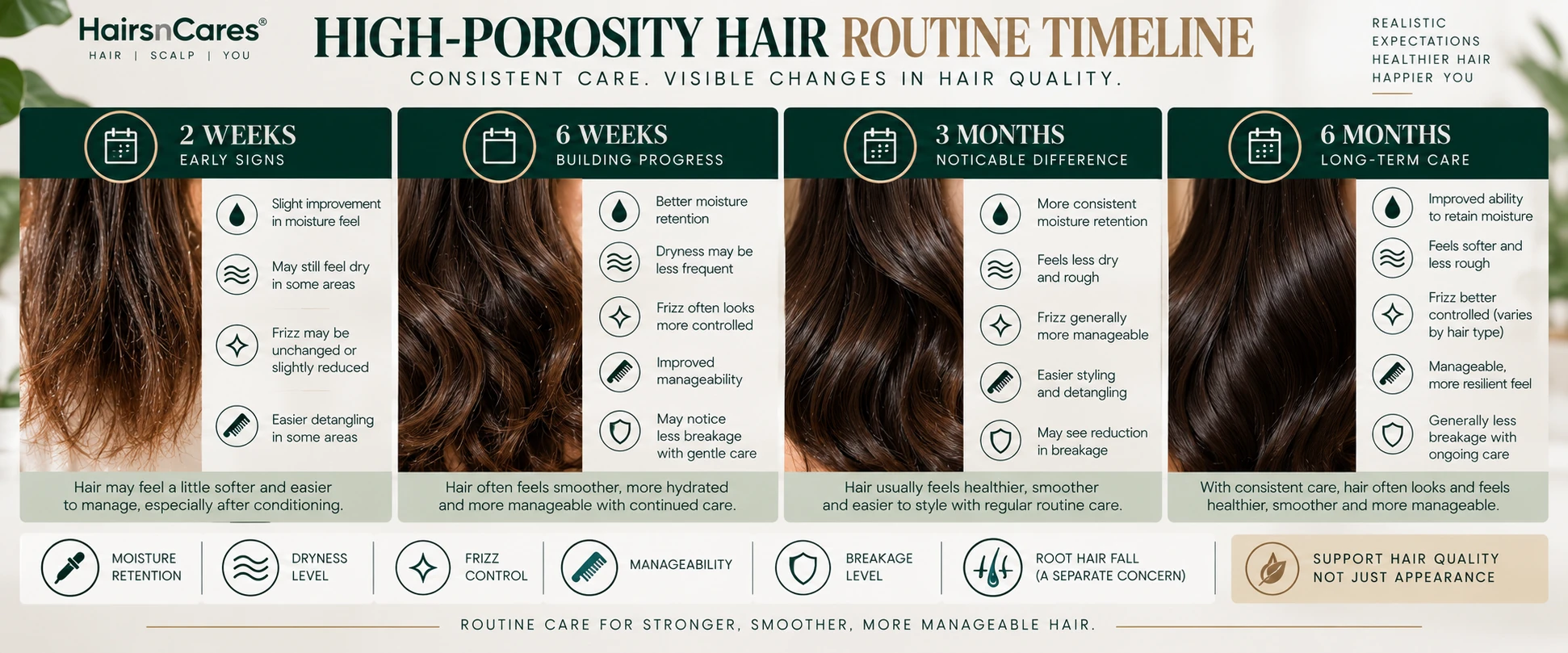
General cosmetic expectations only; hair-fall causes may need longer and a diagnosis. Results vary.
Short, dermatologist-reviewed answers. Cosmetic products support routines; AI tools screen, not diagnose; results vary.
Match products to your scalp and hair: a gentle suitable shampoo, conditioner on the lengths, a serum or leave-in, oil where appropriate, and a weekly mask. Adjust for scalp issues or root hair fall via the AI Hair Test or a dermatologist. Cosmetic support; results vary.
Because raised, porous or damaged cuticles let water in and out quickly, so hair dries fast after absorbing moisture. Rich conditioning, leave-ins, sealing oils and repair-support help hold moisture, alongside gentle handling and heat protection. Results vary.
No. Cosmetic products support moisture retention and sealing and reduced breakage, but they do not treat root causes of hair fall like deficiency, hormones or pattern loss. Screen with the AI Hair Test and see a doctor for genuine shedding. Results vary.
For sudden or patchy hair loss, scalp redness, pain, pus, crusting, thick plaques or severe dandruff, progressive thinning, a widening parting or crown thinning, persistent burning after treatment, or hair fall with PCOS, thyroid or anemia symptoms. These need diagnosis. Results vary.
Hairsncares uses a diagnosis-first approach. These references support general education around hair and scalp care and do not replace dermatologist consultation or endorse any product.
American Academy of Dermatology guidance on healthy hair care and washing frequency.
View AAD reference →Dermatologist-led, diagnosis-first guidance from the American Academy of Dermatology.
View AAD reference →Overview of shampoos, conditioners and styling products for cosmetic-care context.
View PubMed reference →Study on oils and protein loss in hair, for oil-use context only.
View PubMed reference →NIH PubMed Central context on essential oils and possible skin or scalp irritation.
View NIH / PMC reference →External links open in a new tab and are independent sources; Hairsncares is not affiliated with these organisations and they do not endorse any specific product or brand.
As a dermatologist, I separate hair-shaft care from scalp and medical hair-loss care. Colour-treated, chemically-treated, frizzy, low-porosity and high-porosity hair need different product textures and repair logic, but root hair fall, progressive thinning, patchy loss, dandruff and scalp pain need diagnosis-based care. Product selection should depend on hair condition, scalp health and safety — Dr. Amit Agarkar, MD Dermatology
Start with your scalp and hair, not just your hair type.
A good high-porosity hair routine balances lightweight cleansing, smart conditioning, frizz control and scalp comfort. Match products to your scalp and hair, screen with the AI Hair or Scalp Test, and see a doctor for red-flag symptoms. Results vary.
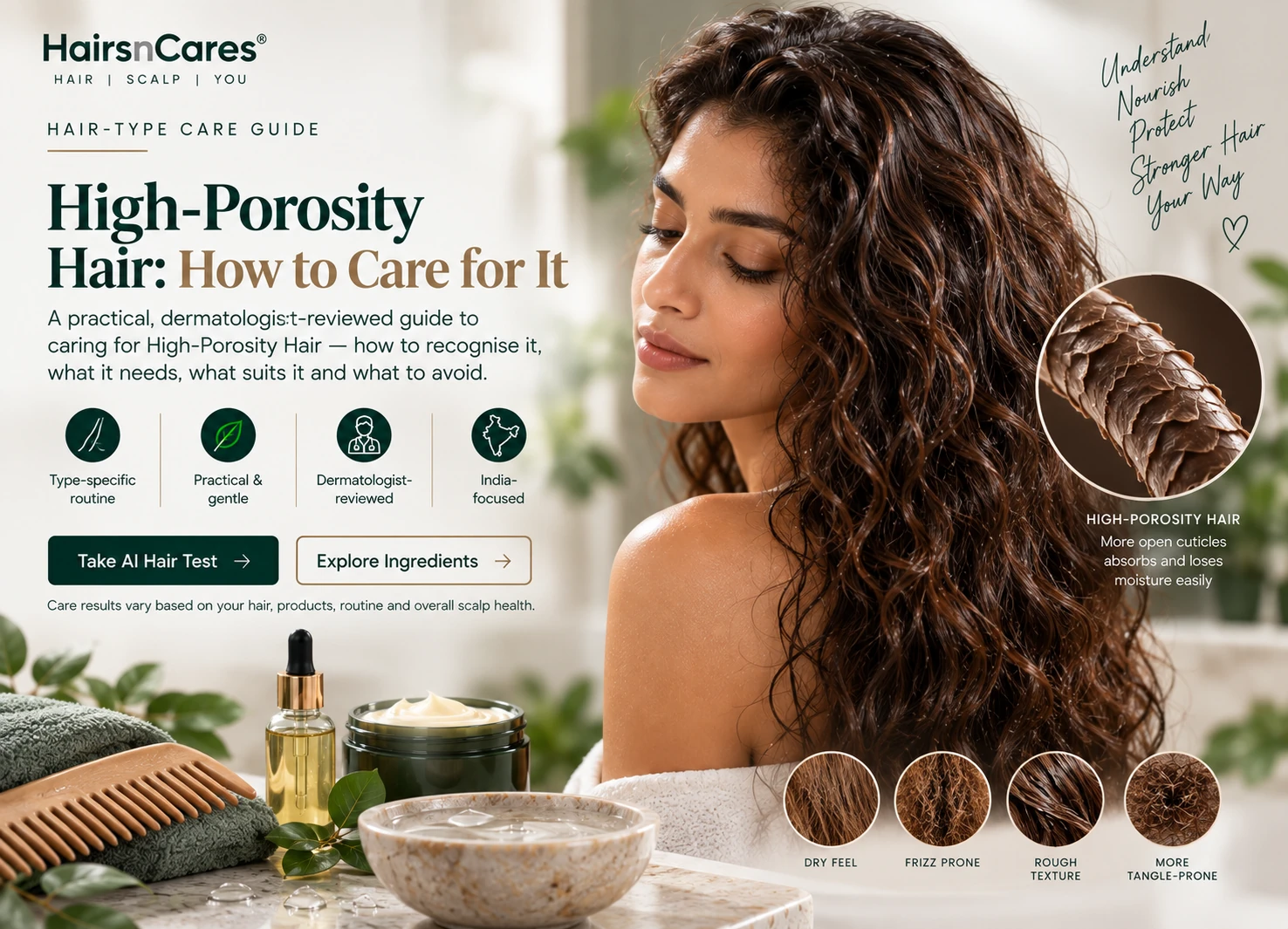
A practical, dermatologist-reviewed guide to caring for High-Porosity Hair — how to recognise it, what it needs, what suits it and what to avoid.
Care results vary based on your hair, products, routine and overall scalp health.
Hair-type visual slot · 720×520 WebP
Hair with a raised, gappy cuticle that absorbs and loses moisture quickly (often from damage or colour).
Hair that soaks up water fast, dries quickly and frizzes or feels dry soon after.
Layered moisture, sealing oils, protein balance and anti-humidity care.
More heat and chemical damage, and skipping the sealing step.
Reviewed by: Dr. Amit Agarkar, MD Dermatology
Medical focus: Dermatology, trichology, hair loss, scalp disorders and hair restoration.
Last reviewed: 1 June 2026
Editorial promise: Practical care advice without exaggerated claims, and a clear line between hair type and hair loss.
The Hairsncares editorial team, medically reviewed by a dermatologist.
Checked for accurate, practical care guidance suited to High-Porosity Hair.
To help you care for High-Porosity Hair well and know when a concern is about hair loss rather than hair type.
| Step | What to do |
|---|---|
| Cleanse | Use a gentle, sulfate-free shampoo |
| Condition | Use a rich conditioner, a leave-in, then seal |
| Style / treat | Moisturise and seal (LOC); minimise heat |
| Weekly care | Alternate protein and moisture treatments |
| Avoid | More heat and chemical damage, and skipping the sealing step |
Hair type is about texture and condition, not hair loss. If you notice increased shedding, new thinning, or a sore, flaky or itchy scalp, that is a separate issue worth getting checked.
Hair that soaks up water fast, dries quickly and frizzes or feels dry soon after.
Layered moisture, sealing oils, protein balance and anti-humidity care.
More heat and chemical damage, and skipping the sealing step.
Type-appropriate options are linked above; choose based on your scalp, sensitivity and routine rather than hype.
Hair type is about texture and condition, not hair loss. If you notice increased shedding, new thinning, or a sore, flaky or itchy scalp, that is a separate issue worth getting checked.
A quick, cosmetic-care overview. Adjust to your scalp and tolerance. Results vary.
| Step | Best direction | Avoid |
|---|---|---|
| Shampoo | Gentle, hydrating; minimise stripping | Harsh washes that worsen porosity |
| Conditioner | Rich, slip-heavy; detangle wet | Skipping conditioner on thirsty hair |
| Serum / Leave-in | Leave-in then seal immediately | Leaving moisture unsealed (evaporates) |
| Oil | Seal with oil/butter on damp hair | Sealing dry hair, locking dryness in |
| Mask | Moisture + occasional protein, balanced | Protein only, or moisture only |
High-porosity hair has a raised or gappy cuticle, so water gets in quickly — and escapes just as quickly. That is why it can feel dry again soon after conditioning. Porosity is often linked to chemical processing, colour, heat or mechanical wear that lifted the cuticle, though some is natural. The strategy is to add moisture and then seal it in before it evaporates.
Layer leave-in, then a sealing oil/butter on damp hair. Explore conditioner, oils and masks. See the AAD's gentle-handling tips.
If hair is breaking or shedding noticeably, that's beyond porosity — take the AI Hair Test or ask a doctor.
This page gives cosmetic hair-care guidance only. For hair fall, patchy loss, progressive thinning, scalp pain, pus, scaling or sudden shedding, screen with an AI tool or see a dermatologist — these are not cosmetic hair-type issues.
Your cart is empty