Above the Fold
Quick Answer: How Do You Control Oily Hair?
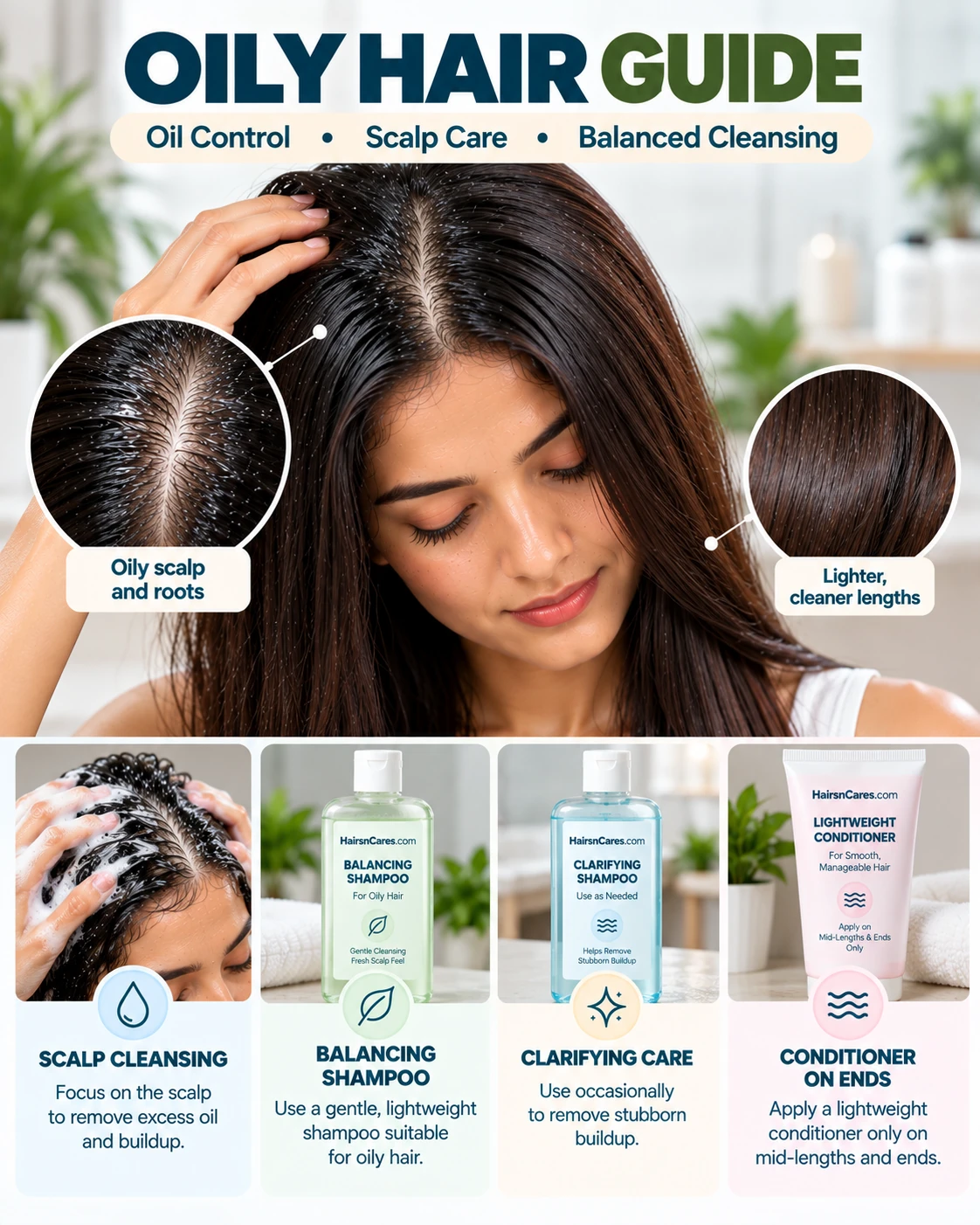
Oily hair is best managed with a balanced wash frequency, a gentle shampoo focused on the scalp, conditioner kept on lengths only, and occasional clarifying to remove buildup. Overwashing with harsh shampoo can backfire by triggering rebound oil production. Persistent oiliness with scalp symptoms needs a dermatologist check.
Search Intent Alignment
What You'll Learn on This Page
- What causes oily hair, and why washing more isn't always the fix
- How to tell oily scalp apart from oily hair and product buildup
- How to find your actual wash frequency instead of guessing
- How clarifying shampoo works, and how often to safely use it
- Whether dry shampoo helps or hides the problem
- Why oiling an already oily scalp usually backfires
- How to manage the common oily-roots, dry-ends combination
- When oiliness is more than cosmetic and needs a doctor's opinion
Understanding the Basics
Oily Hair Starts at the Scalp, Not the Strand
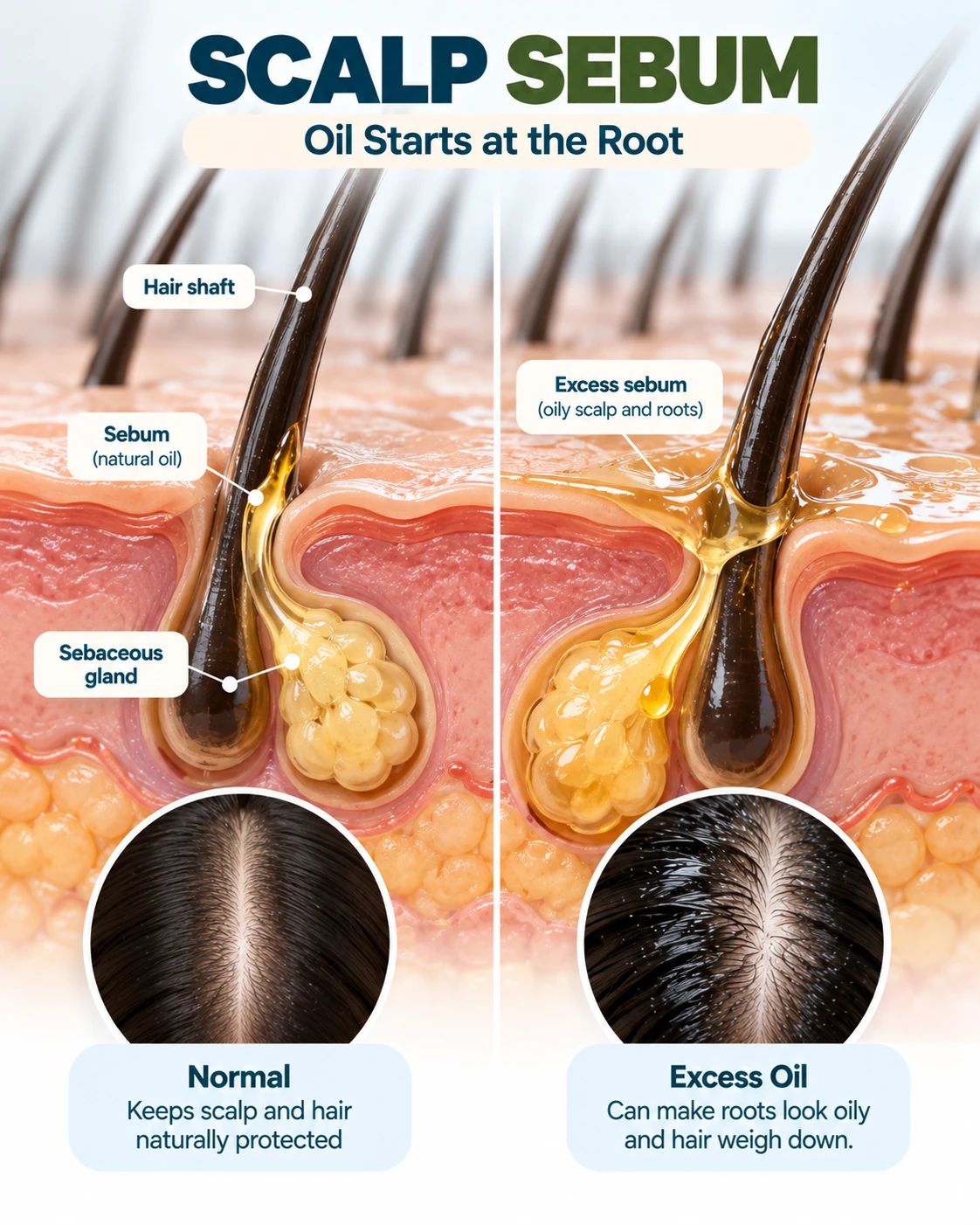
Oily hair happens when the scalp's sebaceous glands produce more oil (sebum) than the hair can absorb before it becomes visibly greasy. It often looks flat, feels heavy soon after washing, appears shiny in a dull way, and may be accompanied by an itchy or uncomfortable scalp.
"Oil production is largely genetic and hormonal. The goal of a routine is to manage it, not eliminate it entirely — some natural oil is healthy for the scalp."
Know the Difference
Three Different Problems Can Look the Same
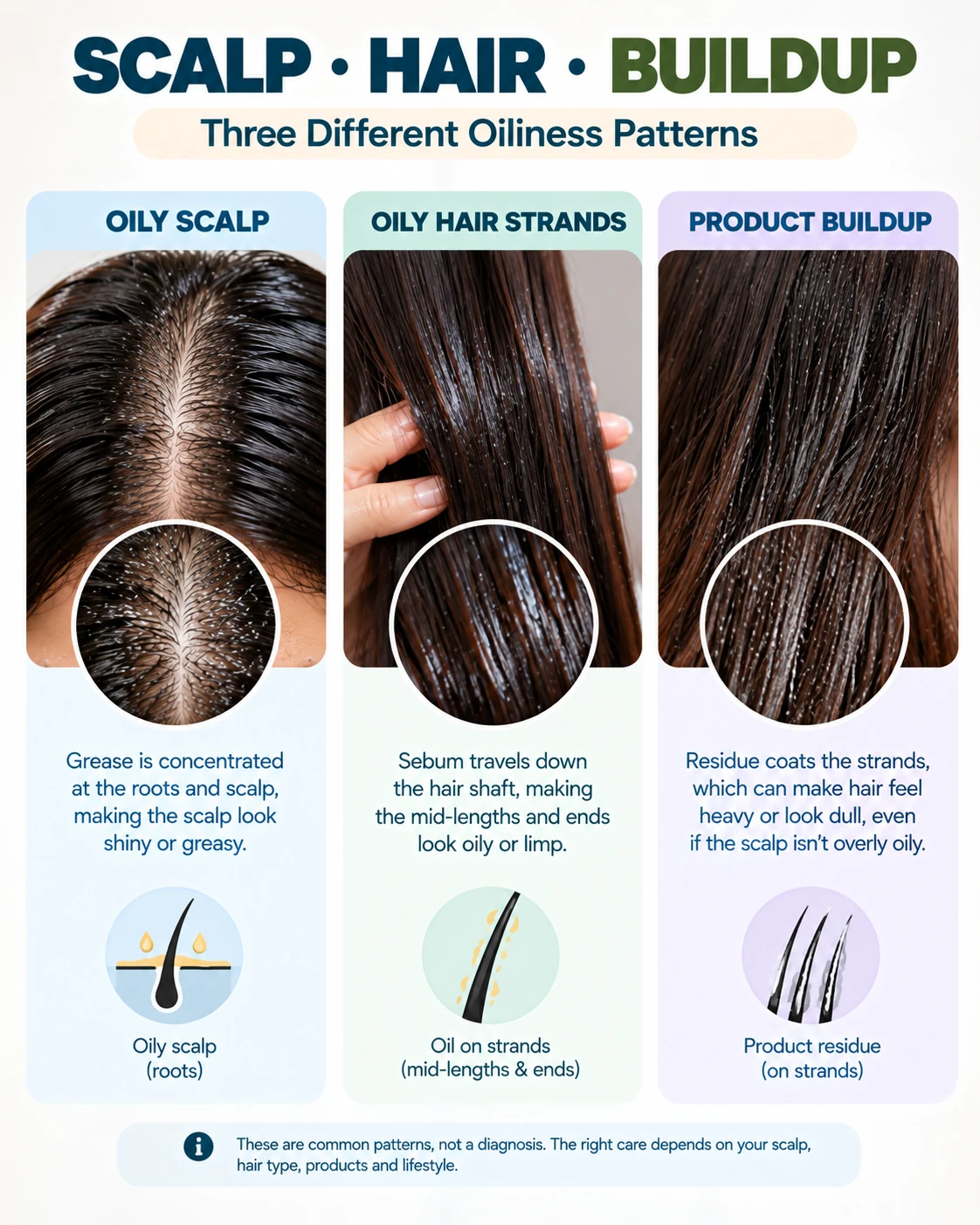
"Oily hair" is often used loosely, but the actual cause changes what routine will help.
Oily Scalp
Excess sebum at the root itself, often genetic or hormonal. Roots feel greasy within a day of washing, even with minimal product use.
Best approach:
- Balanced wash frequency
- Scalp-focused gentle cleansing
- Avoid scalp oiling
Oily Hair Strands
Oil travels down and coats the length of fine or straight strands quickly, even with a normal scalp oil level.
Best approach:
- Lightweight conditioner on lengths only
- Avoid heavy styling products
- Root-lift techniques
Product Buildup
Layered styling products, dry shampoo residue or hard-water minerals coat the hair, mimicking an oily look without actual excess sebum.
Best approach:
- Clarifying shampoo periodically
- Reduce product layering
- Rinse thoroughly every wash
Understanding Causes
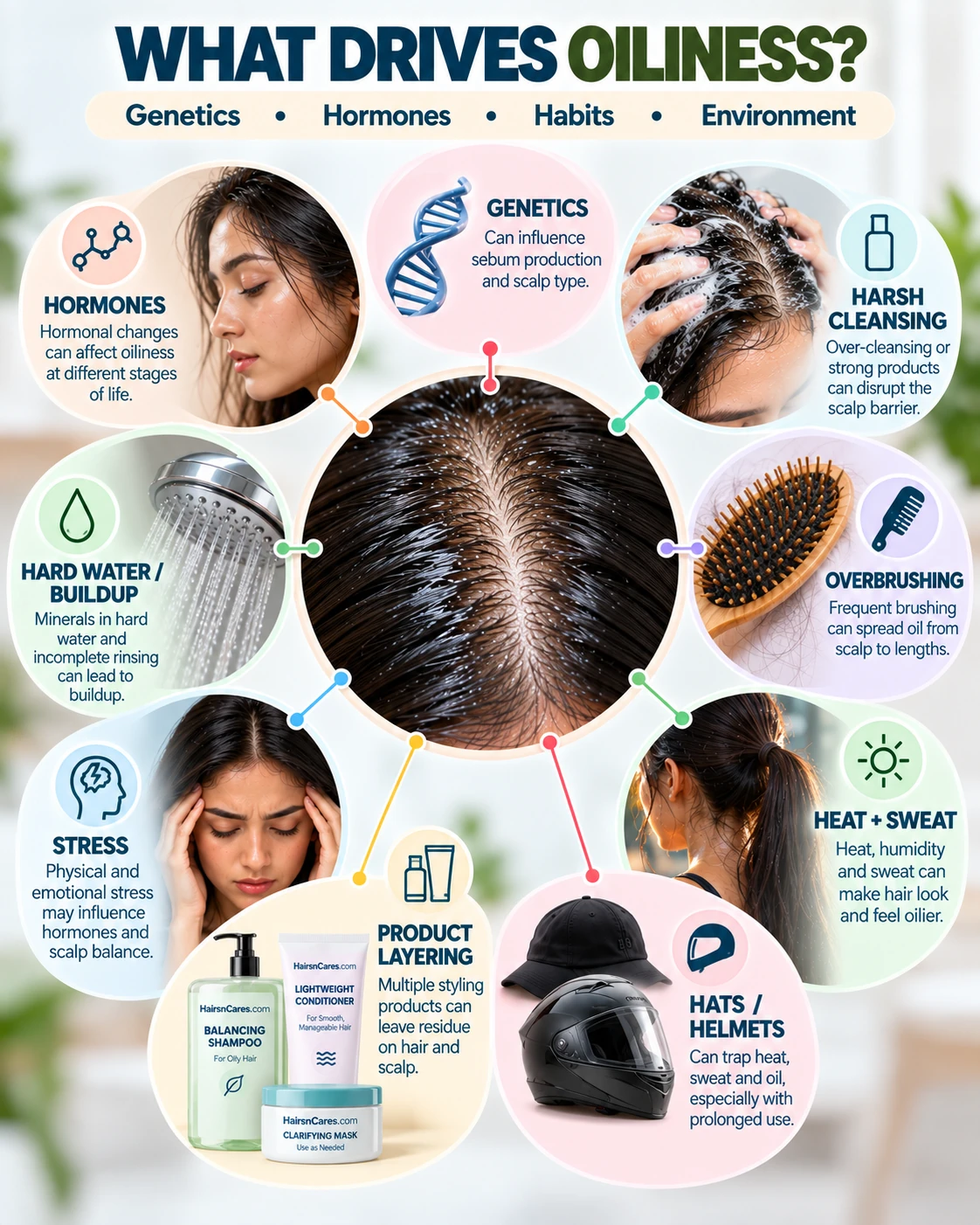
What Actually Drives Scalp Oiliness?
Genetics
Sebaceous gland activity is significantly inherited.
Hormones
Puberty, menstrual cycles, pregnancy and PCOS can all increase sebum.
Harsh Shampoo Rebound
Over-stripping can trigger the scalp to overcompensate with more oil.
Overbrushing
Distributes scalp oil down the length faster than it would travel naturally.
Weather and Sweat
Humidity, heat and workouts all increase oil and sweat production.
Hats and Helmets
Trap heat and oil against the scalp with prolonged wear.
Product Layering
Heavy styling products and residue can mimic or worsen an oily look.
Stress
Can influence hormone levels that affect sebum production.
Hard Water
Mineral buildup can interact with oil and product residue.
Interactive Selector
Find Your Wash Frequency
Select how quickly your hair typically feels oily after washing to see a starting-point suggestion. This is a general guide, not a strict rule — adjust based on how your hair actually responds.
Personalised Routine
Build a Balanced Oil-Control Routine
Answer a few questions to get a suggested cosmetic-care routine. This does not diagnose a hormonal or scalp condition.
The AI Oily Hair Routine Builder supports cosmetic routine planning only. It cannot diagnose a hormonal or scalp condition or prescribe treatment.
Cleansing
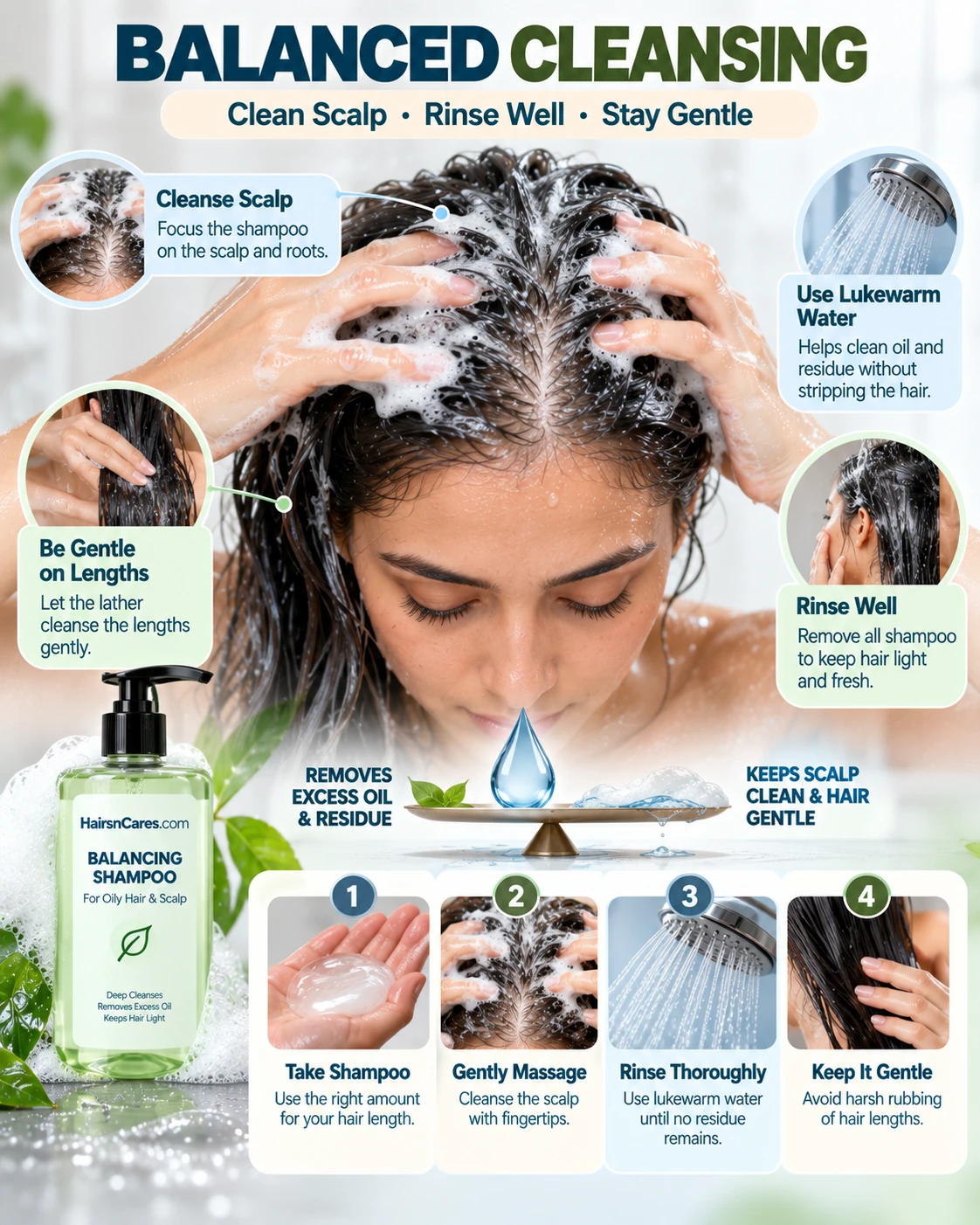
Cleanse Effectively Without Triggering Rebound Oil
Recommended categories
- Balancing shampoo for oily scalp
- Gentle daily-use formula if washing often
- Anti-dandruff shampoo if flaking is present
- Clarifying shampoo occasionally for buildup
Avoid
- Very harsh, stripping formulas used daily
- Hot water
- Excessive scrubbing with nails
- Skipping wash days entirely to "train" the scalp
"Washing less to reduce oil often backfires. A gentle formula at a consistent frequency usually works better than avoidance."
Conditioning
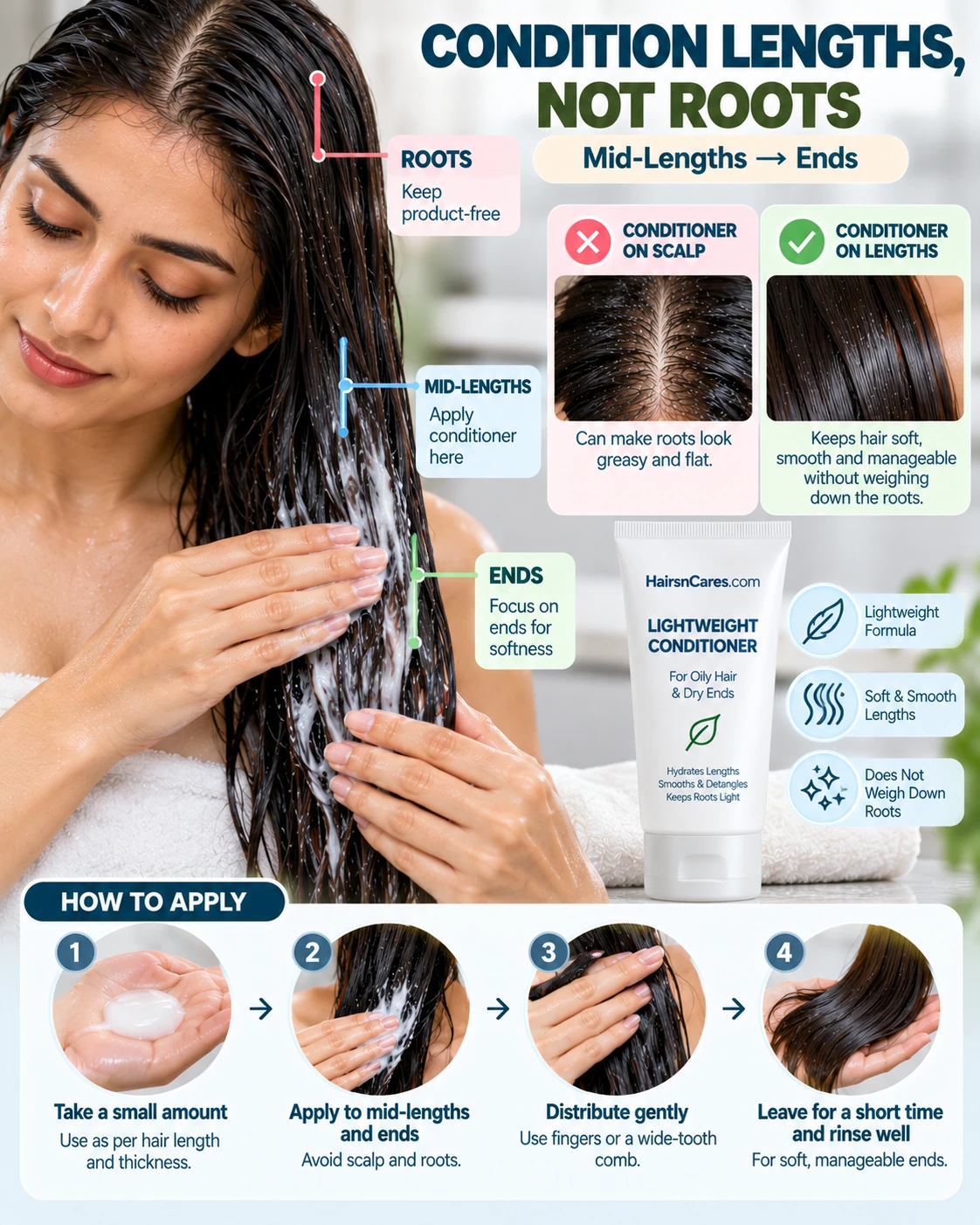
Conditioner Still Matters — Just Keep It Off the Scalp
Skipping conditioner entirely can leave lengths and ends dry, tangled and prone to breakage, even if the scalp is oily. The key is application zone.
Rules
- Apply mid-lengths to ends only
- Avoid the scalp and roots
- Choose a lightweight formula
- Rinse thoroughly
- Richer formula only if ends are notably dry
Periodic Deep Cleanse
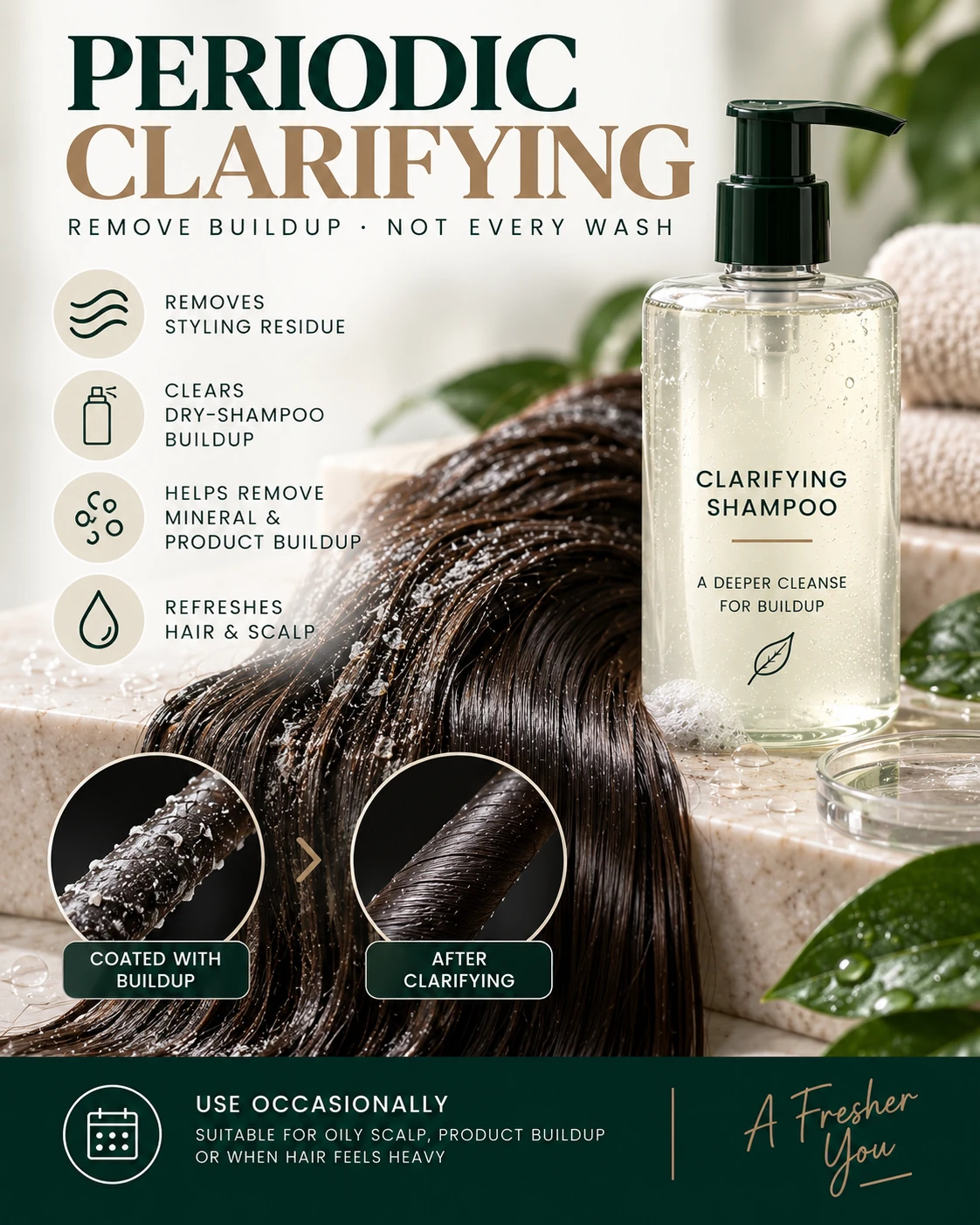
Clarify Periodically, Not Constantly
Clarifying shampoo removes buildup from styling products, dry shampoo residue and hard-water minerals more thoroughly than a regular wash.
When to clarify
- Hair feels coated even right after washing
- Heavy styling product use
- Frequent dry shampoo use
- Noticeable dullness
- Roughly every 1–2 weeks as a starting point
Caution
- Overuse can strip natural oils excessively
- May trigger rebound oiliness
- Follow with a good conditioner on lengths
- Not needed for everyone weekly
Extend, Don't Replace
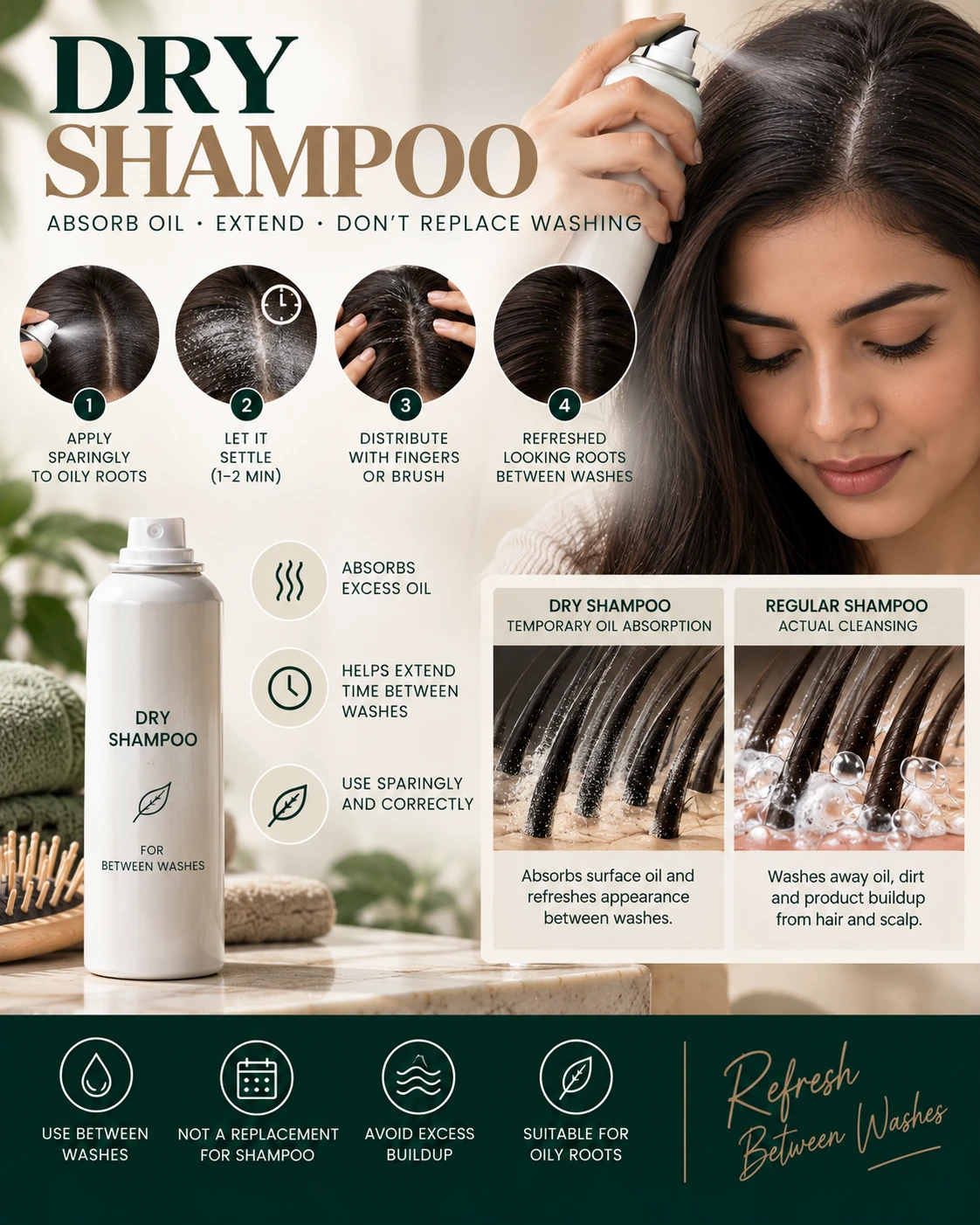
Dry Shampoo Is a Tool, Not a Substitute for Washing
Helpful for
- Extending time between washes
- Absorbing excess oil at the roots
- Adding texture and root lift
- Post-workout freshening
Caution
- Frequent use without washing causes buildup
- Can worsen scalp irritation if overused
- Not a substitute for actual cleansing
- Brush out thoroughly before reapplying
Think Twice Before Oiling
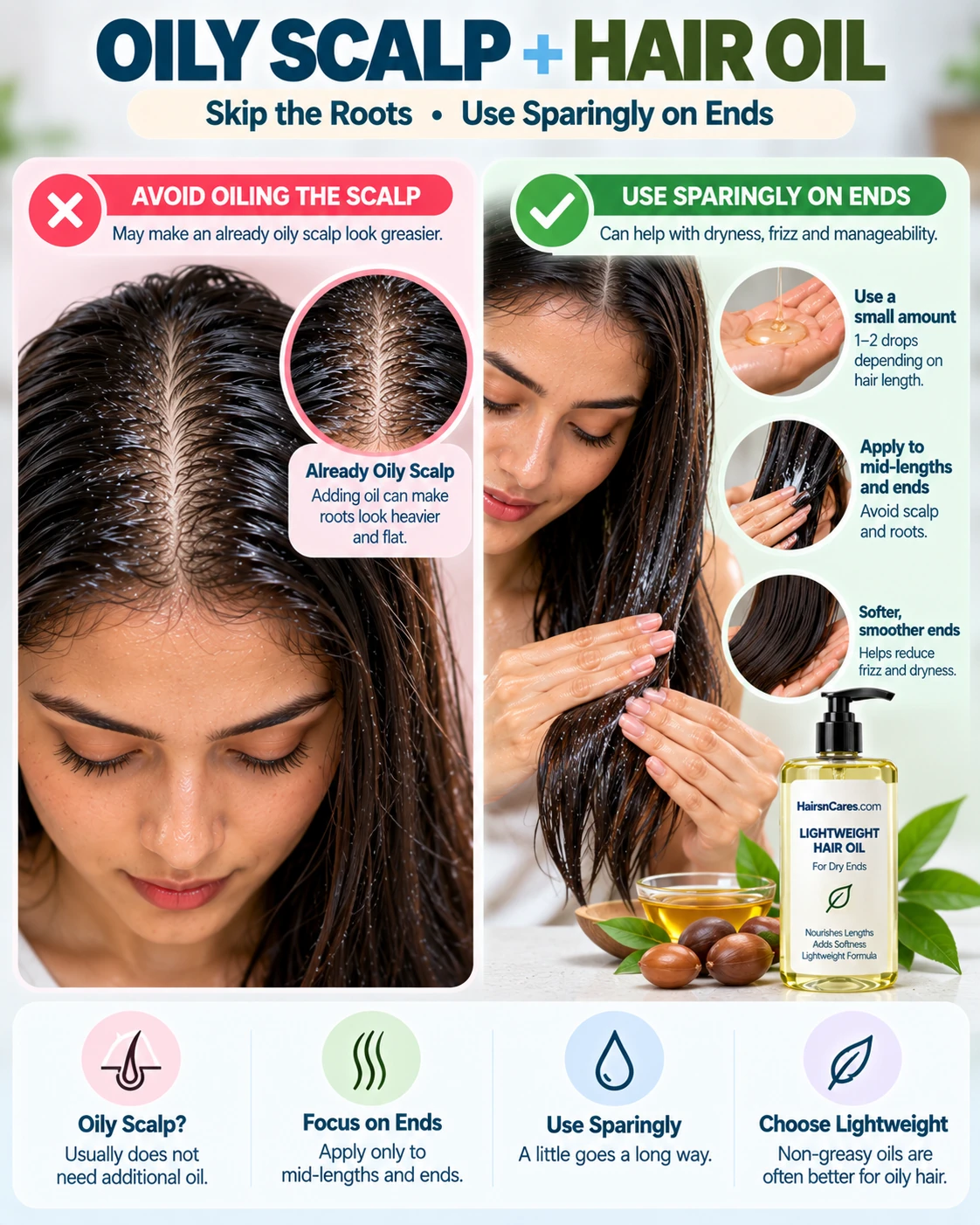
Oiling an Already Oily Scalp Usually Backfires
Traditional scalp oiling is often recommended for dry or normal scalps, but adding oil directly to an already oily scalp can add to existing grease, contribute to buildup, and potentially clog follicles.
If oil is still desired
- Use only on lengths and ends, never the scalp
- Choose very lightweight, non-comedogenic formulas
- Apply sparingly
- Wash out thoroughly
Two-Zone Care
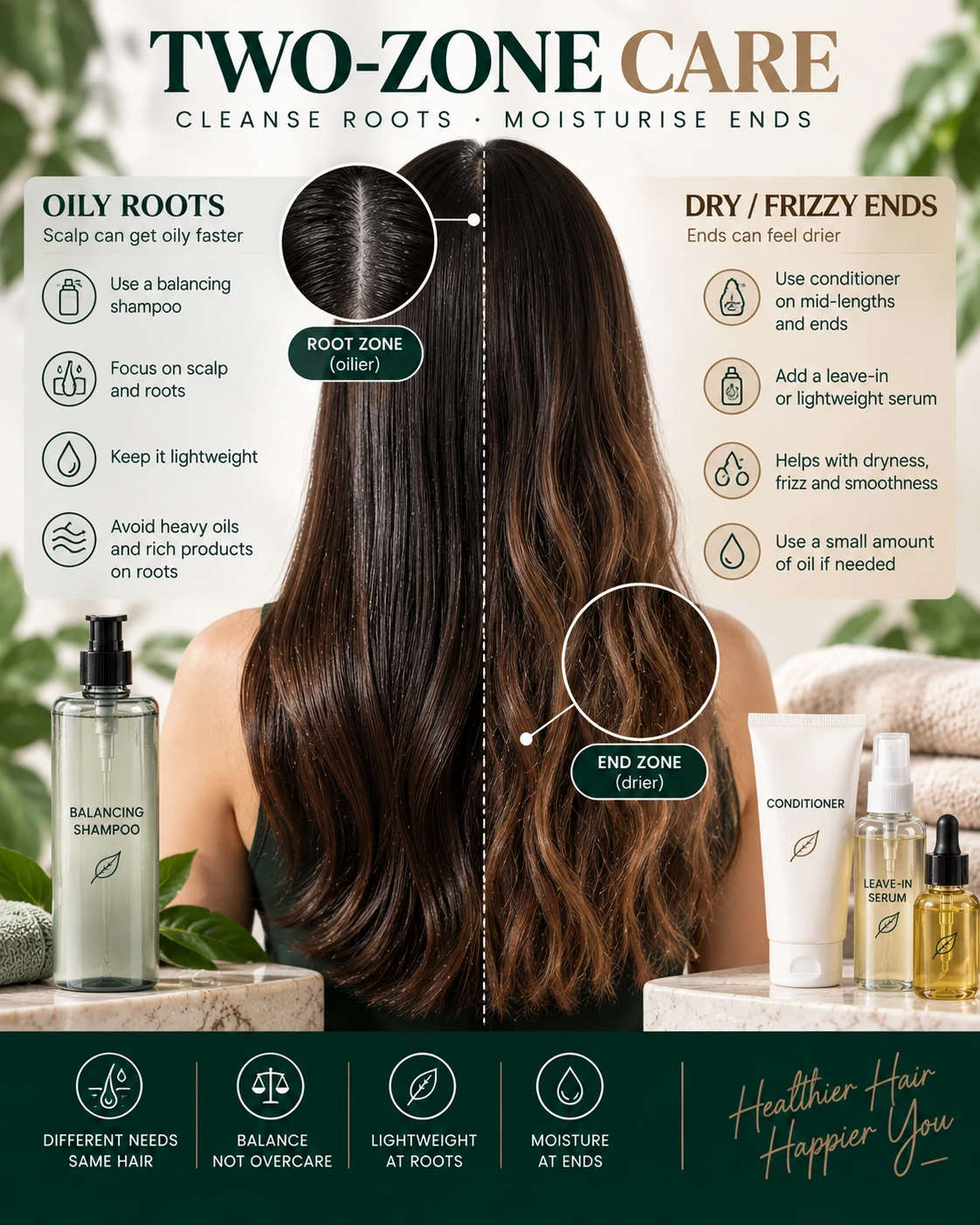
Treat Roots and Ends as Two Different Zones
This common combination — greasy roots with dry, frizzy ends — happens because natural scalp oils often don't travel efficiently down long or textured hair.
Roots
- Balancing shampoo
- Gentle scalp-focused cleansing
- No oil, no rich conditioner
Ends
- Conditioner or leave-in
- Lightweight serum or oil
- Extra moisture as needed
Daily Habits
Small Habits Add Up to Faster Oiliness
Frequent touching or running fingers through hair
Overbrushing
Tight hats or helmets
Sleeping on unwashed pillowcases
Hot showers
High-intensity workouts without a post-sweat rinse
Heavy styling products
Humid climates
Related Scalp Concerns
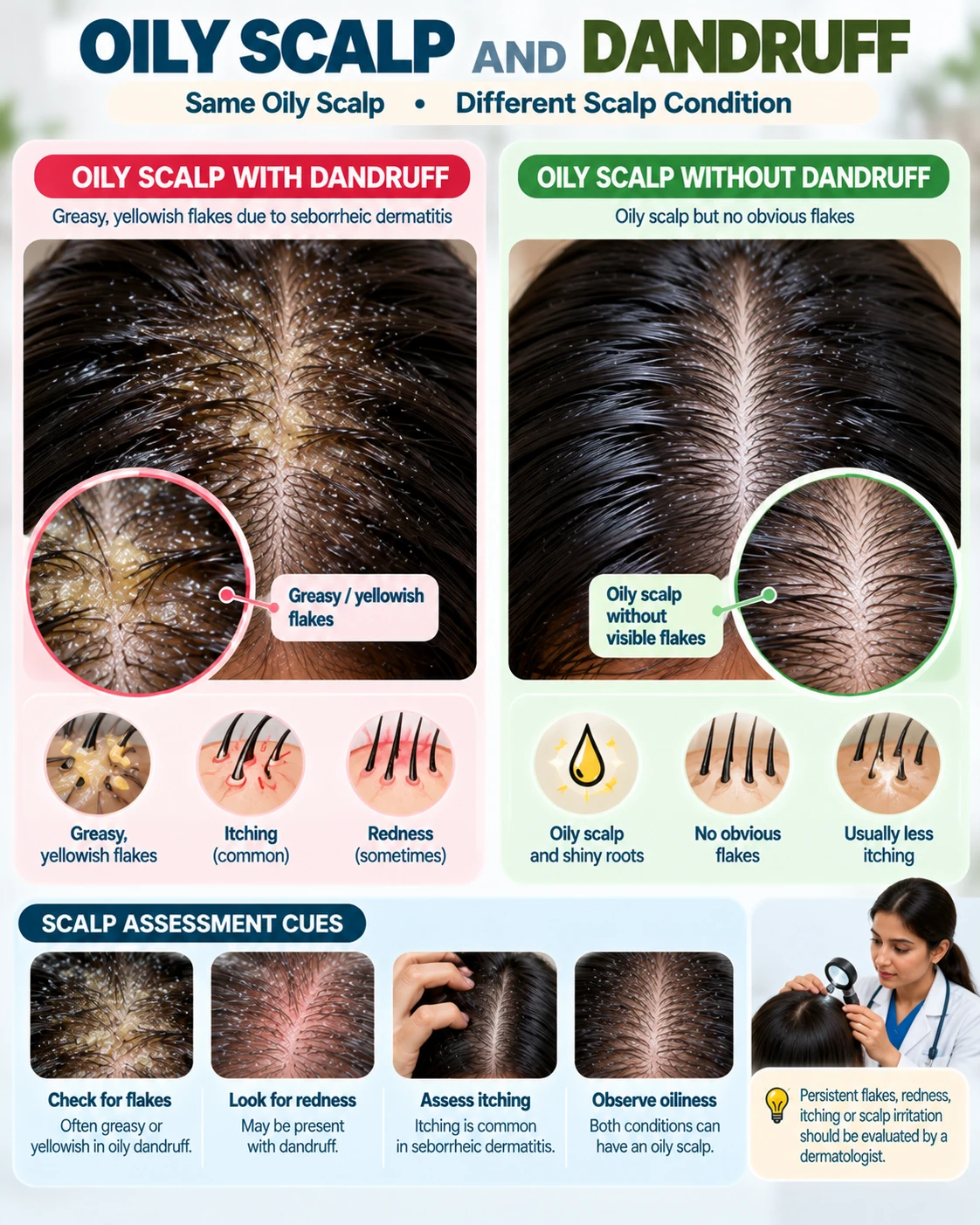
Oily Scalp and Dandruff Are Often Connected
Certain types of dandruff, particularly seborrhoeic dermatitis, are linked to an oily scalp environment, since the yeast associated with dandruff thrives in excess sebum.
Signs to watch for
- Yellowish, greasy-looking flakes
- Persistent itching
- Flaking that doesn't improve with regular shampoo
- Redness alongside flaking
Ecommerce
Shop Oily Hair Products by Concern
Filter by concern, product type and safety preferences.
*Claims are shown only when verified on the product database; unverified claims are not displayed.
Compare by Zone Need
Compare Oil-Control Products by Zone Need
Compare up to four products on scalp suitability, buildup removal strength, and more. Products are never labelled "best" without verified criteria.
| Attribute | Product A | Product B |
|---|---|---|
| Product type | Balancing shampoo | Clarifying shampoo |
| Best use | Regular wash days | Periodic deep cleanse |
| Frequency | Every wash | Every 1–2 weeks |
| Stripping risk | Low | Higher if overused |
AI Tool
Create Your Personal Oil-Control Plan
The AI Oily Hair Routine Builder above uses your inputs — oiliness source, speed, texture, dandruff presence, ends condition and activity level — to suggest routine categories and a wash-frequency starting point.
Track Realistically
Track Oil Speed, Not Just How Hair Looks One Day
Track how quickly hair feels oily after washing, scalp comfort, flaking, itchiness, wash frequency, product use, dry shampoo use, clarifying frequency and ends condition.
Do Not Self-Manage These
Do Not Treat These Signs as Routine Oiliness
- Persistent scalp itching that doesn't improve
- Redness, pain or burning
- Flaking that doesn't respond to regular shampoo
- Hair thinning alongside oiliness
- Sudden increase in shedding
- Painful bumps or pustules on the scalp
- Signs of hormonal changes alongside oiliness — irregular periods, acne, excess hair growth
Route to a dermatologist, the dandruff guide, or a physician/gynaecologist if hormonal symptoms are present.
Avoid These
Mistakes That Keep Hair Oilier for Longer
Expert Note
Balance the Scalp, Don't Fight It
"Oily hair usually responds best to a consistent, gentle wash routine that cleanses the scalp without stripping it excessively. Overwashing with harsh shampoo, or avoiding washing altogether, can both make things worse. If oiliness comes with persistent itching, flaking, pain or hair thinning, that needs a separate medical look rather than more oil-control products."
Reviewed by Dr. Amit Agarkar, MD Dermatology — Hairsncares
Suggested Medical References
Where to Read More From Trusted Sources
This page reflects general dermatology and cosmetic hair-science understanding. For deeper reading on sebum production, seborrhoeic dermatitis and scalp health, these are reputable starting points — search each organisation's site directly for the most current article, since we don't want to point you to a guessed or outdated link.
- American Academy of Dermatology (AAD)Patient guides on oily scalp, dandruff and scalp health
- MedlinePlus (U.S. National Library of Medicine)Consumer-friendly overviews of scalp and hormone-related conditions
- PubMedPeer-reviewed research on sebaceous gland activity and seborrhoeic dermatitis
- NHS (UK National Health Service)Condition overviews for scalp conditions and hormonal skin changes
These are reference categories, not endorsements of specific articles. Always check the publication date and consult a dermatologist for advice specific to you.
Frequently Asked Questions
Oily Hair Guide: FAQs
Browse by category, or open any question directly — every answer stays on the cosmetic side of the line, with medical questions pointed to a doctor.