Above the Fold
Quick Answer: How Do You Care for Curly Hair?
Curly hair generally does best with gentle cleansing, rich conditioning, product applied to soaking wet hair, minimal disturbance while drying, and low-friction overnight protection. Curl type, porosity and density all shape the specific routine — there's no single universal method that works for every curl pattern.
Search Intent Alignment
What You'll Learn on This Page
- How to identify your curl type, and why most people have more than one
- What the curly girl method actually excludes, and whether you need it
- How porosity changes which products and techniques work for you
- A full wash-day routine, from cleansing to scrunching out the cast
- The technique glossary: plopping, praying hands, finger coiling, diffusing
- How to refresh curls between washes and protect them overnight
- Heat and colour safety specific to curly hair
- When curl or scalp changes need a dermatologist rather than a new product
Understanding the Basics
Curl Pattern Comes From Follicle Shape
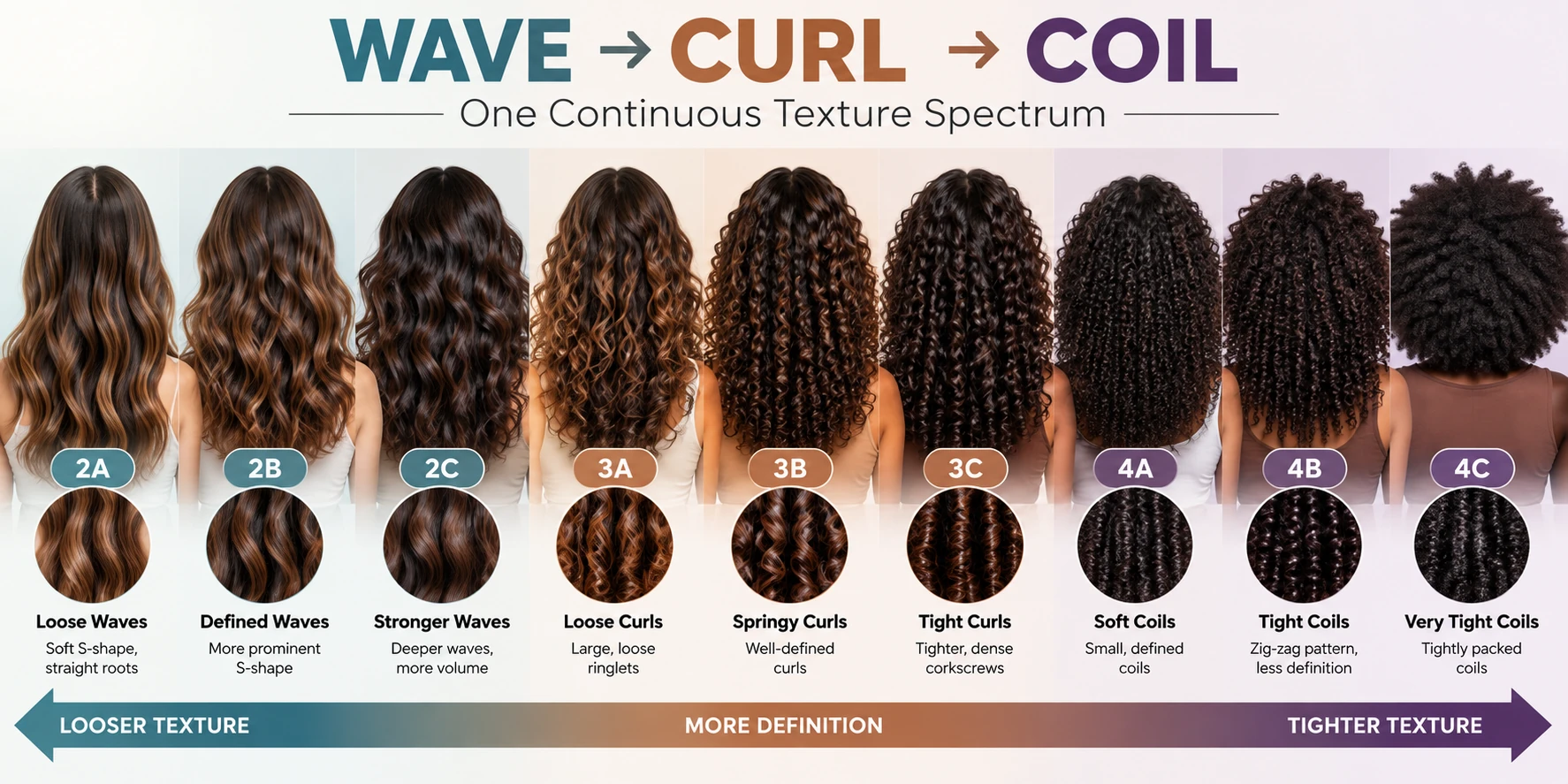
Curly hair grows from an asymmetric, curved hair follicle, which causes the strand to emerge and grow in a bent or coiled shape rather than straight. This pattern can range from loose S-shaped waves to tight, springy coils, and often varies across a single head — looser at the crown and nape, tighter at the sides is a common combination.
"Curl pattern is genetic, but how defined, healthy or frizzy it looks depends heavily on moisture, porosity and technique."
Interactive Classification
What's Your Curl Type?
Select the type closest to your natural, clean, product-free pattern. Many people have more than one type across their head — this is a general reference, not a rigid category.
Know the Difference
Wavy, Curly and Coily Are a Spectrum, Not Strict Boxes
| Category | General Types | Common Traits |
|---|---|---|
| Wavy | 2A–2C | S-shaped waves, less shrinkage, can look straight when wet |
| Curly | 3A–3C | Springy loops to tight corkscrews, moderate to high shrinkage |
| Coily | 4A–4C | Tight S or Z pattern, highest shrinkage, most fragile to friction |
Method Explained
What the Curly Girl Method Actually Means
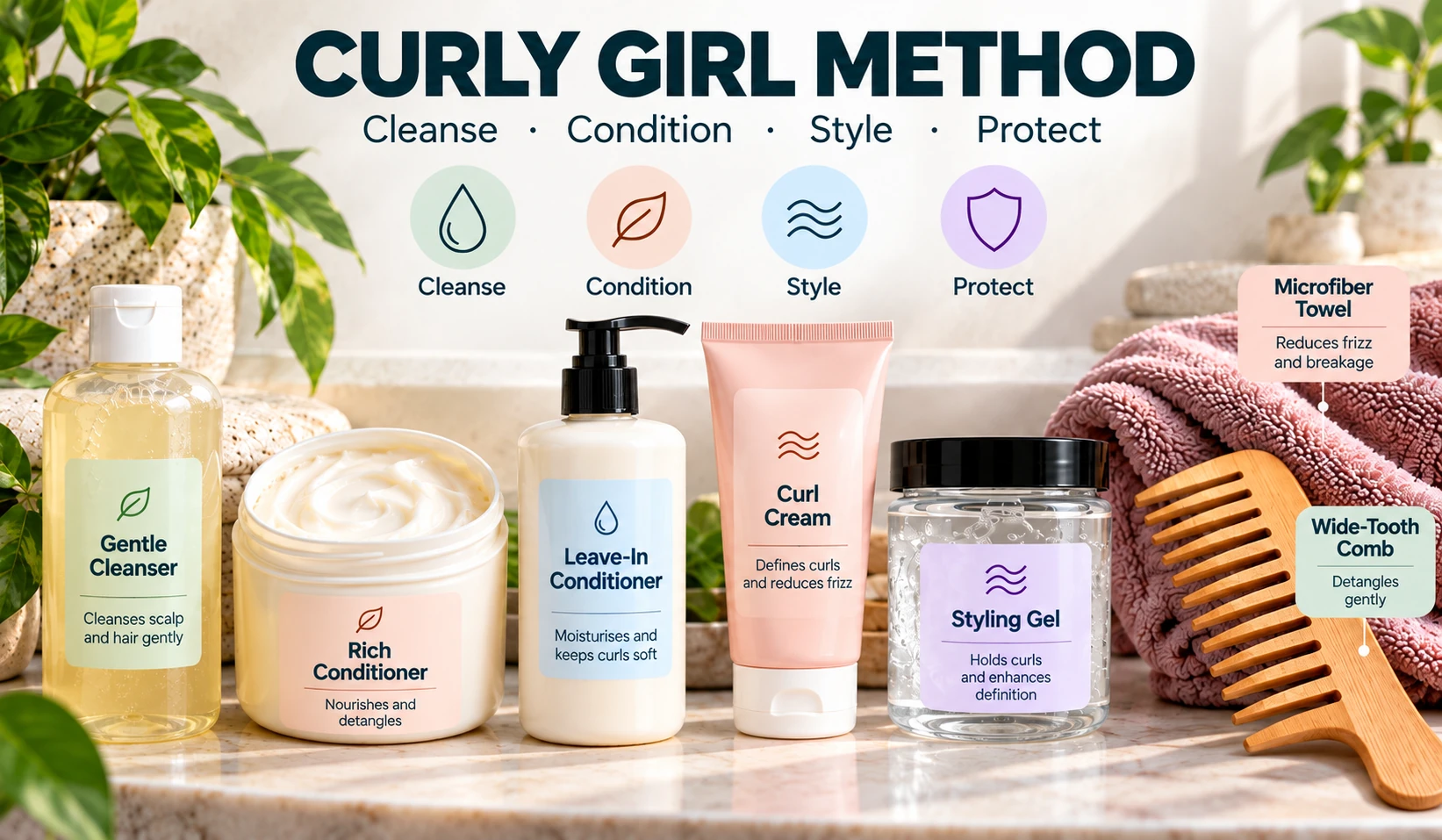
The curly girl method is a haircare approach built around avoiding ingredients believed to weigh down or dry out curls, replacing them with gentle, moisture-focused alternatives and reduced heat styling.
Generally Included
- Sulphate-free or low-sulphate cleansers
- Water-soluble silicones (sometimes)
- Rich conditioners
- Leave-in conditioner
- Gel and cream stylers
- Air-drying or diffusing
Generally Avoided
- Sulphates
- Non-water-soluble silicones
- Drying alcohols
- Mineral oil, petrolatum (in strict versions)
- Frequent heat styling
- Brushing dry hair
"The method is a helpful framework, not a strict rulebook. Many people adapt it — using a clarifying shampoo occasionally, for example — based on how their own hair responds."
Porosity Awareness
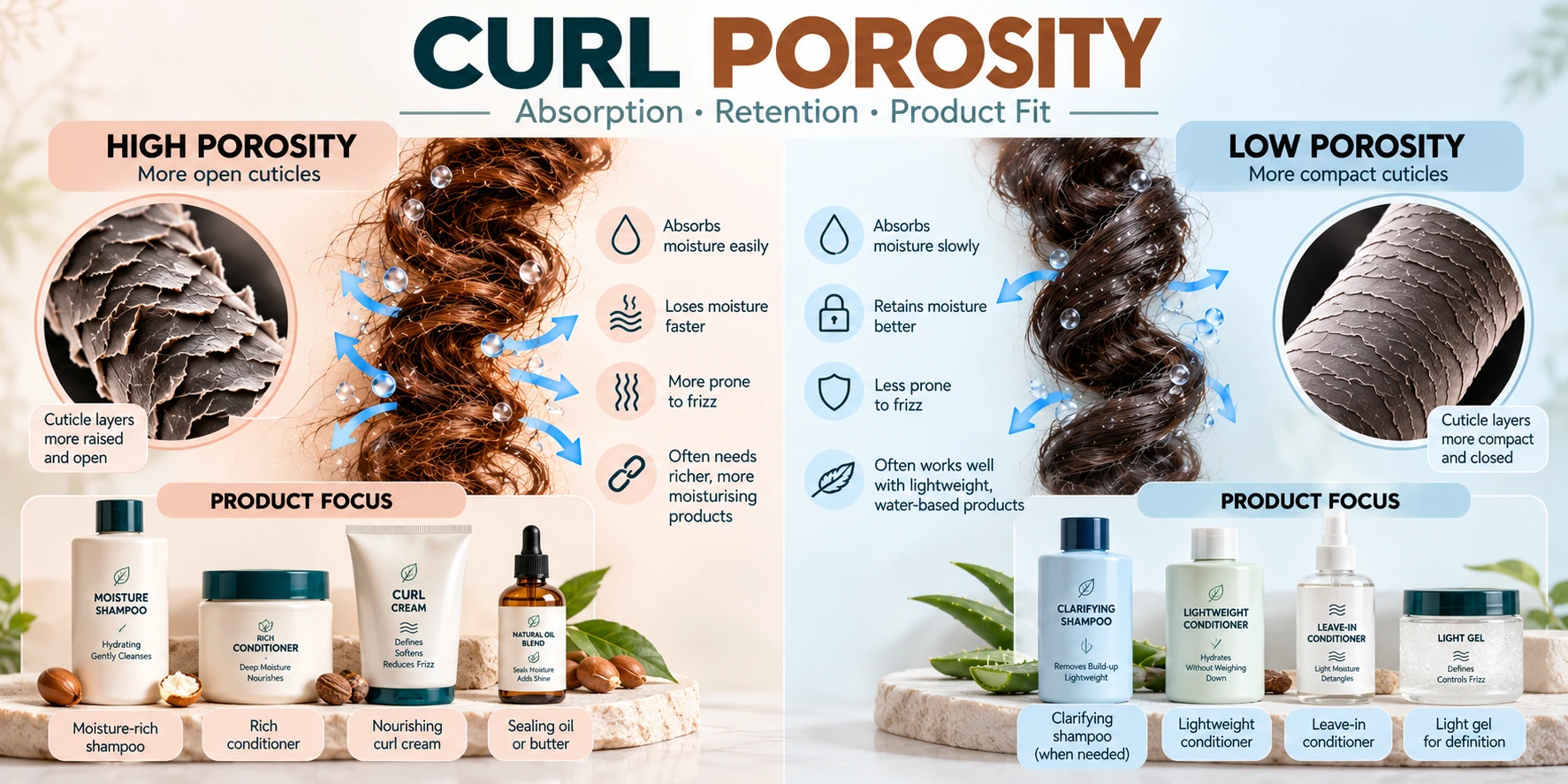
Porosity Often Matters More Than Curl Type
High Porosity
- Absorbs moisture fast, loses it fast
- Benefits from the LOC method with a rich sealing step
- Often more prone to frizz and dryness
- May tolerate protein treatments well
Low Porosity
- Resists moisture absorption
- Products can sit on the surface and cause buildup
- Benefits from lighter products, sometimes applied with heat or steam
- Prone to product buildup if too rich
Build a Curl Routine Matched to Your Type and Porosity
Answer a few questions to get a suggested cosmetic-care routine. This does not diagnose scalp disease or replace a dermatology consult.
The AI Curl Routine Builder supports cosmetic and educational routing only. It cannot diagnose scalp conditions or guarantee results.
Structured Routine
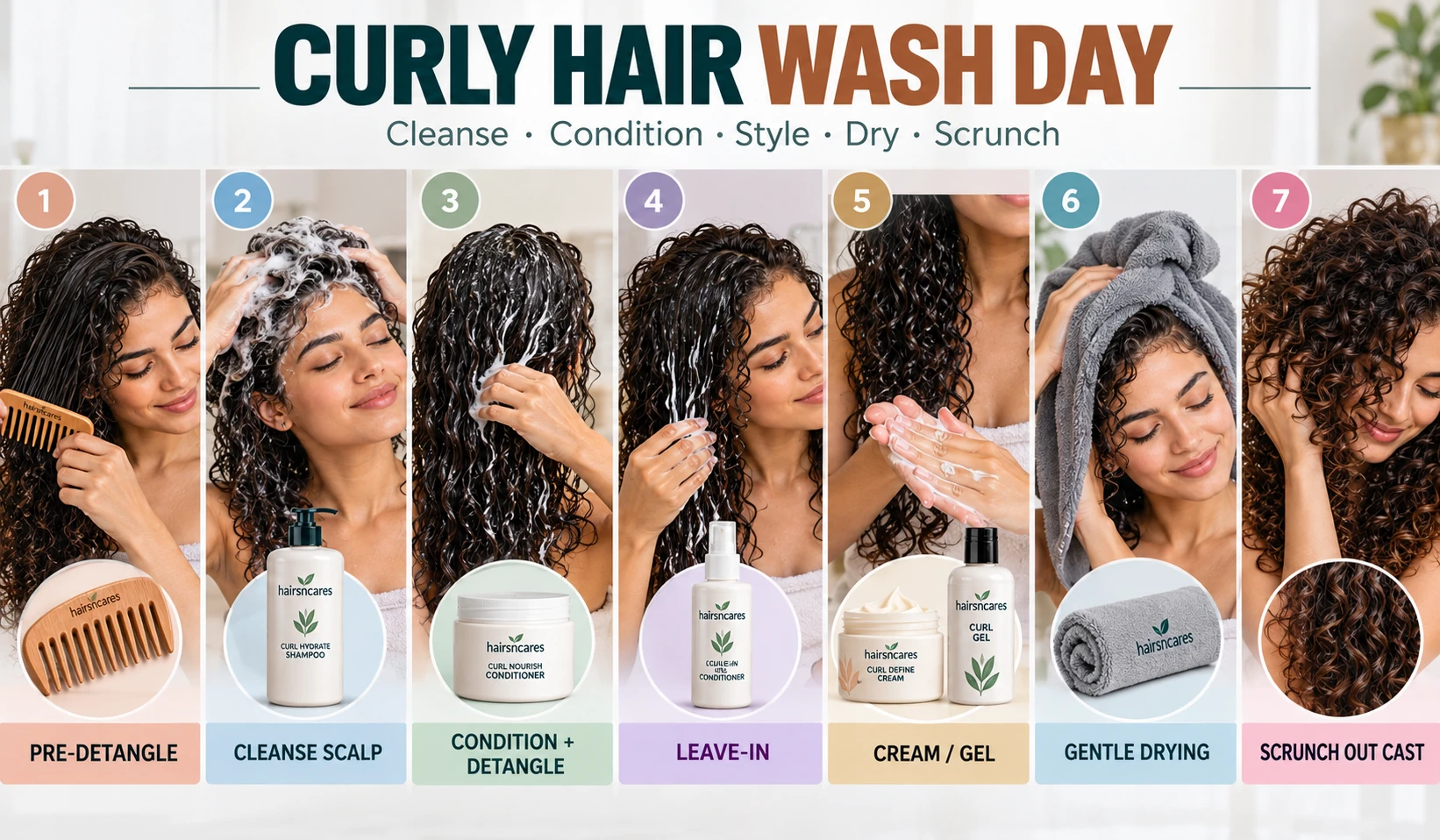
A Complete Wash Day, Step by Step
Pre-Detangle
Gently work through major knots dry or damp before wetting, if hair tangles heavily overnight.
Cleanse the Scalp
Shampoo or co-wash, focused on the scalp and roots.
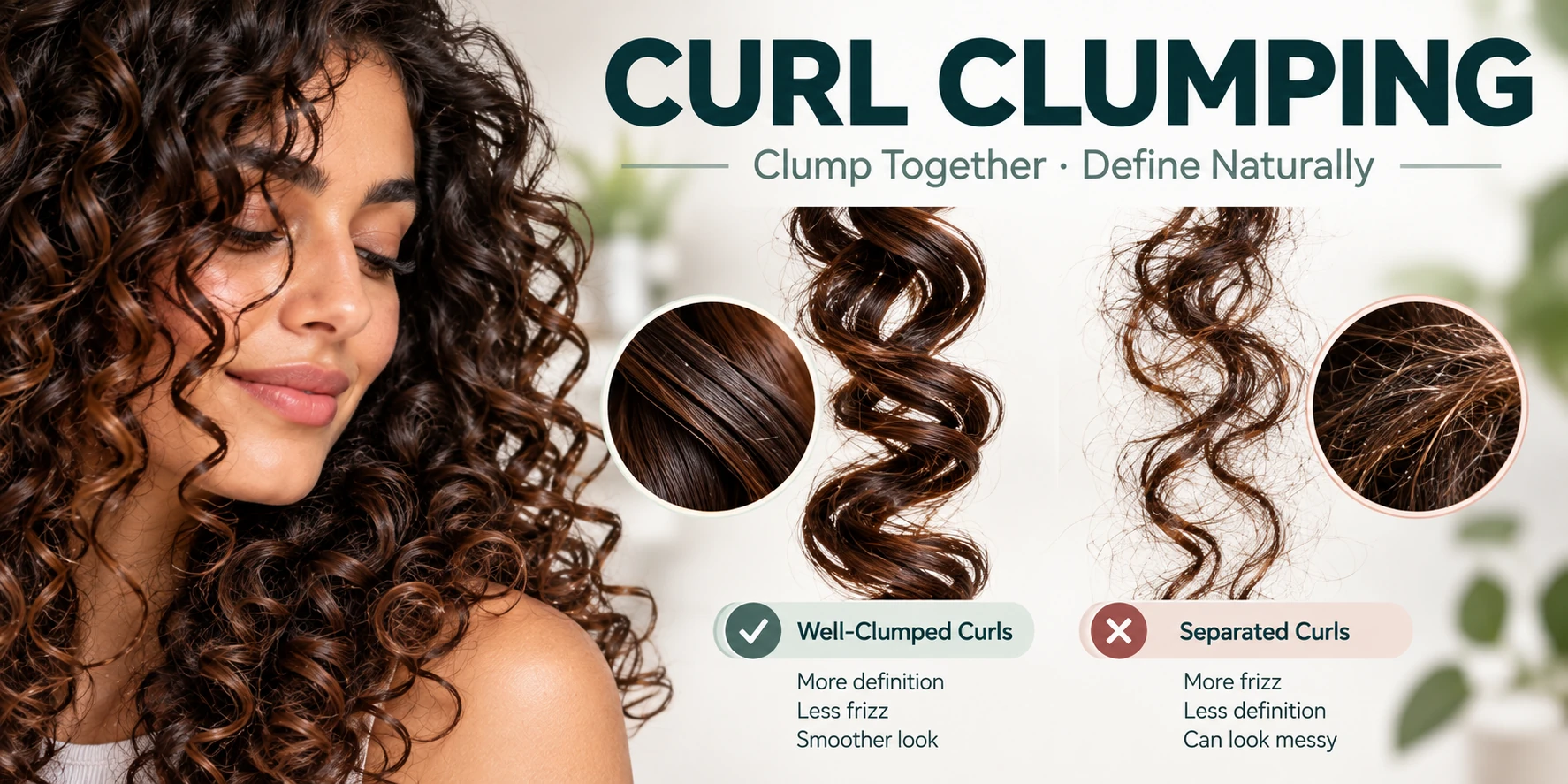
Condition With Slip
Apply generously, detangle in sections from ends upward while it's in.
Leave-In on Soaking Wet Hair
Apply in sections for even distribution before any water evaporates.
Layer Cream and/or Gel
Smooth through with praying hands, then scrunch upward to encourage clumping.
Dry With Minimal Disturbance
Plop, diffuse on low heat, or air-dry without touching hair.
Scrunch Out the Cast
Once fully dry, scrunch gently to break the gel cast and reveal soft curls.
Cleansing Choices
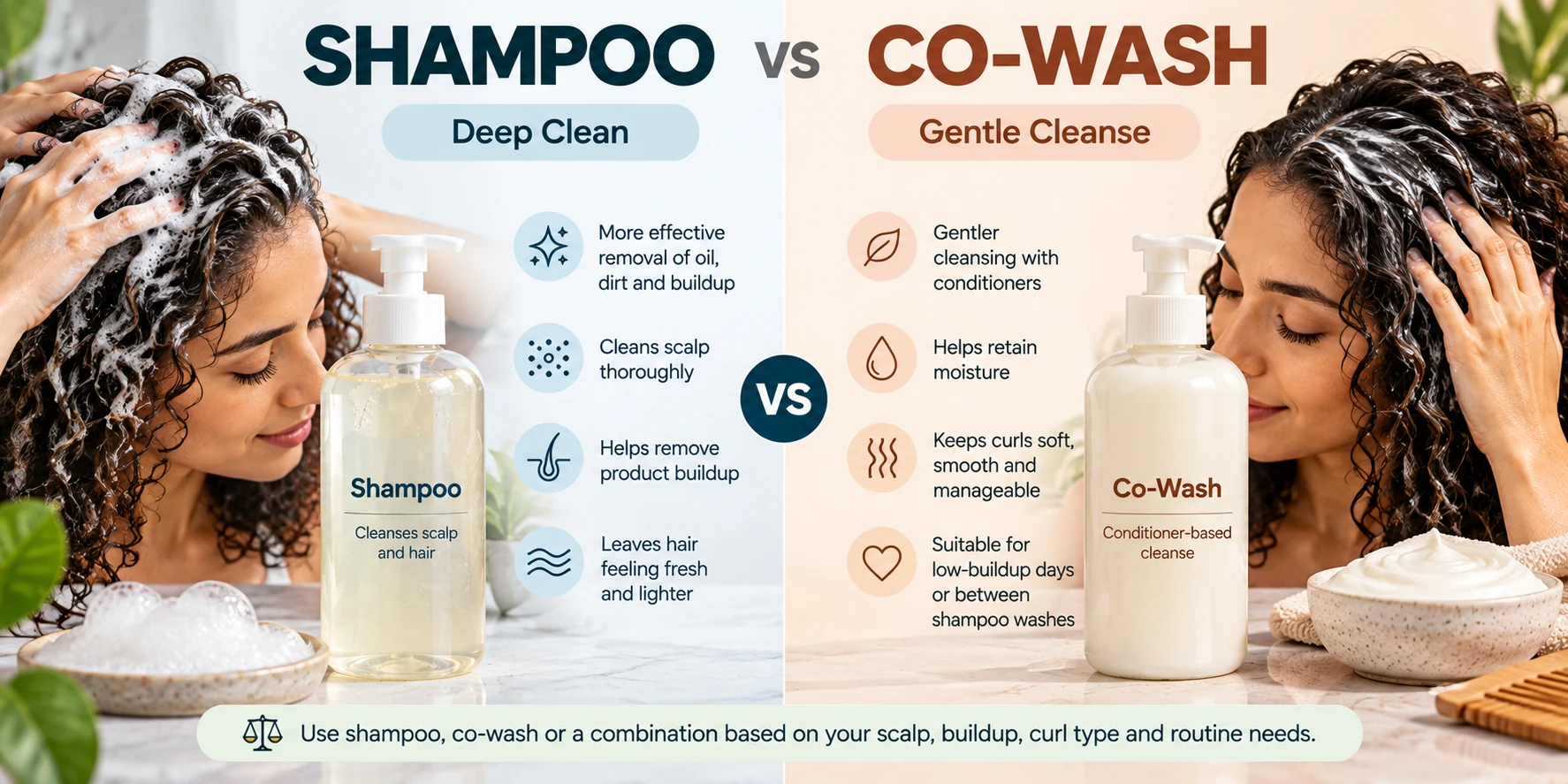
Shampoo, Co-Wash, or Both?
Shampoo
- Effectively removes buildup and excess oil
- Needed periodically even in co-wash routines
- Choose gentle, sulphate-conscious formulas
- Focus application on the scalp
Co-Washing
- Cleanses gently with conditioner
- Helps preserve moisture between full washes
- Doesn't remove buildup as effectively as shampoo
- Works best alternated with regular shampoo
"Co-washing alone often isn't enough — most curly routines still need a gentle shampoo periodically to keep the scalp genuinely clean."
Styling Product Layering
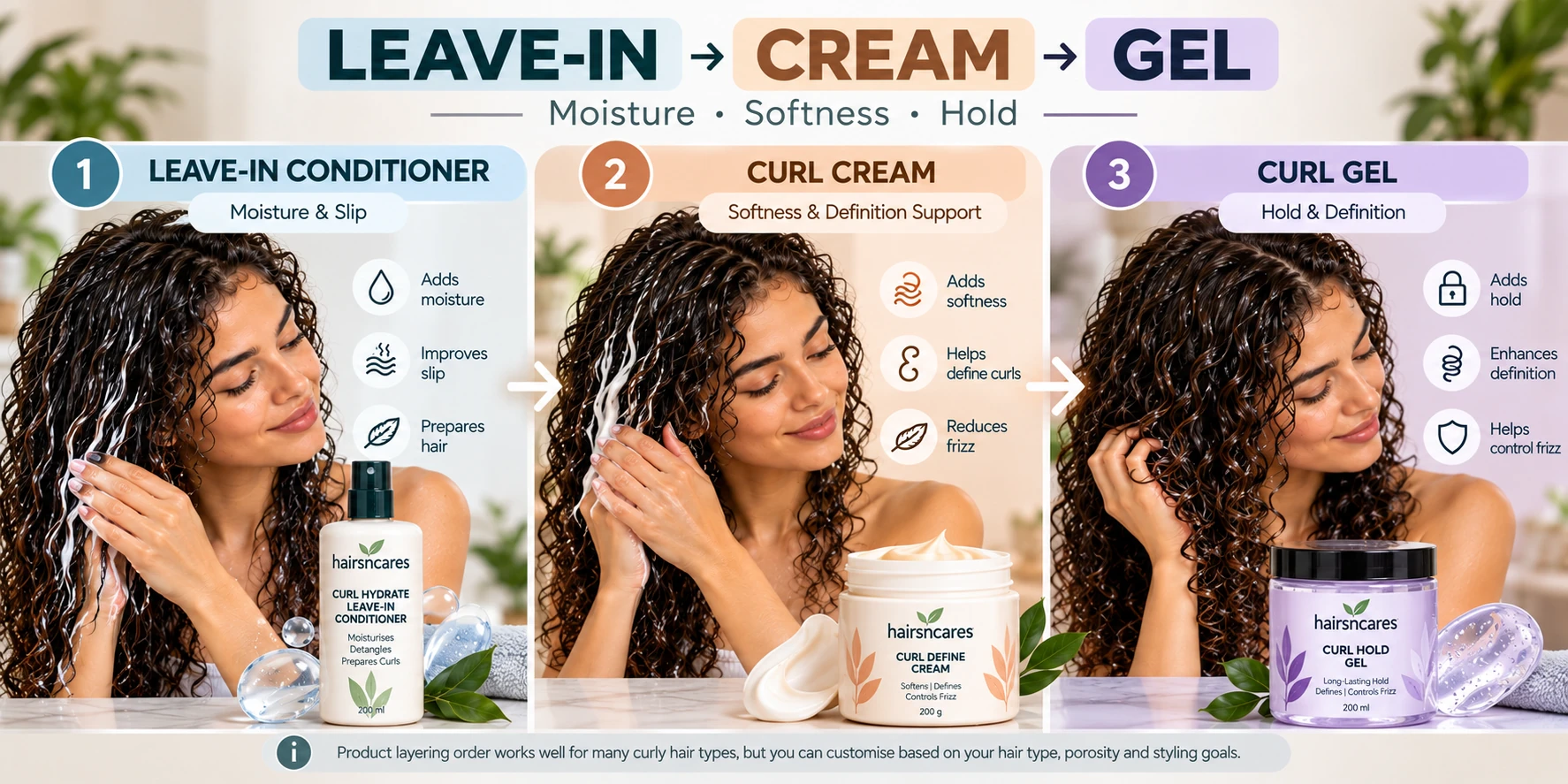
Leave-In, Cream and Gel Each Do a Different Job
Role:
- Ongoing moisture
- Detangling base
- Applied to soaking wet hair
- First layer in LOC method
Role:
- Softer, moisture-rich finish
- Good for coarser or drier curls
- Applied before gel in most routines
Role:
- Hold and definition
- Forms a protective cast while drying
- Frizz control
- Applied last, scrunched in
The LOC method — Liquid, Oil, Cream — layers water-based moisture, a sealing oil, then a cream to lock hydration in, commonly used alongside or instead of gel depending on your porosity and desired finish.
Technique Glossary
The Vocabulary of Curly Hair Styling
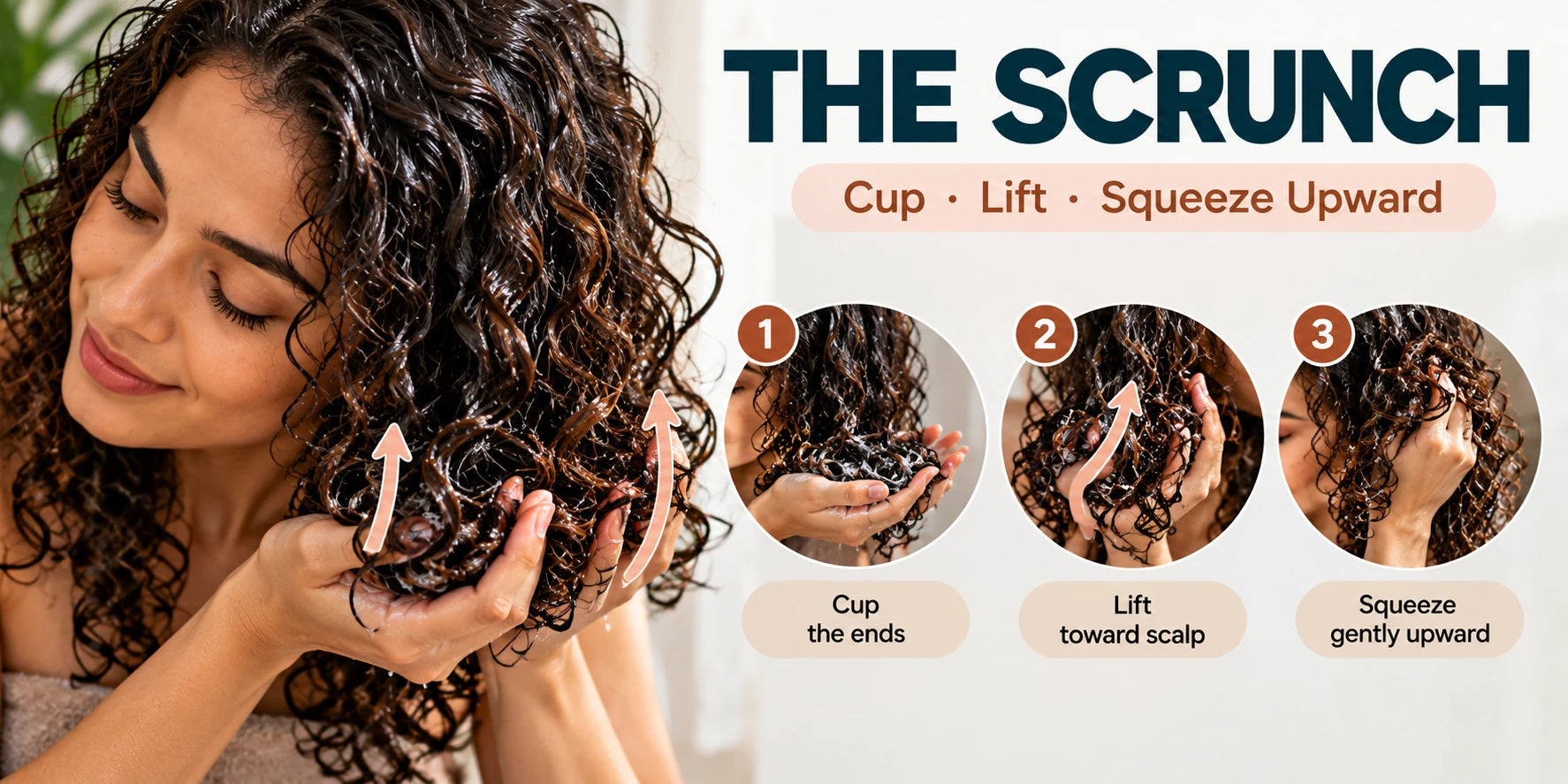
Scrunching
Cupping and squeezing sections upward toward the scalp to encourage clumping and definition.
Praying Hands Method
Sliding flat palms together along the hair's length to smooth and distribute product evenly.
Finger Coiling
Wrapping small sections around one or two fingers to define individual curls, common on tighter patterns.
Plopping
Wrapping wet, styled hair in a microfiber towel or t-shirt to absorb water without disturbing curl pattern.
Denman Brush Styling
Using a flat, firm-bristle brush on wet conditioner-coated hair to detangle while encouraging clumping.
Pineappling
Gathering hair loosely at the crown with a soft tie to preserve curl shape overnight.
Drying Choices
How You Dry Curls Shapes the Final Result
Air-Drying
Gentlest option, slowest, works well when styled thoroughly beforehand.
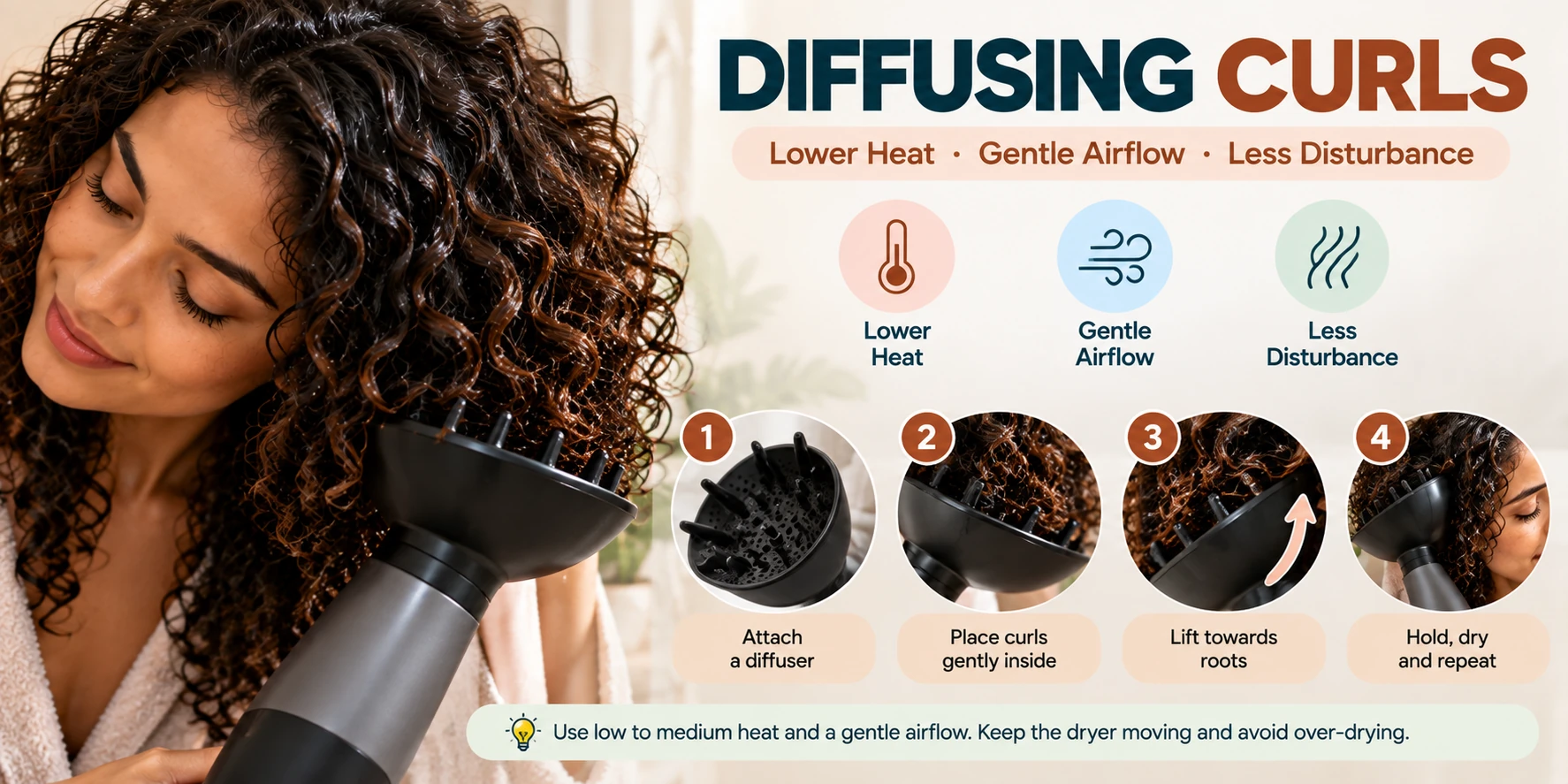
Diffusing
Lower heat setting dries curls faster than air-drying with less disturbance than regular blow-drying.
Plopping Then Diffusing
Combines both — plop first to absorb excess water, then diffuse the rest of the way.
Between Wash Days
Refresh Without a Full Wash
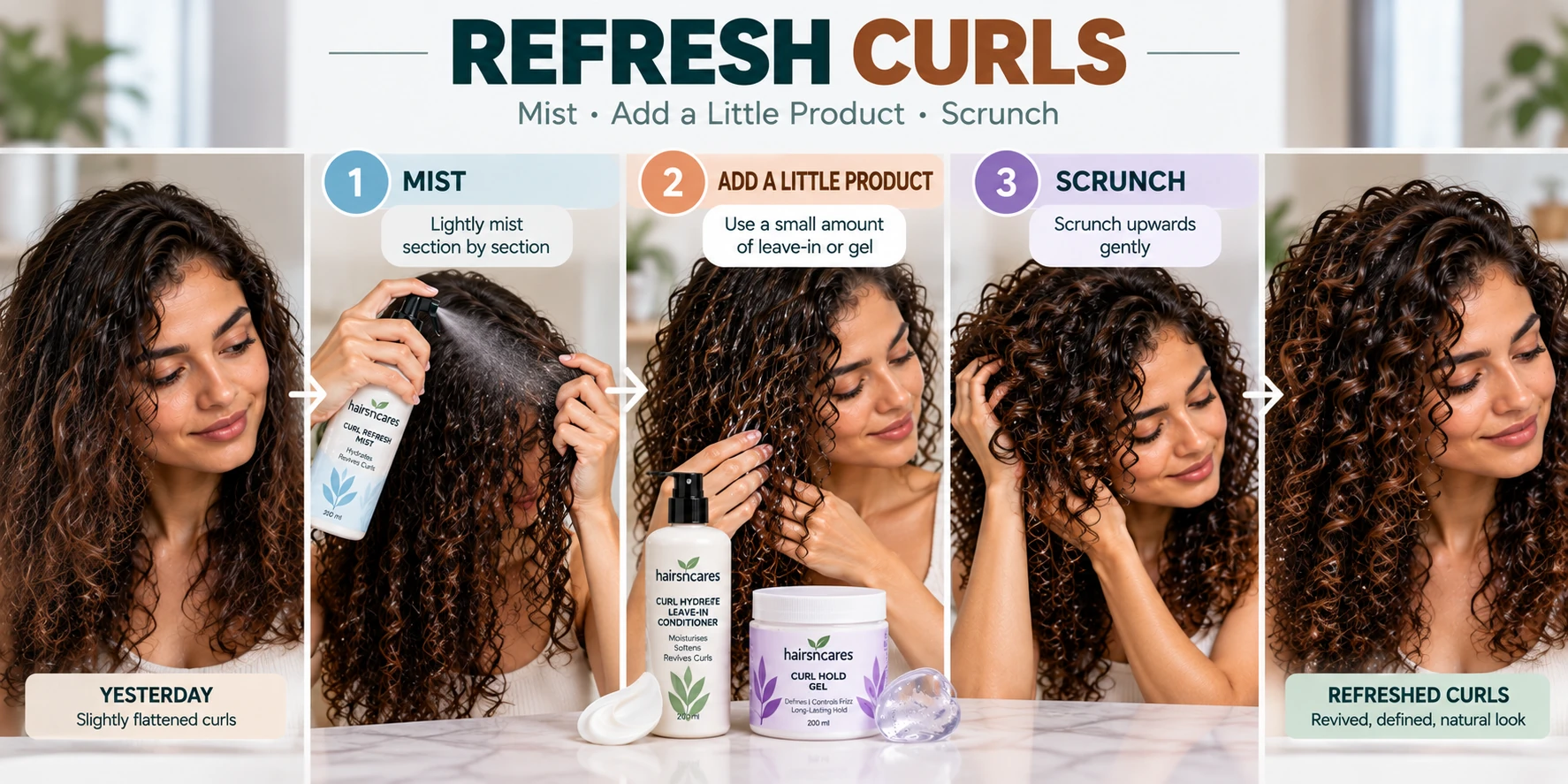
A water-based refresher spray or plain water misted onto curls, followed by scrunching in a small amount of leave-in or gel, can revive definition between wash days without disturbing the overall style.
Refresh routine
- Mist with water or refresher spray, section by section
- Add a small amount of leave-in or gel if needed
- Scrunch gently upward
- Diffuse briefly on low heat if roots feel damp
- Avoid over-refreshing, which can cause buildup
Nighttime Care
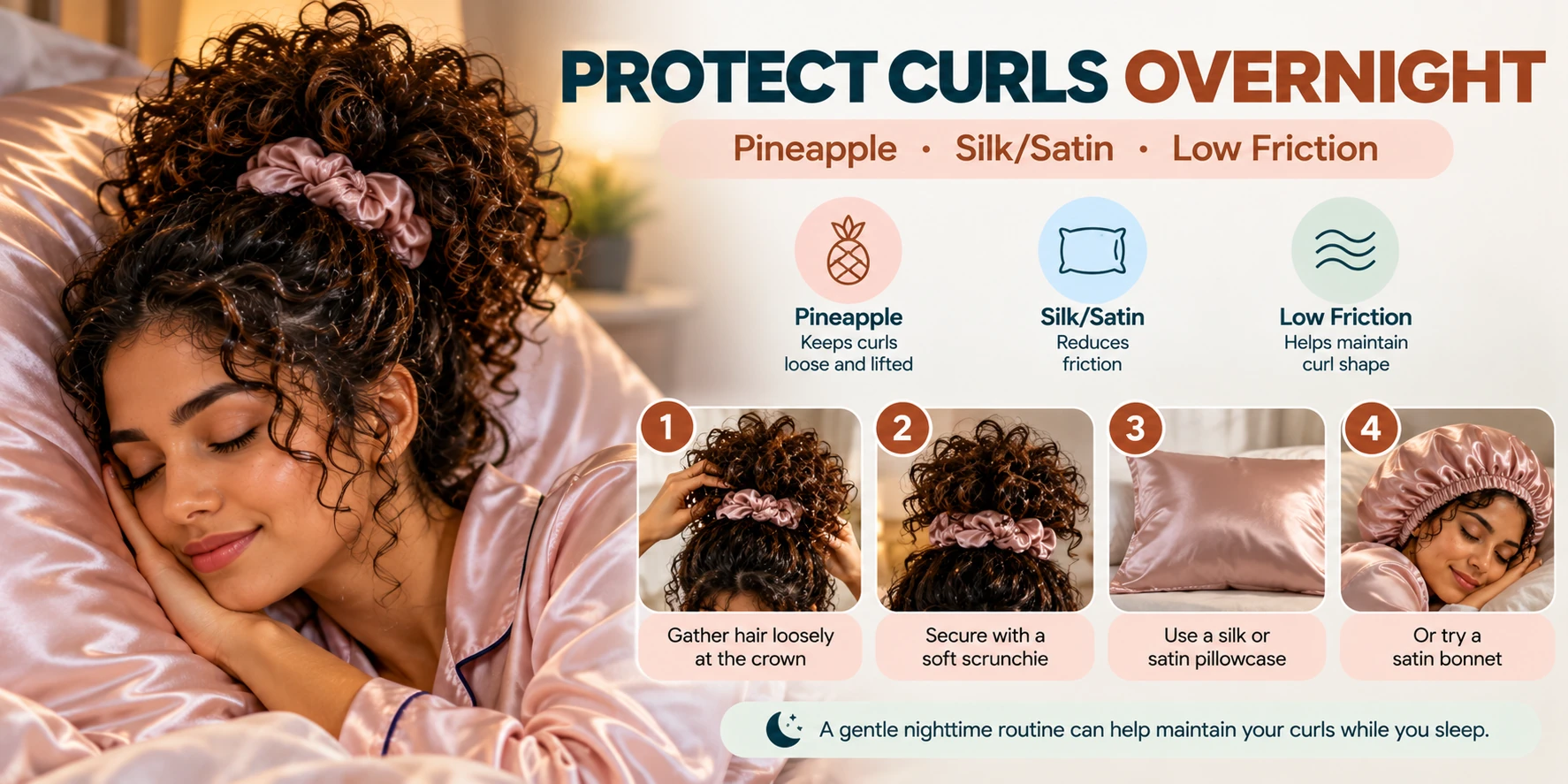
Protect Curl Definition While You Sleep
Reduce friction
- Silk or satin pillowcase
- Silk or satin bonnet or scarf
- Avoid rough cotton fabric contact
Preserve shape
- Pineapple with a soft, loose tie
- Multiple pineapples for dense or long hair
- Avoid tight elastics that create dents
Processing Safety
Heat and Colour Need Extra Care on Curly Hair
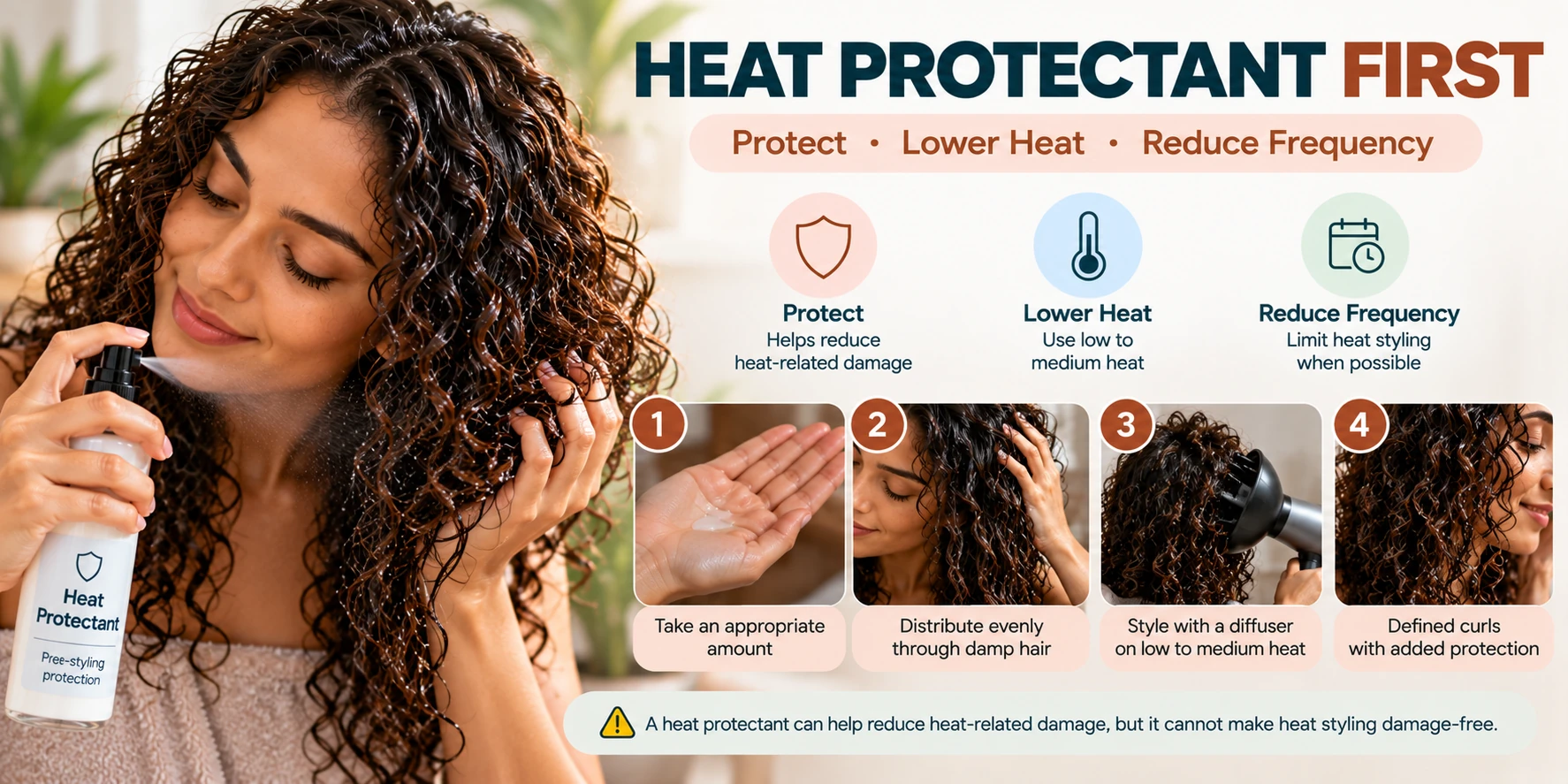
Curly hair's natural bend already puts stress on the strand, so added heat or chemical processing carries more risk of loosening curl pattern, drying the shaft, and increasing frizz and breakage.
Heat styling rules
- Heat protectant every time
- Lowest effective temperature
- Reduce frequency
- Diffuse rather than straighten when possible
- Deep condition regularly if heat is used
Colour treatment rules
- Extra moisture care before and after
- Reduce processing frequency
- Professional guidance for curl-safe techniques
- Deep condition post-colour
- Watch for increased dryness or frizz
Ecommerce
Shop Curly Hair Products by Type and Porosity
Filter by curl type, product type, porosity and safety preferences.
*Claims are shown only when verified on the product database; unverified claims are not displayed.
Compare by Curl Fit
Compare Curl Products by Type and Porosity Fit
Compare up to four products on hold strength, moisture level, porosity fit and more. Products are never labelled "best" without verified criteria.
| Attribute | Product A | Product B |
|---|---|---|
| Product type | Curl cream | Curl gel |
| Hold level | Soft, moisturising | Firm, frizz-controlling |
| Best porosity fit | High porosity | All porosities |
| Application stage | Before gel | Final layer |
AI Tool
Build a Curl Routine Matched to Your Type and Porosity
The AI Curl Routine Builder above uses your inputs — curl type, porosity, density, main concern, wash frequency and heat use — to suggest a wash-day sequence and product priorities.
Track Realistically
Track Definition and Frizz, Not Just One Good Hair Day
Track curl definition, frizz level, shrinkage, moisture retention, scalp comfort, product buildup, wash frequency and technique changes.
Do Not Self-Manage These
Do Not Treat These Signs as Routine Curl Trouble
- Persistent scalp itching, redness or burning
- Flaking that doesn't improve with gentle care
- Sudden heavy shedding or patchy loss
- Scalp pain, pus, crusting or bleeding
- Rapid, unexplained curl pattern loss
- Severe breakage despite good moisture care
- Signs of allergic reaction after a new product
Route to a dermatologist, the AI Hair Test, or relevant scalp-condition pages if any of these appear.
Avoid These
Mistakes That Undo a Good Curl Routine
Expert Note
Technique Matters as Much as Product
"Curly hair care is as much about technique — applying product to soaking wet hair, minimising disturbance while drying, protecting curls overnight — as it is about the products themselves. Curl type is a useful starting reference, but porosity and how your specific hair responds matter more for building a routine that actually works. Persistent scalp symptoms or unexplained pattern loss deserve a dermatologist's opinion."
Reviewed by Dr. Amit Agarkar, MD Dermatology — Hairsncares
Suggested Medical References
Where to Read More From Trusted Sources
This page reflects general dermatology and cosmetic hair-science understanding. For deeper reading on hair-shaft structure, curl pattern biology and scalp health, these are reputable starting points — search each organisation's site directly for the most current article, since we don't want to point you to a guessed or outdated link.
- American Academy of Dermatology (AAD)Patient guides on curly and textured hair care, scalp health
- MedlinePlus (U.S. National Library of Medicine)Consumer-friendly overviews of hair and scalp conditions
- PubMedPeer-reviewed research on hair follicle shape and curl pattern biology
- NHS (UK National Health Service)Condition overviews for scalp conditions and when to seek care
These are reference categories, not endorsements of specific articles. Always check the publication date and consult a dermatologist for advice specific to you.
Frequently Asked Questions
Curly Hair Guide: FAQs
Browse by category, or open any question directly.