Above the Fold
Quick Answer: Can Heat-Damaged Hair Be Repaired?
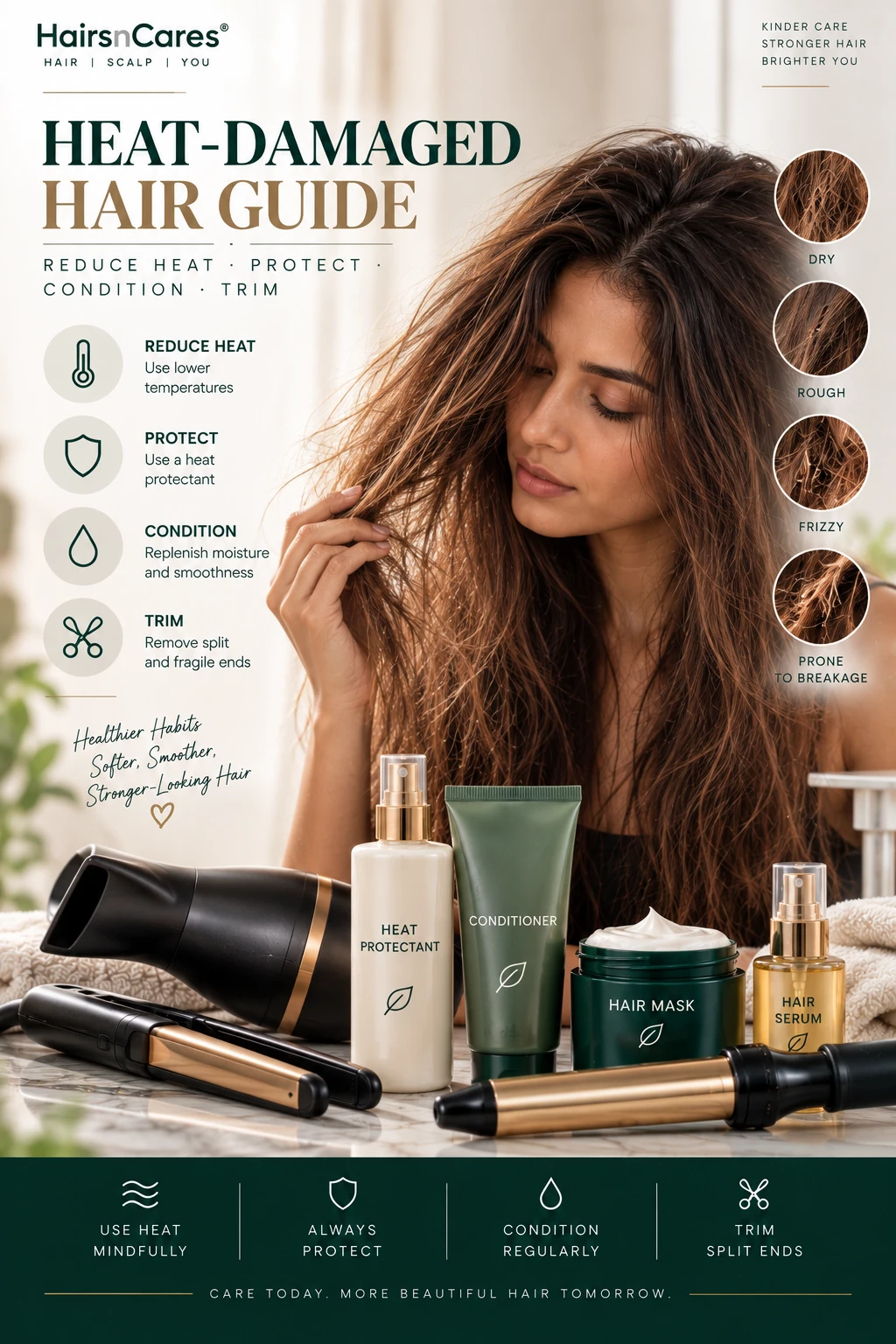
Heat-damaged hair can often look and feel better with conditioning, masks, leave-ins, serums, protein or bond-support products, reduced heat use and trimming split ends. But severe thermal damage cannot be permanently reversed. Heat protectant reduces risk but does not make hot tools harmless.
Search Intent Alignment
What You'll Learn on This Page
- What heat damage actually does to the hair shaft
- How to tell heat breakage apart from root-level hair fall
- Which hot tools carry which risks, and how to use them more safely
- What heat protectant can and cannot do
- How to balance protein and moisture without overdoing either
- How to build a realistic, product-based repair routine
- Heatless styling options to reduce your overall heat load
- When heat-damage care isn't enough and a doctor visit is the next step
Understanding the Basics
Heat Damage Is a Hair-Shaft Problem
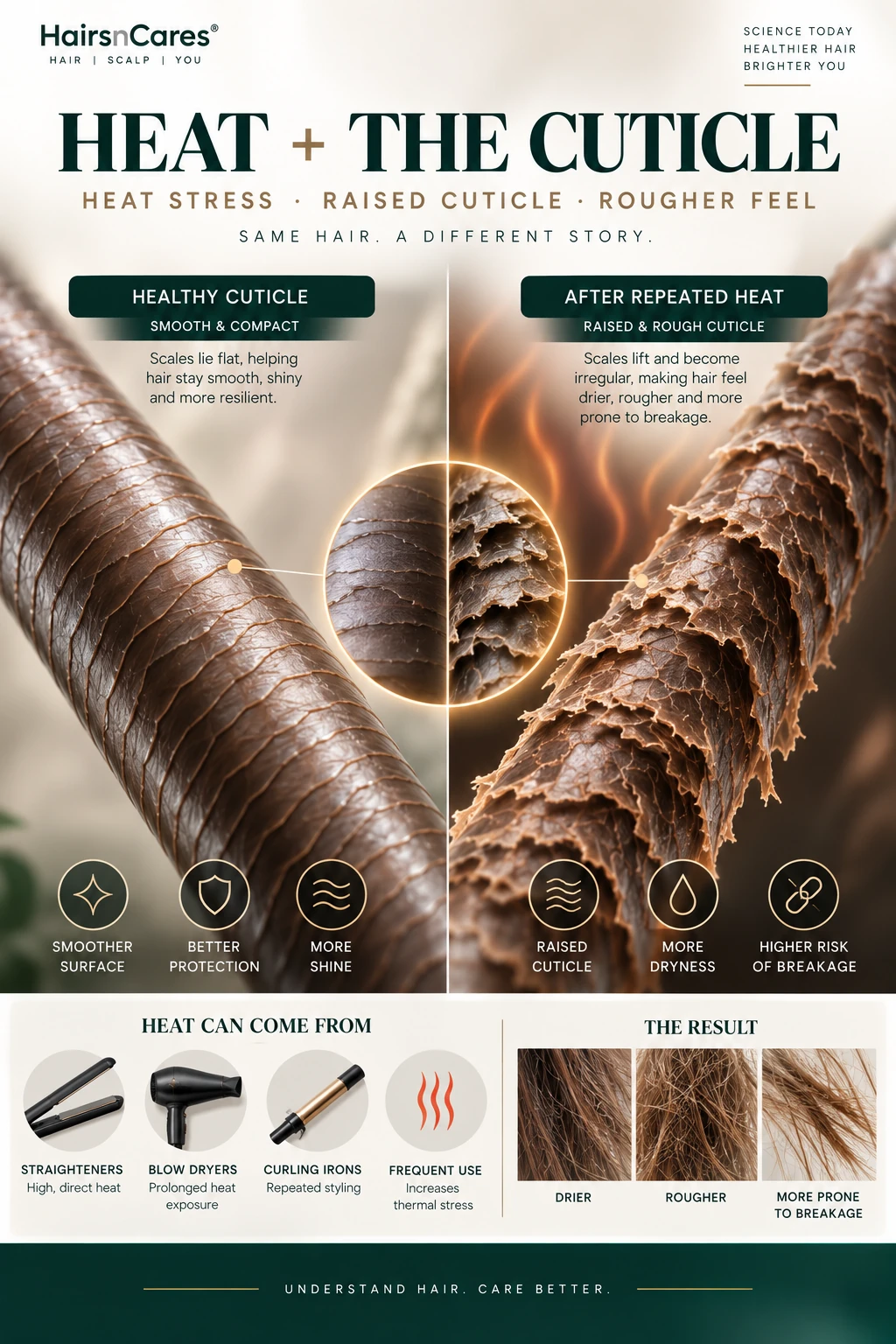
Heat-damaged hair happens when repeated or excessive heat stresses the cuticle and fibre structure of the hair shaft. It may occur from straighteners, curling irons, blow dryers, hot brushes, heated rollers, crimpers, steam tools used incorrectly, repeated salon heat styling, using heat on damp or wet hair, using hot tools without protectant, very high temperatures, or repeated passes over the same section.
Common signs: dryness, frizz, roughness, dullness, split ends, snapping, a brittle feel, a stretchy or weak feel, loss of curl pattern, flyaways, see-through ends and tangling.
"Heat-damaged strands cannot biologically heal like skin. Products improve appearance, feel and manageability while you protect new growth and trim damaged ends when needed."
Know the Difference
Breakage From Heat Is Different From Root Hair Fall
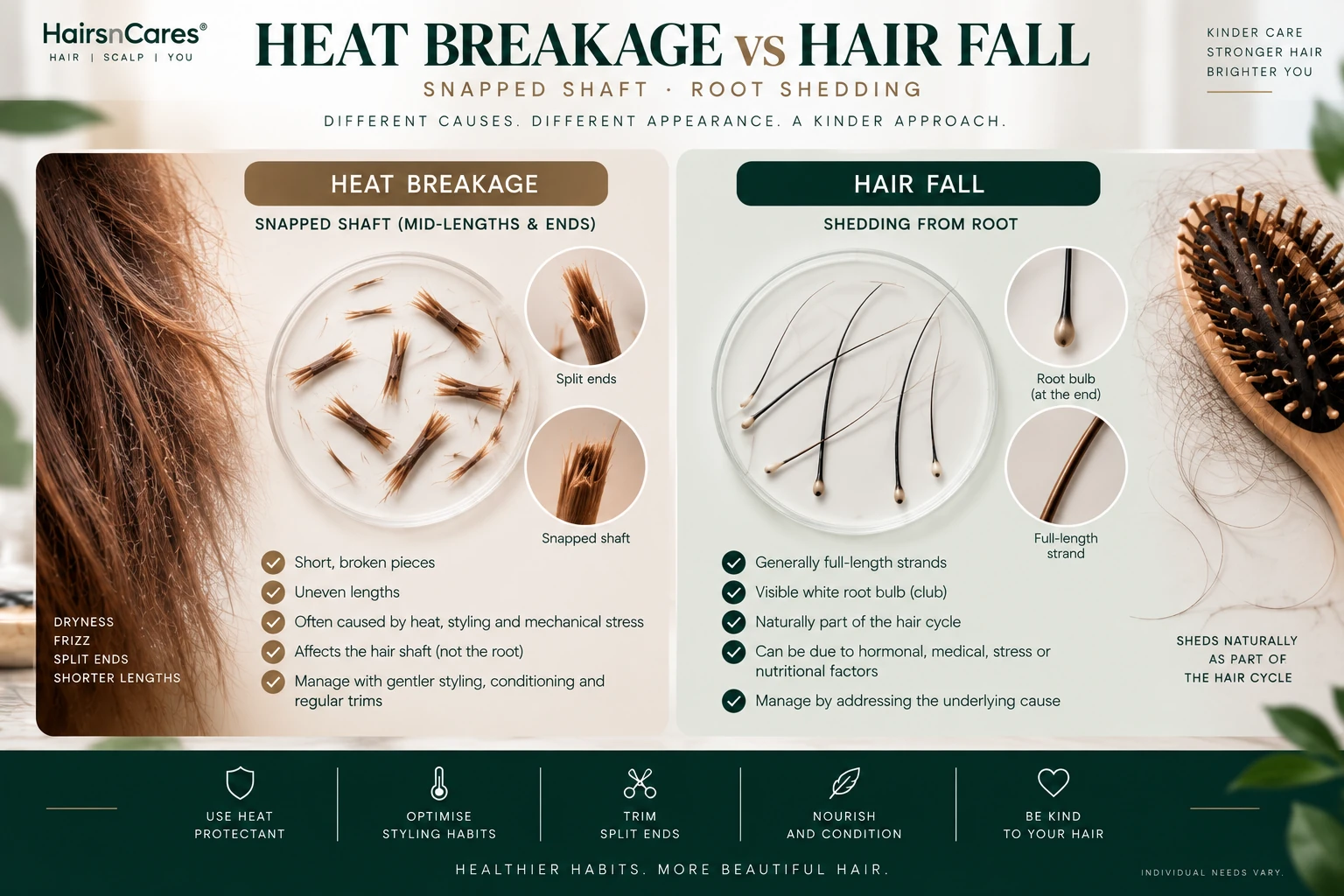
Heat damage and hair fall are different. Heat damage usually affects the hair shaft and causes breakage, split ends, roughness and frizz. Hair fall from the root, widening part, crown thinning, patchy loss or scalp symptoms need separate medical assessment.
| Feature | Heat Damage / Breakage | Root Hair Fall |
|---|---|---|
| Hair length | Short broken pieces or split ends | Full-length strands |
| Root bulb | Usually absent | May be visible |
| Main area | Ends, mid-lengths, face-framing sections | Scalp-wide or pattern zones |
| Common trigger | Hot tools, high heat, no protectant | Telogen shedding, pattern loss, deficiency, thyroid, PCOS |
| Best first step | Reduce heat and repair-look routine | Medical cause assessment |
| Red flag | Breakage with scalp burn or pain | Sudden, patchy or progressive loss |
Self-Assessment
How Heat-Damaged Is Your Hair?
Level 1 — Mild Heat Stress
Signs:
- Light frizz
- Mild dryness
- Slightly rough ends
- Style doesn't last as smoothly
Routine:
- Heat protectant every time
- Conditioner
- Light serum, reduce temperature
Level 2 — Moderate Heat Damage
Signs:
- Visible split ends
- Dryness after styling
- Frequent tangles, frizz
Routine:
- Weekly mask, leave-in
- Heat protectant
- Reduce hot-tool frequency, trim plan
Level 3 — Severe Thermal Damage
Signs:
- Brittle snapping
- Straw-like, porous ends
- Curl pattern loss, see-through ends
Routine:
- Pause hot tools
- Bond/protein + moisture
- Professional trim plan
Level 4 — Scalp or Burn Red Flag
Signs:
- Scalp pain, burning, swelling
- Crusting, redness, blistering
- Patchy shedding after heat injury
Routine:
- Stop heat styling
- Avoid irritants
- Medical review
Tool-Specific Guidance
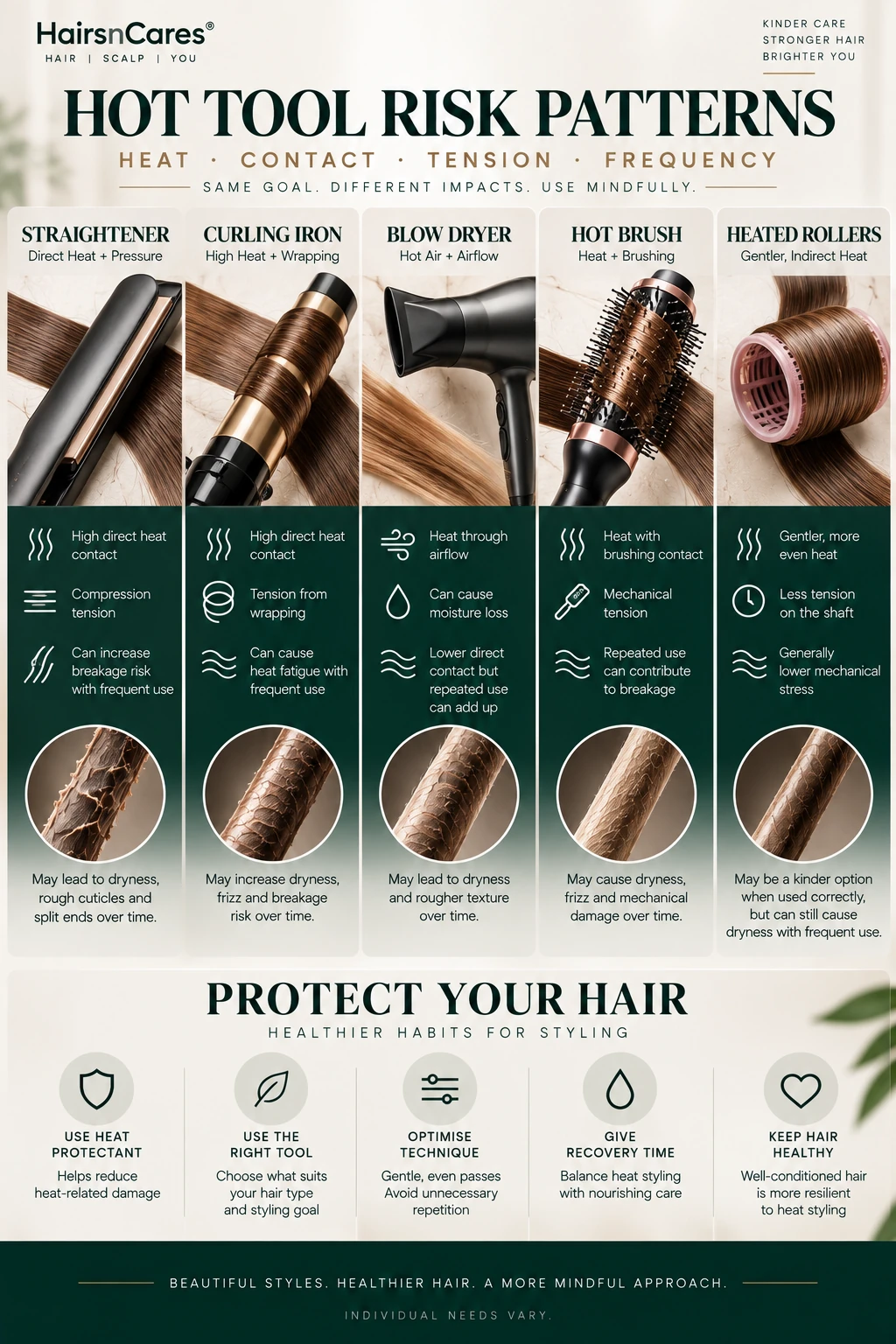
Every Hot Tool Has a Different Risk Pattern
Select a tool to see its specific risks and safer-use guidance.
Extra Caution Needed
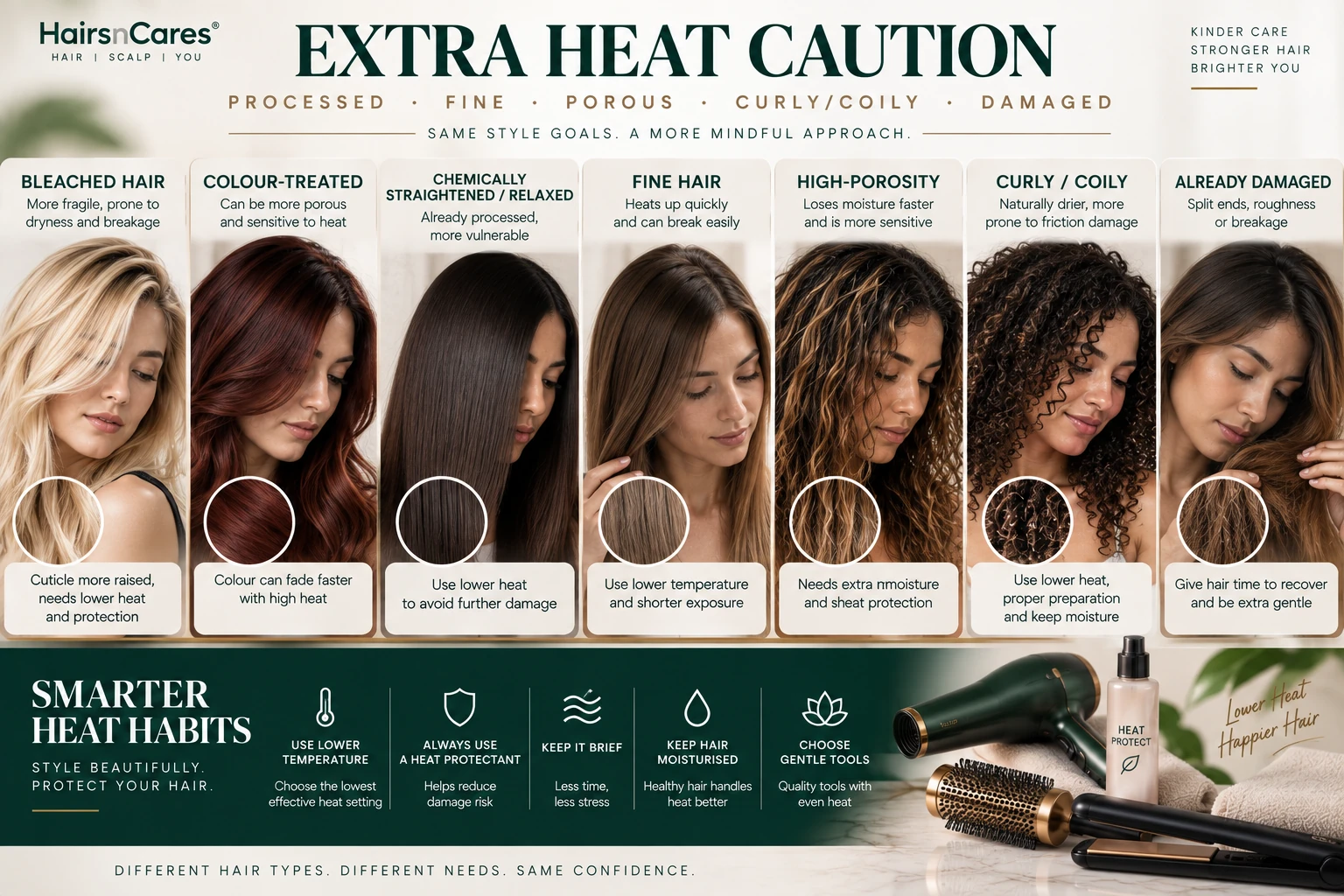
Some Hair Needs Lower Heat and More Protection
Bleached hair
Colour-treated hair
Chemically straightened / relaxed hair
Fine hair
Curly or coily hair
Already damaged hair
Hair styled daily
"If hair is already chemically processed or breaking, reduce heat before adding more repair products."
Understand Its Limits
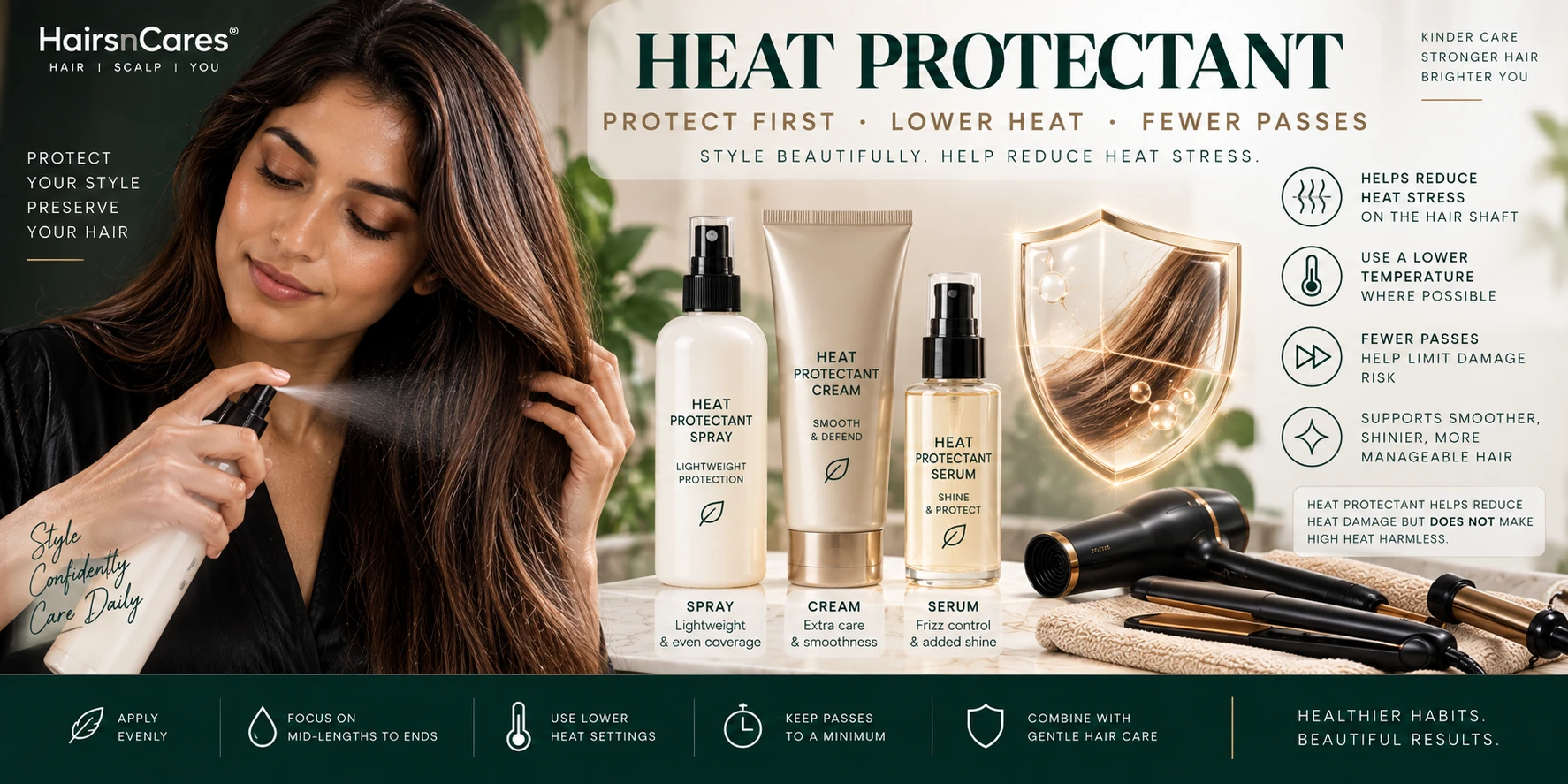
Heat Protectant Is Essential — but Not a Shield Against Abuse
Heat protectant may help by
- Reducing direct heat stress
- Adding slip
- Reducing friction from tools
- Smoothing the cuticle feel
- Supporting shine
- Reducing moisture loss during styling
But it does not
- Make heat harmless
- Repair existing split ends permanently
- Allow unlimited temperature
- Replace conditioner or masks
- Prevent all breakage
Product types:
Interactive Checklist
Style With Less Damage
"Heat styling should be occasional and controlled when hair is already damaged."
Texture-Specific Care
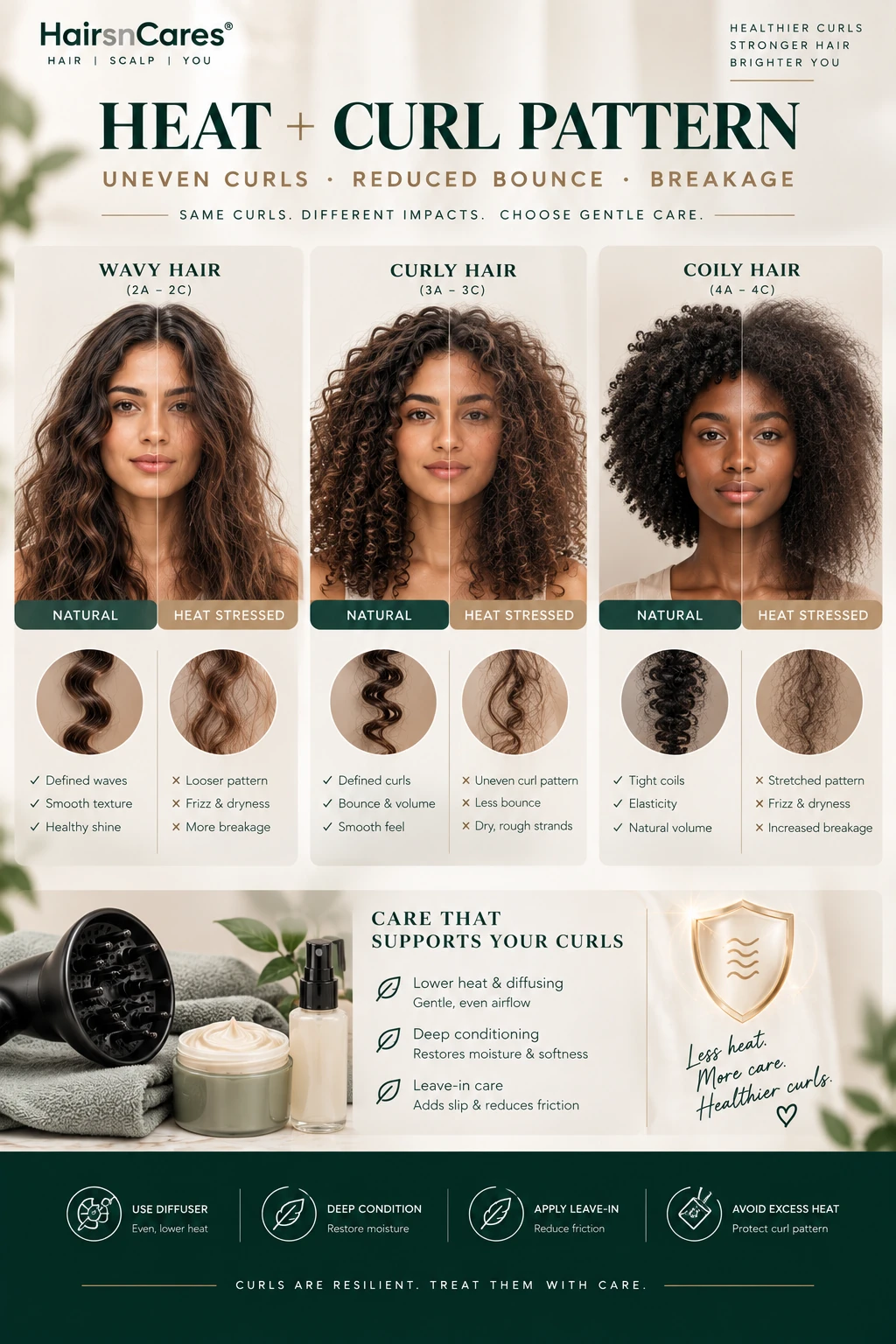
Heat Can Loosen Curl Pattern and Elasticity
Curly, wavy and coily hair may show heat damage as straightened pieces, limp curls, frizz, rough ends, uneven curl pattern, dryness, breakage or loss of bounce.
Routine
- Pause heat
- Deep conditioning
- Leave-in
- Curl cream or gel where suitable
- Protein or bond support if hair feels weak
- Trim severely straightened ends
- Diffuse on lower heat if needed
- Avoid repeated straightening
Realistic Expectations
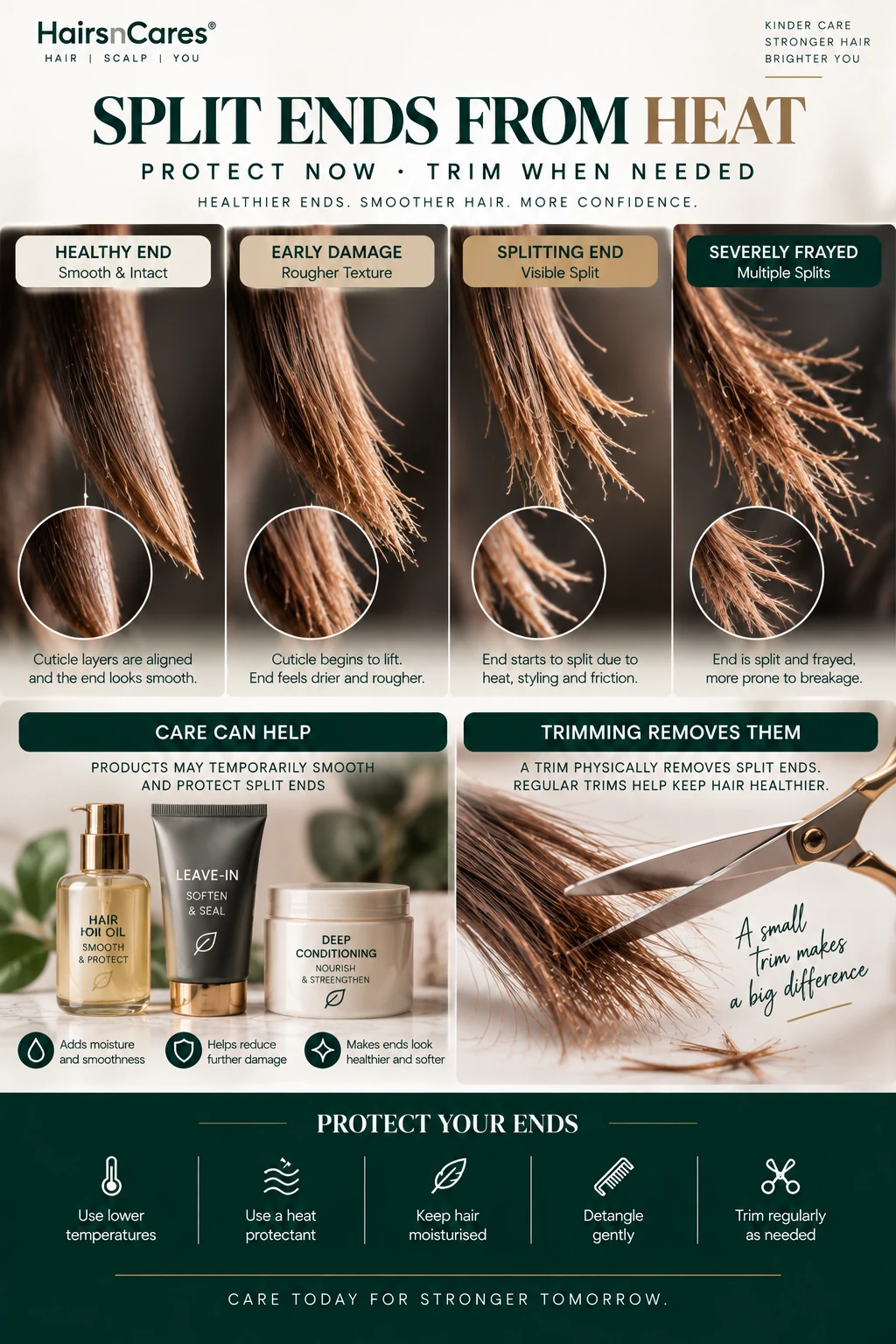
Split Ends Need Protection and Often Trimming
Heat can dry and weaken ends, making them split and continue splitting upward. Products can smooth split ends temporarily, reduce friction, improve appearance and reduce further breakage — but trimming removes damaged ends, improves shape, reduces tangling and prevents split ends from looking worse.
Dusting
Micro-Trim
Shape Trim
Major Damage Cut
Curl-by-Curl Trim
Core Repair Principle
Heat-Damaged Hair Needs Balance
Best when hair feels:
- Dry
- Rough
- Frizzy
- Tangled
- Dull, stiff
Products:
- Moisturising conditioner
- Hydrating mask
- Leave-in, serum, light oil on ends
Best when hair feels:
- Weak
- Limp
- Overly stretchy
- Fragile, breakage-prone
Caution:
Too much protein can make hair stiff or brittle.
Best when hair is:
- Heat damaged
- Chemically processed
- Bleach damaged
- Breaking from repeated styling
Caution:
Improves strength-feel and manageability; does not restore virgin hair.
Personalised Routine
Build a Repair-Look Routine Based on Your Heat History
Answer a few questions to get a suggested cosmetic-care routine. This does not diagnose hair loss, approve high-heat styling or permanently reverse severe damage.
The AI Heat-Damaged Hair Routine Builder provides cosmetic routine support only. It cannot diagnose medical hair loss, treat scalp injury, approve high-temperature styling or guarantee repair.
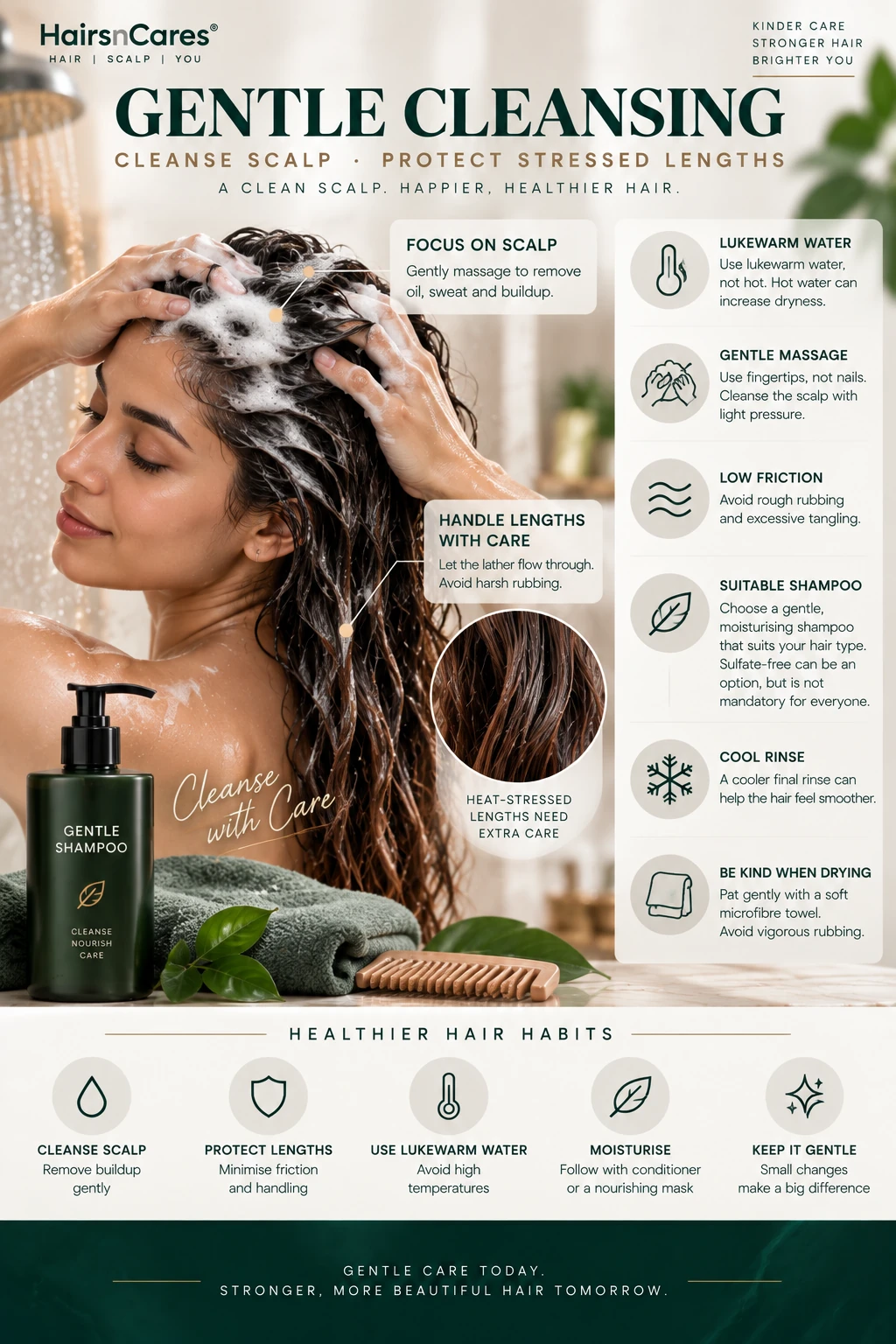
Cleansing
Cleanse Without Stripping Already Stressed Hair
Recommended categories
- Gentle shampoo
- Moisturising shampoo
- Colour-safe shampoo if coloured
- Anti-dandruff shampoo if scalp needs it
- Clarifying shampoo only when buildup exists
Avoid
- Harsh daily cleansing
- Hot water
- Aggressive scalp scratching
- Shampooing only the lengths
- Ignoring dandruff or buildup
Conditioning
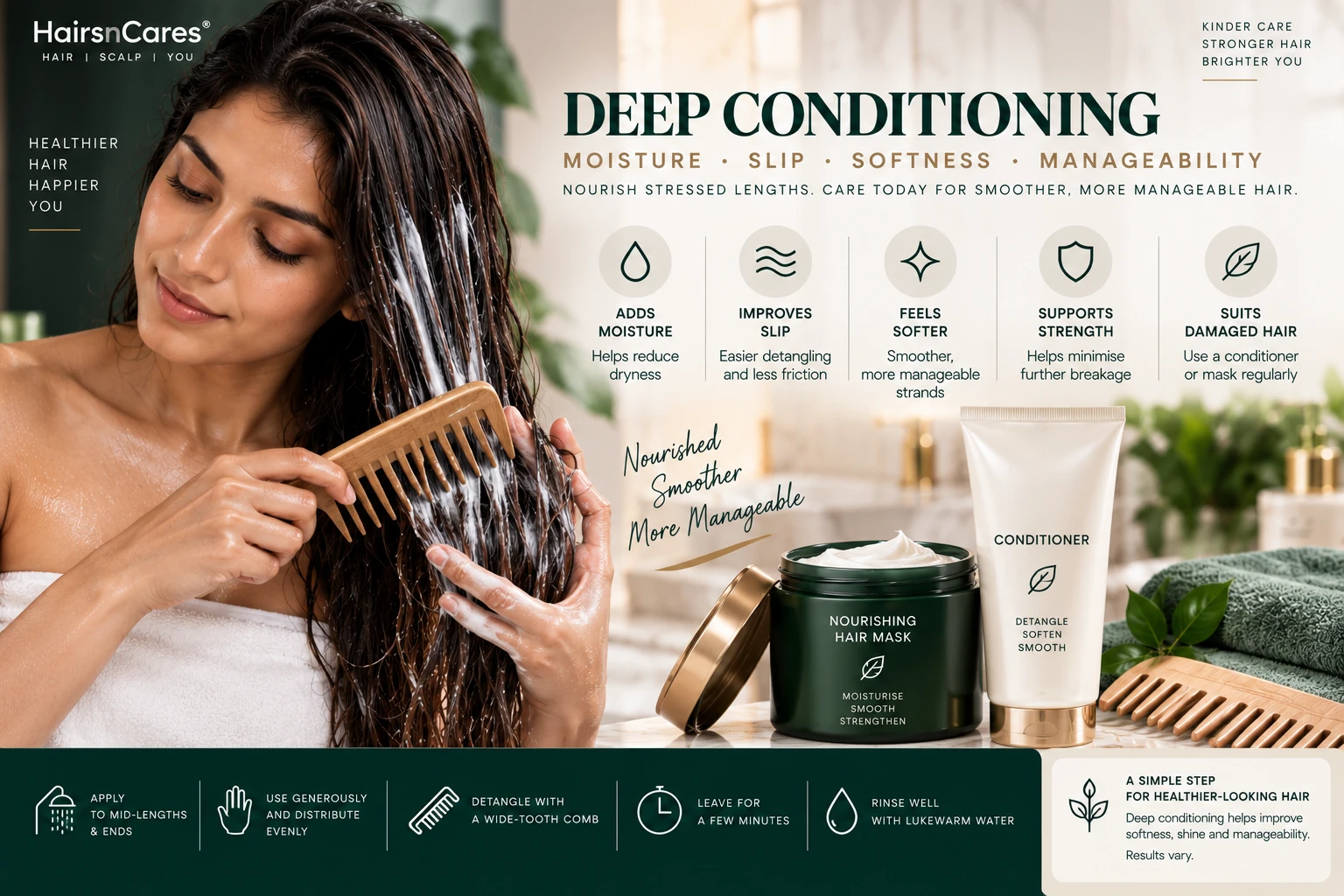
Conditioning Is the Core of Heat-Damage Care
Conditioner benefits
- Improves slip
- Reduces friction
- Supports smoother feel
- Reduces detangling breakage
- Improves softness
Mask benefits
- Deeper conditioning
- Repair-look support
- Frizz reduction
- Protein or moisture support
- Better manageability
Usage: apply to mid-lengths and ends; use more on damaged ends; rinse properly; adjust richness by hair type; avoid protein overload; avoid heavy masks on oily roots.
Between Styling Sessions
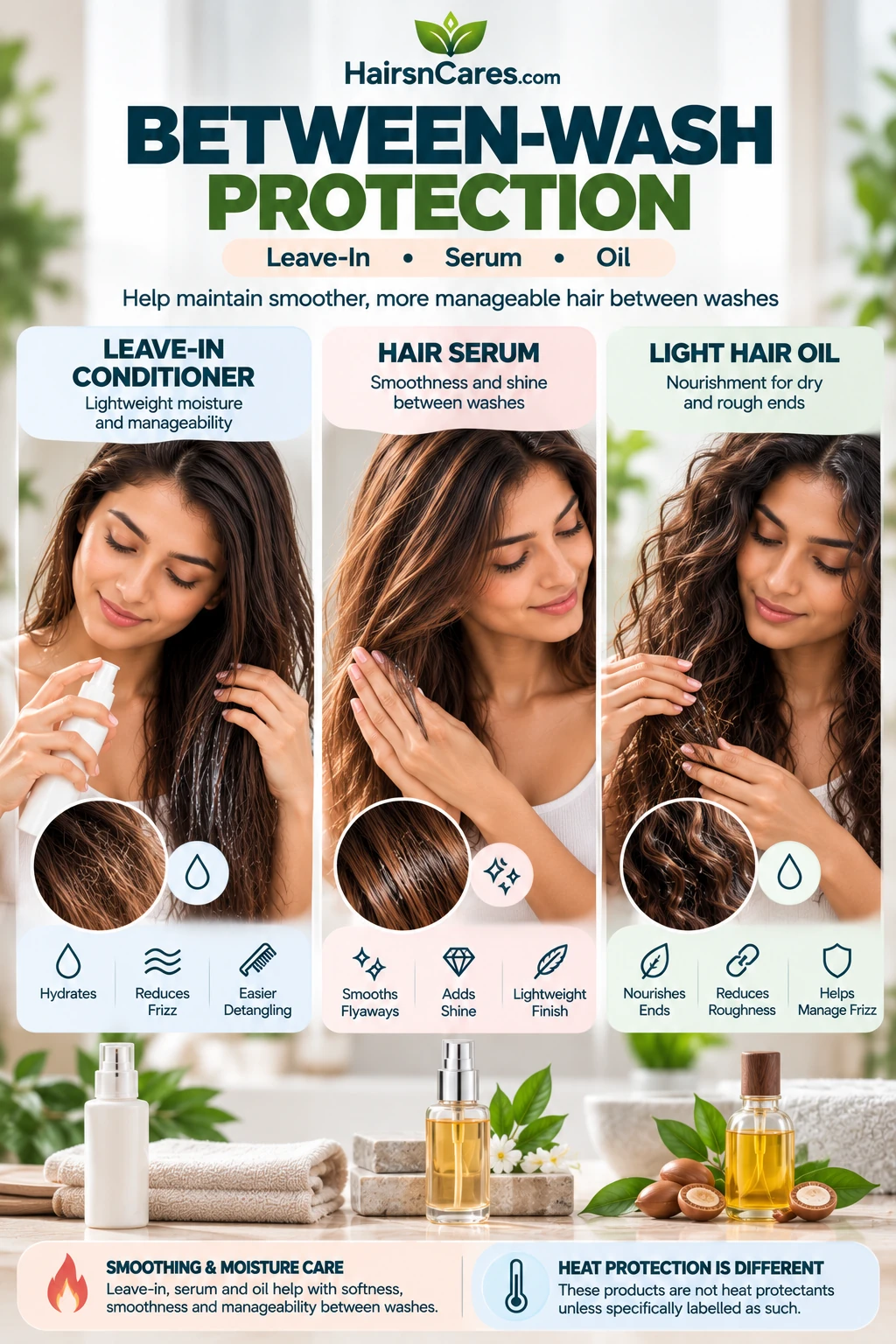
Protect the Shaft Between Washes
Best for:
- Shine
- Smoothness
- Flyaways
- Heat-styling finish
- Friction reduction
Caution: use oil mainly on lengths and ends; heavy scalp oil may worsen oily scalp or dandruff; patch test if sensitive; oils do not repair follicles or stop medical hair fall.
Reduce Heat Load
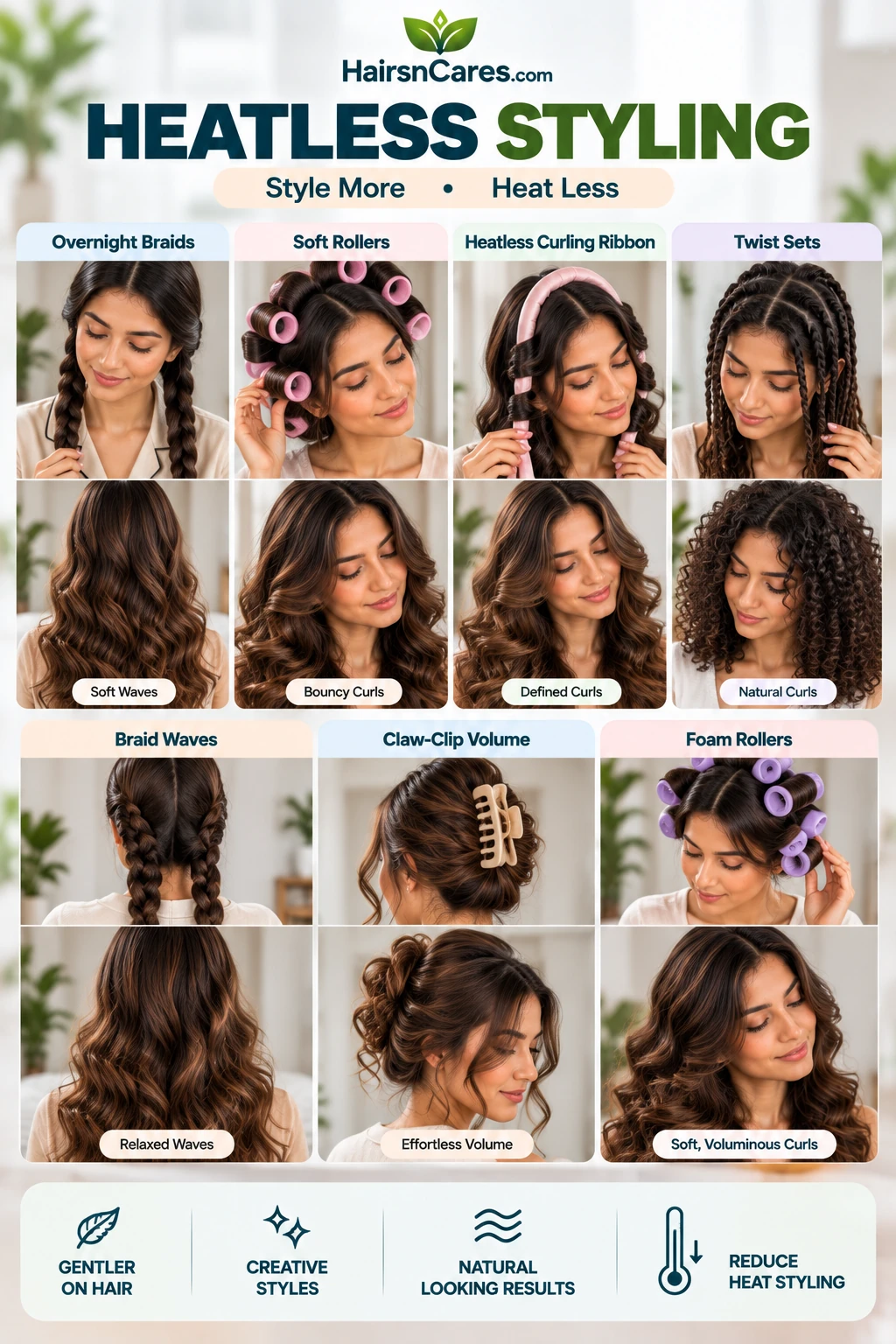
Reduce Heat Without Losing Style
"The best repair routine fails if the same high-heat habit continues every day."
Buying Guide
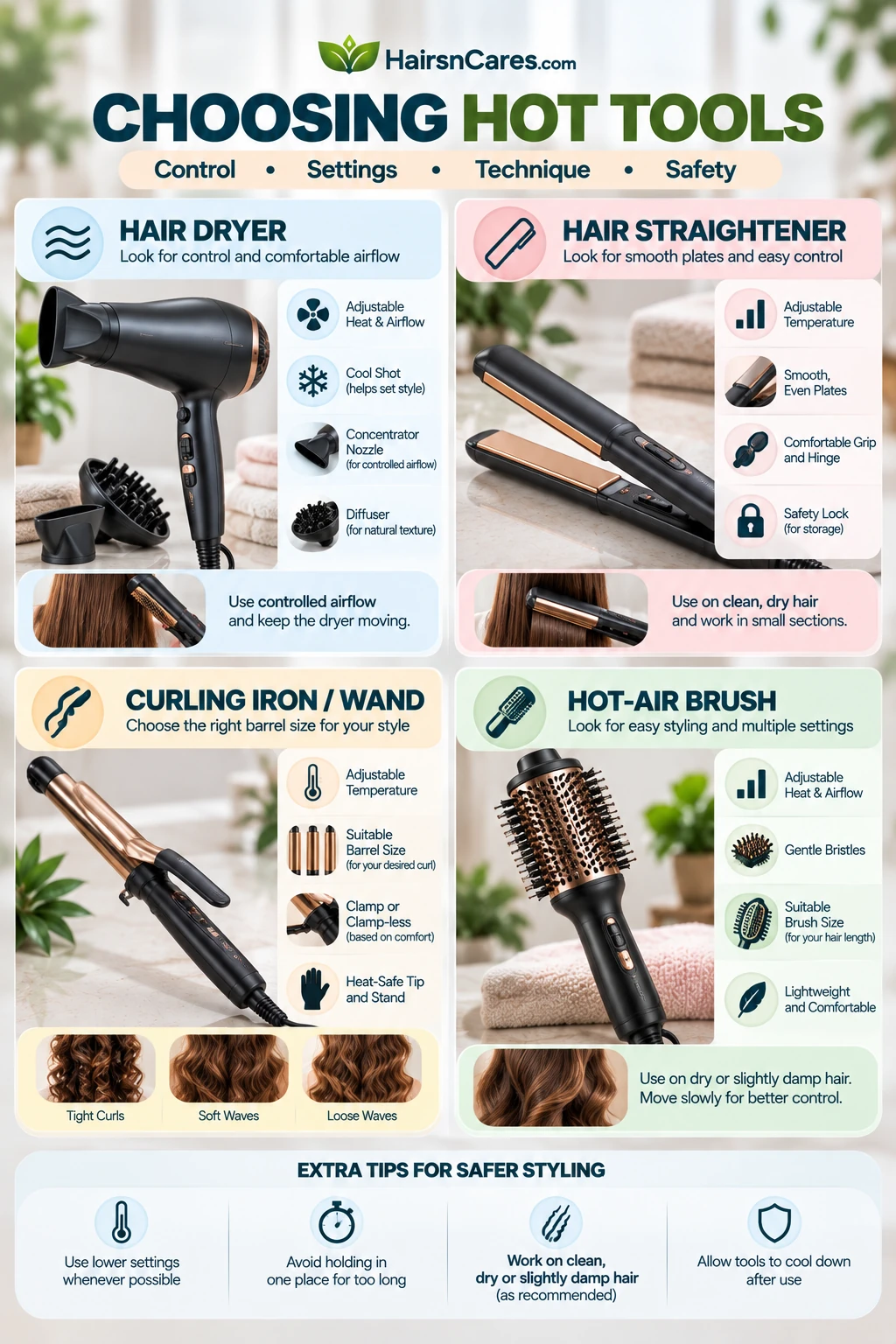
Choose Hot Tools by Control, Not Just Marketing
Hair Dryer
Look for:
- Heat settings
- Cool shot
- Airflow control
- Concentrator nozzle
- Diffuser
- Overheat safety where verified
Straightener
Look for:
- Adjustable temperature
- Plate material where verified
- Plate width
- Smooth glide
- Auto shut-off where verified
- Wet-use warning
Curling Iron / Wand
Look for:
- Adjustable temperature
- Barrel size
- Clamp or wand type
- Heat glove
- Auto shut-off where verified
Hot Air Brush
Look for:
- Heat settings
- Bristle type
- Airflow control
- Weight
- Tension control
Strict appliance rule: we do not invent ion technology, ceramic/titanium coating claims, temperature range, auto shut-off, heat sensor claims, damage-reduction claims, warranty, price, reviews or stock — only verified data is shown.
Ecommerce
Shop Heat-Damaged Hair Products by Damage and Styling Need
Filter by concern, product type, hair type and safety preferences.
*Claims are shown only when verified on the product database; unverified claims are not displayed.
Compare Without False Repair Claims
Compare Heat-Damage Products Without False Repair Claims
Compare up to four products on heat-protection claim, moisture support, protein support and more. Products are never labelled "best" without verified criteria.
| Attribute | Product A | Product B |
|---|---|---|
| Product type | Heat protectant spray | Bond-support mask |
| Heat-protection claim | Product information not confirmed | Not applicable |
| Moisture / protein | Lightweight | Protein-heavy |
| Usage stage | Before heat styling | Weekly deep treatment |
AI Tool
Create a Heat-Safe Routine Based on Your Styling Habits
The AI Heat-Damaged Hair Routine Builder above uses your inputs — hot tool type, heat frequency, damage severity, protectant use and chemical history — to suggest routine categories, a heat-reduction plan and a trim recommendation.
Track Realistically
Track Texture and Breakage, Not Fake Regrowth
Track heat frequency, tool type, protectant use, dryness, frizz, split ends, snapping, curl pattern, shine, roughness, tangling, shedding, scalp symptoms, mask use, trim date, product buildup and styling time.
Do Not Self-Manage These
Do Not Treat These Signs as Routine Heat Damage
- Scalp burns, blistering or swelling
- Pus, crusting or bleeding
- Severe redness or scalp pain
- Allergic reaction to a heat product
- Patchy hair loss or sudden heavy root shedding
- Hair coming out from the root
- Severe dandruff with shedding, or persistent itching
- Eyebrow or body hair loss
- Chemical plus heat injury
- No improvement despite stopping heat
Recommend salon or professional review for severe breakage, uneven damaged lengths, a gummy or melting feel, colour plus heat damage, curl pattern collapse, or major trim planning.
Avoid These
Mistakes That Keep Heat-Damaged Hair Breaking
Who Helps With What
Who Helps With What?
Dermatologist
- Scalp burns
- Scalp irritation
- Contact dermatitis
- Sudden shedding
- Patchy loss
- Dandruff with shedding
- Medical hair-loss causes
Hair Stylist
- Trim strategy
- Heat-free styling
- Blow-dry technique
- Tool technique
- Curl pattern care
- Colour and heat-damage planning
Haircare Advisor
- Routine mapping
- Product layering
- Heat protectant choice
- Mask schedule
- Protein-moisture balance
- Progress tracking
Expert Note
Reduce the Heat Load Before Expecting Repair
"Heat-damaged hair care works best when the same damage source is reduced. Conditioners, masks, leave-ins, serums, protein and bond-support products can improve feel and manageability, but daily high heat will keep weakening the shaft. Protect every styling session, lower the temperature, reduce passes and assess root shedding separately."
Reviewed by Dr. Amit Agarkar, MD Dermatology — Hairsncares
Suggested Medical References
Where to Read More From Trusted Sources
This page reflects general dermatology and cosmetic hair-science understanding. For deeper reading on hair-shaft structure, thermal damage and scalp burns, these are reputable starting points — search each organisation's site directly for the most current article, since we don't want to point you to a guessed or outdated link.
- American Academy of Dermatology (AAD)Patient guides on hair damage, heat styling and scalp health
- MedlinePlus (U.S. National Library of Medicine)Consumer-friendly overviews of hair and scalp conditions
- PubMedPeer-reviewed research on thermal hair damage and cuticle structure
- NHS (UK National Health Service)Condition overviews for scalp burns and skin irritation
These are reference categories, not endorsements of specific articles. Always check the publication date and consult a dermatologist for advice specific to you.
Frequently Asked Questions
Heat-Damaged Hair Guide: FAQs
Browse by category, or open any question directly — every answer stays on the cosmetic side of the line, with medical questions pointed to a doctor.