Skip to content
Dermatologist-reviewed education · Seven treatments, four chemistry classes · No outcome guarantees · Contraindications stated first Last medically reviewed: 25 July 2026 Medical editorial policy Book a consultation

Hair Treatment Intelligence · The Index

Seven Treatments.One Distinction That Decides Everything.

Hair botox, Brazilian, nanoplastia, cysteine, smoothening, rebonding, Japanese straightening. Seven names, seven price lists, seven brochures — and underneath them one question that settles almost every argument: does this treatment break the disulphide bonds inside your hair, or does it only coat them? Everything you actually care about — whether the result washes out or grows out, whether you get a line at the root, whether you can undo it — follows from that single answer. Start there, then choose.

7Treatments indexed
4Chemistry classes
0Outcome guarantees
Dermatologist Reviewed Chemistry Over Brand Names No Fabricated Imagery
Dermatologist Reviewed Marketing Language Corrected No Fabricated Before-After Photos Ingredient Lists Over Brand Names No Outcome Guarantees Contraindications Stated First No Bait Pricing

Quick answer

What are hair smoothing and straightening treatments?

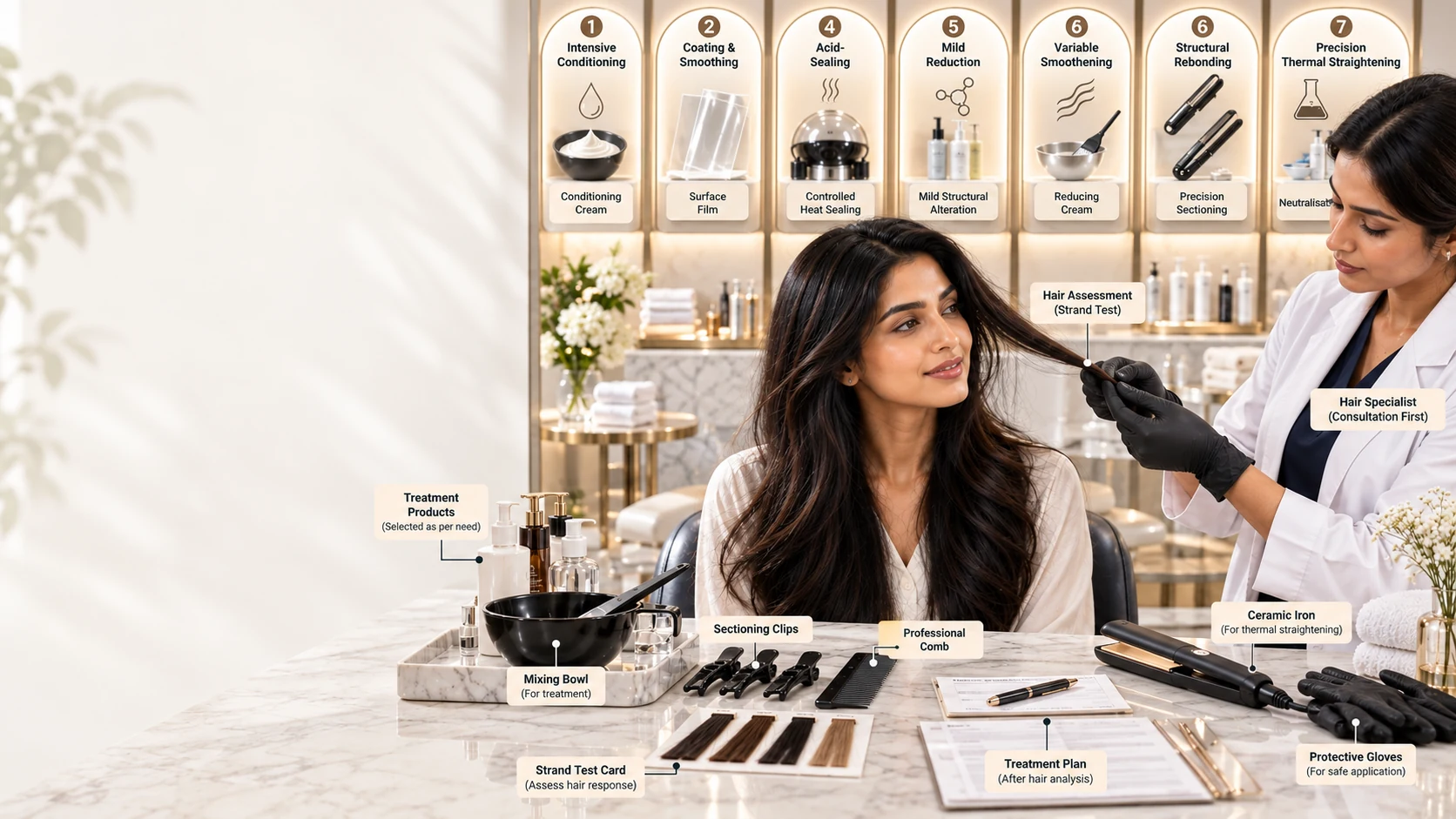
They are salon services that make hair smoother, glossier or straighter, and they divide into two groups that behave completely differently. One group coats and seals the hair fibre without touching its internal bonds — hair botox, Brazilian treatment and nanoplastia sit here, and their results wash out over weeks to months. The other group uses a reducing agent to open the disulphide bonds that hold your curl pattern, then re-fixes them in a straighter shape — cysteine mildly and temporarily, rebonding and Japanese straightening permanently on the treated length. The permanent group does not wash out; it grows out, leaving a line at the root. “Smoothening” is a category name that can mean any of them. If your scalp is sore or your hair is shedding, see a doctor before you book anything.

What you’ll learn on this page

  • Which of these seven treatments change the structure of your hair and which only coat it
  • What each name actually tells you about the chemistry — and which names tell you nothing
  • How long each result realistically lasts, and whether it fades or grows out
  • Why a regrowth line appears with some treatments and never with others
  • What overlap is, and why it causes most of the serious damage in this category
  • Who should not have a chemical smoothing service at all, and when to see a doctor first
  • The twelve questions that separate a salon that has thought about your hair from one that has not
  • Where to read the full dermatologist-reviewed guide for whichever treatment fits
Two lengths of dark hair under identical studio light, one sealed and glossy but still textured, the other reshaped completely straight
The difference the whole page turns on: a sealed surface on the left, a reshaped fibre on the right. One washes out, the other grows out.

The distinction that organises everything

Every one of these is a position on one axis

At one end, a treatment sits on and inside the fibre and changes nothing structural — it washes out. At the other, a reducing agent opens the disulphide bonds that hold your curl pattern, the hair is reshaped, and a neutraliser locks the new shape in — it grows out. Every treatment below is somewhere on that line, and its position, not its name, is what determines permanence, the regrowth boundary, reversibility and risk. Select any marker to see where it sits.

Select a treatment to see its position

Select any treatment above to see where it sits on the spectrum, and what that position commits you to.

Class A · Surface conditioningSits on and in the fibre. No bond chemistry. Washes out.
Class B · Coating and sealingA cross-linking or acid system sealed with heat. Bonds are not broken. Fades.
Class C · Mild reductionSome disulphide bonds are temporarily loosened, then allowed to re-form.
Class D · Full reduction and re-fixingBonds are opened, the fibre is reshaped, and a neutraliser locks the new shape in. Permanent on the treated length.

The one thing worth carrying away: the brand name on the price list tells you almost nothing about which class you are in. Two salons can quote the same word for two different chemistries, and one of them will grow out for the next two years. Ask which class, not which brand.

The index

All seven, in spectrum order

Ordered from the treatment that changes nothing structural to the one that changes the most. Each card opens a full dermatologist-reviewed guide — the chemistry, the safety record, what it cannot do, indicative Indian pricing and the questions to ask.

Class A
Surface conditioning

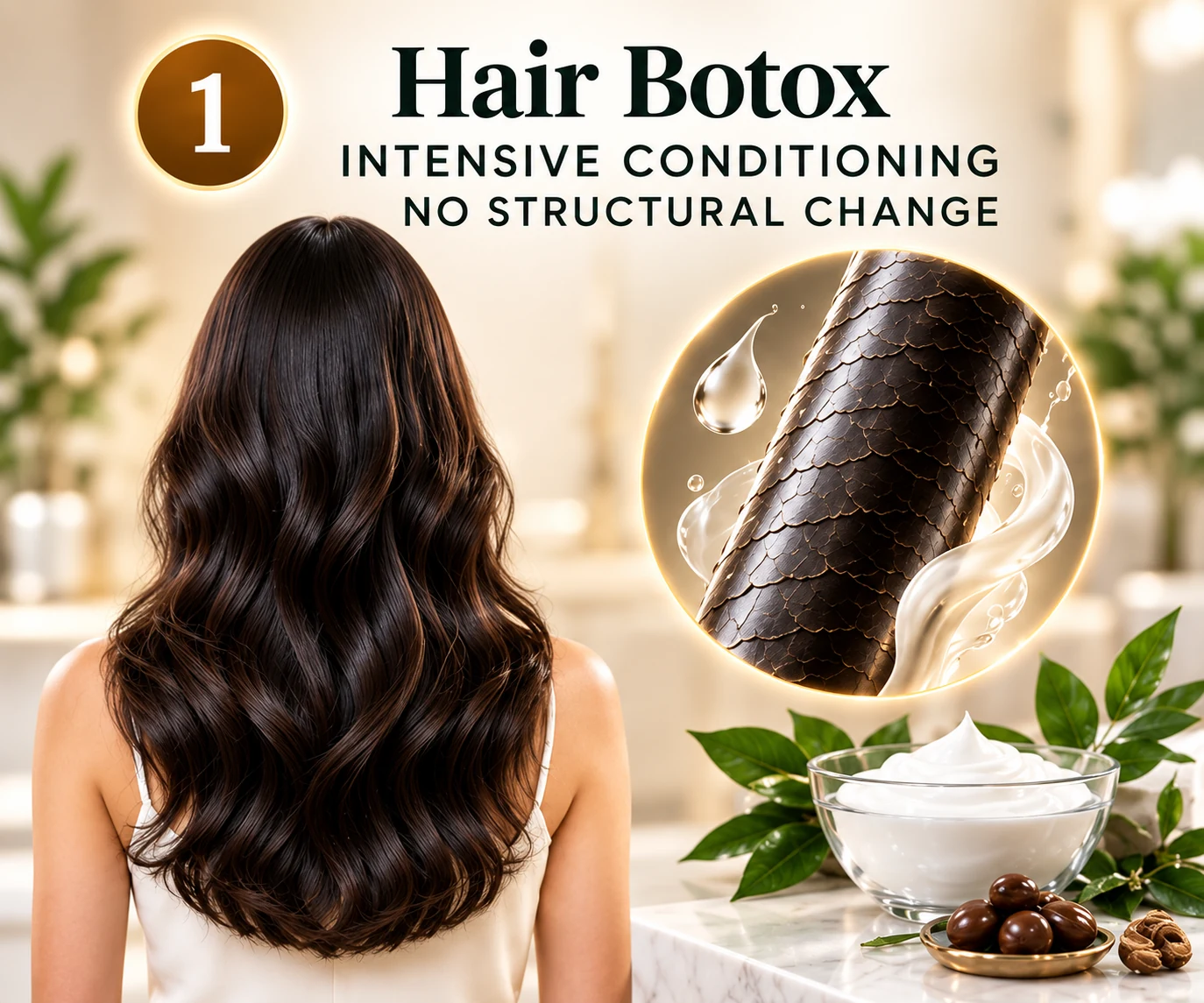
Hair Botox

No botulinum toxin. Nothing is injected.

An intensive conditioning and smoothing treatment applied to the fibre. It fills, softens and adds gloss. It does not touch a single bond.

  • Typical hold3–8 weeks
  • Time in the chair1–2.5 hours
  • Disulphide bondsNone changed

Read this if you want condition and shine, and you are happy to keep your texture.

Read the full guide
Class B
Coating & sealing

Brazilian Treatment

A region, not a formula.

Hydrolysed proteins, conditioning polymers and a cross-linking or acid system, sealed section by section with a flat iron. Smooth, glossy, humidity-resistant — and it washes out.

  • Typical hold2–4 months
  • Time in the chair2–4 hours
  • Disulphide bondsNone changed

Read this if frizz and humidity are the problem and you do not want a permanent change.

Read the full guide
Class B
Coating & sealing

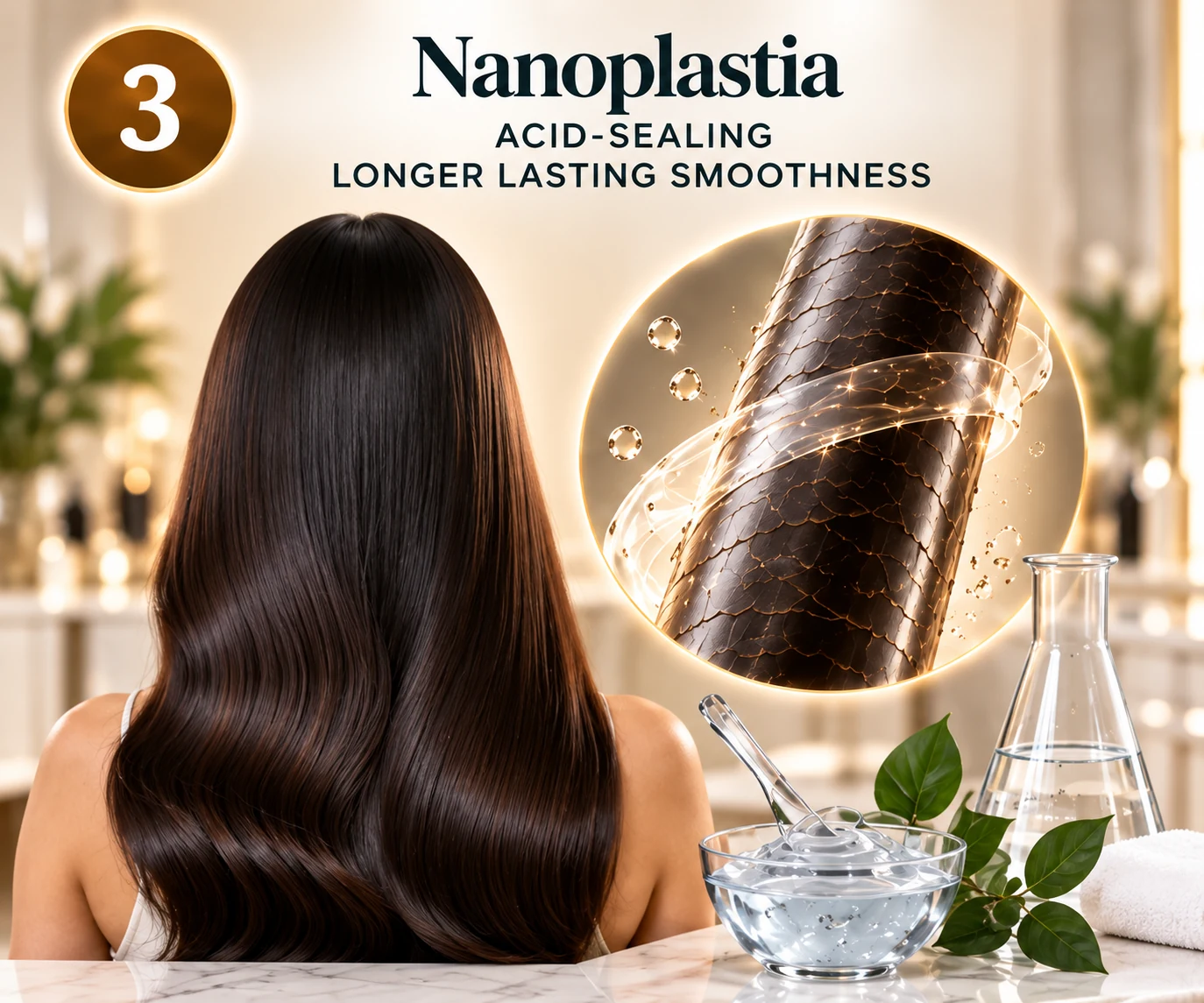
Nanoplastia

Not a nanotechnology. Not automatically formaldehyde-free.

A trade name with no legal definition, most commonly built around glyoxylic acid. It behaves as an acid-sealing service, holds longer than most of its neighbours, and still does not permanently reset your curl.

  • Typical hold3–5 months
  • Time in the chair2–4 hours
  • Disulphide bondsNone changed

Read this if you want the longest hold available without a permanent structural change.

Read the full guide
Class C
Mild reduction

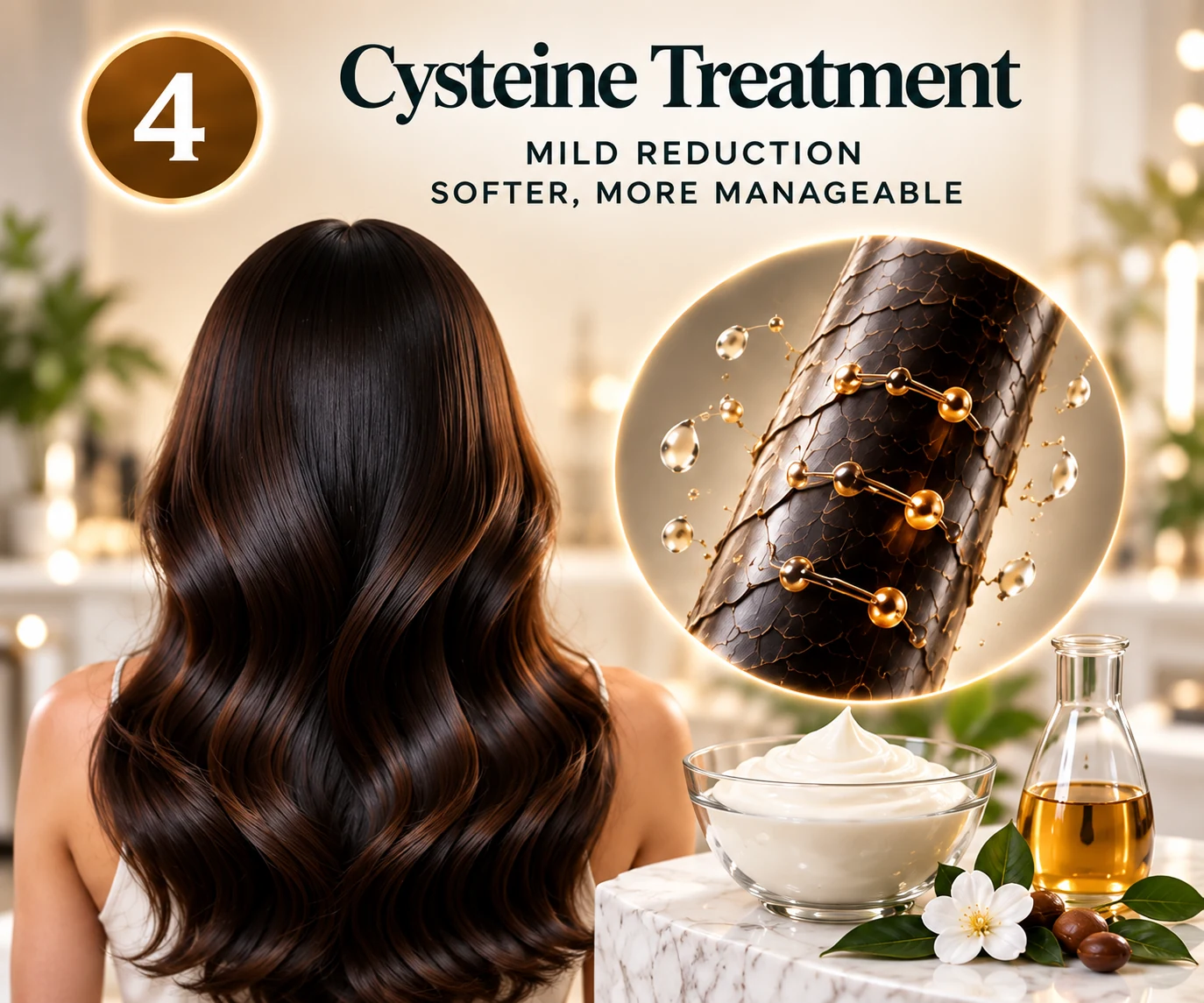
Cysteine Treatment

An amino acid — and a reducing agent.

The gentlest member of the reducing family used on hair. It loosens a proportion of the disulphide bonds so heat can reset the fibre softer — which is exactly why “chemical-free” cannot be true.

  • Typical hold6–10 weeks
  • Time in the chair2–3 hours
  • Disulphide bondsPartly, temporarily

Read this if you want your own texture looser and softer rather than straight.

Read the full guide
Class A–D
Category name, not a chemistry

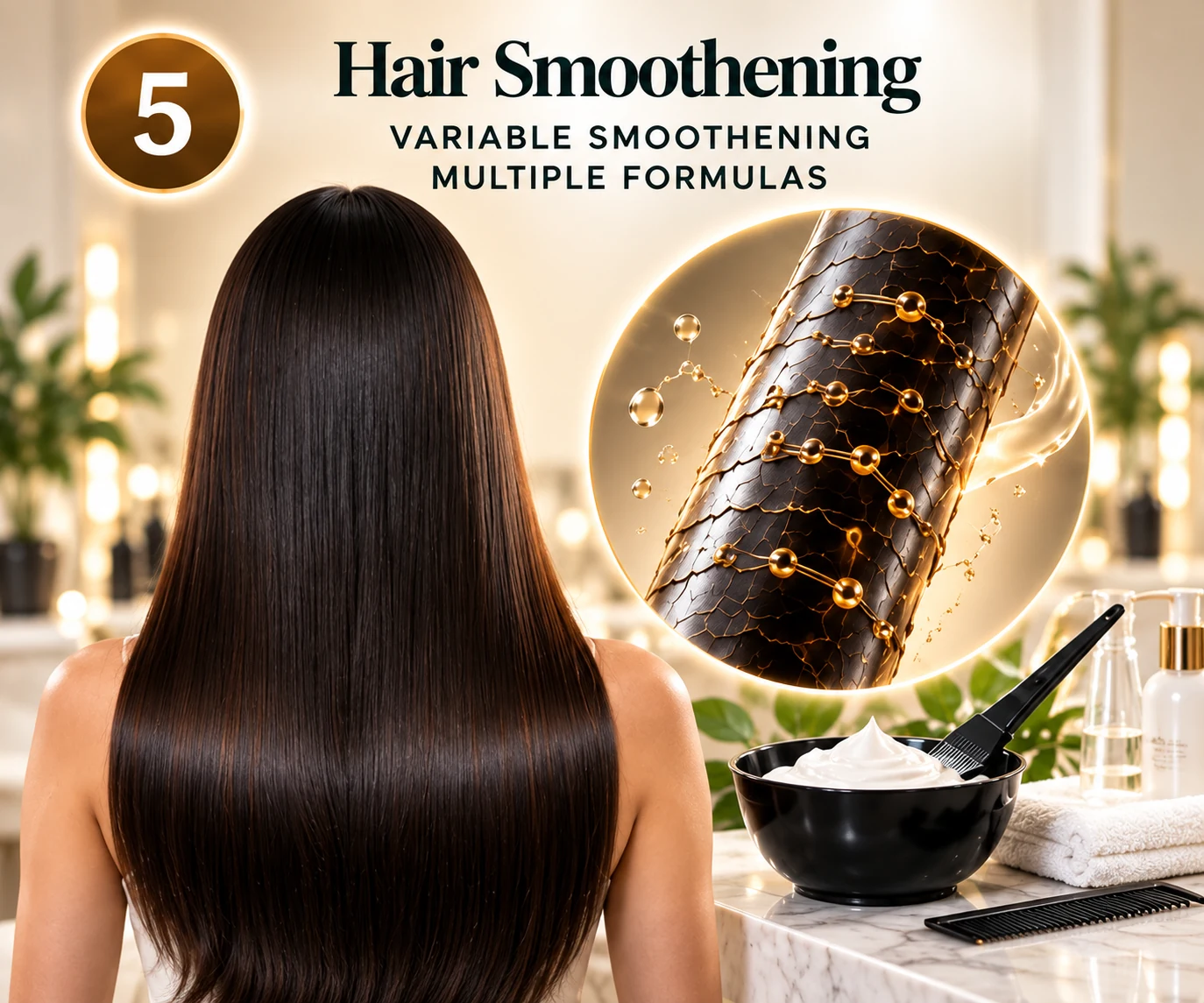
Hair Smoothening

One word. Four different services.

The only name here that guarantees nothing. In Indian salons it most often means a gentler thioglycolate service — but the same word covers coating treatments and mild amino-acid systems too.

  • Typical holdDepends on the system used
  • Time in the chair2–5 hours
  • Disulphide bondsDepends entirely

Read this if you are being quoted for “smoothening” and need to find out what that actually is.

Read the full guide
Class D
Full reduction & re-fixing

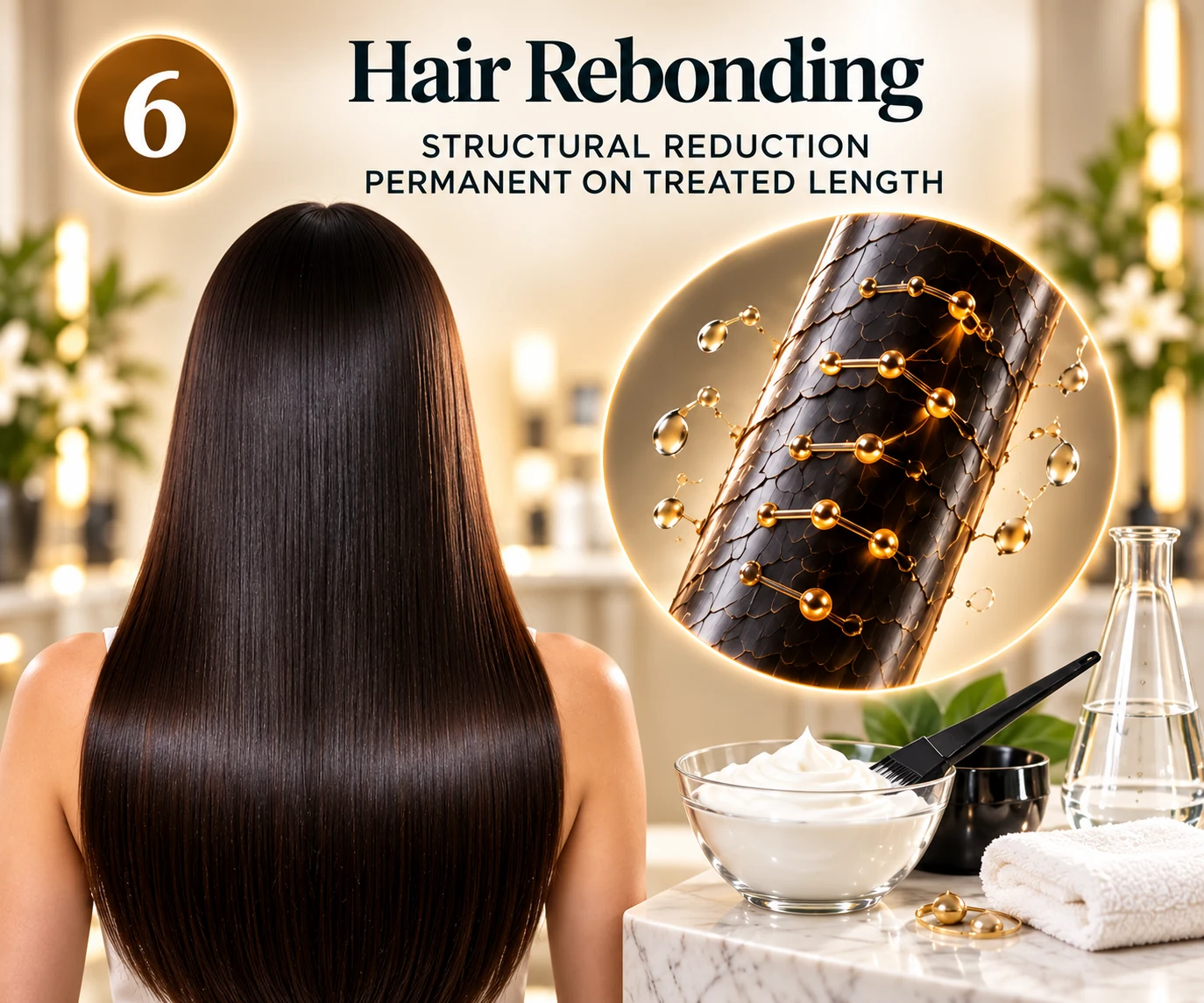
Hair Rebonding

Permanent on the treated length.

A reducing cream opens a large proportion of the disulphide bonds, the hair is straightened under tension, and a neutraliser refixes them in the new shape. The treated length stays straight until it is cut off.

  • Typical holdPermanent on treated hair
  • Time in the chair4–8 hours
  • Disulphide bondsYes — permanently, on the treated length

Read this if you want lasting straightness and accept a permanent commitment.

Read the full guide
Class D
Full reduction & re-fixing

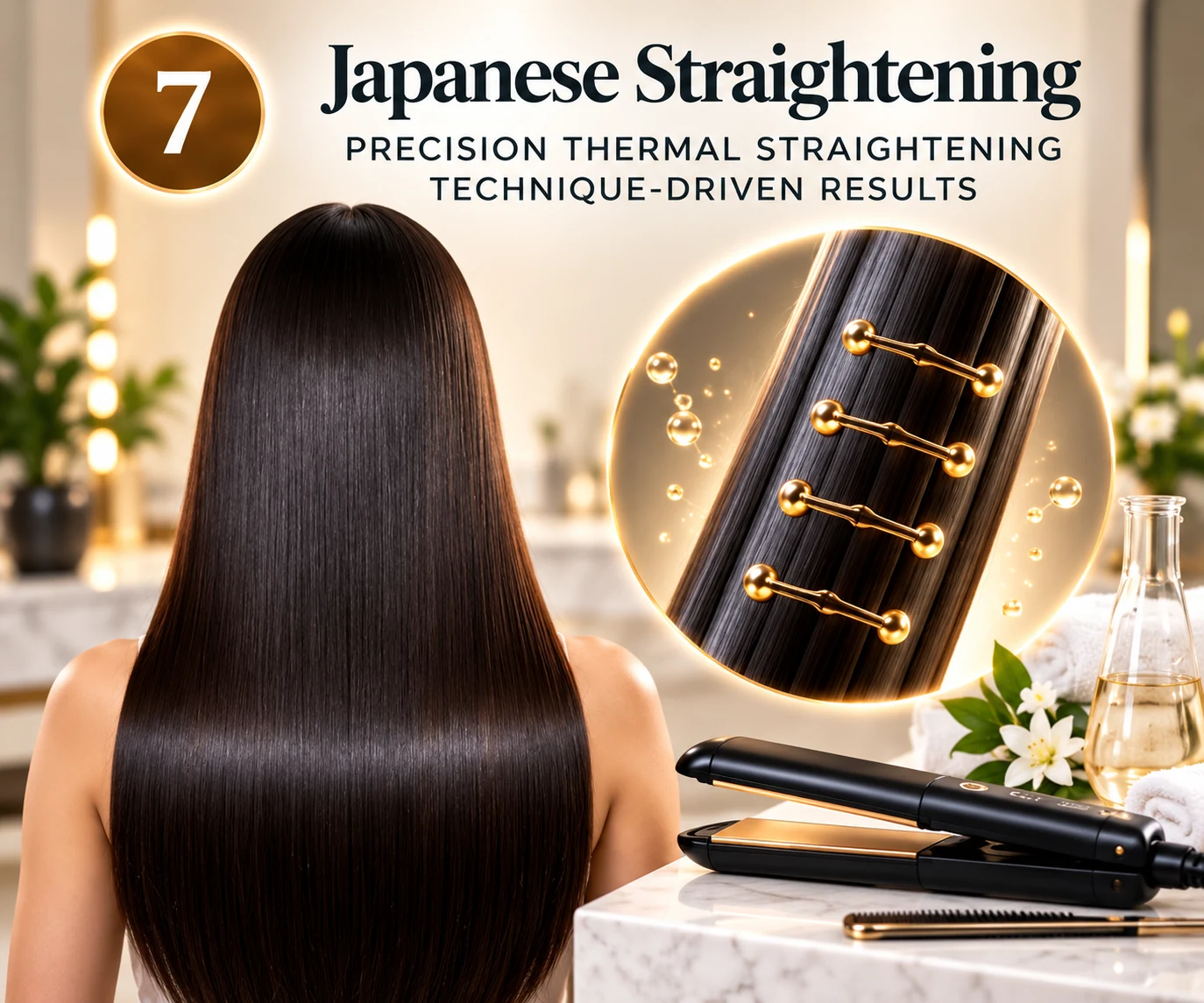
Japanese Straightening

Also called thermal reconditioning.

The same chemical class as rebonding, held to a stricter technique standard: finer sections, tighter control, longer in the chair. Precision reduces avoidable damage. It does not make an intensive chemical service risk-free.

  • Typical holdPermanent on treated hair
  • Time in the chair5–9 hours
  • Disulphide bondsYes — permanently, on the treated length

Read this if you want the same permanence executed with more control, and you have the time for it.

Read the full guide

Side by side

The comparison, without the marketing

Twelve rows, seven columns, no scores out of ten. Where a cell reads “depends entirely”, that is the honest answer rather than a gap — and it is usually the most useful cell in the row.

All seven salon smoothing and straightening treatments compared. Scroll horizontally to see every column.
CompareHair BotoxBrazilian TreatmentNanoplastiaCysteine TreatmentHair SmootheningHair RebondingJapanese Straightening
What the name tells youNothing about the chemistry — “botox” is an analogy for a filling effect, not an ingredientA country, not a composition. Formulas vary widely between brandsNothing enforceable. It is a marketing name, not a defined techniqueOne named active. The most literal name of the sevenNothing. It is a commercial category, not a chemistryThe mechanism itself — bonds are broken and re-bondedA technique standard, not a different chemistry
Chemistry classSurface conditioningCoating & sealingCoating & sealingMild reductionCategory name, not a chemistryFull reduction & re-fixingFull reduction & re-fixing
Disulphide bonds changedNone changedNone changedNone changedPartly, temporarilyDepends entirelyYes — permanently, on the treated lengthYes — permanently, on the treated length
What it actually deliversSoftness, gloss, detangling, some frizz reductionA sealed, glossy, humidity-resistant surfaceA long-holding mirror finish and strong frizz controlA milder, shorter-lived version of a reducing serviceWhatever the underlying system delivers — ask which oneA structural change to the hair that was treatedA structural change, executed with tighter process control
StraightnessNone. Curl pattern stays.Waves soften. They do not disappear.Waves soften considerably. Curl pattern survives.Looser, softer, more manageable. Not poker-straight.Anything from none to a soft natural straightnessMarkedly straighterMarkedly straighter, with a characteristically flat finish
Typical hold3–8 weeks2–4 months3–5 months6–10 weeksDepends on the system usedPermanent on treated hairPermanent on treated hair
Time in the chair1–2.5 hours2–4 hours2–4 hours2–3 hours2–5 hours4–8 hours5–9 hours
Regrowth line at the rootNo line. Nothing structural was changed.No hard line — it fades rather than grows outNo hard lineLittle to no visible line — the effect fadesOnly if the underlying system is bond-alteringYes — new roots grow in your natural textureYes — new roots grow in your natural texture
ReversibleYes — it washes outFades gradually with washingFades gradually with washingFades as bonds re-formDepends entirely on the systemNo. It grows out; it does not wash out.No. It grows out; it does not wash out.
Repeat modelRe-applied when the effect fadesRepeat when the effect washes outRepeat when the effect fadesRepeat when the softness fadesDepends entirely on the systemRoot touch-ups only, never over treated lengthRoot work only, and only by someone who can judge the boundary
Heat sealing involvedUsually low or moderate, and not always essentialYes — high-temperature sealing is part of the methodYes — sealing with a flat iron is centralYes — controlled heat sets the resultAlmost always, but the temperature and purpose varyYes — sealing under tension is part of the processYes — fine-section flat-ironing under tension is the method
The thing to verify before bookingWhether you are being sold a coating or something stronger under the same nameThe full ingredient list: formaldehyde, formaldehyde-releasing agents, glyoxylic acid — and the ventilation in the roomWhether “formaldehyde-free” means free of releasers and glyoxylic acid too. Very often it does notWhich thiol is actually in the bottle, and that nobody is calling it chemical-freeWhich of the four services you are actually being sold. This is the whole questionHow the operator handles the regrowth boundary. Overlap onto previously treated hair causes most of the serious damage in this categoryWho is doing it. In this class the operator matters more than the brand on the bottle

Prices are deliberately absent from this table. Cost moves with hair length and density, salon tier, hair condition and the product used, and a single headline figure lifted out of that context becomes bait pricing. Each treatment page carries an indicative range together with the variables that move it.

Narrow it down

Which part of the spectrum is yours?

Five questions. This produces a specification — the chemistry class that matches what you want, what that class can realistically deliver, and what to verify before you agree to anything. It does not name a salon, quote a price, promise a result or tell you to book. Nothing you select is stored or sent anywhere.

1. What do you actually want to change?
2. Your natural texture
3. Chemical history
4. How much ongoing upkeep suits you?
5. Does any of this apply to you right now?

This question runs before everything else, and it can override the rest.

Specification

Start with the class, not the name

  • Chemistry class
  • Permanence
  • Realistic result
  • Regrowth
  • Verify before agreeing
Read next

    This is an educational specification, not a diagnosis, a recommendation or a treatment plan. It cannot see your hair or your scalp. Anything on it should be checked against an assessment by someone who can.

    Before you go further

    Is this page the right thing for you to be reading?

    Most people arriving here are choosing between services. Some are not — they have a medical question wearing a cosmetic costume, and the honest thing is to say so early rather than at the bottom of an FAQ.

    This page is for you if

    You are making a cosmetic decision and want the chemistry stated plainly.

    • You are comparing two or more of these treatments and the brochures are not helping
    • A salon has quoted you for “smoothening” and you want to know what that actually means
    • You want frizz control but are not sure whether you want a permanent change
    • You have been offered a “formaldehyde-free” treatment and want to know what that claim covers
    • You have had one of these treatments before and are deciding whether to repeat it
    • You want to understand what you are committing to before you spend the money

    Speak to a doctor first if

    These are medical questions. A smoothing service is not the answer to any of them, and going ahead can make the real problem harder to see.

    • Your scalp is sore, flaking, broken or inflamed right now
    • You are shedding more than usual, or seeing thinning or patches
    • You are pregnant or breastfeeding
    • You have reacted to a hair treatment before, however mildly
    • Your hair is heavily bleached, or breaking when you brush it
    • You are already having another chemical service and nobody has planned the order

    The part the brochure skips

    What actually happens over six months

    Not a promise of results — a description of the two different futures these treatments have. Because the coating classes fade and the bond-altering classes grow out, the same timeline reads completely differently depending on which half of the spectrum you chose.

    Day 1

    The result you were sold

    Every class looks its best on the day. This is the least informative moment for judging what you actually bought.

    Coating and conditioning classesThe seal is fresh and the gloss is at maximum. Aftercare instructions matter most in the first days.
    Bond-altering classesThe fibre has just been through an intensive process. Handling should be gentle even though the shape is permanent.

    Week 1

    The first honest look

    The styling from the appointment has washed out and you are seeing the treatment itself rather than the blow-dry.

    Coating and conditioning classesStill close to day one if aftercare has been followed. Any harsh cleansing shows up here first.
    Bond-altering classesThe shape is what it will remain. If breakage was going to appear from over-processing, this is often when it is noticed.

    Month 1

    Where the classes separate

    This is the point at which the two halves of the spectrum start living completely different lives.

    Coating and conditioning classesFading has begun. Frizz control softens gradually rather than failing at a point.
    Bond-altering classesRoughly a centimetre of new growth in your own texture. Nothing has faded — a boundary has appeared.

    Month 3

    Fade versus line

    By now the difference is visible to anyone looking, and it is the difference you actually chose on the day you booked.

    Coating and conditioning classesMost of the effect has washed out or is close to it, depending on which system was used and how you wash.
    Bond-altering classesThe regrowth line is clear. This is the point where the temptation to overlap begins, and where damage most often starts.

    Month 6+

    What you have committed to

    Six months out, the honest question is not how it looked but what the ongoing obligation turned out to be.

    Coating and conditioning classesBack to baseline, or close to it. The decision is simply whether to repeat.
    Bond-altering classesSeveral centimetres of natural texture at the root against treated length below. Root work only — never over what has already been processed.

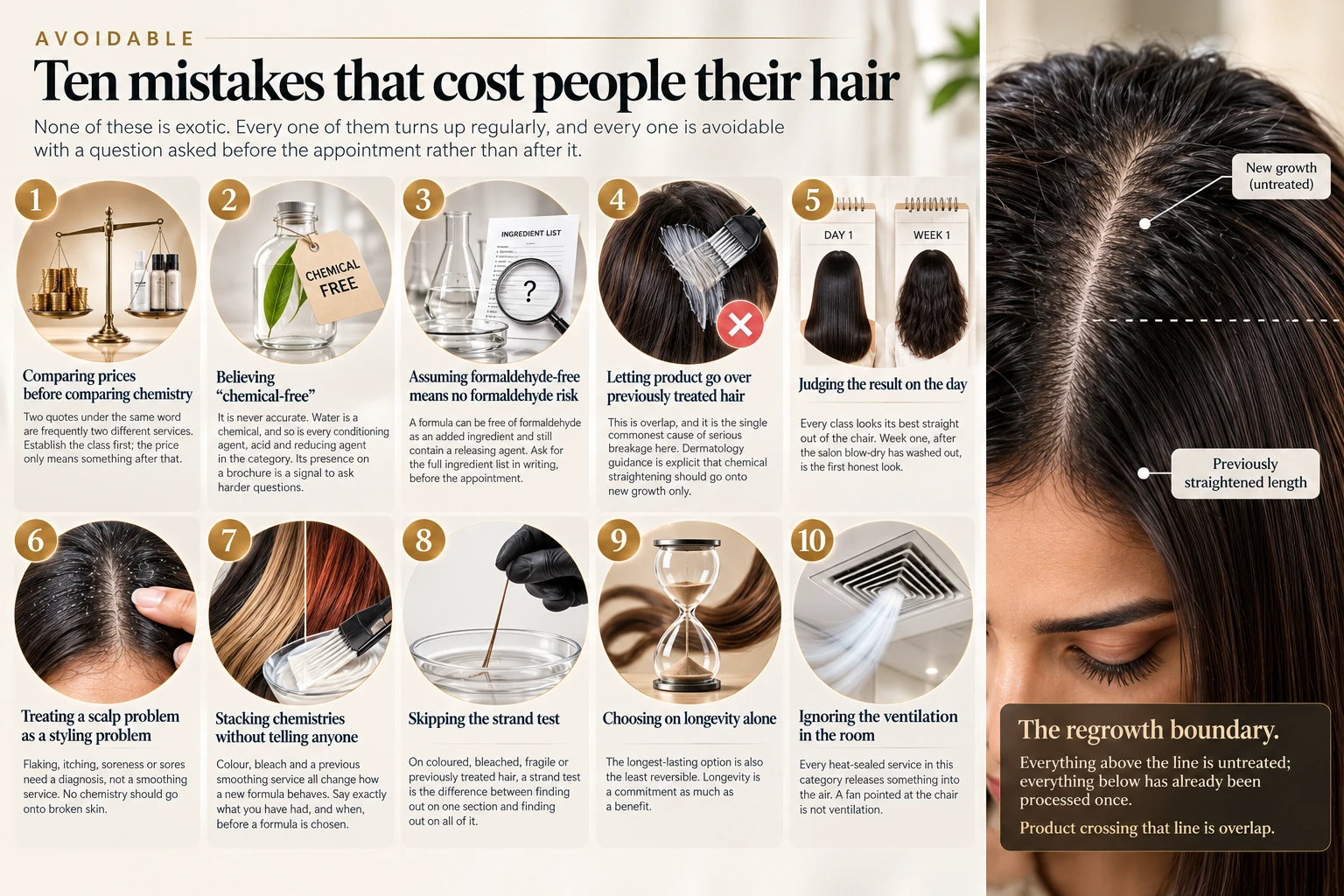
    Avoidable

    Ten mistakes that cost people their hair

    None of these is exotic. Every one of them turns up regularly, and every one is avoidable with a question asked before the appointment rather than after it.

    Comparing prices before comparing chemistryTwo quotes under the same word are frequently two different services. Establish the class first; the price only means something after that.
    Believing “chemical-free”It is never accurate. Water is a chemical, and so is every conditioning agent, acid and reducing agent in the category. Its presence on a brochure is a signal to ask harder questions.
    Assuming formaldehyde-free means no formaldehyde riskA formula can be free of formaldehyde as an added ingredient and still contain a releasing agent. Ask for the full ingredient list in writing, before the appointment.
    Letting product go over previously treated hairThis is overlap, and it is the single commonest cause of serious breakage here. Dermatology guidance is explicit that chemical straightening should go onto new growth only.
    Judging the result on the dayEvery class looks its best straight out of the chair. Week one, after the salon blow-dry has washed out, is the first honest look.
    Treating a scalp problem as a styling problemFlaking, itching, soreness or sores need a diagnosis, not a smoothing service. No chemistry should go onto broken skin.
    Stacking chemistries without telling anyoneColour, bleach and a previous smoothing service all change how a new formula behaves. Say exactly what you have had, and when, before a formula is chosen.
    Skipping the strand testOn coloured, bleached, fragile or previously treated hair, a strand test is the difference between finding out on one section and finding out on all of it.
    Choosing on longevity aloneThe longest-lasting option is also the least reversible. Longevity is a commitment as much as a benefit.
    Ignoring the ventilation in the roomEvery heat-sealed service in this category releases something into the air. A fan pointed at the chair is not ventilation.
    A close view of a hair parting where new growth in its natural texture meets previously straightened length below
    The regrowth boundary. Everything above the line is untreated; everything below has already been processed once. Product crossing that line is overlap.

    Twelve questions

    What to ask before you sit in the chair

    The most useful thing on this page. A salon that answers these twelve clearly is a salon that has thought about your hair; a salon that deflects them has told you something too.

    Which of the four classes is this?If the answer is a brand name rather than a class, ask again in different words. The class decides permanence, regrowth and reversibility.
    What is the active ingredient?Not the brand, not the range — the active. You are entitled to see the full ingredient list before the appointment, not on the day.
    Will this change my disulphide bonds?A yes means the result grows out. A no means it washes out. There is no third option, and the answer should be immediate.
    How will you handle previously treated hair?Overlap causes most of the serious damage in the bond-altering classes. The answer should describe a boundary, not a reassurance.
    Will you do a strand test?On coloured, bleached, previously treated or fragile hair, a strand test is the difference between finding out on one section and finding out on all of it.
    How is the room ventilated?Relevant for every heat-sealed service. If the answer is a fan pointed at the chair, that is not ventilation.
    What does the result actually look like on hair like mine?Ask for the realistic version, not the campaign version. Tight curl needs more processing to reach the same visible result.
    How long will it last, and what happens as it goes?Fading and growing out are different futures. You should know which one you are buying.
    What is the aftercare, and what does it cost?The upkeep is part of the price. A cheap service with an expensive aftercare routine is not a cheap service.
    What happens if I do not like it?For the coating classes there is usually a fade. For the bond-altering classes there is usually not. Ask before, not after.
    Who will actually be doing it?In the bond-altering classes the operator matters more than the product. Ask for the person, not the salon.
    What would make you refuse to do this on my hair?The most revealing question on the list. A salon that has no answer has no threshold.

    Editorial standards

    Why this page reads differently from a salon menu

    Not a list of things we are good at — a list of things we will not do, which is the more useful disclosure when you are deciding whether to trust a page about a service someone sells.

    Dermatologist-reviewed, not salon-written

    Every page in this cluster is written and reviewed by Dr. Amit Agarkar, a practising dermatologist and hair transplant surgeon — not by the people selling the service.

    Ingredient lists over brand names

    We name chemistry classes and actives rather than ranking brands, because the class is what determines your outcome and the brand is what determines the invoice.

    No fabricated results imagery

    There is no before-and-after gallery on this page. When we publish one, it will follow the imagery standard set out above, and every frame in it will be real.

    Contraindications stated first

    Where a treatment should not be done, that comes before the description of what it does. The safety branch in the finder runs before any specification is shown.

    No outcome guarantees

    Nothing on this page promises a result. Longevity ranges are typical, not contractual, and they move with your hair, the formula and the operator.

    Corrections published, not absorbed

    When something here turns out to be wrong, it gets corrected in public with the evidence, rather than quietly edited away.

    Medically reviewed

    Who reviewed this page, and what that means

    “Reviewed” is a word used loosely on health pages. Here is exactly what it covers on this one, so you can judge how much weight to give it.

    Dr. Amit Agarkar

    MBBS, MD Dermatology, FCPS, DDV · Consultant Dermatologist, Trichologist and Hair Transplant Surgeon · Mumbai

    Founder of Hairsncares. This page and the seven treatment guides it links to were written and reviewed under his supervision.

    • Last medically reviewed25 July 2026
    • Review scopeChemistry, safety, claim language
    • Page typeEducational index, not treatment advice
    • Commercial relationshipNone with any brand named

    What the review covered

    • That every chemistry description matches what the treatment actually does
    • That no result is promised, guaranteed or given a fixed timeline
    • That contraindications appear before the descriptions they qualify
    • That the finder cannot output a product, a strength or a booking instruction
    • That every external reference supports a claim the page genuinely makes

    What it does not cover

    • Your hair and scalp, which nobody can assess through a web page
    • Any individual salon, operator or product formulation
    • Pricing, which moves with length, density, salon tier and condition
    # ============================================================= # SECTION — REFERENCES # =============================================================

    Sources

    Where the safety statements on this page come from

    Five independent sources, each verified against the publisher’s own site and each supporting a specific claim made above. None of them is decorative, and none is a study we have characterised beyond what its authors said.

    U.S. Food and Drug Administration Hair Smoothing Products That Release Formaldehyde When Heated The regulator's own explanation of why some smoothing formulas release formaldehyde gas when heat is applied, and why salon ventilation matters. Supports the ingredient-list and ventilation questions on this page. American Academy of Dermatology Black hair: Tips for everyday care Dermatology guidance stating that chemical straightening touch-ups should go only onto newly grown hair, and that relaxer should never be applied to hair that has already been relaxed. This is the overlap rule, from an independent authority. American Academy of Dermatology Hair loss: Tips for managing Guidance for fragile or thinning hair, including stopping chemical straightening and relaxing and having the scalp examined. Supports the safety branch in the treatment finder above. National Institutes of Health · NIEHS Hair straightening chemicals associated with higher uterine cancer risk The NIH news release on the Sister Study analysis. An observational association in a large US cohort, not a demonstration of cause, and uterine cancer remains uncommon — but it is the reason this page treats the bond-altering classes as a decision worth slowing down for. Journal of the National Cancer Institute Use of Straighteners and Other Hair Products and Incident Uterine Cancer The peer-reviewed paper behind that news release, for readers who want the primary source and its stated limitations rather than the coverage of it.

    Questions

    The questions people actually ask

    24 answers covering the choice between treatments, the chemistry underneath them, safety, aftercare and cost. Search or filter by category.

    Which of these seven treatments is the safest?
    Choosing

    Safety is not a property of the brand name; it is a property of the class, the formulation, the condition of your hair and the person applying it. As a general shape: the conditioning and coating classes act on the surface and do not permanently change the fibre, so a poor result usually fades. The bond-altering classes change the hair structurally, so a poor result has to grow out. That is the honest ranking — not a promise that any of them is risk-free for you specifically.

    I have been quoted for “smoothening”. What am I actually being sold?
    Choosing

    Nobody can tell you from the word alone, which is the whole problem with it. Smoothening is a commercial category, not a chemistry. In Indian salons it most often means a gentler thioglycolate service, but the same word is used for coating treatments sealed with heat and for milder amino-acid systems. Ask which of the four classes the service belongs to, and what the active ingredient is. If the salon cannot answer that, you have learned something useful.

    What is the difference between rebonding and Japanese straightening?
    Choosing

    They belong to the same chemical class — bonds are opened, the hair is reshaped under tension, and a neutraliser refixes them. What differs is the technique standard. Japanese straightening, or thermal reconditioning, works in finer sections with tighter process control and takes considerably longer in the chair. Better technique reduces avoidable damage. It does not turn an intensive chemical service into a gentle one.

    Is nanoplastia really a nanotechnology?
    Choosing

    No. Nanoplastia is a trade name with no legal or technical definition. In practice it describes an acid-based smoothing service, most commonly built around glyoxylic acid. The name is marketing; the chemistry is what matters, and the chemistry is on the ingredient list.

    Does hair botox contain botulinum toxin?
    Choosing

    No, and nothing is injected. The name is an analogy for a filling and plumping effect. Products sold under it are intensive conditioning treatments — typically hydrolysed proteins, amino acids, humectants, lipids and film formers. Because there is no standard formulation, results vary substantially between products and salons.

    I want to keep my curls but lose the frizz. Where should I look?
    Choosing

    That is the coating and conditioning end of the spectrum rather than the reducing end. Read the hair botox page if you want condition and gloss with no structural change at all, and the Brazilian and nanoplastia pages if you want a sealed, humidity-resistant surface that softens waves without permanently resetting your curl pattern.

    What are disulphide bonds and why do they decide everything here?
    Chemistry

    They are the strong sulphur-to-sulphur links inside the hair fibre that hold your curl pattern in place. Whether a treatment breaks them is the single fact that determines whether the result washes out or grows out, whether you get a line at the root, and whether the change can be undone. Every other difference between these seven services is downstream of that one.

    Can any of these treatments be genuinely chemical-free?
    Chemistry

    No. Water is a chemical, and so is every conditioning agent, acid, reducing agent and neutraliser used in this category. “Chemical-free” on a smoothing brochure is a marketing phrase with no meaning, and its presence is a reasonable signal to ask harder questions about what else on the page is imprecise.

    What is the difference between an acid sealing system and a reducing agent?
    Chemistry

    An acid system works largely at and near the surface, cross-linking and sealing the fibre so it lies smooth — the underlying curl structure survives. A reducing agent opens the disulphide bonds themselves so the fibre can be reshaped. The first fades; the second, at full strength, does not.

    Does formaldehyde-free mean there is no formaldehyde risk?
    Chemistry

    Not necessarily. A formula can be free of formaldehyde as an added ingredient and still contain a formaldehyde-releasing agent, or contain glyoxylic acid, which behaves differently again. The regulatory record on this is covered in detail on the Brazilian and nanoplastia pages. Ask for the full ingredient list, in writing, before the appointment.

    Do any of these treatments reach the follicle or affect hair growth?
    Chemistry

    No. All seven act on the hair fibre after it has already emerged from the scalp. None of them reaches or alters the follicle, which is precisely why new hair grows in with your natural texture regardless of what was done to the lengths.

    I have flaking, itching or sores on my scalp. Can I still have a treatment?
    Safety

    Not until that has been examined and settled. No smoothing or straightening service should go onto an inflamed or broken scalp, whatever the chemistry, and an active scalp condition needs a diagnosis rather than a styling decision. See a dermatologist first.

    My hair has been shedding more than usual. Should I treat it or investigate it?
    Safety

    Investigate it. Increased shedding or visible thinning is a medical question with a cause, and a chemical process on already-fragile hair can produce breakage that looks like further loss and obscures what is really happening. Get the shedding assessed before you decide anything about a treatment.

    Are these treatments safe during pregnancy or breastfeeding?
    Safety

    That is a conversation for your own doctor, who knows your history, rather than for a web page or a salon. Formulations vary widely and several release volatile ingredients into what is often a poorly ventilated room. We do not give a blanket yes or no here because a blanket answer would be wrong for someone.

    My hair is bleached. Is a bond-altering treatment still possible?
    Safety

    Heavily bleached or chemically damaged hair has less of the internal structure that every one of these processes acts on, and the bond-altering classes in particular carry a real risk of breakage. A strand test and an honest condition assessment come before any decision. A salon that skips both is not managing that risk.

    I reacted badly to a hair treatment before. Can I try a different brand?
    Safety

    A previous reaction is the strongest single reason to stop and be assessed rather than to swap brands. Take the ingredient list of the product that caused the reaction to a dermatologist, so the specific trigger can be identified rather than guessed at.

    What causes most of the serious damage in the bond-altering classes?
    Safety

    Overlap. When new product is applied over hair that has already been chemically treated, that section is processed twice, and the fibre does not get a second chance. Managing the regrowth boundary is the skill that separates a good operator from a dangerous one, and it is worth asking about explicitly.

    How soon can I wash my hair afterwards?
    Aftercare

    It depends on the class and on the specific product used, and the salon that performed the service is the right source for that instruction — they know which formula was on your head. What is consistent across the category is that the aftercare window matters more for the sealing and reducing classes than for a pure conditioning treatment.

    Do I have to buy sulphate-free shampoo afterwards?
    Aftercare

    For the coating and sealing classes, a gentler cleansing routine does meaningfully extend how long the result lasts, because harsh detergents strip the sealed surface faster. For the bond-altering classes, the structural change is not washed away by shampoo — but the hair has been through an intensive process, so gentler handling is still sensible.

    Can I colour my hair before or after one of these treatments?
    Aftercare

    Both are chemical processes on the same fibre, and stacking them changes the risk profile. The order, the interval and whether it is advisable at all depend on which class you are in and on the condition of your hair. Discuss it as one combined plan with someone who can see your hair, not as two separate decisions.

    Can I have a different treatment on top of one I have already had?
    Aftercare

    This is the highest-risk question in the category, and the honest answer is that it depends on what was done, when, and to which sections. Tell any salon exactly which service you have had and how recently — before they choose a formula, not after.

    Why does this page not list prices for each treatment?
    Cost & booking

    Because a single number would be misleading. Cost varies with hair length and density, the salon tier, the condition of your hair and the product used, and a headline figure quoted out of that context becomes bait pricing. Each treatment page carries an indicative range with the variables that move it, which is more useful than a number here.

    Is a more expensive treatment a safer one?
    Cost & booking

    Not reliably. Price tracks the salon tier, the brand and the time in the chair more closely than it tracks formulation safety. What correlates better with a good outcome is a salon that will tell you the ingredient list, discuss your hair history, perform a strand test and explain how it will handle the regrowth boundary.

    How do I decide between two salons quoting different prices for the same name?
    Cost & booking

    Stop comparing the name and start comparing the specification. Ask each one which class the service belongs to, what the active ingredient is, how long it takes, what the aftercare requires and what they will do about previously treated hair. Two quotes under the same word are frequently two different services.

    Still deciding

    Not sure which of the seven is yours?

    That is a reasonable place to be — the names are designed to be confusing and several of them overlap. A consultation looks at your actual hair and scalp rather than at a category, which is the part no page can do for you.

    Dermatologist-led · Chemistry stated plainly · No outcome guarantees · No fabricated results imagery

    Medical disclaimer. This page is a general educational index of cosmetic hair smoothing and straightening services. None of these treatments is a standardised medical procedure, formulations vary widely between products and salons, and nothing here diagnoses a hair or scalp condition, replaces professional assessment or guarantees an individual result. Longevity and chair-time ranges are typical market observations, not commitments. Seek qualified medical advice for sudden or increased hair loss, scalp disease, severe breakage, pregnancy-related concerns, respiratory sensitivity, or any previous reaction to a hair treatment.
    Your Cart (0)

    Your cart is empty

    Subtotal0
    DeliveryFREE
    Total0
    🔒 Secure📦 Free above ₹499↩ Easy returns
    💬 Hi! I'm Dr. Amit — your Hair Intelligence consultant
    🌿
    1
    🌿
    Dr. Amit
    Virtual Dermatologist · Hairsncares.com
    Online
    What are you shopping for today?
    Select a category to begin
    AI-powered scalp diagnosis · Hairsncares.com
    📸
    Scalp Analyser
    Upload scalp photo · Get conditions, root cause, and matched product protocol
    📷
    Drop scalp photo here or click to upload
    JPG, PNG, WEBP · Clear, close-up, well-lit photo

    Your image is processed privately by our AI engine and saved securely with your account.