Straight Hair Guide
Routine SupportStraight hair can look smooth but may become oily, flat, limp or greasy quickly depending on scalp type.
Explore Straight Hair →Hairsncares · Learn · Hair Type Guides
Doctor-reviewed guides for straight, wavy, curly, coily, fine, thick, low porosity, high porosity, frizzy, dry, oily, damaged, colour-treated and chemically treated hair.
"Your hair type is more than straight or curly. Thickness, density, porosity, scalp oiliness, dryness, damage and chemical history all affect which products and routines work for you."
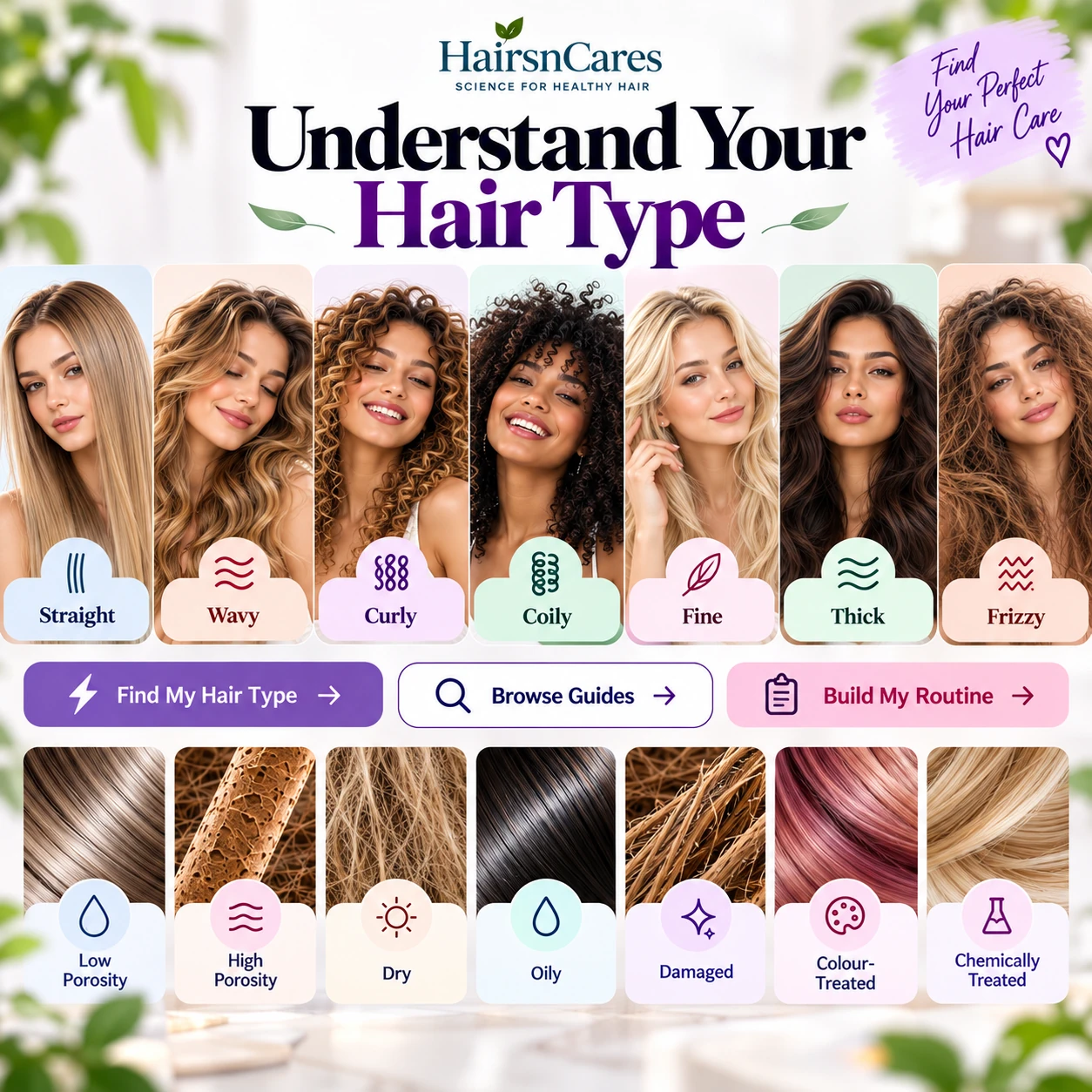
Texture × Porosity × Scalp Match
How to identify your hair type — texture, thickness, density, porosity and damage level
The difference between straight, wavy, curly and coily hair care needs
What low porosity and high porosity mean for product absorption and frizz
Why fine hair, thick hair and low density hair each need different product strategies
How to choose shampoo, conditioner, serum and mask based on your actual hair profile
Common hair type mistakes that cause damage, frizz and unnecessary product waste
When hair type care alone is not enough and dermatologist review is needed
How AI Hair Type Finder helps identify your texture, porosity and routine needs
Simply Explained
Hair type includes your natural texture, strand thickness, density, porosity, scalp condition and damage level. A person can have curly hair with an oily scalp, fine hair with dandruff, thick hair with dryness, or colour-treated hair with breakage. The best routine comes from understanding this full profile.
Straight, wavy, curly or coily hair pattern.
Fine, medium or thick individual hair strands.
How much hair coverage you have on the scalp.
How easily hair absorbs and loses moisture.
Oily, dry, dandruff-prone, sensitive or normal scalp.
Heat, colour, chemical, breakage, roughness or split-end damage.
Quick Answer: Your hair type is more than straight or curly. Thickness, density, porosity, scalp oiliness, damage and chemical history all affect which products and routines work for you. A person can have curly hair with an oily scalp, fine hair with dandruff, or colour-treated hair with breakage. The best routine comes from understanding this full profile — not just buying what looks popular. This library helps you identify your type, match the right products and avoid common mistakes. Persistent or progressive hair loss needs dermatologist evaluation.
Users wanting to understand their hair texture, porosity and scalp type before choosing products — instead of buying by trend or marketing.
Individual dermatologist evaluation. Progressive thinning, scalp disease and pattern hair loss need medical assessment.
Sudden severe fall, patchy loss, widening part, crown thinning, scalp burns after chemical treatment or no improvement after 3–6 months.
Type Finder
Filter by texture, thickness, porosity, scalp type, condition or goal — or search directly.
Featured Pathways
Straight hair can look smooth but may become oily, flat, limp or greasy quickly depending on scalp type.
Explore Straight Hair →Wavy hair needs balance: enough moisture to reduce frizz, but not so much weight that waves become flat.
Explore Wavy Hair →Curly hair is more prone to dryness, frizz, tangling and breakage because natural oils travel less along the curl.
Explore Curly Hair →Coily hair needs careful moisture, low-manipulation styling and breakage prevention as the shaft can be fragile.
Explore Coily Hair →Fine hair has smaller strand diameter and can look oily, flat or low-volume even when density is normal.
Explore Fine Hair →Thick hair may need more conditioning, detangling support and drying/styling control, especially if frizzy.
Explore Thick Hair →Low porosity hair resists water and product absorption, so heavy layering can cause buildup.
Explore Low Porosity →High porosity hair absorbs moisture quickly but loses it fast, leading to frizz, dryness and breakage.
Explore High Porosity →Heat, colouring, bleaching, straightening, rough brushing and chemical treatments weaken the hair shaft.
Explore Damaged Hair →Frizz can come from humidity, dryness, damage, curl pattern, high porosity or rough hair cuticle.
Explore Frizzy Hair →Complete Library
Smooth but can look flat or oily. Lightweight shampoo and volume support recommended.
Frizz-prone loose waves needing lightweight conditioner and frizz serum balance.
Dryness, tangles and curl definition — conditioner, leave-in and gentle detangling focused.
Tight coils needing careful moisture, low-manipulation styling and breakage prevention.
Flat, low-volume hair needing lightweight shampoo, volume support and scalp freshness.
Heavy, coarse or dense hair needing conditioning, frizz control and detangling support.
Low coverage or visible scalp — hair fall support, fibers, volumizers and AI hair test recommended.
Crown visibility, widening part — fibers, volumizers and doctor review if progressive.
Heavy hair, drying difficulty and frizz — masks, detanglers and styling tools.
Product buildup, low absorption — lightweight hydration and clarifying schedule needed.
Frizz, dryness and fast moisture loss — repair products and moisture-sealing needed.
Roughness, dullness and dryness — conditioner, mask and serum focused routine.
Greasy roots, limp hair — oil-control shampoo and scalp cleansing routine.
Flyaways, humidity frizz, roughness — anti-frizz serum and conditioner support.
Heat/chemical/colour damage — repair masks, protein support and reduced processing.
Colour fading, dryness and damage — colour-safe shampoo and protective routine.
High porosity, breakage and dryness from bleaching — repair routine and heat protection.
Roughness, breakage and split ends from heat styling — protectant and repair products.
Snapping and split ends — conditioner, gentle handling and shaft protection.
Lack of shine from buildup, dryness or damage — clarifying care and gloss support.
Coarse feel, dryness and friction — conditioner, serum and mask support.
Irritation and weak hair — gentle shampoo and barrier support approach.
Limp hair with greasy roots — lightweight shampoo and volume support balance.
Curls with flakes and itching — scalp care + curl moisture balance.
Scalp dryness with rough frizzy hair — gentle scalp care + frizz control.
Hair Type Map
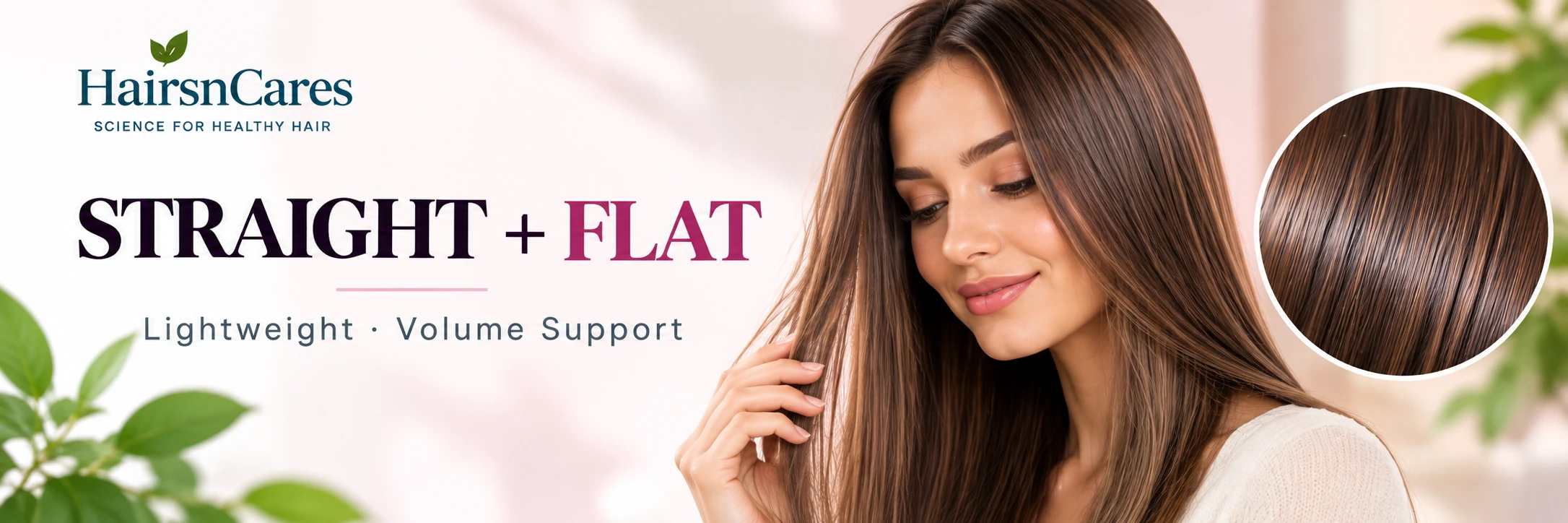
Profile
Straight texture, fine strands, oily scalp
Start with
Straight Hair GuideLightweight shampoo, volume support, avoid heavy oils.
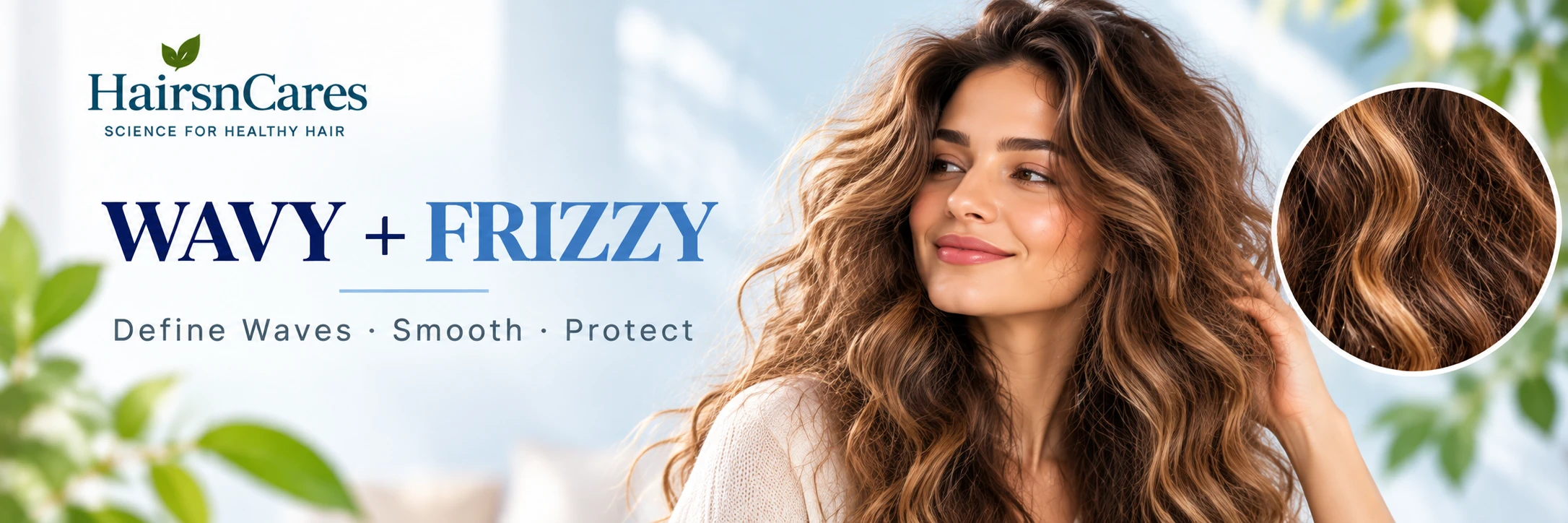
Profile
Wavy texture, humidity response, moderate porosity
Start with
Wavy Hair GuideLightweight conditioner, anti-frizz serum, humidity protection.
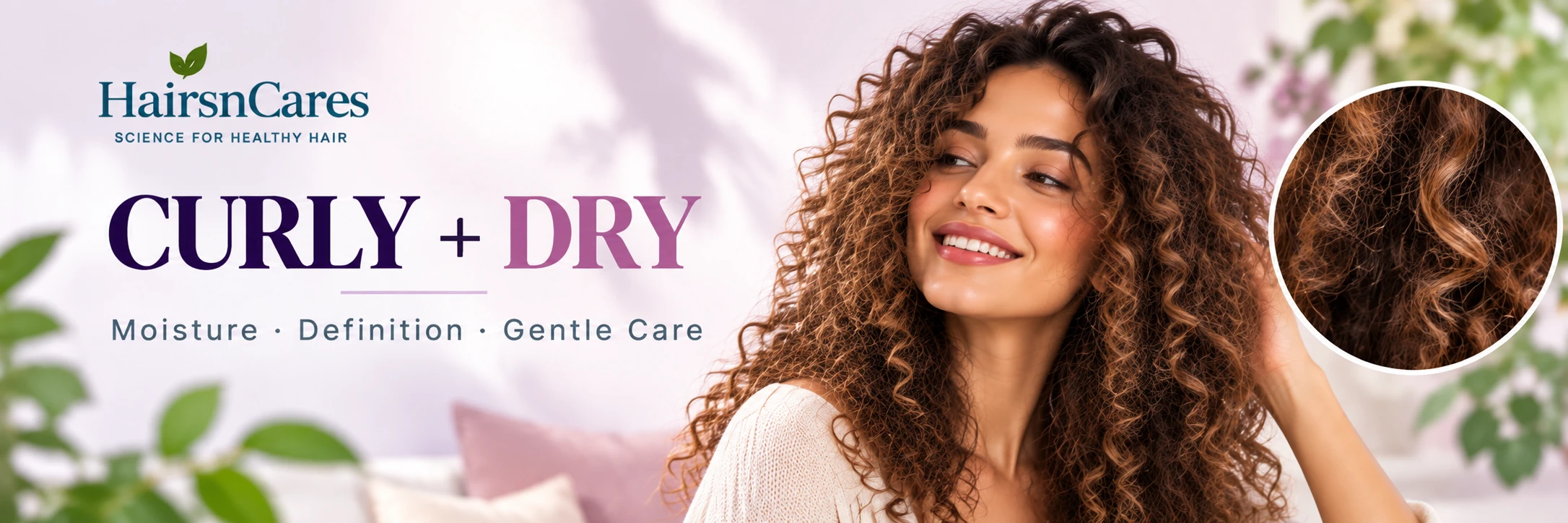
Profile
Curly texture, dryness, tangles, breakage risk
Start with
Curly Hair GuideMoisture routine, leave-in support, gentle detangling.
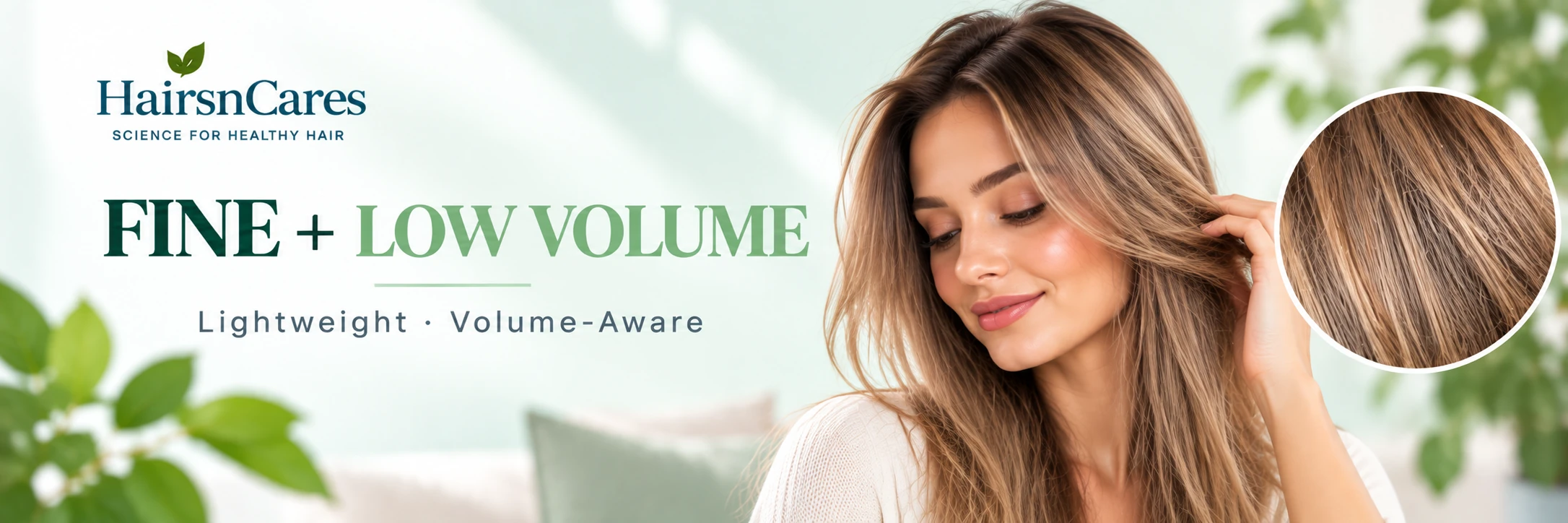
Profile
Fine strands, flat roots, oily scalp, crown concern
Start with
Fine Hair GuideVolume products, lightweight care, density check if progressive.
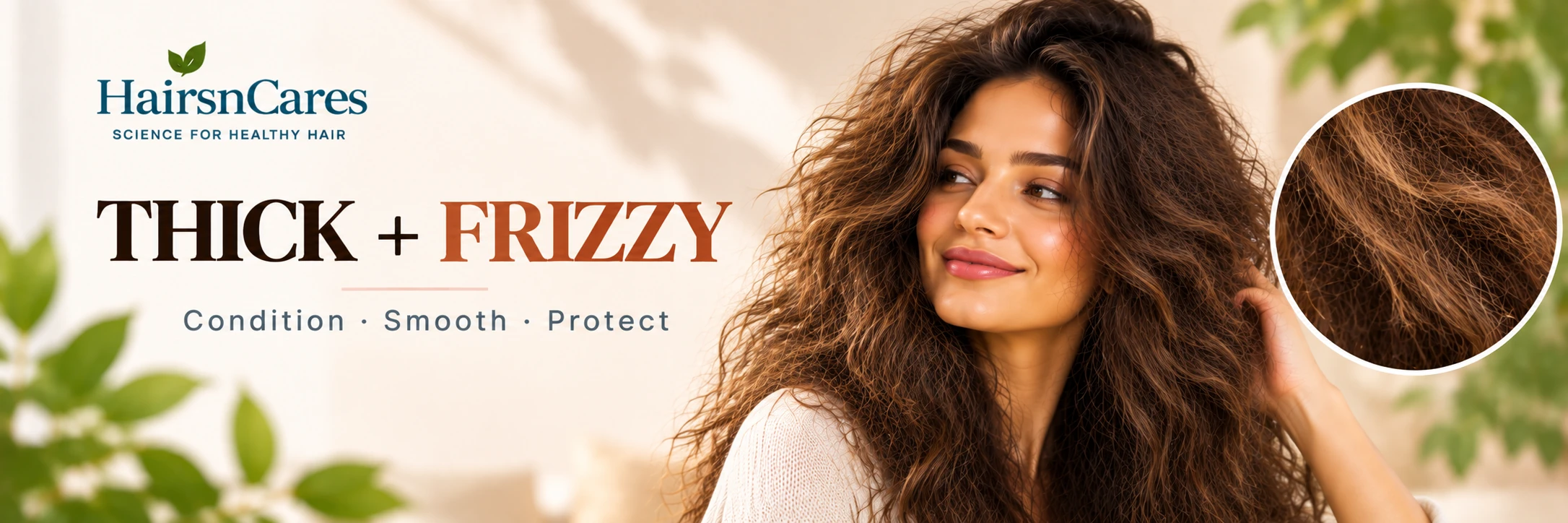
Profile
High density or coarse strands, heavy, dry, frizzy
Start with
Thick Hair GuideConditioner, mask, serum, heat protection.
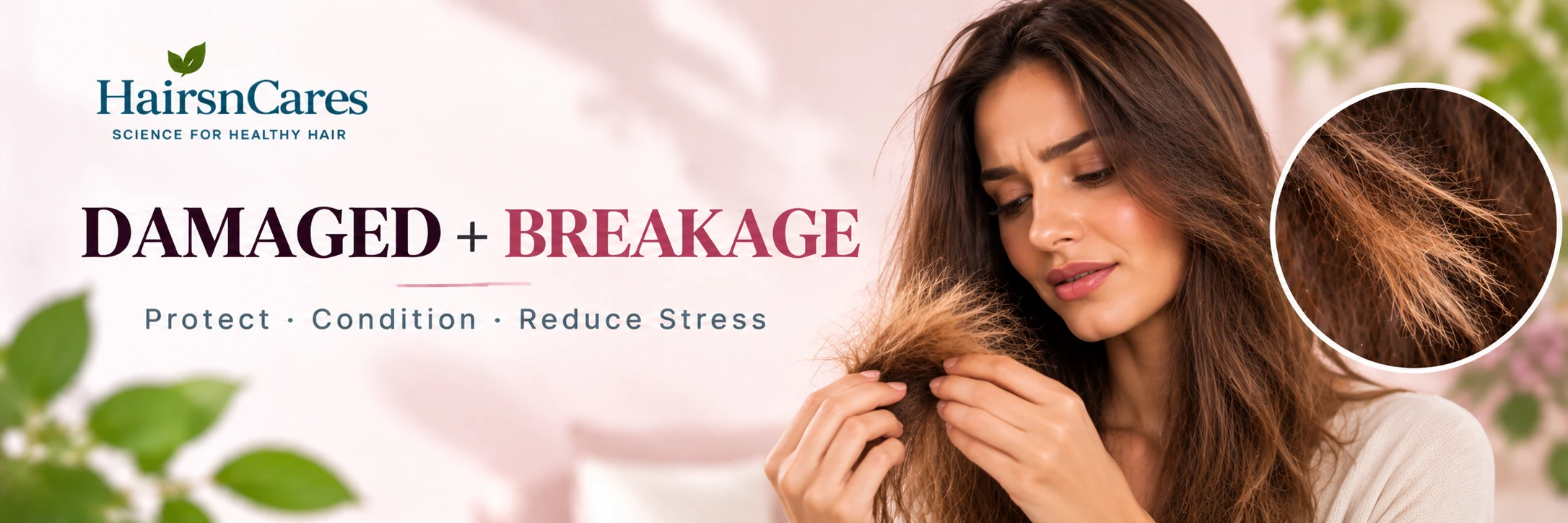
Profile
Heat/colour/chemical damage, split ends, roughness
Start with
Damaged Hair GuideRepair routine, heat protection, reduce chemical stress.
Common Mistakes
Medical Safety
Hair type guidance helps with product selection, but persistent, severe, patchy or progressive hair loss needs dermatologist evaluation.
AI-Powered Hair Tools
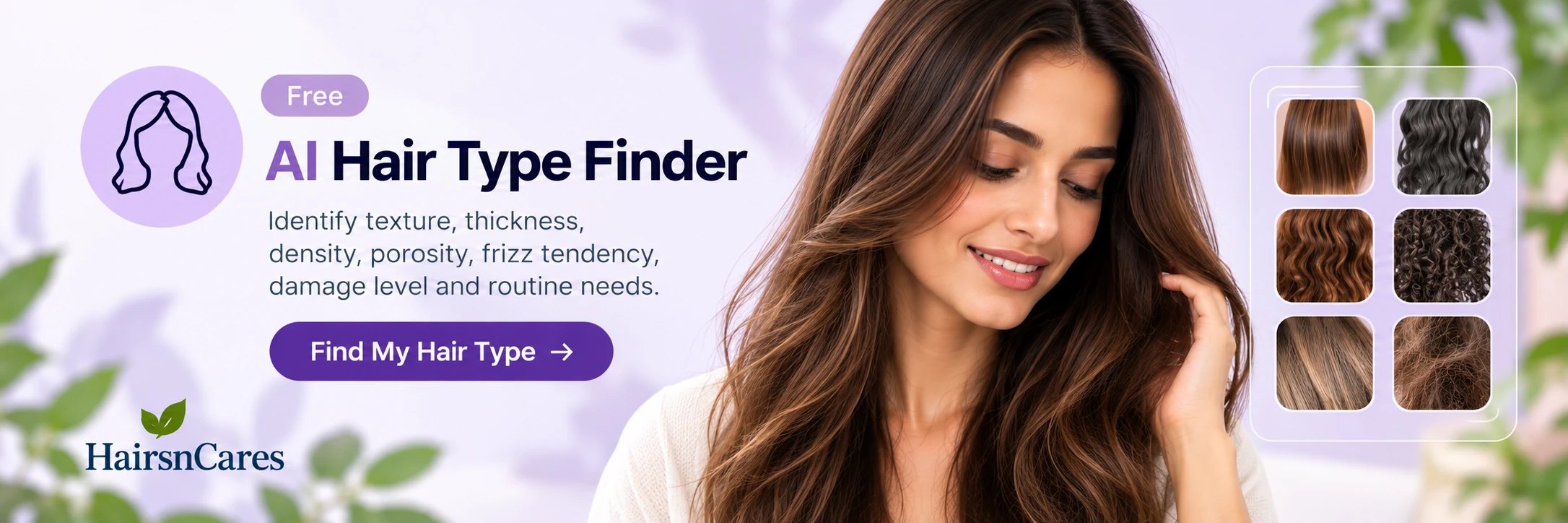
Identify texture, thickness, density, porosity, frizz tendency, damage level and routine needs.
Find My Hair Type →
Understand whether your concern is shedding, thinning, breakage or pattern hair loss.
Start AI Hair Test →
Check visible flakes, oiliness, redness, scalp visibility and irritation signals.
Analyse My Scalp →
Build a routine based on hair type, scalp type, concern, lifestyle and product tolerance.
Build My Routine →
Find shampoos, conditioners, serums, oils, masks and styling products by hair type.
Find Products →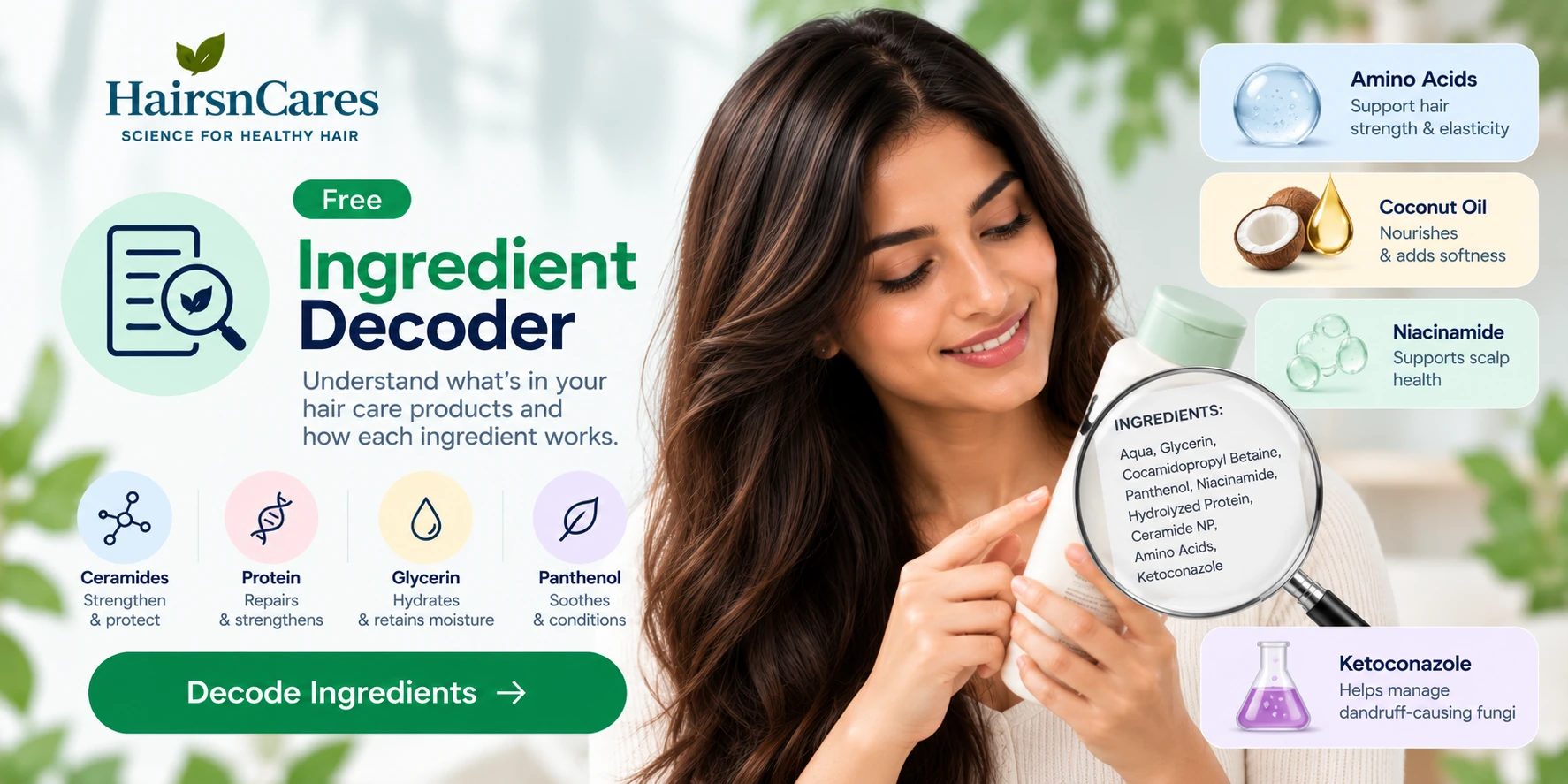
Understand ceramides, amino acids, protein, glycerin, panthenol, coconut oil, ketoconazole and more.
Decode Ingredients →AI tools are educational support tools and do not replace dermatologist diagnosis.
A Note on Hair Types
"Many people feel their hair is difficult, oily, dry, frizzy, thin, flat or unmanageable. Often, the issue is not the hair type itself — it is the wrong routine for that hair type. Once you understand texture, scalp type, porosity, density and damage level, product selection becomes clearer and less frustrating."
Authority & Trust
Every guide reviewed by MD Dermatology. Content follows medical best practices.
Clear distinction between cosmetic routine, scalp routine, product support and medical treatment.
No one-size-fits-all claims. Red flags direct to dermatologist consultation.
Editorial policy, product safety, chemical treatment safety notes and prescription gating.
Hair type guides reviewed for accuracy and safety. Educational only. No guaranteed results. Persistent hair fall needs evaluation. Chemical treatment safety notes included. Last review: June 2026.
Hair Type FAQs
Hair type includes texture (straight, wavy, curly, coily), strand thickness (fine, medium, thick), density, porosity and scalp type. Wash with gentle shampoo, air-dry without products and observe the natural pattern, volume and feel. The AI Hair Type Finder can help.
Main types by texture are straight, wavy, curly and coily. Each can be classified by thickness, density, porosity and condition. The best routine considers all these factors together.
Straight has no natural bend. Wavy has loose S-shaped waves. Curly forms spirals or ringlets. Coily has tight Z-shaped or spring coils. Each has different moisture, frizz and product needs.
Fine hair has smaller strand diameter — soft, may look flat. Thick hair has larger diameter — coarser, holds shape. Roll a strand between fingers: barely noticeable means fine, clearly felt means thick.
Hair density is how many follicles per area on the scalp. Low density means more visible scalp. High density means thick coverage. Density differs from strand thickness.
Low porosity hair has tightly closed cuticles, resisting water and product absorption. Hair takes long to wet, products sit on surface. Lightweight products and clarifying schedules work best.
High porosity hair has open cuticles — absorbs moisture fast but loses it fast, causing frizz and dryness. Often from heat or chemical damage. Moisture-retaining and protein products help.
Frizz occurs when the cuticle lifts allowing moisture to swell the strand. Causes include humidity, dryness, damage, high porosity and rough handling. Conditioner, serum and humidity protection reduce frizz.
Fine hair benefits from lightweight shampoos, avoiding heavy conditioners on roots, volumizing products, minimal oil and regular scalp cleansing. Heavy masks can weigh it down.
Curly hair needs regular moisture, gentle wet detangling with conditioner, leave-in products, minimal heat and protective nighttime care. Balance of moisture and protein depends on porosity.
Damaged hair needs gentle cleansing, deep conditioning, protein repair products, heat protection and minimal chemical processing. Severe damage cannot be fully reversed but care prevents further breakage.
Sulphate-free shampoos, colour-safe conditioners, UV protection, deep conditioning masks and minimal heat styling. Maintain consistency for longer colour retention.
Yes, but on mid-lengths and ends only. Skipping conditioner increases tangles and breakage. Use lightweight formulas. Oily scalp needs cleansing while lengths still need conditioning.
Light oils on hair lengths can help with softness. Avoid heavy oiling on dry or dandruff-prone scalp. Conditioner and masks often provide better shaft hydration than oil alone.
Root fall shows a white bulb at the end. Breakage produces shorter pieces without a bulb. Breakage comes from damage or dryness. Root fall may indicate shedding conditions. A dermatologist can differentiate.
Yes. Hair can change with age, hormonal shifts, medications, illness, nutrition and chemical treatments. Greying hair often changes texture. Adjust routine when hair type shifts noticeably.
AI tools provide directional guidance based on your inputs. They help structure a routine but cannot diagnose conditions. For persistent concerns, see a qualified dermatologist.
See a dermatologist if hair fall is sudden, severe, patchy, progressive, accompanied by scalp symptoms or persists beyond 3–4 months. Also consult before starting prescription products.
Start with primary texture: Straight, Wavy, Curly or Coily. Then check thickness, porosity and condition. Combination guides help with multi-concern profiles. Use the AI Hair Type Finder for guidance.
Routines by concern
Scalp condition guides
Routines by city climate
Hair fall types + causes
Compare products + treatments
Women's thinning guides
Men's pattern loss guides
Decode active ingredients
Trusted Reading
Your cart is empty
Your image is processed privately by our AI engine and saved securely with your account.
This item will be removed from your cart. You can add it back later.