Above the Fold
Quick Answer: Is Thin Hair a Hair Type or Hair Loss?
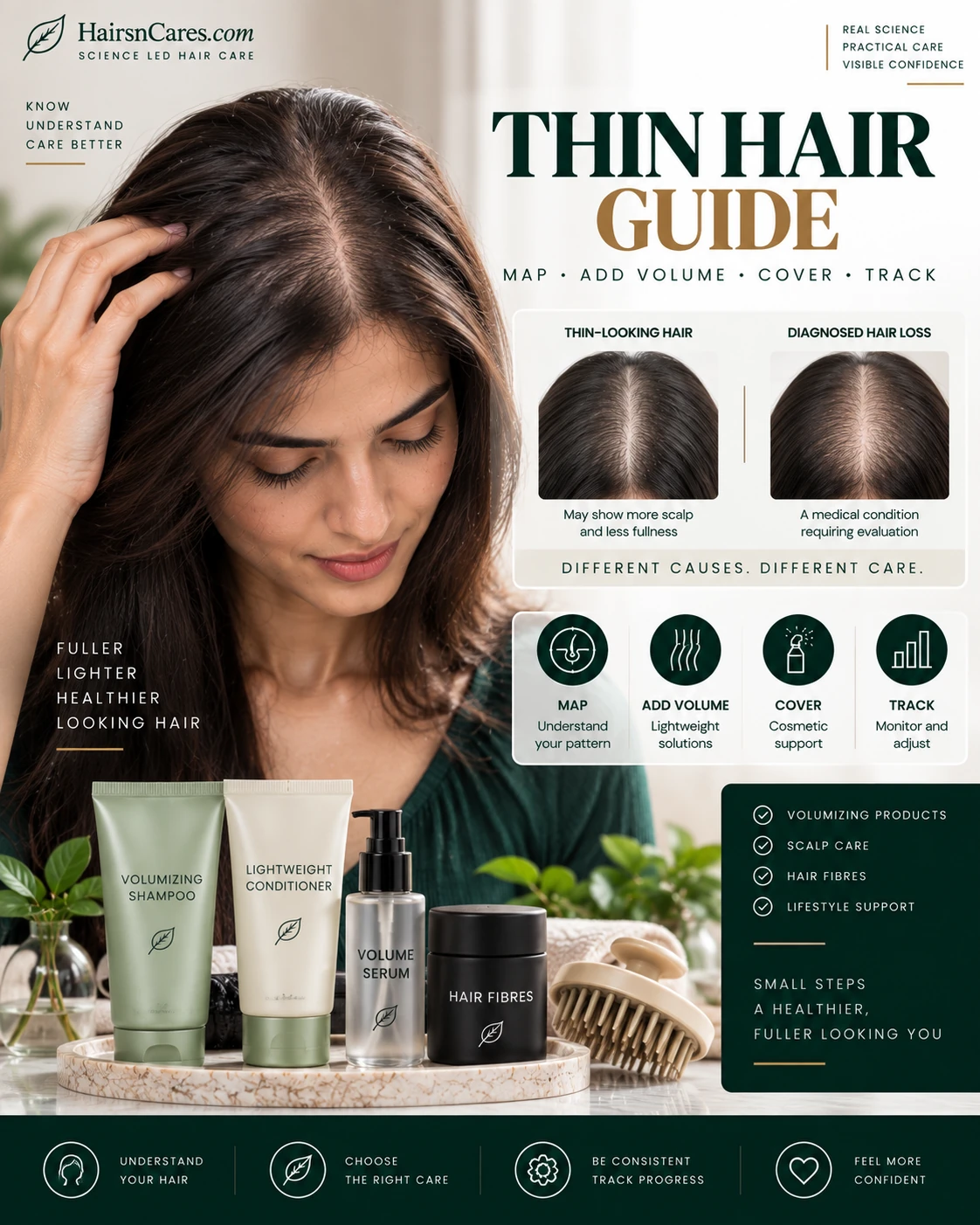
Thin hair can be a natural hair type, a cosmetic styling concern or a sign of hair loss. Fine strands, low density, flat oily roots, breakage and visible scalp can all make hair look thin. Progressive crown thinning, widening part, temple recession, sudden shedding or patchy loss needs medical assessment.
Search Intent Alignment
What You'll Learn on This Page
- What "thin hair" really means, and why it isn't one single diagnosis
- How fine hair, thin hair and low-density hair differ
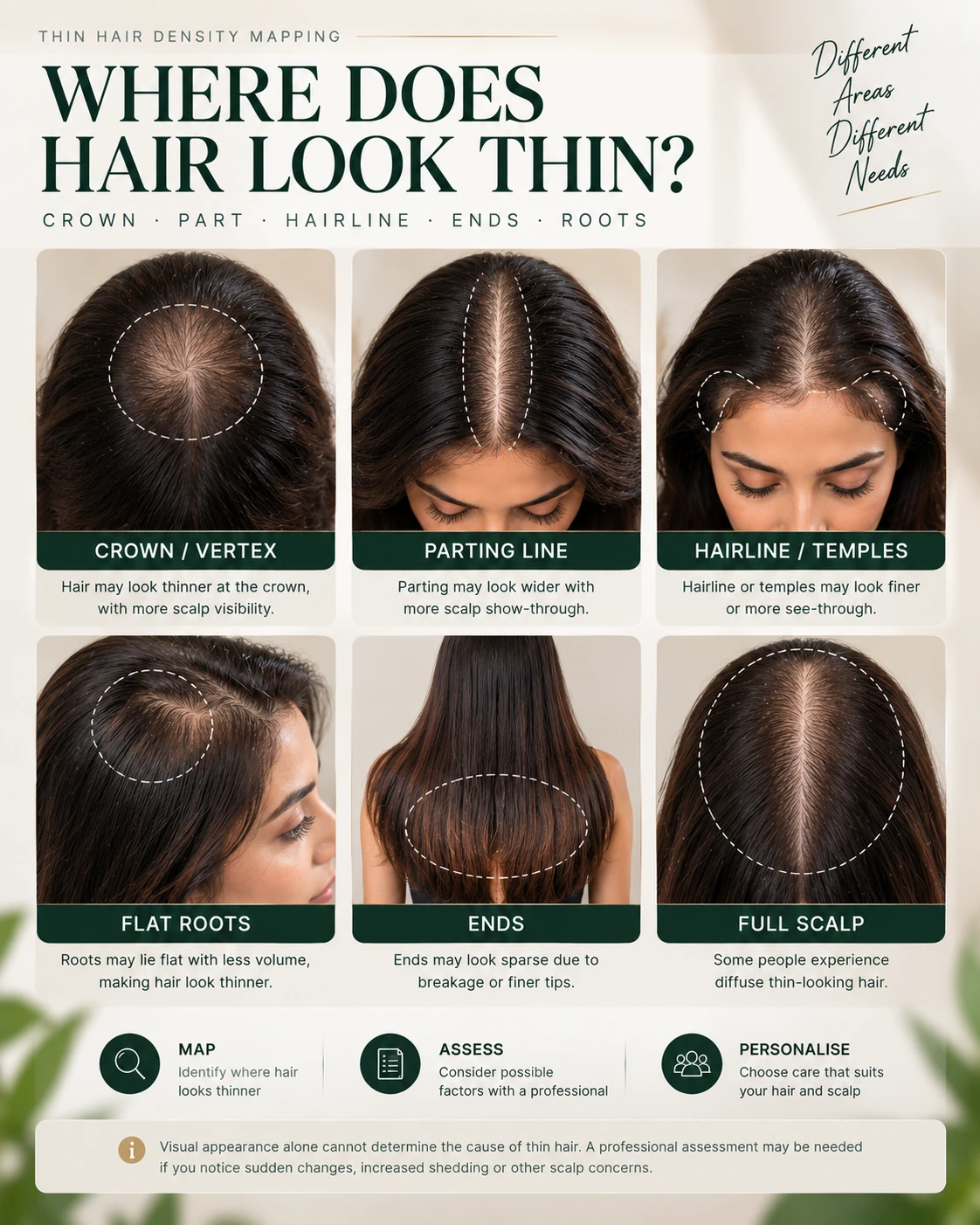
- How to map where hair looks thin — crown, part, hairline or ends
- How to tell natural thin hair apart from new, progressive thinning
- How to separate breakage from root-level shedding
- Gender-specific patterns and causes in men and women
- How to build a lightweight volume routine without overloading roots
- When styling and cosmetic coverage are enough, and when a doctor visit is the next step
Understanding the Basics
Thin Hair Is a Visual Concern, Not One Diagnosis
Thin hair may mean individual strands are fine, total density is low, the parting looks wider, the crown appears visible, the ponytail feels smaller, hair sits flat, the scalp shows under light, ends look sparse due to breakage, hair has become less full over time, or hair loss is progressing.
"The same phrase — thin hair — can describe very different situations. The routine depends on the cause."
Know the Difference
These Terms Are Related but Not the Same
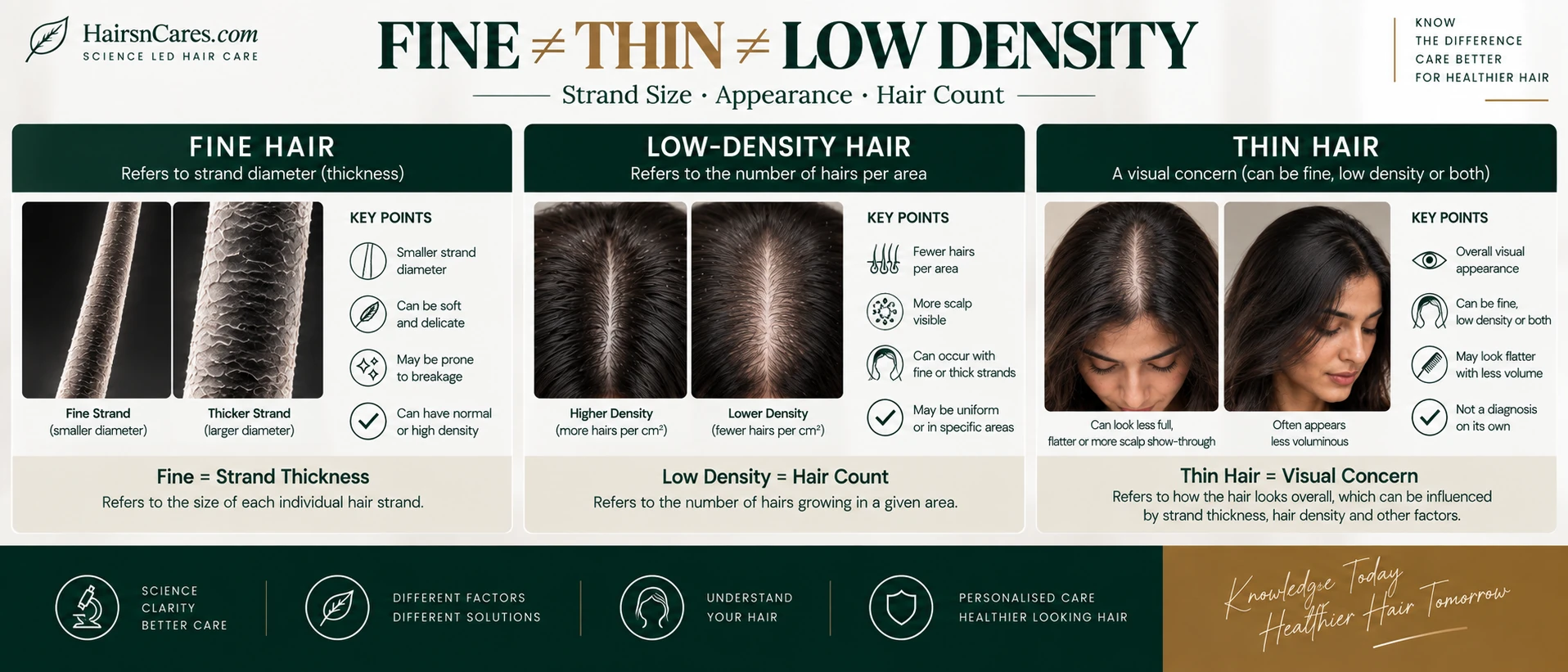
Thin hair, fine hair and low-density hair are related but not identical. Fine hair describes individual strand thickness. Low density describes fewer hairs per scalp area. Thin hair is the user-facing concern where hair looks sparse, flat or scalp-visible.
| Term | Meaning | Main Concern | Best Pathway |
|---|---|---|---|
| Fine Hair | Small strand diameter | Flat roots, oiliness, lack of volume | Lightweight product routine |
| Thin Hair | User-facing sparse or flat appearance | Visible scalp, low fullness, reduced coverage | Cosmetic + medical triage |
| Low Density Hair | Fewer hairs per scalp area | Part width, crown visibility, density gaps | Density mapping and coverage support |
| Hair Fall | Hair shedding from scalp | Root shedding, reduced density over time | Medical cause assessment |
| Breakage | Hair snapping along shaft | Short broken pieces, rough ends | Damage-control routine |
Interactive Selector
Where Does the Hair Look Thin?
Select where hair looks thinnest to see common pathways. This is a self-assessment guide, not a diagnosis.
Timeline Check
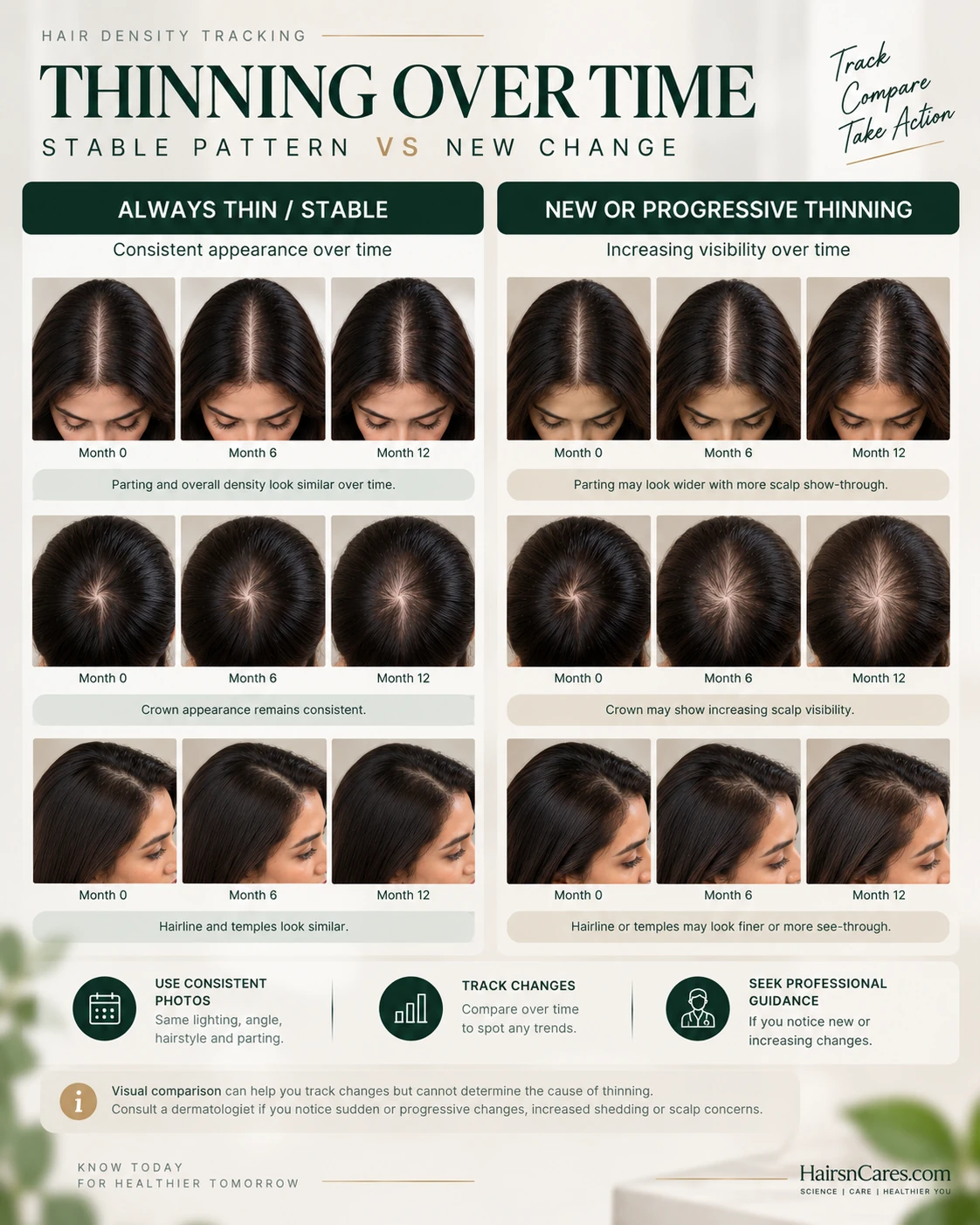
Has Your Hair Always Been Thin — or Is This New?
Natural Thin Hair
Clues:
- Thin since childhood
- Family has similar density
- Stable part width
- Stable crown
- No sudden shedding
- No scalp symptoms
Routine:
- Volume and styling
- Lightweight conditioning
- Cosmetic density support
New Thinning
Clues:
- Recent reduction in ponytail
- More scalp visible
- Increased shedding
- Widening part, crown change
- Temples receding, patchy areas
- Scalp symptoms
- Recent illness, weight loss, delivery or stress
Routine:
- AI Hair Test
- Medical review pathway
- Progress photography
- Supportive styling only
Know the Difference
Sparse Ends May Be Breakage, Not Scalp Hair Loss
Breakage clues
- Short broken pieces
- Uneven lengths
- Rough ends
- Split ends
- Heat or chemical history
- Snapping while brushing
- Ends look see-through
Root shedding clues
- Full-length hairs
- Hair on pillow/shower
- Density loss from scalp
- Part or crown change
- Bulb at root end
Gender-Specific Patterns
Thin Hair Patterns Differ Between Men and Women
Check Crown and Hairline Before Treating Thin Hair as Styling Only
Common male thin-hair pathways include male pattern hair loss, crown thinning, temple recession, early Norwood changes, gym cutting or rapid weight loss, dandruff and scalp inflammation, nutritional shedding, stress and sleep loss, and medication-related shedding.
"Volumizing products may improve appearance, but progressive temple or crown thinning needs separate medical evaluation."
Widening Part, Ponytail Reduction and Crown Visibility Need Pattern Mapping
Common female thin-hair pathways include female pattern hair loss, diffuse shedding, postpartum hair fall, PCOS, thyroid disease, iron or ferritin deficiency, menopause, stress, rapid weight loss, traction, scalp inflammation and hair breakage.
"A wider part or visible crown is not just a cosmetic problem if it is progressing."
Understanding Causes
What Can Make Hair Look Thin?
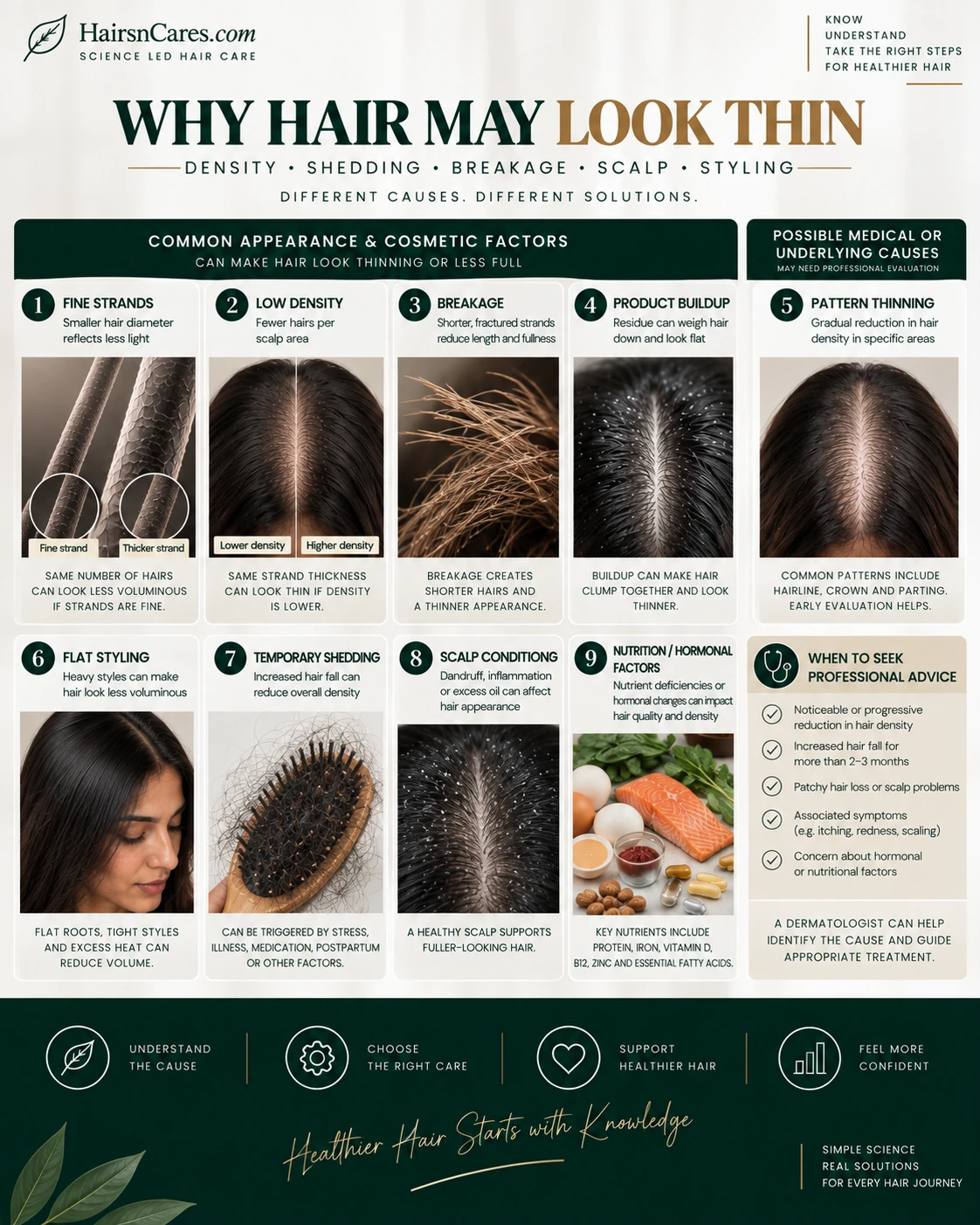
Fine or Low-Density Hair
Stable and long-standing, often runs in families.
Androgenetic Alopecia
Male or female pattern thinning, typically progressive.
Telogen Effluvium
Diffuse shedding after stress, illness, surgery, fever, weight loss or delivery.
Nutritional Deficiency
Low protein, iron/ferritin, vitamin D, B12 or zinc risk.
Hormonal Causes
PCOS, postpartum, menopause, thyroid disease.
Scalp Conditions
Dandruff, seborrhoeic dermatitis, folliculitis or inflammation.
Breakage
Heat, bleach, colouring, straightening, friction or tight hairstyles.
Product Build-Up
Heavy oils, masks, waxes or silicones may flatten roots.
Styling and Haircut
Long heavy hair may look flatter and thinner.
Core Strategy
The Goal Is Volume Without More Breakage
- Cleanse scalp properly
- Avoid heavy root coating
- Use lightweight conditioner on lengths
- Choose volumizing or thickening stylers carefully
- Protect from heat
- Use dry shampoo or root lift selectively
- Reduce breakage from brushing
- Use fibres or concealer for temporary coverage
- Track real density changes
- Seek review if thinning progresses
Build a Routine Based on Your Thin Hair Pattern
Answer a few questions to get a suggested cosmetic-care routine. This does not diagnose hair loss or replace a dermatology consult.
The AI Thin Hair Routine Builder supports cosmetic and educational routing only. It cannot diagnose hair loss, prescribe treatment or guarantee regrowth.
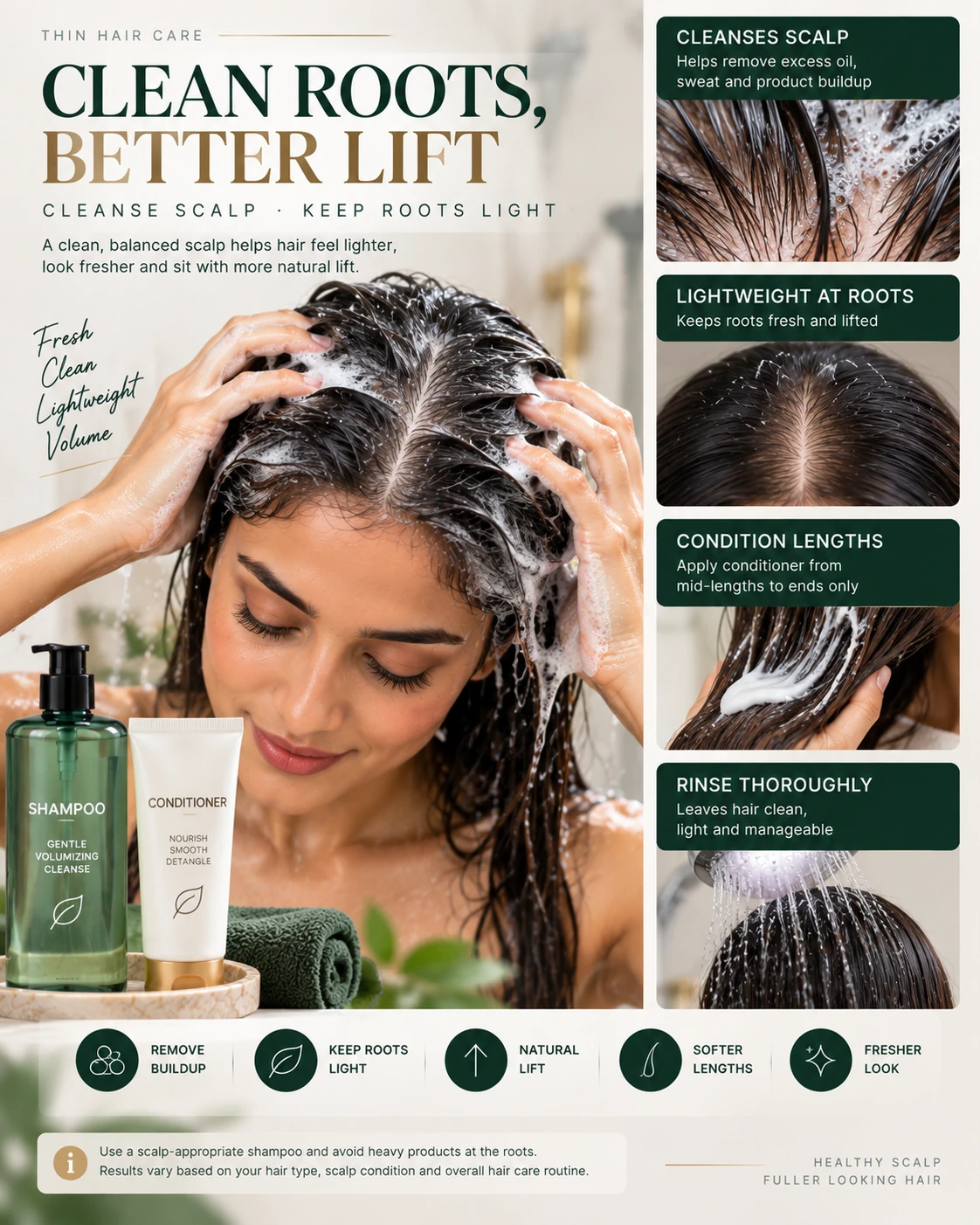
Cleansing
Clean Roots Create Better Lift
Shampoo selection
- Lightweight shampoo
- Volumizing shampoo
- Oily-scalp shampoo
- Gentle shampoo for sensitive scalp
- Anti-dandruff shampoo if needed
- Clarifying shampoo occasionally for buildup
Avoid
- Overly rich shampoo on fine/oily roots
- Heavy scalp oils before every wash
- Skipping scalp cleansing
- Harsh over-cleansing
- Relying on shampoo for regrowth
"Volumizing shampoo can improve lift and feel, but it does not increase follicle count."
Conditioning
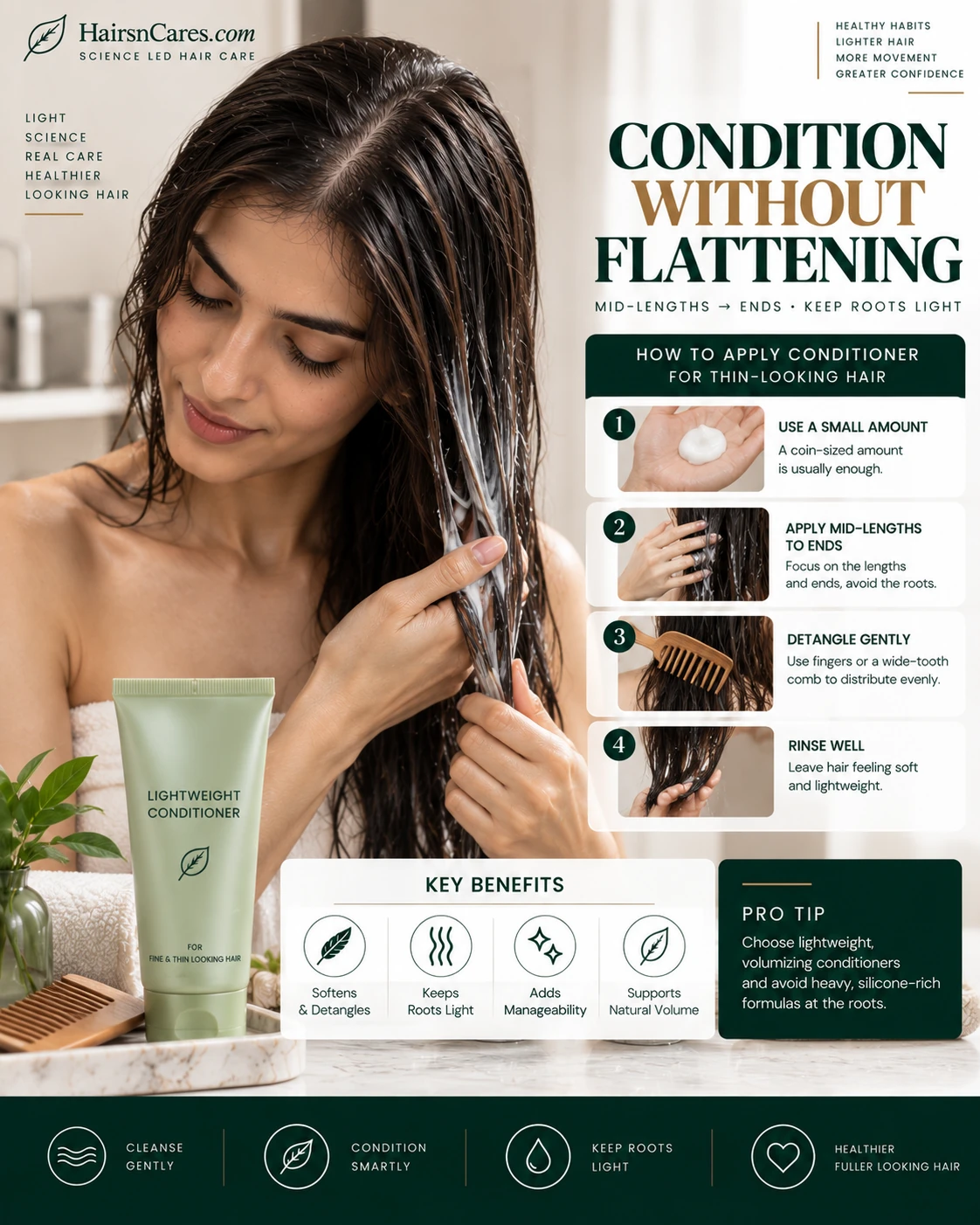
Condition the Lengths Without Flattening the Roots
Rules
- Apply conditioner mid-lengths to ends
- Choose lightweight formulas
- Fine hair needs less product
- Damaged thin hair may still need conditioning
- Avoid heavy scalp application
- Rinse thoroughly
- Use leave-in only if hair can tolerate it
Product types
- Lightweight conditioner
- Volume conditioner
- Detangling conditioner
- Protein-light conditioner
- Bond-support conditioner where damage exists
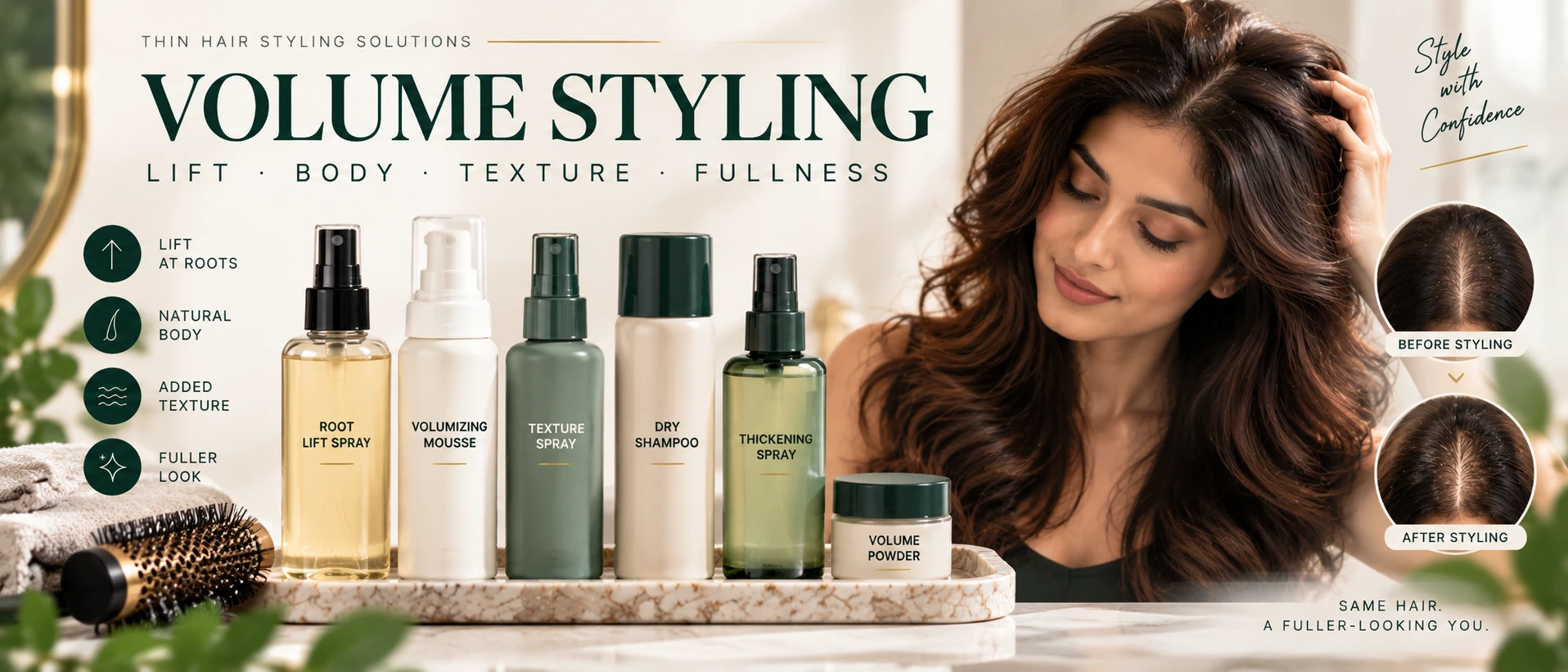
Styling Strategy
Volume Is a Styling Strategy, Not a Medical Treatment
Use:
Flat roots, blow-dry volume
Use:
Body and lift, fine hair styling
Use:
Grip, lived-in fullness
Use:
Oil control, root lift. Caution: remove buildup, avoid overuse on irritated scalp.
Use:
Fuller hair feel, styling support
Use:
Event-ready lift. Caution: may create buildup, wash out properly.
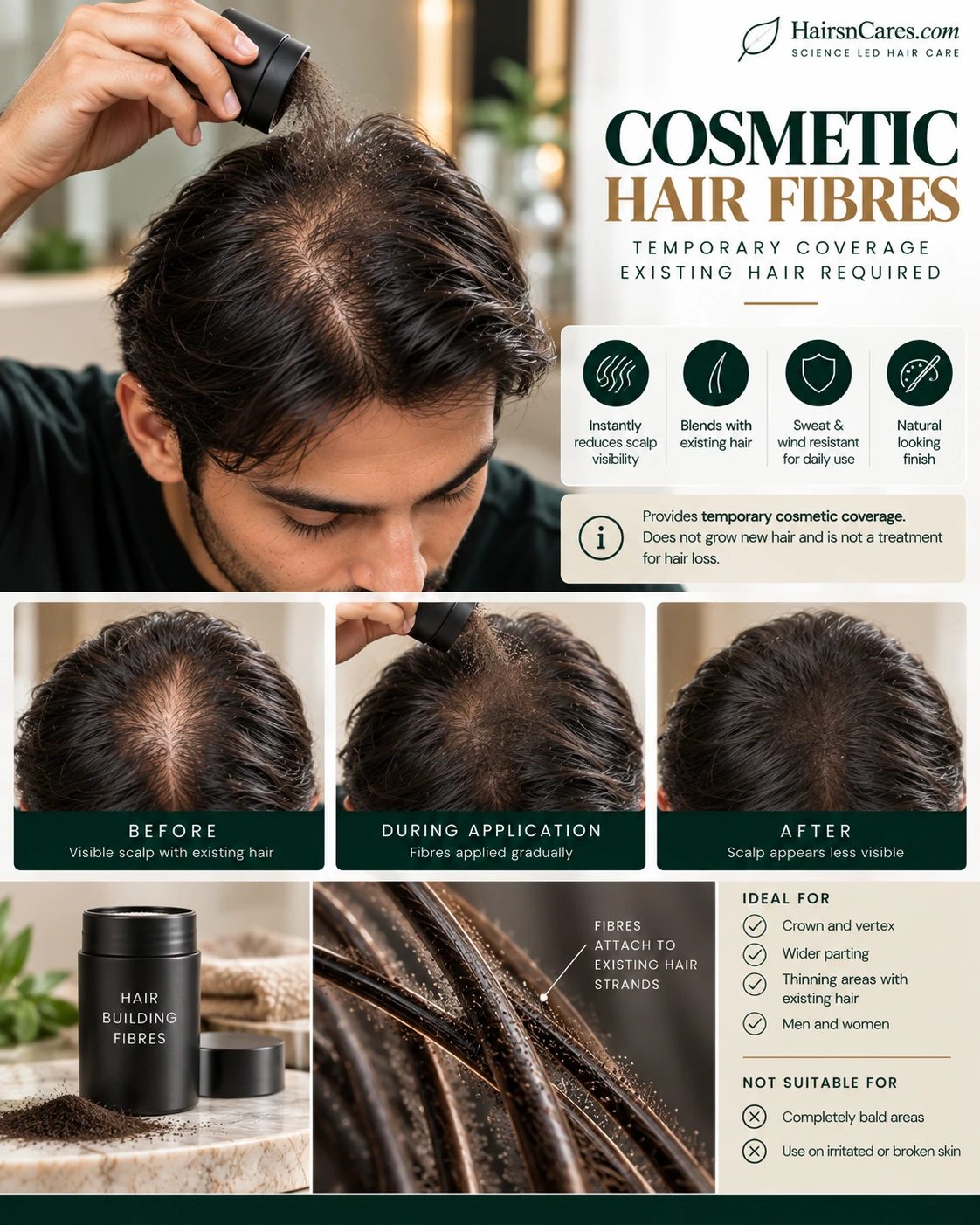
Temporary Cosmetic Coverage
Temporary Cosmetic Coverage for Visible Scalp
Hair fibres may help when
- Existing hair remains in the area
- Crown visibility is mild to moderate
- Parting looks wider
- Scalp show-through is the main concern
- You want instant cosmetic improvement
Limitations
- Do not regrow hair
- Work poorly on smooth bald areas
- Wash out, may transfer
- Need shade matching
- Avoid on inflamed, wounded or infected scalp
- Remove before scalp assessment
Scalp concealers may help with a visible part, hairline shading and scalp contrast reduction.
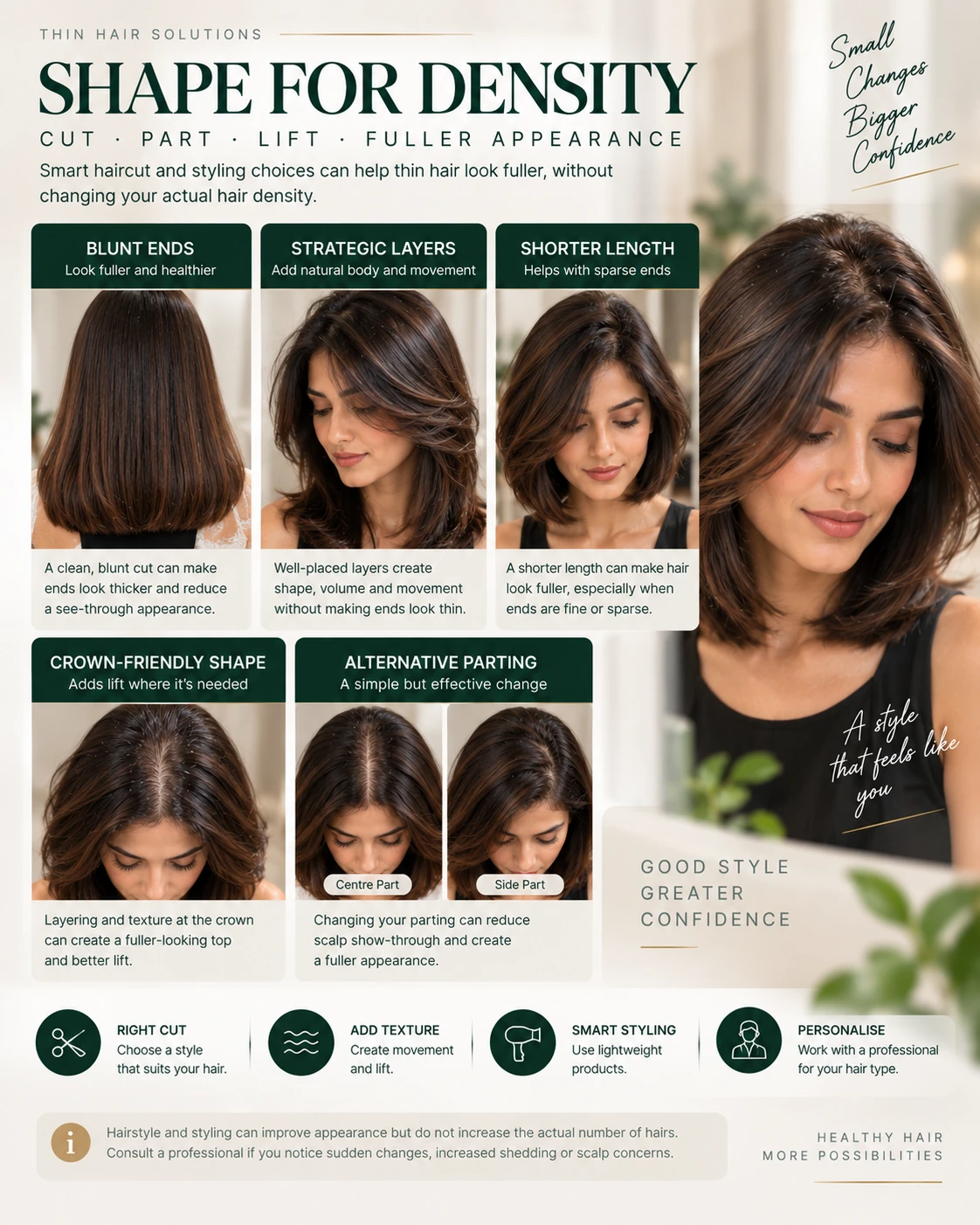
Shape and Illusion
Shape Can Create the Illusion of Density
- Blunt ends
- Strategic layers
- Shorter length for very sparse ends
- Crown-friendly cuts
- Side parting changes
- Textured cuts for men
- Soft layers for women
- Avoiding overly long, heavy hair if roots look flat
- Avoiding tight styles if traction exists
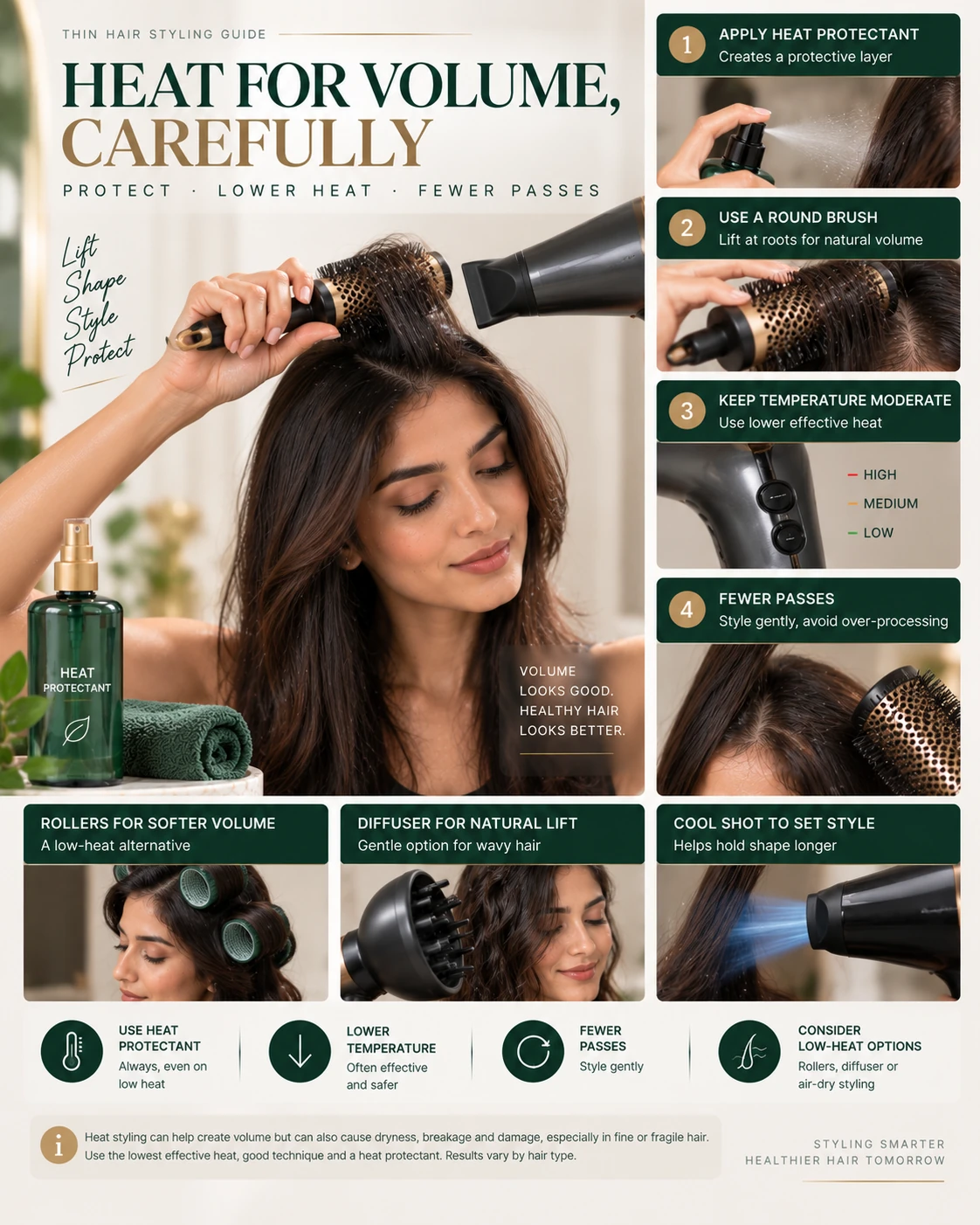
Styling Safety
Use Heat for Volume Carefully
Heat can help create volume but may worsen breakage.
Rules
- Use heat protectant
- Use lower effective temperature
- Avoid repeated passes
- Lift roots with blow-dry technique
- Avoid scorching fine strands
- Use rollers or low-heat methods where possible
- Do not straighten thin damaged hair daily
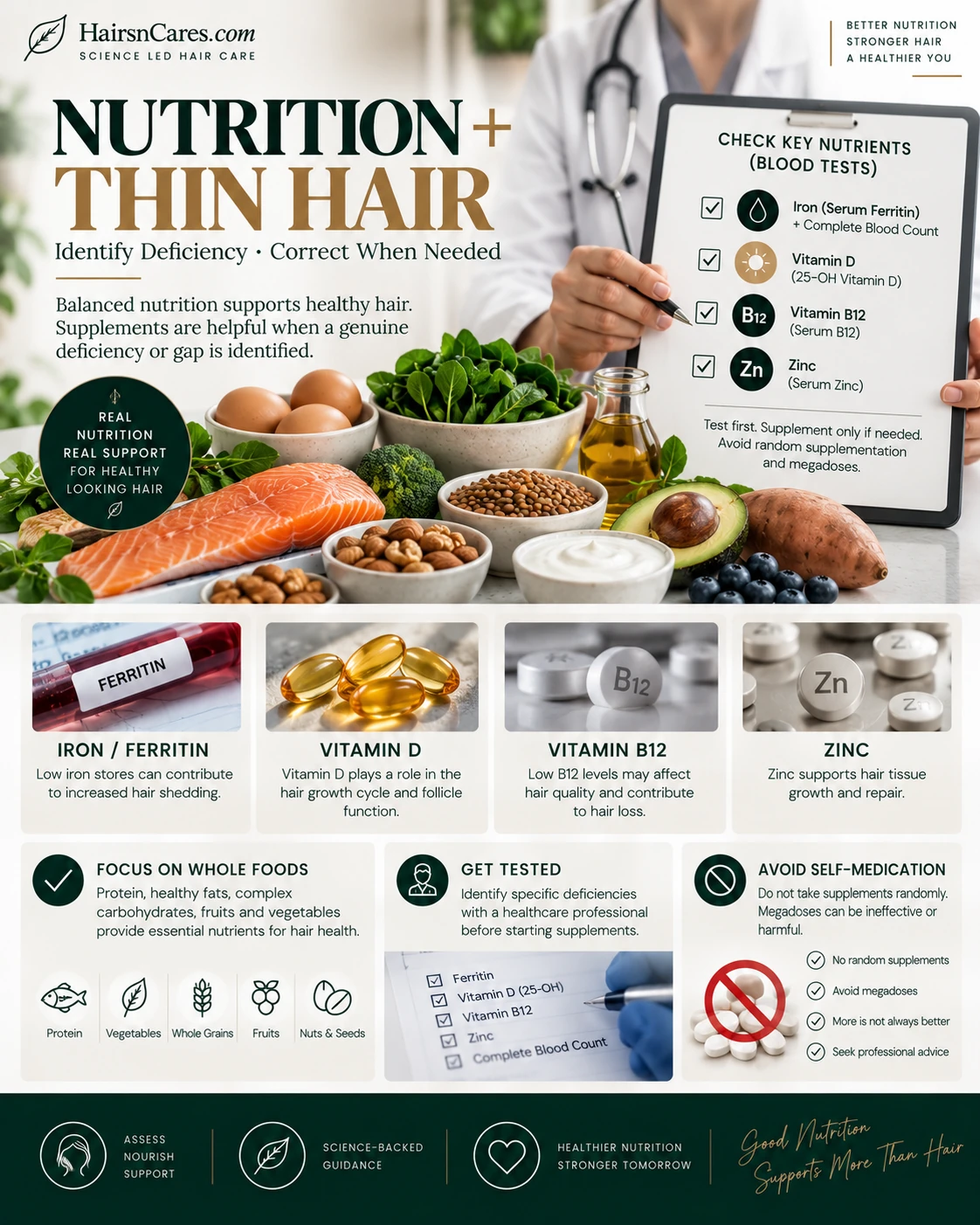
Nutrition
Supplements Help Only When a Nutritional Gap Exists
Nutritional contributors may include
- Low protein
- Low ferritin / iron deficiency
- Vitamin D deficiency
- Vitamin B12 deficiency
- Zinc deficiency
- Rapid weight loss
- Restrictive dieting
- Postpartum demand
Safety
- Do not self-start iron
- Do not megadose vitamin D
- Biotin is not universally needed
- Excess nutrients can be harmful
- Blood tests may be discussed with a doctor
- Supplements do not replace treatment for pattern hair loss
Ecommerce
Shop Thin Hair Products by Root, Density and Styling Need
Filter by concern, product type, user type and safety preferences.
*Claims are shown only when verified on the product database; unverified claims are not displayed.
Compare Without Regrowth Confusion
Compare Thin Hair Products Without Regrowth Confusion
Compare up to four products on root lift, density illusion, scalp coverage, weight level and more. Products are never labelled "best" without verified criteria.
| Attribute | Product A | Product B |
|---|---|---|
| Product type | Volumizing shampoo | Hair fibres |
| Purpose | Root lift | Scalp coverage |
| Medical claim status | None — cosmetic only | None — cosmetic only |
| Washability | N/A | Washes out |
AI Tool
Build a Routine Based on Your Thin Hair Pattern
The AI Thin Hair Routine Builder above uses your inputs — pattern location, timeline, scalp type, shedding and breakage levels — to suggest a cosmetic pathway, product categories and a doctor-review recommendation where relevant.
Track Realistically
Track Appearance and True Density Separately
Track part width, crown visibility, hairline shape, ponytail circumference, shedding, breakage, root oiliness, scalp symptoms, styling volume, fibre use, wash frequency, product buildup, progress photos, medical treatments and supplement use.
Photo rules
- Same lighting
- Same hairstyle
- Dry hair
- No fibres, no wet gel
- Same parting
- Top, crown, sides and hairline views
Do Not Self-Manage These
Do Not Treat These Signs as Styling Problems Only
- Sudden heavy shedding or patchy loss
- Widening part or crown thinning
- Temple recession or progressing visible scalp
- Scalp pain, pus, crusting or redness
- Severe dandruff
- Eyebrow or beard loss
- Fatigue, dizziness or heavy/irregular periods
- Postpartum shedding beyond expected recovery
- Thyroid symptoms or rapid weight loss
- Recent medication change
- No improvement after routine correction
- Family history with progressive thinning
Route to a dermatologist, physician, gynaecologist where relevant, the AI Hair Test, scalp analyser or progress tracker.
Avoid These
Mistakes That Make Thin Hair Look Flatter or Delay Diagnosis
Who Helps With What
Who Helps With What?
Dermatologist
- Hair-loss pattern
- Trichoscopy
- Scalp disease
- Pattern hair loss
- Telogen effluvium
- Minoxidil suitability
- Progress tracking
Physician
- Anaemia
- Thyroid
- Vitamin D / B12
- Systemic illness
- Medication causes
Gynaecologist
- PCOS
- Heavy periods
- Postpartum
- Menopause
- Hormonal treatment
- Fertility or pregnancy safety
Hair Stylist
- Cut shape
- Volume styling
- Fibre blending
- Colour placement
- Breakage reduction
Expert Note
Volume Support Is Useful, but Progressive Thinning Needs Diagnosis
"Thin-looking hair may be natural, cosmetic or medical. Lightweight products, volumizers, fibres and styling can improve fullness and scalp coverage, but they do not treat the root cause of progressive hair loss. If the part is widening, the crown is thinning, the hairline is receding or shedding is sudden, a dermatologist-led assessment is important."
Reviewed by Dr. Amit Agarkar, MD Dermatology — Hairsncares
Suggested Medical References
Where to Read More From Trusted Sources
This page reflects general dermatology and trichology understanding. For deeper reading on hair density, androgenetic alopecia, telogen effluvium and nutritional or hormonal hair loss, these are reputable starting points — search each organisation's site directly for the most current article, since we don't want to point you to a guessed or outdated link.
- American Academy of Dermatology (AAD)Patient guides on hair loss, hair density and scalp health
- MedlinePlus (U.S. National Library of Medicine)Consumer-friendly overviews of hair loss and thyroid conditions
- PubMedPeer-reviewed research on androgenetic alopecia, telogen effluvium and nutritional hair loss
- NHS (UK National Health Service)Condition overviews for hair loss, PCOS and postpartum hair changes
These are reference categories, not endorsements of specific articles. Always check the publication date and consult a dermatologist for advice specific to you.
Frequently Asked Questions
Thin Hair Guide: FAQs
Browse by category, or open any question directly — every answer stays clear about cosmetic support versus medical thinning.
Ready When You Are
Create Volume. Cover Wisely. Check the Cause.
Thin hair can be managed beautifully with lightweight routines, volume products, smart styling and cosmetic coverage. But if scalp visibility, crown thinning, part widening or shedding is progressing, the cause must be assessed before relying on styling alone.