Dermatologist Reviewed🪶 Lightweight Hair Oil⚠️ Not a Hair Regrowth Medicine
Jojoba Oil for Lightweight Scalp Balance, Softness & Frizz Support
A dermatologist-guided guide to using jojoba oil safely in hair routines — including lightweight scalp suitability, dry hair support, frizz control, side effects, product selection, and when hair fall needs medical evaluation.
⚠️Patch Test Recommended. Jojoba oil is generally lightweight, but may still irritate sensitive, acne-prone, dandruff-prone or inflamed scalps. Stop if itching, redness, rash, burning, dandruff flare or increased shedding occurs.
🪶 Lightweight Hair Oil⚖️ Scalp Balance Support💧 Dry Hair & Frizz Support⚖️ Patch Test Recommended🚫 Not a Minoxidil Replacement🤖 AI-Guided Routine Matching
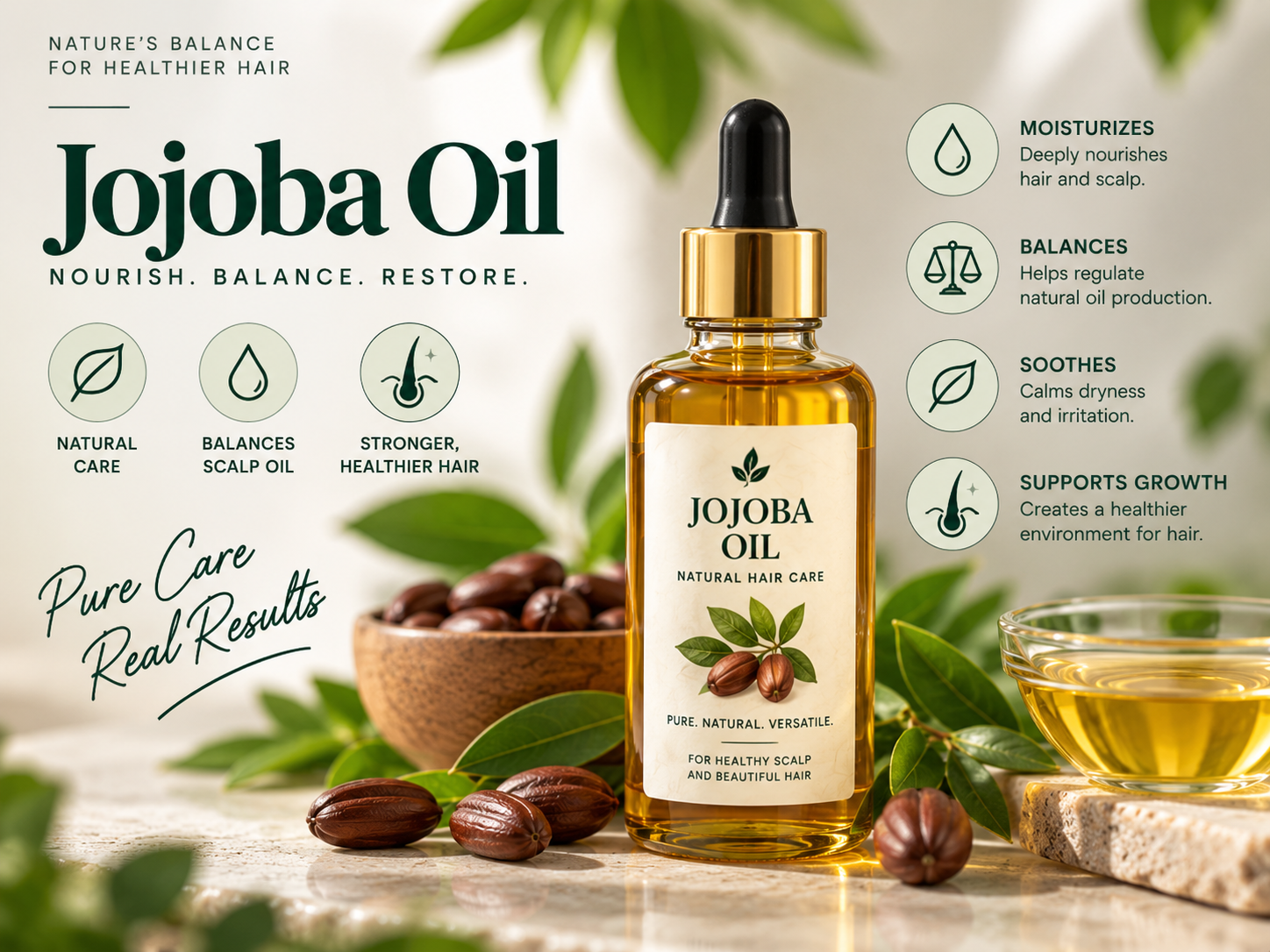
Jojoba Oil Hero · 720×540 · WebP
Dermatologist Reviewed
Reviewed by Dr. Amit Agarkar, MD Dermatology
Jojoba oil is technically a liquid wax ester rather than a true oil — derived from the seeds of Simmondsia chinensis, a desert shrub native to the Sonoran Desert. Unlike most plant oils composed of triglycerides, jojoba's wax ester structure is chemically similar to human sebum, which is why it is often described as lightweight, skin-compatible and non-greasy compared to heavier carrier oils. It is used in cosmetic haircare for scalp comfort, dry hair softness, frizz control, pre-wash oiling and lightweight conditioning. However, it is not a proven medical treatment for progressive hair loss, androgenetic alopecia, alopecia areata, PCOS-related hair fall, thyroid-related hair fall, postpartum shedding, nutritional deficiency hair fall or severe dandruff. People with oily scalp with active acne, folliculitis, seborrheic dermatitis, severe dandruff, eczema, psoriasis, painful scalp, sudden shedding, recent scalp procedures or recent hair transplant should consult a dermatologist before applying jojoba oil to the scalp.
What You’ll Learn on This Page
What jojoba oil can and cannot do — it is a wax ester, not an oil
Why jojoba mimics sebum and what that means for your scalp
Best application methods — scalp balancing vs hair conditioning
When jojoba is not enough — signs you need clinical scalp care
Quick Answer
Is jojoba oil good for hair?
Jojoba oil stands apart from most hair oils in this series because of its unique wax ester chemistry. Where coconut oil coats with fatty acids and castor oil provides thick ricinoleic acid coverage, jojoba's wax esters are particularly close to human sebum in structure — meaning it often feels less greasy and is better tolerated by hair types that struggle with heavier oils. For users with dry or frizzy hair who find heavy oils too much, jojoba is a preferred lightweight alternative.
It can be useful for hair softness, frizz control, lightweight scalp comfort and dry hair support, used sparingly as a pre-wash oil or small finishing treatment on lengths and ends. However, it is not a medical treatment for hair loss, dandruff or any scalp condition. Active hair fall, progressive thinning or scalp disease requires dermatologist evaluation.
Verdict: Jojoba oil is a valued lightweight cosmetic hair oil suitable for users with dry, frizzy or fine hair who prefer non-greasy options. It requires a patch test and is not appropriate for all scalp types. It does not treat the medical causes of hair loss and should not replace professional evaluation for significant shedding or thinning.
Jojoba oil is technically a liquid wax ester that closely mimics human sebum, making it one of the lightest and most scalp-friendly hair oils. It may help balance sebum production on oily scalps and condition dry hair without heavy buildup. It does not treat hair loss, cure dandruff, or regrow hair. Suitable for most hair types; patch-test before scalp use.
People with oily or combination scalps looking for a lightweight, non-comedogenic scalp oil. Also suits fine hair that gets weighed down by heavier oils.
Not a Substitute For
Anti-fungal shampoos for dandruff, medical treatments for hair loss, or prescribed scalp therapies. Jojoba balances surface oil — it does not treat underlying conditions.
See a Dermatologist If
Oily scalp persists despite balanced routines, you develop seborrheic dermatitis symptoms, or notice hair thinning. Excess oiliness can sometimes indicate hormonal issues.
Cosmetic Benefits
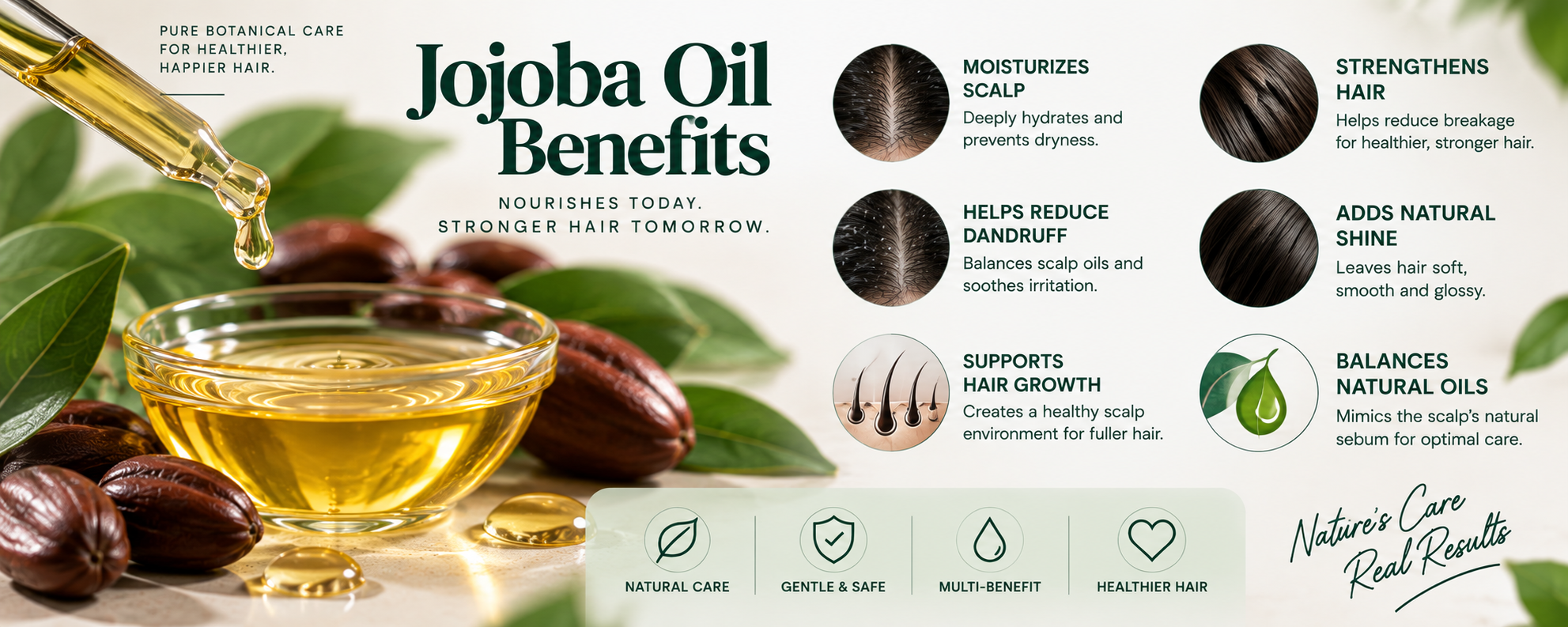
What Jojoba Oil May Do for Your Hair Routine
All benefits are cosmetic. Jojoba oil is not a medical treatment. Patch test required. Active hair fall requires dermatologist evaluation.
🪶
Lightweight Scalp Comfort
Jojoba oil is often lighter-feeling than most carrier oils due to its wax ester structure similar to human sebum. Users with normal or dry scalp types may find it provides comfort without heaviness. Scalp tolerance still varies — patch test before use.
💧
Dry Hair Softness
Jojoba oil helps soften dry or rough hair lengths by adding a lightweight conditioning layer to the hair shaft. It is particularly useful for fine-to-medium hair types that find coconut or castor oil too heavy for regular use.
✨
Frizz Support
Used sparingly — 2 to 4 drops — jojoba oil may smooth the hair shaft surface and reduce frizz appearance. Its lightweight wax coating improves manageability without the heavy film that thicker oils leave on fine hair.
🌟
Shine Without Heavy Grease
Tiny amounts of jojoba oil may improve cosmetic hair shine without the heavy weighed-down feel of thicker oils. Best for small leave-on use on ends or lightweight pre-wash conditioning on lengths.
🛡️
Pre-Wash or Finishing Use
Jojoba oil works well as a short-contact pre-wash oil or a small finishing oil on dry ends. Its lightweight feel makes it more versatile across hair types than heavier traditional oils.
🤖
AI Routine Pairing
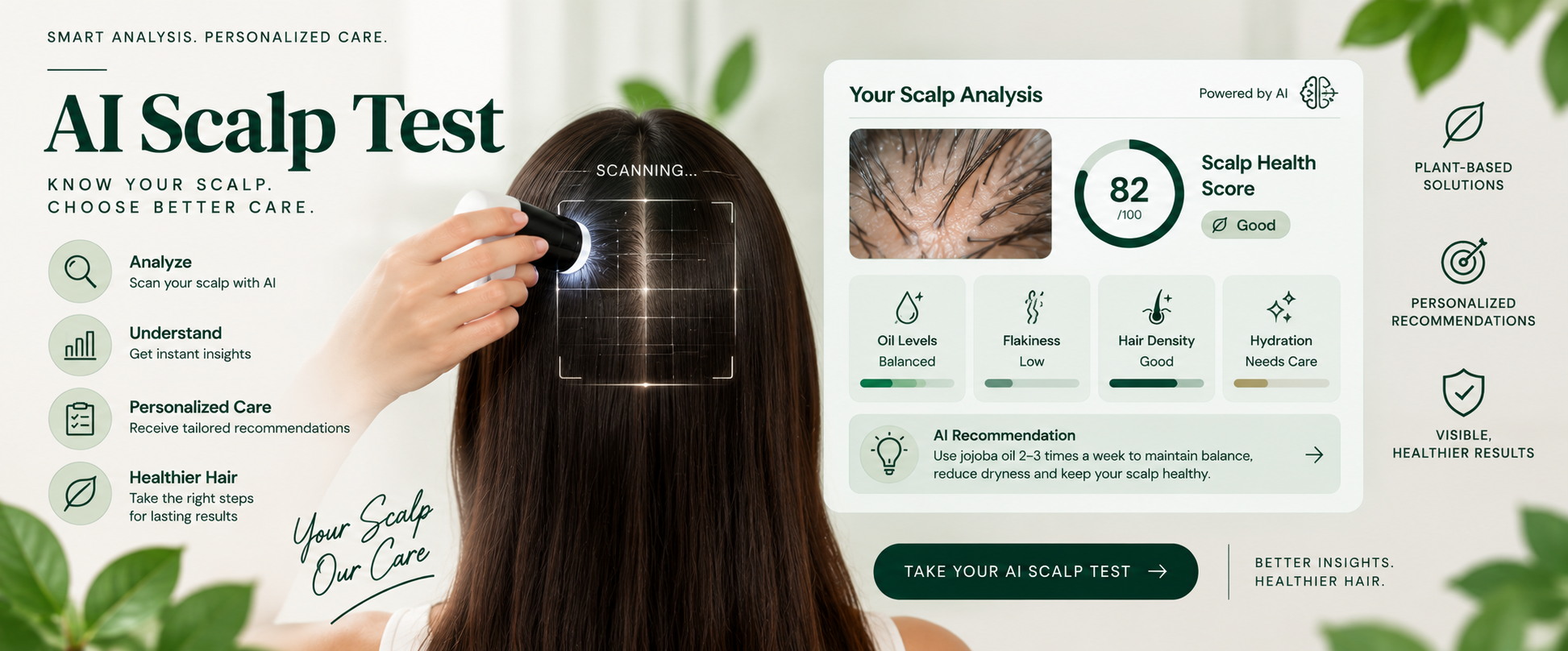
Jojoba oil's unique wax ester chemistry means it performs differently across hair types. Our AI Hair Test assesses your texture, oiliness, frizz level and sensitivity before recommending it as part of your routine.
Jojoba oil's lightweight nature makes it more versatile than most oils, but it still requires careful use to avoid buildup, scalp issues or irritation.
Important: Do not layer jojoba oil with minoxidil, medicated anti-dandruff treatments, scalp acids, steroid lotions, prescription serums or multiple active oils without dermatologist guidance.
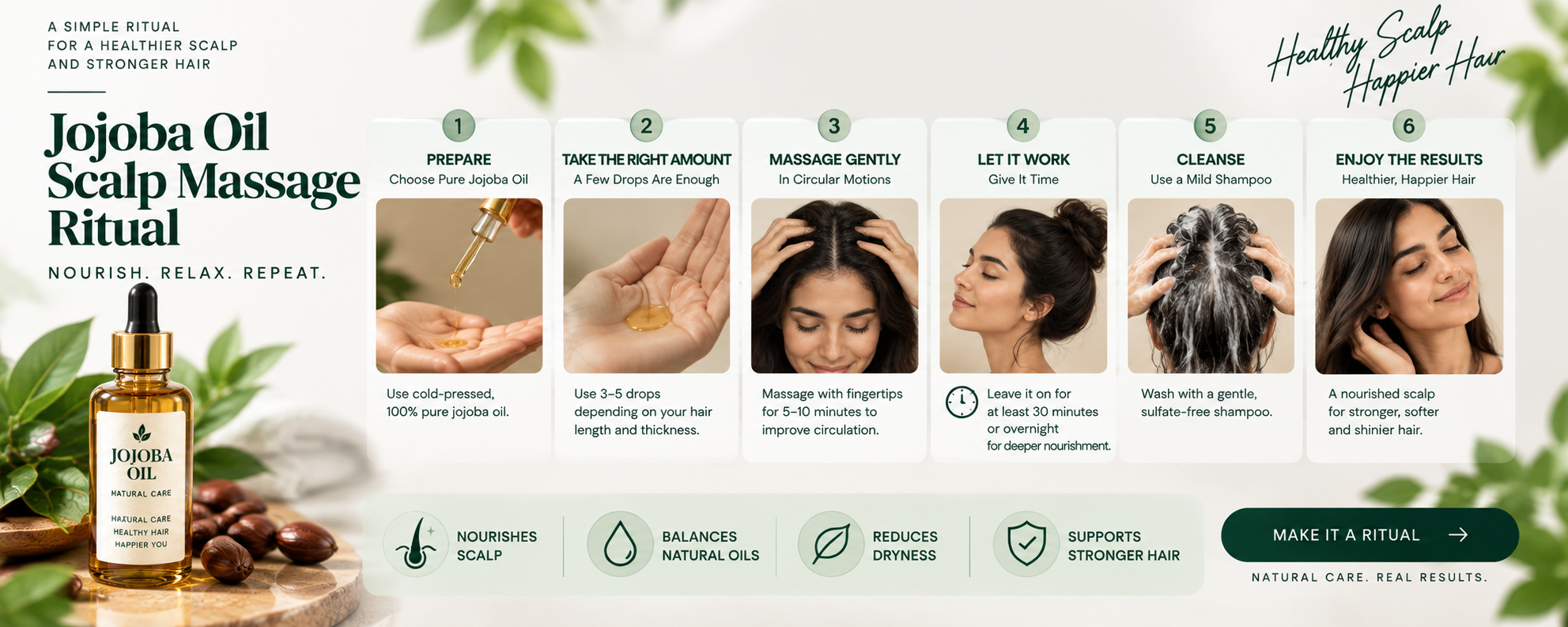
1
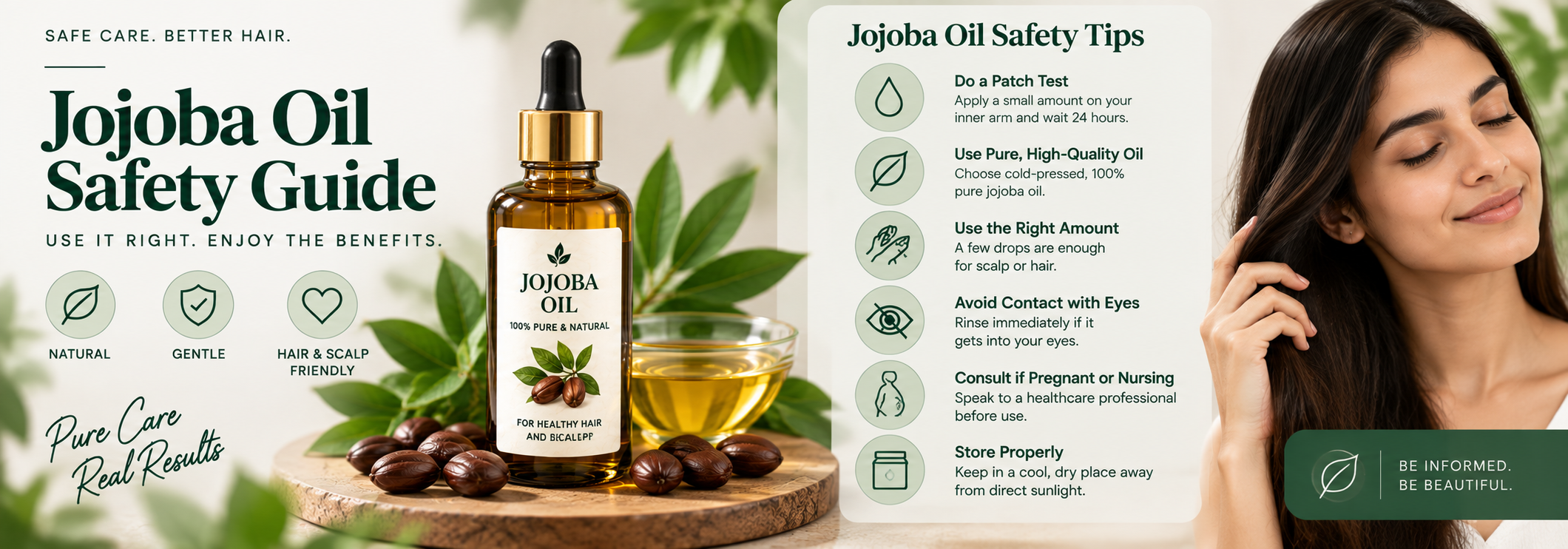
Patch Test — 24 Hours
Apply a small amount behind the ear or on the inner arm. Wait 24 hours. Do not proceed if redness, burning, itching or rash appears. Individual sensitivity varies and patch testing is non-negotiable before scalp application.
2
Start With 2–4 Drops
Jojoba is lightweight but overuse still causes greasiness and buildup. Start with 2–4 drops — significantly less than you would use with a heavier oil. For finishing use on ends, 1–2 drops is often sufficient.
3
Apply Mainly to Lengths First
Start on mid-lengths and ends rather than the scalp. Apply to scalp only if your scalp is non-irritated, non-oily and tolerates oil well. Users with oily or dandruff-prone scalps should keep jojoba oil to lengths only.
4
Pre-Wash or Finishing Use
For pre-wash use, leave on for 30–60 minutes before shampooing. For finishing use, apply a tiny amount to dry ends only after styling. Do not apply leave-on product heavily to roots or oily areas.
5
Avoid Heavy Scalp Coating
Heavy scalp application can cause buildup, clogged follicles and potential irritation — especially in users with dandruff, acne, folliculitis or oily scalp tendencies.
6
Shampoo Thoroughly When Needed
Use a gentle shampoo to remove oil residue. Jojoba's wax ester structure may require a thorough shampoo to fully remove from scalp. Do not allow accumulation between sessions.
7
Track Your Response
Monitor your scalp and hair for 24–48 hours after each application. Stop immediately if burning, itching, redness, rash, dandruff flare or increased shedding occurs.
8
Frequency — 1 to 3 Times Weekly
Use 1–3 times weekly for dry or frizzy lengths, or small finishing use on ends as needed if hair tolerates it. For scalp use, start with once weekly only and monitor carefully.
Essential oil — growth-support scalp ritual; must dilute
Light when diluted
Patch test; avoid active inflammation
Must dilute; not a minoxidil replacement
All oils are cosmetic supportive options. Medical hair loss requires proper diagnosis and individualised treatment planning by a qualified dermatologist.
Before starting a jojoba oil routine, our AI Hair Test assesses your hair texture, scalp oiliness, dandruff status, frizz level, sensitivity history, product buildup tendency and current treatments — to identify whether jojoba oil is appropriate for your specific profile.
Jojoba oil is a lightweight liquid wax ester useful for hair softness, frizz control, scalp comfort and dry hair support. It is often preferred by users who find heavier oils too greasy. It is not a proven hair regrowth treatment. Patch testing is recommended before use.
Jojoba oil may provide lightweight scalp comfort in users with dry or normal scalp types. Its wax ester structure is chemically similar to human sebum. It should not be used on actively inflamed, acne-prone, folliculitis-affected or severely dandruff-prone scalps without dermatologist guidance.
Jojoba oil is not a proven hair regrowth treatment. It is a cosmetic conditioning ingredient. Progressive hair loss, pattern thinning or bald patches require medical evaluation by a dermatologist and should not be managed with cosmetic oil routines alone.
Jojoba oil cannot treat the underlying causes of hair fall such as androgenetic alopecia, thyroid disorders, PCOS, nutritional deficiency or medication-induced hair loss. Consult a dermatologist for significant or progressive hair fall rather than relying on cosmetic oil routines.
Evidence for jojoba oil's medical hair regrowth in humans is limited. Jojoba's value in hair care is primarily cosmetic — conditioning, softness, frizz control and scalp comfort — rather than as a clinically proven treatment for any hair loss condition.
Jojoba oil is well-suited to dry hair as a lightweight conditioning oil. Its waxy ester structure coats the hair shaft without feeling as heavy as coconut or castor oil, helping reduce roughness and dryness-related frizz when used correctly on lengths and ends.
Jojoba oil used sparingly may help smooth the hair shaft and reduce frizz appearance, particularly in fine-to-medium hair types. Avoid overuse as this can weigh hair down or cause buildup on the scalp.
Although jojoba oil is generally considered gentle, it can still cause scalp irritation, itching, redness or contact dermatitis in some individuals, especially those with fragrance sensitivity or seed oil allergies. A 24-hour patch test is recommended before scalp application.
Jojoba oil is not a treatment for dandruff. Applying oil to a dandruff-prone scalp can worsen flaking and irritation. Active dandruff requires antifungal treatment. Consult a dermatologist for effective dandruff management.
Daily jojoba oil scalp application is not recommended as it can cause buildup over time. For hair lengths or ends, small amounts can be used more frequently if hair tolerates it. Shampoo regularly to prevent residue accumulation on scalp.
Overnight jojoba oil use on the scalp is not recommended for first-time users or those with oily or dandruff-prone scalps. Start with a 30-60 minute pre-wash application or small leave-on amounts on ends only. Monitor scalp response before extending contact time.
Do not combine jojoba oil with minoxidil without dermatologist guidance. Oils can interfere with minoxidil absorption and combining multiple active scalp products increases irritation risk. Consult your dermatologist before adding any hair oil to a prescription treatment routine.
Jojoba oil is not generally recommended for very oily scalps. Despite being lighter than many oils, it can still contribute to scalp greasiness and buildup. If your scalp is oily, apply to hair lengths only and avoid direct scalp application.
Do not use jojoba oil or any cosmetic hair oil on a post-transplant scalp without explicit clearance from your hair transplant surgeon. Any topical product on a post-transplant scalp requires surgeon approval to protect graft survival.
Stop jojoba oil use immediately if you experience burning, redness, rash, scalp itching, dandruff flare, folliculitis, oil buildup or increased hair shedding. Consult a dermatologist before resuming any hair oil routine.
Consult a dermatologist if you experience progressive hair thinning, patchy hair loss, sudden heavy shedding, scalp pain, folliculitis, severe dandruff, PCOS-related hair fall, thyroid-related hair fall, postpartum hair loss, medication-related shedding, or if cosmetic routines have not helped after consistent use.
Still unsure whether jojoba oil is right for your hair type?
Jojoba oil's strongest role is cosmetic — conditioning, softness, frizz support and scalp comfort. Evidence for medical hair regrowth is limited. All external links open in a new tab.
Jojoba oil is a cosmetic supportive hair oil (technically a liquid wax ester) derived from Simmondsia chinensis and used in haircare routines for scalp comfort, dry hair softness, frizz control and lightweight conditioning. It does not diagnose, treat, cure or prevent any medical hair loss condition, dandruff, seborrheic dermatitis, fungal infection, alopecia or scalp disease. It should not replace minoxidil, finasteride, dutasteride, ketoconazole, zinc pyrithione, selenium sulfide, anti-dandruff treatment, prescription therapy, PRP, GFC, hair transplant care, nutritional correction or dermatologist consultation. This guide has been reviewed by Dr. Amit Agarkar, MD Dermatology. Consult a qualified dermatologist if you experience progressive hair thinning, bald patches, sudden shedding, painful scalp, scalp infection, severe dandruff, PCOS-related hair fall, thyroid-related hair fall, postpartum hair loss, medication-related shedding, nutritional deficiency or suspected alopecia. A patch test is required before any scalp application.
Hair Loss Treatment India — Free AI Hair Diagnosis & Dermatologist-Recommended Products
Minoxidil India — CDSCO-Approved Hair Regrowth Treatment
Free AI Hair Loss Diagnosis by Qualified Dermatologists
Best Anti Hair Fall Shampoo, Oil & Supplements in India
Male Pattern Baldness Treatment — Minoxidil & DHT Blocker Protocol