💧
Dry Hair Softness
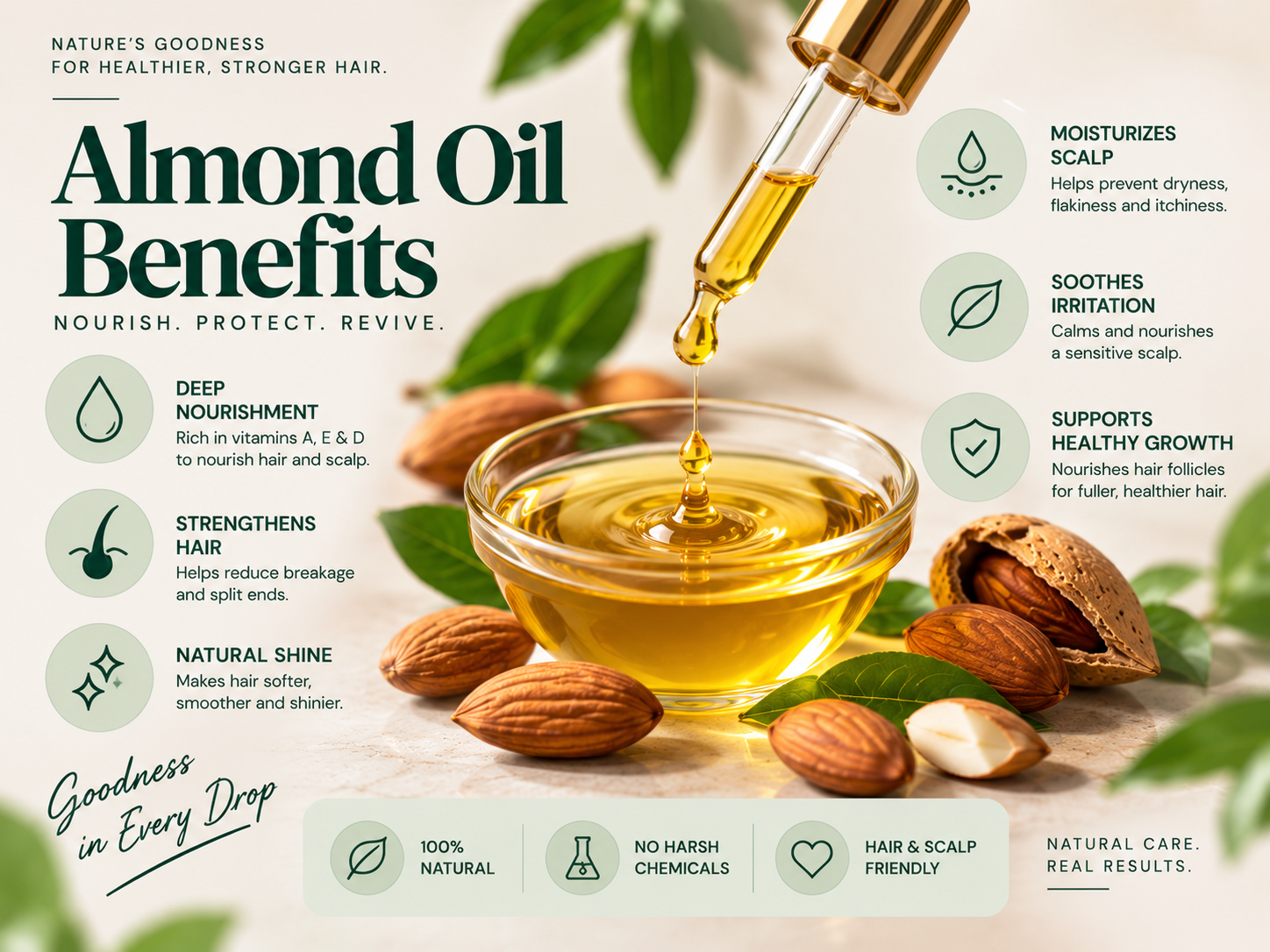
Almond oil may help soften dry, rough or dull hair lengths by adding a conditioning fatty acid layer to the hair shaft. It is particularly useful for coarse, dry or frizz-prone hair types as a pre-wash conditioning treatment.
A dermatologist-guided guide to using almond oil safely in hair routines — including dry hair support, frizz control, scalp suitability, nut allergy caution, side effects, product selection, and when hair fall needs medical evaluation.
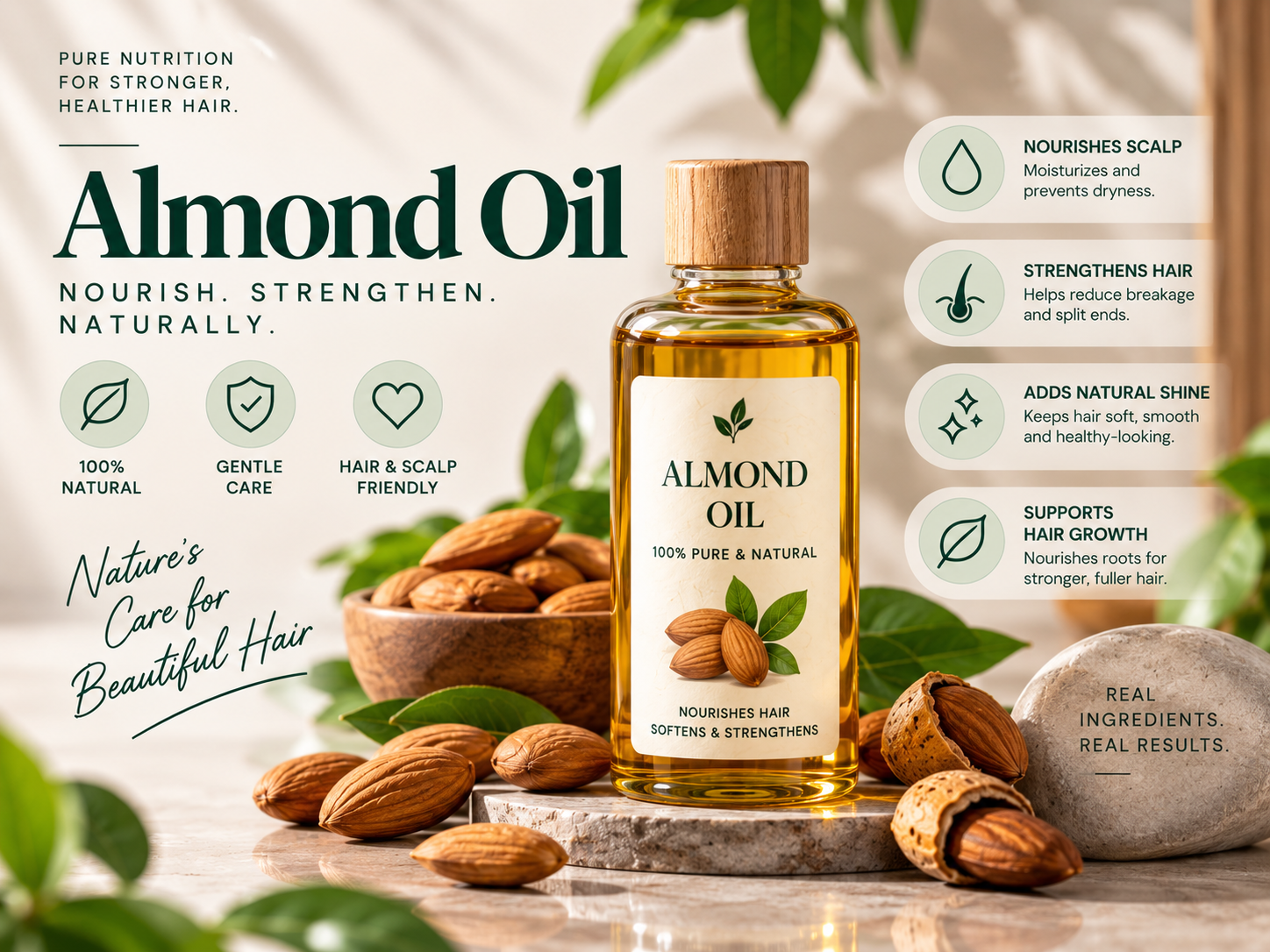

Almond oil — particularly sweet almond oil (Prunus amygdalus dulcis oil) — is a cosmetic supportive oil widely used for dry hair, dull hair, frizz, scalp massage, pre-wash oiling and hair shaft conditioning. Rich in oleic and linoleic fatty acids and vitamin E, it may support softness, shine and manageability of dry or coarse hair lengths when used correctly. However, it is not a proven medical treatment for progressive hair loss, androgenetic alopecia, alopecia areata, PCOS-related hair fall, thyroid-related hair fall, postpartum shedding, nutritional deficiency hair fall, severe dandruff or scalp infection. Critical safety note: People with known almond or tree nut allergy should avoid almond oil unless explicitly cleared by a doctor. Even topical almond oil can trigger contact dermatitis or allergic reactions in sensitised individuals. People with sensitive scalp, oily scalp with active acne, folliculitis, seborrheic dermatitis, severe dandruff, eczema, psoriasis, painful scalp, sudden shedding, recent scalp procedures or recent hair transplant should consult a dermatologist before applying oils to the scalp.
What almond oil can and cannot do for dry, brittle hair
How to do a patch test before applying any nut-derived oil
Best hair types for almond oil — and who should skip it
Safe overnight vs. pre-wash application methods
Almond oil vs coconut, argan, jojoba and castor oil compared
Which scalp conditions benefit and which may worsen
Doctor-reviewed product formulas to look for
Red flags that mean you should stop using almond oil
Almond oil can be a useful cosmetic conditioning oil for dry hair, dull hair, frizz, shine support and pre-wash nourishment. Its oleic acid content and vitamin E profile support hair shaft softness and temporary smoothness. It works best as a hair length and ends conditioner — not as a primary scalp treatment or medical hair loss solution.
It is best framed as a nourishing cosmetic hair oil for dry, dull or coarse lengths, useful for people who enjoy traditional pre-wash oiling routines. It does not treat the medical causes of hair loss. Active hair fall, progressive thinning or scalp disease requires dermatologist evaluation.
Verdict: Almond oil is a valued cosmetic hair oil for dry, dull or coarse hair lengths. Nut allergy caution is essential. Patch test required. Not appropriate for oily, dandruff-prone or inflamed scalp. Does not treat medical hair loss causes and should not replace professional evaluation for significant shedding or thinning.
Sweet almond oil is a lightweight emollient that may help soften dry, brittle hair and add temporary shine. It does not treat hair loss, regrow hair, or cure dandruff. Patch-test before use — nut allergies are a contraindication. Use as a pre-wash mask or leave-in serum on mid-lengths and ends, not directly on scalp if you have oily or acne-prone skin.
People with dry, rough, or frizzy hair looking for a lightweight conditioning oil. Safe for colour-treated hair when used on lengths only.
Medical hair loss treatment, prescription therapies, or clinical dandruff management. Almond oil is a cosmetic conditioner, not a medicine.
You notice sudden hair shedding, scalp redness or itching after use, or have a known tree-nut allergy. Do not self-treat persistent scalp conditions with oil alone.
Best suited for dry, rough or dull hair lengths. Almond oil adds a softening conditioning layer and may help improve shine and frizz appearance with regular use as a pre-wash oil.
Best MatchGood match for frizzy hair, especially coarse or dull hair types. Used sparingly, it may smooth the hair shaft and reduce frizz appearance on lengths and ends.
Good Match — Use SparinglyWell-suited to coarse or thick hair textures that are dry or rough. Almond oil's softening properties make it particularly useful for dense, rough or curly dry hair lengths.
Well SuitedMay be trialled on a normal, non-oily scalp after patch test and allergy clearance. Use in small amounts and monitor for buildup or any reaction over time.
May Trial — Patch Test + Allergy CheckNot recommended on oily scalp. Almond oil can contribute to scalp greasiness and follicular buildup. Apply to lengths only if you have an oily scalp.
Lengths OnlyContraindicated. Anyone with known almond or tree nut allergy must not use almond oil without explicit medical clearance. This is the most important contraindication on this page.
Avoid — Consult DoctorNot recommended on scalp. Oil application on a dandruff-prone scalp can worsen flaking. Dandruff requires antifungal treatment, not cosmetic oiling.
Avoid on ScalpDo not apply to acne-prone or folliculitis-affected scalp. Oil application can worsen follicular occlusion and delay healing.
Do Not UseNever apply without surgeon clearance. Any topical product on a post-transplant scalp requires explicit surgeon approval to protect graft survival.
Surgeon Clearance RequiredAlmond oil is the only oil in the Hairsncares series with a mandatory allergy check as the first step before any other consideration.
Important: Do not layer almond oil with minoxidil, medicated anti-dandruff treatments, scalp acids, steroid lotions, prescription serums or multiple active oils without dermatologist guidance.
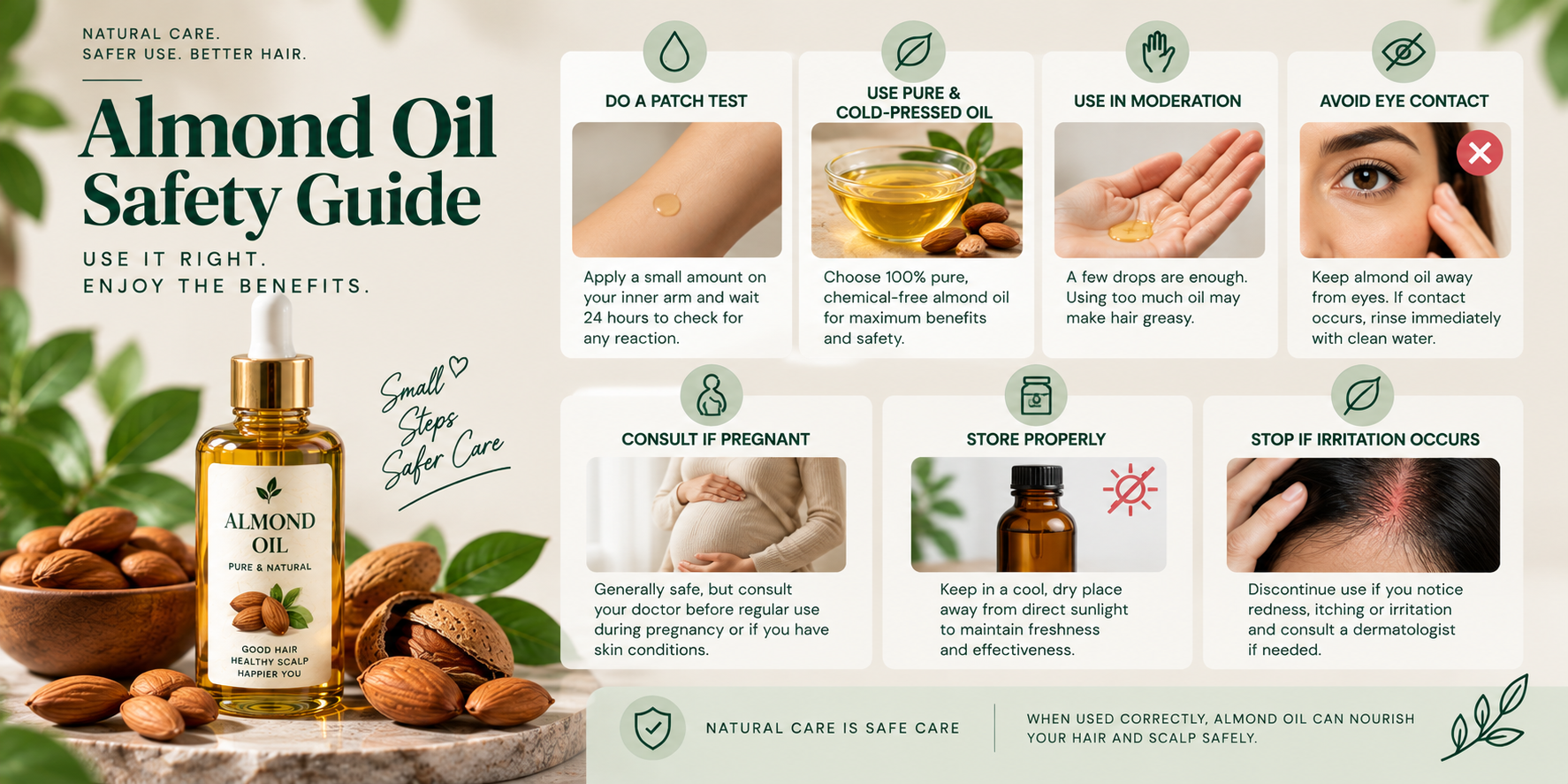
If you have a known almond allergy, tree nut allergy, or history of allergic reactions to nuts, do NOT use almond oil without explicit medical clearance from a doctor. This step must come before any other consideration.
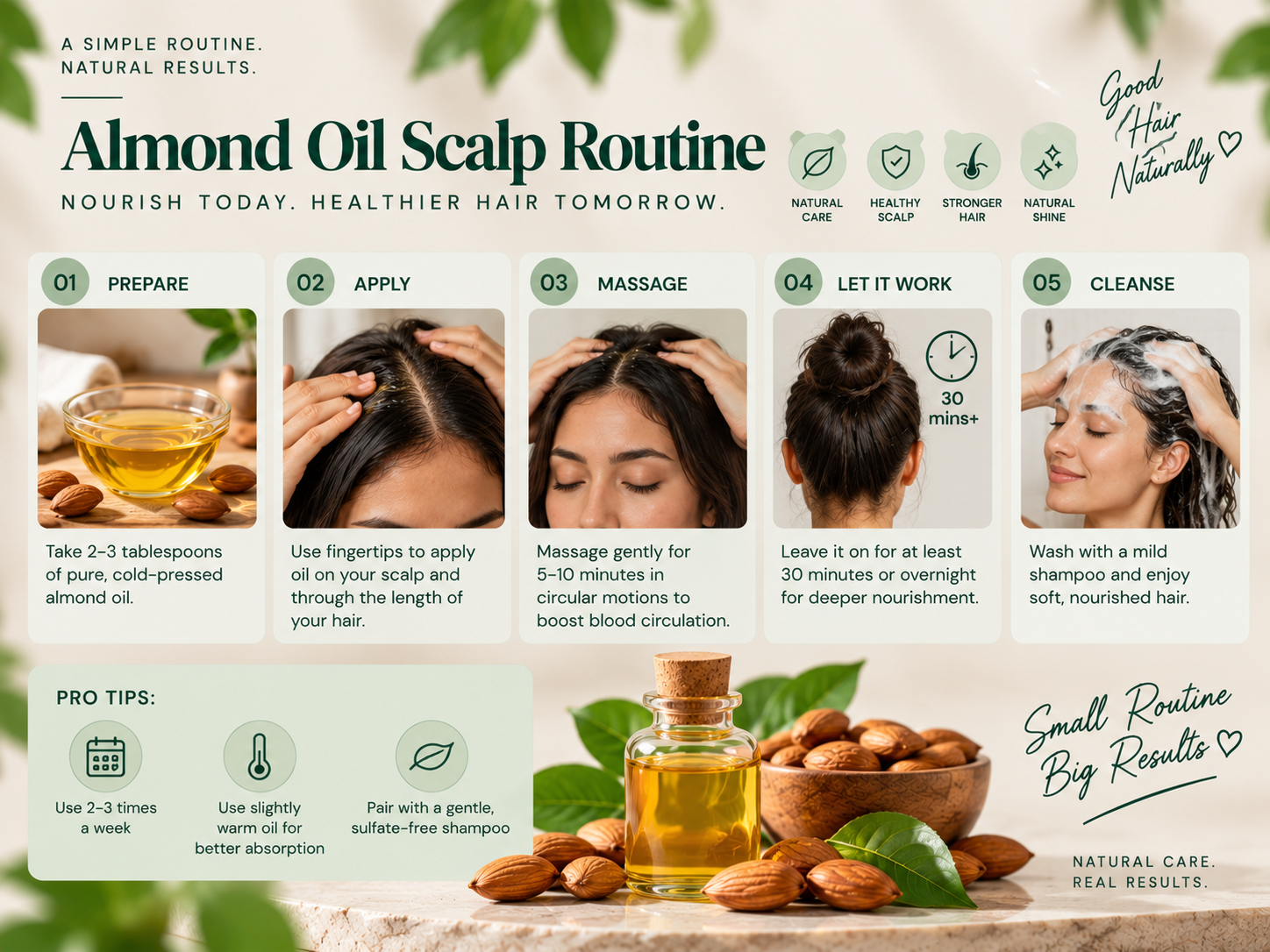
Apply a small amount behind the ear or on the inner arm. Wait 24 hours. Do not proceed if redness, burning, itching, swelling or rash appears. Even without a known nut allergy, individual skin reactions to almond oil can occur.
Use a small amount first — a few drops to a teaspoon depending on hair length. Excess oil causes greasiness, scalp buildup and potential follicular occlusion, especially on oily scalp types.
Focus on mid-lengths and ends, especially dry, dull or frizzy areas. Apply to scalp only if your scalp is non-oily, non-inflamed and tolerates oil well after a successful 24-hour patch test.
Leave on for 30–60 minutes before shampooing rather than using overnight at the start. Pre-wash routines limit scalp contact time and are better tolerated, especially for first-time users.
Users with dandruff, scalp acne, folliculitis or oily scalp should avoid leaving almond oil on the scalp. Even small residual amounts can worsen scalp conditions in susceptible individuals.
Monitor scalp and skin for 24–48 hours after each session. Stop immediately if burning, redness, rash, swelling, itching, dandruff flare or increased shedding occurs. Any swelling near the face or throat after topical nut oil use is a medical emergency.
Use 1–2 times weekly for dry hair as a pre-wash conditioning routine. Use less often if hair becomes greasy, flat or if scalp shows any reaction.
Stop almond oil use immediately if burning, redness, rash, swelling, itching, dandruff flare or increased shedding occurs. Any facial or throat swelling after nut oil contact is a medical emergency — seek immediate care. Consult a dermatologist before resuming.
| Oil | Type & Best For | Feel | Scalp Suitability | Key Note |
|---|---|---|---|---|
| Almond Oil | Carrier oil — dry, dull, frizzy, coarse hair; pre-wash softness and shine | Medium; smooth-absorbing | Dry/normal hair; avoid oily/dandruff/acne scalp | Nut allergy caution; not a regrowth oil |
| Coconut Oil | Carrier oil — dry, frizzy, coarse hair; protein-loss reduction pre-wash | Medium; solid-to-liquid | Not for oily or dandruff-prone scalp | Good protein-loss reduction data; no nut allergy risk |
| Argan Oil | Carrier oil — frizz, shine, damaged, heat-styled hair | Light-to-medium | Lengths preferred; patch test on scalp | Shine and smoothness; not a growth oil |
| Jojoba Oil | Wax ester — lightweight scalp comfort, fine hair, frizz, finishing | Lightest, closest to sebum | Normal to dry; avoid oily/acne/dandruff scalp | No nut allergy risk; lightest in series |
| Castor Oil | Carrier oil — dry lengths; thickness appearance; sealant | Very thick; needs blending | Avoid oily/acne scalp | Limited regrowth evidence; heaviest in series |
| Rosemary Oil | Essential oil — growth-support scalp ritual; must dilute | Light when diluted | Patch test; avoid inflammation | Must dilute; not a minoxidil replacement |
All oils are cosmetic supportive options. Medical hair loss requires proper diagnosis and treatment planning by a qualified dermatologist.
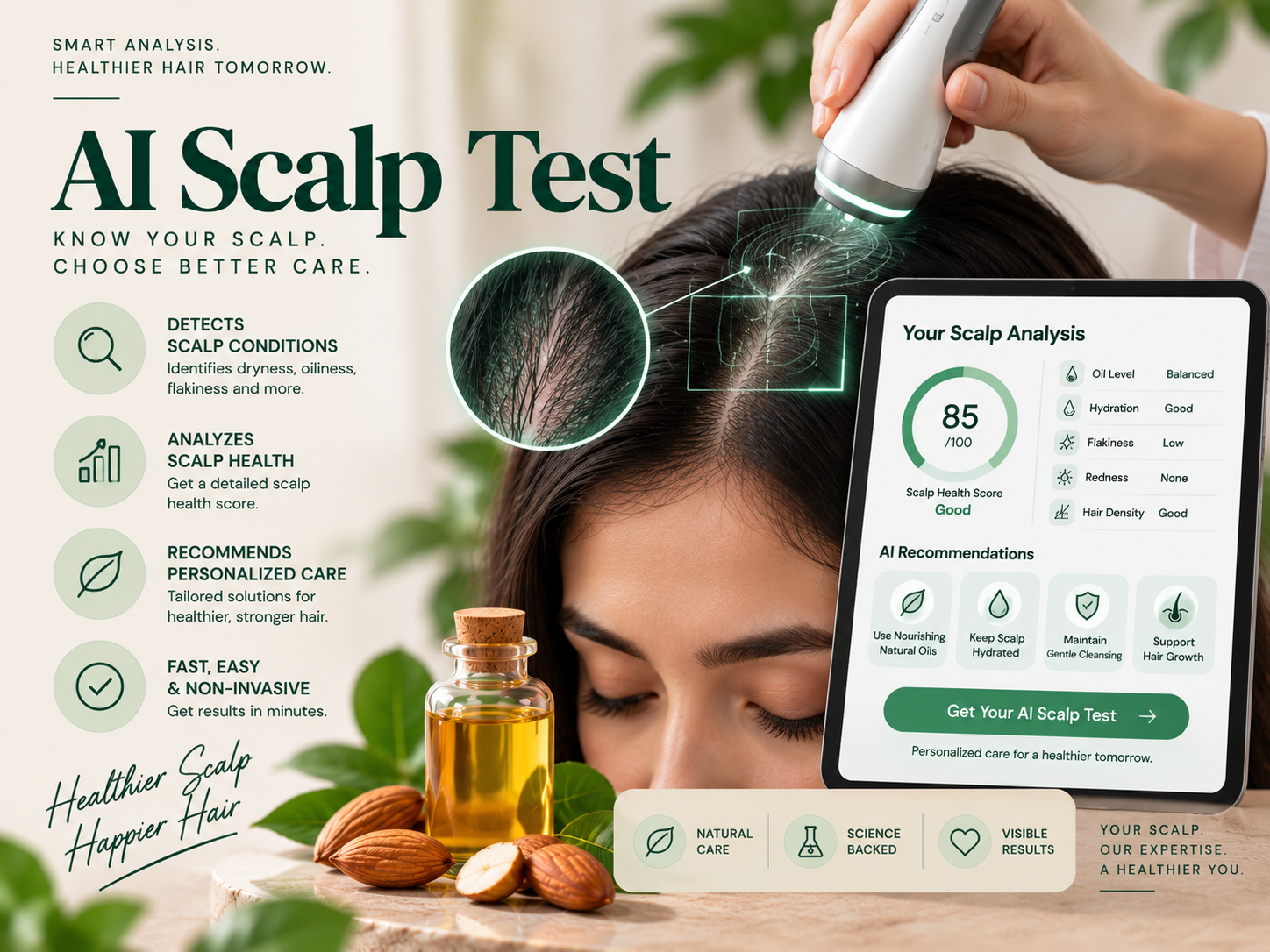
Before recommending almond oil, our AI Hair Test first checks allergy history — then assesses hair texture, scalp oiliness, dandruff status, dryness level, sensitivity history, current treatments and medical red flags.
This tool provides screening and product-direction guidance only. It does not diagnose, prescribe, or replace dermatologist advice. Allergy diagnosis requires medical evaluation.
All products are cosmetic hair oils. Nut allergy caution and patch test required before use. Not for people with known almond or tree nut allergy without medical clearance.
Doctor-Reviewed Resources
Still unsure whether almond oil is right for your hair type?
Ask a Hair Doctor →Almond oil's established role is cosmetic conditioning for dry hair. Evidence for medical hair regrowth is limited. Nut allergy caution is an essential safety consideration unique to this page. All external links open in a new tab.
Search PubMed for peer-reviewed literature on Prunus amygdalus dulcis oil, sweet almond oil, hair shaft conditioning, cosmetic oils, contact dermatitis and nut oil allergy to assess the current evidence base directly.
Authoritative clinical guidance on hair loss types, causes and evidence-based treatments — essential context for understanding when cosmetic oil routines are insufficient and medical evaluation is required.
Authoritative guidance on tree nut allergy including almond allergy — essential context for understanding the allergic risk of topical almond oil use in sensitised individuals.
Clinical guidance on contact dermatitis — relevant for understanding skin and scalp irritation and allergic reaction risk from cosmetic oils, nut extracts and fragrance components in hair products.
Almond oil is a cosmetic supportive hair oil derived from almonds (Prunus amygdalus dulcis) and used in haircare routines for dry hair softness, frizz control, shine support, scalp massage and pre-wash conditioning. It does not diagnose, treat, cure or prevent medical hair loss, dandruff, seborrheic dermatitis, fungal infection, alopecia or scalp disease. It should not replace minoxidil, finasteride, dutasteride, ketoconazole, zinc pyrithione, selenium sulfide, anti-dandruff treatment, prescription therapy, PRP, GFC, hair transplant care, nutritional correction or dermatologist consultation. CRITICAL: Avoid almond oil if you have known almond or tree nut allergy unless explicitly cleared by a doctor. Topical almond oil can cause contact dermatitis or allergic reactions in sensitised individuals. Any facial or throat swelling after nut oil use is a medical emergency. This guide has been reviewed by Dr. Amit Agarkar, MD Dermatology. Consult a qualified dermatologist if you experience progressive hair thinning, bald patches, sudden shedding, painful scalp, scalp infection, severe dandruff, PCOS-related hair fall, thyroid-related hair fall, postpartum hair loss, medication-related shedding, nutritional deficiency or suspected alopecia. A patch test is required before any use.
Your cart is empty