Dermatologist Reviewed🌿 Traditional Scalp-Care Oil⚠️ Not a Medical Dandruff Cure
Neem Oil for Scalp Care, Dandruff-Prone Routines & Itchy Scalp Support
A dermatologist-guided guide to using neem oil safely in hair and scalp routines — including traditional benefits, scalp suitability, dilution, side effects, product selection, and when itching, flaking or hair fall needs medical evaluation.
⚠️Patch Test Required. Neem oil can be strong and may irritate sensitive, inflamed, infected, acne-prone, dandruff-prone or eczema-prone scalps. Do not apply on open wounds. Stop if burning, redness, rash, swelling, flaking flare or increased shedding occurs.
🌿 Traditional Scalp-Care Oil❄️ Dandruff-Prone Routine Support🌀 Itchy Scalp Support⚗️ Dilution Recommended🚫 Not a Medical Dandruff Cure⚖️ Patch Test Required🤖 AI-Guided Routine Matching
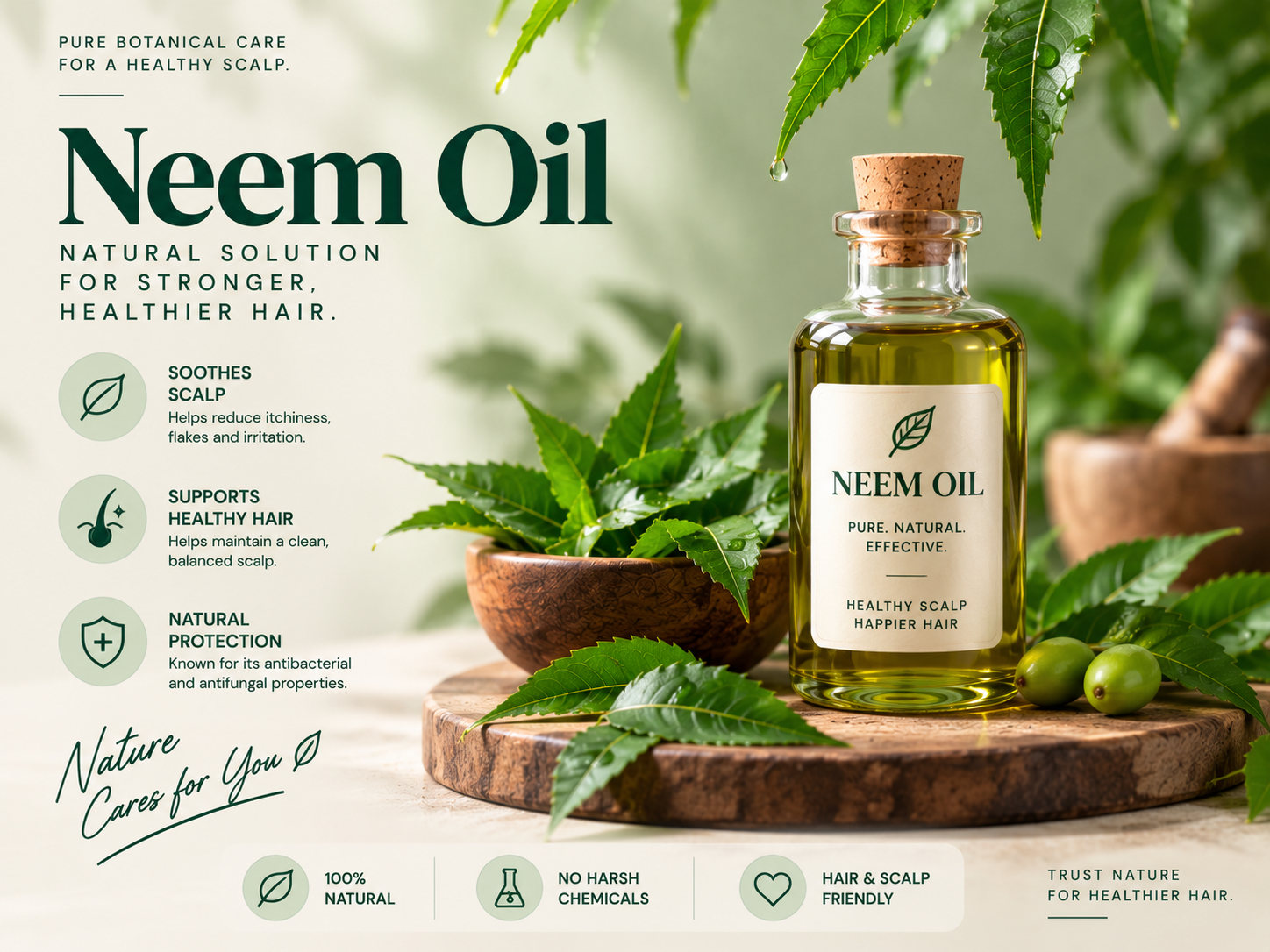
Neem Oil Hero · 720×540 · WebP
Dermatologist Reviewed
Reviewed by Dr. Amit Agarkar, MD Dermatology
Neem oil (Azadirachta indica) is a traditional botanical oil with a long history of use in Indian scalp-care routines, particularly for oily, itchy or dandruff-prone scalps. Its active compounds — notably azadirachtin, nimbin and nimbidin — give it a characteristic strong, pungent odour and may contribute to its scalp-care properties in cosmetic use. However, neem oil is not a substitute for medical diagnosis or dermatologist-prescribed antifungal, anti-inflammatory, anti-lice or hair-loss treatment. It should be framed as a cosmetic pre-wash scalp oil, not a medical treatment. Neem oil can irritate the scalp if used undiluted, overused, applied on inflamed skin, or layered with multiple active products. People with sensitive scalp, eczema, psoriasis, seborrheic dermatitis, folliculitis, scalp acne, open wounds, painful scalp, severe dandruff, sudden shedding, pregnancy, children's scalp conditions, recent hair transplant or scalp procedure should consult a dermatologist before use.
What You’ll Learn on This Page
What neem oil can and cannot do for scalp conditions
Antifungal and antibacterial properties — what research shows
Neem oil for dandruff, itchy scalp, and seborrheic dermatitis
Safe dilution ratios — never apply neem oil undiluted
Which scalp types benefit and who should avoid neem entirely
The strong odour problem — how to manage it
Serious reactions to watch for — neem toxicity is real
Quick Answer
Is neem oil good for hair and scalp?
Neem oil has a distinct position in Indian haircare — it is one of the most traditionally recognised scalp-care oils in Ayurvedic practice, used for generations to support oily, itchy and dandruff-prone scalp routines. However, the clinical evidence for neem oil's efficacy in treating dandruff, scalp infection, lice or hair loss is significantly limited, and it should not be presented as a medical cure for any of these conditions.
As a traditional cosmetic scalp-care oil, it may help some users maintain an oily or dandruff-prone scalp routine when used with care. Its strong odour, irritation potential, and the risk of worsening inflamed or sensitive scalps make careful selection and cautious use essential. Active dandruff, itching, scalp disease or hair loss requires dermatologist evaluation — not cosmetic botanical oil routines.
Verdict: Neem oil is a traditional Ayurvedic scalp-care oil with a strong botanical odour and cosmetic scalp-care relevance. Best used diluted or in formulated products for oily or mildly dandruff-prone scalp routines. Not suitable for inflamed, eczema-prone or infected scalps. Cannot cure dandruff or treat hair loss. Patch test and prefer formulated products.
Neem oil has documented antifungal and antibacterial properties that may help manage dandruff-prone and itchy scalps when properly diluted. It does not cure chronic scalp conditions, treat hair loss, or replace medicated shampoos. Never apply undiluted — neem oil is potent and can cause contact dermatitis. Always patch-test 24 hours before use. Avoid during pregnancy.
People with dandruff-prone, itchy, or oily scalps looking for a natural antimicrobial addition to their wash routine. Best diluted into a carrier oil or shampoo.
Not a Substitute For
Prescription ketoconazole shampoo, antifungal treatments, or dermatologist-managed scalp care. Neem is an adjunct, not a primary therapy.
See a Dermatologist If
Dandruff does not improve after 4 weeks, you develop thick scaling or plaques (possible psoriasis), or notice hair loss alongside scalp symptoms. These need clinical evaluation.
Traditional & Cosmetic Benefits
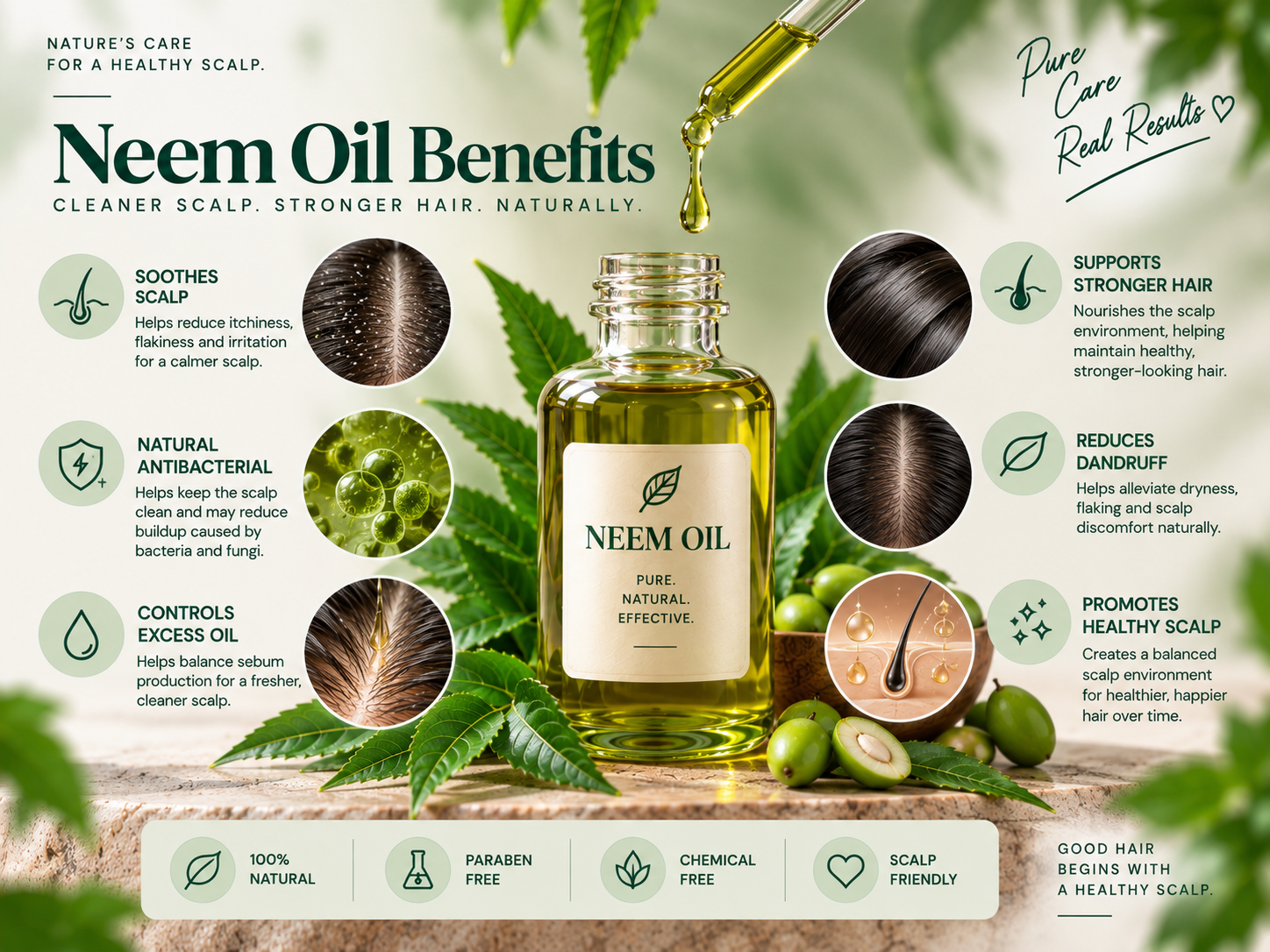
What Neem Oil May Do for Your Scalp Routine
All benefits are cosmetic and scalp-support only. Neem oil is not a medical treatment. Patch test required. Active scalp conditions or hair loss require dermatologist evaluation.
❄️
Dandruff-Prone Routine Support
Neem oil in pre-formulated products or diluted blends may support dandruff-prone scalp routines as a cosmetic adjunct. However, it does not cure dandruff. Persistent, severe or inflammatory dandruff requires antifungal treatment and medical evaluation.
💦
Oily Scalp Support
Short-contact pre-wash neem oil use may suit some oily scalp types. Heavy or prolonged oiling can worsen scalp buildup and is counterproductive for oily scalps. Prefer diluted blends or formulated shampoos.
🌀
Itch-Prone Scalp Routine
Some users with mildly itchy, non-inflamed oily scalps find neem oil supports a scalp-comfort routine. Stop immediately if itching worsens, burning begins, redness appears, or rash develops after use.
🌿
Pre-Wash Scalp Care
Short-contact pre-wash application (15–30 minutes) is safer than overnight oiling for sensitive or flake-prone scalps. Short contact limits scalp exposure time and reduces irritation and buildup risk.
🏺
Traditional Botanical Haircare
Neem oil has deep roots in Ayurvedic haircare traditions across India, used for scalp massage, pre-wash routines and hair-care rituals for generations. This traditional use carries cultural significance distinct from medical efficacy claims.
🤖
AI Scalp Routine Pairing
Given neem oil's strong odour, irritation potential and contraindications, our AI Hair Test checks dandruff severity, itching, scalp oiliness, inflammation status, sensitivity, current treatments and medical red flags before recommending neem as part of your routine.
Neem oil is a potent botanical oil with a strong, characteristic odour. Unlike most other oils in this series, its strength means dilution or pre-formulated products are strongly recommended for the majority of users.
Safe Dilution & Usage Options
Choose the safest approach for your scalp type. For most users, a pre-formulated product is the lowest-risk option.
🧴Pre-Formulated Product
Safest option for most users. Commercial neem shampoos, scalp oils and serums control concentration and include skin-compatible bases that reduce raw neem irritation risk significantly.
⚗️Diluted Carrier Blend
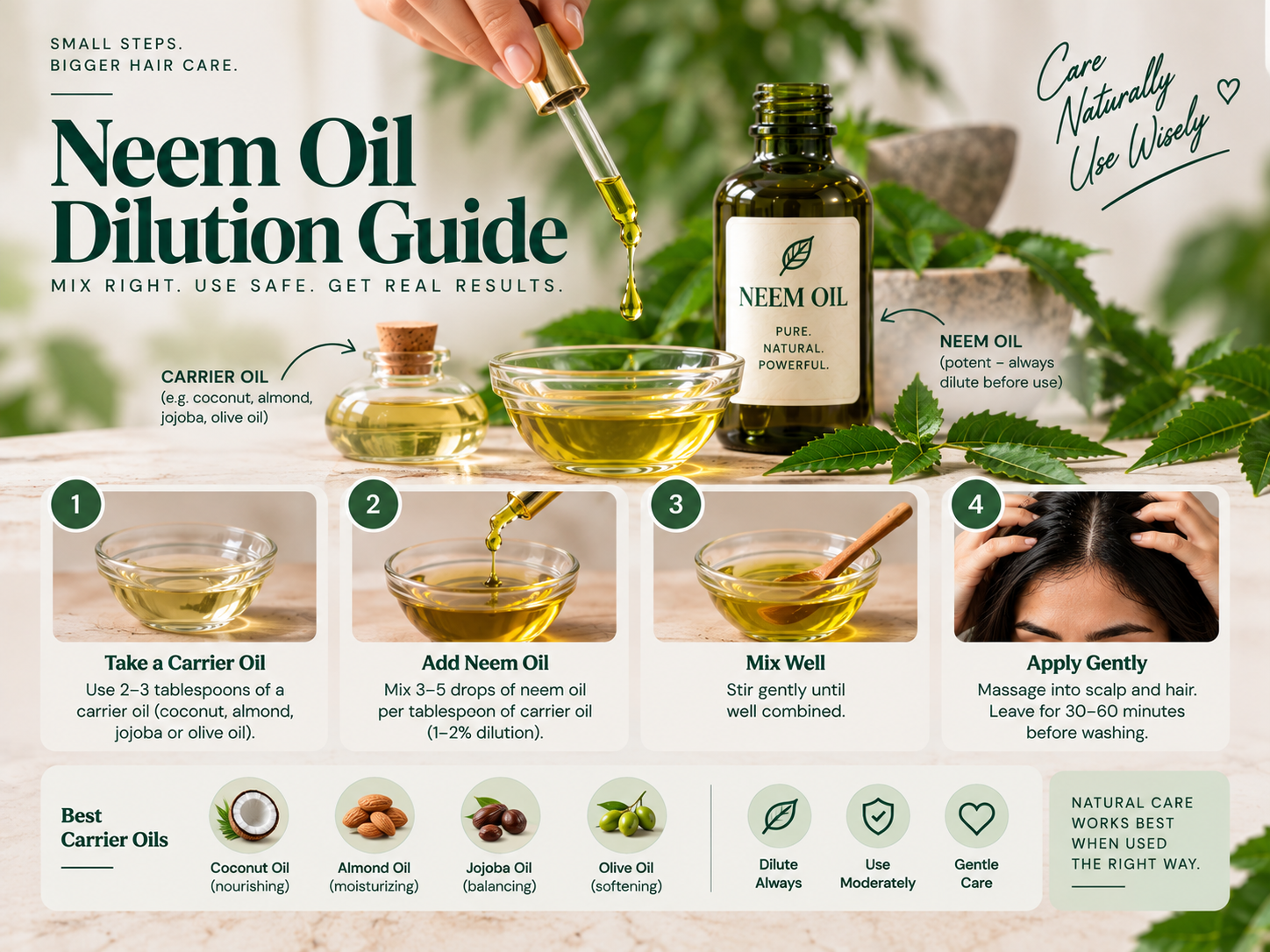
Blend a small amount of neem oil with a gentler carrier oil such as coconut, jojoba or almond oil (for non-allergic users). Start with a low neem-to-carrier ratio. Patch test the blend separately.
⏱️Short-Contact Pre-Wash
Apply only as a pre-wash (15–30 minutes) initially rather than as an overnight leave-on. Short contact limits exposure time and reduces irritation risk from raw neem's strong active compounds.
👶🤰
Children & Pregnancy — Special Caution
Neem oil is not recommended for use on children's scalps without explicit paediatrician or dermatologist advice. Neem's active compounds can be potent and may not be safe for young children. During pregnancy or postpartum, do not use neem oil without consulting your obstetrician or dermatologist. Child scalp scaling or itching requires professional evaluation — not self-treatment with botanical oils.
🛑
Never Use On:
Open wounds, severely inflamed scalp, active scalp infection, folliculitis, eczema flares, psoriasis plaques, or recently transplanted scalp tissue. Do not mix neem oil with tea tree oil, minoxidil, strong antidandruff products, acids, or steroid lotions without dermatologist guidance. Do not use near eyes. Do not ingest.
Short-contact pre-wash neem use in diluted or formulated form may suit selected oily scalp types. Avoid heavy or prolonged oiling as this can worsen buildup.
May Trial — Diluted & Short-Contact❄️
Mild Dandruff-Prone Scalp
Diluted neem formulations may support a mild dandruff-prone scalp routine. Active or severe dandruff requires antifungal medical treatment, not cosmetic oil.
Formulated Products Only🌀
Mildly Itchy Scalp
May be tried for mild scalp itching on oily scalps using diluted or formulated neem. Stop immediately if itching worsens, burning or redness occurs after application.
Try With Caution — Diluted🔴
Sensitive / Reactive Scalp
High risk. Neem oil frequently causes irritation, burning or contact dermatitis on sensitive scalps. Consult a dermatologist before attempting any neem product.
Consult Dermatologist First🏜️
Dry Scalp
Not recommended. Neem oil can worsen scalp dryness and trigger flaking on already dry scalps. Dry scalp benefits from gentle moisturising carrier oils, not neem.
Not Suitable🔥
Scalp Acne / Folliculitis / Eczema
Do not use. These conditions require medical treatment. Neem oil on an inflamed, infected or eczema-prone scalp can cause significant irritation and worsen the condition.
Do Not Use🩹
Open Wounds / Psoriasis Plaques
Absolutely contraindicated. Never apply neem oil to open scalp wounds, psoriasis plaques or broken skin. Consult a dermatologist immediately for these conditions.
Contraindicated💉
Post-Transplant Scalp
Never without surgeon clearance. Strong botanical oils can irritate healing graft tissue and compromise survival. Wait for explicit written clearance from your surgeon.
Surgeon Clearance Required👶
Children's Scalp
Not recommended without paediatrician or dermatologist advice. Neem's potent active compounds can cause significant scalp irritation in children. Seek professional guidance.
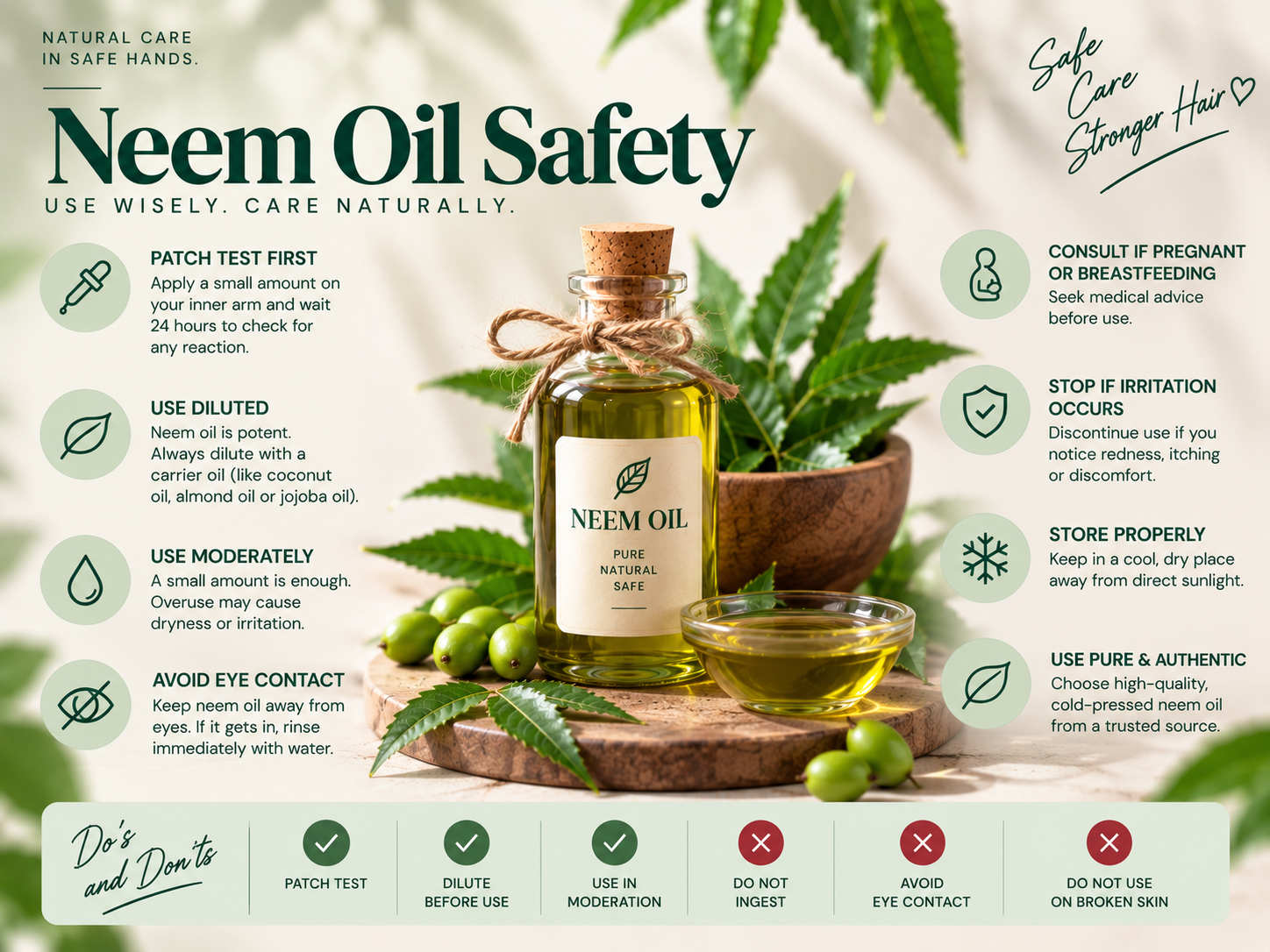
Neem oil has the most safety steps in the Hairsncares hair oil series — 9 steps rather than the standard 8 — because of its strength, odour and contraindication profile.
Important: Do not combine neem oil with minoxidil, tea tree oil, strong anti-dandruff products, scalp acids, steroid lotions or multiple essential oils without dermatologist guidance.
1
Prefer Formulated Products
For most users, neem-based scalp products, neem shampoos or diluted blends are significantly safer than raw neem oil. Commercial products control concentration and reduce the odour and irritation intensity of raw neem.
2
Patch Test — 24 Hours
Apply a small amount of diluted neem product behind the ear or on the inner arm. Wait 24 hours. Do not proceed if redness, burning, itching, swelling or rash appears. Neem contact allergy and irritation is more common than with most carrier oils.
3
Use Small Quantity
Neem oil can irritate with excess application. Start with minimal product and increase only if your scalp tolerates it without any reaction after at least two sessions.
4
Use Short Contact Initially
Apply as a pre-wash scalp product for 15–30 minutes initially, then rinse thoroughly. Never leave raw or diluted neem oil on the scalp overnight at first use. The strong active compounds in neem can accumulate and cause irritation with prolonged exposure.
5
Massage Gently
Use gentle fingertip pressure only. Do not scratch flakes or irritated scalp areas — scratching breaks the skin barrier and significantly increases neem's irritation potential on compromised skin.
6
Shampoo Thoroughly
Remove neem oil residue with a gentle shampoo or your dermatologist-advised anti-dandruff shampoo. Neem's odour and active compounds should not remain on the scalp after a routine session.
7
Avoid Layering Multiple Actives
Do not combine neem oil with minoxidil, tea tree oil, strong anti-dandruff products, scalp acids, steroid lotions or multiple botanical oils in the same session. Each combination unpredictably increases irritation risk on the scalp.
8
Track Scalp Response
Monitor scalp for 24–48 hours after each session. Stop immediately if burning, itching, redness, rash, swelling, dryness, flaking flare, bumps or increased shedding occurs. Do not persist with neem oil if initial sessions cause any adverse response.
9
Consult if Scalp Problems Persist
If dandruff, itching, oily scalp, redness or scalp discomfort persists despite routine neem use, consult a dermatologist for proper diagnosis and evidence-based treatment. Cosmetic scalp oils are supportive, not curative.
Burning, redness, rash, swelling, worsening itching, flaking flare, or increased shedding occurs. Do not increase dose or frequency if early sessions cause any reaction. Consult a dermatologist before resuming any neem scalp routine.
Oil Comparison
Neem Oil vs Tea Tree Oil vs Rosemary Oil vs Coconut Oil vs Jojoba Oil
Oil
Type & Best For
Odour
Scalp Suitability
Key Note
Neem Oil
Botanical oil — traditional Ayurvedic scalp-care; oily, dandruff-prone, itch-prone routines
Wax ester — lightweight scalp comfort, fine hair, frizz, finishing
Very mild, neutral
Normal to dry; avoid oily/dandruff scalp
Lightest in series; best for fine/dry hair
Persistent dandruff, itching, scalp disease or medical hair loss requires diagnosis and dermatologist-guided treatment — not cosmetic botanical oil routines.
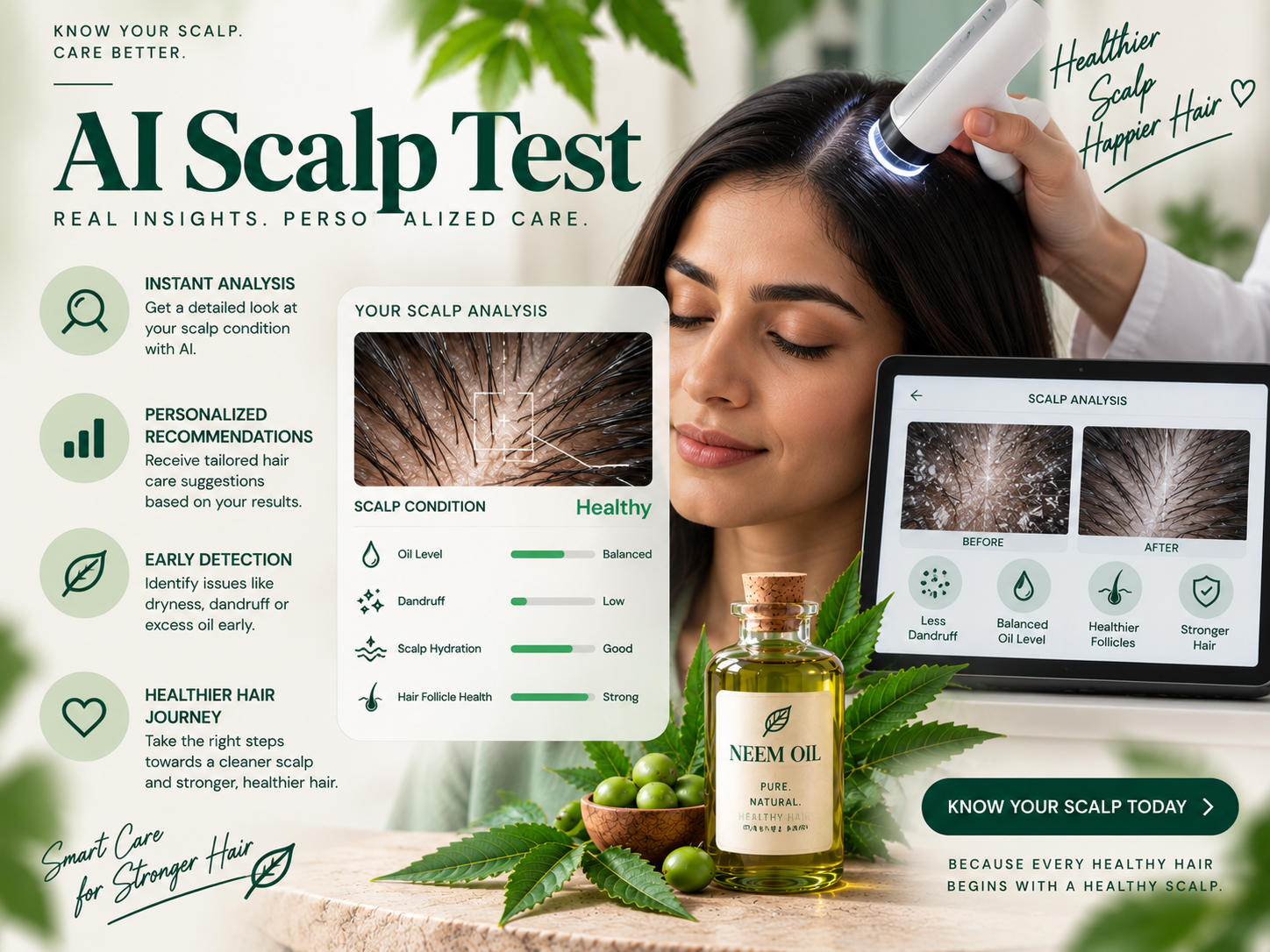
Before recommending neem oil, our AI Hair Test first checks dandruff severity, scalp inflammation, itching, oiliness, sensitivity, current treatments, pregnancy/postpartum status and medical red flags — because neem has a significantly higher contraindication profile than most other oils in this series.
This tool provides screening and product-direction guidance only. It does not diagnose, prescribe, or replace dermatologist advice.
AI Scalp Test · WebP
Shop the Collection
Shop Neem Scalp-Care Products
All products are cosmetic scalp-care formulations. Patch test required. Not for children without paediatrician advice. Neem products are not medical dandruff treatments.
Products for this guide are being curated. Take the AI Hair Test for personalised, scalp-checked picks meanwhile.
Neem oil is primarily useful as a traditional scalp-care oil for oily, itchy or dandruff-prone scalp routines. It is not a proven hair regrowth treatment. Patch testing and dilution are essential. Strong odour and irritation potential are important considerations before use.
Neem oil may support oily, mildly itchy or dandruff-prone scalp routines as a cosmetic pre-wash oil in selected users. However, it can cause significant irritation on sensitive, inflamed, eczema-prone or acne-prone scalps. Persistent scalp problems require dermatologist evaluation.
Neem oil is not a proven hair regrowth treatment. It is a traditional scalp-care oil. Progressive hair loss, pattern thinning or bald patches require medical evaluation by a dermatologist and cannot be managed with cosmetic botanical oil routines alone.
Neem oil in formulated products may support dandruff-prone scalp routines. However, it is not a cure for dandruff and is not a substitute for evidence-based antifungal treatments. Persistent or severe dandruff requires dermatologist evaluation and proper antifungal management.
No. Neem oil does not cure dandruff. Dandruff is primarily caused by Malassezia yeast and sebum imbalance, requiring appropriate antifungal treatment. Neem oil may cosmetically support a dandruff-prone scalp routine for some users but cannot reliably treat the underlying causes.
Some users with mild scalp itching on oily or dandruff-prone scalps find neem oil supports their routine. However, neem oil itself can cause or worsen scalp irritation in sensitive, inflamed or eczema-prone scalps. Stop immediately if itching worsens or burning or rash appears.
Yes. Neem oil can cause significant scalp irritation, burning, redness, contact dermatitis, dryness or flaking flare if used undiluted, overused or applied to inflamed or sensitive skin. Patch testing before scalp use is mandatory.
Yes. Raw neem oil should be diluted with a carrier oil or used in a pre-formulated product. Its high active compound concentration and strong odour make undiluted application inadvisable for most scalp types. For most users, a pre-formulated neem scalp product is safer than DIY dilution.
Undiluted raw neem oil is not recommended for direct scalp application. It is potent, strongly pungent and can cause irritation and contact dermatitis. Use diluted blends or commercially formulated neem scalp products and always patch test first.
Daily neem oil scalp application is not recommended. Even diluted products can cause scalp dryness, irritation or buildup with frequent use. Use once weekly initially as a short-contact pre-wash routine and increase only if scalp tolerates it without any adverse response.
Overnight neem oil application is not recommended for first-time users or those with sensitive scalps. The strong odour, irritation risk and prolonged contact time increase the chance of scalp reactions. Start with a 15-30 minute short-contact pre-wash application only.
Do not combine neem oil with minoxidil without dermatologist guidance. Oils can interfere with minoxidil absorption and combining multiple active scalp products increases irritation risk. Consult your dermatologist before adding any botanical oil to a prescription treatment routine.
Consult your dermatologist before combining neem oil with ketoconazole or any medicated anti-dandruff shampoo. Combining multiple active scalp products increases irritation risk and may alter the effectiveness of prescription antifungal treatments.
Diluted or formulated neem products may be used as a short-contact pre-wash treatment for oily scalps by some users. However, heavy or prolonged oiling can worsen scalp buildup. Patch test first, use sparingly and stop if any irritation occurs.
Neem oil is not recommended for dry scalp. It can worsen scalp dryness, cause flaking or trigger irritation on dry or sensitive scalps. Dry scalp is better addressed with moisturising carrier oils and dermatologist guidance.
Do not apply neem oil to a post-transplant scalp without explicit clearance from your hair transplant surgeon. Strong botanical oils can irritate healing graft tissue and compromise graft survival.
Neem oil is not recommended for children's scalp use without paediatrician or dermatologist advice. Neem oil is potent and can cause significant scalp irritation in children. Child scalp scaling, itching or dandruff-like conditions require professional evaluation — not self-treatment with strong botanical oils.
Stop neem oil use immediately if you experience burning, redness, rash, worsening itching, swelling, scalp dryness, flaking flare, bumps or increased hair shedding. Consult a dermatologist before resuming any neem scalp routine.
Consult a dermatologist if you have persistent dandruff despite regular anti-dandruff product use, severe scalp itching, painful scalp, pus or folliculitis, redness or swelling, progressive hair thinning, patchy hair loss, sudden heavy shedding, PCOS, thyroid or postpartum hair fall, or if scalp conditions worsen with cosmetic products.
Still unsure whether neem oil is right for your scalp?
Traditional Use, Botanical Evidence & What the Research Says
Neem oil has traditional Ayurvedic scalp-care relevance. However, its role should be framed as cosmetic scalp-care support and traditional botanical use — not as evidence-based medical treatment for dandruff, seborrheic dermatitis, lice or hair loss. All external links open in a new tab.
Neem oil (Azadirachta indica) is a cosmetic supportive traditional botanical oil used in scalp-care routines. It does not diagnose, treat, cure or prevent medical hair loss, dandruff, seborrheic dermatitis, fungal infection, lice infestation, eczema, psoriasis, alopecia or scalp disease. It should not replace ketoconazole, zinc pyrithione, selenium sulfide, prescription antifungal treatment, anti-lice treatment, antibiotics, topical steroids, minoxidil, finasteride, dutasteride, PRP, GFC, hair transplant care or dermatologist consultation. Neem oil is not appropriate for children without paediatrician or dermatologist advice, or during pregnancy or postpartum without medical clearance. This guide has been reviewed by Dr. Amit Agarkar, MD Dermatology. Consult a qualified dermatologist if you experience persistent dandruff, severe scalp itching, painful scalp, scalp infection, pus or folliculitis, bald patches, sudden shedding, PCOS-related hair fall, thyroid-related hair fall, postpartum hair loss, medication-related shedding or suspected alopecia. Patch test is mandatory. Do not use on open wounds, severely inflamed scalp, eczema, psoriasis plaques or post-transplant scalp without explicit clearance.
Hair Loss Treatment India — Free AI Hair Diagnosis & Dermatologist-Recommended Products
Minoxidil India — CDSCO-Approved Hair Regrowth Treatment
Free AI Hair Loss Diagnosis by Qualified Dermatologists
Best Anti Hair Fall Shampoo, Oil & Supplements in India
Male Pattern Baldness Treatment — Minoxidil & DHT Blocker Protocol