A dermatologist-guided guide to using hibiscus oil safely in hair routines — including traditional benefits, shine support, dry hair conditioning, scalp suitability, allergy caution, side effects, product selection, and when hair fall needs medical evaluation.
⚠️Patch Test Recommended. Avoid if you have known hibiscus or floral botanical allergy. May not suit oily, acne-prone, dandruff-prone, inflamed or very sensitive scalps. Stop if itching, redness, rash, swelling, burning, dandruff flare or increased shedding occurs.
🌺 Floral Botanical Haircare✨ Shine & Softness Support💧 Dry Hair Support⚖️ Patch Test Recommended🚫 Not a Hair Regrowth Medicine🤖 AI-Guided Routine Matching
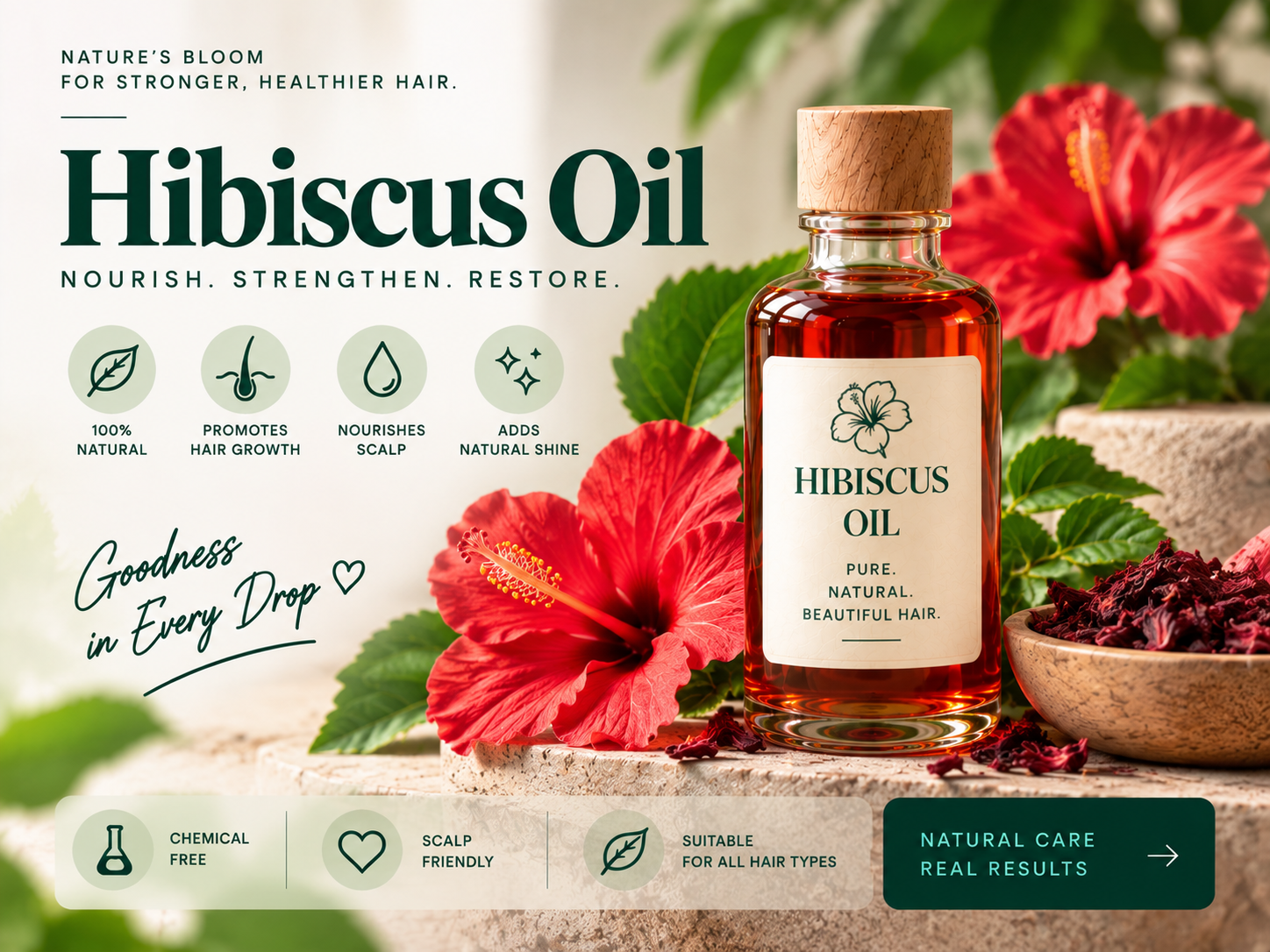
Hibiscus Oil Hero · 720×540 · WebP
Dermatologist Reviewed
Reviewed by Dr. Amit Agarkar, MD Dermatology
Hibiscus oil is a traditional botanical hair oil derived from or infused with Hibiscus rosa-sinensis — a flowering plant widely used in Indian and Southeast Asian haircare traditions. Hibiscus is traditionally associated with shine, softness, scalp massage and hair conditioning. Its botanical compounds may offer cosmetic hair benefits when used as a pre-wash conditioning oil, but hibiscus oil is not a proven medical treatment for progressive hair loss, androgenetic alopecia, alopecia areata, PCOS-related hair fall, thyroid-related hair fall, postpartum shedding, nutritional deficiency hair fall, severe dandruff or scalp infection. Allergy note: Hibiscus rosa-sinensis is a known cause of contact dermatitis. People with hibiscus or floral botanical allergy should consult a doctor before topical use. People with sensitive scalp, oily scalp with active acne, folliculitis, seborrheic dermatitis, severe dandruff, eczema, psoriasis, painful scalp, sudden shedding, pregnancy/postpartum concerns, recent scalp procedures or recent hair transplant should consult a dermatologist before use.
What You’ll Learn on This Page
What hibiscus oil can and cannot do for hair shine and softness
Traditional uses in South Indian and Ayurvedic haircare
Hibiscus for premature greying — myths vs evidence
How to make and apply hibiscus hair oil safely at home
Which hair types benefit most from hibiscus treatments
Potential issues — allergic reactions and staining risks
When to see a trichologist instead of relying on flower oils
Quick Answer
Is hibiscus oil good for hair?
Hibiscus oil is particularly valued for its cosmetic shine and smoothness properties — it is the most "shine-forward" botanical oil in the Hairsncares hair oil series. Traditional Indian haircare has long associated hibiscus flowers with glossy, healthy-looking hair, and this cosmetic reputation makes hibiscus oil a distinctive choice among botanical oils.
As a cosmetic conditioning, shine-support and pre-wash oil, it may help with hair softness, gloss, frizz control and scalp massage routine consistency. Its floral fragrance also distinguishes it sensorially from all other oils in this series. But like all botanical oils, it is not a medical treatment for hair loss, dandruff or scalp disease — and active hair fall requires proper dermatologist evaluation.
Verdict: Hibiscus oil is a floral botanical cosmetic oil valued for shine, softness and scalp massage. Its allergy and irritation caution must be respected. Not suitable for oily, dandruff-prone, inflamed or infected scalps. Does not treat medical hair loss and should not replace professional evaluation for significant shedding or thinning.
Hibiscus oil is a traditional South Indian hair conditioning oil that may help add softness and shine to dry hair. Anecdotal claims about preventing premature greying lack clinical evidence. It does not treat hair loss, reverse grey hair, or cure scalp infections. Use as a pre-wash conditioning mask on mid-lengths and ends. Patch-test for allergies before first use.
People with dry, dull hair looking for a natural conditioning treatment with traditional Ayurvedic heritage. Suits most hair textures as a pre-wash mask.
Not a Substitute For
Medical evaluation of premature greying, hair loss treatment, or scalp condition management. Greying is primarily genetic — no oil reverses it.
See a Dermatologist If
You experience sudden greying under age 25, persistent scalp itching, or notice patchy hair loss. These warrant blood tests and clinical assessment, not oil treatments.
Floral & Cosmetic Benefits
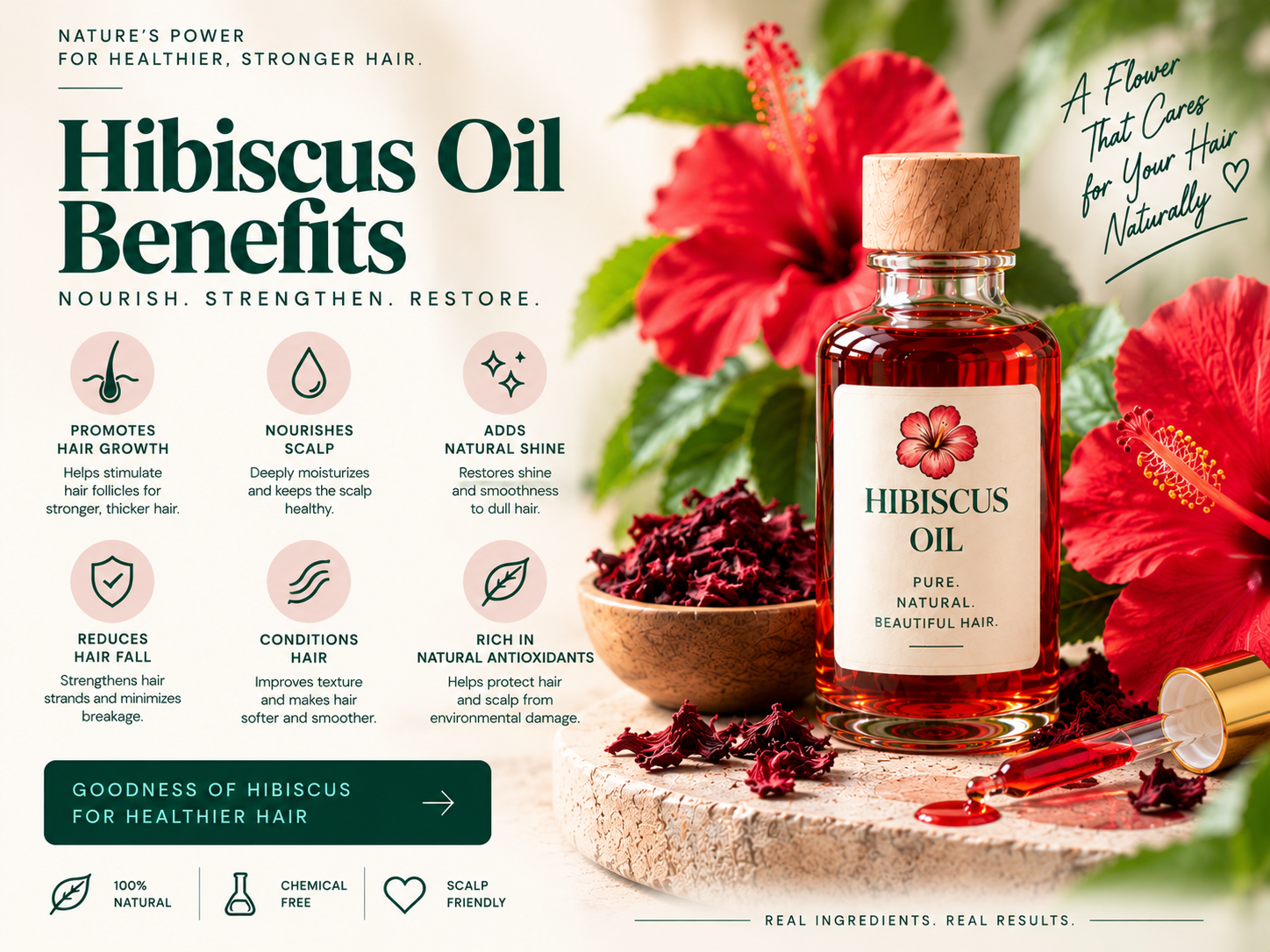
What Hibiscus Oil May Do for Your Hair Routine
All benefits are cosmetic. Hibiscus oil is not a medical treatment. Allergy caution and patch test required. Active hair fall requires dermatologist evaluation.
✨
Shine & Gloss Support
Hibiscus oil is particularly associated with hair shine — perhaps the most "shine-forward" oil in the Hairsncares series. Oil coating on the hair shaft may improve cosmetic gloss and smoothness temporarily. This is the signature benefit that distinguishes hibiscus from other traditional Indian botanical oils.
💧
Dry Hair Softness
Hibiscus oil may help soften dry or rough hair lengths by adding a conditioning botanical layer. Suitable for dry, coarse or frizzy hair types as part of a weekly pre-wash oiling routine in users without allergy or scalp sensitivity.
🤲
Scalp Massage Ritual
Gentle scalp massage with hibiscus oil as part of a weekly oiling ritual may support relaxation and haircare routine consistency. Aggressive massage or pulling hair during oiling can worsen mechanical shedding rather than helping.
🌀
Frizz & Smoothness Support
Hibiscus oil coating may temporarily reduce frizz appearance and improve hair manageability. Used on lengths and ends, it can improve the feel and appearance of rough, frizzy or coarse hair.
🌺
Traditional Floral Haircare
Hibiscus rosa-sinensis has been used in Indian and Southeast Asian haircare traditions for centuries, associated with hair health, shine and scalp wellness. This traditional use is culturally significant and distinct from clinical medical claims.
🤖
AI Routine Pairing
Given hibiscus oil's floral fragrance, allergy potential and shine-focused cosmetic profile, our AI Hair Test checks allergy history, hair fall pattern, dandruff status, scalp oiliness, sensitivity and current treatments before recommending it in your routine.
Hibiscus rosa-sinensis is a known cause of contact dermatitis and allergic reactions in some individuals. People with hibiscus allergy, floral botanical fragrance sensitivity, or a history of allergic reactions to floral topical products should consult a doctor before using hibiscus oil. Topical hibiscus oil can cause contact dermatitis or allergic reactions in sensitised individuals.
💧
Dry Hair
Best match. Hibiscus oil adds a conditioning and shine layer to dry, rough or dull hair lengths. Well-suited to dry, coarse or frizzy hair types as a pre-wash oil in users without allergy.
Best Match — Patch Test First✨
Dull Hair Needing Shine
Hibiscus oil is the most shine-associated botanical oil in this series. If your primary goal is cosmetic hair gloss and smoothness, hibiscus is well-suited compared to heavier, less shine-focused oils.
Shine Focused — Patch Test🌀
Frizzy Hair
Good match for frizzy hair. Used on lengths and ends, hibiscus oil may smooth the hair shaft and reduce frizz appearance. Monitor for any scalp reaction even if frizz improves.
Good Match — Patch Test🌿
Normal Scalp
May be trialled on a normal, non-oily scalp after allergy check and 24-hour patch test. Use in small amounts and monitor for any reaction or buildup over time.
May Trial — Allergy + Patch Test💦
Oily Scalp
Not recommended on oily scalp. Hibiscus oil can worsen scalp greasiness and cause follicular buildup. Apply to hair lengths only if your scalp is oily.
Lengths Only🚨
Hibiscus / Floral Allergy
Contraindicated. Anyone with known hibiscus, rose or floral botanical allergy must not use hibiscus oil without explicit medical clearance. This is the primary contraindication for this oil.
Avoid — Consult Doctor❄️
Dandruff-Prone Scalp
Not recommended on scalp. Oil on a dandruff-prone scalp can worsen flaking. Dandruff requires antifungal treatment, not cosmetic botanical oiling.
Avoid on Scalp🤰
Pregnancy / Postpartum
Consult your obstetrician or dermatologist before use. Hibiscus has traditional associations with menstrual effects in oral use; topical safety in pregnancy is not adequately established and medical clearance is advisable.
Medical Clearance Advised💉
Post-Transplant Scalp
Never without surgeon clearance. Any topical product on a post-transplant scalp requires explicit surgeon approval to protect graft survival.
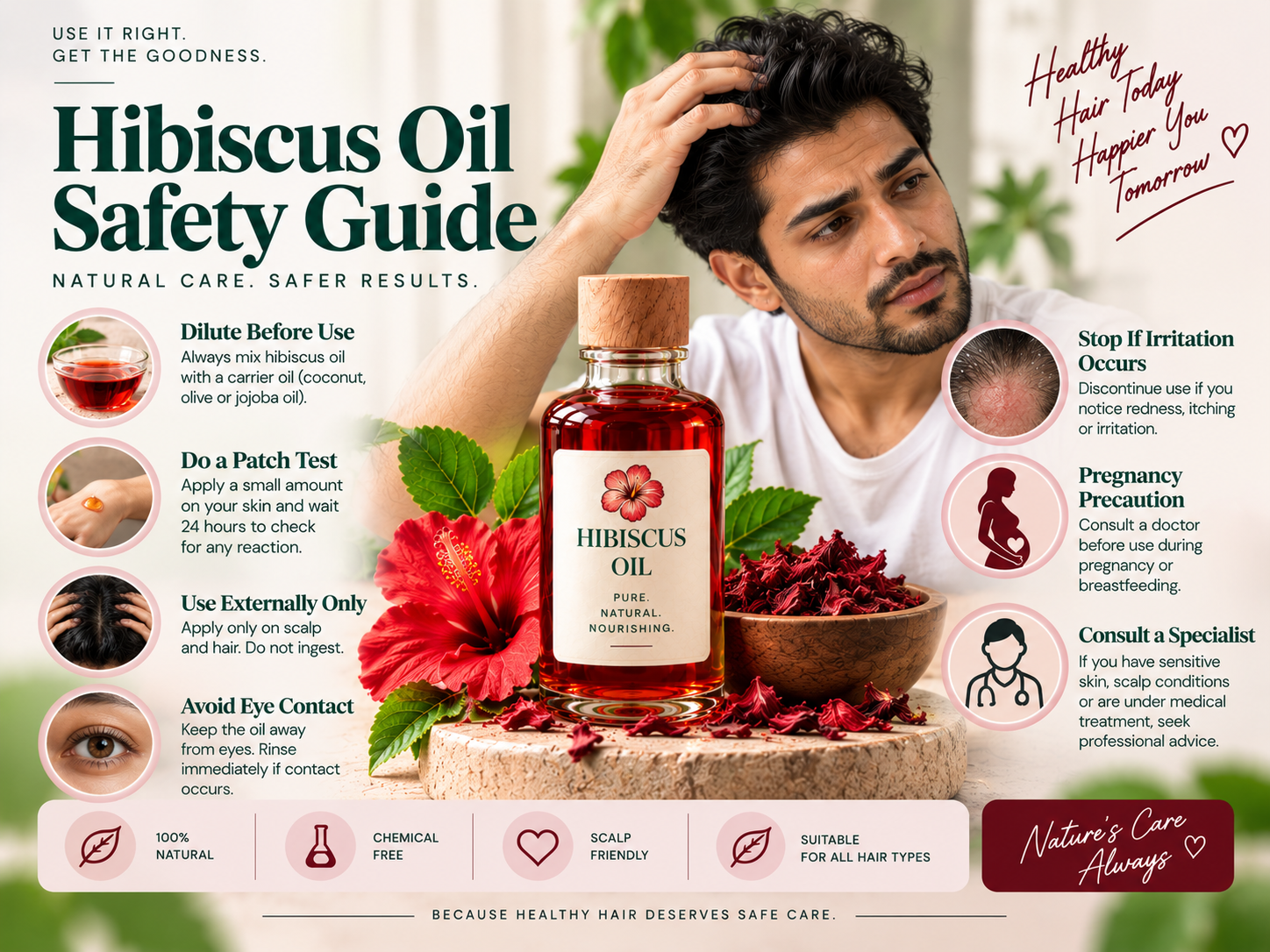
Hibiscus oil uses the same 9-step safety framework as fenugreek and neem — allergy check is Step 1 before any other consideration.
Important: Do not layer hibiscus oil with minoxidil, medicated anti-dandruff treatments, scalp acids, steroid lotions, tea tree oil, neem oil, prescription serums or multiple active oils without dermatologist guidance.
🚨
Check Allergy Risk — First
If you have known hibiscus allergy, floral botanical fragrance sensitivity, or past reaction to hibiscus-based topical products, do NOT use hibiscus oil without medical clearance. This step precedes all others.
2
Patch Test — 24 Hours
Apply a small amount behind the ear or on the inner arm. Wait 24 hours. Do not proceed if redness, burning, itching, swelling or rash appears. Even without a known floral allergy, individual reactions to hibiscus oil can occur, especially in fragrance-sensitive individuals.
3
Start With Small Quantity
Heavy oiling can cause greasiness, scalp buildup or irritation. Begin with a small amount — a few drops for lengths, slightly more for a scalp massage on non-oily scalps — and assess your scalp's response over the first two sessions.
4
Apply as Pre-Wash
Use for 30–60 minutes before shampooing initially rather than overnight. Pre-wash application limits contact time and is better tolerated by users with sensitive, oily or flake-prone scalps.
5
Massage Gently
Use fingertips and slow circular movements. Do not scratch the scalp, pull hair or rub aggressively. Gentle massage supports routine enjoyment; aggressive technique can increase mechanical hair shedding.
6
Focus on Lengths if Scalp Is Sensitive
For oily, dandruff-prone, acne-prone or itchy scalps, apply hibiscus oil only on dry hair lengths and mid-shaft, avoiding direct scalp application. Hair conditioning benefits do not require scalp oiling.
7
Shampoo Thoroughly
Use a gentle shampoo after pre-wash use to remove all hibiscus oil residue. Do not allow oil to accumulate on the scalp between sessions — buildup contributes to follicular occlusion over time.
8
Track Scalp Response
Monitor scalp and skin for 24–48 hours after each session. Stop immediately if burning, redness, rash, itching, swelling, dandruff flare, bumps or increased shedding occurs. Do not continue use if any session causes adverse response.
9
Frequency — 1 to 2 Times Weekly
Use 1–2 times weekly as a short-contact pre-wash routine only if scalp and skin tolerate it fully. Reduce to once weekly or stop if any greasiness, dandruff worsening, scalp reaction or shedding increase occurs.
Consult your obstetrician or dermatologist before using hibiscus oil during pregnancy or postpartum. Hibiscus rosa-sinensis has traditional associations with menstrual and uterine effects in oral form; topical safety in pregnancy lacks adequate data and medical clearance is advisable. Postpartum hair fall is typically physiological and requires medical evaluation rather than cosmetic oil routines.
🛑
Stop Immediately If:
Burning, redness, rash, swelling, worsening itching, dandruff flare, folliculitis or increased hair shedding occurs. Consult a dermatologist before resuming any hibiscus oil routine.
Oil Comparison
Hibiscus Oil vs Amla Oil vs Bhringraj Oil vs Fenugreek Oil vs Coconut Oil vs Rosemary Oil
Essential oil — growth-support scalp ritual; must dilute
Only essential oil with RCT growth data
Patch test; avoid inflammation; must dilute
Must dilute; not a minoxidil replacement
All oils are cosmetic supportive options. Medical hair loss requires proper diagnosis and individualised treatment planning by a qualified dermatologist.
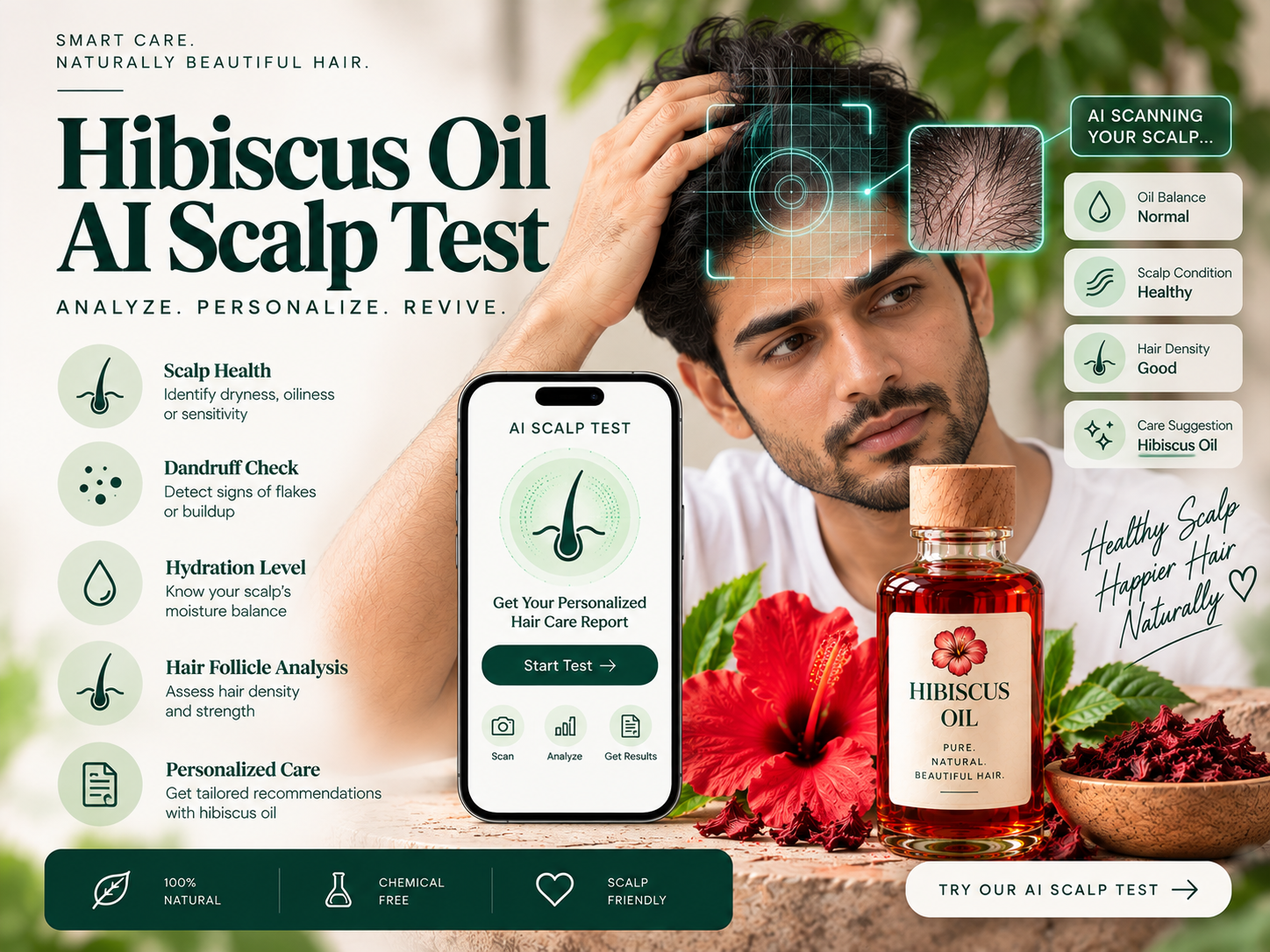
Before recommending hibiscus oil, our AI Hair Test first checks allergy and fragrance sensitivity history — then assesses hair texture, scalp oiliness, dryness, dandruff status, hair fall pattern, pregnancy/postpartum status, current treatments and medical red flags.
This tool provides screening and product-direction guidance only. It does not diagnose, prescribe, or replace dermatologist advice. Allergy and pregnancy assessment requires medical evaluation.
AI Test · WebP
Shop the Collection
Shop Hibiscus Oil Formulas
All products are cosmetic hair oils. Allergy caution and patch test required. Not for people with known hibiscus or floral botanical allergy without medical clearance. Hibiscus oil products are not hair loss treatments.
Products for this guide are being curated. Take the AI Hair Test for personalised, allergy-checked picks meanwhile.
Hibiscus oil is used in traditional haircare routines for shine, softness, scalp massage, dry hair support and pre-wash oiling. It may help hair feel smoother and glossier, and is particularly valued for cosmetic shine enhancement. It is not a proven hair regrowth treatment. Patch testing and allergy caution are important.
Hibiscus oil is not a proven hair regrowth treatment. It is a traditional botanical cosmetic oil. Progressive hair loss, pattern thinning or bald patches require medical evaluation by a dermatologist and should not be managed with cosmetic oil routines alone.
Hibiscus oil cannot treat the underlying medical causes of hair fall such as androgenetic alopecia, thyroid disorders, PCOS, nutritional deficiency or medication-induced hair loss. Consult a dermatologist for significant or progressive hair fall rather than relying on cosmetic oil routines.
Human evidence for hibiscus oil's medical hair regrowth is limited. Its value in hair care is primarily cosmetic — shine, softness, conditioning, frizz support and scalp massage — rather than as a clinically proven treatment for any hair loss condition.
Hibiscus oil may help soften dry or rough hair lengths by adding a conditioning botanical layer. Suitable for dry, coarse or frizzy hair types as part of a weekly pre-wash oiling routine in users without allergy or scalp sensitivity.
Hibiscus oil may help reduce frizz appearance by smoothing the hair shaft surface. Used on lengths and ends as a pre-wash or small finishing application, it can improve manageability and shine in frizzy hair types.
Hibiscus oil may improve cosmetic hair shine and gloss by coating the hair shaft surface. This shine benefit is the signature quality that distinguishes hibiscus from many other botanical oils in this series. The effect is cosmetic and temporary, lasting until the next shampoo session.
Yes. Hibiscus oil can cause scalp irritation, redness, itching or contact dermatitis in some individuals, especially those with floral fragrance sensitivity or botanical oil allergy. A 24-hour patch test is recommended before scalp application.
Yes. Hibiscus rosa-sinensis is a known cause of contact dermatitis and allergic reactions. Topical hibiscus oil can trigger skin reactions in sensitised individuals, particularly those with floral fragrance sensitivity. Anyone with known hibiscus or floral botanical allergy should consult a doctor before use.
Hibiscus oil is not a treatment for dandruff. Heavy oiling of a dandruff-prone scalp can worsen flaking. Active dandruff requires antifungal treatment. Consult a dermatologist for effective dandruff management.
Daily hibiscus oil scalp application is not recommended as it can cause buildup and irritation. Use 1-2 times weekly as a short-contact pre-wash routine if tolerated. Shampoo regularly to prevent oil accumulation on scalp.
Overnight hibiscus oil application is not recommended at the start, especially for sensitive or oily scalps. Begin with 30-60 minute pre-wash use and monitor scalp response before extending contact time.
Do not combine hibiscus oil with minoxidil without dermatologist guidance. Oils can interfere with minoxidil absorption. Consult your dermatologist before adding any hair oil to a prescription treatment routine.
Hibiscus oil is not generally recommended for oily scalps. It can contribute to scalp greasiness and follicular buildup. If your scalp is oily, apply hibiscus oil to hair lengths only and avoid direct scalp application.
Do not use hibiscus oil or any cosmetic hair oil on a post-transplant scalp without explicit clearance from your hair transplant surgeon.
Consult your obstetrician or dermatologist before using hibiscus oil during pregnancy or postpartum. Hibiscus rosa-sinensis has traditional associations with menstrual and uterine effects in oral use; while topical use is different, topical safety data in pregnancy is limited and medical clearance is advisable. Postpartum hair fall is typically physiological and self-resolving — it requires medical evaluation rather than cosmetic oil routines.
Stop hibiscus oil use immediately if you experience burning, redness, rash, swelling, scalp itching, dandruff flare, folliculitis, oil buildup or increased hair shedding. Consult a dermatologist before resuming any hibiscus oil routine.
Consult a dermatologist if you experience progressive hair thinning, patchy hair loss, sudden heavy shedding, scalp pain, folliculitis, severe dandruff, PCOS, thyroid, postpartum or medication-related hair fall, or if cosmetic routines have not helped after consistent use.
Still unsure whether hibiscus oil is right for your hair type?
Traditional Use, Botanical Evidence & What Research Says
Hibiscus oil has traditional haircare relevance in botanical and Indian hair routines. Evidence for direct topical hair regrowth should not be exaggerated. Benefits are best framed as cosmetic shine, softness and dryness support. All external links open in a new tab.
Hibiscus oil is a cosmetic supportive traditional botanical oil derived from Hibiscus rosa-sinensis and used in haircare routines for hair shine, dry hair softness, scalp massage, frizz control and pre-wash conditioning. It does not diagnose, treat, cure or prevent medical hair loss, dandruff, seborrheic dermatitis, fungal infection, alopecia or scalp disease. It should not replace minoxidil, finasteride, dutasteride, ketoconazole, zinc pyrithione, selenium sulfide, anti-dandruff treatment, prescription therapy, PRP, GFC, hair transplant care, nutritional correction or dermatologist consultation. Avoid hibiscus oil if you have known hibiscus or floral botanical allergy unless cleared by a doctor. Consult your obstetrician or dermatologist before use during pregnancy or postpartum. This guide has been reviewed by Dr. Amit Agarkar, MD Dermatology. Consult a qualified dermatologist if you experience progressive hair thinning, bald patches, sudden shedding, painful scalp, scalp infection, severe dandruff, PCOS-related hair fall, thyroid-related hair fall, postpartum hair loss, medication-related shedding, nutritional deficiency or suspected alopecia. A patch test is required before any scalp application.
Hair Loss Treatment India — Free AI Hair Diagnosis & Dermatologist-Recommended Products
Minoxidil India — CDSCO-Approved Hair Regrowth Treatment
Free AI Hair Loss Diagnosis by Qualified Dermatologists
Best Anti Hair Fall Shampoo, Oil & Supplements in India
Male Pattern Baldness Treatment — Minoxidil & DHT Blocker Protocol