Hair Loss: Causes & Treatment
Dermatologist-led overview of how hair loss is evaluated and the evidence behind common treatments.
View AAD reference ›Considering Minoxidil for thinning hair? It's one of the most widely used treatments for male pattern hair loss — a topical (and, by prescription, oral) treatment that supports follicles and prolongs the growth phase. The honest picture helps most: it's doctor-guided, not suitable for every type of hair fall, usually causes a temporary initial shed in the first weeks, works only while continued, and is not a cure. Hairsncares helps you check whether Minoxidil is likely to suit you, understand 2% vs 5% and topical vs oral, set realistic expectations, and know when to see a dermatologist. Results vary.
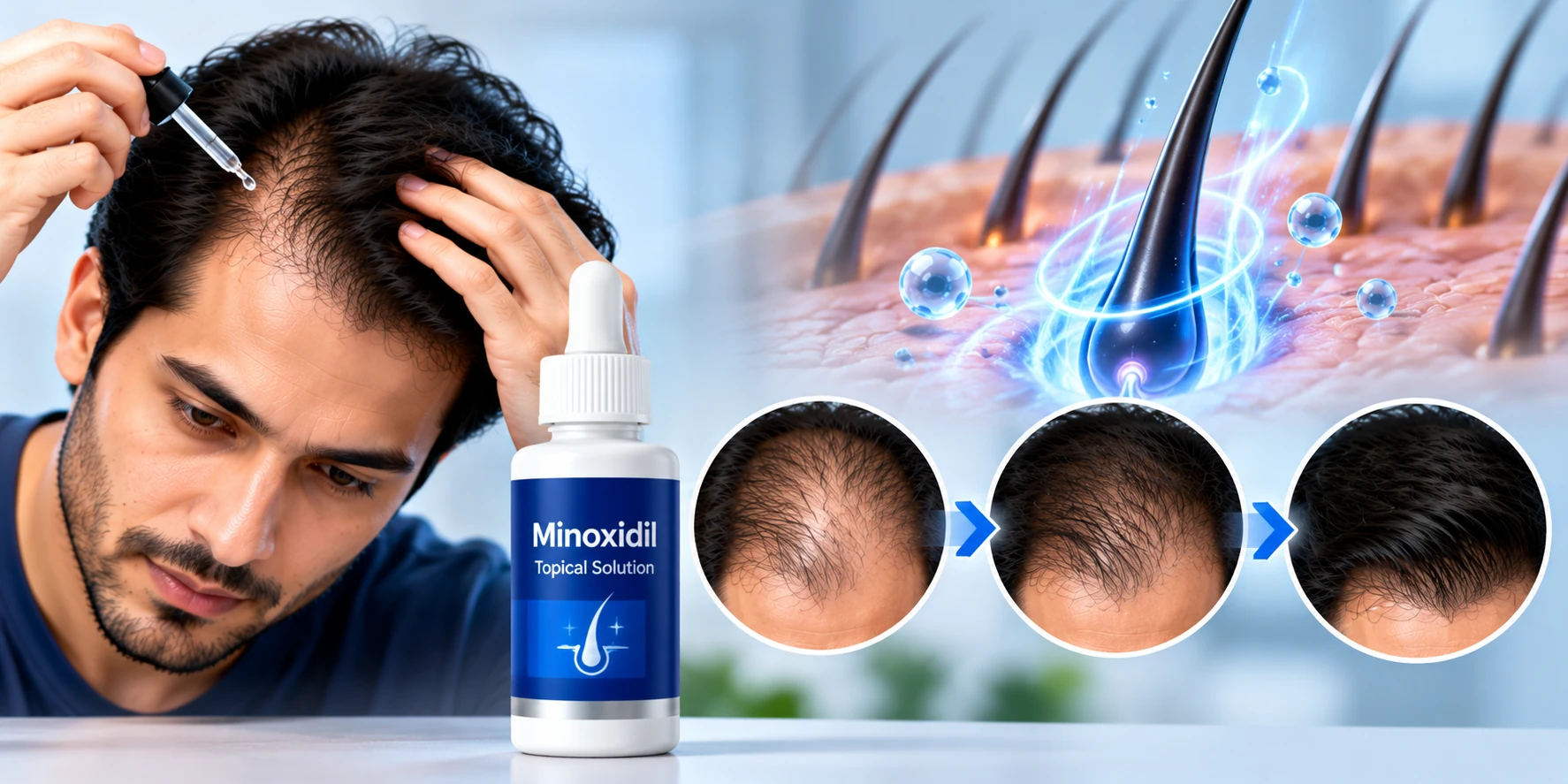
Illustrative sample only. AI screening helps guide decisions and does not replace a dermatologist's assessment or prescribe medicine. Not for every hair fall.
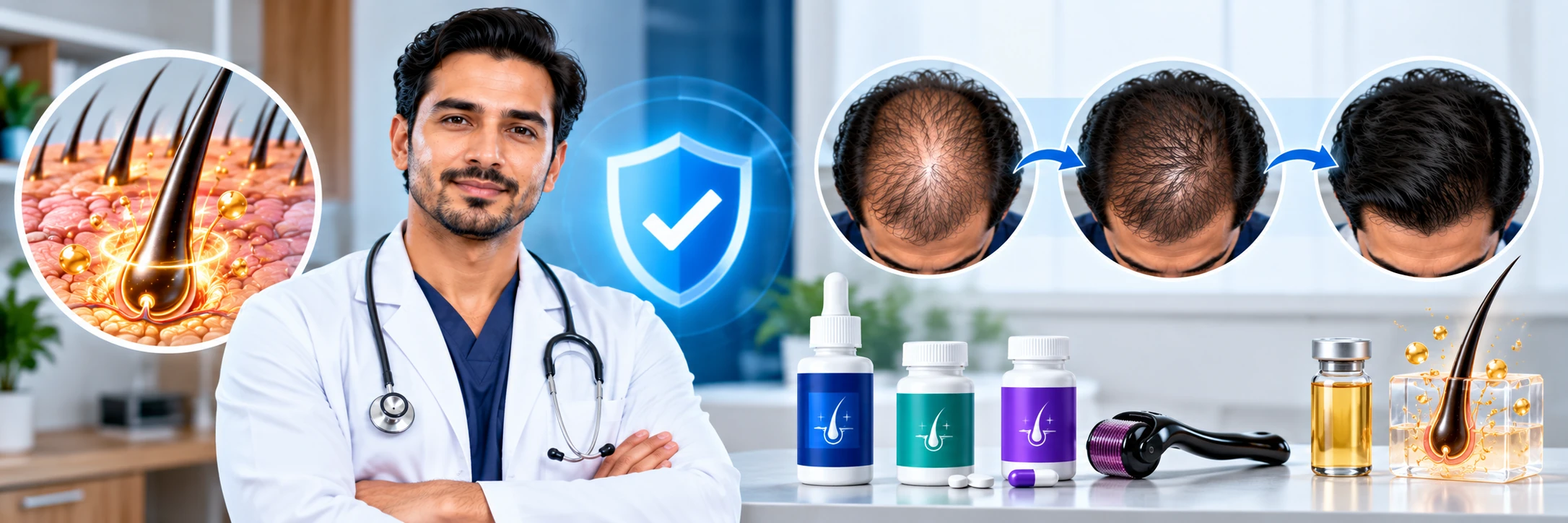
Minoxidil is a topical treatment (also available orally on prescription) for male pattern hair loss. It works by supporting follicles and prolonging the growth phase of the hair cycle, which can reduce shedding and modestly improve density in suitable men — it does not reduce DHT, so it works differently from DHT-reducing medicines. Key honest points: it's doctor-guided, not suitable for every type of hair fall (it's for pattern loss, not sudden diffuse shedding or patches), usually causes a temporary initial shed in the first weeks, takes 3–6 months to show benefit, works only while continued, and is not a cure. Not every man needs it. The sensible first step is to check suitability — with the AI Minoxidil Suitability Test and ideally a dermatologist — before buying. Results vary.
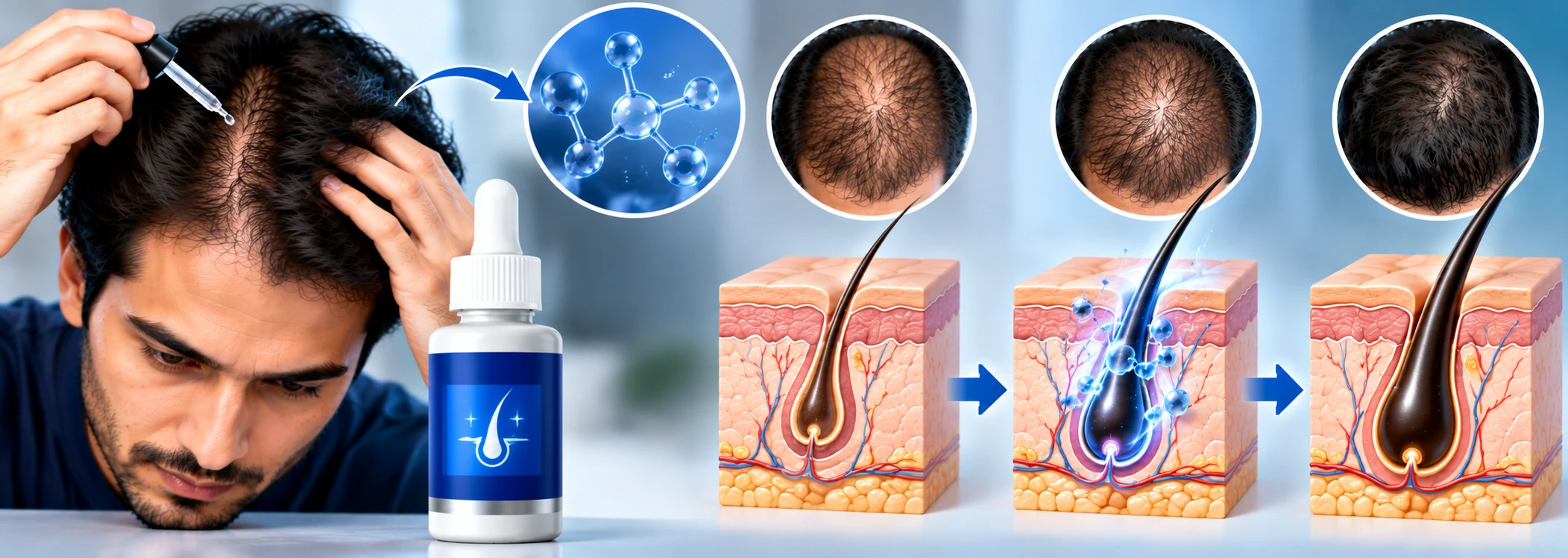
Minoxidil is one of the most widely used treatments for male pattern hair loss. It is usually applied to the scalp as a topical solution or foam, and is also available as a low-dose oral tablet on prescription. It works by supporting hair follicles and prolonging the growth (anagen) phase of the hair cycle, helping follicles produce thicker, longer hairs and reducing shedding over time.
An important point: Minoxidil does not reduce DHT, the hormone behind male pattern hair loss. It works through a different mechanism than DHT-reducing medicines, which is why dermatologists sometimes use the two together in suitable men.
The honest picture matters: Minoxidil is doctor-guided, not suitable for every type of hair fall, usually causes a temporary initial shed in the first weeks, takes months to show benefit, works only while continued, and is not a cure. Not every man needs it. The sensible first step is checking whether it suits your type of hair loss. Results vary.
Not sure if Minoxidil suits you?
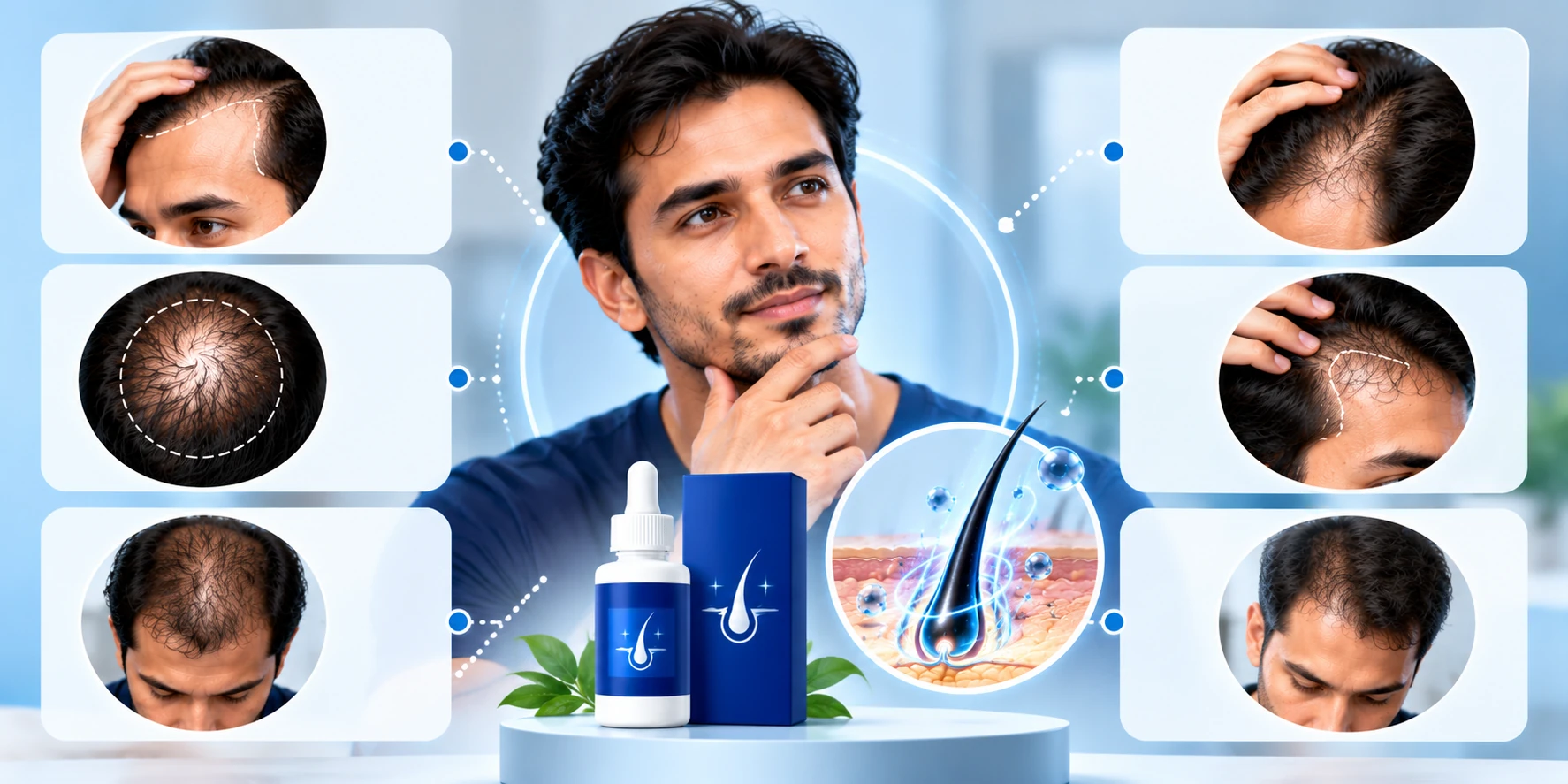
Learn MoreMinoxidil is mainly for male pattern hair loss. These scenarios are where it's most often considered — always with guidance.
Gradual thinning over the crown (vertex)
Early to moderate male pattern hair loss
Wanting to reduce shedding and support density
A receding hairline (often with realistic expectations)
Starting early, while follicles are miniaturised not lost
Able to use it consistently, long term
Comfortable with an initial shedding phase
Considering it alongside doctor-guided options
After a suitability check or dermatologist assessment
Does this sound like you?
Learn More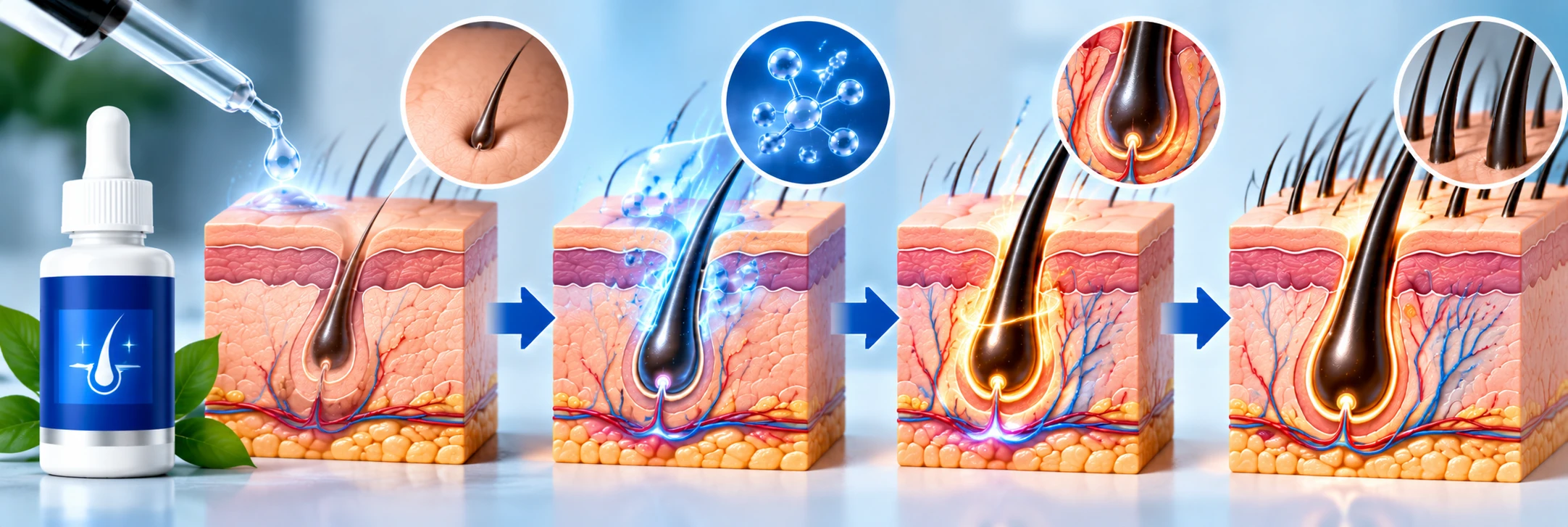
Understanding how Minoxidil acts — and how it differs from DHT-reducing medicines — makes its effects and limits clear.
Topical solution or foam acts locally on follicles.
Form: topical
Extends the anagen (growth) phase of the cycle.
Effect: longer growth
Helps follicles make thicker, longer hairs.
Effect: density
Different mechanism to DHT-reducing medicines.
Note: not DHT
Resting hairs release first, then regrow.
Weeks: temporary
Benefit is maintained only while it's used.
Outlook: ongoing
Want to know if this mechanism fits your loss?
Learn MoreThe main formats and strengths at a glance. Which suits you depends on your loss, scalp and tolerance — choose with guidance, not by picking the strongest.
| Option | What it is | Notes |
|---|---|---|
| 5% topical | Stronger common strength for men | Often more effective for pattern loss; slightly more chance of irritation |
| 2% topical | Milder strength | A gentler option; may suit sensitive scalps |
| Foam | 5% foam format | Often gentler, dries fast, usually no propylene glycol; good for irritation-prone scalps |
| Solution | Liquid (often with alcohol/PG) | Easy to apply with a dropper; can cause more dryness or irritation |
| Oral (Rx) | Low-dose tablet | Prescription-only, doctor-decided; systemic medicine with its own considerations |
Unsure which format fits?
Learn MoreWhat to expect, month by month. Patience and consistency matter more than anything — judge it over months.
Confirm suitability (ideally with a dermatologist), choose the right strength and format, and begin applying correctly and consistently. Knowing about the initial shed in advance helps you stick with it.
A temporary increase in shedding is common as resting hairs release to make way for new growth. It's part of the cycle resetting, not a sign of failure, and usually settles within a couple of months.
Shedding generally settles and early signs of support may appear. Keep applying consistently — stopping now would lose any gains. Photos help you see the trend.
By around six months, any visible improvement in density is usually clearer. If there's no benefit after a sustained, correct trial, review with a dermatologist rather than continuing blindly.
To keep the benefit, continue use, since Minoxidil manages rather than cures the condition. Review periodically with a doctor and adjust the plan as needed. Results vary.
Want to track your journey?
Learn More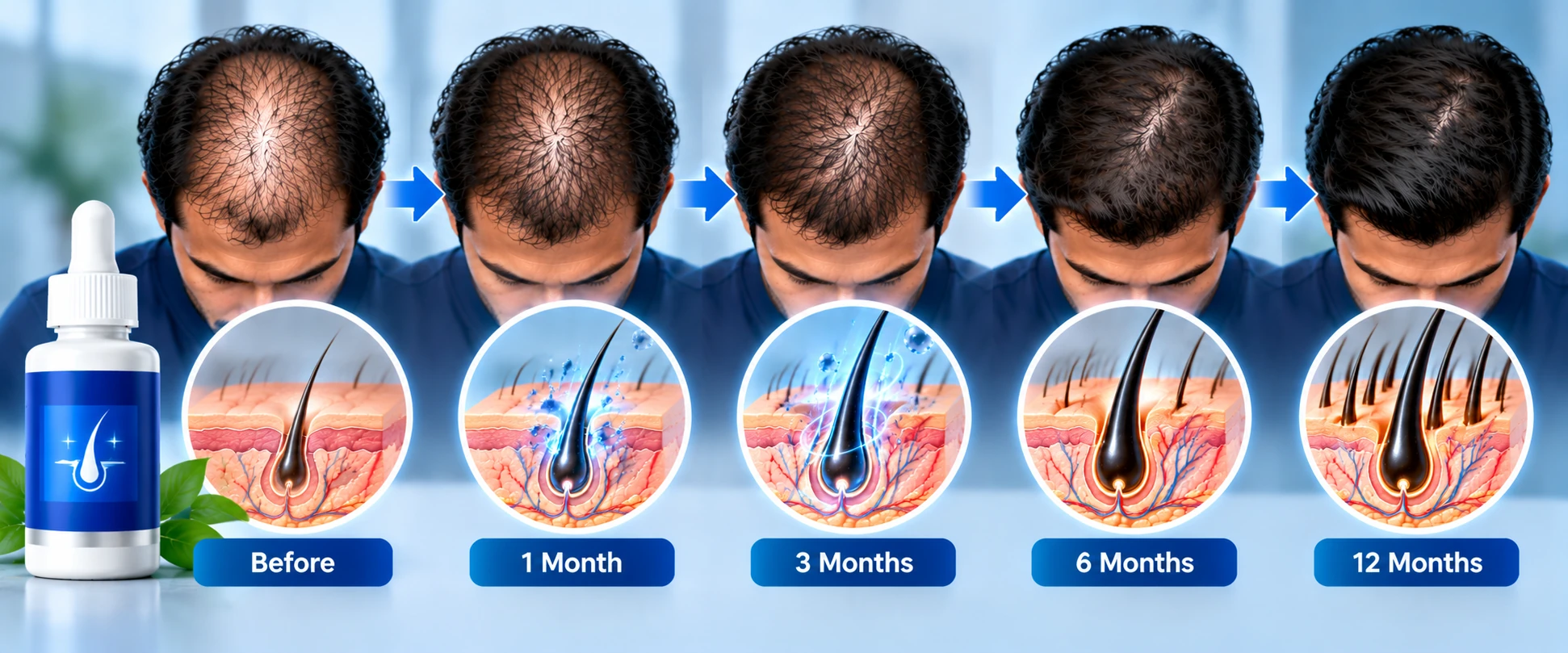
Minoxidil is for male pattern hair loss. For these, it isn't the answer — and using it blindly could delay the right treatment.
Not sure it's DHT? A dermatologist can confirm and rule out other causes.
See a DoctorCheck Suitability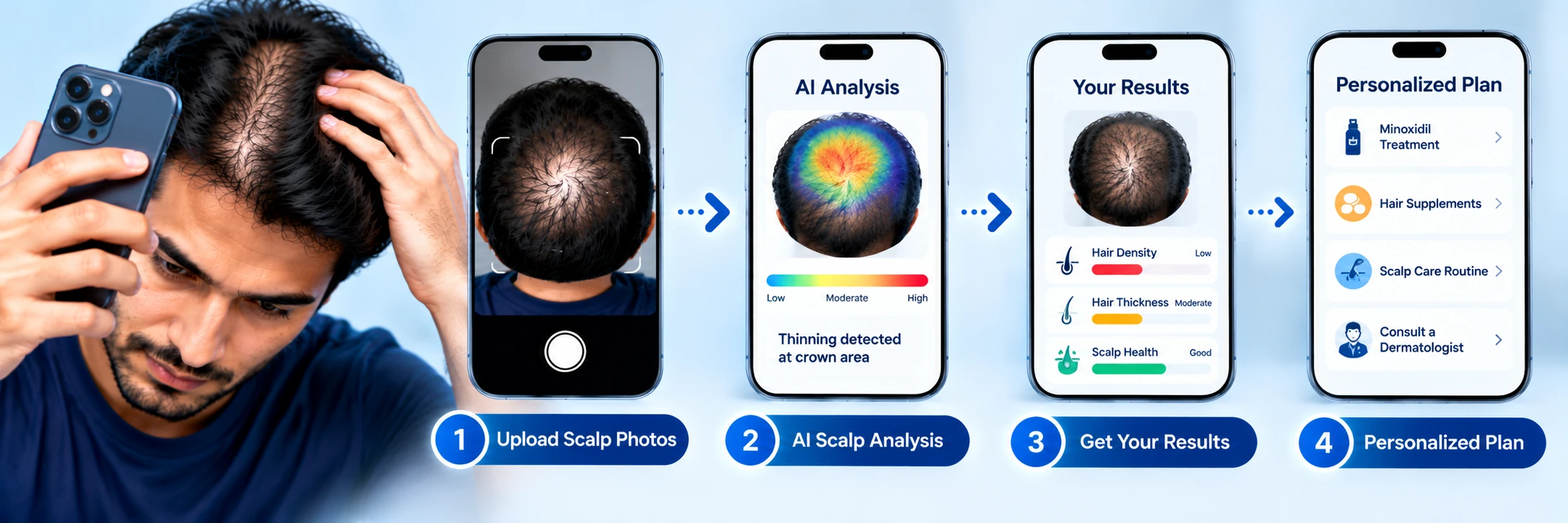
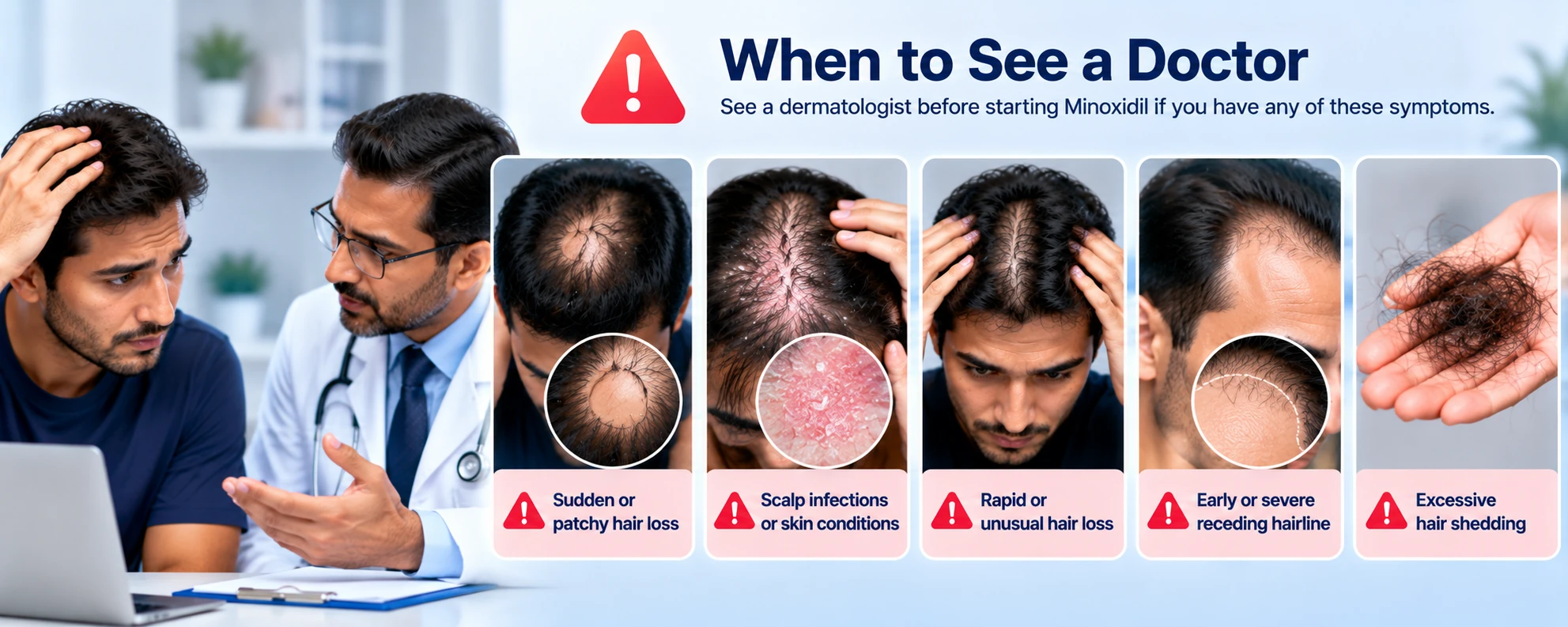
Minoxidil is doctor-guided for good reason. See a dermatologist before starting if anything below applies — and never start oral Minoxidil on your own, as it is prescription-only.
Minoxidil plus supportive men's pathways. Minoxidil is doctor-guided and not suitable for every type of hair fall. DHT-support products are for DHT-prone hair and do not block DHT like medicines. Beard products are for grooming, not scalp baldness.
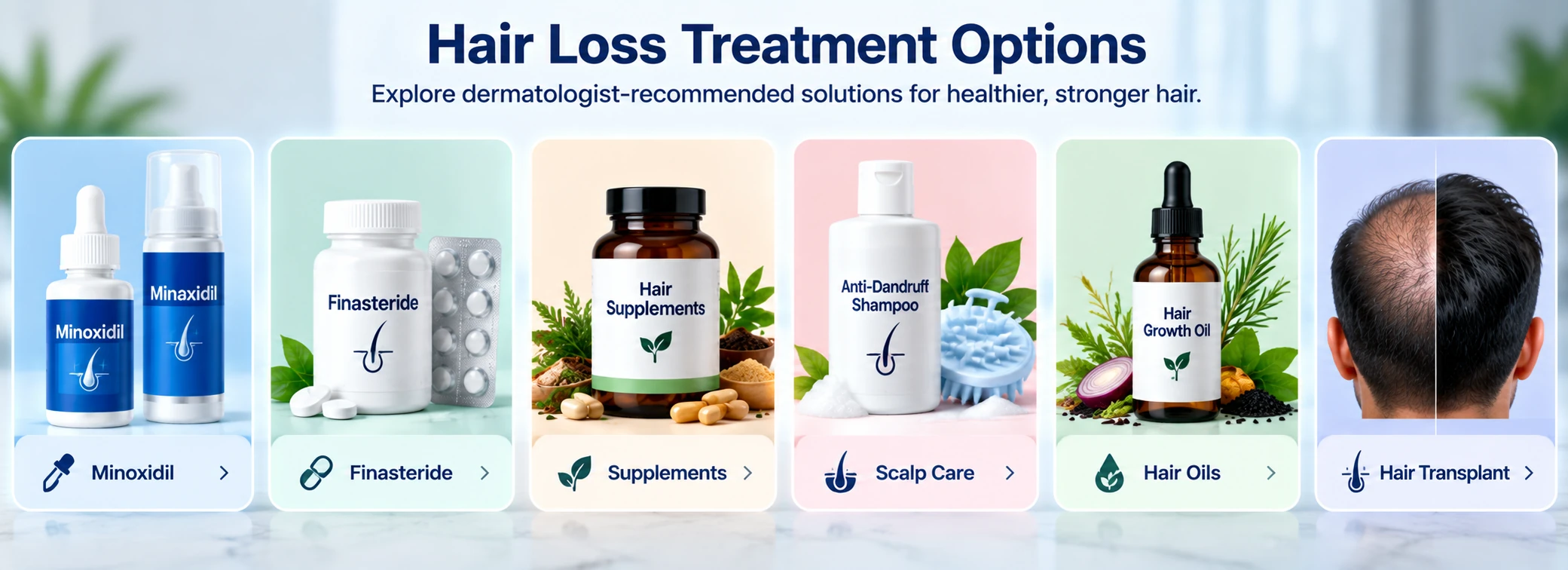
Topical Minoxidil products, used correctly and with guidance.
Supportive care for thinning, early baldness and density.
Designed for DHT-prone hair. Supportive, not a DHT-blocking medicine.
For active shedding, dandruff-associated and stress hair fall.
Grooming and beard density support — not for scalp baldness.
Not sure which fits you? The Product Finder matches options to your pattern.
Open Product FinderBrowse MinoxidilSample selection. Prices, ratings and availability shown are placeholders.
Minoxidil is doctor-guided, is not suitable for every type of hair fall, often causes a temporary increase in shedding when starting, works only while continued, and is not a cure. Oral Minoxidil is prescription-only and a doctor's decision. It does not reduce DHT and works through a different mechanism than DHT-reducing medicines. Not every man needs Minoxidil, Finasteride or Dutasteride. Use exactly as directed, and discuss suitability, strength, format and side effects with a doctor, especially if you have heart or blood pressure concerns or take other medicines. DHT-support products are designed for DHT-prone hair and do not block DHT like prescription medicines. Beard growth products are for grooming and beard density only and do not treat scalp baldness. No product is guaranteed to regrow hair. Prescription (Rx) and doctor-guided items require appropriate medical oversight. Prices, ratings and availability are placeholders to be populated dynamically. Results vary.

Where to go next, matched to men's hair-loss needs. These categories support hair and scalp health; they do not cure hair loss or replace dermatologist assessment. Minoxidil is doctor-guided and not suitable for every type of hair fall.
If Minoxidil suits you, start it correctly and consistently — and pair it with supportive care. Remember it's not for every hair fall, OTC DHT-support products aren't DHT-blocking medicines, and beard products are not for scalp baldness.
The key pathway for doctor-guided Minoxidil products for male pattern hair loss, crown thinning or a receding hairline. Minoxidil is not suitable for every type of hair fall and should be used correctly, ideally with medical guidance.
Explore ›The main men's hair growth gateway for thinning, early baldness, crown thinning, hairline recession or weak density — supportive care to use alongside Minoxidil or any doctor-guided plan.
Explore ›A DHT-support pathway for men with suspected male pattern hair loss, crown thinning or hairline recession. Designed for DHT-prone hair concerns — supportive, not a DHT-blocking medicine, and works differently from Minoxidil.
Explore ›For men with active shedding, dandruff-associated hair fall, stress hair fall, gym-related shedding or early thinning support.
Explore ›A related men's grooming and growth-support pathway for beard patchiness and beard density concerns. For beard use only — these do not treat scalp baldness.
Explore ›Medical safety: These products support hair and scalp health. They do not cure hair loss, do not guarantee regrowth, and do not replace dermatologist assessment. Minoxidil is doctor-guided, not suitable for every type of hair fall, often causes initial shedding, works only while continued, is not a cure, and does not reduce DHT. Oral Minoxidil is prescription-only. OTC DHT-support products are designed for DHT-prone hair concerns and do not block DHT like prescription medicines. Beard products are for grooming, not scalp baldness. Not every man needs Minoxidil, Finasteride or Dutasteride. Results vary.
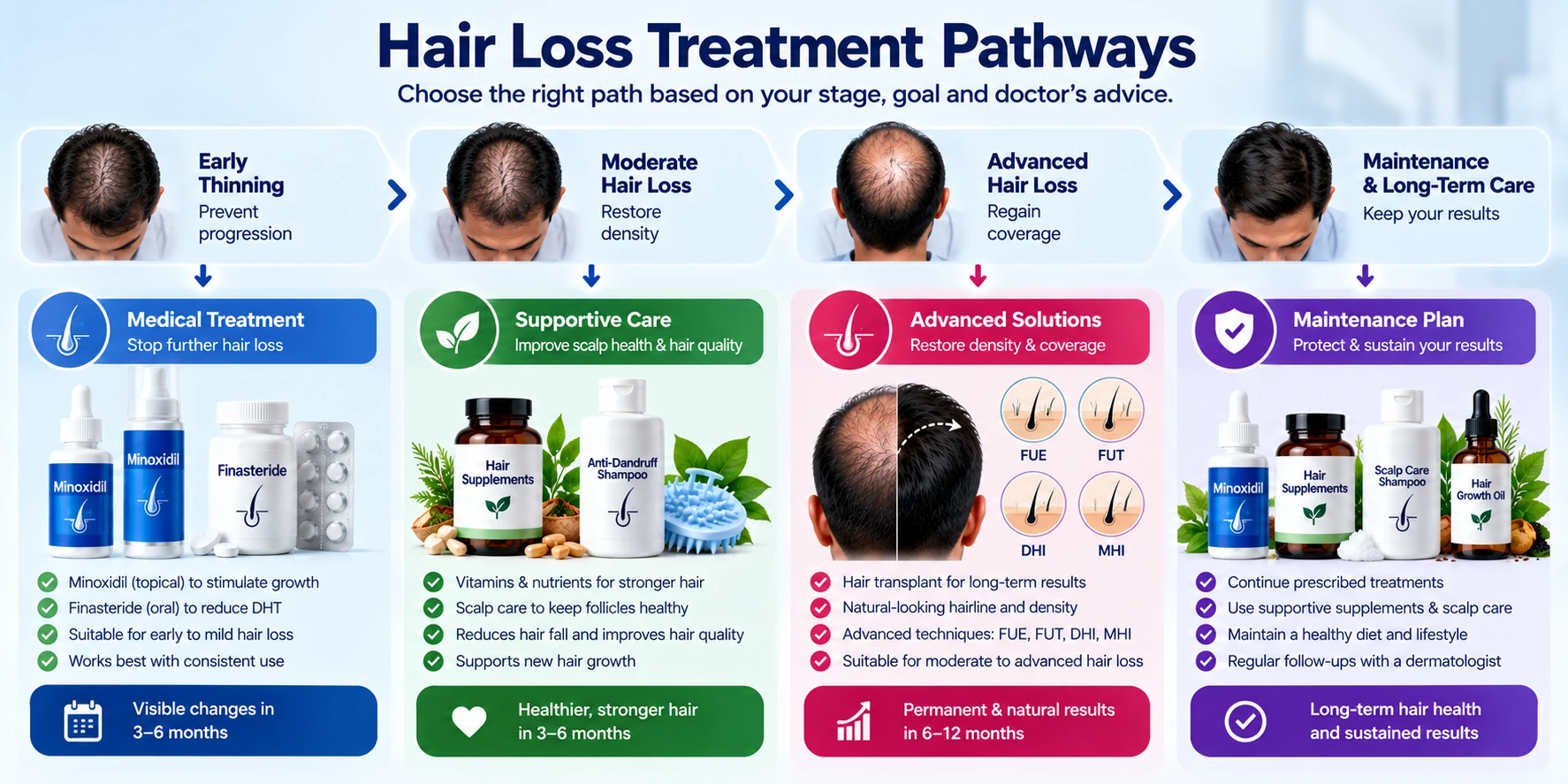
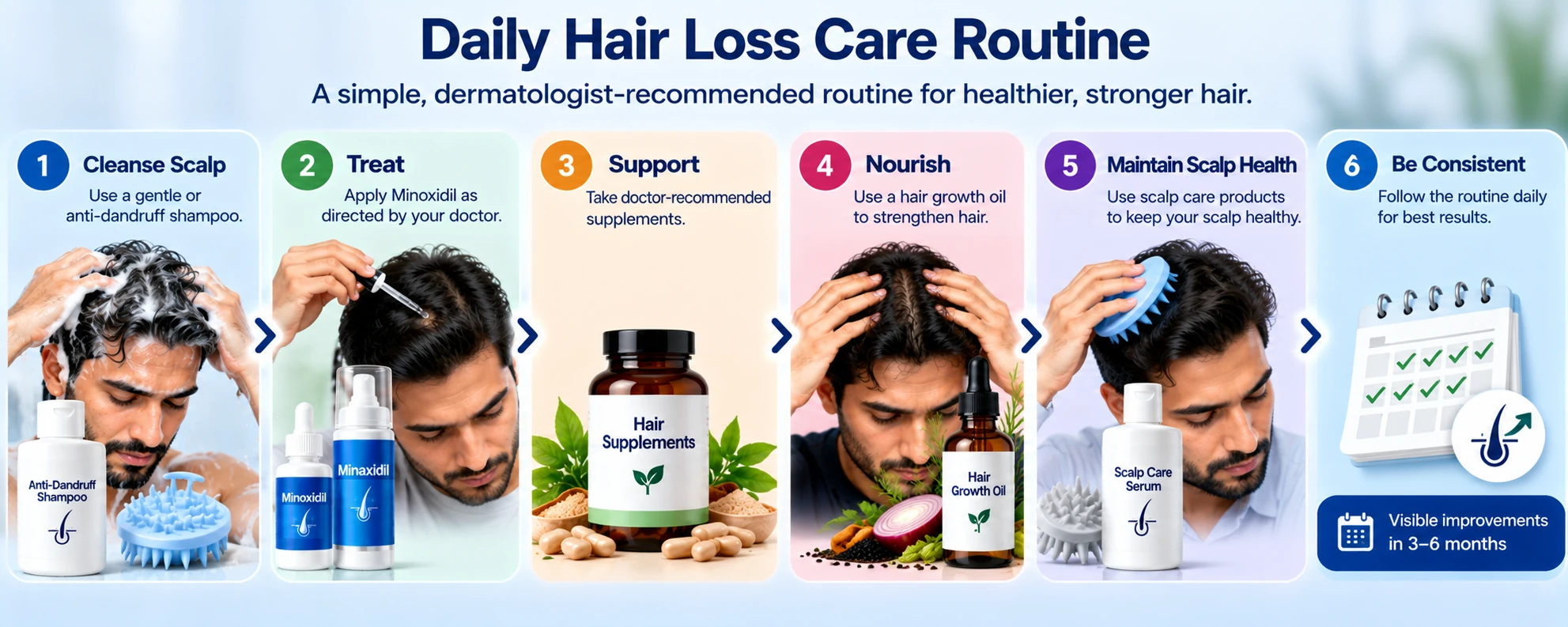
Adherence drives results. Use Minoxidil exactly as directed and consistently; review with a doctor. These steps are general guidance, not a substitute for product instructions or medical advice.
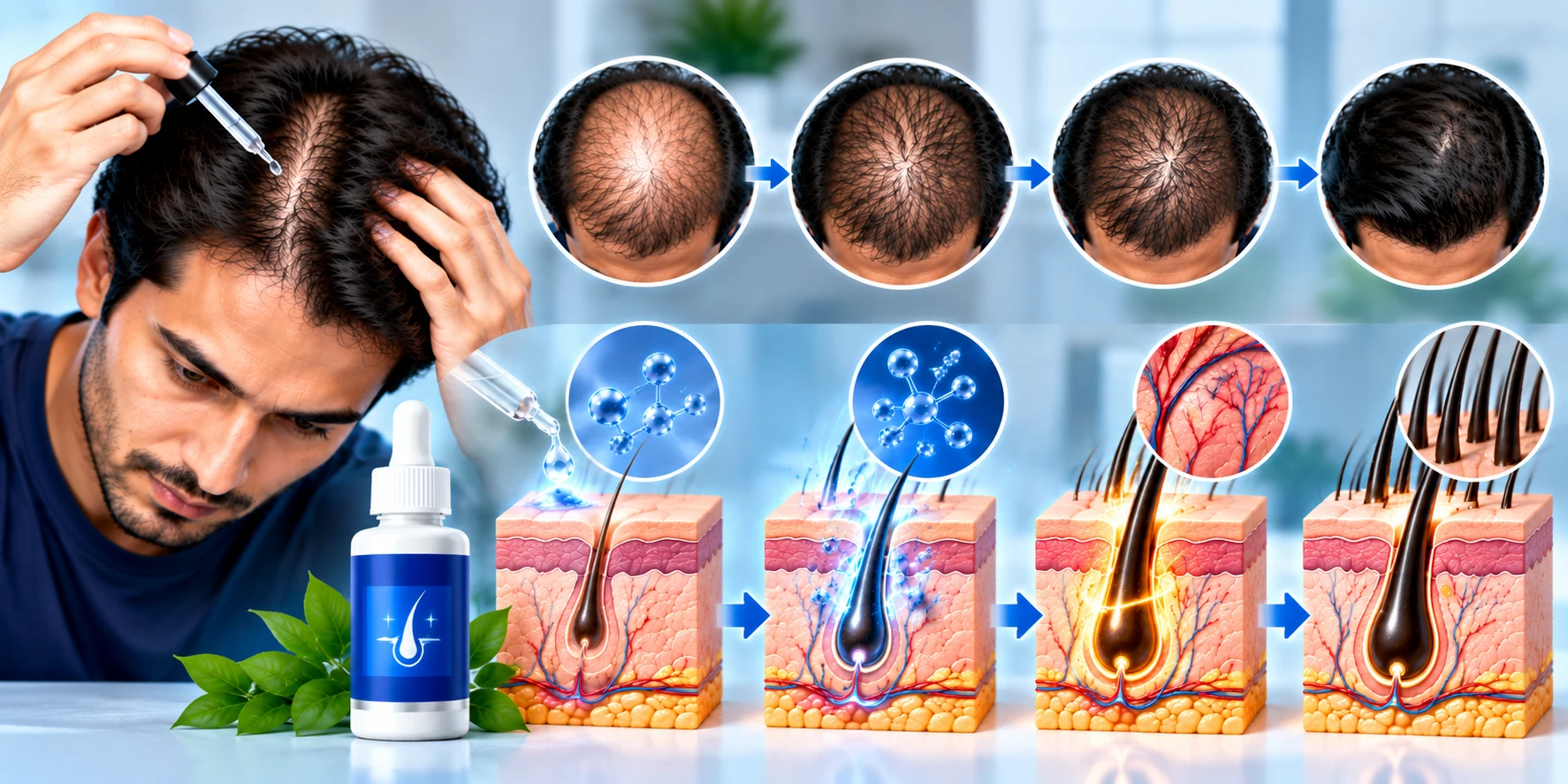
Confirm it's pattern loss, ideally with a doctor.
Strength/format with guidance; oral is Rx only.
Expect a temporary initial shed in early weeks.
It works only while continued — plan long term.
Apply to a dry scalp as directed on the label.
Use the stated amount; more isn't better.
Wash hands after; avoid transfer to face/others.
Same routine daily; skipping undoes gains.
If irritated, consider a foam; ask a doctor.
Mild shampoo; don't over-wash thinning areas.
Supportive serums/DHT-support as advised.
Adequate protein; correct deficiencies if confirmed.
Photograph hairline and crown before starting.
Review density monthly, same light/angle.
Judge benefit over months, not weeks.
See a doctor about side effects or no benefit.
Want a routine built around Minoxidil?
Build My RoutineEvidence labels are a simple guide: strong, moderate, supportive or mainly cosmetic. Rx marks prescription items. None of these cure hair loss, and benefits from medical treatments last only while continued.
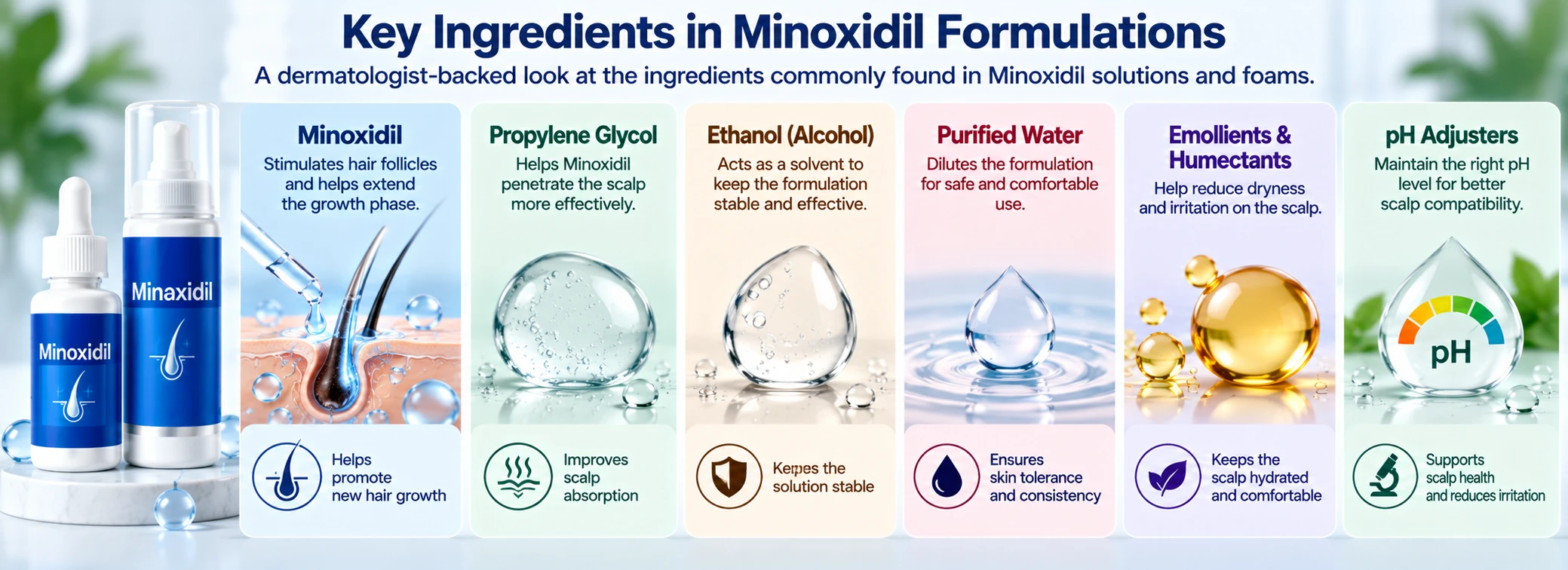
Supports follicles and prolongs growth; may reduce shedding and modestly improve density in suitable men.
Best for: suitable pattern loss, used consistently
Caution: not for every hair fall; initial shed; benefit only while continued; not a cure.
Related productsLow-dose tablet used by some dermatologists in selected cases, often when topical is not tolerated.
Best for: doctor-decided situations only
Caution: prescription-only; systemic medicine; discuss risks with a doctor; not casual.
Related productsPrescription medicine that reduces DHT; sometimes combined with Minoxidil as they work differently.
Best for: doctor-assessed pattern loss
Caution: prescription only; potential side effects; not for everyone; not casual.
Related productsMay support a Minoxidil routine in some men; technique and hygiene matter.
Best for: supportive use, with guidance
Caution: ask a doctor about combining with Minoxidil; use hygienically.
Related productsCommon in men's scalp products; may support the look of fuller hair.
Best for: daily supportive scalp care
Caution: supportive, not a substitute for Minoxidil or treatment.
Learn moreAnti-dandruff ingredient that may support the scalp alongside a routine.
Best for: dandruff-associated shedding
Caution: use as directed; some strengths are pharmacy/Rx.
Learn moreAnti-DHT-inspired ingredients for DHT-prone hair; limited evidence, work differently from Minoxidil.
Best for: supportive use alongside a plan
Caution: do not block DHT like Rx; not a cure.
Related productsGeneral nutrition support; clearly helps only a true deficiency, which is uncommon.
Best for: general support, not pattern loss itself
Caution: not a cure; biotin can skew some blood tests.
Related products"Minoxidil is a genuinely useful treatment, and I prescribe and recommend it often — but the two things I most want men to understand are suitability and expectations. It's for pattern hair loss, not for sudden shedding, patches or a sore, scaly scalp, and using it blindly for those just delays the right care. I always warn about the initial shed so people don't panic and quit in week three, and I'm clear that it works only while you keep using it — it manages, it doesn't cure. Not every man needs it, and oral Minoxidil in particular is a proper medical decision. Check suitability, start correctly, and judge it over months."
Thinking about starting Minoxidil?
Learn MoreCurated combinations to use as part of a plan. Minoxidil is doctor-guided; timelines are general estimates; results vary and are not guaranteed, and kits do not replace medical advice.
Prefer a kit tailored to you? Build a custom kit from your screening result.
Build a Custom KitUse the TestMinoxidil is slow and starts with a shed, so consistent photos over months show whether it's working — and help you ride out the early phase rather than quitting too soon.
These references are provided for patient education and do not replace a dermatologist’s diagnosis or individual medical advice.
Dermatologist-led overview of how hair loss is evaluated and the evidence behind common treatments.
View AAD reference ›Patient-education summary of genetic, DHT-driven pattern hair loss in men and women.
View MedlinePlus reference ›Searchable index of peer-reviewed research on hair loss.
Search PubMed ›Independent systematic reviews assessing the evidence behind hair-loss interventions.
View Cochrane Library ›
Question not answered here? Ask Dr Aria for instant guidance or book a consultation.
Ask Dr AmitConsult a DoctorMinoxidil helps many men with male pattern hair loss, but it's not for every hair fall, it starts with a shed, it works only while continued, and it's not a cure. The smart first move is to check whether it suits your type of loss. Use the Hairsncares AI Minoxidil Suitability Test, understand what to expect, and get assessed by a dermatologist before starting — especially before any oral, prescription Minoxidil.
A clear, dermatologist-reviewed overview — what it is, the evidence behind treatment options, and the red flags that mean a doctor should look first. No exaggerated regrowth claims.
Results vary based on diagnosis, consistency, formulation and scalp condition.
Premium concern visual slot · 720×520 WebP
Topical Minoxidil used by men for doctor-confirmed pattern hair loss
Men with doctor-confirmed pattern (androgenetic) hair loss
Strong in selected pattern loss; a medicine, doctor-guided
Recommended — suitability check first
Reviewed by: Dr. Amit Agarkar, MD Dermatology
Medical focus: Dermatology, trichology, hair loss, scalp disorders and hair restoration.
Last reviewed: 1 June 2026
Editorial promise: This page explains causes, treatment evidence, limitations and safe next steps without exaggerating hair-growth claims.
Prepared by the Hairsncares editorial team and medically reviewed by a dermatologist experienced in hair and scalp disorders.
Checked for accuracy of causes, treatment evidence, safety warnings, limitations and suitability for Indian users.
To help you understand this concern and choose safe next steps, and to know when a dermatologist diagnosis matters most.
| Parameter | Assessment | What it means |
|---|---|---|
| What it is | Topical Minoxidil used by men for doctor-confirmed pattern hair loss | The nature of this concern in plain terms. |
| Who it affects | Men with doctor-confirmed pattern (androgenetic) hair loss | The people in whom it is most commonly seen. |
| Best-evidence options | Strong in selected pattern loss; a medicine, doctor-guided | Where the strongest support lies — most are doctor-guided. |
| When to see a doctor | Sudden, patchy or unexplained loss; teens; heart/BP concerns without review | Situations needing diagnosis before any treatment. |
| Expected timeline | 3–6+ months of consistent use; benefit only while continued | Results vary based on diagnosis, consistency, formulation and scalp condition. |
Stop and seek care for dizziness, chest pain, palpitations or swelling. Not for sudden/patchy loss, teens or heart/BP concerns without review.
Product results should be selected based on diagnosis, scalp type, sensitivity, routine compatibility and dermatologist guidance where needed.
Find Products After AI Hair TestTopical Minoxidil used by men for doctor-confirmed pattern hair loss. The exact cause should be confirmed, because look-alike conditions are treated differently.
Strong in selected pattern loss; a medicine, doctor-guided. Most effective options are doctor-guided, and results depend on diagnosis, consistency and realistic expectations.
3–6+ months of consistent use; benefit only while continued.
For sudden, patchy, painful or unexplained loss, yes — see a dermatologist before treating. A suitability screen helps you understand likely causes.
Sudden, patchy or unexplained loss; teens; heart/BP concerns without review — these need evaluation before any product or medicine.
Strong evidence for suitable male pattern hair loss, but not for every hair fall. Benefits need consistent use and doctor guidance.
This page provides educational guidance. The AI checker can screen patterns, but diagnosis and any prescription decision need a dermatologist. Results vary.
Gradual, patterned, genetic — where Minoxidil is most evidence-supported.
Diffuse shedding after trigger — Minoxidil is not the answer here.
Patchy, autoimmune — Minoxidil is not appropriate.
Irreversible damage — needs dermatologist diagnosis first.
| Option | What it means | What it cannot claim / caution |
|---|---|---|
| Solution | Users comfortable with dropper application | May irritate some scalps due to the vehicle (e.g. propylene glycol) |
| Foam | Users wanting a lighter feel or less drip | Still needs correct, consistent use |
| Oral minoxidil | Only selected users, under prescription | Not OTC; needs a doctor's monitoring |
Two things confuse new users. First, an initial shedding phase in the first weeks ("dread shed") can happen as follicles cycle — that's different from a side effect, and visible change generally needs a consistent 12–24 week trial. Second, higher strength is not automatically better: 5% vs 10% is a tolerance trade-off, and stronger can irritate more. Format (solution vs foam) is about feel and propylene-glycol sensitivity, not superiority.
Minoxidil is not for every hair fall — sudden, patchy or scarring loss needs a diagnosis first — and benefit fades if you stop. Stop and seek care for dizziness, palpitations, swelling or chest symptoms. Check suitability with the AI Minoxidil Suitability Test, see the minoxidil ingredient guide, and read MedlinePlus on minoxidil.
Answer a few questions about your hairline, crown, shedding, family history, scalp symptoms and product use. This is a screening aid, not a diagnosis — sudden, patchy, scarring or painful loss needs a dermatologist.
Your cart is empty