Male Pattern Baldness
Strong EvidenceGradual hairline recession, temple or crown thinning caused by genetic and androgen-linked follicle miniaturisation — the most common cause of hair loss in men.
Explore Male Pattern Baldness →Hairsncares · Learn · Men's Hair Loss Library
Doctor-reviewed guides for male pattern baldness, receding hairline, crown thinning, DHT-related hair loss, early hair loss, sudden shedding, minoxidil, finasteride, scalp concerns, routines and hair transplant readiness.
"Male hair loss often starts as temple recession, a thinning crown, a changing hairline, reduced density or excessive shedding. The right solution depends on the pattern, cause, age, progression speed and scalp condition."
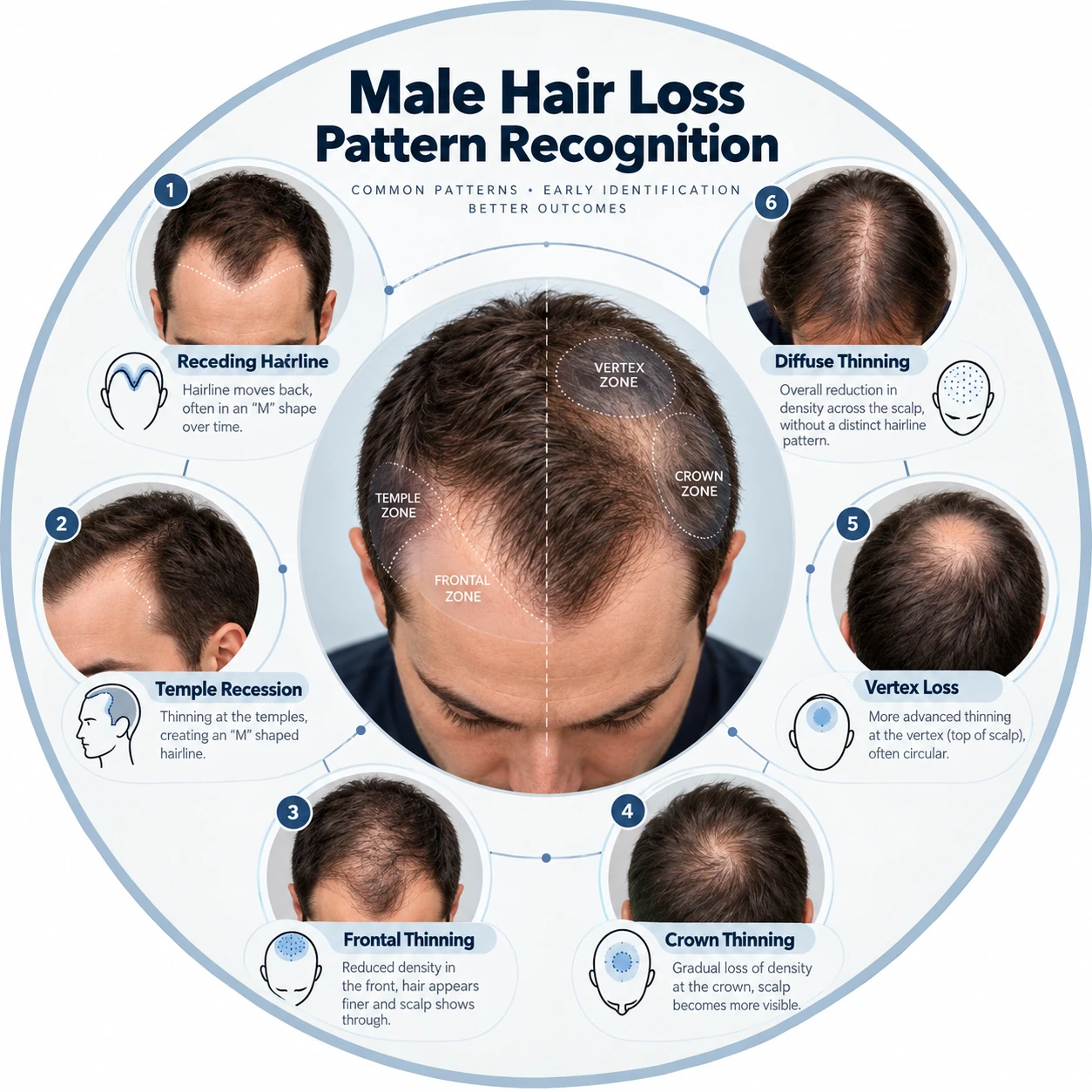
Male Hair Loss Pattern Recognition
How male pattern baldness progresses — Norwood stages, crown thinning and hairline recession
The role of DHT, genetics, stress and scalp health in men's hair loss
Evidence-level ratings for minoxidil, finasteride, dutasteride, PRP and hair transplant
How to distinguish between normal shedding and early pattern hair loss
When hair transplant is appropriate and when medical stabilization comes first
How AI Hair Test helps map your specific male hair loss pattern
Red flags that mean immediate dermatologist consultation is needed
Safe approaches vs dangerous shortcuts in men's hair loss treatment
Simply Explained
Men's hair loss is not always the same problem. Some men have gradual DHT-driven pattern hair loss. Some have sudden shedding after stress, fever, COVID, dieting or lifestyle changes. Some have scalp-linked hair fall with dandruff, oiliness or itching. This library helps you identify the pattern first, understand possible causes, compare treatment options safely and know when a dermatologist should review your case.
Temples move backward or the frontal hairline becomes uneven — often the first visible sign.
Top-back scalp starts showing, especially under bright light or in photos.
Hair falls from all over the scalp during combing, washing or styling.
Hair becomes finer, shorter and weaker over time — the DHT signature.
Dandruff, oiliness, itching or inflammation may worsen or trigger shedding.
Quick Answer: Men's hair loss is most commonly androgenetic alopecia (male pattern baldness) — driven by DHT sensitivity and genetics, causing receding hairline and crown thinning. But not all men's hair fall is pattern loss — stress shedding, deficiency, scalp conditions and medications can also contribute. The right approach depends on accurate pattern identification first. This library covers 25+ doctor-reviewed guides with evidence-level ratings, covering minoxidil, finasteride, PRP, transplant readiness and scalp care. No guaranteed regrowth — results depend on diagnosis, stage, consistency and individual response.
Men experiencing receding hairline, crown thinning, early pattern loss, dandruff with hair fall or considering treatment options.
Individual dermatologist evaluation. Pattern hair loss, finasteride decisions and transplant planning need medical guidance.
Rapid progression, patchy loss, scalp pain/pus, considering finasteride/dutasteride, or planning hair transplant.
Pathway Finder
Select your pattern, age, cause or intent — or search directly — to find the most relevant guides.
Featured Pathways
Eight curated men's hair loss pathways, each connecting to the most relevant guides for that concern.
Gradual hairline recession, temple or crown thinning caused by genetic and androgen-linked follicle miniaturisation — the most common cause of hair loss in men.
Explore Male Pattern Baldness →Early temple recession or M-shaped hairline can be the first visible sign of male pattern hair loss — identifying it early improves management options.
Explore Receding Hairline →Crown thinning often progresses slowly and may first become noticeable in photos, under bright light or in a top-down mirror view.
Explore Crown Thinning →Hair loss in the 20s can feel alarming, but early evaluation helps separate genetic pattern loss from temporary shedding — and guides the right next step.
Explore Early Hair Loss →Sudden shedding may happen after stress, fever, illness, COVID, surgery, weight loss or major lifestyle changes — typically temporary but needs confirmation.
Explore Sudden Hair Fall →Oily scalp, dandruff, itching, flakes or redness may worsen hair fall and scalp discomfort. Treating the scalp condition is often the missing first step.
Explore Scalp-Linked Hair Fall →Stress, poor sleep, smoking, alcohol, gym supplements and nutritional gaps may trigger or worsen shedding — pattern recognition guides the right response.
Explore Lifestyle Hair Fall →Not every man with hair loss needs a transplant immediately. Donor area, hair-loss stage, age, expectations and medical stabilisation all matter before a decision.
Check Transplant Readiness →Complete Library
Doctor-reviewed guides covering every major men's hair loss pattern, cause and treatment. Evidence level marked on every card.
Androgenetic alopecia in men — DHT, follicle miniaturisation, Norwood stages and evidence-based care options.
How dihydrotestosterone drives follicle miniaturisation in genetically predisposed men and why this is central to pattern hair loss.
Temple recession, M-shaped hairline, and how to distinguish normal hairline maturation from progressive DHT-driven recession.
Vertex thinning patterns in men — causes from DHT to diffuse shedding, what to look for and when to seek evaluation.
Understanding the 7 stages of male pattern baldness and how the Norwood classification guides treatment and transplant decisions.
Hair loss in young men — separating early genetic pattern loss from temporary shedding, and what early evaluation can offer.
What recent sudden or heavy shedding may mean, how to identify the pattern and what the appropriate next steps are.
How stress, fever, illness, weight loss and major events trigger diffuse shedding 2–3 months later and what recovery looks like.
Shedding after COVID-19, dengue, typhoid or fever — the telogen effluvium link and recovery timeline in men.
How severe physical or emotional stress triggers the shedding phase 2–3 months later and what recovery typically looks like in men.
The limited and mixed evidence around creatine, gym supplements and DHT — what it means and doesn't mean for hair loss risk in men.
How smoking affects scalp blood flow and oxidative stress, and how heavy alcohol use may worsen nutritional hair fall in men.
Crash dieting, very low protein intake or rapid weight change can trigger telogen effluvium — what to expect and how it typically resolves.
How scalp inflammation, dandruff and seborrheic dermatitis can worsen hair shedding in men and what scalp care approach may help.
Excess sebum, scalp oiliness and inflammation may contribute to scalp environment changes that worsen hair shedding in susceptible men.
How minoxidil works for male pattern hair loss, concentrations, timelines, the dread shed and what consistent use means for outcomes.
Prescription DHT blocker for male pattern hair loss — mechanism, suitability, side effects, contraindications and why doctor guidance is essential.
Dutasteride blocks both forms of 5-alpha-reductase and may be considered in selected cases under medical supervision — how it differs from finasteride.
Two different mechanisms, different evidence profiles, different application methods and different suitability criteria — compared clearly.
A structured daily and weekly care routine for managing active hair shedding in men — step order, frequency and product categories explained.
Which supplements may support hair health when deficiency is present, what the evidence shows and what random supplementation cannot do.
How hair fibres provide immediate coverage for crown thinning and low-density areas — what they are, how they work and what they cannot do medically.
Patchy beard, uneven density or slow beard growth — causes from genetics to hormones to alopecia areata and what evaluation and options may look like.
Who is a candidate, what stage matters, donor area assessment, age considerations, expectations and why medical stabilisation comes first.
The critical first weeks after a hair transplant — care protocols, shock loss, timeline expectations and the need for continuing medical treatment.
Visual Diagnosis Map
Different patterns indicate different causes. Find your pattern and read the most relevant guide first.
Common possibilities
First guide to read
Receding Hairline GuideDoctor review if rapidly progressing or below age 25.
Common possibilities
First guide to read
Crown Thinning in MenDoctor review for rapid progression or when considering Rx.
Common possibilities
First guide to read
Male Pattern BaldnessDoctor review when considering prescription treatment or transplant.
Common possibilities
First guide to read
Telogen Effluvium in MenDoctor review for severe, prolonged or systemic-symptom-linked shedding.
Common possibilities
First guide to read
Patchy Hair Loss GuideDoctor review required promptly for all patchy hair loss.
Common possibilities
First guide to read
Dandruff With Hair FallDoctor review if persistent itching, redness, crusting or bleeding.
Education to Action
A seven-step framework for moving from recognising early hair loss to taking structured, evidence-led action.
Shower, pillow, comb, helmet or towel — early signals to watch and log.
Temple recession, crown visibility, thinner hairline under bright light.
Stress, illness, dandruff, diet, sleep, gym use, new medication.
Family history, miniaturisation pattern, Norwood stage assessment.
Scalp care, minoxidil education, prescription discussion, progress tracking.
Fast progression, young age, severe shedding, treatment confusion.
Finasteride/dutasteride discussion, GFC/PRP, transplant readiness assessment.
Treatment Education
Every treatment option in men's hair loss has a specific role, mechanism and suitability criteria. Understanding these helps you ask the right questions.
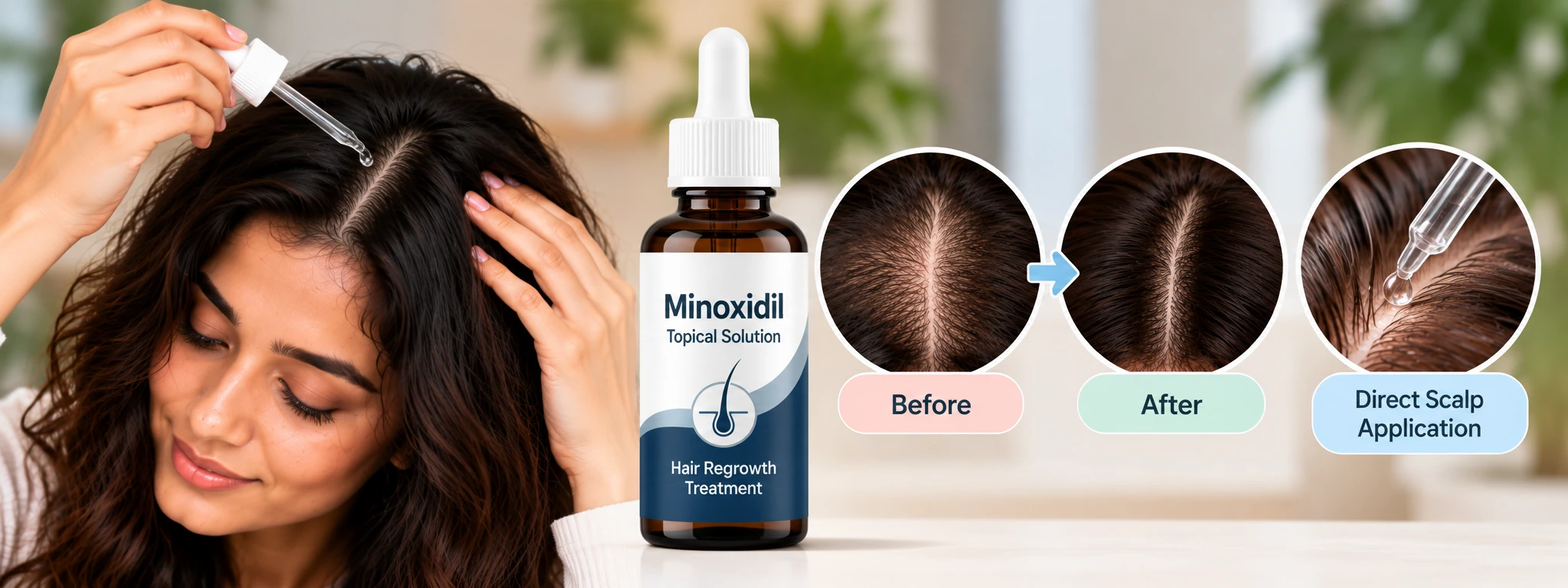
Minoxidil may support hair retention and regrowth in suitable pattern hair loss cases when used consistently. Initial shedding may occur in the first weeks. Benefits require ongoing use and results take time. It does not work by blocking DHT.
Dermatologist evaluation recommended before starting. Results vary. Not suitable for everyone.
Read Minoxidil Guide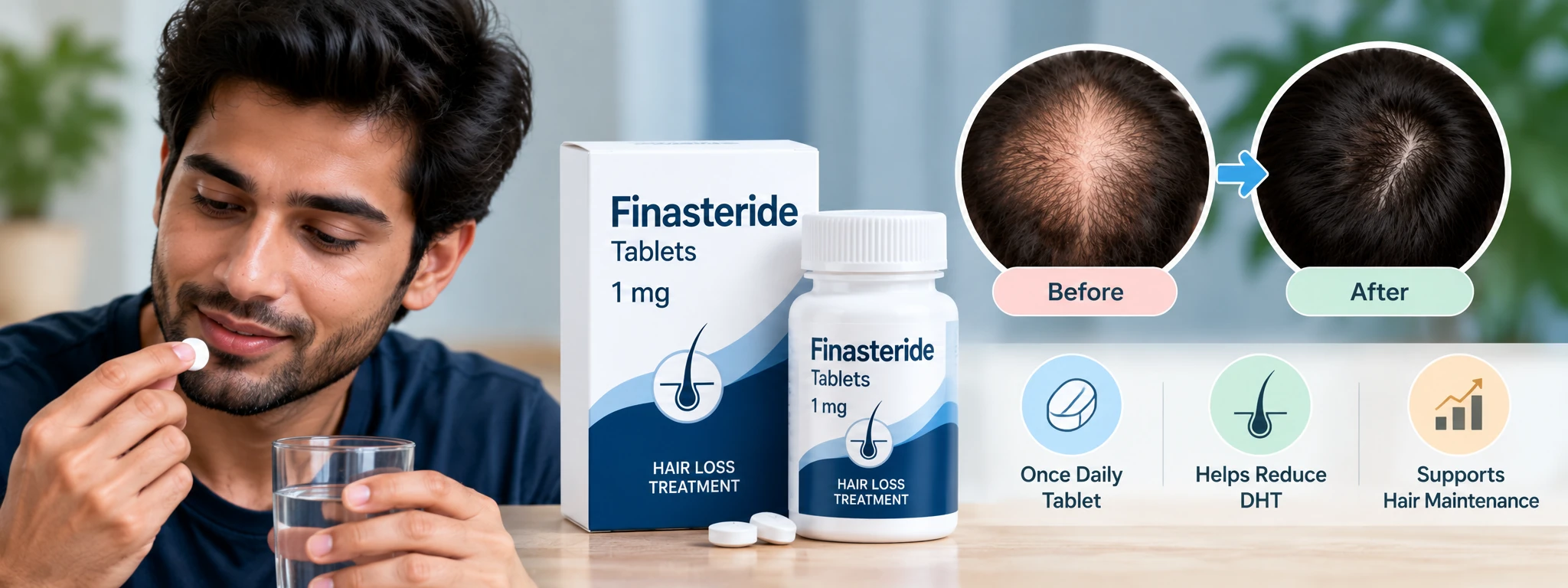
Finasteride is a prescription medicine that reduces DHT production for DHT-linked male pattern hair loss in suitable adult men. It requires medical guidance and discussion of risks before starting.
Prescription only. Not for women of childbearing potential. Side effects documented. Doctor evaluation essential before starting.
Read Finasteride Guide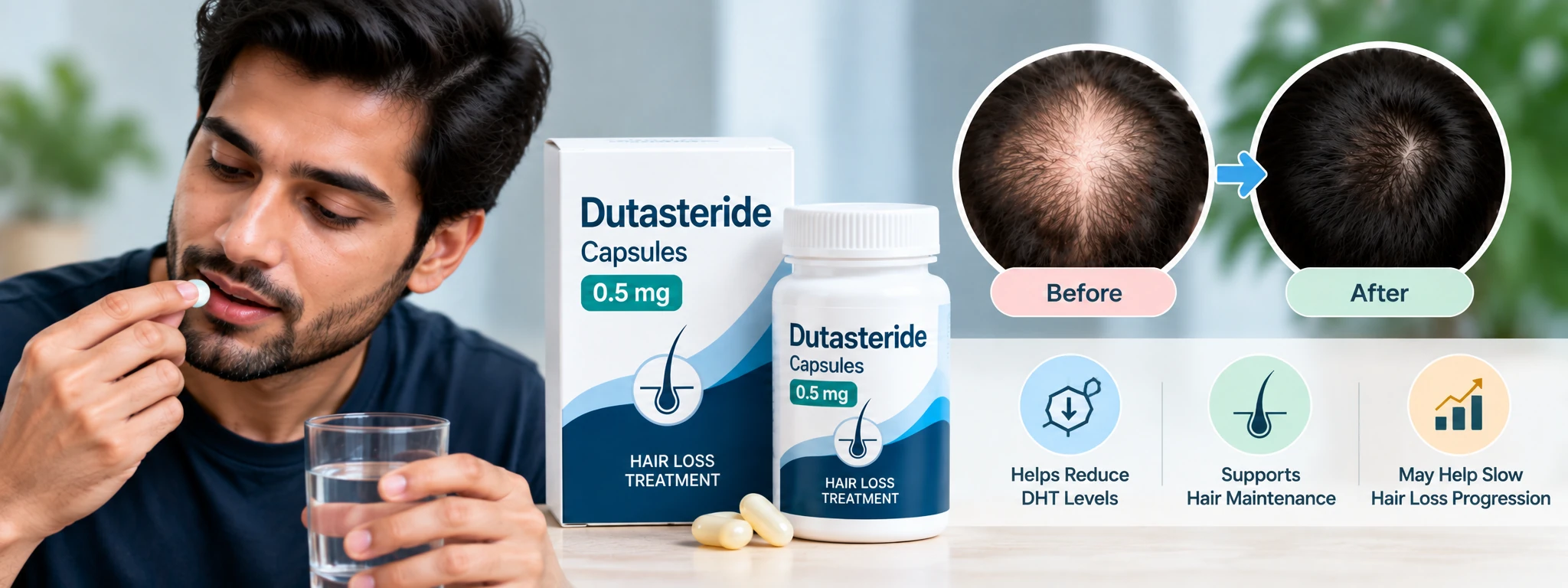
Dutasteride blocks both forms of 5-alpha-reductase and may be considered by doctors in selected cases where finasteride response is insufficient. It requires medical supervision and carries its own risk profile.
Prescription only. Not for women. Medical supervision required. More potent DHT suppression than finasteride.
Read Dutasteride Guide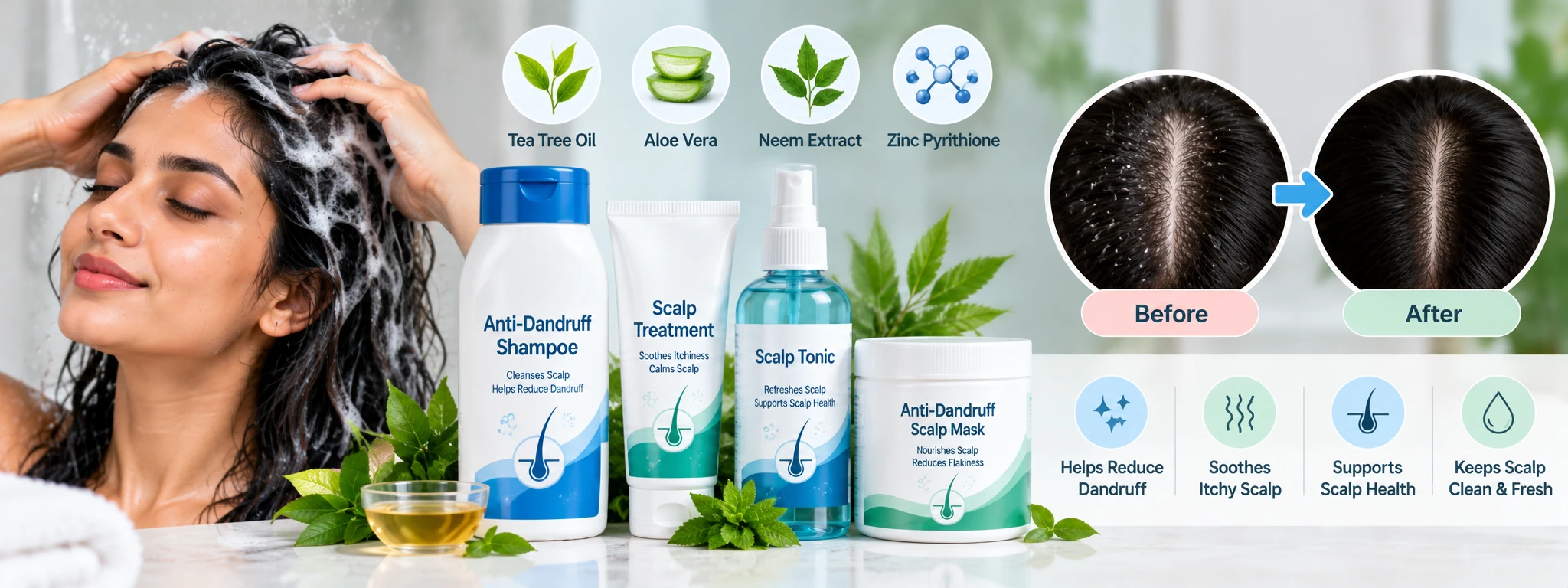
Ketoconazole, zinc pyrithione and salicylic acid-based products can help reduce scalp inflammation, dandruff, itching and sebum-linked shedding. Scalp control can support the overall hair environment.
Does not treat pattern hair loss. Doctor review for persistent, infected or severe scalp conditions.
Explore Scalp Care
Supplements help mainly when deficiency, low protein or nutritional gaps are present. Random supplementation does not solve DHT-driven pattern hair loss. Blood tests confirm deficiency before supplementing.
Not a substitute for medical treatment. Excess supplementation carries risks. Results depend on confirmed deficiency.
Explore Supplements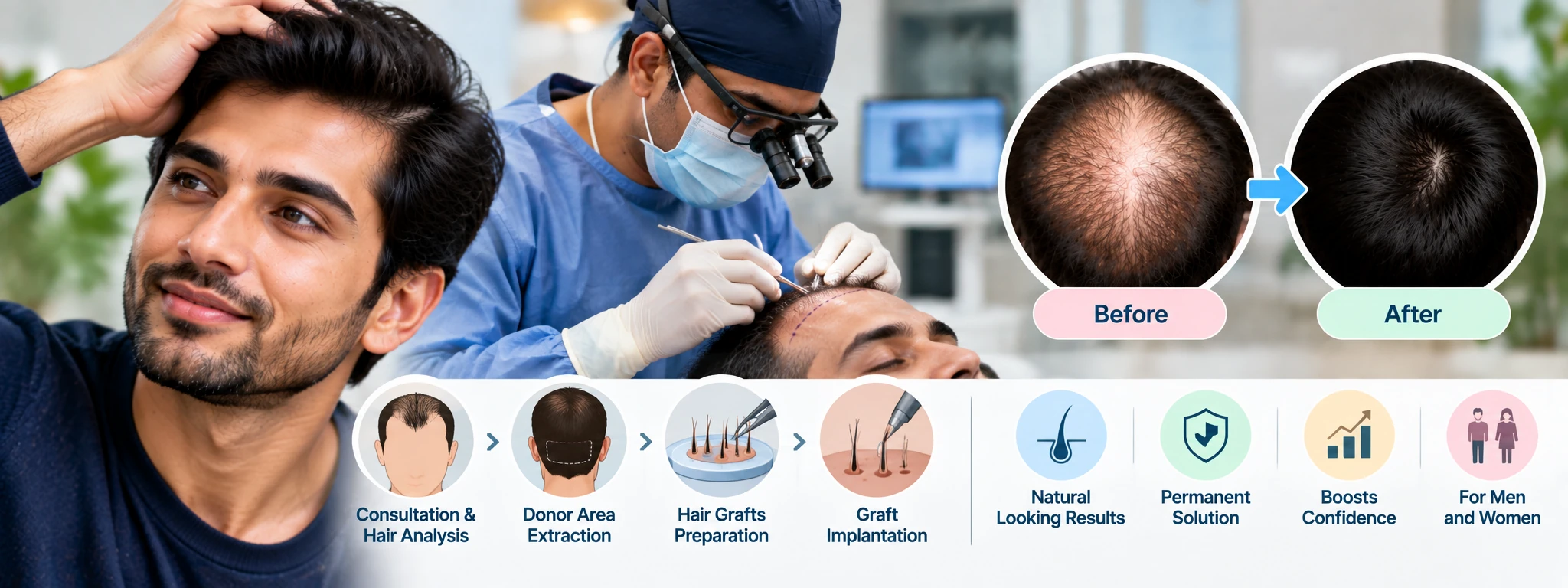
Hair transplant is considered when hair loss stage, donor area, age and expectations are suitable. Medical stabilisation may still be needed to prevent ongoing loss around grafts. It does not stop DHT.
Specialist evaluation essential. Not suitable for everyone. Transplant without medical stabilisation may lead to continued progression.
Check Transplant ReadinessA dermatologist evaluation helps match the right treatment to your specific pattern, stage and health profile.
Medical Safety
Education helps you understand patterns. Persistent, fast, patchy or medically linked hair loss needs individual dermatologist assessment.
Transparency
Every guide carries an evidence label. Here is what each means in plain language for men's hair loss.
Used for treatments with established clinical support in multiple peer-reviewed trials for suitable, diagnosed patients. Outcomes documented though individual results vary.
Examples: Minoxidil, Finasteride for androgenetic alopecia
May help selected users depending on cause, consistency and scalp condition. Evidence base exists but may be smaller scale or needs more confirmation.
Examples: Ketoconazole for DHT reduction, stress hair fall management
Requires medical history, scalp examination, trichoscopy or lab testing before decisions. Self-care alone is not appropriate as first-line management.
Examples: Alopecia areata, patchy hair loss, transplant readiness
Improves appearance, density illusion or confidence but does not treat the root medical cause of hair loss. Useful alongside but not as a substitute for medical management.
Examples: Hair fibres, volumising products, scalp concealers
Popular or promising but clinical evidence is insufficient to make a strong recommendation. Not a replacement for proven medical treatment where needed.
Examples: Creatine-DHT link, rosemary oil, most lifestyle claims
Prescription medicines such as finasteride or dutasteride should only be used after qualified medical guidance. Hair transplant decisions require specialist evaluation. Results vary. This page is educational and not a substitute for personal medical advice.
AI-Powered Learning
Free educational AI tools that help men understand their hair concern, prepare the right questions and move toward clarity — not a replacement for medical care.
Answer questions about your hair pattern, shedding and scalp condition to get educational guidance on the most likely pattern and next steps. Educational only — not a diagnosis.
⚡ Start Free AI Hair TestCheck crown visibility, hairline recession, dandruff, oiliness and density signals. Get guidance on the most relevant scalp care approach for your pattern.
🔬 Analyse My ScalpBuild a structured care routine based on pattern, scalp type, lifestyle and product tolerance. Step order and frequency matched to your specific concern.
📋 Build My RoutineFind products matched to your hair concern, scalp type and goals. Educational direction to narrow choices before speaking to a specialist or starting treatment.
🎯 Find My ProductsLook up minoxidil, finasteride, dutasteride, ketoconazole, caffeine, biotin, peptides, rosemary and more — evidence level, mechanism and key cautions explained.
🧪 Decode IngredientsTrack hairline, crown, shedding volume, product use and routine consistency over realistic timelines. Build a record to share with your dermatologist.
📈 Track My ProgressAI tools are educational support tools and do not replace dermatologist diagnosis, prescription or individualised medical advice.
Learn Before You Buy
Each product category has a specific role and type of hair concern it may support. Reading the guide before buying leads to better and safer choices.
For: Daily shedding, weak hair, early hair fall, general maintenance
Routine-based care works best when the underlying cause is identified first. Results vary.
Explore Hair Fall Routine →For: Hairline recession, crown thinning, progressive density reduction
Doctor evaluation recommended before Rx actives. Not suitable for everyone. Results vary.
Explore Pattern Hair Loss Products →For: Men considering finasteride, dutasteride or prescription-level guidance
Rx products require medical evaluation. Never self-prescribe finasteride or dutasteride. Results vary.
Read DHT Guide →For: Doctor-guided male pattern hair loss support and density maintenance
Dermatologist evaluation recommended before starting. Consistent use required. Results vary.
Read Minoxidil Guide →For: Oily scalp, dandruff, itching, flakes, seborrheic dermatitis
Doctor review when scalp shows infection, crusting, bleeding or spreading redness.
Explore Anti-Dandruff Care →For: Deficiency-linked shedding, low protein, gym diets, recovery support
Blood tests to confirm deficiency before supplementing. Excess supplementation has risks. Results vary.
Explore Supplements →For: Crown thinning visibility, low density, instant coverage support
Cosmetic support only — does not treat hair loss medically. Safe for concurrent use with medical treatments.
Explore Hair Fibers →For: Advanced hairline or crown loss, FUT/FUE readiness and surgical planning
Specialist evaluation essential. Transplant without medical stabilisation may lead to ongoing progression. Results vary.
Check Transplant Readiness →Start With Clarity
Many men ignore hair loss until photos, bright lighting, wet hair or a changing hairline make it obvious. Some panic-buy random products. Some delay for years. The smarter approach is to identify the pattern, understand the cause, check whether it is DHT-linked or temporary, and then choose a structured routine or doctor-guided plan — not a shelf full of products that may or may not match the actual problem.
Dr. Amit Agarkar
MD Dermatology · Trichologist · Hairsncares Medical Director
Why Trust This
Every guide is reviewed by Dr. Amit Agarkar, MD Dermatology and Trichologist, under the Hairsncares medical review policy. Content reflects current dermatological understanding, not trends or marketing.
Every guide carries an evidence label — Strong, Moderate, Doctor Evaluation, Cosmetic Support or Limited. This helps you distinguish medically validated options from personal preferences.
This library educates — it does not diagnose, prescribe or guarantee outcomes. Prescription medicines (finasteride, dutasteride) and transplant decisions require qualified specialist supervision, stated clearly throughout.
Guides are reviewed and updated as evidence evolves, particularly for newer DHT blockers, oral minoxidil and emerging areas. Each page carries a last-reviewed date.
Dr. Amit Agarkar, MD Dermatology
Dermatologist · Trichologist · Hair Transplant Surgeon · Hairsncares Medical Director
Men's hair loss is genuinely varied — DHT-driven pattern loss, telogen effluvium, scalp-linked shedding and lifestyle-triggered hair fall all look different and need different approaches. The most important first step is identifying the pattern correctly. Use this library to understand your concern, prepare for a dermatologist visit, and avoid starting treatment — especially prescription medicines — without knowing whether it is the right one for your specific cause.
Content reviewed June 2026 · Medical Review Policy
Frequently Asked
Answers to the most common questions about men's hair loss, DHT, minoxidil, finasteride and when to see a dermatologist.
Androgenetic alopecia — male pattern baldness driven by DHT — is the most common cause of progressive hair loss in men globally. In India, telogen effluvium from stress, nutritional gaps, illness and lifestyle triggers is also highly prevalent. A dermatologist evaluation helps identify the correct pattern and cause. Results vary.
Male pattern baldness typically shows as a receding hairline at the temples (M-shape), thinning at the crown, or both. Hair in affected areas becomes progressively finer over time. Family history is a major risk factor. A dermatologist confirms through clinical examination and trichoscopy. Results vary.
Early signs include a slowly receding hairline at the temples, hair becoming finer at the crown, a changing M-shaped hairline, reduced density visible in photos or under bright light, and widening at the vertex. Earlier identification generally allows more management options. Dermatologist evaluation recommended.
Hairline recession is most commonly caused by androgenetic alopecia — DHT causing gradual miniaturisation of genetically sensitive follicles at the temples and frontal hairline. Speed depends on genetic sensitivity and DHT levels. A dermatologist helps distinguish normal maturation from progressive recession and guides appropriate management.
Crown thinning is most often caused by male pattern baldness — androgenetic alopecia — where DHT drives follicle miniaturisation at the top-back scalp. It may also result from diffuse telogen effluvium or nutritional deficiency. Dermatologist evaluation with trichoscopy identifies the pattern.
DHT is the primary driver of androgenetic alopecia in genetically predisposed men. However, not all male hair loss is DHT-driven — stress, fever, nutritional deficiency, scalp inflammation and medication can all cause hair fall without DHT involvement. Identifying the correct cause determines appropriate management.
Yes. Severe physical or emotional stress can trigger telogen effluvium — diffuse shedding 2–3 months after the stressful event. This is typically temporary. Doctor evaluation recommended if severe or prolonged to rule out concurrent pattern loss. Results vary.
Dandruff itself does not directly cause permanent hair loss, but significant scalp inflammation from seborrheic dermatitis can affect the scalp environment, and excessive scratching can cause mechanical damage. Managing the scalp condition typically reduces associated shedding. Doctor evaluation for persistent cases.
The link between creatine and hair loss is based on limited evidence from a single small study showing increased DHT conversion, not confirmed in larger clinical trials. High-intensity training may theoretically influence androgen levels in genetically predisposed men. A dermatologist evaluation can assess your pattern and contributing factors. Results vary.
Smoking is associated with reduced scalp blood flow and oxidative stress which may worsen follicle health. Heavy alcohol can contribute to nutritional deficiencies affecting hair. Neither directly causes male pattern baldness, but both may worsen progression in genetically predisposed individuals.
Minoxidil has strong clinical evidence for male pattern hair loss in suitable patients. It may support hair retention and regrowth when used consistently. Initial shedding in the first weeks is common and temporary. Benefits require ongoing use. Dermatologist evaluation recommended before starting to confirm suitability and concentration. Results vary.
No. Finasteride is prescription-only for adult men with male pattern hair loss. It is contraindicated in women of childbearing potential and not for children or adolescents. A small proportion of men may experience sexual side effects, usually reversible on stopping. Rare cases of persistent side effects have been reported. Dermatologist evaluation essential before starting. Results vary.
Minoxidil is a topical vasodilator applied to the scalp to support hair growth and retention — it works regardless of DHT levels and is available without prescription. Finasteride is an oral prescription medicine that reduces DHT production by blocking 5-alpha-reductase. They work differently and can be used together under medical guidance. Dermatologist evaluation determines what is appropriate.
See a dermatologist for sudden or rapid hair loss, patchy bald spots, fast hairline recession, scalp pain or crusting, shiny patches, systemic symptoms, hair loss after new medication, confusion about treatment, or no improvement after 3–6 months of appropriate routine care. Early evaluation leads to better outcomes.
Hair transplant may be considered when hair loss has stabilised, donor hair is adequate, Norwood stage is suitable and medical treatment options have been explored. Specialist evaluation is essential. Transplant does not stop ongoing pattern loss without concurrent medical treatment. Results vary significantly.
Yes. Hair fibres provide immediate cosmetic coverage for crown thinning. They work best when some hair remains to anchor to. They are a cosmetic support tool — not a medical treatment — and can be used safely alongside medical treatment. Results vary by density and coverage needs.
No. The AI Hair Test is an educational screening and directional tool — not a medical diagnosis. It does not replace clinical examination, trichoscopy or blood tests. For prescription-linked, fast-progressing or patchy hair loss, a qualified dermatologist assessment is essential.
Start with the guide closest to your primary symptom. For a receding hairline, read Receding Hairline or Male Pattern Baldness. For crown thinning, start with Crown Thinning in Men. For sudden diffuse shedding, read Telogen Effluvium in Men. Use the above or take the free AI Hair Test.
All hair loss types
Women's hair loss
Dandruff + scalp care
Men's routines
Care by hair type
Compare treatments
Haircare by city
Decode ingredients
Medical References
Our guides are informed by recognised dermatology authorities. External links for educational reference only — they do not replace individual medical assessment.
External links open in a new tab. References are for education only and do not replace a dermatologist's diagnosis or prescription.
Your cart is empty
Your image is processed privately by our AI engine and saved securely with your account.
This item will be removed from your cart. You can add it back later.