Myth
Niacinamide conditioner regrows hair
Fact
Niacinamide conditioner may support scalp-skin comfort in selected scalp-safe formulas. It does not regrow hair and has no proven effect on follicle activity or root-level hair fall.
Niacinamide Scalp-Skin Barrier Atelier · Hairsncares
A dermatologist-guided conditioner guide for selected scalp-safe formulas — with niacinamide scalp-skin support logic, sensitive scalp comfort, barrier-friendly haircare, buildup safety and AI scalp/product matching.
Educational product-selection guide. Niacinamide conditioner is a cosmetic product. Results vary. Scalp-safe applies only to selected formulas. Consult a dermatologist for scalp disease or hair fall concerns.
What niacinamide conditioner can and cannot do for the scalp
How niacinamide (vitamin B3) supports the scalp skin barrier
Niacinamide in conditioner vs in serum — delivery differences
Best scalp types — oily, irritated, or barrier-compromised
How often to use for scalp barrier support
Anti-inflammatory and sebum-regulating claims assessed
Why niacinamide conditioner cannot treat scalp diseases
When scalp symptoms need a dermatologist, not a vitamin conditioner
Niacinamide conditioner may support scalp-skin comfort and barrier-friendly haircare in selected scalp-safe formulas. However,most conditioners are designed for hair lengths, so scalp benefit varies. If the product is not scalp-safe, apply it only from mid-lengths to ends. Niacinamide conditioner does not treat dandruff, scalp infection, eczema, psoriasis, scalp acne, root-level hair fall or baldness.
Niacinamide conditioner delivers vitamin B3 to the scalp skin, potentially supporting barrier function, reducing mild inflammation, and helping regulate sebum. Evidence for niacinamide in rinse-off conditioners is limited due to short contact time. It does not treat dandruff, hair loss, or seborrheic dermatitis. Best for people with mildly irritated or oily scalps seeking gentle barrier support.
Niacinamide is widely used in skincare for barrier-support and skin-conditioning positioning. In conditioner, niacinamide may support scalp-skin comfortonly when the product is specifically designed and tested for scalp contact. Most conditioners are meant for hair lengths, not scalp treatment. A niacinamide conditioner does not treat androgenetic alopecia, alopecia areata, telogen effluvium, PCOS-related hair fall, thyroid-related hair fall, dandruff, seborrheic dermatitis, eczema, psoriasis, folliculitis or scalp infection.
⚠️ Consult a dermatologist if there is persistent itching, redness, burning, severe dandruff, painful scalp, pus, crusting, scalp pimples, bald patches or sudden/progressive hair fall.
Ask a Hair DoctorPeople with mildly irritated, oily, or barrier-compromised scalps looking for a soothing, scalp-focused conditioner. Apply to scalp (not just lengths) for maximum benefit.
Medicated shampoos for dandruff, prescription scalp treatments, or clinical hair loss therapy. Niacinamide conditioner is a cosmetic barrier support, not a medicine.
Scalp irritation persists despite gentle products, you develop flaking or redness, or notice hair thinning. Persistent scalp symptoms need clinical diagnosis.
Niacinamide is used in skin and scalp-care for barrier-support and skin-conditioning positioning. In conditioner, benefit depends on scalp-safe design, concentration, pH and formula base.
Many conditioners are rinsed off and applied away from scalp. Scalp benefit may be limited compared with scalp serums or shampoos that have direct, prolonged scalp contact.
Selected scalp-safe formulas may support comfort-focused routines for sensitive or dry-feeling scalp. Active scalp disease, flakes, pus or itching needs dermatologist diagnosis first.
Even with niacinamide, conditioner mainly supports hair softness, smoothness, detangling and manageability on hair lengths — regardless of scalp benefit claims.
Applying rich conditioners to scalp can worsen greasiness, buildup, pimples, folliculitis or flakes in oily, acne-prone, dandruff-prone or product-sensitive scalp types.
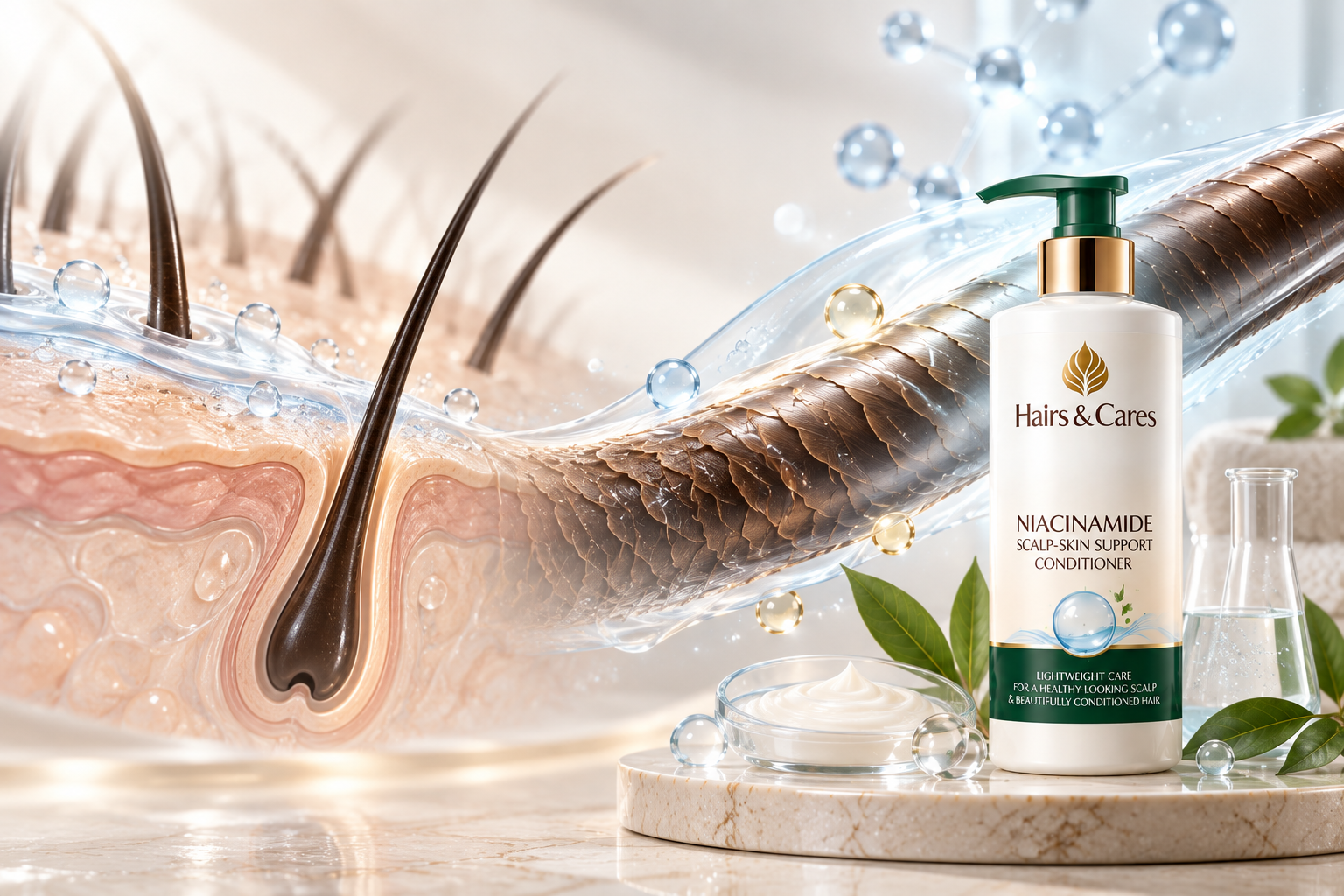
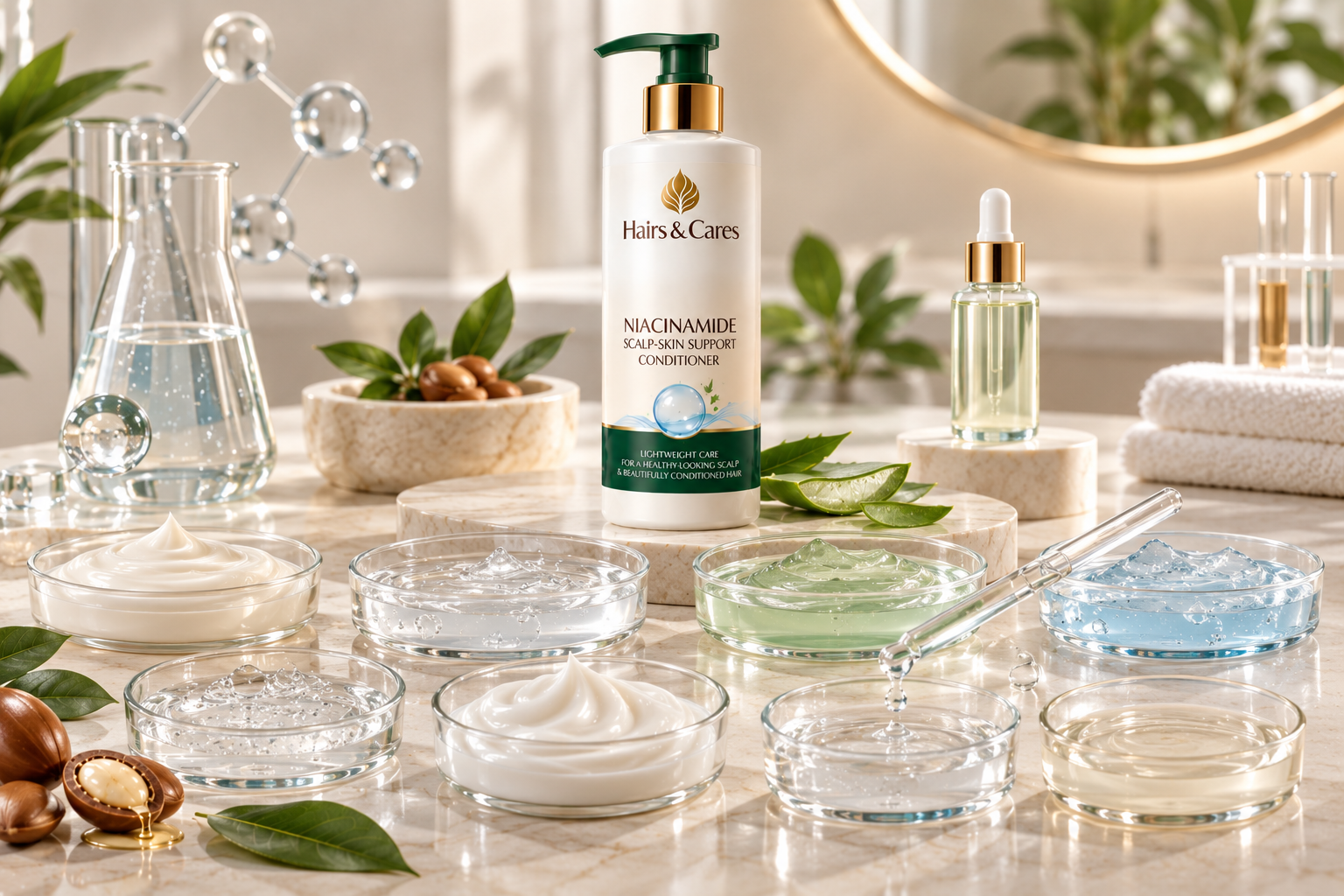
Formula base, concentration, pH, fragrance, preservatives, occlusiveness, rinse-off vs leave-in format, scalp type and disease status all affect what a niacinamide conditioner delivers.
Barrier-friendly scalp and haircare positioning. Combines niacinamide skin-conditioning logic with ceramide cuticle-support properties.
Caution: scalp benefit only if formula specifically scalp-safe.
Softness, comfort feel and lightweight manageability. Good for sensitive scalp comfort routines and fine hair needing gentle conditioning.
Caution: avoid scalp-heavy use if oily or acne-prone.
Gentle scalp comfort and soothing-feel routines. Lightweight and relatively non-occlusive combination.
Caution: botanical sensitivity and fragrance can still occur.
Dry-feeling scalp/hair hydration-support positioning. Combines barrier-support with humectant moisture feel.
Caution: rinse-off conditioner limits scalp contact time.
Oily-scalp support positioning in scalp-safe formulas. Zinc PCA is used for sebum-control and scalp-conditioning positioning.
Caution: not a dandruff or acne cure; consult doctor if symptoms persist.
Sensitive scalp and lightweight conditioning. Minimal actives with mild emulsifiers reduce irritation risk for reactive scalp types.
Caution: fragrance and preservatives may still irritate.
Scalp buildup support in specific scalp products. More suited to scalp-specific products than regular conditioners.
Caution: acid-containing formulas may irritate sensitive or inflamed scalp.
Scalp-specific comfort support if product is designed and tested for scalp contact. Better scalp delivery than rinse-out.
Caution: avoid if scalp acne, folliculitis, wounds or active rash are present.
Ingredient names alone do not guarantee scalp suitability. UseIngredient Decoderto analyse your conditioner formula, concentration and scalp-safe status.
Selected scalp-safe niacinamide conditioners may support sensitive scalp comfort routines. Patch-test first. Fragrance-free formula preferred.
Best MatchNiacinamide conditioners tend to be lighter than oil-rich formulas. Good for fine hair, oily-root users who want soft lengths, or those who dislike heavy conditioning.
Good MatchUsers wanting barrier-friendly ingredient language in their conditioner routine. Apply to mid-lengths and ends. Scalp application only if label says scalp-safe.
Good MatchMost conditioners should not be applied to oily or dandruff-prone scalp. Even niacinamide conditioners can worsen greasiness or flakes if applied near scalp. Use on lengths only.
Avoid Scalp UseActive scalp rash, pimples, folliculitis, open wounds or pus need dermatologist evaluation. Do not apply any conditioner near active scalp lesions.
Consult DoctorTake AI Scalp Test first to determine if niacinamide conditioner is scalp-safe for your type, and whether shampoo or scalp serum may be more appropriate.
AI Guided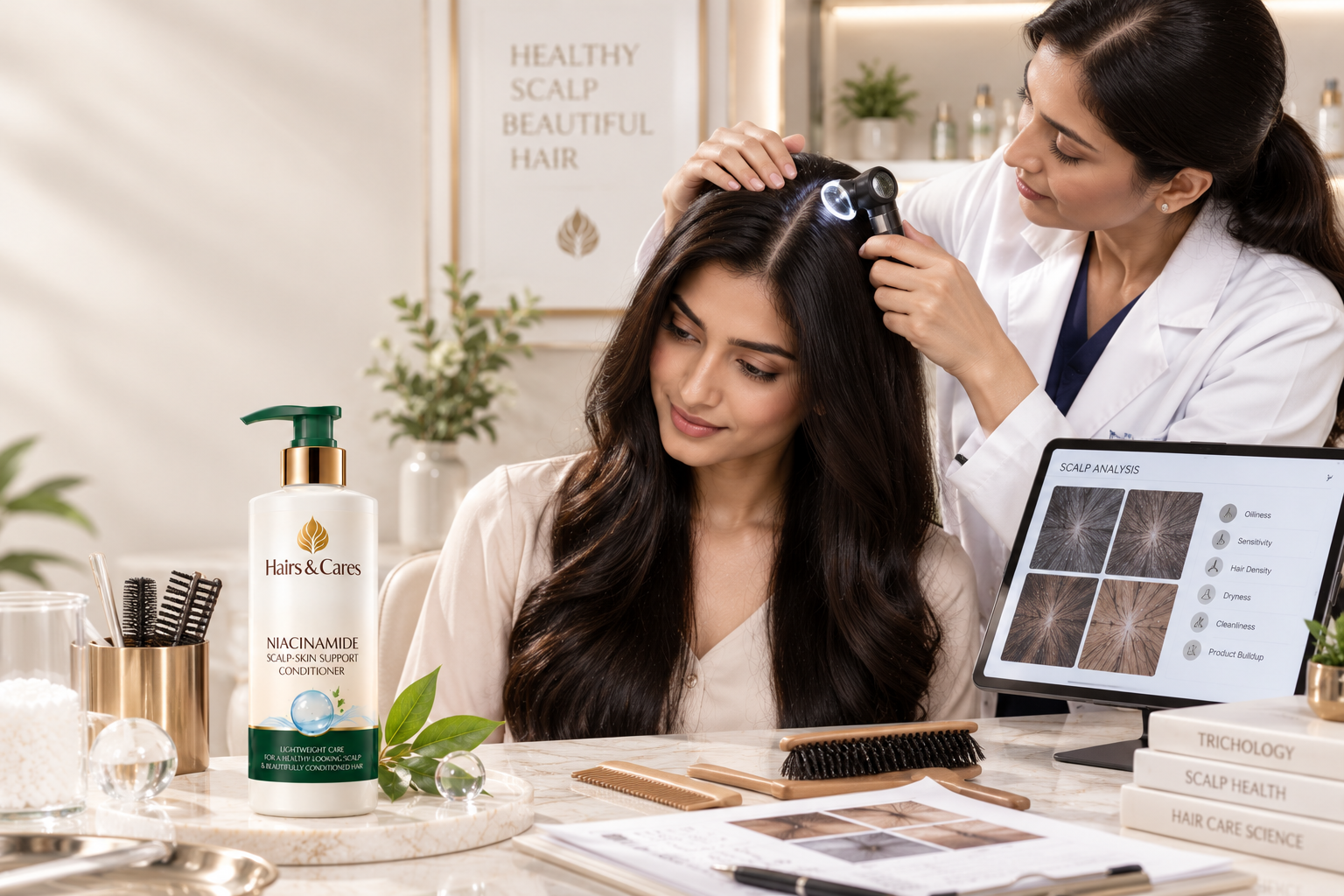
You may be wondering whether Niacinamide Conditioner is the right type for your hair. The honest answer: conditioner is a cosmetic hair-shaft product that supports scalp-skin comfort. It may improve how your hair feels — softer, smoother, more manageable — but it cannot treat root-level hair loss, dandruff, scalp disease or conditions needing medical treatment. If your concern goes beyond dryness and texture, a dermatologist evaluation is the right first step.
9 dermatologist-guided steps for scalp-safe conditioning without misuse or buildup.
Do not assume every niacinamide conditioner should be applied to scalp. Check the product label for "scalp-safe" or "scalp-compatible" before using near roots.
If label does not say scalp-safe, apply only to mid-lengths and ends.
Use mild, anti-dandruff, oily-scalp or sensitive-scalp shampoo only when suitable for your scalp type. Cleanse scalp first.
Conditioner works better on damp hair than dripping wet hair.
Avoid scalp unless the product specifically says scalp-safe. This is the correct application for most niacinamide conditioners.
Scalp caution: avoid if oily, acne-prone, folliculitis-prone, dandruff-prone or post-transplant.
Apply lightly to the intended scalp area only if the label specifically permits scalp contact. Use minimum effective amount.
This may worsen greasiness, scalp pimples or folliculitis. Scalp-safe does not mean suitable for active scalp acne or infection.
Active scalp lesions, pus or wounds: consult dermatologist before any scalp product.
Follow product label or dermatologist advice. Do not extend contact time beyond label recommendation for scalp contact.
Residue can worsen heaviness, scalp greasiness or discomfort. Follow product label for leave-in vs rinse-out guidance.
Stop if itching, burning, pimples, redness, flakes, greasiness or rash worsen. Consult dermatologist if symptoms persist.
Niacinamide conditioner is not always the best vehicle for scalp treatment. Many conditioners soften hair lengths and are rinsed away. For persistent scalp symptoms, the correct product may be a shampoo, serum or prescription treatment.
Best for hair softness. Limited scalp comfort in selected scalp-safe formulas only.
Better scalp delivery if non-greasy and designed for scalp contact. Patch-test required.
Better scalp contact during cleansing. Useful for oil, flakes, buildup and scalp-contact actives.
For dandruff, dermatitis, psoriasis, folliculitis, infection, scalp pain or hair fall.
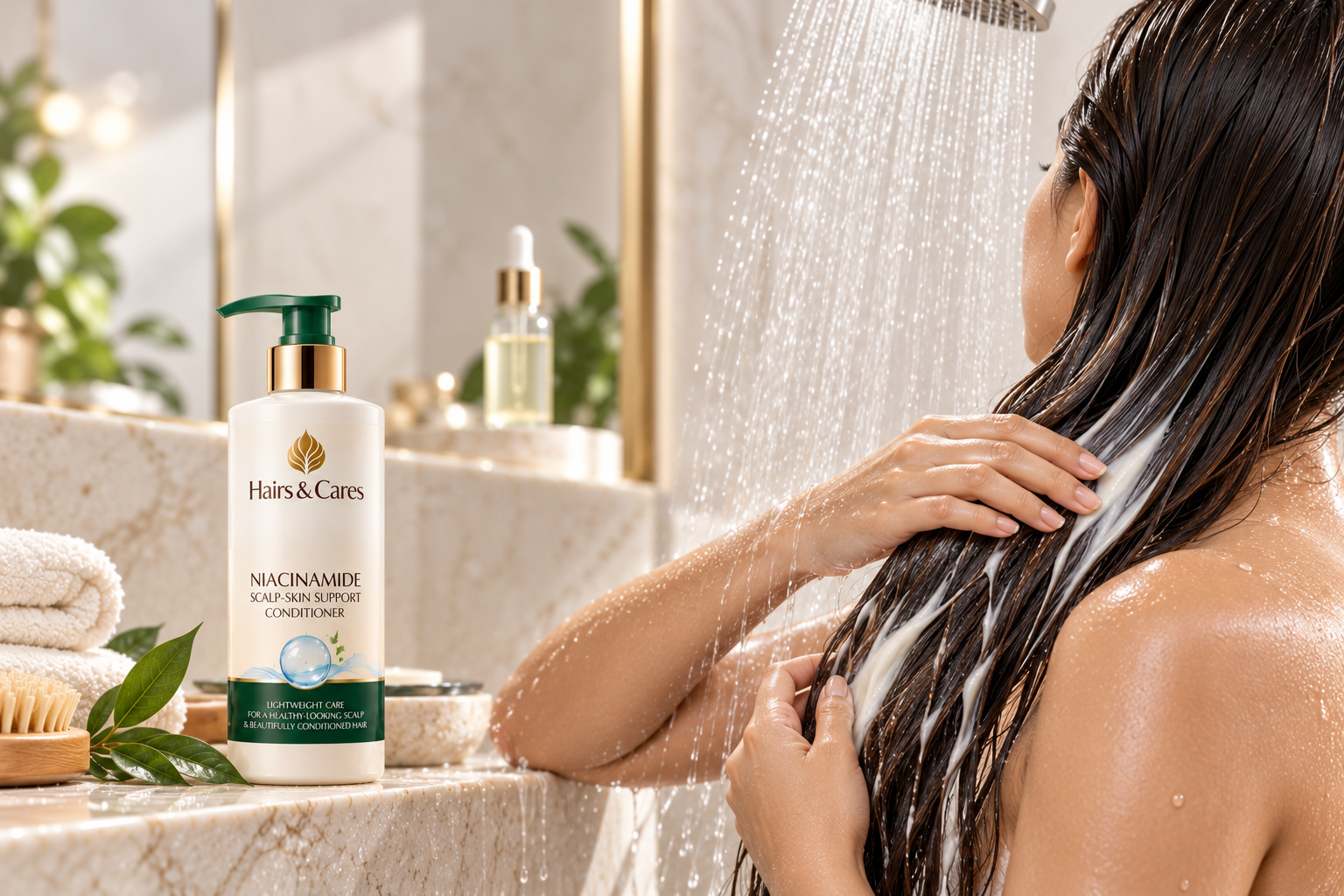
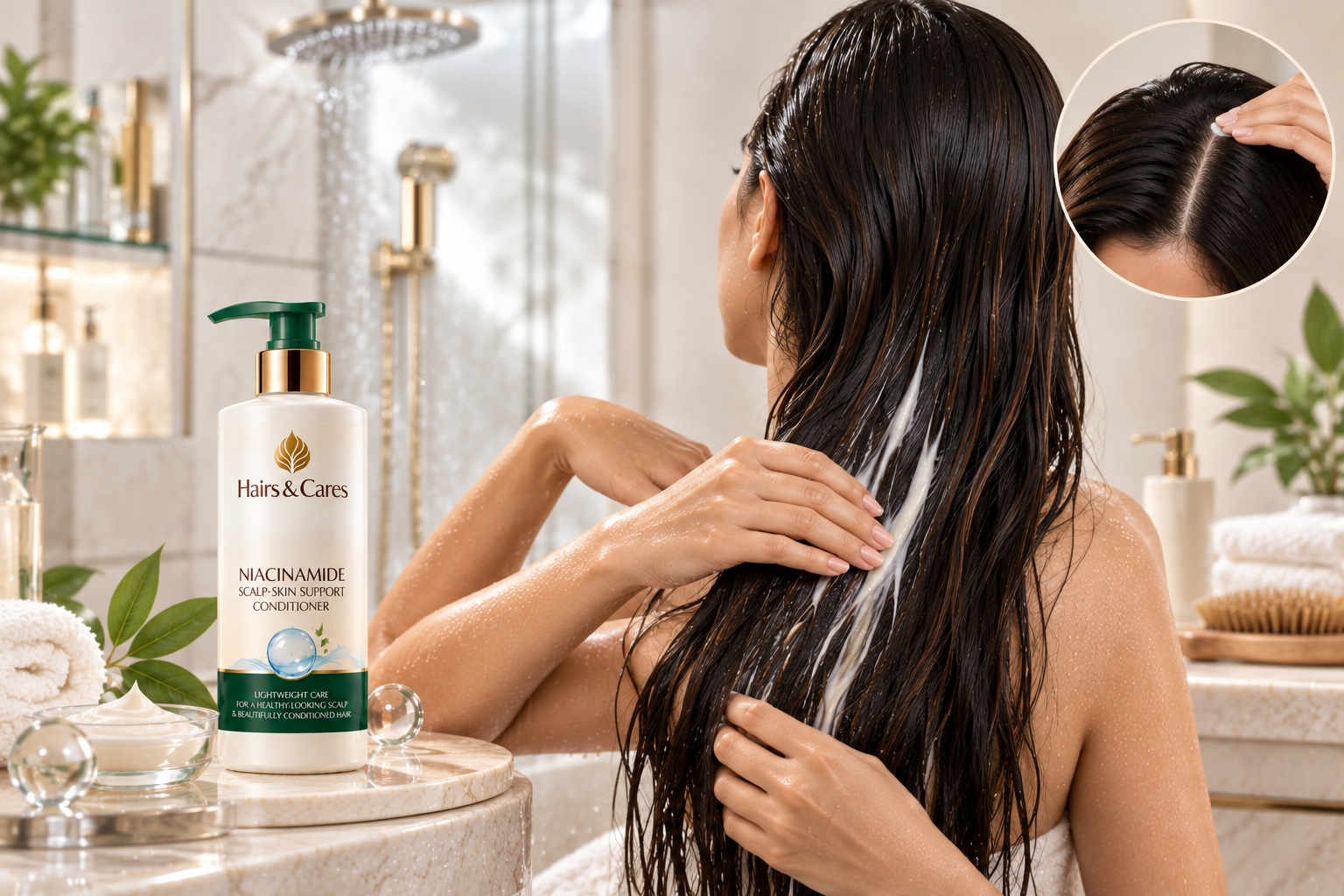
The most common conditioner mistake is applying it to the scalp. Conditioner on an oily, dandruff-prone or acne-prone scalp causes buildup, greasiness and scalp pimples. Apply niacinamide conditioner from mid-lengths to ends only, use the minimum effective amount, and rinse thoroughly. If hair still feels dry after correct use, consider adding a leave-in product rather than increasing the rinse-out conditioner amount.
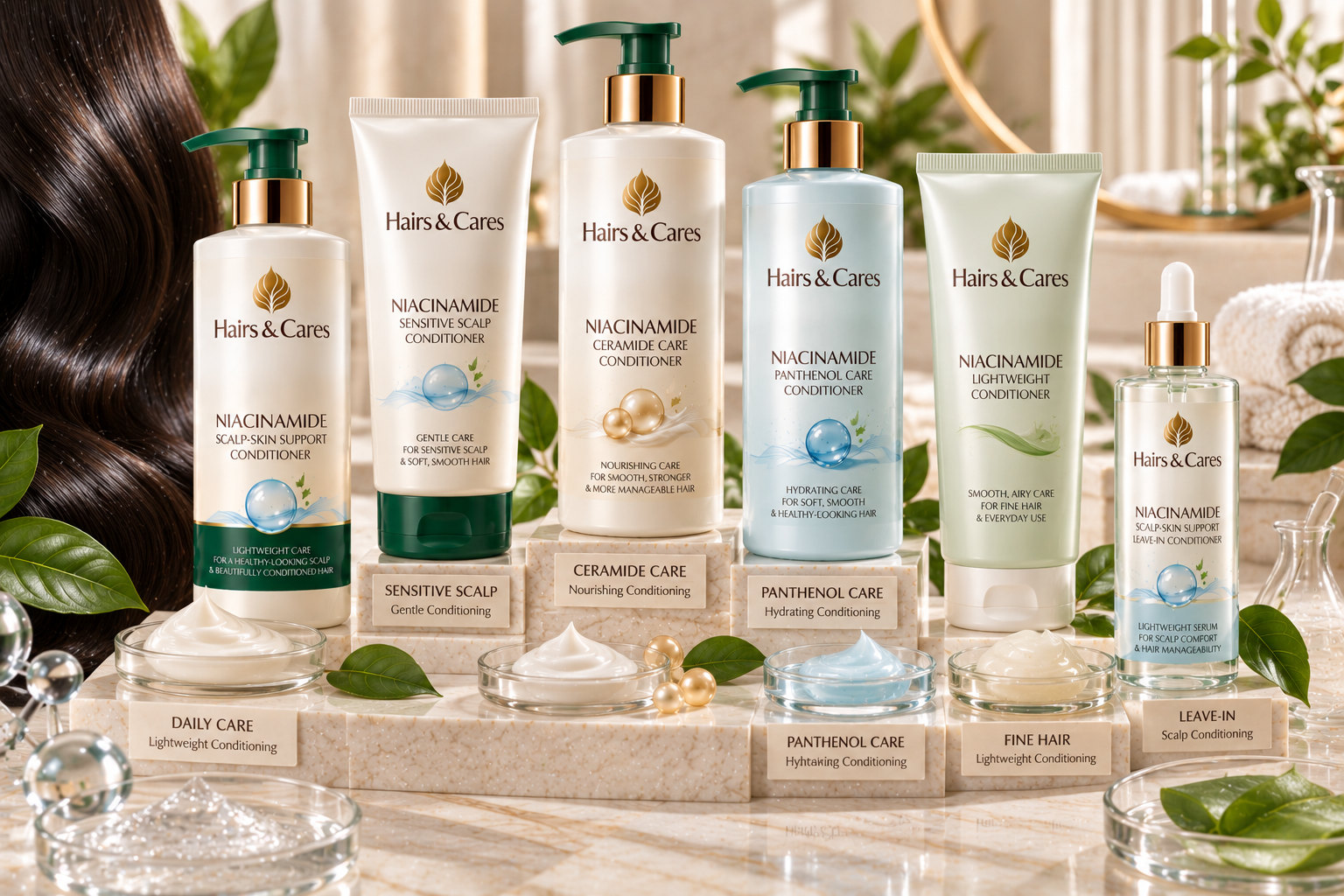
Dermatologist-curated niacinamide conditioner selection for scalp-skin support, sensitive scalp comfort and barrier-friendly haircare. Price available on product page. Take AI Scalp Test before selecting.
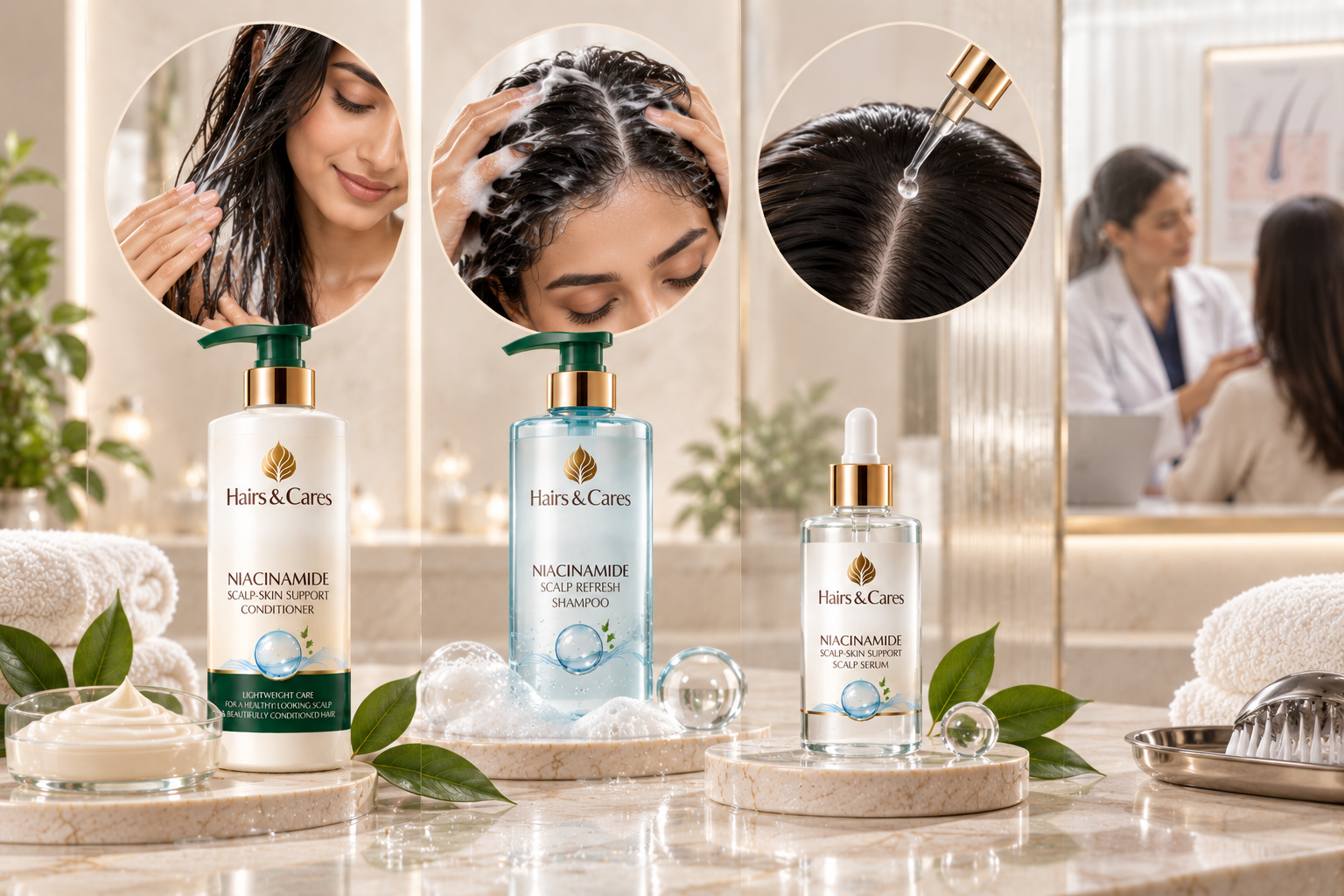
Identifies scalp type, sensitivity, oiliness, dandruff risk, acne/folliculitis tendency, and whether niacinamide conditioner is scalp-safe for you — or if shampoo/serum is more appropriate.
Start AI Scalp Test →Matches niacinamide conditioner type to your scalp-safe formula need, hair type, dryness, lightweight preference and barrier-friendly routine.
Find My Conditioner →Builds a personalised scalp-aware routine — matched to scalp type, hair type, shampoo need, conditioner application and leave-in safety.
Build My Routine →Identifies whether your concern is dryness, breakage, scalp discomfort or medical hair loss — so you know when conditioner helps vs when a doctor is needed.
Take AI Hair Test →Decodes niacinamide concentration, scalp-safe designation, pH, fragrance risk and formula suitability in your conditioner label.
Decode Ingredients →Niacinamide conditioner regrows hair
Niacinamide conditioner may support scalp-skin comfort in selected scalp-safe formulas. It does not regrow hair and has no proven effect on follicle activity or root-level hair fall.
All niacinamide conditioners should be applied to scalp
Most conditioners are for hair lengths. Apply to scalp only if the product specifically says scalp-safe. Applying regular conditioner to scalp can worsen buildup, greasiness and pimples.
Niacinamide conditioner cures dandruff
Dandruff may need anti-dandruff actives such as ketoconazole, zinc pyrithione or salicylic acid and dermatologist guidance. Niacinamide conditioner does not treat dandruff.
Scalp-skin support means scalp disease treatment
Scalp-skin support is cosmetic comfort language, not treatment for eczema, psoriasis, infection, folliculitis or active scalp inflammation. Active disease needs dermatologist evaluation.
Sensitive scalp only needs conditioner
Sensitive scalp may need diagnosis, fragrance avoidance, mild shampoo, patch testing or medical treatment. Conditioner alone is not a management strategy for persistent sensitive scalp.
Conditioner can stop hair fall
Conditioner may reduce friction-related breakage from tangling. True root-level hair fall from androgenetic alopecia, hormonal causes or nutritional deficiency needs medical diagnosis.
More active ingredients mean better scalp care
Sensitive scalp often needs fewer irritants and the right formula, not more actives. Fragrance, preservatives, surfactants and certain actives can worsen sensitive scalp reactions.
Soft hair means healthy scalp
Hair softness is a fibre-level cosmetic result. Scalp inflammation, active dandruff or hair fall may still be present and need medical care regardless of hair texture.
Stop product and consult if any of these occur after conditioner use:
Doctor-Reviewed Resources
Niacinamide conditioner may support scalp-skin comfort and barrier-friendly haircare in selected scalp-safe formulas. Most conditioners are designed for hair lengths so apply to mid-lengths and ends unless scalp-safe. It does not treat dandruff, scalp disease or root-level hair fall.
Scalp-skin support conditioner refers to selected formulas with niacinamide that may support scalp-skin comfort and barrier-friendly haircare. Benefit depends on whether the product is designed for scalp contact. Most conditioners are hair-length focused.
Niacinamide conditioner may support a sensitive scalp comfort routine if the formula is scalp-safe. Fragrance, preservatives or other additives can still irritate. Patch-test before use. Consult a dermatologist if scalp irritation persists.
A scalp-safe niacinamide conditioner may support dry scalp comfort if designed for scalp contact. Most regular conditioners should not be applied to scalp. If dry scalp is persistent or accompanied by flakes, consult a dermatologist.
Most conditioners should not be applied to oily scalp. Even niacinamide conditioners can worsen greasiness, buildup and pimples on oily-scalp users if applied near roots. Use only on mid-lengths and ends.
No. Niacinamide conditioner is not a dandruff treatment. Dandruff may need anti-dandruff actives such as ketoconazole or zinc pyrithione. Persistent dandruff needs dermatologist evaluation.
No. Applying conditioner near scalp acne can worsen greasiness and buildup. Scalp acne or folliculitis needs dermatologist evaluation. Avoid applying conditioner to scalp if acne or pimples are present.
No. Conditioner should not be applied to scalp with folliculitis. Folliculitis needs dermatologist diagnosis and treatment. Applying conditioner near affected areas may worsen symptoms.
Niacinamide conditioner is not a treatment for itchy scalp. Persistent itchy scalp may have underlying causes such as dandruff, eczema or psoriasis and needs dermatologist evaluation. Apply conditioner only to mid-lengths and ends unless scalp-safe.
Niacinamide may support scalp-skin barrier comfort in selected scalp-safe formulas. It cannot permanently repair scalp barrier or treat scalp disease. Active scalp conditions need dermatologist diagnosis.
No. Niacinamide conditioner does not treat root-level hair fall. Androgenetic alopecia, hormonal causes, nutritional deficiency and scalp disease require medical diagnosis and treatment.
No. Niacinamide conditioner cannot regrow hair. It may support scalp-skin comfort in selected formulas. It has no proven effect on follicle activity.
No. Niacinamide conditioner does not treat or cure alopecia. Androgenetic alopecia, alopecia areata and other forms require dermatologist diagnosis and medical treatment.
Only if the product specifically says scalp-safe. Most niacinamide conditioners are for hair lengths. Apply to mid-lengths and ends. Avoid scalp if oily, dandruff-prone, acne-prone or inflamed.
A scalp-safe conditioner will state scalp-safe or scalp-compatible on the label or product instructions. If the label does not mention scalp-safe, apply only to mid-lengths and ends.
Most regular conditioners should not be applied to scalp. Scalp application can cause buildup, greasiness, pimples, worsening dandruff or folliculitis in susceptible users. Apply to mid-lengths and ends unless label says otherwise.
Follow the product label or your dermatologist advice. Most rinse-out conditioners can be used on every wash day. Scalp-safe variants may have different usage guidance per label.
Some formulations allow daily use; others do not. Follow the product label. Monitor scalp response if using near scalp. Avoid daily scalp application unless specifically permitted by label.
Follow the product label. Rinse-out conditioners typically 1 to 5 minutes. Do not extend contact time on scalp beyond label recommendation.
Yes. Rinse thoroughly. Residue near scalp can worsen buildup, greasiness and scalp pimples. Follow product label for leave-in vs rinse-out guidance.
Yes. Any conditioner applied near scalp or in large amounts can cause buildup. Rinse thoroughly and apply only to mid-lengths and ends unless scalp-safe.
Yes. Applying conditioner near scalp on oily-scalp users can worsen greasiness. Avoid scalp application unless the formula is scalp-safe and dermatologist-approved.
Yes. Rich conditioner near scalp can block follicles and cause pimples. Avoid scalp application. If scalp pimples appear, stop product near scalp and consult a dermatologist.
Even gentle niacinamide formulas can irritate sensitive scalp due to fragrance, preservatives or other additives. Patch-test before use. Stop if burning, redness, rash or itching occurs.
Lightweight niacinamide conditioners may suit fine hair. Use small amounts on ends only. Avoid scalp application which can flatten fine hair and cause buildup.
Curly hair may benefit from lightweight niacinamide conditioning for softness. Apply to mid-lengths and ends. Scalp application depends on whether the formula is scalp-safe.
Niacinamide conditioner can support colour-treated hair for softness and gentle care. Use a colour-safe formula. Apply to mid-lengths and ends.
For scalp-skin support, a niacinamide shampoo may be more effective as it has direct scalp contact during cleansing. Niacinamide conditioner is mostly for hair lengths unless scalp-safe. Choose based on your primary goal.
A scalp serum is leave-on and more targeted for scalp-skin support. Conditioner is mostly rinse-out and hair-length focused. For persistent scalp concerns, a scalp serum may be more appropriate.
Niacinamide conditioner focuses on scalp-skin support. Ceramide conditioner focuses on hair-fibre barrier-like support. Both are cosmetic products. Choice depends on hair concern vs scalp concern.
Niacinamide provides scalp-skin support positioning. Panthenol provides softness, detangling and manageability. Both are useful in lightweight conditioning routines. Many formulas combine both.
Niacinamide provides clinical scalp-skin support positioning. Aloe vera provides light hydration and soothing-feel. Both are gentle-feel options. Choice depends on hair and scalp type.
For dandruff, zinc pyrithione shampoo is a proven anti-dandruff active. Niacinamide conditioner does not treat dandruff. Use zinc pyrithione shampoo on scalp and conditioner on hair lengths separately.
Ketoconazole shampoo is prescription-strength for dandruff and seborrheic dermatitis. Niacinamide conditioner does not treat these conditions. Consult a dermatologist for persistent dandruff.
Yes. Rinse anti-dandruff shampoo thoroughly, then apply niacinamide conditioner to mid-lengths and ends only. Do not apply conditioner to dandruff-prone or inflamed scalp.
Do not apply conditioner near the minoxidil application area without dermatologist clearance. Minoxidil should be applied to clean dry scalp. Conditioner should be applied to hair lengths only.
Do not change any conditioner on a post-transplant scalp without explicit clearance from your hair transplant surgeon. Follow post-operative protocols exactly.
Children should use products formulated for their age. Do not use adult niacinamide conditioners on children without paediatric dermatologist guidance.
Stop if scalp itching, pimples, burning, redness, rash, swelling, worsening flakes or worsening hair fall occurs. Consult a dermatologist if symptoms persist after stopping.
Consult a dermatologist for sudden heavy hair fall, patchy bald spots, widening part, scalp pain, pus, crusting, severe dandruff, folliculitis, burning scalp, PCOS or thyroid symptoms with hair fall, or postpartum hair fall.
Still unsure whether niacinamide conditioner is right for your scalp?
Take the AI Scalp Test first to determine if niacinamide conditioner is right for your scalp type — or whether a niacinamide shampoo, scalp serum or dermatologist consultation may be more appropriate.
Your cart is empty