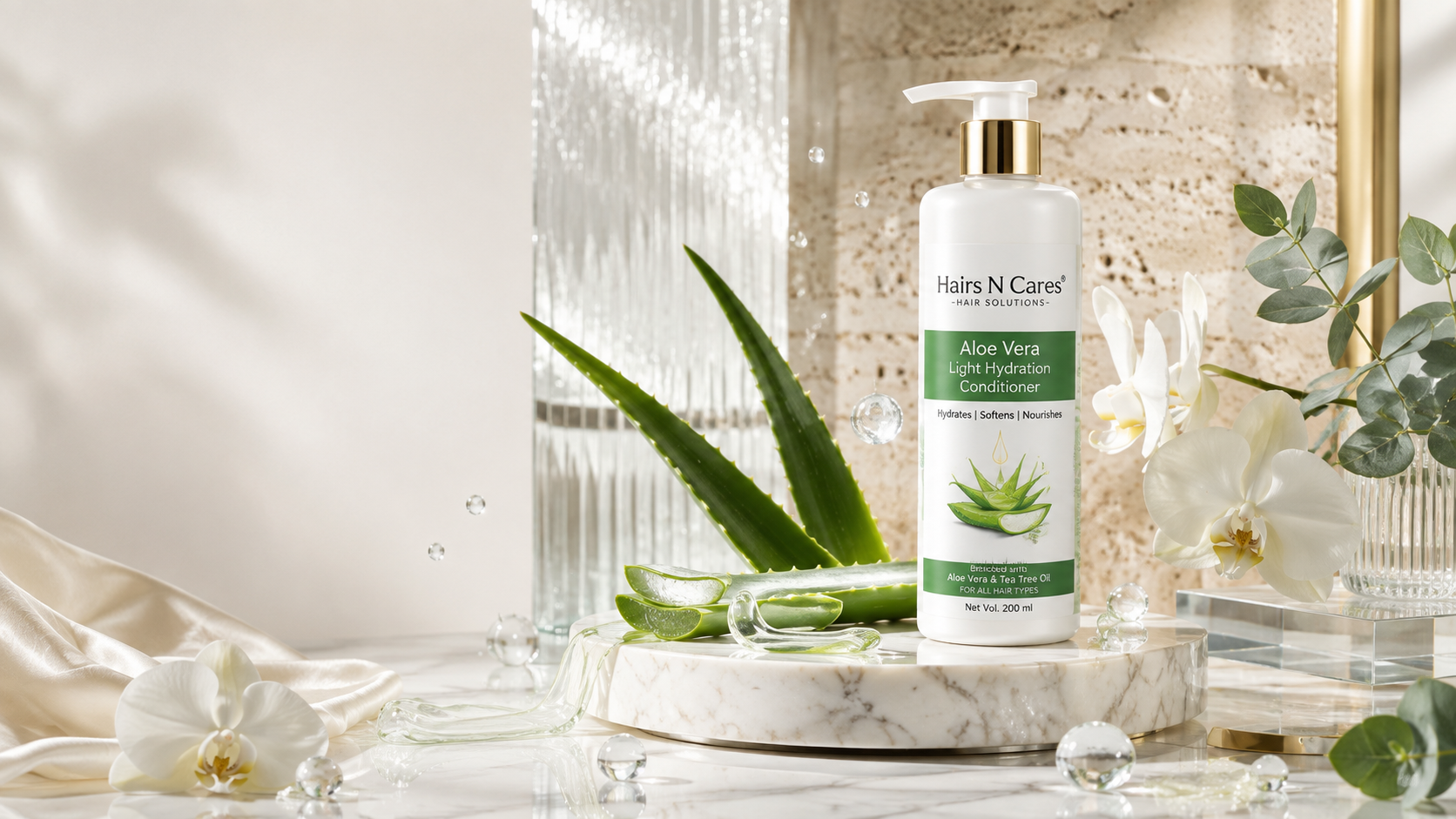
Myth
Aloe vera conditioner regrows hair
Fact
Aloe vera conditioner supports light hydration feel, softness and detangling at the hair shaft. It has no proven effect on the hair follicle and cannot stimulate regrowth or stop root-level shedding.
Aloe Aqua Light Hydration Atelier · Hairsncares
A dermatologist-guided conditioner guide for light hydration, gentle conditioning, soft detangling, dry/frizzy hair comfort and curl-friendly routines — with aloe vera hydration-feel logic, scalp caution, buildup safety and AI routine matching.
Educational product-selection guide. Aloe vera conditioner is a cosmetic hair-shaft product. Results vary. Consult a dermatologist for hair fall or scalp concerns.
What aloe vera conditioner can and cannot do for dry hair
How aloe vera works as a lightweight humectant in conditioners
Best hair types for aloe vera conditioner — fine, oily, or dry
Aloe vera conditioner vs coconut oil vs panthenol conditioner
How to apply without weighing down fine or limp hair
Ingredients to look for alongside aloe vera for best results
Common myths about aloe vera and hair growth debunked
When dry hair needs more than a light conditioner
Aloe vera conditioner helps lightly dry, frizzy, dull, wavy or curly hair feel softer, smoother and easier to detangle without a heavy rich-conditioning feel. It supports light hydration feel, gentle conditioning and curl-friendly slip on hair lengths. It may reduce breakage caused by friction and tangling, but it does not treat root-level hair fall, regrow hair, cure scalp disease or permanently repair split ends.
Aloe vera conditioner is a lightweight humectant that adds surface moisture and detangling ease without heavy buildup. It suits fine, oily, or normal hair best. It does not repair structural damage, treat hair loss, or cure scalp conditions. For severely dry or chemically damaged hair, a richer ceramide or protein conditioner may be needed. Always rinse thoroughly to avoid residue.
Aloe vera conditioners are cosmetic hair-length support products. Useful in routines for light dryness, frizz-prone hair, wavy hair, curly hair, normal hair and users who prefer a gentle-feel conditioner rather than a heavy rich-conditioning formula. They can improve softness, slip, detangling and light hydration feel depending on formula, hair type, climate and quantity. Aloe vera conditioner does not treat androgenetic alopecia, alopecia areata, telogen effluvium, PCOS-related or thyroid-related hair fall.
⚠️ Aloe vera is often perceived as gentle, but product tolerance depends on the full formula including fragrance, preservatives and botanical additives. Patch-test before use. Consult a dermatologist if hair fall is sudden, patchy, progressive or scalp is inflamed.
Ask a Hair DoctorPeople with fine, normal, or oily hair who need lightweight hydration and easy detangling without heaviness. Ideal for daily conditioning in humid climates.
Deep conditioning masks for severely damaged hair, protein treatments for breakage, or medical scalp therapy. Aloe vera conditioner provides surface moisture, not structural repair.
Hair remains dry and brittle despite consistent conditioning, you notice increased shedding, or develop scalp irritation. Persistent dryness may signal thyroid or nutritional issues.
Aloe vera is used in haircare formulas for light hydration feel, softness and gentle conditioning. It is a botanical water-gel ingredient rather than a heavy oil or butter.
Lightweight conditioners can improve combability and reduce friction during detangling without the heaviness of rich butters or oils. Good for fine, normal and curl-weighed-down hair types.
Wavy and curly hair may benefit from light hydration plus slip, especially when heavier conditioners make curls limp, weighed-down or undefined after washing.
Conditioner can reduce friction-related breakage at the hair shaft by improving slip during detangling. It cannot treat shedding from the root caused by medical or nutritional causes.
Aloe vera formulas can still irritate sensitive users because the full formula includes fragrance, preservatives, botanicals and other conditioning agents — not aloe vera alone.
Aloe concentration, base formula, conditioning agents, fragrance, preservatives, pH, hair porosity, humidity, quantity and rinse quality all affect what an aloe vera conditioner delivers.
Light hydration feel, gentle conditioning and soothing-feel positioning. Best for fine, normal, wavy and lightly dry hair.
Caution: patch-test; avoid scalp if oily or dandruff-prone.
Light hydration plus softness and frizz support. Good for gentle daily conditioning routines.
Caution: lightweight but reduce if hair feels flat.
Lightweight hydration feel for dry or dull hair. Humectant moisture support combined with aloe gel base.
Caution: in high humidity, humectants may increase frizz without sealing.
Humectant moisture feel combined with aloe conditioning base. Good for soft daily hydration.
Caution: glycerin + high humidity may cause puffiness; formula and climate matter.
Light hydration plus barrier-like cuticle support. Useful for porous or mildly damaged hair needing both hydration and sealing.
Caution: monitor if hair feels coated.
Light hydration plus shine and frizz-control appearance. Good for wavy or curly hair needing both hydration and gloss.
Caution: may feel heavier than aloe-only formulas for fine hair.
Richer hydration for dry or curly hair needing more conditioning than aloe alone can provide.
Caution: may feel heavy for fine hair. Not suitable for oily scalp application.
Gentle hydration plus hair-fiber support for mildly rough or chemically stressed hair.
Caution: balance moisture if hair feels stiff from amino acid content.
Slip and smoothing feel combined with aloe gel conditioning. High-gloss curl definition look.
Caution: buildup risk with over-layering or insufficient cleansing routine.
Fine/normal hair friendly hydration when formulated to avoid heaviness. Very light feel on wet and dry hair.
Caution: may still not be enough for very dry or coarse hair.
Ingredient names alone do not guarantee results. UseIngredient Decoderto analyse your conditioner formula, aloe concentration and conditioning agents.
Fine and normal hair benefits most from lightweight aloe vera conditioning. No heaviness, good softness and slip. Use on ends only in small amounts. Avoid scalp.
Best MatchWavy and curly hair that gets weighed down by rich conditioners may benefit from aloe vera light hydration conditioning for gentle slip and definition. Pair with leave-in if needed.
Best MatchAloe vera conditioner may help mild dryness and frizz with gentle softness and detangling support. For very dry or coarse hair, richer conditioning may be needed alongside.
Good MatchAloe vera conditioner alone may be too light for very dry, coarse or severely damaged hair. A richer conditioner or deep mask rotation is usually needed for adequate moisture feel.
May Need MoreAloe vera is often preferred in gentle-feel routines, but patch-test first. Fragrance, preservatives and botanical additives in the full formula can still cause irritation in sensitive individuals.
Patch-Test FirstNever apply any conditioning formula to oily, dandruff-prone, acne-prone or folliculitis-prone scalp. Even lightweight aloe conditioner applied near scalp can cause buildup and pimples.
Avoid Scalp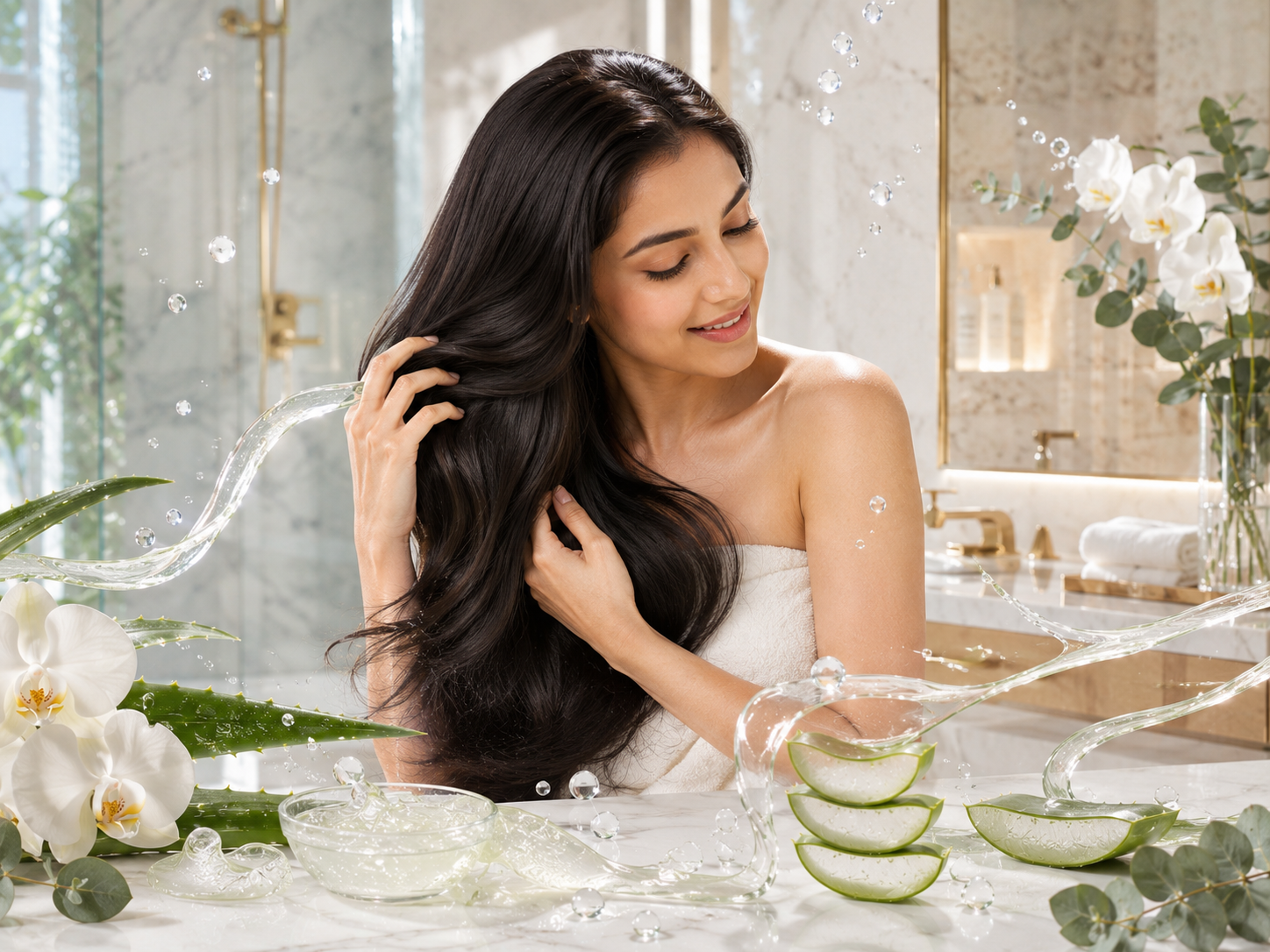
9 dermatologist-guided steps for light hydration conditioning without buildup or scalp irritation.
Cleanse scalp first with a shampoo suited to your scalp type. Aloe vera conditioner is a hair-length product, not a scalp product.
Gently squeeze water from lengths before conditioning. Lightweight conditioners work better on damp but not dripping hair.
Apply aloe vera conditioner from mid-lengths to ends. Avoid the scalp unless the product label specifically states scalp-safe.
Scalp caution: even lightweight aloe formulas can cause buildup, pimples or dandruff if applied to oily, acne-prone or dandruff-prone scalp.
Fine hair needs very little — a small amount on ends only. Wavy, curly or dry lengths may need slightly more to cover mid-lengths.
Use fingers or wide-tooth comb while conditioner is in the hair. Start from ends upward. Even with lightweight formula, detangling slip helps reduce breakage.
Typically 1 to 3 minutes for lightweight rinse-out conditioners. Follow product label or dermatologist advice.
Rinse all conditioner from hair. Even aloe gel residue near the scalp causes buildup and greasiness. Rinse thoroughly especially near roots.
If hair remains dry after rinsing, add a light leave-in mist, curl cream or serum. Avoid heavy layering that causes buildup and loses the lightweight benefit.
Still dry? This may signal your hair needs a richer conditioner or a deep mask rotation.
If hair feels flat, sticky, greasy, coated or itchy, reduce quantity, avoid scalp and switch to a lighter or fragrance-free formula. If hair is still too dry, switch to a richer conditioner.
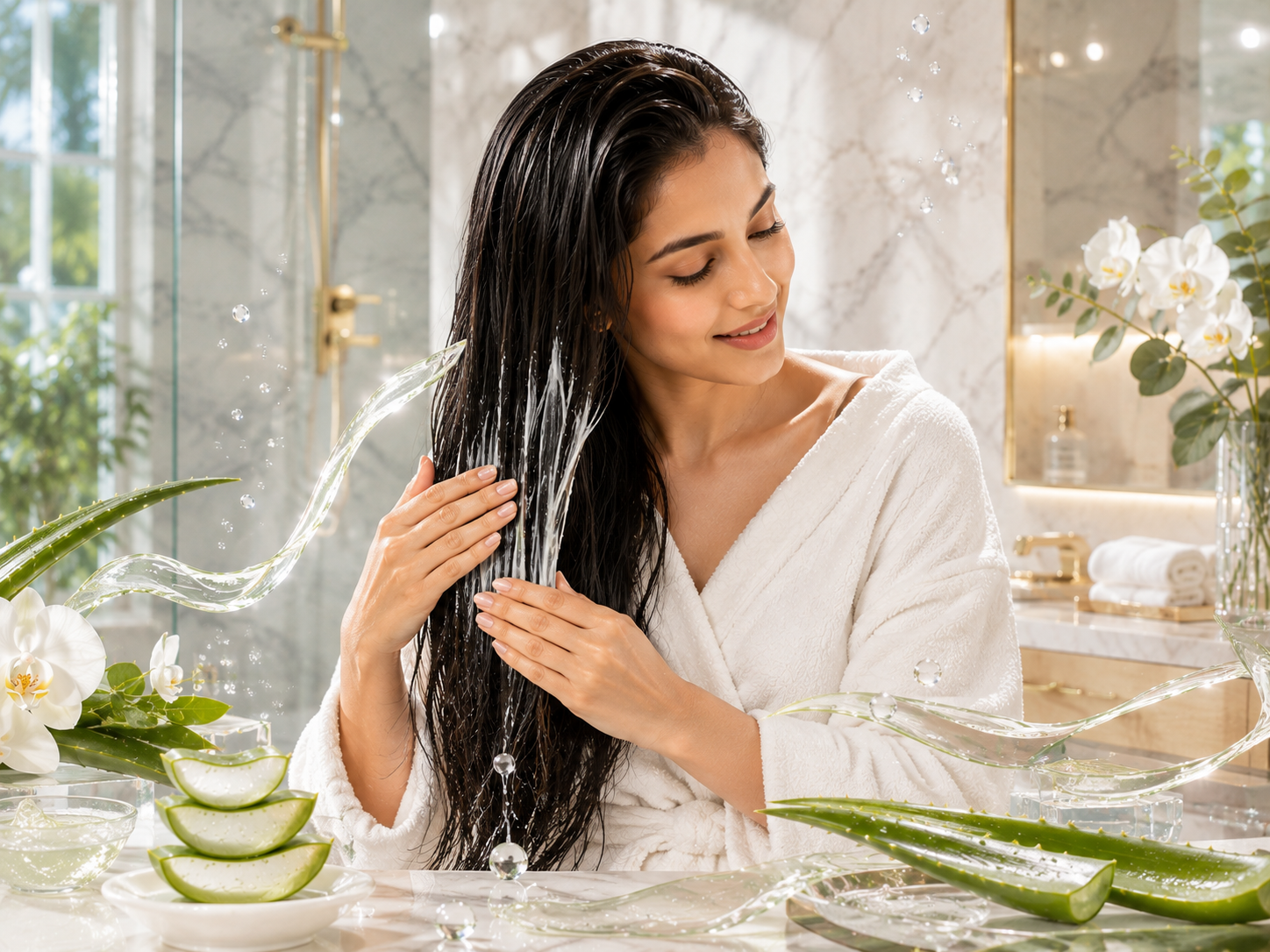
Aloe vera is commonly used in gentle-feel cosmetic formulas, but the complete formula matters. Fragrance, preservatives, botanical extracts, oils, conditioning agents or individual sensitivity can cause irritation in some users.
The most common conditioner mistake is applying it to the scalp. Conditioner on an oily, dandruff-prone or acne-prone scalp causes buildup, greasiness and scalp pimples. Apply aloe vera conditioner from mid-lengths to ends only, use the minimum effective amount, and rinse thoroughly. If hair still feels dry after correct use, consider adding a leave-in product rather than increasing the rinse-out conditioner amount.
Dermatologist-curated aloe vera conditioner selection for light hydration, gentle conditioning and curl-friendly hair routines. Price available on product page.
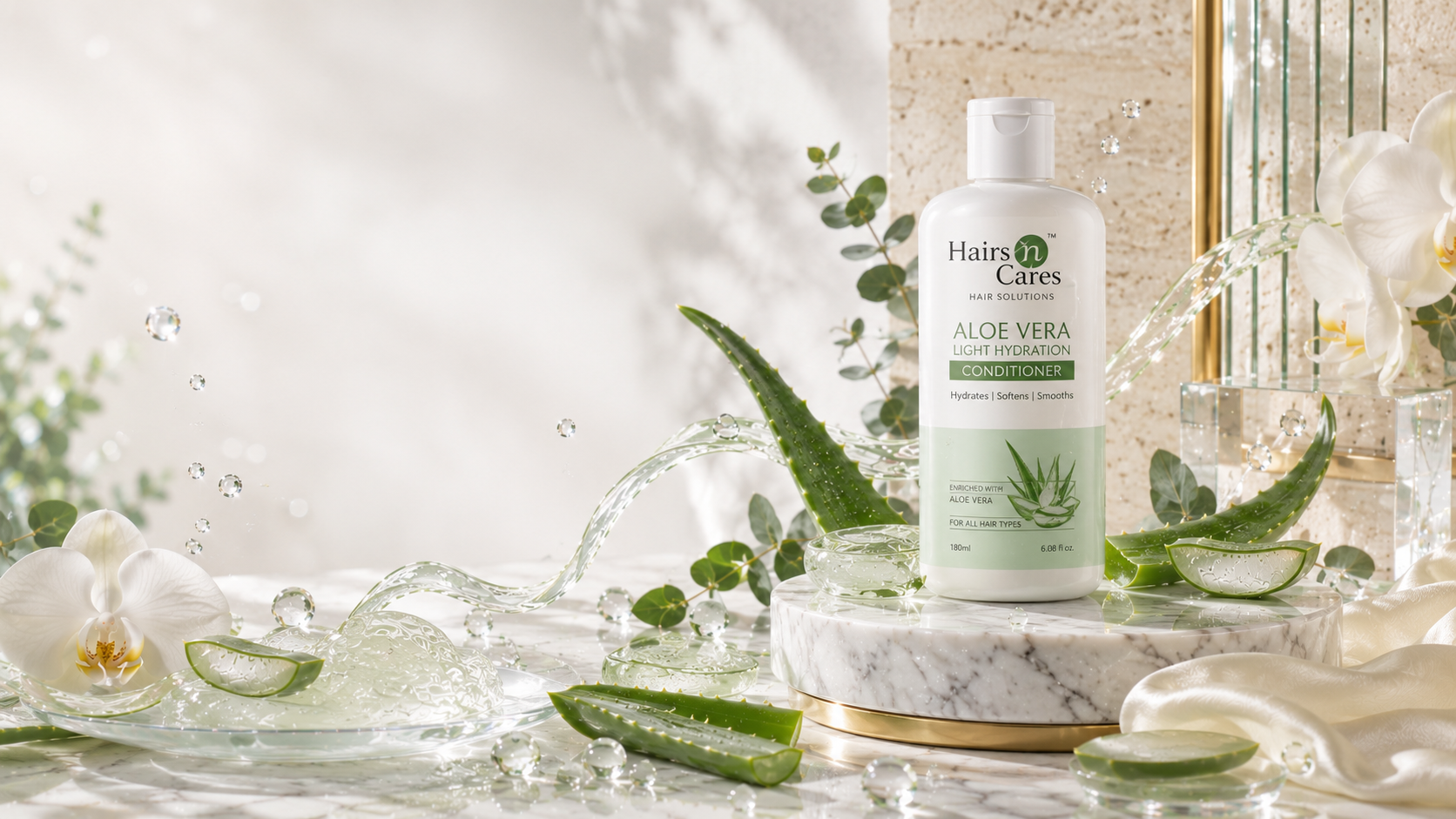
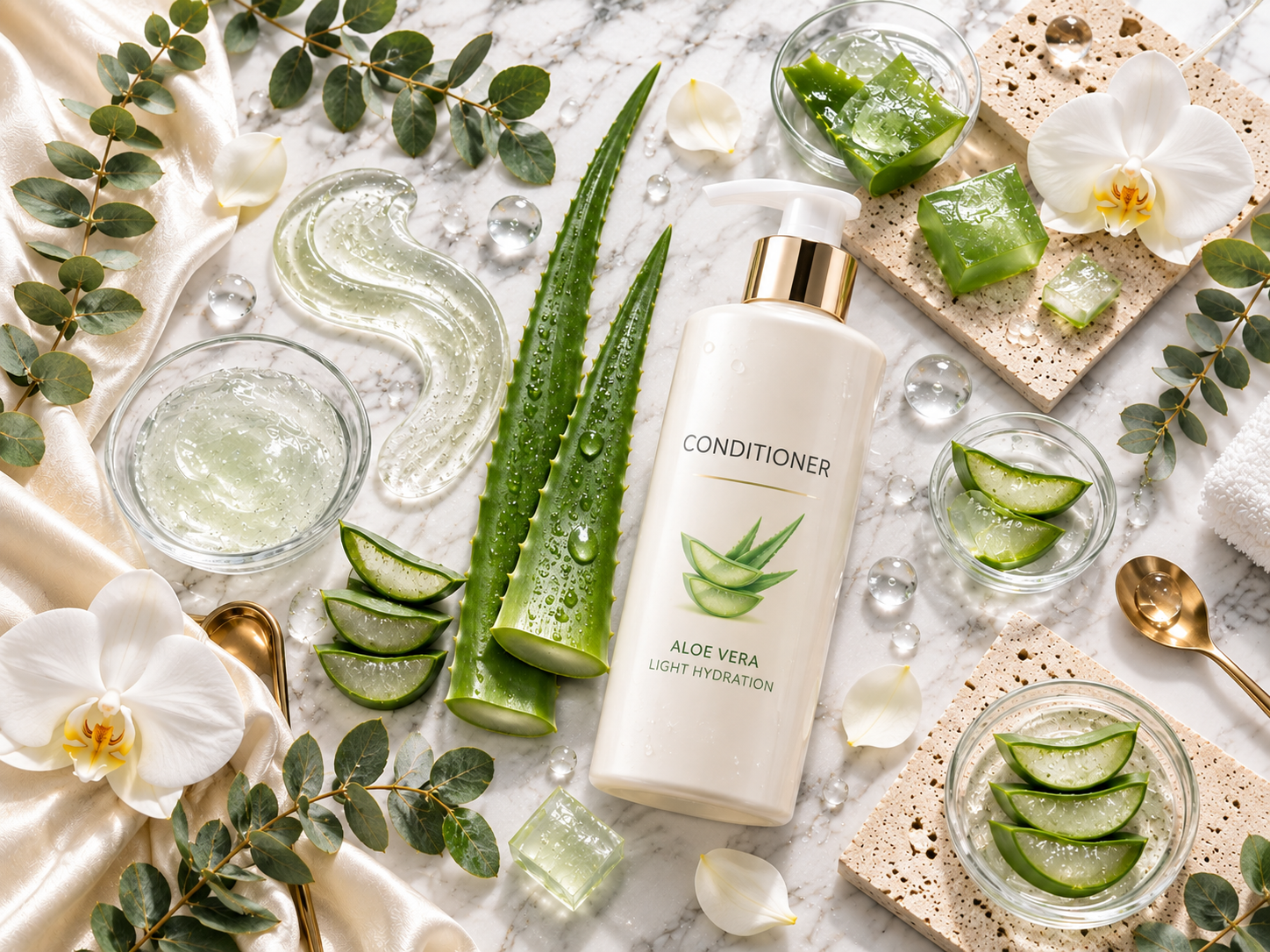
Identifies scalp type before recommending if and how to use aloe vera conditioner near the scalp. Flags dandruff, oily or acne-prone scalp types.
Start Scalp Test →Matches aloe vera conditioner type to your dryness, curl pattern, fine hair risk, sensitivity and desired light hydration or gentle-conditioning finish.
Find My Conditioner →Builds a personalised aloe vera light hydration routine — shampoo + conditioner + leave-in mist + gentle drying — matched to hair type and climate.
Build My Routine →Identifies whether your concern is light dryness, frizz, breakage or medical hair loss — so you know when conditioner helps vs when a doctor is needed.
Take AI Hair Test →Decodes your conditioner labels — identifies aloe vera concentration, fragrance, preservatives, buildup-prone ingredients and sensitivity flags.
Decode Ingredients →Aloe vera conditioner is a lightweight option. If your hair needs more conditioning, the solution is not to apply more of the same — it is to step up to a richer conditioner or deep treatment rotation.
Aloe vera conditioner regrows hair
Aloe vera conditioner supports light hydration feel, softness and detangling at the hair shaft. It has no proven effect on the hair follicle and cannot stimulate regrowth or stop root-level shedding.
Aloe vera permanently hydrates hair
Aloe vera conditioner gives temporary surface-level conditioning and softness feel. Hair is non-living fibre. Benefits must be maintained with consistent routine conditioning.
Aloe vera conditioner cures sensitive scalp
Aloe vera conditioner may feel gentle for some users, but it does not treat scalp disease, dermatitis, eczema or psoriasis. Product tolerance depends on the full formula including fragrance and preservatives.
Light conditioner can be freely applied on the scalp
Most conditioners should be used on mid-lengths and ends only, even lightweight aloe formulas. Scalp application causes buildup, pimples and worsening dandruff in oily or acne-prone scalp types.
Aloe vera suits every sensitive user
Botanical formulas can still irritate because of fragrance, preservatives, botanical additives or individual allergy. Patch-test any new aloe conditioner before full use, even if marketed as gentle.
Lightweight conditioner is enough for all dry hair
Very dry, coarse, highly porous or severely damaged hair typically needs richer conditioning than aloe vera alone. Rotating with hyaluronic acid, ceramide or shea butter conditioner may be necessary.
Dry hair and hair fall are the same
Dryness is a hair-shaft texture issue related to porosity and moisture. Hair fall may be root-level shedding from androgenetic alopecia, PCOS, thyroid or nutritional deficiency — very different conditions needing different care.
Conditioner can replace medical hair loss treatment
Medical hair loss requires dermatologist diagnosis and cause-based treatment. No conditioner, including aloe vera conditioner, treats androgenetic alopecia, hormonal hair loss or nutritional deficiency hair fall.
Stop product and consult if any of these occur after conditioner use:
Doctor-Reviewed Resources
Aloe vera conditioner is used for light dryness, gentle conditioning, soft detangling, wavy hair, curly hair, fine/normal hair and frizz-prone lengths. It is a lightweight cosmetic conditioner that supports light hydration feel and softness. Apply to mid-lengths and ends. It does not regrow hair or stop root-level shedding.
Light hydration conditioner refers to formulas that provide a lighter, less heavy conditioning feel compared to rich butter or oil-based conditioners. They support softness, slip and mild moisture feel on hair lengths without weighing hair down. Benefits are cosmetic and temporary.
Aloe vera conditioner may help lightly dry hair feel softer and smoother. Apply from mid-lengths to ends. For very dry, coarse or highly damaged hair, a richer conditioner or deep mask may be needed.
Aloe vera conditioner may help mild frizz by improving softness and slip. For very frizzy or humidity-prone hair, pair with anti-frizz serum or rotate with ceramide/argan conditioner for better control.
Curly hair that gets weighed down by rich conditioners may benefit from aloe vera light hydration conditioning for gentle slip and softness. Apply to mid-lengths and ends. Very dry or coarse curly hair may need a richer conditioner or leave-in cream.
Wavy hair that flattens with heavy conditioners may benefit from aloe vera lightweight conditioning. Apply to mid-lengths and ends. Pair with lightweight curl cream if waves need definition support.
Yes. Fine hair benefits from lightweight conditioning. Aloe vera formulas may provide softness and slip without flatness. Use on ends only in small amounts. Avoid scalp application entirely.
Yes. Normal hair can benefit from aloe vera conditioner for gentle daily conditioning, softness and ease of detangling without heavy residue. Apply to mid-lengths and ends.
Aloe vera is positioned as a gentle-feel ingredient, but product tolerance depends on the full formula including fragrance, preservatives and botanical additives. Patch-test before use. Aloe vera conditioner does not treat scalp disease or dermatitis.
Aloe vera conditioner may improve softness and mild shine feel for dull hair. For pronounced dullness, argan oil or panthenol formulas may provide more noticeable gloss support.
Yes. Aloe vera conditioner may improve slip on hair lengths, making mild tangling easier to manage. Apply to mid-lengths and ends.
Aloe vera conditioner may reduce friction-related breakage by improving slip during detangling. It does not address root-level shedding or medical hair fall.
No. Aloe vera conditioner does not treat root-level hair fall. Androgenetic alopecia, hormonal causes, nutritional deficiency and scalp disease require medical diagnosis.
No. Aloe vera conditioner cannot regrow hair. It supports cosmetic light hydration feel on hair lengths. It has no proven effect on follicle activity.
Aloe vera conditioner may temporarily smooth split ends, reducing their appearance. Split ends cannot be permanently repaired by any conditioner. Trimming is the only permanent solution.
No. Hair is non-living fibre. Aloe vera conditioner gives temporary surface-level conditioning and softness feel. Benefits must be maintained with consistent routine conditioning.
No. Aloe vera conditioner is a cosmetic product. It does not diagnose, treat or cure scalp disease, dermatitis, eczema or psoriasis. If scalp irritation persists, consult a dermatologist.
Most aloe vera conditioners should be applied to mid-lengths and ends only. Scalp application can worsen oiliness, buildup, pimples and dandruff. Apply to scalp only if the product label specifically states scalp-safe.
Follow the product label or your dermatologist advice. Most rinse-out conditioners can be used on every wash day. Adjust based on hair type and how hair responds.
Some formulations allow daily use; others do not. Follow the product label. For fine hair or those prone to flatness, daily use may cause heaviness or buildup.
Follow the product label, typically 1 to 3 minutes for lightweight rinse-out conditioners. Leave-in aloe mist stays in hair per product label instructions.
Yes. Rinse thoroughly after the label-recommended time. Even aloe gel residue near the scalp causes buildup, heaviness and scalp pimples.
Yes. Even lightweight formulas can cause buildup if overused, applied near the scalp or not rinsed thoroughly. Use a clarifying shampoo occasionally if buildup is a concern.
Even lightweight aloe formulas can feel heavy on fine or oily-tendency hair if overused or applied to the scalp. Apply minimum amount on ends only and avoid scalp.
Yes. Aloe vera is often positioned as gentle, but the full formula including fragrance, preservatives and botanical additives can cause contact irritation. Patch-test before use. Consult a dermatologist if irritation, rash or burning occurs.
No. Very dry, coarse, highly porous or severely damaged hair typically needs richer conditioning. Aloe vera conditioner may need to be supplemented with hyaluronic acid, ceramide, shea butter or deep conditioning mask rotation.
Applying any conditioning formula near a dandruff-prone scalp may worsen dandruff. Apply only to mid-lengths and ends. Use anti-dandruff shampoo on scalp only.
Aloe vera provides light hydration feel and gentle conditioning. Hyaluronic acid provides stronger humectant hydration-support for dry/frizzy/dehydrated-feeling hair. Aloe vera is better for gentle or fine-hair routines; HA is better when hair needs more hydration support.
Aloe vera focuses on light hydration and botanical gentle-feel positioning. Panthenol focuses on softness, frizz support and manageability. Both are useful in lightweight routines. Many formulas combine both.
Aloe vera provides lighter hydration; shea butter provides richer conditioning. For fine/normal/wavy hair, aloe vera is better. For very dry/coarse/curly hair, shea butter is more suitable.
Aloe vera provides light hydration and gentle feel. Argan oil provides shine and frizz-control appearance. For fine hair or gentle routines, aloe vera is better. For frizz, dullness and medium hair types, argan oil may deliver more visible results.
Yes. Rinse anti-dandruff shampoo thoroughly, then apply aloe vera conditioner to mid-lengths and ends only. Do not apply any conditioner to a dandruff-prone scalp.
Do not change any conditioner on a post-transplant scalp without explicit clearance from your hair transplant surgeon. Follow post-operative care protocols exactly.
Stop if scalp itching, pimples, rash, burning or swelling occurs. Reduce or switch to a lighter or fragrance-free formula if hair becomes flat, coated, sticky or heavy. Switch to a richer formula if hair remains too dry.
Consult a dermatologist for sudden heavy hair fall, patchy bald spots, widening part, crown thinning, receding hairline, scalp pain, pus, crusting, severe dandruff, PCOS or thyroid symptoms with hair fall, or postpartum hair fall.
Still unsure whether aloe vera conditioner suits your hair type and routine?
Take the AI Light Hydration Finder to identify the right aloe vera conditioner for your hair type, curl pattern, dryness level and sensitivity profile — or consult Dr. Amit Agarkar directly.
Your cart is empty