👨‍⚕️ Ask Dr. Amit
💧 Shop🤖 AI Finder👨‍⚕️ Doctor

Hyaluronic Acid Hydration Atelier · Hairsncares

Hyaluronic AcidHydration
Conditioner for Dry,
Dull, Frizzy & Dehydrated-Feeling Hair

A dermatologist-guided conditioner guide for dry, dull, rough, frizzy and dehydrated-feeling hair — with hyaluronic acid humectant science, moisture-feel support, lightweight hydration, buildup safety and AI routine matching.

⚠️Hyaluronic acid conditioner supports moisture feel, softness and a plumper appearance in dry or dull lengths. It is a cosmetic hair-shaft conditioner, not a hair-growth or scalp-disease treatment. Apply mainly to mid-lengths and ends.
👨‍⚕️ Dermatologist Guided🛡️ Humectant Conditioner💎 Hydration Support🎨 Dull Hair Support💧 Frizz-Softening Routine📍 Wash-Off Haircare🤖 AI Product Finder Available

Educational product-selection guide. Hyaluronic acid conditioner is a cosmetic hair-shaft product — it does not diagnose or treat medical hair loss. Results vary. Consult a dermatologist for hair fall or scalp concerns.

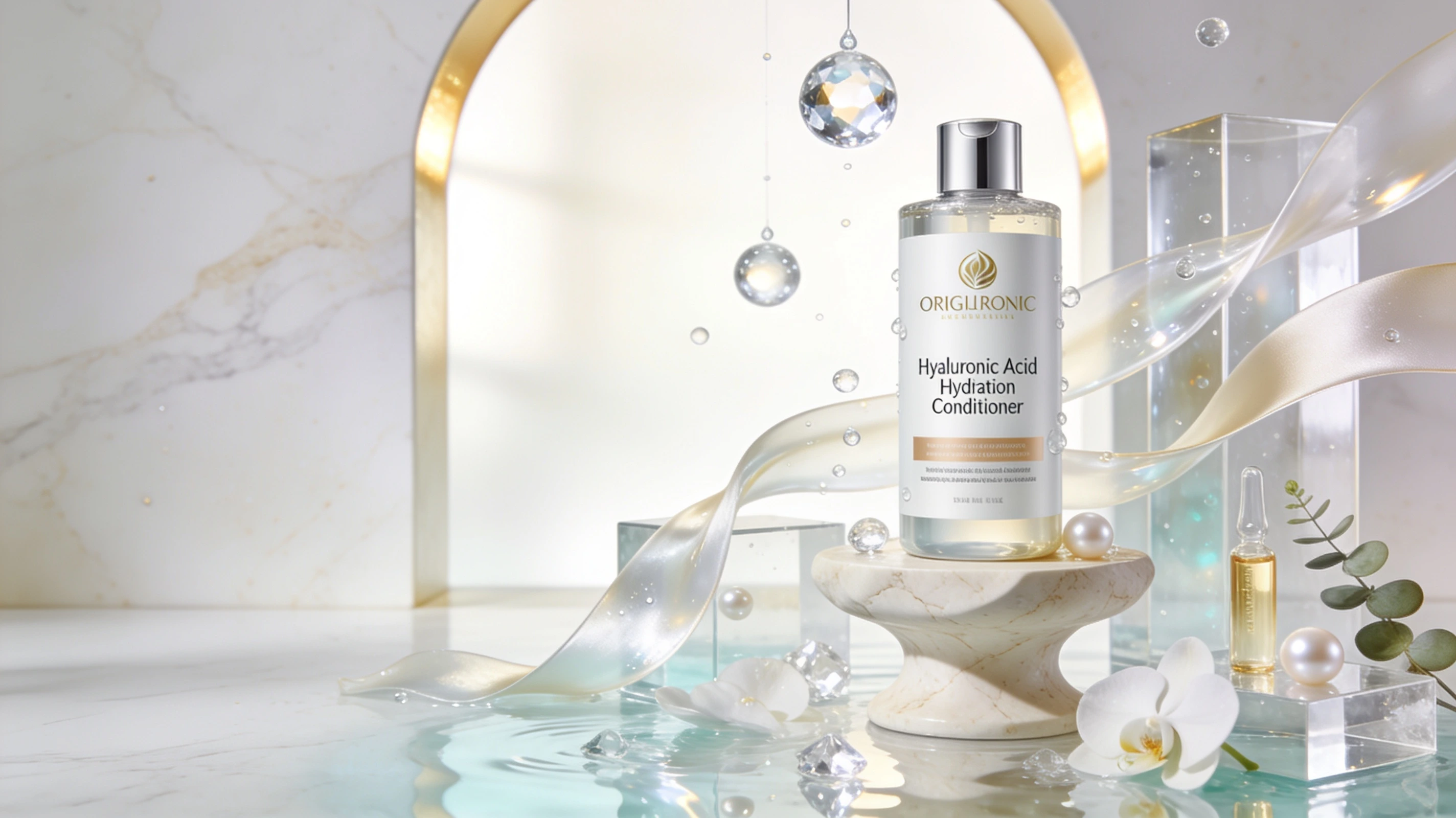
🛡️Ultra-luxury hyaluronic acid hydration conditioner — pearl cream bottle, champagne-gold label, deep emerald background
🤖 AI Product Finder  →
Dr. Amit Agarkar
MD Dermatology · Trichologist

What You’ll Learn on This Page

What hyaluronic acid conditioner can and cannot do for dry hair

How hyaluronic acid works as a humectant on hair

Hyaluronic acid vs glycerin vs ceramide conditioner compared

Best hair types — dry, dull, frizzy or dehydrated-feeling

How often to use without buildup or stickiness

Humectant conditioner in different humidity levels

Why hyaluronic acid conditioner cannot stop hair fall

When dry hair needs dermatologist evaluation


Quick Answer

What does hyaluronic acid hydration conditioner do?

Hyaluronic acid hydration conditioner helps dry, dull, rough and frizzy hair feel softer, smoother and plumper. It is a humectant that draws moisture to the hair shaft surface, supporting hydration feel and improved slip. It does not treat root-level hair fall, regrow hair, cure scalp disease or permanently repair split ends.

Best for:dry, dull, rough, dehydrated-feeling, frizz-prone hair lengths
Not for:root-level hair fall, dandruff, scalp infection, bald patches or medical hair loss
Apply:mid-lengths to ends only
Scalp caution:avoid scalp application unless product label says scalp-safe
Buildup caution:watch for stickiness, heaviness, buildup or humidity-related frizz
Next step:use AI Product Finder to match conditioner type to your hair
Featured Answer

Hyaluronic acid is a humectant that draws moisture from the environment to the hair shaft surface, supporting a softer, plumper and more hydrated feel. It works best on dry, dull, rough or dehydrated-feeling hair. It does not penetrate or repair hair structure permanently. Results are cosmetic, temporary and depend on formula, humidity and hair porosity. Reapplication after each wash is necessary.

Dermatologist-Guided

Dr. Amit Agarkar — Hyaluronic Acid Conditioner Guide

Hyaluronic acid conditioners are cosmetic hair-shaft hydration products. They may help dry, dull, rough and frizzy hair feel softer, smoother and plumper by drawing moisture to the hair surface, Hair is not living skin, so this is cosmetic surface-level hydration support, not biological repair. Hyaluronic acid conditioner does not treat androgenetic alopecia, alopecia areata, telogen effluvium, PCOS-related or thyroid-related hair fall.

⚠️ Consult a dermatologist if hair fall is sudden, patchy, progressive, associated with scalp pain, pus, crusting, severe dandruff, postpartum changes, PCOS or thyroid symptoms or fatigue.

👨‍⚕️ Ask a Hair Doctor
What It Can Do

Hyaluronic Acid Conditioner — Can & Cannot Matrix

Understanding what hyaluronic acid conditioner can and cannot do prevents unrealistic expectations.

✓ Can Help Support
  • Moisture feel and hydration support
  • Softer, smoother hair texture
  • Dry hair softness
  • Frizz from dryness support
  • Dehydrated-feeling hair support
  • Wavy and curly hair hydration
  • Plumper-looking hair feel
  • Post-shampoo softness and detangling
  • Lightweight plumping feel
  • Improved slip and manageability
  • Shine and lustre feel
  • Humectant-based hair shaft hydration
✗ Cannot Do
  • Regrow hair
  • Stop root-level shedding
  • Cure baldness
  • Reverse genetic hair loss
  • Treat alopecia areata
  • Cure PCOS / thyroid / postpartum hair fall
  • Treat scalp infection or dandruff
  • Permanently repair split ends
  • Permanently repair split ends or heat damage
  • Treat seborrheic dermatitis or scalp eczema
  • Replace dermatologist diagnosis
  • Replace medical treatment for hair loss
📊 Understand Surface Care, Not Biological Repair

Best For

People with dry, dull, rough or dehydrated-feeling hair needing lightweight humectant hydration. Works well for fine-to-normal hair that gets weighed down by heavy conditioners.

Not a Substitute For

Medical hair loss therapy, prescription dandruff treatment, or heavy barrier-repair conditioners for severely damaged hair. Hyaluronic acid conditioner supports hydration feel, not structural repair.

See a Dermatologist If

Hair fall continues despite correct conditioner use, dryness persists with scalp symptoms, or you notice thinning alongside dullness. Rule out thyroid, nutritional or hormonal causes.


Hydration Science

How hyaluronic acid supports hydration feel on hair

Five concepts behind hyaluronic acid humectant conditioning for dry and dull hair..

01

Humectant Moisture Concept

Hyaluronic acid is a humectant molecule used in skincare and haircare. In conditioner formulas, it draws moisture from the surrounding environment to the hair shaft surface, supporting a softer, plumper and more hydrated feel.

02

Moisture Draw Mechanism

Hyaluronic acid works by attracting water molecules, which may help hair feel more moisturised and less dry. Results depend on the surrounding humidity, hair porosity and the complete product formula — not the humectant alone.

03

Lightweight Hydration Feel

Hyaluronic Acid-rich conditioners paired with humectants (glycerin, panthenol, hyaluronic acid) may help hair feel less dry and more protected — supporting a moisture-lock sensation. Benefits are temporary and routine-dependent.

04

Surface Care, Not Biological Repair

Hair is not living skin. Hyaluronic acid conditioner provides cosmetic surface-level hydration support on the hair shaft. It does not biologically repair the hair fibre, regrow hair or treat root-level shedding from genetic, hormonal or nutritional causes.

05

Humidity and Formula Factors

In very high humidity, humectants can draw too much moisture and cause frizz rather than reducing it. In very low humidity, they may pull moisture from the hair. Results depend on climate, formula and whether a sealing agent like ceramide, argan or silicone is paired with the humectant.

📋 Check My Hydration Routine
Expert Insight

Many people assume hyaluronic acid works the same way on hair as it does on skin. In skincare, hyaluronic acid draws moisture into living cells. Hair is not living tissue — so the benefit is cosmetic surface-level moisture feel, not biological hydration. This does not make it useless — it makes it a conditioning tool, not a medical treatment. Understanding the difference helps you set realistic expectations.

Hyaluronic acid hydration conditioner science section editorial image for Hairsncares
Hyaluronic acid conditioner — science visual guide.
Suitability Guide

Who is hyaluronic acid conditioner best for?

Suitability depends on hair type, dryness level, porosity and humidity conditions.

💧

Dry-Feeling Hair

Hyaluronic Acid barrier conditioner is well-suited for dry, rough or brittle hair that feels stripped after shampooing and needs softness and moisture-lock support.

Best Match
🎨

Dull & Lifeless Hair

Dull, lifeless hair lacking shine and bounce may benefit from hyaluronic acid hydration conditioner. The humectant action may help hair feel plumper and look more vibrant.

Best Match
🧪

Frizz from Dryness

Frizz caused by dryness rather than damage may respond well to humectant conditioning. Pair with an anti-frizz serum or sealing conditioner in high humidity for best results.

Best Match
🪶

Fine or Low-Porosity Hair

Fine and low-porosity hair is prone to heaviness and buildup from rich barrier conditioners. Use lightweight hyaluronic acid formulas in small amounts on ends only.

Use Caution
🌀

Very Oily Scalp

Applying hyaluronic acid conditioner near an oily scalp worsens greasiness, buildup and scalp pimples. Keep strictly to mid-lengths and ends.

Use Caution
🛑

Dandruff / Scalp Acne

Never apply hyaluronic acid conditioner to dandruff-prone, acne-prone, folliculitis or inflamed scalp. Conditioner on scalp worsens buildup and skin conditions.

Avoid Scalp Application
🤖 Check My Conditioner Suitability
Hyaluronic acid hydration conditioner suitability guide for different hair types
Hyaluronic acid conditioner — suitability visual guide.
Doctor’s Tip

You may be wondering whether hyaluronic acid conditioner is the right type for your hair. If your hair feels dry, dull and rough after every wash — and heavy oil-based conditioners weigh it down — a lightweight humectant conditioner is worth trying. If your hair is damaged, porous or colour-treated, you may get better results by pairing hyaluronic acid with a ceramide or argan oil sealer for moisture-lock support.

Doctor’s Tip

You may be wondering whether Hyaluronic Acid Conditioner is the right type for your hair. The honest answer: conditioner is a cosmetic hair-shaft product that supports humectant plumping. It may improve how your hair feels — softer, smoother, more manageable — but it cannot treat root-level hair loss, dandruff, scalp disease or conditions needing medical treatment. If your concern goes beyond dryness and texture, a dermatologist evaluation is the right first step.

Application Guide

How to use hyaluronic acid barrier conditioner correctly

9 dermatologist-guided steps for smooth, soft results without scalp buildup.

1

Shampoo According to Scalp Type

Cleanse scalp thoroughly first. Use anti-dandruff, mild or clarifying shampoo suited to your scalp — not based on hair type alone.

2

Squeeze Out Excess Water

Gently squeeze water from lengths before conditioning. Conditioner on dripping wet hair is diluted and less effective on the hair shaft.

3

Apply Wash-Off Haircare Only

Apply hyaluronic acid conditioner from mid-lengths to ends. Avoid the scalp unless the product label specifically states scalp-safe use.

⚠️ Scalp caution: avoid if oily, acne-prone, dandruff-prone or post-transplant.

4

Use the Right Quantity

Fine hair needs a small amount on ends only. Thick, dry, curly or severely damaged hair may need more. Avoid loading excess — more conditioner near the scalp causes buildup.

5

Detangle Gently

Use fingers or a wide-tooth comb while conditioner is in the hair. Start from ends upward. Never yank — this causes the breakage conditioner is meant to reduce.

6

Leave for Label-Recommended Time

Rinse-out conditioners typically need 1–5 minutes. Follow the product label — extended contact increases heaviness risk without improving results.

7

Rinse Thoroughly

Rinse all conditioner residue. Leftover product near the scalp causes buildup, greasiness and scalp pimples over time. Cool rinse helps maintain cuticle smoothness.

8

Watch for Buildup Signs

If hair feels coated, greasy or limp every wash — reduce amount, avoid scalp contact, rinse more thoroughly and consider monthly clarifying shampoo if suitable.

⚠️ Buildup signal: heaviness, greasiness, limp lengths or scalp pimples.

9

Consult Dermatologist If Hair Fall Persists

Sudden, patchy, progressive or scalp-associated hair fall needs medical evaluation. No conditioner change addresses root-level hair loss.

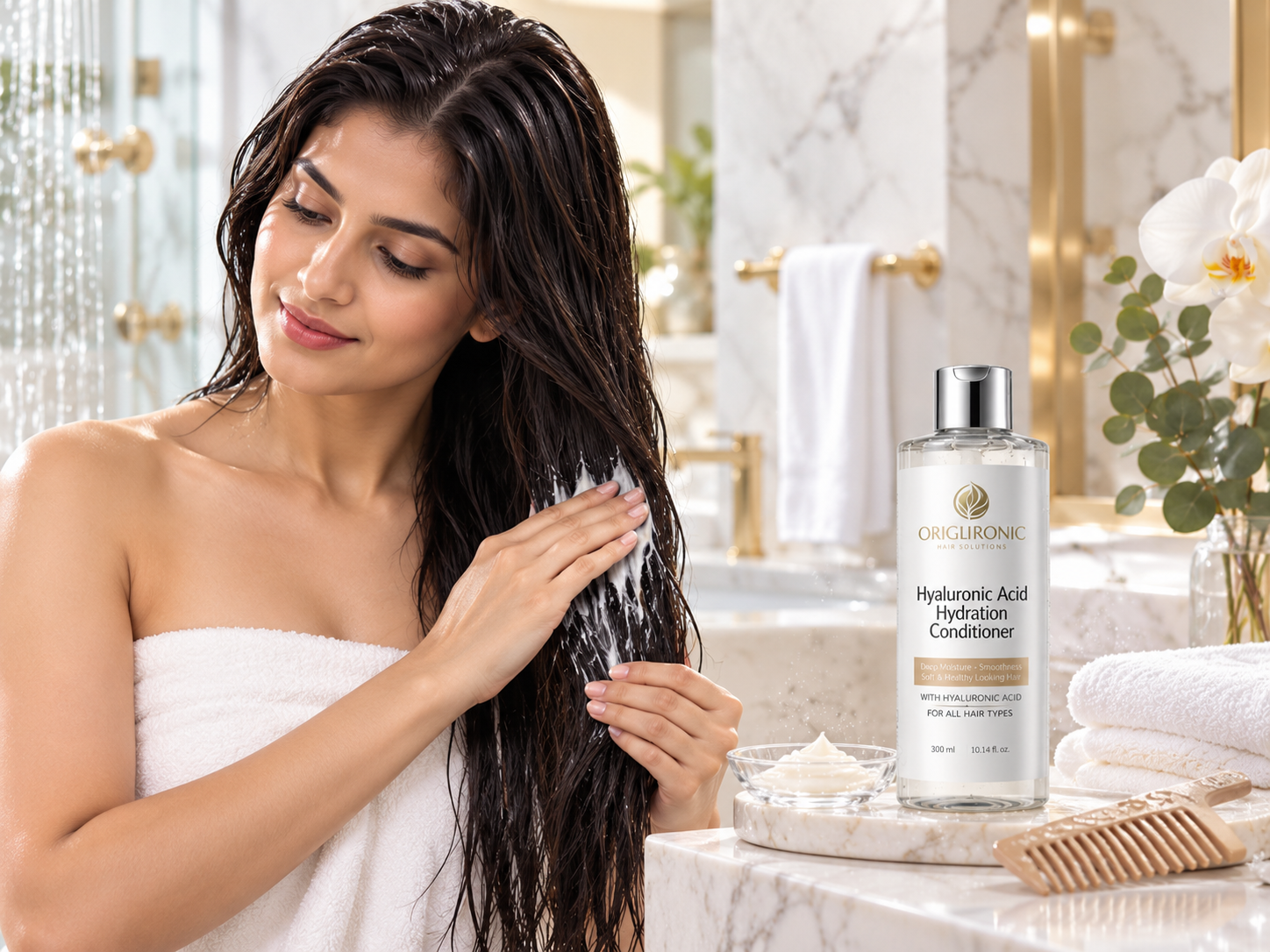
🛡️Hyaluronic acid conditioner — applied to mid-lengths and ends, wide-tooth comb, no scalp application

⚠️ Buildup Quick Check

  • Hair feels coated or waxy after conditioning
  • Hair looks flat and limp after washing
  • Scalp becomes greasy faster than usual
  • Pimples appear near scalp or hairline

→ Apply only to ends, use less, rinse more thoroughly.

How to use hyaluronic acid hydration conditioner without buildup — step-by-step guide
Hyaluronic acid conditioner — usage visual guide.
Expert Note

The most common reason humectant conditioners fail is incorrect application. Applying to dripping-wet hair dilutes the product. Applying to the scalp causes buildup and greasiness. Not rinsing thoroughly creates stickiness. And using too much makes fine hair flat. Small adjustments in technique often make more difference than switching products.

Expert Note

The most common conditioner mistake is applying it to the scalp. Conditioner on an oily, dandruff-prone or acne-prone scalp causes buildup, greasiness and scalp pimples. Apply hyaluronic acid conditioner from mid-lengths to ends only, use the minimum effective amount, and rinse thoroughly. If hair still feels dry after correct use, consider adding a leave-in product rather than increasing the rinse-out conditioner amount.

Shop Hydration Conditioner

Hyaluronic Acid Hydration Conditioner Range

Dermatologist-curated hyaluronic acid conditioner selection for dry, damaged, colour-treated and frizz-prone hair. Price available on product page.

Products for this guide are being curated. Take the AI Product Finder for personalised picks meanwhile.
Hyaluronic acid hydration conditioner product range section editorial image for Hairsncares
Hyaluronic acid conditioner — product range visual guide.
Avoid These Errors

Common Mistakes with Hydration Conditioner

Many people unknowingly reduce the effectiveness of their hydration conditioner routine. Avoiding these errors makes a meaningful difference.

Applying to Dripping Wet Hair

Excess water dilutes the conditioner. Squeeze hair gently after shampooing so it is damp, not dripping, before applying conditioner for better absorption.

Applying to Scalp

Conditioner on the scalp causes buildup, greasiness and scalp pimples. Apply from mid-lengths to ends only, unless the product label specifically says scalp-safe.

Not Rinsing Thoroughly

Residue left on hair causes stickiness, heaviness and limpness. Rinse until the water runs clean and hair feels light, smooth and slip-free.

Using Too Much Product

More conditioner does not mean more hydration. Excess product weighs down fine hair, causes flatness and increases buildup risk. Use the minimum effective amount.

Switching Products Every Week

Consistent use over 2–4 weeks is needed to assess results. Frequent switching prevents any single product from showing its effect on your hair.

Ignoring Humidity Conditions

Humectant conditioners can worsen frizz in very humid weather by drawing excess moisture. In high humidity, pair with a sealing agent or consider a non-humectant formula.

Expecting Hair Regrowth

Conditioner manages hair-shaft feel and manageability. It does not regrow hair, stop root-level shedding or treat medical hair loss. If you are losing hair, see a dermatologist.

Skipping Clarifying Wash

Product buildup accumulates over time, even with correct use. A monthly clarifying shampoo helps reset the hair and scalp, keeping conditioner effective long-term.

Doctor’s Tip

If you have been using a conditioner for weeks without noticing improvement in dryness, the problem may not be the conditioner — it may be the shampoo. An overly harsh or stripping shampoo undoes the conditioning effect. Consider switching to a gentler, sulphate-free shampoo before changing your conditioner.

Hydration Routine Bundles

Hyaluronic Acid Conditioner Routine Bundles

Each bundle is matched to a specific hair concern for purposeful hydration care.

Bundles for this guide are being curated.
📋 AI Routine BuilderShop Kits & Combos
Compare

Hyaluronic Acid Conditioner — Head-to-Head Comparison

Choose the right conditioner ingredient for your primary hair concern.

Hyaluronic Acid Conditioner
  • Humectant moisture-drawing action
  • Improved slip and manageability
  • Best for dry, porous, colour-treated hair
  • Usually soft feel, no stiffness risk
  • Dehydrated-feeling hair support
Keratin Conditioner
  • Humectant slip and softness
  • Lightweight hydration feel
  • Best for dry and frizzy hair in moderate humidity
  • Can feel sticky or frizzy in high humidity
  • Moisture-lock and smoothing feel than oils
Hyaluronic Acid Conditioner
  • Humectant-based moisture feel
  • Best for dry, dull, dehydrated-feeling hair
  • Hyaluronic acid humectant focus
  • Lightweight plumping hydration
Moisturising Conditioner
  • Humectant moisture-drawing action
  • Best for porous, damaged, colour-treated hair
  • Ceramide and lipid-based ingredients
  • Moisture-lock and smoothing feel
Hyaluronic Acid Conditioner
  • Humectant moisture-drawing action
  • Usually softer feel — no stiffness risk
  • Better for colour-treated and dry hair
  • No protein overload risk
Protein Conditioner
  • Strength-feel and structure support
  • May stiffen hair if overused
  • Better for weak, limp, over-processed hair
  • Protein overload risk in some hair types
Hyaluronic Acid Conditioner
  • Barrier-support ingredient focus
  • May or may not contain silicones
  • Usually richer, more intense smoothing
  • Better for dry or porous hair
Silicone-Free Conditioner
  • Avoids silicone-related buildup
  • May feel lighter and less coating
  • Better for silicone-sensitive or buildup-prone hair
  • Less instant smoothing effect
Conditioner (Cosmetic)
  • Reduces tangling and friction breakage
  • Improves hair-shaft feel and manageability
  • No effect on root-level follicle activity
  • Cannot address genetic or hormonal causes
Hair Fall Treatment (Medical)
  • Targets root-level shedding causes
  • Minoxidil, finasteride, nutritional support
  • Requires dermatologist diagnosis first
  • Addresses androgenetic alopecia, PCOS etc.
Hyaluronic acid hydration conditioner comparison section editorial image for Hairsncares
Hyaluronic acid conditioner — comparison visual guide.
AI Matching

Find out if hyaluronic acid conditioner is right for your hair

Our AI Product Finder assesses hair dryness, texture, porosity, frizz tendency and climate factors to match the right hydration conditioner formula.

🔬
AI Scalp Test

Identifies scalp type — oily, dry, dandruff, sensitive — to recommend whether hyaluronic acid conditioner suits your hair and how to use it safely.

Start Scalp Test →
🤖
AI Product Finder

Matches hyaluronic acid conditioner formula to your dryness level, porosity, texture, frizz pattern and humidity conditions.

Find My Hair Routine →
📋
AI Routine Builder

Builds a personalised hydration routine — shampoo + hyaluronic acid conditioner + leave-in + sealing support — matched to your hair type and climate.

Build My Routine →
🧬
AI Hair Test

Identifies whether your concern is dryness, breakage, shedding or medical hair loss — so you know when conditioner helps vs when a doctor is needed.

Take AI Hair Test →
🔓
Ingredient Decoder

Decodes hyaluronic acid conditioner ingredient lists — identifies humectants, buildup-risk ingredients, silicone content and allergen flags in your current product.

Decode Ingredients →
🤖 Start AI Product Finder
⚠️ Safety

When hyaluronic acid conditioner may cause buildup or stickiness

Stickiness, heaviness or buildup can occur with humectant conditioners — especially if too much is used, rinsing is incomplete, or the formula is not suited to the humidity level.

⚠️ Signs of Buildup / Heaviness

  • Hair feels coated or waxy after conditioning
  • Hair looks flat and limp after washing
  • Hair becomes greasy faster than before
  • Ends feel heavy or weighted down
  • Scalp feels heavy or itchy
  • Pimples appear near scalp or hairline
  • Dandruff seems worse after scalp application
  • Fine hair loses volume every wash

✓ What to Do

  • Apply only to mid-lengths and ends
  • Use smaller quantity than before
  • Rinse more thoroughly
  • Rotate with a lightweight conditioner
  • Consider clarifying shampoo monthly if suitable
  • Avoid applying product near the scalp
  • Consult dermatologist if itching, pimples or flakes persist
🔬 Check My Buildup Risk
Myths vs Facts

Common Hyaluronic Acid Hair Myths — Debunked

Misleading claims about hyaluronic acid in haircare are common. Here is what the evidence actually says.

✕  Myth

Hyaluronic acid conditioner regrows hair

✓  Fact

Hyaluronic acid conditioner is a cosmetic humectant product. It supports moisture feel on the hair shaft. It has no effect on hair follicle activity and cannot stimulate regrowth or stop root-level shedding.

✕  Myth

Hyaluronic acid deeply penetrates and repairs hair

✓  Fact

Hyaluronic acid molecules are typically too large to penetrate the hair cortex. Benefits are surface-level, cosmetic and temporary. Hair is not living skin and cannot be biologically hydrated in the same way.

✕  Myth

Hyaluronic acid conditioner treats dandruff or scalp disease

✓  Fact

Hyaluronic acid conditioner is a cosmetic hair-shaft product, not a scalp treatment. It cannot treat dandruff, eczema, psoriasis or scalp infection. These need dermatologist diagnosis and treatment.

✕  Myth

Humectant conditioner works equally in all humidity levels

✓  Fact

In very high humidity, humectants can draw excess moisture and worsen frizz. In very dry climates, they may pull moisture from the hair. Pairing with a sealing agent and choosing climate-appropriate formulas helps.

✕  Myth

Hyaluronic Acid suit every hair type equally

✓  Fact

Hyaluronic acid conditioner provides temporary cosmetic softness that washes out. Consistent use is needed for ongoing feel improvement. It does not permanently change hair structure or texture.

✕  Myth

All dry hair needs hyaluronic acid

✓  Fact

Some dry hair is better served by oils, butters or ceramide conditioners than humectants. The right choice depends on porosity, hair thickness and climate. Hyaluronic acid is one option, not the only option for dry hair.

✕  Myth

Conditioner replaces medical hair loss treatment

✓  Fact

Using too much conditioner causes buildup, heaviness and greasy feel. Use the minimum effective amount on mid-lengths and ends only. More product does not mean more benefit.

✕  Myth

More conditioner means more hydration

✓  Fact

Using too much conditioner causes buildup, heaviness and greasy feel. Use the minimum effective amount on mid-lengths and ends only. More product does not mean more benefit.

Hyaluronic acid hydration conditioner myths debunked section editorial image for Hairsncares
Hyaluronic acid conditioner — myths debunked visual guide.
⚠️ Medical Red Flags

When to consult a dermatologist — not just change conditioner

No conditioner change addresses these conditions. Early diagnosis improves outcomes for medical hair loss.

⚠️ Sudden heavy hair fall
⚠️ Hair fall for more than 6–8 weeks
⚠️ Patchy bald spots (alopecia areata)
⚠️ Widening part or crown thinning
⚠️ Receding hairline
⚠️ Scalp pain or burning
⚠️ Pus or crusting on scalp
⚠️ Severe dandruff or thick scales
⚠️ Scalp pimples with hair fall
⚠️ Itch with worsening hair fall
⚠️ Hair fall after childbirth
⚠️ Hair fall with PCOS symptoms
⚠️ Hair fall with thyroid symptoms
⚠️ Hair fall after crash diet or surgery
⚠️ Hair fall with fatigue or nutritional deficiency

Stop product and consult if any of these occur after conditioner use:

🛑 Scalp itching starts after conditioner
🛑 Pimples appear near scalp / hairline
🛑 Hair feels coated, heavy or greasy
🛑 Buildup worsens despite reducing amount
🛑 Rash, swelling or burning occurs
🛑 Hair becomes limp and heavy every wash
👨‍⚕️ Book Dermatologist Consultation

Explore More Conditioner Guides

Doctor-Reviewed Resources


Expert Answers

Frequently Asked Questions — Hyaluronic Acid Hydration Conditioner

Dermatologist-guided answers about hyaluronic acid conditioner for hair hydration.

Hyaluronic acid conditioner is used for dry, dull, rough, frizzy and dehydrated-feeling hair. It is a humectant-based conditioner that may improve softness, hydration feel, plumping appearance and slip. It does not regrow hair, stop root-level shedding or cure scalp disease.

Yes — hyaluronic acid is a humectant that draws moisture to the hair shaft. It may help dry hair feel softer, smoother and more hydrated. Apply to mid-lengths and ends. Results depend on formula, humidity and hair porosity.

Yes — dull hair often lacks moisture and surface smoothness. Hyaluronic acid conditioner may help hair look shinier and feel plumper by supporting hydration on the hair shaft surface.

Frizz caused by dryness may respond to humectant conditioning. However, in very humid climates, humectants can worsen frizz by drawing excess moisture. Pair with an anti-frizz serum or ceramide sealer if humidity-related frizz is a concern.

Curly hair is often dry and benefits from lightweight humectant hydration. Hyaluronic acid conditioner can support softness and definition without the heaviness of oil-based conditioners. Apply generously to mid-lengths and ends.

Fine hair may benefit from lightweight hyaluronic acid formulas. Use small amounts on ends only. Rich formulations or over-application can cause heaviness or flatness in fine hair. Monitor and adjust quantity.

Yes — colour-treated hair often feels drier and more porous. Hyaluronic acid conditioner may support hydration feel and softness. Use colour-safe formulations and apply to mid-lengths and ends only.

Hyaluronic acid supports a hydration feel on the hair shaft surface. Hair is not living skin, so this is cosmetic surface-level moisture support, not biological cellular hydration. Results are temporary and wash out.

Hyaluronic acid may support a plumper, fuller appearance by drawing moisture to the hair surface. This is a temporary cosmetic effect, not permanent volumising. Results depend on formula and hair type.

No. Hyaluronic acid conditioner does not treat root-level hair fall. Androgenetic alopecia, hormonal causes, nutritional deficiency and scalp disease all require medical diagnosis and cause-based treatment.

No. Hyaluronic acid conditioner cannot regrow hair. It supports cosmetic hair-shaft smoothness and barrier-like care — it has no effect on hair follicle activity or root-level hair growth.

Both are humectants. Hyaluronic acid typically feels lighter and less sticky. Glycerin is more widely available and affordable but can feel tacky in high humidity. Choice depends on hair type, climate and formula preference.

Hyaluronic acid focuses on humectant hydration and plumping feel. Ceramide conditioner focuses on barrier-support and moisture-lock for damaged or porous hair. Use hyaluronic acid for lightweight hydration; ceramide for repair-feel and colour-treated hair.

Most hyaluronic acid conditioners should be applied to mid-lengths and ends only. Applying to scalp can cause buildup, greasiness and scalp pimples. Apply to scalp only if the product label specifically states scalp-safe.

Yes — using too much, not rinsing thoroughly, or applying near the scalp can cause buildup. If hair feels sticky, heavy or coated, reduce the amount, rinse more thoroughly and consider alternating with a lighter conditioner.

Follow the product label. Most hyaluronic acid conditioners are suitable for every wash day. If hair feels sticky, heavy or limp, reduce frequency or amount. Fine hair may need less frequent use.

If hair still feels dry after rinsing, a leave-in mist or cream may help. For curly or very dry hair, layering a leave-in after rinsing can extend the hydration feel between washes.

Yes — rinse thoroughly after the label-recommended contact time. Residue near the scalp causes buildup, heaviness and scalp pimples. Thorough rinsing also helps maintain cuticle smoothness.

Yes — scalp application, large amounts or insufficient rinsing can cause product buildup, heaviness, greasiness or scalp irritation. Use a clarifying shampoo monthly if buildup is a concern, then remoisturise.

Rich hyaluronic acid formulas can feel heavy on fine, low-porosity or oily-tendency hair. Apply only to mid-lengths and ends using the minimum effective amount. Switch to a lightweight formulation if heaviness persists.

Fine hair is more prone to heaviness and buildup from rich barrier conditioners. Use lightweight hyaluronic acid formulas in small amounts on ends only. Avoid applying near the scalp and monitor for flatness or volume loss.

Curly hair is often dry and porous — a good match for hyaluronic acid hydration conditioner. Apply generously to mid-lengths and ends. Pair with a leave-in conditioner for stronger curl definition and moisture retention.

Low-porosity hair resists absorption — rich hyaluronic acid conditioners may sit on the surface causing heaviness. Lightweight formulas and warm water rinsing may help. Monitor for coating sensation.

Hyaluronic Acid focuses on barrier-like support, moisture-lock and colour-treated hair comfort. Keratin focuses on smoothing finish and frizz reduction. Both are cosmetic. Choice depends on your primary hair concern and response to each.

Hyaluronic acid conditioner focuses on humectant-based moisture draw for dry, dull hair. Moisturising conditioner may use a broader mix of emollients and oils. Both serve dry hair with different textures and feels. Both can be used together for comprehensive care.

Hyaluronic acid provides lightweight humectant hydration with a soft feel. Protein conditioner may stiffen hair if overused. For dry, dull or dehydrated-feeling hair, hyaluronic acid is usually lighter and better tolerated.

Hyaluronic acid conditioner focuses on humectant hydration — the formula may or may not also include silicones. Silicone-free conditioner avoids silicone buildup and may feel lighter. For silicone-sensitive or buildup-prone hair, check the full ingredient list regardless of the hyaluronic acid label.

Yes — rinse anti-dandruff shampoo thoroughly, then apply hyaluronic acid conditioner to mid-lengths and ends only. Do not apply conditioner to the scalp if dandruff-prone. Anti-dandruff shampoo treats the scalp; conditioner supports the hair shaft.

Do not change any conditioner on a post-transplant scalp without explicit clearance from your hair transplant surgeon. Follow post-operative care protocols exactly as given.

Applying conditioner near the scalp can cause buildup, greasiness and scalp pimples. Some fragrance or preservative ingredients may cause contact irritation or allergy. Stop and consult a dermatologist if irritation, rash or burning occurs.

Stop if scalp itching, pimples, rash, burning or swelling occurs. Reduce or switch to a lighter conditioner if hair feels coated, greasy, limp or heavy every wash. Consult a dermatologist before resuming if severe.

Consult a dermatologist for sudden heavy hair fall, patchy bald spots, widening part, crown thinning, receding hairline, scalp pain, pus, crusting, severe dandruff, PCOS or thyroid symptoms, postpartum hair fall or if hair fall worsens despite correct conditioner use.

Still unsure which hyaluronic acid conditioner suits your hair type?

Start Your Hydration Routine

Hyaluronic Acid Hydration Conditioner — Right for Your Hair?

Use the AI Routine Builder to match your conditioner by hair type, dryness level, porosity, frizz pattern and humidity — or consult Dr. Amit Agarkar directly.

⚠️ Medical Disclaimer:Hyaluronic acid hydration conditioner is a cosmetic hair-shaft support product for dry, rough, frizzy, porous, colour-treated, chemically treated and breakage-prone hair lengths. It does not diagnose, treat, cure or prevent medical hair loss, baldness, alopecia, dandruff, scalp infection, PCOS-related hair fall, thyroid-related hair fall, postpartum shedding or nutritional deficiency hair fall. It cannot permanently repair split ends, fix heat or chemical damage, or treat scalp disease. Use mainly from mid-lengths to ends unless the product label says otherwise. Stop if scalp irritation, pimples, buildup, rash, burning or worsening hair fall occurs. Consult a dermatologist for sudden, patchy, progressive or scalp-associated hair fall.
Your Cart (0)

Your cart is empty

Subtotal0
DeliveryFREE
Total0
🔒 Secure📦 Free above ₹499↩ Easy returns
💬 Hi! I'm Dr. Amit — your Hair Intelligence consultant
🌿
1
🌿
Dr. Amit
Virtual Dermatologist · Hairsncares.com
Online
What are you shopping for today?
Select a category to begin
AI-powered scalp diagnosis · Hairsncares.com
📸
Scalp Analyser
Upload scalp photo · Get conditions, root cause, and matched product protocol
📷
Drop scalp photo here or click to upload
JPG, PNG, WEBP · Clear, close-up, well-lit photo

Your image is processed privately by our AI engine and saved securely with your account.