Skip to content
Dermatologist-reviewed scalp education · Dry shampoo is a refresher, not a cleanser · It does not replace washing Last medically reviewed: 23 July 2026 Medical editorial policy Cosmetic-claims policy Aerosol-safety policy Correction policy Commercial-affiliation disclosure Book a consultation
Persistent itching, pain, pustules, crusting, sudden shedding or patchy hair loss requires medical assessment rather than a change of product.

Scalp Cleansing and Wash-Routine Intelligence

Dry Shampoo vs Regular Shampoo: Differences, Uses, Scalp Health and Which One You Need

These are not two versions of the same product. Regular shampoo uses water and surfactants to physically lift sebum, sweat, environmental debris and styling residue off the scalp and rinse them away. Dry shampoo uses absorbent powders to take up some surface oil, reducing the appearance of greasiness without removing anything. Absorption is not cleansing — which is why dry shampoo can be genuinely useful between washes and still cannot replace one. Used well it extends a style; relied on instead of washing it contributes to buildup, irritation and, in some people, folliculitis.

Scalp Health Prioritised
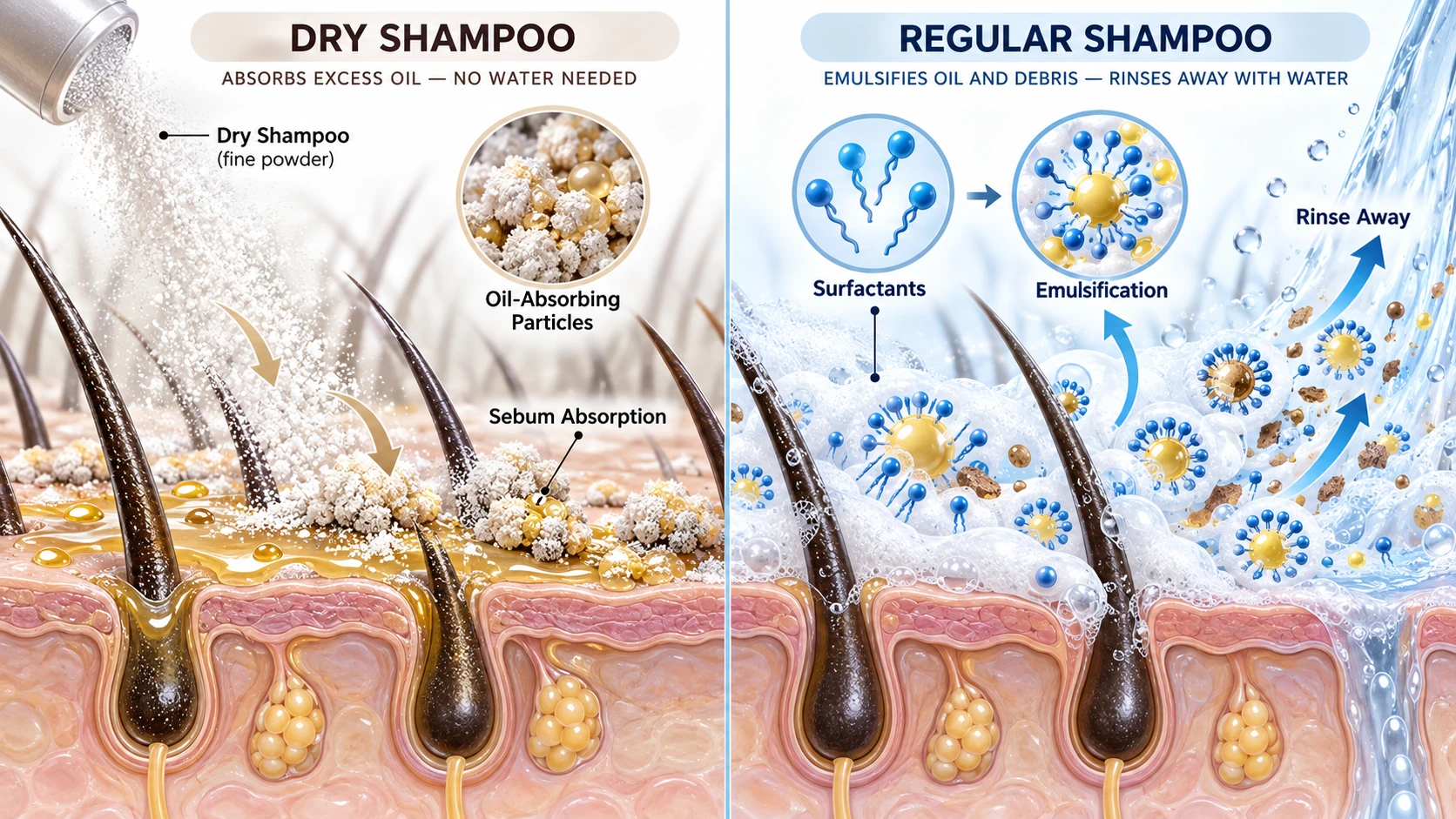
Scientific comparison of dry shampoo oil absorption and regular shampoo surfactant cleansing for scalp health
Absorption and removal — two different processes, not two versions of one.
Cosmetic Claims Audited

Quick Answer

Regular shampoo cleanses the scalp and hair with water and surfactants, physically removing oil, sweat, debris and residue. Dry shampoo absorbs some surface oil and improves appearance temporarily, but does not cleanse the scalp or remove buildup. Dry shampoo does not replace washing. It can be genuinely useful between washes; it is not a substitute for one.

Read this first: If your scalp is itchy, flaking, tender or inflamed, the answer is washing and assessment — not another application of dry shampoo.

At a Glance

Absorption and Removal, Compared

These panels are not ranked against each other, but they are not equivalent either. One category cleanses; the other manages appearance between cleanses.

Dry Shampoo

CleansingNo. It absorbs surface oil; it does not remove sebum, sweat, dead skin cells, product residue or microbial load
Oil absorptionYes — absorbent starches and minerals take up some surface sebum
Scalp hygieneDoes not maintain scalp hygiene. The scalp remains uncleansed
BuildupContributes to it. Product plus unremoved sebum accumulates over repeated use
VolumeOften adds texture and apparent root volume as a secondary effect
OdourFragrance may mask odour temporarily without addressing its source
SweatDoes not remove sweat or its residues from the scalp
Fine hairFrequently effective for appearance; excess is more visible
Curly hairScalp access is harder; product can lodge and be difficult to remove
Dark hairWhite cast is a genuine risk — tinted formulas exist but shade match varies
Sensitive scalpFine particles, fragrance and repeated layering are the considerations
DandruffDoes not treat it, and may make flaking harder to distinguish from residue
TravelPractical where washing is genuinely unavailable
FrequencyOccasional use between washes. No fixed maximum is published here — it depends on scalp, hair and routine
RemovalRequires washing. Layering without washing is the core problem
CostFormat, size and quantity used per application drive cost
A Refresher — Not a Cleanser

Regular Shampoo

CleansingYes. Surfactants emulsify sebum and residue so water can rinse them away
Oil absorptionRemoves oil rather than absorbing it — a different process
Scalp hygieneThe primary means of maintaining it
BuildupRemoves it. Formula and technique determine how thoroughly
VolumeClean hair often looks fuller; formula affects the result
OdourRemoves the source rather than masking it
SweatRemoves sweat and its residues
Fine hairWide formula range; conditioning load is the variable
Curly hairWash frequency and technique matter; extensive curl-focused options exist
Dark hairNo residue or cast concern
Sensitive scalpSurfactants, fragrance and preservatives are the considerations
DandruffA medicated shampoo may be indicated — a separate product category
TravelRequires water and facilities
FrequencyDepends on sebum, texture, activity, climate and styling. No universal number applies
RemovalNot applicable — this is the removal step
CostSurfactant and conditioning technology, size and brand drive cost
Cleansing — No Universal Frequency

The Core Correction

Absorption Is Not Cleansing

This is the single most consequential misunderstanding about dry shampoo, and almost every other question on this page follows from it. Absorbing oil changes how hair looks. Cleansing removes what is actually on the scalp. These are different processes with different outcomes.

What dry shampoo does

  • Absorbs some surface sebum
  • Reduces the appearance of greasiness
  • Adds texture and apparent root volume
  • May mask odour with fragrance
  • Extends the look of a style between washes
  • Works without water or facilities

What it does not do

  • Remove sebum from the scalp
  • Remove sweat or its residues
  • Remove dead skin cells
  • Remove product buildup
  • Reduce microbial load
  • Replace washing

What regular shampoo does

  • Emulsifies sebum so water can carry it away
  • Removes sweat, debris and styling residue
  • Clears loose scale and dead skin cells
  • Removes accumulated product
  • Maintains scalp hygiene
  • Requires water and facilities
Dry shampoo can be genuinely useful between washes. It cannot be useful instead of them — because everything it leaves behind is still there.

Where Dry Shampoo Is Reasonable — and Where It Is Not

There are real circumstances in which washing is genuinely difficult or impossible. Acknowledging that is not the same as treating dry shampoo as an equivalent option.

Reasonable circumstances

  • Travel without reliable facilities
  • Water scarcity or restricted supply
  • Illness, injury or reduced mobility limiting washing
  • Post-operative periods where washing is restricted on medical advice
  • Extending a style between washes
  • Managing appearance during a long day

Where it is the wrong tool

  • An itchy, flaking or tender scalp
  • Visible inflammation or pustules
  • Managing dandruff or seborrhoeic dermatitis
  • Removing accumulated styling product
  • After heavy sweating, as a substitute for washing
  • Replacing washing indefinitely

If washing is difficult for you

  • Speak to a clinician or carer about practical options
  • Rinsing with water alone still removes more than dry shampoo does
  • No-rinse cleansing products exist and are a different category
  • Scalp symptoms in this situation deserve assessment, not tolerance
  • This is a practical constraint, not a personal failing

How Each One Works

The Cleansing Pathway

Follow what happens to the sebum in each case. In one pathway it leaves the scalp; in the other it stays, with powder on top of it.

Starting Condition

Sebum from the scalp travels along the hair shaft. Sweat, environmental debris, dead skin cells and styling residue accumulate alongside it over time.

Dry Shampoo: Particle Absorption

Absorbent starches and minerals take up some surface sebum. Hair looks and feels less oily, and gains texture. The sebum, sweat, debris and residue remain on the scalp — now with powder among them.

Nothing is removed

Shampoo: Surfactant Emulsification

Surfactants surround oily soil and suspend it in water. This is physical removal — the sebum, debris and residue are lifted off the surface rather than covered.

Removal, not masking

Shampoo: Rinsing and Clearance

Rinse water carries the suspended soil away. What was on the scalp is now gone. Thorough rinsing matters — incomplete rinsing leaves residue that can itself cause irritation.

The clearance step

What Accumulates Over Time

Repeated dry-shampoo use without washing layers powder over unremoved sebum and debris. This is the mechanism behind buildup, dullness, itching and, in susceptible people, folliculitis.

Follow step two carefully. Dry shampoo changes how the scalp looks without changing what is on it — which is precisely why it extends a style and cannot replace a wash.

Abstract diagram comparing dry shampoo particle absorption with surfactant emulsification and rinsing on the scalp
In one pathway the sebum leaves. In the other it stays.

In Detail

Full Comparison Table

Read the five “removes” rows together. They answer the question this page exists to settle.

Swipe to compare →

Dry shampoo and regular shampoo compared across mechanism, scalp effect, hair type, safety and practical use. General education — individual products vary, and neither is a hair-loss treatment.
ConsiderationDry ShampooRegular Shampoo
Product categoryTemporary cosmetic refresherWater-based cleansing product
Core mechanismPowder absorbs surface sebumSurfactants emulsify soil; water rinses it away
Water requiredNoYes
FormatsAerosol, loose powder, foamLiquid, cream, bar, concentrate
Removes sebum from scalpNo — absorbs some at the surfaceYes
Removes sweatNoYes
Removes dead skin cellsNoYes
Removes styling residueNoYes
Affects microbial loadNoReduces surface load through washing
Maintains scalp hygieneNoYes — the primary means
Reduces appearance of oilYesYes, by removing it
Adds textureOften, as a secondary effectNot typically
Adds apparent root volumeOftenClean hair may look fuller
Masks odourFragrance may mask temporarilyRemoves the source
Buildup effectContributes to buildupRemoves buildup
Scalp itchingMay worsen with repeated layeringWashing usually relieves residue-related itch
FlakingResidue can mimic or worsen visible flakingRemoves loose scale and residue
Folliculitis riskPossible with heavy repeated use in susceptible peopleNot associated with appropriate washing
Fine hairEffective for appearance; excess more visibleWide range of suitable formulas
Thick hairReaching all roots is harderSectioning helps distribution
Straight hairDistributes relatively easilyStraightforward
Curly hairScalp access harder; product can lodgeWash frequency and technique matter
Coily hairRemoval is more difficult; buildup less visibleCurl-focused formulas widely available
Dark hairWhite cast is a genuine risk; tinted options varyNo cast concern
Light hairCast less visibleNo cast concern
Grey hairCast may be less obvious but residue still accumulatesNo cast concern
Colour-treated hairDoes not affect dye directly; buildup can dull appearanceFormula affects colour retention
Oily scalpManages appearance temporarilyAddresses the sebum itself
Dry scalpMay increase the dry, rough feelGentle formulas suit better
Sensitive scalpFine particles, fragrance and layering are concernsSurfactant, fragrance and preservative choice matter
DandruffDoes not treat it; may confuse residue with flakingA medicated shampoo may be indicated
Seborrhoeic dermatitisNot a treatment; may aggravate an inflamed scalpAppropriate treatment is a separate product category
Post-exercise useDoes not remove sweatRemoves sweat and residues
Travel usePractical where facilities are unavailableRequires water and facilities
Water scarcityA reasonable practical optionMay not be feasible
Reduced mobility or illnessA reasonable practical option — discuss with a clinician or carerMay require assistance
Aerosol flammabilityAerosol formats are flammableNot applicable
Inhalation concernFine particles — avoid inhaling; ventilateNot applicable
Eye exposureAvoid; keep clear of the eyesAvoid; rinse if contact occurs
Application surfaceDry hair, at the rootsWet hair and scalp
RemovalRequires washingNot applicable
Frequency guidanceOccasional between washes; no fixed maximum published hereIndividual; no universal number applies
Cost per useFormat, size and quantity usedFormula, size and quantity used
Main limitationDoes not cleanse and does not replace washingRequires water, time and facilities

Dry Shampoo · Temporary Refresher

Dry Shampoo: Temporary Oil Absorption and Appearance Refresh

The name is the problem. There is no shampoo in dry shampoo — no surfactant, no water, no removal. What there is, used sensibly, is still genuinely useful.

Absorbent ingredients

Rice, tapioca and corn starch, silica, kaolin, and aluminium starch octenylsuccinate are common. Alcohol appears in aerosol formats as a carrier. Fragrance is near-universal, and tinted versions add pigments to reduce white cast.

What it leaves behind

Everything except the sebum it absorbed — and even that stays on the scalp, now bound to powder. Sweat residues, dead skin cells, environmental debris, styling product and the scalp’s microbial load are all untouched.

Aerosol, powder and foam formats

Aerosols distribute finely but are flammable and must be kept from flame, sparks and hot tools. Loose powders give more control but need careful dispensing. Foams behave differently again. Format affects both application and safety.

Fine-particle inhalation

Fine powders and aerosol mists should not be deliberately inhaled. Apply in a ventilated space, hold the container away from the face, and avoid dispensing toward the breathing zone.

White cast on dark hair

A genuine and common problem. Tinted formulas exist but shade matching varies, and overapplication remains visible under overhead light and camera flash. Applying at a distance and working the product in reduces it.

Application technique

Section dry hair, hold the container at the distance stated on the label, apply a small amount to the roots, wait briefly, then massage or brush through. Waiting before working it in is the step most often skipped.

Buildup and what it causes

Repeated use without washing layers powder over unremoved sebum and debris. The result is dull, waxy roots, increased tangling, itching and sometimes visible flaking that is residue rather than a scalp condition.

Folliculitis and susceptible scalps

Heavy repeated use can contribute to follicular inflammation in susceptible people. Pustules, tenderness or persistent itching are reasons to wash, stop the product and seek assessment — not to apply more.

Curly, coily and textured hair

Scalp access is harder and product lodges more readily, while buildup is less visible until it is substantial. Removal takes more effort. This does not exclude use — it means removal deserves more attention than usual.

When it is the wrong tool

An itchy, flaking, tender or inflamed scalp. Managing dandruff or seborrhoeic dermatitis. Removing styling product. Substituting for washing after heavy sweating. In each case the answer is washing, and sometimes assessment.

Where it genuinely helps

Travel without facilities, water scarcity, illness, injury or reduced mobility that limits washing, medically restricted post-operative periods, and simply extending a style. These are real constraints and dry shampoo is a reasonable response to them.

Dry-Shampoo Reality Check

Ten corrections worth carrying to the shelf

  1. Dry shampoo does not cleanse the scalp
  2. It does not remove sebum, sweat or dead skin cells
  3. It does not remove product buildup
  4. It does not reduce microbial load
  5. It does not replace washing
  6. Repeated use without washing causes buildup
  7. It can contribute to folliculitis in susceptible people
  8. It does not treat dandruff or any scalp condition
  9. Aerosol formats are flammable
  10. Fine particles should not be inhaled
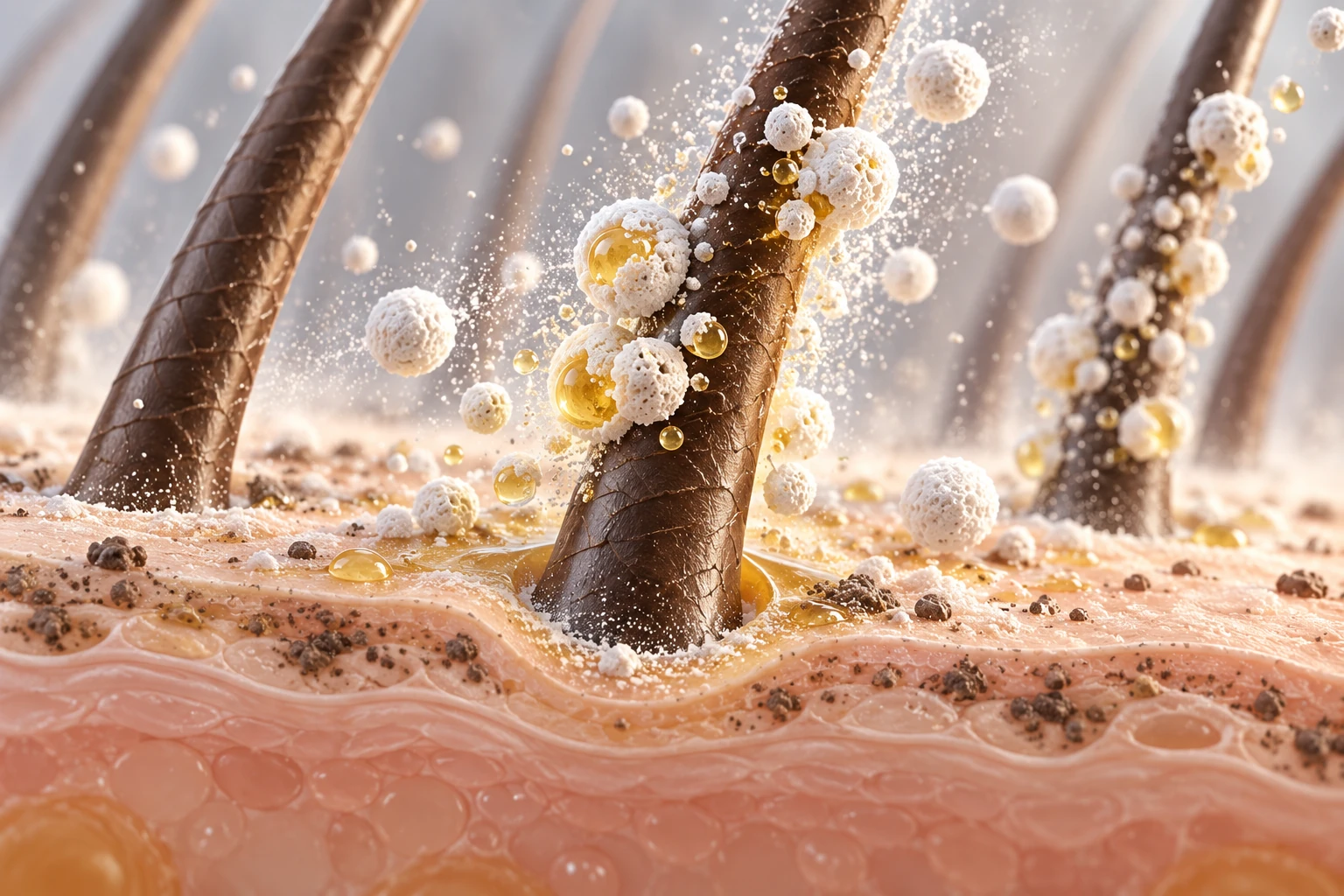
Abstract illustration of dry shampoo absorbent particles taking up surface sebum while scalp soil remains
Powder over sebum — the appearance changes, the scalp does not.

Regular Shampoo · Physical Removal

Regular Shampoo: Surfactant Cleansing and Scalp Hygiene

Washing is the only process on this page that removes anything. Everything else manages how the scalp looks in between.

How surfactants work

Surfactant molecules have a water-attracting end and an oil-attracting end. They surround oily soil, suspend it in water, and hold it there until rinsing carries it off the scalp. Nothing is masked or absorbed — it leaves.

Surfactant systems vary widely

Anionic surfactants provide most of the cleansing and foam; amphoterics moderate harshness; non-ionics contribute mildness. The combination determines how a formula behaves, and the range within “regular shampoo” is enormous.

Sulfate-free is not automatically milder

A common misconception. Sulfate-free describes the absence of one surfactant class. A sulfate-free formula can be irritating and a sulfate-containing one well tolerated — the finished formula matters more than any single ingredient.

Foam is not a measure of cleansing

Low foam does not mean poor cleansing, and rich foam does not prove the opposite. Foam depends on the surfactant blend and on how much sebum and product are present — which is why the second wash foams more.

Wash frequency has no universal answer

No number is published here. Appropriate frequency depends on sebum production, hair texture and curl pattern, activity level, climate, styling routine, scalp condition and personal preference. Anyone stating a universal figure is overreaching.

Signs frequency may need adjusting

Too infrequent: persistent oiliness, odour, itching, flaking or discomfort. Too frequent: tightness, dryness, irritation or brittle lengths. Your scalp gives better feedback than any general rule.

Rinsing thoroughly

Incomplete rinsing leaves residue that can itself cause irritation and flaking — sometimes mistaken for dandruff. Rinsing is not an afterthought; it is the step that completes the removal.

Scalp-focused technique

Concentrate cleansing at the scalp, where the sebum is. The lengths are largely cleaned by the rinse water passing over them, which also limits unnecessary exposure of fragile or coloured ends.

Clarifying and medicated formulas

Clarifying shampoos remove residue more aggressively — useful for buildup, but over-clarifying irritates. Medicated anti-dandruff shampoos are a separate category with active ingredients and their own regulatory considerations.

Hair type and formula range

Fine, thick, straight, curly, coily, colour-treated, bleached and textured hair all have well-developed formula options. “Regular shampoo” is a category name, not a single product with fixed properties.

What it cannot do

Washing does not treat androgenetic alopecia, reverse chemical damage or grow hair. It also is not automatically gentler than a medicated shampoo. Over-washing with a poorly matched formula can itself cause dryness and irritation.

Regular-Shampoo Reality Check

Ten corrections worth carrying to the shelf

  1. “Regular shampoo” is not one standard formula
  2. Sulfate-free does not automatically mean milder
  3. Foam volume does not measure cleansing power
  4. There is no universal correct wash frequency
  5. Over-washing with a harsh formula can irritate
  6. Under-washing can cause buildup, odour and itching
  7. Incomplete rinsing can cause residue-related flaking
  8. Washing does not treat medical hair loss
  9. Clarifying shampoo is not the same as medicated shampoo
  10. Scalp feedback is more reliable than any general rule
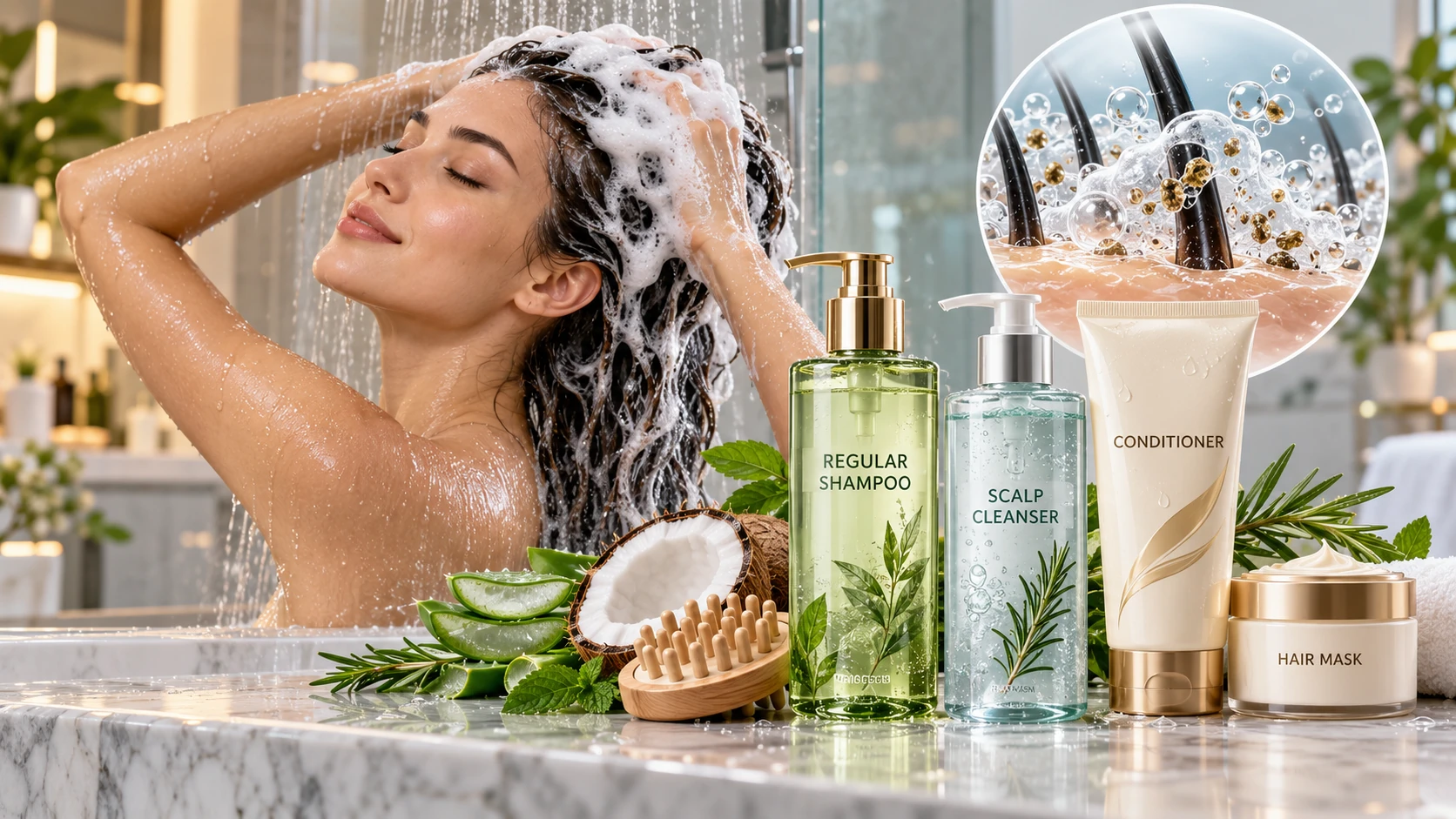
Abstract illustration of surfactant micelles emulsifying sebum and rinse water carrying soil away from the scalp
Emulsify, suspend, rinse — the soil leaves the scalp.

By Scenario

Which Product Fits Which Situation?

Some of these are genuinely good uses for dry shampoo. Others are situations where reaching for it makes things worse. Educational starting points — not a diagnosis.

Oily Roots by Mid-Day

The situation
Sebum production outpaces the wash interval.
Dry-shampoo relevance
Manages appearance temporarily; the sebum stays on the scalp.
Regular-shampoo relevance
Addresses the sebum itself.
What to be careful of assuming
That dry shampoo reduces oil production.
Practical direction
Consider whether wash frequency suits your scalp rather than layering product.

Fine Hair That Goes Flat

The situation
Fine fibres collapse under sebum weight.
Dry-shampoo relevance
Absorbs oil and adds texture — often effective for appearance.
Regular-shampoo relevance
Removes the weight entirely.
What to be careful of assuming
That texture from residue equals clean hair.
Practical direction
Effective, but removal still matters.

Post-Workout Hair

The situation
Sweat and its residues on the scalp.
Dry-shampoo relevance
Does not remove sweat. Masks appearance only.
Regular-shampoo relevance
Removes sweat and residues.
What to be careful of assuming
That dry shampoo substitutes for washing after exercise.
Practical direction
Rinsing with water alone removes more than dry shampoo does.

Travel Without Facilities

The situation
Washing genuinely unavailable.
Dry-shampoo relevance
A reasonable practical option.
Regular-shampoo relevance
Not feasible without facilities.
What to be careful of assuming
That extended use is equivalent to washing.
Practical direction
Wash as soon as facilities allow.

Water Scarcity

The situation
Washing restricted by supply.
Dry-shampoo relevance
A reasonable practical response to a real constraint.
Regular-shampoo relevance
May not be feasible.
What to be careful of assuming
That this makes dry shampoo a cleanser.
Practical direction
Rinsing with water alone still removes more; scalp symptoms still deserve assessment.

Illness or Reduced Mobility

The situation
Washing physically difficult or restricted.
Dry-shampoo relevance
A reasonable practical option. This is a constraint, not a failing.
Regular-shampoo relevance
May require assistance.
What to be careful of assuming
That scalp symptoms should simply be tolerated.
Practical direction
Discuss practical options with a clinician or carer; no-rinse cleansers are a separate category.

Post-Operative Restriction

The situation
Washing restricted on medical advice.
Dry-shampoo relevance
May be permitted — but only per your treating team.
Regular-shampoo relevance
Timing determined by the surgical or medical team.
What to be careful of assuming
That general guidance overrides medical instruction.
Practical direction
Follow your treating team’s specific direction.

Between-Wash Style Extension

The situation
Wanting a style to last another day.
Dry-shampoo relevance
Its most straightforward and reasonable use.
Regular-shampoo relevance
Resets the style entirely.
What to be careful of assuming
That indefinite extension is achievable.
Practical direction
Occasional use with washing in between.

Itchy Scalp

The situation
Irritation of uncertain cause.
Dry-shampoo relevance
The wrong tool. May worsen it and obscure the cause.
Regular-shampoo relevance
Washing often relieves residue-related itch.
What to be careful of assuming
That more dry shampoo will settle the itch.
Practical direction
Wash, then seek assessment if itching persists.

Visible Flaking

The situation
Flakes of uncertain origin.
Dry-shampoo relevance
Residue can mimic or worsen it, making the picture harder to read.
Regular-shampoo relevance
Removes loose scale and residue.
What to be careful of assuming
That flaking is necessarily dandruff.
Practical direction
Wash thoroughly first; persistent flaking after that warrants assessment.

Diagnosed Dandruff

The situation
An active scalp condition.
Dry-shampoo relevance
Does not treat it. May aggravate an inflamed scalp.
Regular-shampoo relevance
A medicated shampoo may be indicated — a separate category.
What to be careful of assuming
That cosmetic products manage a scalp condition.
Practical direction
Treat the condition; dry shampoo is not part of that.

Pustules or Tenderness

The situation
Possible folliculitis or inflammation.
Dry-shampoo relevance
Stop use. Heavy repeated use can contribute.
Regular-shampoo relevance
Washing is appropriate; assessment is needed.
What to be careful of assuming
That the product is safe to continue over inflamed skin.
Practical direction
Stop, wash and seek prompt assessment.

Dark Hair

The situation
White cast risk.
Dry-shampoo relevance
Tinted formulas exist; shade matching varies and overapplication still shows.
Regular-shampoo relevance
No cast concern.
What to be careful of assuming
That every formula is invisible on dark hair.
Practical direction
Apply at a distance and work it in; check in bright light.

Curly Hair

The situation
Scalp access and product removal both harder.
Dry-shampoo relevance
Product lodges more readily and is harder to remove.
Regular-shampoo relevance
Wash frequency and technique matter.
What to be careful of assuming
That buildup is absent because it is not visible.
Practical direction
Removal deserves more attention than usual.

Coily Hair

The situation
Longer wash intervals are common and often appropriate.
Dry-shampoo relevance
Buildup accumulates less visibly and takes more effort to remove.
Regular-shampoo relevance
Curl-focused formulas widely available.
What to be careful of assuming
That longer intervals mean dry shampoo can fill the gap indefinitely.
Practical direction
Plan removal deliberately rather than layering.

Protective Styles

The situation
Scalp access limited by the style itself.
Dry-shampoo relevance
Residue accumulates where it cannot easily be washed out.
Regular-shampoo relevance
Access is the practical constraint.
What to be careful of assuming
That product can be applied freely under a style.
Practical direction
Discuss a realistic scalp-care routine that fits the style.

Colour-Treated Hair

The situation
Balancing wash frequency against colour retention.
Dry-shampoo relevance
Does not affect dye directly; buildup can dull appearance.
Regular-shampoo relevance
Formula affects colour retention.
What to be careful of assuming
That dry shampoo protects colour by replacing washes.
Practical direction
Colour-safe formulas and technique matter more than skipping washes.

Sensitive Scalp

The situation
Reactive skin, plus product contact.
Dry-shampoo relevance
Fine particles, fragrance and layering are all concerns.
Regular-shampoo relevance
Surfactant, fragrance and preservative choice matter.
What to be careful of assuming
That fragrance-free means reaction-free.
Practical direction
Introduce one product at a time; settle irritation before adding products.

Daily Dry-Shampoo Habit

The situation
Repeated use replacing washing.
Dry-shampoo relevance
This is where buildup, dullness, itching and folliculitis originate.
Regular-shampoo relevance
Washing resolves the accumulation.
What to be careful of assuming
That habitual use is equivalent to a wash routine.
Practical direction
Reassess the routine; the hair looks worse because of what has accumulated.

Uncertain Wash Frequency

The situation
Not knowing how often to wash.
Dry-shampoo relevance
Not a substitute for working this out.
Regular-shampoo relevance
No universal number applies — scalp feedback is the guide.
What to be careful of assuming
That a fixed schedule suits everyone.
Practical direction
Adjust by how your scalp and hair actually respond.

Ingredient Intelligence

Ingredient Explorer

The first ten belong to dry shampoo, the rest to washing. Notice that only one group emulsifies anything — which is the whole distinction in ingredient form.

Rice starch

What it is
Plant-derived absorbent powder
Function
Absorbs surface sebum
Practical note
Common in dry shampoo; generally soft-feeling
Limitation or caution
Contributes to buildup when not washed out
Label terms you may see
Oryza sativa starch

Tapioca starch

What it is
Plant-derived absorbent powder
Function
Absorbs surface sebum and adds soft texture
Practical note
Often chosen for a lighter feel
Limitation or caution
Same buildup consideration
Label terms you may see
Tapioca starch, manihot esculenta

Corn starch

What it is
Plant-derived absorbent powder
Function
Absorbs sebum
Practical note
Widely used and inexpensive
Limitation or caution
Same buildup consideration
Label terms you may see
Zea mays starch

Aluminium starch octenylsuccinate

What it is
Modified starch
Function
Improves absorbency and product feel
Practical note
Common in dry-shampoo formulas
Limitation or caution
Buildup applies as with any powder
Label terms you may see
Aluminum starch octenylsuccinate

Silica

What it is
Fine mineral particle
Function
Absorbs oil and adds texture
Practical note
Strong absorbency and grip
Limitation or caution
Can feel gritty; excess is visible
Label terms you may see
Silica, hydrated silica, silica silylate

Kaolin

What it is
Absorbent clay
Function
Absorbs oil and adds a matte finish
Practical note
Traditional absorbent with a soft feel
Limitation or caution
Can feel drying on already-dry hair
Label terms you may see
Kaolin

Alcohol

What it is
Volatile carrier in aerosols
Function
Carries the formula and evaporates quickly
Practical note
Fast drying and even distribution
Limitation or caution
May feel drying; can sting irritated scalp
Label terms you may see
Alcohol denat., SD alcohol

Aerosol propellants

What it is
Liquefied gases pressurising the can
Function
Deliver a fine, even spray
Practical note
Consistent distribution
Limitation or caution
Flammable. Keep from flame, sparks and hot tools; ventilate; do not inhale
Label terms you may see
Butane, propane, isobutane

Pigments (tinted formulas)

What it is
Colourants
Function
Reduce white cast on darker hair
Practical note
Helpful where cast is the problem
Limitation or caution
Shade matching varies; can transfer
Label terms you may see
Iron oxides, mica, titanium dioxide

Fragrance

What it is
Scent components
Function
Masks odour and improves user experience
Practical note
Temporary odour masking
Limitation or caution
A recognised contact sensitiser; masking is not removal
Label terms you may see
Parfum, fragrance, linalool, limonene

Anionic surfactants

What it is
Primary cleansing agents in shampoo
Function
Emulsify sebum so water can rinse it away
Practical note
The actual cleansing mechanism
Limitation or caution
Harshness varies by specific surfactant and formula
Label terms you may see
Sodium laureth sulfate, sodium lauryl sulfoacetate

Amphoteric surfactants

What it is
Secondary surfactants
Function
Moderate harshness and support foam quality
Practical note
Improve mildness of the finished formula
Limitation or caution
Cocamidopropyl betaine is a recognised sensitiser in some people
Label terms you may see
Cocamidopropyl betaine, coco-betaine

Non-ionic surfactants

What it is
Mild co-surfactants
Function
Contribute mildness and solubilising capacity
Practical note
Gentler cleansing profile
Limitation or caution
May cleanse less thoroughly alone
Label terms you may see
Decyl glucoside, coco glucoside

Chelating agents

What it is
Mineral-binding ingredients
Function
Manage hard-water minerals during washing
Practical note
Improve rinsing and reduce mineral deposits
Limitation or caution
Not a substitute for adequate rinsing
Label terms you may see
EDTA, tetrasodium EDTA, sodium phytate

Conditioning polymers

What it is
Cationic conditioning agents
Function
Improve combability after cleansing
Practical note
Reduce friction and static
Limitation or caution
Heavy levels can weigh down fine hair
Label terms you may see
Polyquaternium-10, guar hydroxypropyltrimonium chloride

Preservatives

What it is
Antimicrobial system
Function
Necessary for safety in water-containing formulas
Practical note
Prevent microbial contamination
Limitation or caution
A recognised sensitisation source
Label terms you may see
Phenoxyethanol, sodium benzoate, benzyl alcohol

No absorbent powder emulsifies sebum. That is why dry shampoo cannot remove it, and why no reformulation changes that fundamental limit.

Educational Tool

Educational Wash-Routine Guide

Answer a few questions to see which considerations matter most. This guide does not prescribe a wash frequency, diagnose a scalp condition or verify any specific product.

Educational Guide — No Wash-Frequency Prescription, No Diagnosis

What are you trying to achieve right now?

When did you last wash your hair?

Any scalp symptoms?

How oily is your scalp?

Hair texture?

Hair colour depth?

Do you have access to washing facilities?

Is illness, injury or reduced mobility limiting washing?

How often do you currently use dry shampoo?

Does your hair feel coated, waxy or dull?

Do you have a sensitive or reactive scalp?

Have you exercised heavily since your last wash?

This educational guide cannot prescribe a wash frequency, diagnose a scalp condition or verify the safety of a specific product.

Your answers stay in your browser only.

Technique Studio

Application and Washing Technique

Timelines vary by diagnosis, formulation, treatment route, adherence, baseline severity, individual biology and any concomitant treatment. A meaningful response cannot be judged after only a few days — standardised photographs, taken the same way each time, can help track real change.

Before starting

Start with dry hair and section the roots so product reaches the scalp area.

Early adjustment

Hold the container at the distance stated on the label.

First review

Apply a small amount. More can be added; excess cannot easily be removed.

Intermediate assessment

Wait briefly before touching it — the step most often skipped.

Longer-term assessment

Massage or brush through to distribute and reduce visible cast.

Maintenance phase

Check in bright light, and plan when you will actually wash.

Safety, Without the Drama

Scalp, Inhalation and Flammability Safety

Flammability — the primary risk

  • Aerosol products are flammable
  • Keep away from open flame and sparks
  • Do not use near hot styling tools in operation
  • Do not spray toward any ignition source

Inhalation and ventilation

  • Use in a well-ventilated space
  • Do not inhale intentionally
  • Avoid spraying toward the breathing zone
  • Keep clear of the eyes

Container safety

  • Pressurised container — do not pierce or burn
  • Store away from heat and direct sunlight
  • Do not leave in a hot vehicle

Other considerations

  • Alcohol may sting an irritated scalp
  • Fragrance sensitivity
  • Overspray onto face, skin and surfaces
Aerosol products are flammable — keep away from flame, sparks and hot styling tools in operation. Facial swelling or breathing difficulty after using any product requires urgent medical care. Pustules, crusting, severe pain or symptoms after inhaling product warrant prompt assessment.

Realistic Expectations

What Results Can Realistically Be Expected?

What dry shampoo realistically achieves: temporary improvement in how oily hair looks, added texture and apparent root volume, and a practical option where washing is genuinely unavailable. These are real and useful outcomes.

What it does not achieve: a clean scalp. Sebum, sweat, dead skin cells, product residue and microbial load all remain — which is why the benefit is cosmetic and time-limited, and why washing remains necessary.

No universal wash frequency is published here. Sebum production, hair texture, curl pattern, activity, climate, styling routine and scalp condition all differ between people. Persistent oiliness, odour, itching or flaking suggests washing more often; tightness, dryness or irritation suggests less often or a gentler formula. Your scalp is more informative than any general rule.

Reduced Oily Appearance

Added Texture and Root Volume

Practical Where Washing Is Unavailable

Scalp Cleansing — Not Achieved

Replacement for Washing — Not Possible

Hair Growth — Not a Shampoo Outcome

Wash Frequency

There Is No Universal Correct Wash Frequency

No number is published on this page. Anyone offering a single figure for everyone is overreaching — the variables below differ too much between individuals.

What actually determines it

  • Sebum production rate
  • Hair texture and curl pattern
  • Hair length and density
  • Activity level and perspiration
  • Climate and humidity
  • Styling-product use
  • Scalp condition
  • Personal preference and routine

Signs of washing too infrequently

  • Persistent oiliness that returns quickly
  • Scalp odour
  • Itching
  • Flaking that clears after washing
  • Hair looking dull or coated
  • General scalp discomfort

Signs of washing too frequently

  • Scalp tightness after washing
  • Dryness or irritation
  • Brittle or rough lengths
  • Increased sensitivity
  • Colour fading faster than expected
  • Discomfort that improves with a gentler formula

Longer intervals between washes are common and often appropriate — particularly with textured, coily or chemically treated hair. That is a legitimate routine, not a reason to substitute dry shampoo for cleansing.

Product Label Audit

Label evaluation guide. Educational only — this page does not rank or recommend any brand.
What to checkWhat it tells you
Does it claim to cleanse?Dry shampoo does not cleanse. A cleansing claim on an absorbent powder product deserves scepticism.
Aerosol or powder?Determines flammability and propellant considerations. Aerosols require distance from flame, sparks and hot tools.
Flammability warning present?Expected on an aerosol. Its absence is worth questioning.
Inhalation warning present?Relevant for both aerosols and loose powders.
Which absorbent is used?Starch, silica or clay behave differently in feel, absorbency and residue.
Is it tinted?Relevant for dark hair, though shade matching varies and overapplication still shows.
Alcohol position in the listHigh in the list means fast drying, which some find drying or stinging on irritated skin.
Fragrance and preservativesThe usual sensitisers. Relevant for a sensitive scalp or previous reaction.
Application distance stated?Its absence makes overapplication and concentrated residue more likely.
Removal directionsShould say washing. Vague guidance suggests buildup may be harder to manage.
Any frequency guidanceTreat a specific universal number with caution — appropriate frequency is individual.
Any hair-growth claimA red flag. Neither product category affects follicles or the growth cycle.
Dry shampoo used between washes is a reasonable convenience. Dry shampoo used instead of washing is how buildup, irritation and folliculitis begin.
Abstract illustration of dry shampoo residue accumulating at the scalp over repeated use without washing
When hair looks worse the more product is applied, accumulation is the reason.

Setting the Record Straight

Myths vs Medical Reality

Myth

“Dry shampoo cleans the hair.”

Medical Reality

It absorbs some surface sebum and changes appearance. It removes nothing from the scalp — no sebum, sweat, dead skin cells, product residue or microbial load.

Myth

“Dry shampoo can replace washing.”

Medical Reality

It cannot. Everything it does not remove remains on the scalp, and accumulates with each application.

Myth

“Dry shampoo is just a waterless shampoo.”

Medical Reality

It contains no cleansing surfactants. The name describes the format, not the function.

Myth

“Using dry shampoo daily is fine indefinitely.”

Medical Reality

Repeated use without washing is precisely how buildup, dullness, itching and folliculitis develop.

Myth

“Dry shampoo causes hair loss.”

Medical Reality

It is not established as a cause of hair loss. Heavy prolonged use without washing can contribute to scalp inflammation, which is a different and more accurate concern.

Myth

“Dry shampoo treats oily scalp.”

Medical Reality

It manages the appearance of oil. It does not reduce sebum production or address why the scalp is oily.

Myth

“Dry shampoo helps dandruff.”

Medical Reality

It does not treat any scalp condition, and its residue can make flaking harder to distinguish from a genuine condition.

Myth

“If hair looks clean, the scalp is clean.”

Medical Reality

Appearance and scalp condition are different things. This is the assumption the whole page exists to correct.

Myth

“Dry shampoo removes sweat.”

Medical Reality

It does not. After heavy exercise, sweat and its residues remain regardless of how much is applied.

Myth

“Fragrance means the scalp is clean.”

Medical Reality

Fragrance masks odour temporarily without addressing its source.

Myth

“Washing daily damages hair.”

Medical Reality

It depends entirely on the formula, technique and individual. Daily washing suits some people well; there is no universal rule.

Myth

“Washing less often is always healthier.”

Medical Reality

Longer intervals suit many people, particularly with textured hair. But under-washing causes buildup, odour and itching just as over-washing causes dryness.

Myth

“There is a correct number of washes per week.”

Medical Reality

There is not. Sebum production, texture, activity, climate, styling and scalp condition all differ too much between people.

Myth

“Sulfate-free shampoo cleans less effectively.”

Medical Reality

Cleansing effectiveness depends on the whole surfactant system, not on the absence of one class.

Myth

“Foam volume shows how well shampoo is working.”

Medical Reality

Foam depends on the surfactant blend and how much sebum and product are present — which is why the second wash foams more.

Myth

“Aerosol dry shampoo is safe near hot tools.”

Medical Reality

It is not. Aerosols are flammable and must be kept away from flame, sparks and hot styling tools in operation.

Myth

“Powder dry shampoo has no inhalation concern.”

Medical Reality

Fine powders should not be deliberately inhaled. Apply in a ventilated space and keep the container away from the face.

Myth

“Tinted dry shampoo always matches dark hair.”

Medical Reality

Shade matching varies considerably, and overapplication remains visible under overhead light and camera flash.

Myth

“Buildup is the same as dandruff.”

Medical Reality

Residue flaking and a scalp condition can look similar but are different. Persistent flaking after thorough washing warrants assessment.

Myth

“More dry shampoo fixes flat, dull hair.”

Medical Reality

When hair looks worse the more product is applied, accumulation is usually the cause. Washing resolves it; more product compounds it.

Myth

“Dry shampoo is bad and should never be used.”

Medical Reality

It is genuinely useful between washes, and reasonable where washing is unavailable through travel, water scarcity or limited mobility. The problem is substitution, not the product.

Myth

“Natural or powder dry shampoo cannot cause buildup.”

Medical Reality

Any absorbent powder accumulates when it is not washed out. Natural origin does not change that.

Myth

“Dry shampoo is safe on any scalp condition.”

Medical Reality

It should not be applied over broken, inflamed or infected skin, and may aggravate an already irritated scalp.

Myth

“Expensive dry shampoo cleanses better.”

Medical Reality

No dry shampoo cleanses at any price. Formulation affects feel, cast and residue — not the fundamental mechanism.

When a Product Is Not the Answer

Red Flags: Wash and Assess, Do Not Reapply

The first eighteen are clinical or safety signs. The last two concern products claiming something neither category can deliver.

Persistent scalp itching
Painful scalp
Pustules or crusting
Bleeding
Severe or spreading flaking
Flaking that persists after thorough washing
Sudden shedding
Patchy hair loss
Broken hairs with scale
Smooth shiny areas of scalp
Signs of scarring
Persistent scalp odour despite washing
Facial swelling
Breathing difficulty
Symptoms after inhaling product
Aerosol used near flame or a hot tool
Scalp symptoms in a young child
Fresh transplant wounds
A product claiming to cleanse without water
A product claiming hair growth

Prepare for Your Visit

Wash-Routine and Scalp Checklist

Medically Reviewed

Medically Reviewed By

Dr. Amit S. Agarkar

Dermatologist, Trichologist and Hair Transplant Surgeon

Medical reviewer: Dr. Amit Agarkar, MD Dermatology Editorial role: Medical review, scalp-health review and cosmetic-claim review Review date: 23 July 2026 Next review date: 23 January 2027 Commercial affiliation: No brand sponsorship or affiliate arrangement informs this comparison

Full profile · Medical editorial policy · Correction policy · References

Medical information is periodically reviewed and may change as evidence, product labeling and regulatory guidance evolve.

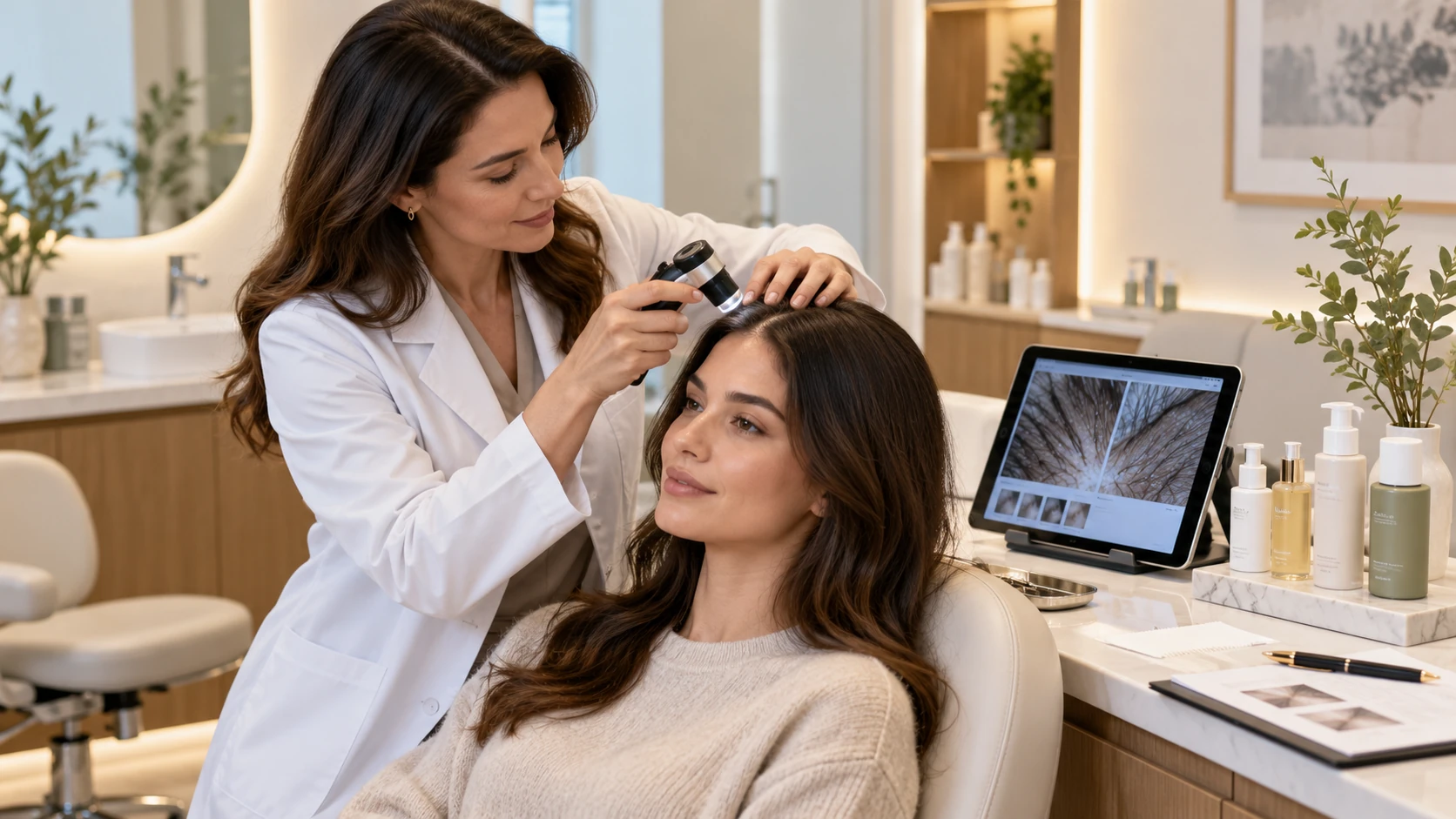
A calm dermatologist-led scalp assessment and wash-routine consultation environment
Scalp condition guides the routine, not the other way round.

Sources

Medical and Cosmetic-Science References

This list reflects the categories of authoritative source used to inform this page’s general statements. Exact citation details, titles and access dates should be finalised and verified by the reviewing dermatologist before publication. No wash-frequency figures, absorption percentages, buildup timelines or prices are fabricated anywhere on this page. Retailer blogs and influencer content are not used as evidence.

  1. Cosmetic-science reference texts on shampoo formulation, surfactant systems and scalp cleansing. Standard reference literature — verify edition
  2. Peer-reviewed research on sebum production, scalp physiology and the scalp microbiome. PubMed To be cited individually
  3. Studies of dry-shampoo composition, absorbent ingredients and scalp effects. PubMed To be cited individually
  4. Clinical literature on folliculitis, scalp inflammation and contributing cosmetic factors. PubMed To be cited individually
  5. Clinical guidance on dandruff, seborrhoeic dermatitis and scalp hygiene. IADVL Verify current guideline
  6. Contact-dermatitis literature on fragrance, preservative and propellant sensitisation. PubMed / Contact Dermatitis To be cited individually
  7. Aerosol product safety guidance covering flammability, ventilation and inhalation exposure. National safety authorities — verify current guidance
  8. Cosmetic powder safety assessments covering particle size and inhalation exposure. CIR and equivalent — verify current assessment
  9. Textured-hair research on wash frequency, scalp access and product removal. PubMed To be cited individually
  10. American Academy of Dermatology (AAD) — patient-education resources on hair washing and scalp care. AAD Verify current resource
  11. Cosmetic-claims regulations applicable to the Indian market. CDSCO cosmetics Verify current requirements

Common Questions

Frequently Asked Questions

36 questions, grouped by what you are actually trying to work out.

The Core Difference

Regular shampoo uses water and surfactants to physically remove sebum, sweat, debris and residue from the scalp. Dry shampoo uses absorbent powders to take up some surface oil, changing appearance without removing anything.

No. It absorbs some surface sebum and improves how hair looks. Sebum, sweat, dead skin cells, product residue and microbial load all remain on the scalp.

No. Everything it does not remove stays on the scalp and accumulates with each application. It is useful between washes, not instead of them.

Not in function. It contains no cleansing surfactants. The name describes the format rather than what the product does.

No. After exercise, sweat and its residues remain regardless of how much is applied.

No — it adds to it. Powder layers over residue that was never removed.

It does not reduce microbial load. Washing is what addresses that.

Use & Frequency

No fixed maximum is published here. It depends on your scalp, hair and routine. The practical guide is that when hair feels coated, waxy or dull, the answer is washing rather than reapplying.

There is no universal number. Sebum production, texture, curl pattern, activity, climate, styling and scalp condition all differ. Persistent oiliness, odour or itching suggests washing more often; tightness and dryness suggest less often or a gentler formula.

Not inherently. It depends on the formula, technique and individual. Daily washing suits some people well.

Longer intervals suit many people, particularly with textured hair. But under-washing causes buildup, odour and itching just as over-washing causes dryness.

Leaving it in overnight adds to the accumulation. If you are using it late in the day, plan when you will wash.

Working it through after a brief wait improves distribution and reduces visible cast. Brushing does not remove it from the scalp — only washing does.

Section dry hair, hold the container at the distance stated on the label, apply a small amount at the roots, wait briefly, then massage or brush through.

By washing. There is no dry removal method, which is why layering compounds the problem.

Scalp Health

Yes — this is its main scalp-health concern. Powder layers over unremoved sebum and debris, producing waxy roots, dullness, tangling and itching.

Heavy repeated use can contribute in susceptible people. Pustules, tenderness or persistent itching mean stopping the product, washing and seeking assessment.

It is not established as a cause of hair loss. Prolonged heavy use without washing can contribute to scalp inflammation, which is the more accurate concern.

It does not cause dandruff, but its residue can mimic flaking and make a genuine scalp condition harder to identify.

No. It does not treat any scalp condition and may aggravate an inflamed scalp.

No, though they can look similar. Flaking that clears after thorough washing suggests residue; flaking that persists warrants assessment.

Yes. Fine particles, fragrance, alcohol and repeated layering are the usual contributors.

Use with caution and review the ingredient list. Introduce one product at a time, and settle any active irritation before adding product.

Not on fresh grafts or healing skin. Timing must be determined by your treating surgical team.

Hair Type & Practical

It can be used, but scalp access is harder and product lodges more readily. Removal deserves more attention than usual.

Longer wash intervals are common and often appropriate, which makes deliberate removal more important — buildup accumulates less visibly.

It can. Tinted formulas exist but shade matching varies, and overapplication remains visible under overhead light and camera flash.

It often works well for appearance and adds texture. Excess is more visible on fine hair, so apply sparingly.

It does not affect dye directly, though buildup can dull the appearance of colour over time.

Yes — where washing facilities are genuinely unavailable, it is a sensible way to manage appearance. Wash as soon as circumstances allow.

Dry shampoo is a reasonable practical response to a genuine constraint. Rinsing with water alone still removes more than dry shampoo does, and persistent scalp symptoms still deserve attention.

This is a practical constraint, not a personal failing. Dry shampoo is a reasonable option, and no-rinse cleansing products are a separate category worth asking a clinician or carer about. Scalp symptoms in this situation deserve assessment rather than tolerance.

Yes. Aerosol products are flammable and must be kept away from open flame, sparks and hot styling tools in operation. Use in a ventilated space.

Fine powders and aerosol mists should not be deliberately inhaled. Apply in a ventilated space and keep the container away from the face.

Often, as a secondary effect — the powder adds texture and grip at the roots. Volume powder is a related but distinct product category designed primarily for that purpose.

For persistent itching, pain, pustules, crusting, bleeding, flaking that continues after thorough washing, sudden shedding, patchy hair loss or signs of scarring.

Next Step

Build a Wash Routine Around Your Scalp — not Around the Product

A dermatologist-led scalp assessment can distinguish product buildup from a genuine scalp condition, identify what is driving oiliness, itching or flaking, and help set a wash routine that fits your hair, your scalp and your circumstances.

Disclaimer: This page is for educational purposes only and does not replace professional medical advice, diagnosis or treatment. Dry shampoo is a temporary cosmetic refresher, not a cleanser. It absorbs some surface sebum and improves appearance, but does not remove sebum, sweat, dead skin cells, product residue or microbial load from the scalp, and does not replace washing. Repeated use without washing causes buildup and can contribute to scalp irritation and, in susceptible individuals, folliculitis; it does not treat dandruff or any scalp condition, and its residue can make genuine flaking harder to identify. No universal wash frequency is stated on this page — appropriate frequency depends on sebum production, hair texture and curl pattern, activity, climate, styling routine, scalp condition and personal preference. Longer intervals between washes are common and often appropriate, particularly for textured or chemically treated hair. Where washing is genuinely limited by travel, water scarcity, illness, injury or reduced mobility, dry shampoo is a reasonable practical option and such circumstances are constraints rather than personal failings — practical alternatives, including no-rinse cleansing products, are worth discussing with a clinician or carer, and scalp symptoms in these situations still deserve assessment. Aerosol products are flammable and must be kept away from open flame, sparks and hot styling tools in operation, and used in a ventilated space. Fine powders and aerosol mists should not be deliberately inhaled. Do not apply these products to broken or inflamed skin, active scalp disease or fresh transplant grafts — post-procedure timing must be determined by the treating surgical team. Neither product category affects follicles or the hair-growth cycle. No brand sponsorship or affiliate arrangement informs this comparison, and no product is recommended or ranked. Persistent itching, pain, pustules, crusting, bleeding, flaking that continues after thorough washing, sudden shedding or patchy hair loss requires assessment by a qualified dermatologist. Content reviewed by Dr. Amit Agarkar, MD Dermatology.

Your Cart (0)

Your cart is empty

Subtotal0
DeliveryFREE
Total0
🔒 Secure📦 Free above ₹499↩ Easy returns
💬 Hi! I'm Dr. Amit — your Hair Intelligence consultant
🌿
1
🌿
Dr. Amit
Virtual Dermatologist · Hairsncares.com
Online
What are you shopping for today?
Select a category to begin
AI-powered scalp diagnosis · Hairsncares.com
📸
Scalp Analyser
Upload scalp photo · Get conditions, root cause, and matched product protocol
📷
Drop scalp photo here or click to upload
JPG, PNG, WEBP · Clear, close-up, well-lit photo

Your image is processed privately by our AI engine and saved securely with your account.