Teenage Hair Fall Routine: Doctor-Reviewed Safe Morning, Night & Weekly Haircare Plan for Teens
Teenage hair fall should be handled carefully. It may relate to dandruff, scalp infection, stress, crash dieting, iron or vitamin D deficiency, tight hairstyles, puberty oiliness, PCOS in girls, thyroid issues, medications or breakage. Teenagers should not self-start strong hair-loss products or supplements without parent/guardian and doctor guidance. This routine is a safe, gentle, parent-aware plan with scalp care, nutrition logic and progress tracking. Screen first with the AI Hair Test. Results vary.
✓ Gentle, teen-safe morning / night / weekly plan
✓ Parent/guardian + doctor involvement built in
✓ No teen self-start of Minoxidil / Finasteride / Dutasteride
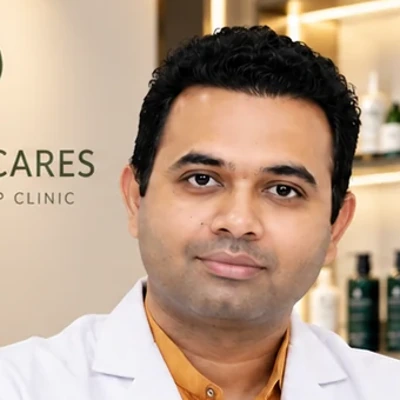
Reviewed by Dr. Amit AgarkarMD Dermatology · Dermatologist & Hair Specialist
Illustrative sample. The goal is manageability, scalp comfort and photo-readiness, not guaranteed density, shine or wedding-date results. AI tools screen and do not diagnose; results vary.
🩺
Doctor-reviewedMD Dermatology
👨👩👧
Parent-awareguardian guidance
⚠️
No self-Rxteens & strong actives
📷
Photo trackingwith a parent
🚚
India-widedelivery
Quick Answer
What does a safe teenage hair fall routine include?
Gentle, age-appropriate care plus parent and doctor involvement. A mild scalp-suited shampoo, dandruff care if needed, gentle styling without tight hairstyles or excess heat, good nutrition and sleep, and tracking with a parent. Teenage hair fall is often from dandruff, an oily scalp, styling, diet or stress — so the routine treats those safely. Teenagers should not self-start Minoxidil, Finasteride, Dutasteride, hormonal medicines, steroids, antibiotics, antifungals or high-dose supplements without a doctor and parent/guardian. See a dermatologist with a parent for severe, persistent or patchy hair loss, scalp infection signs, rapid weight loss or eating-disorder risk, irregular periods/acne in girls, or emotional distress. Screen with the AI Hair Test. Results vary.
For teenagers, safety and parent/guardian involvement come first. Teenage hair fall may relate to dandruff, scalp infection, stress, crash dieting, iron or vitamin D deficiency, tight hairstyles, puberty oiliness, PCOS in girls, thyroid issues, medications or breakage. Teenagers should not self-start Minoxidil, Finasteride, Dutasteride, hormonal medicines, steroids, antibiotics, antifungals or high-dose supplements without medical guidance.See a dermatologist with a parent or guardian for sudden severe or patchy hair loss, scalp pain, pus, crusting, thick plaques, severe dandruff or scaling, suspected fungal infection, scalp swelling or fever, rapid weight loss or eating-disorder risk, severe acne, irregular periods, thyroid or anemia symptoms, medication-related hair fall, or emotional distress. AI suggestions are screening, not diagnosis or prescription.
Teen-safe and parent-guided routine. Teens should not self-start strong hair-loss medicines or high-dose supplements.
AI Summary
The Teenage Hair Fall Routine in Simple Terms
The Teenage Hair Fall Routine. A teen-safe, parent-guided routine covering dandruff, oily scalp, styling, diet and stress; teens should not self-start Minoxidil, hormonal medicines or high-dose supplements.
The right routine depends on your hair-fall pattern, scalp symptoms, hair type, product history, styling exposure, medical history and whether the concern is root-related, scalp-related or hair-shaft-related.
Bottom line: keep it gentle and parent-guided. Use this page to understand a teen-safe structure, and get parent-guided doctor help before any strong product. Results vary.
Who It Suits
Who This Routine Suits
✓
Mild teenage hair fall
✓
Hair fall with dandruff
✓
Hair fall with an oily scalp
✓
Hair fall after stress / exams
✓
Hair fall after dieting
✓
Hair breakage from styling
✓
Tight-hairstyle-related shedding
✓
Teen girls with irregular periods / acne needing screening
✓
Teens needing parent-guided product selection
✓
A safe beginner routine
When a Routine Is Not Enough
Not Suitable For / Doctor Red Flags
This routine is not enough — see a doctor with a parent/guardian — if a teenager has sudden severe hair fall, patchy hair loss, scalp pain, pus, crusting, thick plaques, severe dandruff or scaling, suspected fungal infection, scalp swelling or fever, rapid weight loss or eating-disorder risk, severe acne, irregular periods, thyroid symptoms, anemia symptoms, medication-related hair fall, or emotional distress. Teenagers should not self-start Minoxidil, Finasteride, Dutasteride, hormonal medicines, steroids, antibiotics, antifungals or high-dose supplements without medical guidance.
Any of these apply? A routine is not a substitute for diagnosis.
Work to your timeline, protect the scalp, and support texture gently.
1
Hair fall & scalp check
Check shedding, dandruff, itching, oiliness, flakes and scalp pain, check whether hair is breaking or falling from the roots, and track a hair-fall score with parent/guardian support.
Wash, mask and plan salon work early — never experiment near the date.
1
Scalp-type wash
Wash frequency by oiliness, sweat, dandruff and sport; a teen oily scalp may need regular cleansing. Anti-dandruff shampoo only if flakes/itching and it is suitable.
Log shedding, flake/itch, diet/protein, sleep/stress and hairstyle-tension scores with monthly photos.
Tool: Progress tracker
4
Doctor-review trigger
See a dermatologist with a parent for patchy loss, severe dandruff/scaling, rapid weight loss, irregular periods/acne/hirsutism, fatigue/anemia symptoms, prolonged hair fall or emotional distress.
Curated kits for this routine. Patch-test new products and avoid new strong actives without guidance. Prices, stock and ratings load from the catalogue.
🎁
Kits coming soon
Curated kits for this concern aren't ready just yet. Browse the full Hairsncares shop to build the routine that fits your needs.
Product image, name, category, teen-safety badge, parent-guided badge, best-for tags, key ingredients, doctor-guided badge (where needed), price, stock, ratings and reviews are dynamic placeholders from the official label and database — we do not fabricate product data. Strong actives and supplements need a doctor and parent/guardian. Add-to-cart, compare and add-to-routine wire to the backend.
Why These Ingredients
Why These Ingredients
Bridal ingredients focus on smoothness, shine, scalp comfort and breakage support — introduced early and patch-tested, never as last-minute strong actives.
✓
Mild surfactants
Gentle cleansing for regular teen haircare.
May support: Everyday gentle cleansingEvidence: GentleAvoid if: Harsh or overfrequent washing
With a parent's support, record photos and track hair fall, dandruff and itch, diet, sleep and stress with an improvement score at 2 weeks, 6 weeks, 3 months and 6 months. It supports self-monitoring — it does not diagnose or replace a doctor.
Shop gentle, age-appropriate products to build a teen hair-fall routine — mild cleansing, scalp care and nutrition basics. Teens should not self-start prescription or active medicines; persistent shedding deserves a doctor and, for under-18s, specialist guidance. Results vary.
🧴
Products coming soon
We're curating the right supportive products for this concern. In the meantime, browse the full Hairsncares shop or take the AI Hair Test for a tailored match.
Suggested bundles around this topic. Final recommendations should be personalised using the AI Hair Test, scalp photos, medical history and dermatologist review where needed. Prices, stock and prescription status load from the product database.
🎁
Bundles coming soon
Value bundles for this concern aren't ready just yet. Browse the full Hairsncares shop to build the routine that fits your needs.
Doctor-reviewed guidanceProduct selection should follow symptoms, age, pregnancy status and scalp condition.
Secure checkoutPayment, invoice and order tracking ready.
Prescription safetyPrescription products must follow dermatologist approval where required.
India deliveryPincode-based availability and refill reminders.
Delivery Check
Check Delivery Availability
Enter your pincode to check medicine, haircare product and bundle delivery availability in your area.
Refill Plan
Never Miss Your Haircare Routine
Routines only work when you stick to them. Add eligible masks, serums and shampoos to a monthly refill plan with reminders — active and prescription refills always follow dermatologist approval.
"As a dermatologist, I treat teenage hair fall carefully, because causes range from simple dandruff or styling damage to deficiency, thyroid issues, PCOS, fungal infection or emotional stress. Teens should not self-medicate with strong hair-loss products or supplements. I encourage a gentle routine, good nutrition and sleep, and seeing a doctor with a parent if hair fall is severe, persistent or patchy — and I always take a teenager's worry about their hair seriously and kindly."
Reviewed by Dr. Amit Agarkar, MD DermatologyDermatologist & Hair Specialist · Last reviewed 1 June 2026
Severe, persistent or patchy hair fall, scalp infection signs, or distress? See a doctor with a parent.
Hairsncares follows a who-how-why editorial process so you can see who stands behind this guidance and how it was checked.
🩺
Who created this guide?
Prepared by the Hairsncares editorial team and medically reviewed by Dr. Amit Agarkar, MD Dermatology, a dermatologist and hair specialist.
⚖️
How was it reviewed?
Checked for honest claims (support, not cure or guaranteed regrowth), correct ingredient role, red-flag escalation to a doctor, prescription-active warnings, and suitability for Indian haircare users.
💡
Why was it created?
To help you follow a safe, realistic routine, understand honest timelines, and know when a dermatologist's assessment matters more than self-treating.
🩺
Last medically reviewed: 1 June 2026Dr. Amit Agarkar, MD Dermatology · Dermatologist & Hair Specialist · Reviewed against the live guidance
Gentle, parent-guided scalp and hair care suitable for teenagers
Improving routine consistency
Supporting scalp comfort, hair-shaft appearance or product fit where relevant
Tracking progress at 2 weeks, 6 weeks, 3 months and 6 months
⛔ Cannot Promise
Replace parent-guided medical assessment for a teenager
Guaranteed hair regrowth
A permanent cure for hair loss, dandruff or scalp disease
Permanent reversal of chemical, heat or colour damage
A replacement for a dermatologist's diagnosis
Prescription-level results from cosmetic products
Medical References
When to See a Doctor & Trusted Sources
A routine supports comfort, appearance and consistency — it does not replace diagnosis. For red-flag symptoms or no improvement, rely on assessment rather than only changing routines.
External links open in a new tab and are provided for general education; they are not endorsements and do not replace personalised medical advice.
Questions
Frequently Asked Questions
What is the best teenage hair fall routine?
The best teenage hair fall routine is gentle and safe: a mild scalp-suited shampoo, dandruff care if needed, gentle styling without tight hairstyles or excess heat, good nutrition and sleep, and tracking with a parent. The best approach is a simple, safe routine plus parent and doctor involvement, avoiding strong hair-loss products and supplements that teenagers should not self-start. Results vary.
Is hair fall normal in teenagers?
Some hair shedding is normal at any age, and mild teenage hair fall is often linked to manageable causes like dandruff, tight hairstyles, stress, exams or dieting. Noticeable, persistent or patchy hair loss in a teenager is worth checking with a doctor, since identifying causes early leads to better outcomes than waiting. Results vary.
What causes teenage hair fall?
Teenage hair fall can be caused by dandruff or an oily scalp, scalp infection, stress and exams, crash dieting, iron or vitamin D deficiency, tight hairstyles, puberty-related changes, PCOS in girls, thyroid issues, certain medications or breakage from styling. Identifying the likely cause, with a parent and doctor where needed, matters more than reaching for strong products. Results vary.
Can dandruff cause teenage hair fall?
Yes, dandruff and the related itching and scratching are a common contributor to teenage hair fall, since scratching causes breakage and shedding. Controlling dandruff is an important and safe step in a teen routine, while severe, persistent or unusual scaling should be reviewed by a doctor with a parent. Results vary.
Can exams and stress cause hair fall?
Yes, significant stress during exams and poor sleep can contribute to increased hair shedding in teenagers, often temporarily. Exam stress and disrupted sleep often improve as stress settles, while persistent shedding or significant emotional distress should be discussed with a parent and, if needed, a doctor. Results vary.
Can dieting cause teenage hair fall?
Yes, crash dieting, very restrictive eating or inadequate protein and nutrients can trigger hair shedding in teenagers. Avoiding crash diets and eating adequately supports the hair, and because rapid weight loss or restrictive eating can both cause hair fall and signal an eating concern, parent and medical involvement is especially important. Results vary.
Can iron deficiency cause teen hair fall?
Yes, iron deficiency can contribute to hair shedding in teenagers, particularly in girls with heavy periods or limited diets. Iron status is worth assessing in a teenager with hair fall, especially with heavy periods, tiredness or a restricted diet, with supplements doctor and parent guided rather than self-started. Results vary.
Can PCOS cause hair fall in teenage girls?
Yes, PCOS can begin in adolescence and contribute to hair fall, often alongside irregular periods, acne or other features. If a teenage girl has hair fall with irregular periods, acne or other possible PCOS features, this should be reviewed medically with a parent. Results vary.
Which shampoo is safe for teenagers?
A mild shampoo suited to the teenager's scalp type is safe, with an anti-dandruff shampoo only if there is genuine dandruff and it is suitable, used gently rather than harshly. Choose a gentle, scalp-appropriate shampoo for everyday teen haircare and avoid harsh products and overwashing. Results vary.
Are anti-dandruff shampoos safe for teens?
Suitable anti-dandruff shampoos are generally safe for teenagers when there is genuine dandruff, used as directed. Severe, unusual or persistent scaling, or signs of infection, warrant a doctor's assessment with a parent rather than continued self-treatment. Results vary.
Can teenagers use hair growth serum?
Teenagers should be cautious with hair growth serums and use only mild cosmetic products if a doctor or parent approves, since most teenage hair fall is better addressed by treating the cause. A teenager is usually better served by gentle scalp care, good nutrition and addressing the actual cause. Results vary.
Can teenagers use Minoxidil?
Minoxidil is generally not recommended for teenagers to self-start, since adolescent hair loss needs proper evaluation. A teenager with hair loss should be assessed by a doctor rather than starting Minoxidil independently, with parental involvement rather than self-directed decisions. Results vary.
Can teenagers take biotin?
Biotin is only useful where there is a true deficiency, which is uncommon, so most teenagers do not need biotin for hair fall. Any supplement should be doctor and parent guided rather than taken from advertisements, and supplements should be used only if a doctor confirms a need. Results vary.
Are hair supplements safe for teenagers?
Hair supplements should only be given to teenagers with doctor and parent guidance and where there is a genuine need, such as a confirmed deficiency, rather than self-started or taken from advertisements. Prioritise balanced nutrition, since for most teenagers good diet and addressing the cause matter more than supplements. Results vary.
Should teens oil their hair?
Light oiling of the lengths can be fine for dry teenage hair if enjoyed, but heavy oiling should be avoided on an oily or dandruff-prone scalp, since it can worsen flaking and discomfort. Oiling should be seen as a comfort step rather than a treatment for hair fall. Results vary.
Can tight hairstyles cause hair fall?
Yes, repeatedly tight ponytails, buns and braids put tension on the hair and can cause breakage and traction-related shedding. Favouring loose, low-tension hairstyles and gentle detangling protects the hair from avoidable breakage. Results vary.
When should parents consult a dermatologist?
Parents should consult a dermatologist for a teenager with sudden severe or patchy hair loss, scalp pain, pus, crusting, thick plaques or severe dandruff or scaling, suspected scalp infection, rapid weight loss or eating-disorder risk, irregular periods, acne or hirsutism, fatigue or anemia symptoms, medication-related hair fall, prolonged hair fall or emotional distress. Results vary.
Can the AI Hair Test build a teen routine?
The AI Hair Test, with the AI Routine Builder, can help a teenager and parent build a safe, gentle routine and flag when a doctor is needed, but it is a screening and education aid that does not diagnose, prescribe or recommend strong products for teens. Diagnosis and any treatment decisions remain with a doctor and parent. Results vary.
How should teenagers track hair fall?
A teenager can track hair fall with the Tracker, ideally with a parent's support, by recording photos and noting shedding, dandruff and itch, diet, sleep and stress at 2 weeks, 6 weeks, 3 months and 6 months. Consistent, parent-supported tracking helps see whether the routine is helping and provides useful information for a doctor if needed. Results vary.
What should teens avoid during hair fall?
During hair fall, teenagers should avoid starting strong hair-loss products or supplements without a doctor, tight hairstyles, crash dieting, excess heat styling, chemical treatments, heavy oiling on an oily scalp, scratching, sharing combs during a scalp infection, and ignoring dandruff, patchy loss or emotional stress. The safest approach is gentle care, good nutrition and telling a parent and doctor about significant hair fall. Results vary.
Question not answered here? Ask Dr Aria for general guidance, or book a consultation.
A teenage hair fall routine works best when it is gentle and safe: mild scalp care, dandruff control if needed, gentle styling, good nutrition and sleep, and tracking with a parent. Teenagers should not self-start strong hair-loss products or supplements — those need a doctor with a parent/guardian. Screen with the AI Hair Test, track at 2 weeks, 6 weeks, 3 months and 6 months, and see a doctor with a parent for anything severe, persistent, patchy or distressing. Results vary.
Medical disclaimer. This is educational content reviewed by a dermatologist. The AI Routine Builder, AI Hair Test and Teen Hair Fall Tracker help a teenager, with a parent or guardian, build and monitor a safe routine and flag when a doctor is needed, but do not diagnose, prescribe, recommend strong hair-loss products for teens, or replace a doctor. Teenage hair fall may relate to dandruff, scalp infection, stress, crash dieting, iron or vitamin D deficiency, tight hairstyles, puberty oiliness, PCOS in girls, thyroid issues, medications or breakage.Teenagers should not self-start Minoxidil, Finasteride, Dutasteride, hormonal medicines, steroids, antibiotics, antifungals or high-dose supplements without parent/guardian and doctor guidance. See a dermatologist with a parent or guardian for sudden severe or patchy hair loss, scalp pain, pus, crusting, thick plaques, severe dandruff or scaling, suspected fungal infection, scalp swelling or fever, rapid weight loss or eating-disorder risk, severe acne, irregular periods, thyroid or anemia symptoms, medication-related hair fall, or emotional distress. Product price, stock, ratings and reviews are dynamic placeholders from the official label and database. Results vary.