Hair Growth Routine: Doctor-Reviewed Morning, Night & Weekly Plan for Healthier, Fuller-Looking Hair
A hair growth routine should not be based only on trending oils, serums or supplements. The right routine depends on whether the concern is early thinning, weak hair, breakage, scalp health, deficiency risk, dandruff, or pattern hair loss. This is a structured, doctor-reviewed growth-support routine with safe ingredient logic and progress tracking. It may support healthier, fuller-looking hair — it does not cure or guarantee regrowth. Screen the cause first with the AI Hair Test. Results vary.
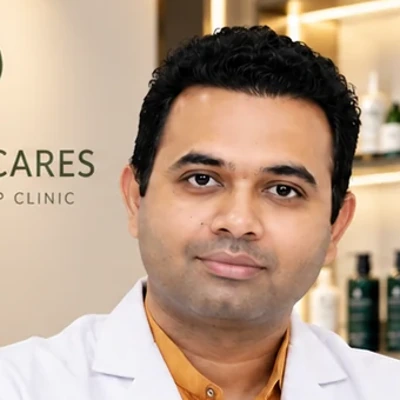
Reviewed by Dr. Amit AgarkarMD Dermatology · Dermatologist & Hair Specialist
Illustrative sample. The goal is manageability, scalp comfort and photo-readiness, not guaranteed density, shine or wedding-date results. AI tools screen and do not diagnose; results vary.
🩺
Doctor-reviewedMD Dermatology
⚡
AI builderfree
📷
Progress tracking2/6/12/24 wks
⚖️
Honest claimssupport, not cure
🚚
India-widedelivery
Quick Answer
What does a good hair growth routine actually include?
A scalp-friendly cleanser, a suitable growth-support serum or tonic, sensible nutrition only where a deficiency is relevant, hair-shaft care to retain length, and progress tracking — matched to whether the concern is early thinning, breakage, scalp health or pattern hair loss. Cosmetic actives like Redensyl, Procapil, Capixyl, caffeine or peptides offer mild support; Minoxidil is a doctor-guided option for selected pattern hair loss, not a cosmetic add-on and not for every hair-fall type. This routine may support healthier, fuller-looking hair — it does not cure or guarantee regrowth. Build it gradually, track at 2 weeks, 6 weeks, 3 months and 6 months, and see a doctor for sudden, severe or patchy loss, a widening parting or crown thinning, scalp red flags, or thyroid / PCOS / anemia symptoms. Screen with the AI Hair Test. Results vary.
This is a growth-support routine — not a cure or guaranteed regrowth. Cosmetic serums, supplements and oils support a routine; they do not replace diagnosis. Minoxidil, Finasteride and Dutasteride are doctor-guided, are marked, and are not started casually.See a doctor for sudden or severe shedding, patchy loss, scarring suspicion, a scalp infection, severe dandruff, scalp redness, pus, pain or crusting, pregnancy/breastfeeding, teenagers, thyroid or PCOS symptoms, heavy periods, anemia symptoms, rapid weight loss, or an unclear diagnosis. AI suggestions are screening, not diagnosis or prescription.
Growth-support routine for fuller-looking hair. Cosmetic support and nutrition are not guaranteed regrowth treatments.
AI Summary
The Hair Growth Routine in Simple Terms
The Hair Growth Routine. Designed to support fuller-looking hair through scalp care, nutrition and product consistency; cosmetic support and nutrition are not guaranteed regrowth treatments.
The right routine depends on your hair-fall pattern, scalp symptoms, hair type, product history, styling exposure, medical history and whether the concern is root-related, scalp-related or hair-shaft-related.
Bottom line: use this page to understand the routine structure, product logic, safety checks and tracking plan, then take the AI Hair Test before building your personalised routine. Results vary.
Who It Suits
Who This Routine Suits
✓
Early thinning support
✓
Hair-density appearance support
✓
Weak hair & breakage support
✓
Post-shedding recovery support
✓
Men's early hair-growth support
✓
Women's widening-parting support (with assessment)
✓
Non-Minoxidil support-routine users
✓
Users wanting product + progress tracking
When a Routine Is Not Enough
Not Suitable For / Doctor Red Flags
This routine is not enough for sudden severe shedding, patchy hair loss, scarring alopecia suspicion, a scalp infection, severe dandruff, scalp redness, pus, pain or crusting, pregnancy/breastfeeding, teenage thinning, thyroid symptoms, PCOS symptoms, heavy periods, anemia symptoms, rapid weight loss, or an unclear diagnosis. These need a dermatologist's diagnosis — pattern hair loss in particular often needs doctor-guided treatment, not just cosmetics.
Any of these apply? A routine is not a substitute for diagnosis.
Curated kits for this routine. Patch-test new products and avoid new strong actives without guidance. Prices, stock and ratings load from the catalogue.
🎁
Kits coming soon
Curated kits for this concern aren't ready just yet. Browse the full Hairsncares shop to build the routine that fits your needs.
Product image, name, key ingredients, best-for tags, evidence/doctor-guided badge, price, stock, ratings and reviews are dynamic placeholders from the official label and database — we do not fabricate product data. Minoxidil and similar actives are doctor-guided and clearly marked. Add-to-cart, compare and add-to-routine wire to the backend.
Why These Ingredients
Why These Ingredients
Bridal ingredients focus on smoothness, shine, scalp comfort and breakage support — introduced early and patch-tested, never as last-minute strong actives.
Track Hair Growth with Photos, Scores & Milestones
Record photos and track density impression, shedding, scalp comfort, product consistency and an improvement score at 2 weeks, 6 weeks, 3 months and 6 months. It supports self-monitoring — it does not diagnose or replace a doctor.
Shop dermatologist-reviewed products to build a hair-growth routine — cosmetic growth-support serums, supplements and supportive care. Cosmetic actives support appearance; medical regrowth (like minoxidil) is doctor-guided and no product guarantees regrowth. Results vary.
🧴
Products coming soon
We're curating the right supportive products for this concern. In the meantime, browse the full Hairsncares shop or take the AI Hair Test for a tailored match.
Suggested bundles around this topic. Final recommendations should be personalised using the AI Hair Test, scalp photos, medical history and dermatologist review where needed. Prices, stock and prescription status load from the product database.
🎁
Bundles coming soon
Value bundles for this concern aren't ready just yet. Browse the full Hairsncares shop to build the routine that fits your needs.
Doctor-reviewed guidanceProduct selection should follow symptoms, age, pregnancy status and scalp condition.
Secure checkoutPayment, invoice and order tracking ready.
Prescription safetyPrescription products must follow dermatologist approval where required.
India deliveryPincode-based availability and refill reminders.
Delivery Check
Check Delivery Availability
Enter your pincode to check medicine, haircare product and bundle delivery availability in your area.
Refill Plan
Never Miss Your Haircare Routine
Routines only work when you stick to them. Add eligible masks, serums and shampoos to a monthly refill plan with reminders — active and prescription refills always follow dermatologist approval.
"As a dermatologist, I separate hair growth support from true regrowth treatment. Cosmetic serums, supplements and oils may support routines and help hair look its best, but pattern hair loss or progressive thinning often needs diagnosis and doctor-guided treatment. I want patients to enjoy a sensible growth-support routine and track it honestly, while bringing me a widening parting, crown thinning or red flags — because that is where a real diagnosis, not another serum, changes the outcome."
Reviewed by Dr. Amit Agarkar, MD DermatologyDermatologist & Hair Specialist · Last reviewed 1 June 2026
Widening parting, crown thinning, or no improvement after 3 months? Get assessed.
Hairsncares follows a who-how-why editorial process so you can see who stands behind this guidance and how it was checked.
🩺
Who created this guide?
Prepared by the Hairsncares editorial team and medically reviewed by Dr. Amit Agarkar, MD Dermatology, a dermatologist and hair specialist.
⚖️
How was it reviewed?
Checked for honest claims (support, not cure or guaranteed regrowth), correct ingredient role, red-flag escalation to a doctor, prescription-active warnings, and suitability for Indian haircare users.
💡
Why was it created?
To help you follow a safe, realistic routine, understand honest timelines, and know when a dermatologist's assessment matters more than self-treating.
🩺
Last medically reviewed: 1 June 2026Dr. Amit Agarkar, MD Dermatology · Dermatologist & Hair Specialist · Reviewed against the live guidance
Supporting fuller-looking hair through scalp care, nutrition and consistency
Improving routine consistency
Supporting scalp comfort, hair-shaft appearance or product fit where relevant
Tracking progress at 2 weeks, 6 weeks, 3 months and 6 months
⛔ Cannot Promise
Guarantee regrowth
Guaranteed hair regrowth
A permanent cure for hair loss, dandruff or scalp disease
Permanent reversal of chemical, heat or colour damage
A replacement for a dermatologist's diagnosis
Prescription-level results from cosmetic products
Medical References
When to See a Doctor & Trusted Sources
A routine supports comfort, appearance and consistency — it does not replace diagnosis. For red-flag symptoms or no improvement, rely on assessment rather than only changing routines.
External links open in a new tab and are provided for general education; they are not endorsements and do not replace personalised medical advice.
Questions
Frequently Asked Questions
What is the best hair growth routine?
The best hair growth routine is one matched to your situation rather than a trending product list, combining a scalp-friendly cleanser, a suitable growth-support serum, sensible nutrition where a deficiency is relevant, hair-shaft care to retain length, and progress tracking. It is a consistent, cause-matched plan that supports a healthy scalp and length retention, framed as support rather than guaranteed growth, with doctor-guided treatment considered where pattern loss is involved. Results vary.
How long does hair growth take?
Hair grows slowly, typically around a centimetre or so a month, so a growth routine is judged over months, not weeks; scalp comfort and breakage may improve early, but density and length changes take three to six months or longer to appear in suitable users. Expect gradual change and assess progress at 2 weeks, 6 weeks, 3 months and 6 months with photos. Results vary.
Can hair grow in 2 weeks?
No, meaningful hair growth cannot be expected in two weeks, because hair growth is a slow biological process and two weeks is only long enough to judge product tolerance and early scalp comfort, not growth. Any rapid visible change in that time is usually styling, hydration or reduced frizz rather than new growth. Results vary.
Which serum is best for hair growth?
The best serum depends on your concern: cosmetic growth-support serums may use ingredients like Redensyl, Procapil, Capixyl, caffeine or peptides for mild support, while Minoxidil is a doctor-guided active for selected pattern hair loss rather than a cosmetic choice. None guarantees growth. Results vary.
Which supplement is best for hair growth?
No single supplement is universally best for hair growth; supplements help mainly where a genuine deficiency or nutrition gap exists, such as low iron, vitamin D or B12, ideally confirmed or guided by a doctor, rather than being taken blindly. Many people without a deficiency see little benefit. Results vary.
Is Minoxidil needed for hair growth?
Minoxidil is not needed for everyone; it is a doctor-guided active with established evidence for selected pattern hair loss, but it is not appropriate for every hair-fall type and is not a cosmetic add-on. Whether it suits you depends on diagnosis and a suitability check with a doctor. Results vary.
Are Redensyl and Procapil useful?
Redensyl and Procapil are cosmetic actives marketed for hair-density appearance and root support, and they may offer mild cosmetic support in some users as part of a routine, but their evidence is limited compared with doctor-guided medicines, and they are not a substitute for diagnosis. Results vary.
Is Rosemary Oil useful for hair growth?
Rosemary oil is a popular cosmetic option that some people use diluted as part of a scalp routine, and there is limited interest in it for hair support, but it is a cosmetic ingredient rather than a proven regrowth treatment and can irritate if used undiluted or on a sensitive scalp. Results vary.
Does Biotin help hair growth?
Biotin mainly helps hair where there is a genuine biotin deficiency, which is uncommon, so for most people without a deficiency, biotin supplements are unlikely to noticeably improve growth despite their popularity. It can also interfere with some lab tests. Results vary.
What should I apply at night?
At night you can apply a suitable leave-on scalp product or growth-support serum as the label directs, and a serum or leave-in on dry or damaged lengths, while avoiding heavy scalp oil if your scalp is oily or dandruff-prone. Keep it simple rather than layering many actives. Results vary.
Should I use hair oil for growth?
Hair oil is a cosmetic conditioning step rather than a growth treatment, so it may improve the look and feel of dry or frizzy hair and reduce breakage, which helps length retention, but it does not stimulate growth at the root. It should also be kept off oily or dandruff-prone scalps. Results vary.
What is best for crown thinning?
Crown thinning is often an early sign of pattern hair loss, so the most useful step is to have it assessed rather than relying only on cosmetic products, since doctor-guided treatment is more effective for genuine pattern loss at the crown. Cosmetic serums may offer mild support meanwhile. Results vary.
What is best for a widening parting?
A widening parting, especially in women, can indicate pattern hair loss or another treatable cause, so it is best assessed rather than managed with cosmetic products alone, since the right treatment depends on the diagnosis. A supportive routine can run alongside assessment. Results vary.
Can women follow this routine?
Yes, women can follow this growth-support routine, but women's hair concerns often involve causes such as iron deficiency, thyroid issues, PCOS or hormonal changes that need their own assessment, and some actives are not suitable in pregnancy, so women with significant or unexplained thinning should be assessed rather than relying on the routine alone. Results vary.
Can men follow this routine?
Yes, men can follow this growth-support routine, but men's thinning is often pattern hair loss, especially at the hairline and crown, which responds best to doctor-guided treatment, so men with receding or crown thinning should be assessed rather than relying only on cosmetic support. Results vary.
Is this routine safe for teenagers?
The gentle cosmetic parts of this routine are generally fine for teenagers, but stronger actives, supplements and any prescription-style treatment should involve a doctor, and significant or unexplained thinning in a teenager deserves assessment rather than self-treatment. Results vary.
Is this routine safe during pregnancy?
The gentle cosmetic parts of this routine are generally reasonable in pregnancy, but you should check any active ingredients, supplements or medicated products with your doctor first, and avoid prescription hair-loss medicines such as Minoxidil and Finasteride unless a doctor explicitly approves. Postpartum shedding is common and usually temporary. Results vary.
When should I consult a doctor?
You should consult a doctor for sudden or severe shedding, patchy hair loss, a widening parting or progressive crown thinning, scalp redness, pus, pain or crusting, or if you have thyroid or PCOS symptoms, heavy periods, anemia symptoms or rapid weight loss, or if there is no improvement after about three months. Results vary.
Can the AI Hair Test build my routine?
The AI Hair Test, together with the AI Routine Builder, can screen your pattern, scalp type and symptoms and suggest a personalised morning, night and weekly growth-support routine with a product bundle and a doctor-consult flag. It is a screening and education aid, not a diagnosis or prescription. Results vary.
How do I track hair growth?
You track hair growth with the Hair Progress Tracker by taking consistent photos of the hairline, crown and parting and noting density impression, shedding and scalp comfort at 2 weeks, 6 weeks, 3 months and 6 months, using similar lighting and angles each time. Regular, consistent tracking gives a far more reliable picture of progress than memory. Results vary.
Question not answered here? Ask Dr Aria for general guidance, or book a consultation.
A hair growth routine works best when it is gentle, consistent, matched to your scalp and concern, and tracked over months. It may support healthier, fuller-looking hair — it does not cure or guarantee regrowth, and cosmetic products are support rather than regrowth medicine. Screen with the AI Hair Test, build your plan, track at 2 weeks, 6 weeks, 3 months and 6 months, and see a doctor for pattern loss or red flags. Results vary.
Medical disclaimer. This is educational content reviewed by a dermatologist. The AI Hair Routine Builder, AI Hair Test and Hair Progress Tracker help you build and monitor a routine and flag when a doctor is needed, but do not diagnose, prescribe, order tests, confirm a product is right for you, endorse a brand, or replace a dermatologist. This routine may support healthier, fuller-looking hair; it does not cure hair loss or guarantee regrowth, and cosmetic serums, supplements and oils are support rather than regrowth medicine.Minoxidil, Finasteride, Dutasteride and other prescription medicines are doctor-guided, are marked accordingly, and should not be started casually or for every hair-fall type. See a doctor for sudden or severe shedding, patchy loss, scarring suspicion, scalp redness, pus, pain, crusting, thick plaques, suspected fungal infection, thyroid or PCOS symptoms, heavy periods, anemia symptoms, rapid weight loss, pregnancy/breastfeeding, teenagers, or an unclear diagnosis. Product price, stock, ratings and reviews are dynamic placeholders from the official label and database. Results vary.