Alopecia Areata
Dermatologist-led overview of alopecia areata, a common cause of patchy hair loss.
View AAD reference ›Bald patches are different from ordinary hair fall. The most common cause is alopecia areata, an autoimmune condition, but patches can also be a fungal scalp infection, traction from tight styles, or a scarring alopecia — and these are treated in completely different ways. Some can spread or cause permanent loss if mismanaged. So the safest first step is a dermatologist's diagnosis. Hairsncares helps you screen the patches with an AI checker and points you to the right specialist care.
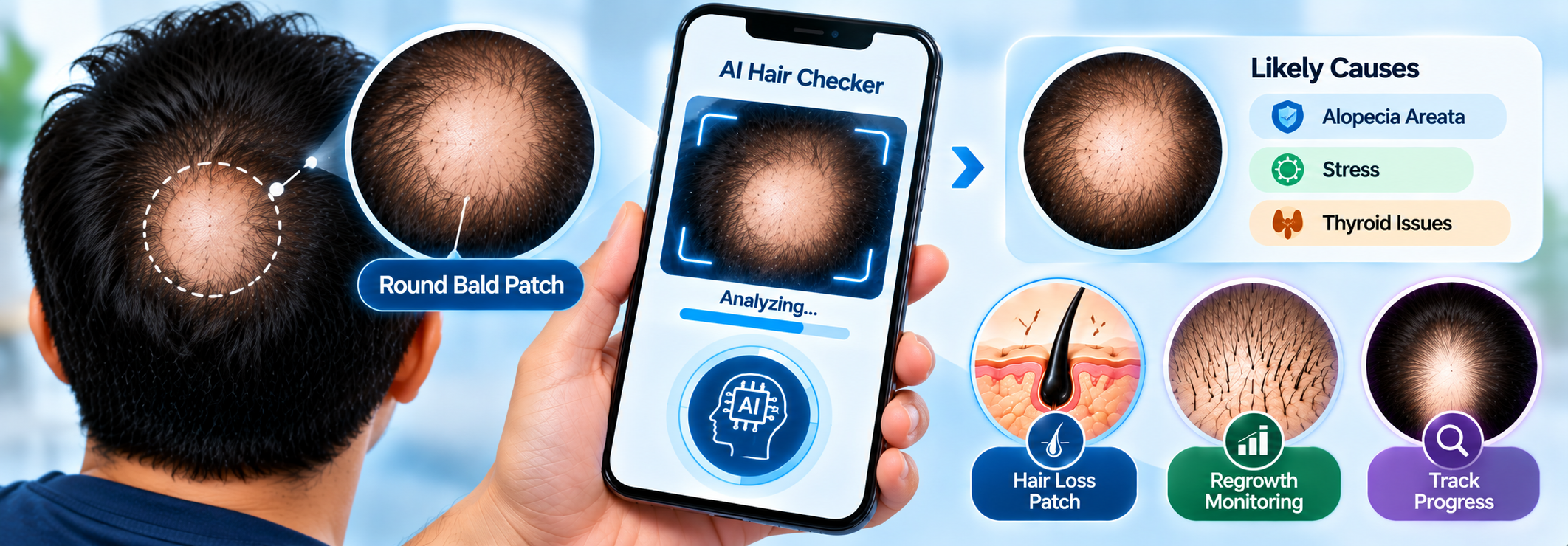
Illustrative sample only. AI screening cannot diagnose and does not replace a dermatologist's assessment.
There is no single best treatment, because patchy hair loss has several very different causes. Smooth round patches are usually alopecia areata (autoimmune); scaly, red or broken-hair patches may be a fungal infection (tinea capitis), especially in children; and shiny, scarred patches may be a scarring alopecia. Each is treated differently, and some can spread or cause permanent loss. So the best and safest first step is a dermatologist's diagnosis — not buying products. An AI patch check can screen and flag urgency, and gentle products may give supportive or cosmetic help alongside medical treatment.
Round bald patches are diagnosis-first and should be reviewed for alopecia areata, fungal infection or scarring causes.
AI Summary
Patchy hair loss is one possible hair-loss pattern or trigger. The right next step depends on whether hair is shedding from the root, breaking from the shaft, thinning in a pattern, falling suddenly, persisting for months or appearing in patches.
This page is educational and screening-oriented. It does not diagnose, prescribe or guarantee results. Use the AI Hair Test to organise symptoms, and consult a dermatologist if symptoms are severe, persistent, patchy, painful or progressive.
Best next step: identify the pattern, check likely triggers, review red flags, then choose a routine, product pathway or doctor consultation safely.
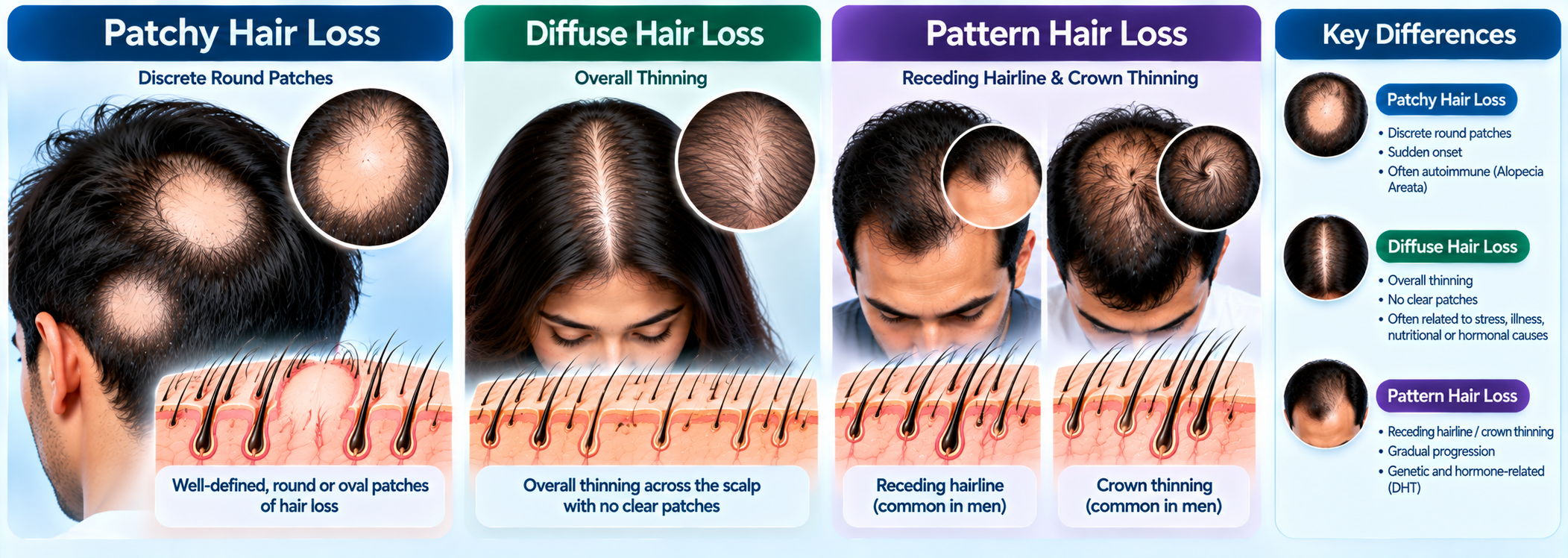
Patchy hair loss means hair is lost in distinct patches — often round or oval bald spots — rather than evenly across the scalp or in a receding pattern. This distribution is an important clue, because the conditions that cause patches are mostly medical and quite different from ordinary hair fall.
The most common cause is alopecia areata, an autoimmune condition that produces smooth, round bald patches. But a scaly, red or broken-hair patch may be a fungal scalp infection (tinea capitis), especially in children; tight hairstyles can cause traction alopecia at the edges; and a shiny, scarred patch may signal a scarring alopecia, which can cause permanent loss. Because the right treatment — and the urgency — depends entirely on which of these it is, patchy hair loss should be diagnosed by a dermatologist rather than self-treated.
| Aspect | What it means |
|---|---|
| Distribution | Discrete patches, not diffuse or pattern |
| Most common cause | Alopecia areata (autoimmune) |
| Other causes | Fungal infection, traction, scarring |
| Nature | Mostly medical conditions |
| Can it scar? | Some causes can cause permanent loss |
| First step | Dermatologist diagnosis |
Have a new bald patch? Screen it in 90 seconds and see whether it needs prompt care.
Take Patch CheckThese features help describe a patch — and some point to causes that need prompt dermatologist care.
Round or oval bald patch with smooth skin
Patch appearing suddenly over days to weeks
Short broken hairs at the edge (exclamation-mark hairs)
Scaling, redness or pus (possible infection)
Small black dots in the patch (possible fungal)
Shiny, smooth, scarred-looking skin (see a doctor)
Itching, burning or tenderness
Patches in beard, eyebrows or body hair
Nail pitting (can accompany alopecia areata)
Recognise these signs? Screen them and get a referral recommendation.
Screen My PatchEach is treated very differently — and some need urgent care. This is a guide to discuss with a dermatologist, not a self-diagnosis tool.
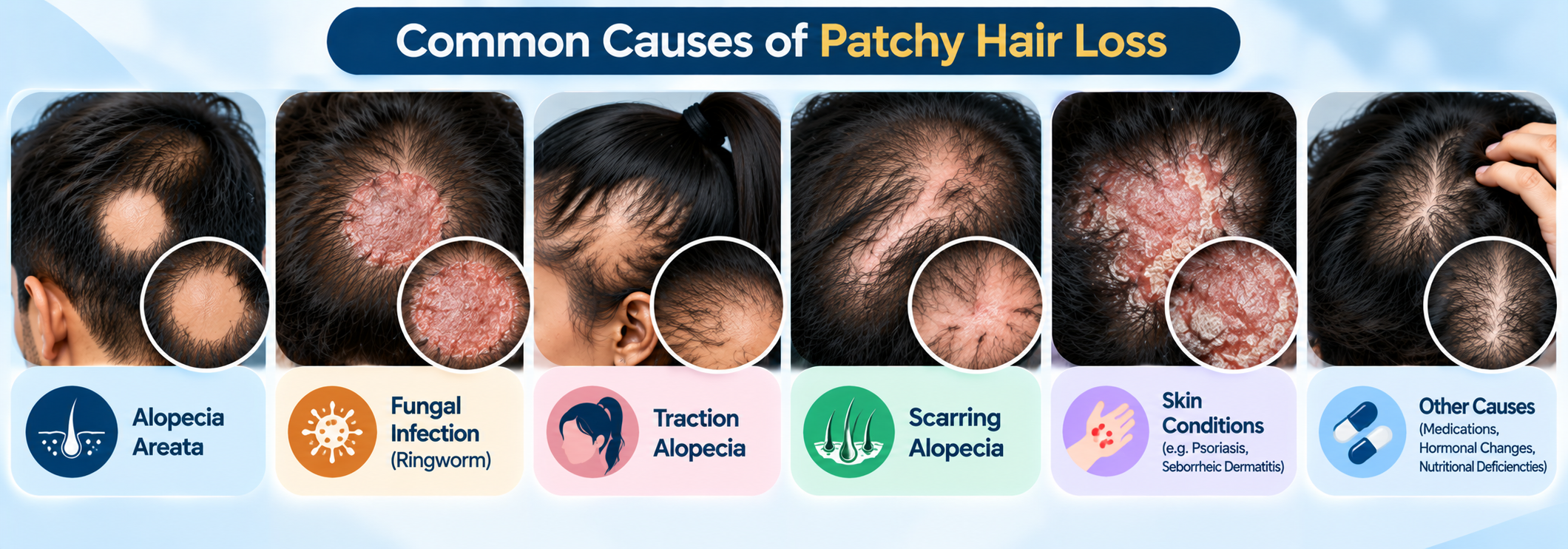
Not sure which applies? The patch checker flags features that need prompt care.
Screen My PatchAlopecia areata is an autoimmune condition in which the immune system temporarily attacks hair follicles, producing smooth, round bald patches — usually without scaling or scarring. It can affect the scalp, beard, eyebrows or body, and is sometimes accompanied by subtle nail changes such as pitting.
Its course is unpredictable. In many people, especially with limited patches, hair regrows over months, sometimes on its own; in others it stays stable or recurs, and a minority develop more extensive loss. Because of this variability, treatment is chosen and led by a dermatologist to suit the extent of loss and the individual — it is not something to manage with shop-bought products, and outcomes vary.
It is also important to know that alopecia areata is not contagious and is not caused by poor hygiene. It can carry a real emotional impact, and support — both medical and psychological — is a valid part of care. A specialist can explain the realistic outlook and options for your situation.
Important: Treatments such as hair transplants, PRP or Finasteride are not standard first-line care for alopecia areata. Be cautious of anyone offering these as a quick fix for bald patches. Always start with a dermatologist's diagnosis.
Think it may be alopecia areata? A dermatologist can confirm and discuss suitable options.
See a DermatologistThese look different to a trained eye. The table is for understanding — only a dermatologist can confirm.
| Feature | Alopecia areata | Tinea capitis (fungal) | Traction alopecia | Scarring alopecia |
|---|---|---|---|---|
| Patch surface | Smooth, normal skin | Scaly, red, broken hairs | Thinning where pulled | Shiny, scarred |
| Onset | Sudden, round | Often with scaling/itch | Gradual, at tension points | Gradual, progressive |
| Contagious? | No | Yes | No | No |
| Permanent? | Usually not | Usually recovers if treated | Can be, if prolonged | Often permanent if late |
| Treatment | Dermatologist-led | Prescribed antifungals | Reduce tension early | Prompt specialist care |
Want help describing your patch? The AI checker structures it for your dermatologist.
Take Patch CheckerSee a DermatologistWith most hair concerns, a good routine helps. Patchy hair loss is different: the causes are largely medical conditions, and using the wrong approach can waste time or make things worse. A fungal infection treated with a cosmetic serum will keep spreading; a scarring alopecia left unassessed can cause permanent loss; and even alopecia areata is best managed with specialist-chosen options rather than guesswork.
That is why Hairsncares takes a diagnosis-first stance for patchy loss. An AI patch check can help you describe the patch and recognise urgency, but its job is to guide you to the right care, not to replace it. Any products we suggest here are gentle, supportive or cosmetic — for comfort and confidence alongside medical treatment, never instead of it.
Ready for a clear answer? A dermatologist can diagnose the patch and start the right plan.
Consult a Dermatologist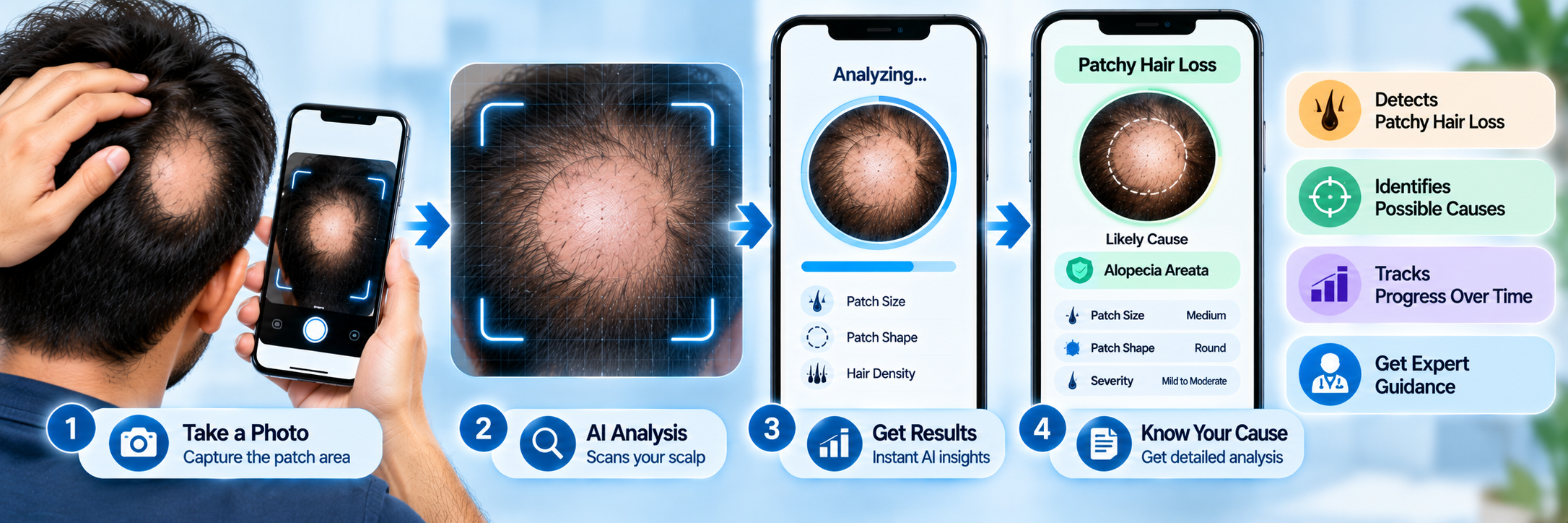
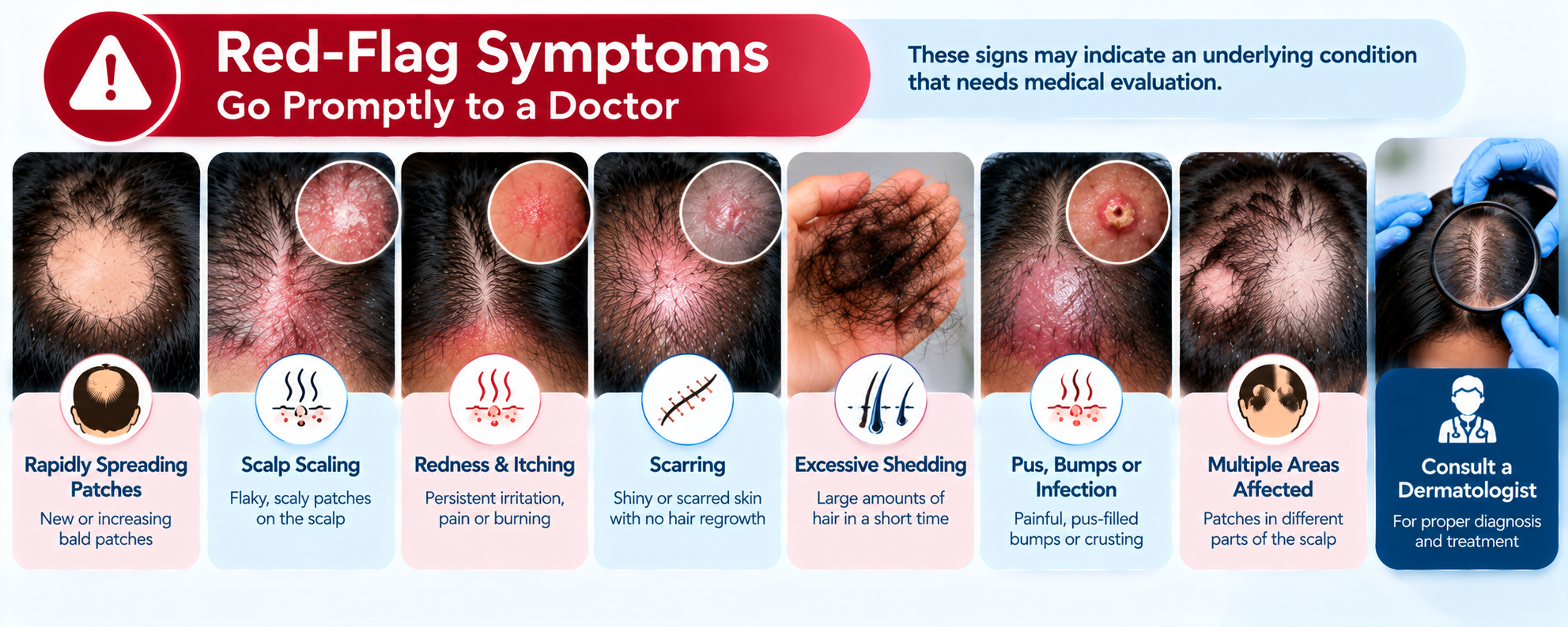
Patchy hair loss should always be assessed. Seek prompt dermatologist care — and treat the following as priority reasons to go quickly rather than buy products.
These are for comfort, scalp gentleness and cosmetic confidence <strong>alongside</strong> a dermatologist's treatment. They do not treat or cure the cause of patchy hair loss.

Non-medicated serums to calm and comfort the scalp.
These help comfort, not cure. Confirm the diagnosis with a dermatologist first.
See a DermatologistBrowse Gentle CareSample selection for supportive and cosmetic use alongside medical care. Prices, ratings and availability are placeholders.
These products are non-medicated and intended for gentle scalp comfort and cosmetic support only. They do not treat, manage or cure alopecia areata, fungal infections, scarring alopecia or any other cause of patchy hair loss, and no product is guaranteed to regrow hair. Patchy hair loss requires a dermatologist's diagnosis; medical conditions such as tinea capitis and scarring alopecia need prescribed, doctor-led treatment. If a patch is scaly, inflamed, scarred, spreading, painful, or affects a child, seek prompt dermatologist care rather than relying on products. Results vary.
Before anything else, get the patch diagnosed so it is treated correctly.
See a Dermatologist FirstScreen the PatchThis routine is for comfort and gentle care while your dermatologist treats the underlying cause. It does not replace prescribed treatment.
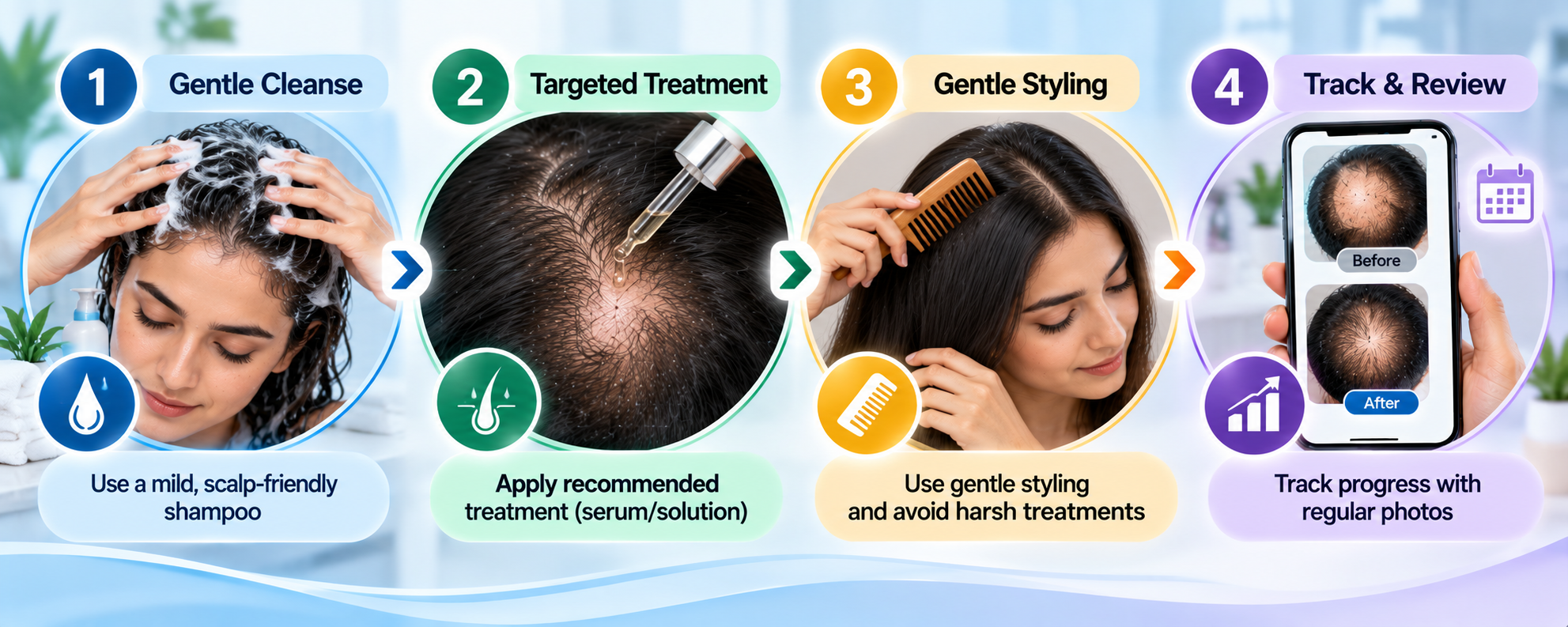
Gentle, low-irritation shampoo on wash days; pat dry softly.
Non-medicated soothing serum if the scalp feels tight or itchy.
Avoid harsh chemical treatments and heat on affected areas.
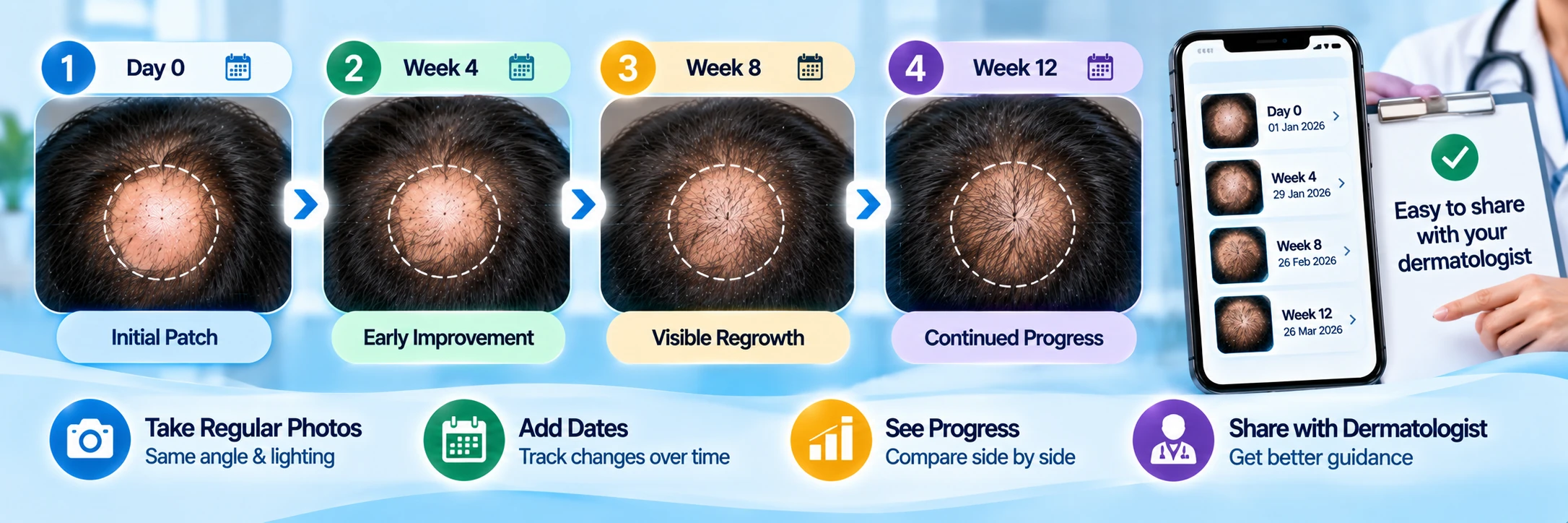
Photograph patches; keep your dermatologist review on track.
Use exactly the treatment your dermatologist has prescribed (e.g. antifungal for tinea capitis).
Complete the full course even if it looks better early.
For fungal infection, avoid sharing combs, towels or caps.
Return for follow-up; report spread or no improvement.
Avoid tight ponytails, buns and braids that pull on the scalp.
Keep the area clean and gentle; avoid scratching or picking.
Protect exposed bald skin from sunburn with a hat or cover.
Note any scaling, redness or spreading and tell your doctor.
Use hair fibres or styling to reduce the look of a patch if you wish.
Soft caps, wraps or scarves for comfort and confidence.
Reach out for emotional support — the impact is real and valid.
Keep photos to share progress with your dermatologist.
Want a gentle plan saved for you? Build a supportive routine around your dermatologist's advice.
Build My RoutineFor patchy hair loss, ingredients are about gentle comfort, not treating the cause. Anything medical — antifungals or therapies for alopecia areata — is prescribed and led by a dermatologist.
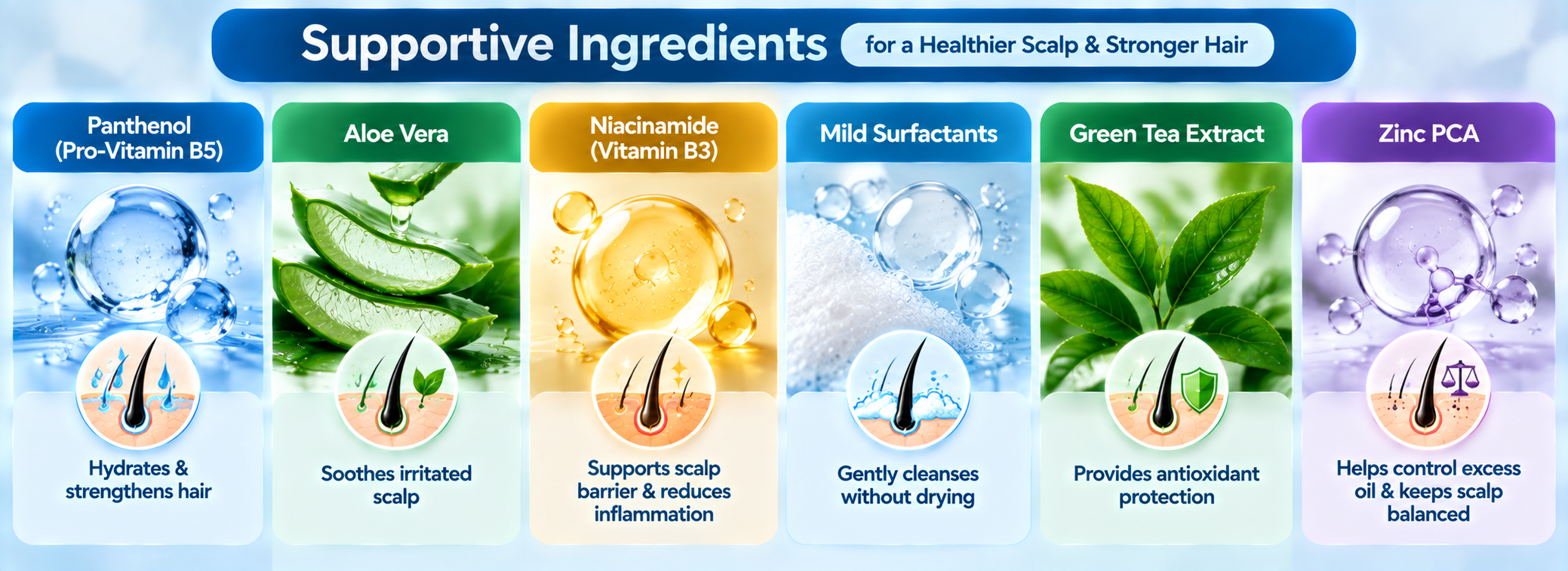
Gentle cleansing agents that are less likely to irritate.
Best for: sensitive scalp comfort.
Caution: cosmetic only; does not treat the cause.
Related productsA soothing, conditioning cosmetic ingredient.
Best for: scalp comfort, softness.
Caution: cosmetic; not a treatment.
Related productsA calming botanical used for scalp comfort.
Best for: soothing, hydration.
Caution: patch test; cosmetic only.
Related productsA well-tolerated ingredient for general scalp care.
Best for: gentle scalp support.
Caution: cosmetic; not for treating patches.
Related productsCling to existing hair to mask a patch instantly.
Best for: appearance on the day.
Caution: cosmetic only; does not treat loss.
Related productsA B-vitamin involved in hair structure.
Best for: confirmed deficiency, general support.
Caution: limited benefit without deficiency; can affect lab tests.
Related productsA mineral involved in hair and skin health.
Best for: confirmed low zinc.
Caution: excess can be harmful; test first.
Related productsLight conditioning agents for gentle care.
Best for: softness, comfort.
Caution: cosmetic only.
Related productsProtects exposed bald skin from sunburn.
Best for: protecting bare patches outdoors.
Caution: choose scalp-suitable options.
Related productsThe real treatment is medical. Confirm the diagnosis and follow your dermatologist's plan.
Ask a DermatologistAll Ingredients"When a patch of hair disappears, the single most important thing is the diagnosis. Is it alopecia areata, where the skin is smooth and hair may regrow? Is it a fungal infection, which is contagious and needs antifungals — common in children? Or is it a scarring alopecia, where every week of delay can mean permanent loss? These look different to a trained eye, and they are treated in completely different ways. Please don't reach for a serum off a shelf for a bald patch — come and let us look, and we will guide the right care."
Want the patch assessed? Book a dermatologist assessment for patchy hair loss.
Consult Dr. Amit's TeamNon-medicated comfort and cosmetic sets for use alongside dermatologist treatment. They do not treat the cause; results vary.

The most important "kit" is a diagnosis. Start there, then add gentle support.
See a DermatologistTake Patch CheckPatchy hair loss can change over time. Clear, dated photos and notes help your dermatologist judge response and spot spread early — they are a record for your doctor, not a substitute for review.
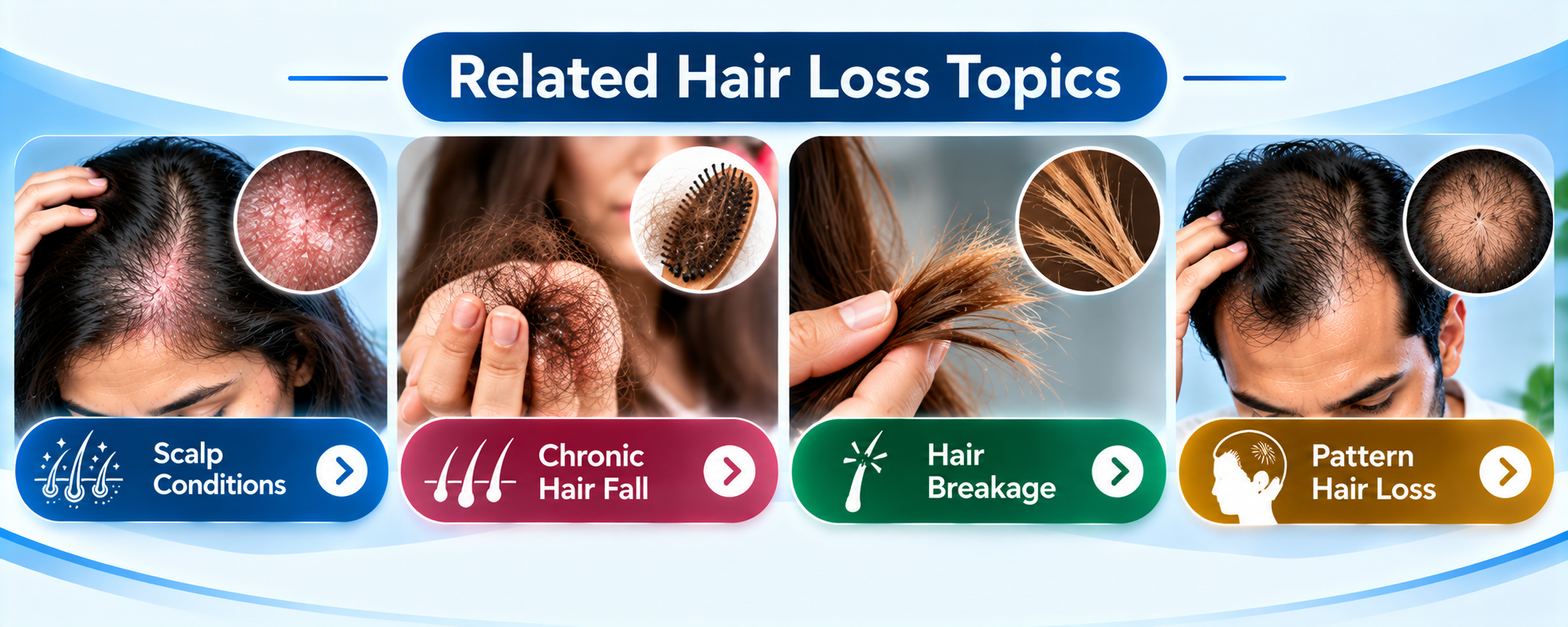
These references are provided for patient education and do not replace a dermatologist's diagnosis or individual medical advice.
Dermatologist-led overview of alopecia areata, a common cause of patchy hair loss.
View AAD reference ›Patient-education summary of patchy hair loss caused by alopecia areata.
View MedlinePlus reference ›Searchable index of peer-reviewed research on patchy hair loss and alopecia areata.
Search PubMed ›Independent systematic reviews assessing the evidence behind hair-loss interventions.
View Cochrane Library ›Diagnosis Pathway
Hair loss treatment should start by identifying the pattern. Pattern thinning, diffuse shedding, patchy loss, sudden shedding and hair breakage need different next steps.
May suggest androgenetic alopecia or DHT-related pattern hair loss. Often gradual and progressive.
Androgenetic Alopecia →May relate to telogen effluvium, deficiency, thyroid, illness, stress, postpartum phase or diffuse pattern loss.
Diffuse Hair Thinning →Often follows a trigger weeks to months earlier, but sudden shedding should not be dismissed if severe or persistent.
Sudden Hair Fall →Persistent shedding needs cause-finding: chronic TE, thyroid, deficiency, medicines, hormones or pattern loss.
Chronic Hair Fall →Patchy loss may be alopecia areata, fungal infection or scarring alopecia and should be dermatologist-led.
Patchy Hair Loss →Breakage is shaft damage, not root shedding. It needs damage repair and styling changes, not root-hair-fall treatment.
Breakage vs Hair Fall →Cause Map
DHT-related follicle miniaturisation causing gradual pattern thinning in men and women.
Read Guide →Diffuse shedding after triggers such as fever, COVID, stress, childbirth, surgery, dieting or deficiency.
Read Guide →Iron, vitamin D, thyroid and nutritional issues can contribute to diffuse shedding and chronic hair fall.
Supplement Safety →Round bald patches need dermatologist diagnosis because causes and treatments differ greatly.
Patchy Hair Loss →Stress, rapid weight loss, illness, smoking and alcohol may contribute, but rarely act alone.
Stress Hair Loss →Breakage from heat, chemicals, friction or styling is different from root hair fall.
Breakage vs Hair Fall →Red Flags
Short-term shedding after a known trigger can be tracked with photos, routine consistency and symptom notes.
Use the AI Hair Test to organise pattern, duration, triggers, scalp symptoms and next-step direction.
Hair fall lasting more than 6 months, worsening crown thinning, a widening parting or unclear shedding needs evaluation.
Patchy loss, scalp pain, pus, crusting, bleeding, scarring-looking skin, sudden severe shedding or child scalp scaling needs prompt medical review.
Progression
Patches may appear suddenly, may improve, recur or progress — a dermatologist monitors and adjusts the plan.
Tinea capitis needs proper antifungal treatment; without it the infection spreads.
Scarring alopecias cause irreversible loss where delayed — prompt assessment prevents spread.
Early removal of tension can allow recovery; prolonged pulling can lead to permanent loss.
Diagnosis First
Patchy hair loss may be alopecia areata, a fungal infection (tinea capitis), traction, scarring alopecia or inflammation. These need different treatments, so product shopping should not replace a dermatologist's diagnosis — some scarring causes need prompt care to limit permanent loss.
AI-Guided Next Step
Screen hair fall pattern, duration, triggers, scalp symptoms and next-step direction.
Take AI Hair Test →Explore product directions based on cause, scalp type and safety needs after screening.
Find Products →Build a realistic routine for shedding, pattern thinning, scalp support or breakage.
Build Routine →Track shedding, density, parting, crown and treatment response over time.
Track Progress →Product & Routine Pathway
Supportive shampoos, serums and routines for shedding-related concerns. Products do not cure hair loss.
View Hair Fall Products →Cosmetic serums, deficiency-guided supplements and selected doctor-guided active pathways.
View Growth Products →For dandruff, itching, oiliness or inflammation-linked shedding, scalp care may be the first step.
View Scalp Care →If the issue is shaft snapping rather than root shedding, focus on damage repair and styling changes.
View Damage Care →Explore More
External links open in a new tab for education. They are not endorsements and do not replace a consultation.
Next Step
Hair loss can come from pattern thinning, telogen effluvium, deficiency, thyroid, stress, post-viral shedding, rapid weight loss, scalp inflammation, patchy alopecia or hair shaft breakage. Start with screening, then choose the right routine or doctor review.
Question not answered here? Ask Dr Amit for instant guidance or book a consultation.
Ask Dr AmitConsult a DoctorPatchy hair loss is usually a medical condition — and the right diagnosis changes everything. Screen the patch with the Hairsncares AI Patch Checker, see a dermatologist for a clear answer, and use gentle products only for comfort and confidence alongside proper treatment.
A clear, dermatologist-reviewed overview of Patchy Hair Loss — what it is, the evidence behind treatment options, and the red flags that mean a doctor should look first. No exaggerated regrowth claims.
Results vary based on diagnosis, consistency, formulation and scalp condition.
Premium concern visual slot · 720×520 WebP
Hair loss in distinct patches, which can mean alopecia areata, fungal infection, traction or scarring — not pattern loss
Anyone with one or more bald patches
Patchy loss needs a diagnosis; some causes are urgent or scarring
Required — see a dermatologist promptly
Reviewed by: Dr. Amit Agarkar, MD Dermatology
Medical focus: Dermatology, trichology, hair loss, scalp disorders and hair restoration.
Last reviewed: 1 June 2026
Editorial promise: This page explains causes, treatment evidence, limitations and safe next steps without exaggerating hair-growth claims.
Prepared by the Hairsncares editorial team and medically reviewed by a dermatologist experienced in hair and scalp disorders.
Checked for accuracy of causes, treatment evidence, safety warnings, limitations and suitability for Indian users.
To help you understand this concern and choose safe next steps, and to know when a dermatologist diagnosis matters most.
| Parameter | Assessment | What it means |
|---|---|---|
| What it is | Hair loss in distinct patches, which can mean alopecia areata, fungal infection, traction or scarring — not pattern loss | The nature of this concern in plain terms. |
| Who it affects | Anyone with one or more bald patches | The people in whom it is most commonly seen. |
| Best-evidence options | Patchy loss needs a diagnosis; some causes are urgent or scarring | Where the strongest support lies — most are doctor-guided. |
| When to see a doctor | Self-treating patches with over-the-counter products | Situations needing diagnosis before any treatment. |
| Expected timeline | Depends entirely on the cause | Results vary based on diagnosis, consistency, formulation and scalp condition. |
Patchy hair loss needs prompt dermatologist assessment — some causes are scarring or need specific medical treatment, and over-the-counter products are not appropriate.
Product results should be selected based on diagnosis, scalp type, sensitivity, routine compatibility and dermatologist guidance where needed.
Find Products After AI Hair TestHair loss in distinct patches, which can mean alopecia areata, fungal infection, traction or scarring — not pattern loss. The exact cause should be confirmed, because look-alike conditions are treated differently.
Patchy loss needs a diagnosis; some causes are urgent or scarring. Most effective options are doctor-guided, and results depend on diagnosis, consistency and realistic expectations.
Depends entirely on the cause.
For sudden, patchy, painful or unexplained loss, yes — see a dermatologist before treating. A suitability screen helps you understand likely causes.
Self-treating patches with over-the-counter products — these need evaluation before any product or medicine.
Your cart is empty