Hair Loss: Causes & Treatment
Dermatologist-led overview of how hair loss is evaluated and the evidence behind common treatments.
View AAD reference ›Procapil and Redensyl are both branded cosmetic hair-active ingredients used in hair-growth serums — they're cosmetic actives, not drugs. The supporting evidence is limited rather than conclusive, and crucially neither is equivalent to, or a replacement for, prescription treatment (like minoxidil) or a doctor's diagnosis. Neither is universally better; any benefit depends on the cause of your hair fall, your scalp tolerance and consistent use — and neither cures hair loss or guarantees regrowth. The right pick comes down to the specific serum's formulation, how your scalp reacts, preference and doctor advice. Screen your pattern with the AI Hair Test, and understand the cause before relying on a serum. Results vary.
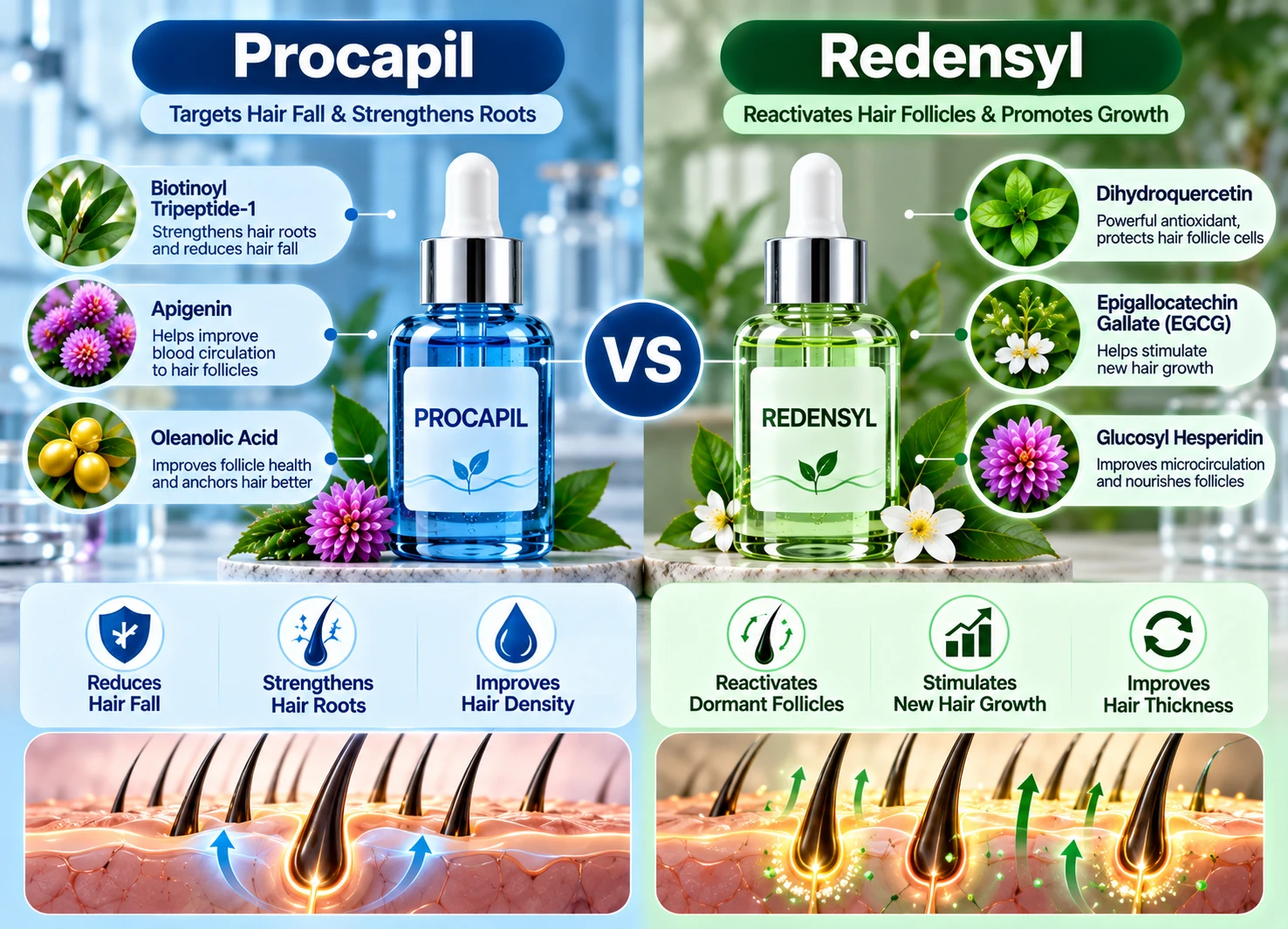
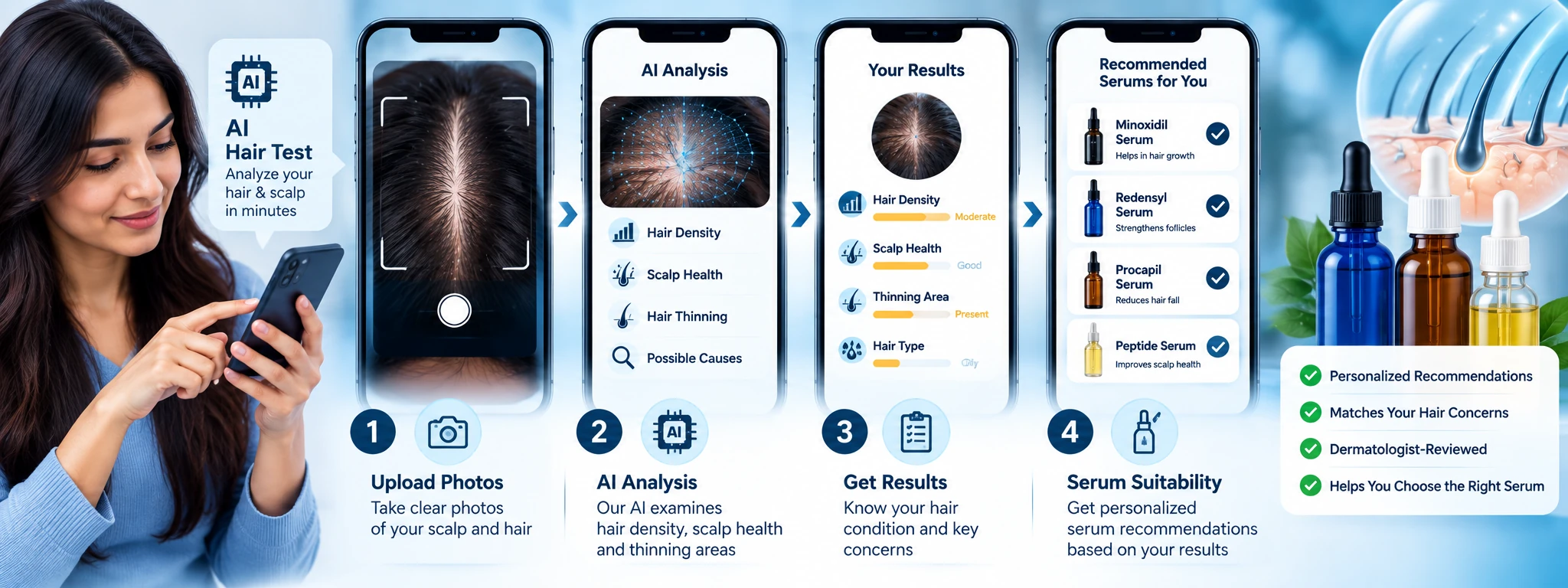
Illustrative sample only. The AI Hair Test screens patterns and does not diagnose, prescribe or endorse a brand. These are cosmetic actives with limited evidence, not medicines, and not a replacement for prescription treatment. No cure or guaranteed regrowth.
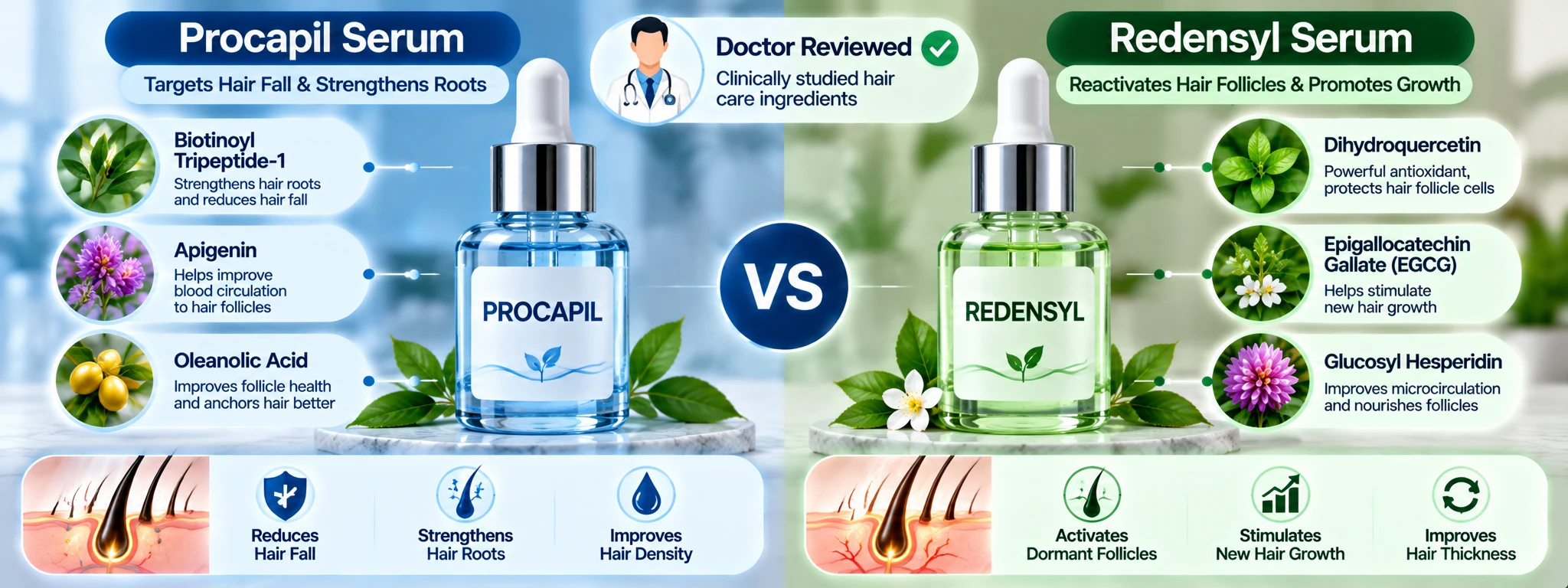
Neither is universally better. Procapil and Redensyl are both branded cosmetic hair-active ingredients used in serums — not drugs — and the evidence for each is limited rather than conclusive. They're marketed for general hair support, so any benefit depends on the cause of your hair fall, your scalp tolerance and consistent use, and neither cures hair loss or guarantees regrowth. The sensible basis for choosing is the specific serum's formulation, how your scalp reacts, preference and doctor advice — not a belief that one active is proven superior. Most important: neither is equivalent to, or a replacement for, prescription treatment such as minoxidil, or for a doctor's diagnosis. If your hair loss is sudden, patchy, unexplained or progressing, a serum is unlikely to be the answer on its own — see a doctor. Use the AI Hair Test to screen your pattern first. Results vary.
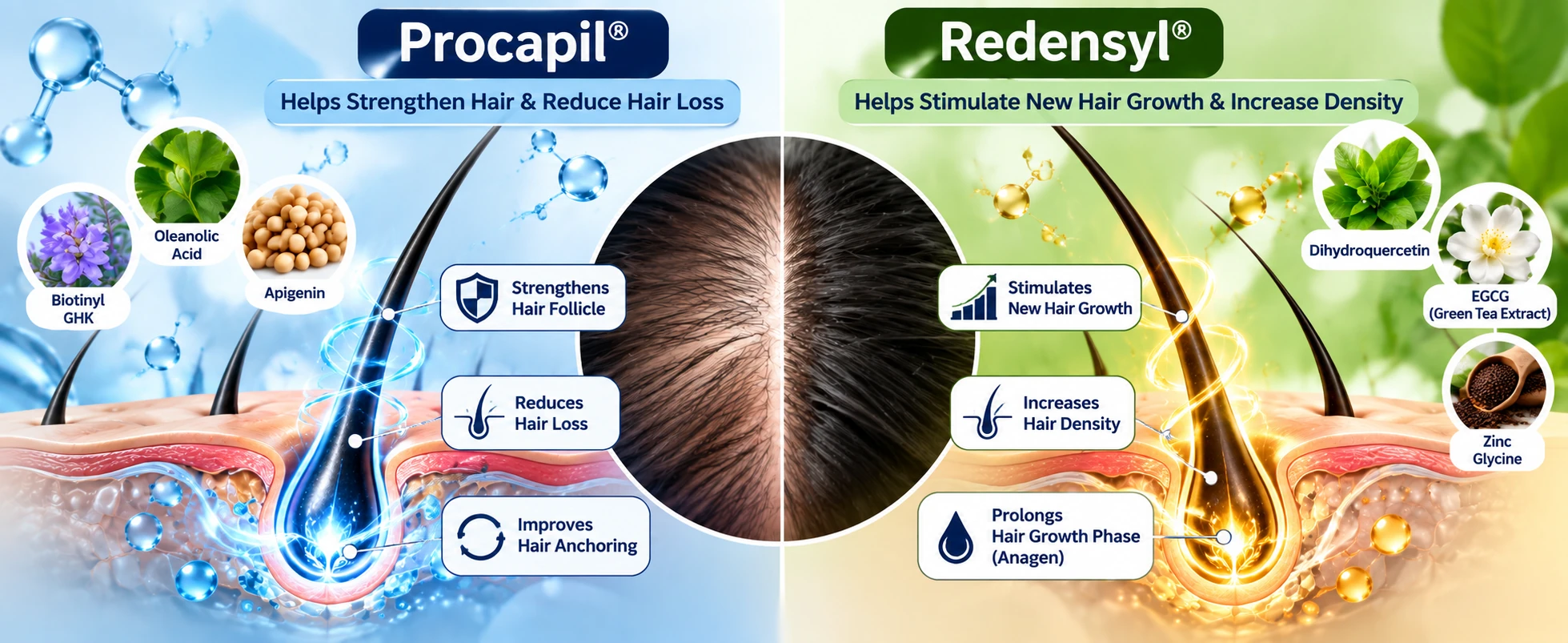
Procapil and Redensyl are two well-known branded cosmetic hair-active complexes formulated into topical hair-growth serums. The first thing to be clear about: they are cosmetic actives, not medicines, developed by different suppliers, and the serums that contain them vary in concentration and other ingredients.
The supporting evidence for cosmetic actives is limited rather than the kind of proof expected of drugs, so we don't over-claim. Any benefit depends on the cause of your hair fall, scalp tolerance and consistent use, and individual responses vary widely. Neither ingredient cures hair loss or guarantees regrowth, and we don't state fixed formulation percentages here — check the specific product.
Bottom line: choose on the serum's formulation, how your scalp tolerates it, preference and doctor advice — not on one active being "proven" better. And remember the bigger point: neither is a replacement for prescription treatment or a diagnosis. If your hair loss is progressing or may have a medical cause, see a doctor first.
Two different scalp concerns. Recommended categories, prices, ratings, stock and badges are placeholders populated dynamically.
Not sure which you have? The AI Hair Test screens your pattern before active.
Take the AI Hair TestAsk a Hair DoctorA clean, extractable side-by-side. This helps you tell them apart; it isn't a diagnosis.
| Feature | Procapil | Redensyl |
|---|---|---|
| Type | Cosmetic hair active | Cosmetic hair active |
| Found in | Topical serums | Topical serums |
| Drug or cosmetic? | Cosmetic (not a drug) | Cosmetic (not a drug) |
| Evidence | Limited | Limited |
| = Prescription treatment? | No | No |
| Cures hair loss? | No | No |
| Benefit depends on | Cause, tolerance, consistency | Cause, tolerance, consistency |
| Choose on | Formulation, tolerance, preference, doctor advice | Formulation, tolerance, preference, doctor advice |
| Suitable for everyone? | No | No |
Neither column "wins". Because both are cosmetic actives with limited evidence, the sensible basis for choosing is the specific serum's formulation, how your scalp tolerates it, preference and doctor advice — and a clear understanding that neither replaces prescription treatment or a diagnosis.
Want this matched to you? Screen your scalp and the likely cause first.
Check Product SuitabilityTake the AI Hair TestUse this as guidance, not a prescription. When the cause of hair fall is unclear, diagnosis comes first — before any serum.
Reaching for a serum before a diagnosis? Get the cause checked — a serum won't fix it.
Take AI Hair TestDoctor Diagnosis Needed?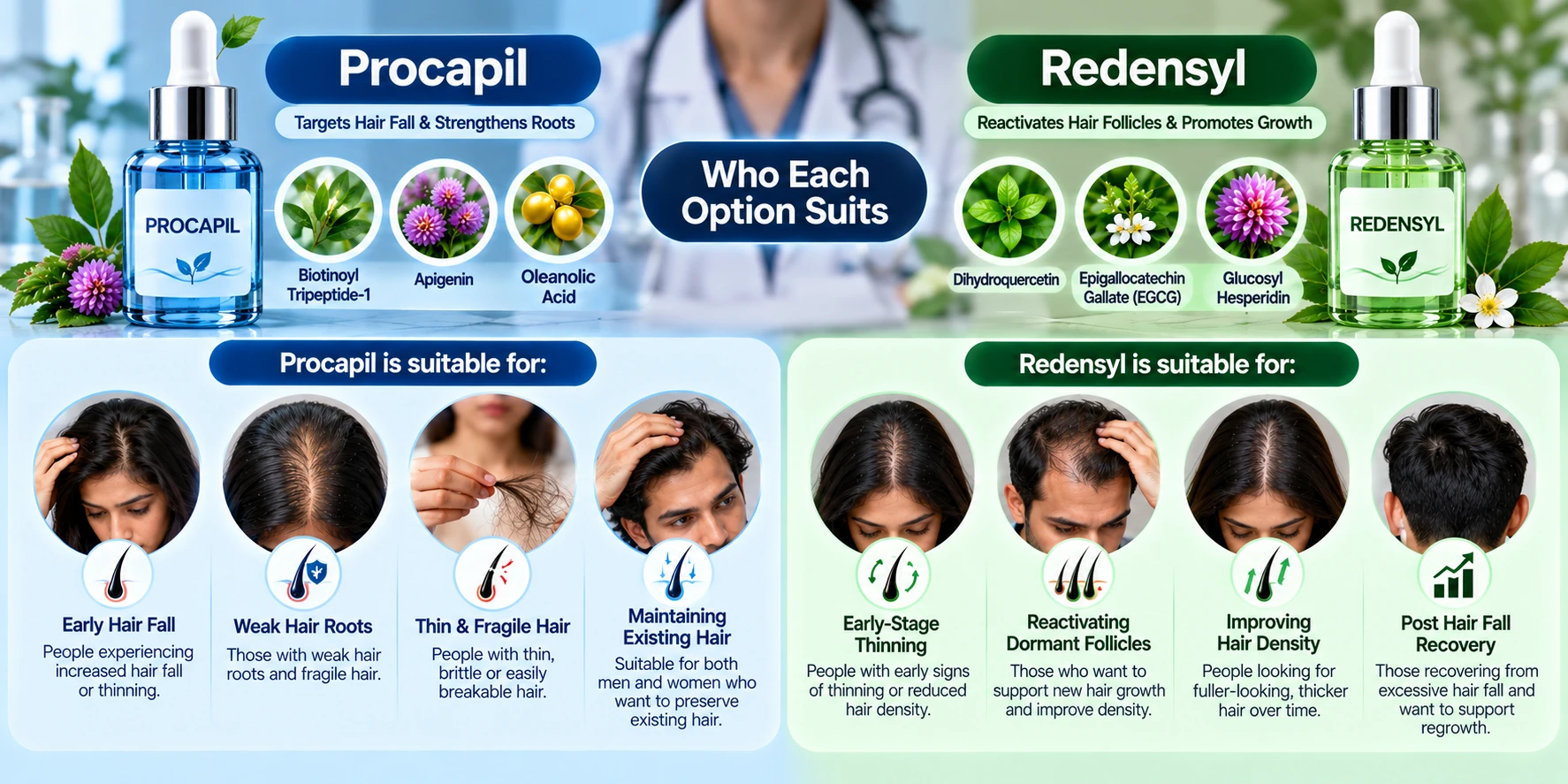
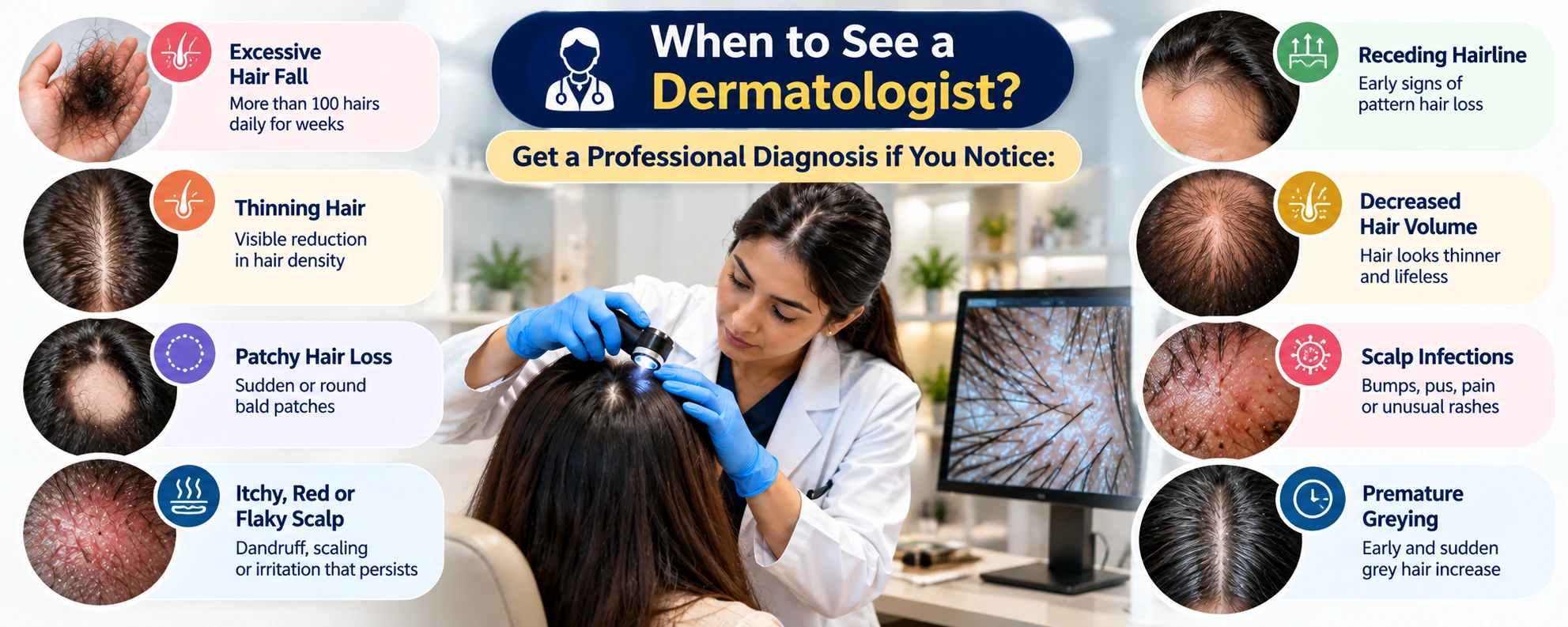
Cosmetic serums aren't medicines and won't treat an underlying cause. Don't rely on a serum — see a doctor first for any of these.
Explore doctor-reviewed categories. Cosmetic serums are support, not treatment, and not a replacement for prescription options. Formulation, prices, ratings, stock and Rx/OTC badges are placeholders populated dynamically.
Procapil and Redensyl are cosmetic hair-active ingredients, not drugs; serums containing them offer cosmetic support, do not cure hair loss, do not guarantee regrowth, and are not equivalent to or a replacement for prescription treatment (such as minoxidil) or a doctor's diagnosis. The supporting evidence is limited, and neither active is universally better — choose on the specific serum's formulation, scalp tolerance, preference and doctor advice. We do not fabricate formulation percentages, ingredient lists, prices, ratings, stock, discounts or reviews; these are placeholders pulled dynamically from the label and database. Patch test if your scalp is sensitive, and check with a doctor in pregnancy, breastfeeding or with a scalp condition. Some situations — sudden, patchy or unexplained loss, scalp infection, thyroid/PCOS symptoms, suspected anaemia, teenagers — need a doctor first. Results vary.
Compare other options too, or check what suits you first.
Take AI Hair TestCompare Rosemary Oil vs Minoxidil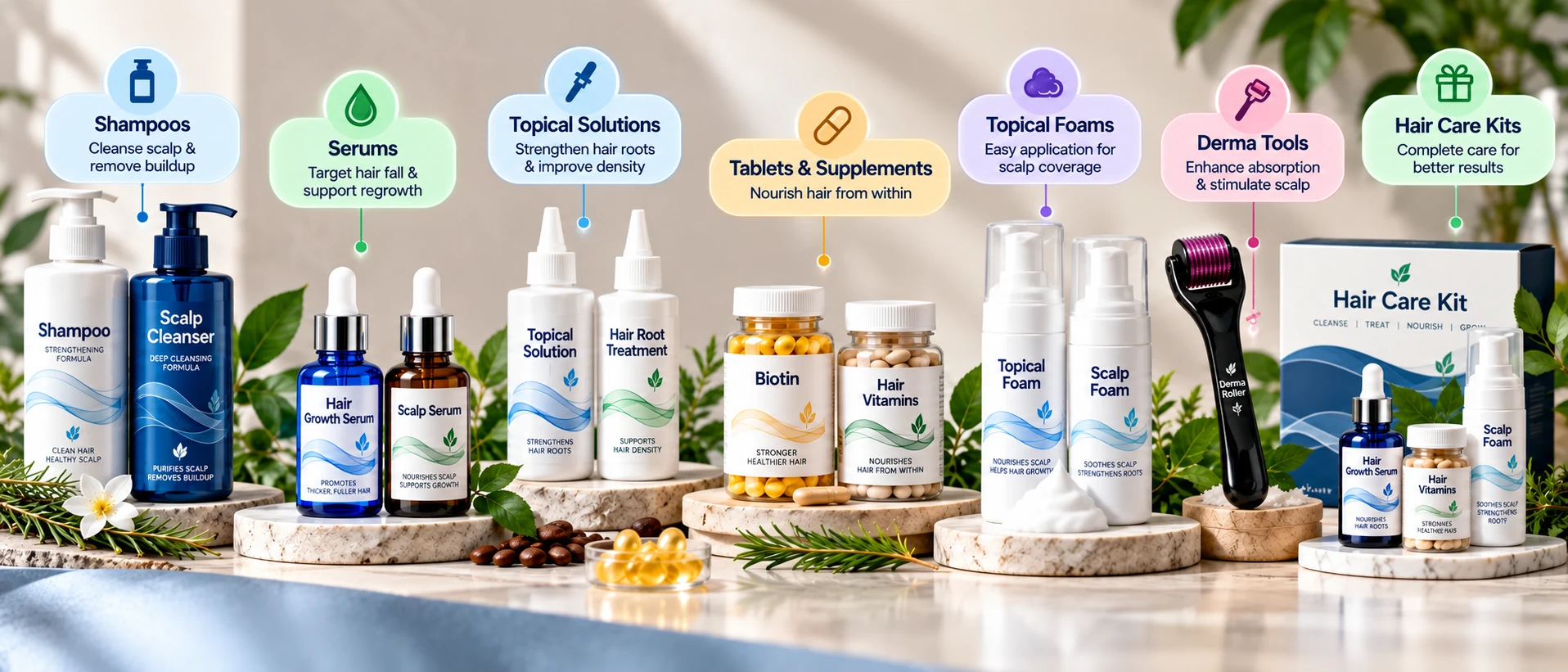
A simple framework for using a tolerated cosmetic serum consistently, alongside addressing the actual cause and gentle care. General guidance, not treatment advice — follow the product and your doctor.
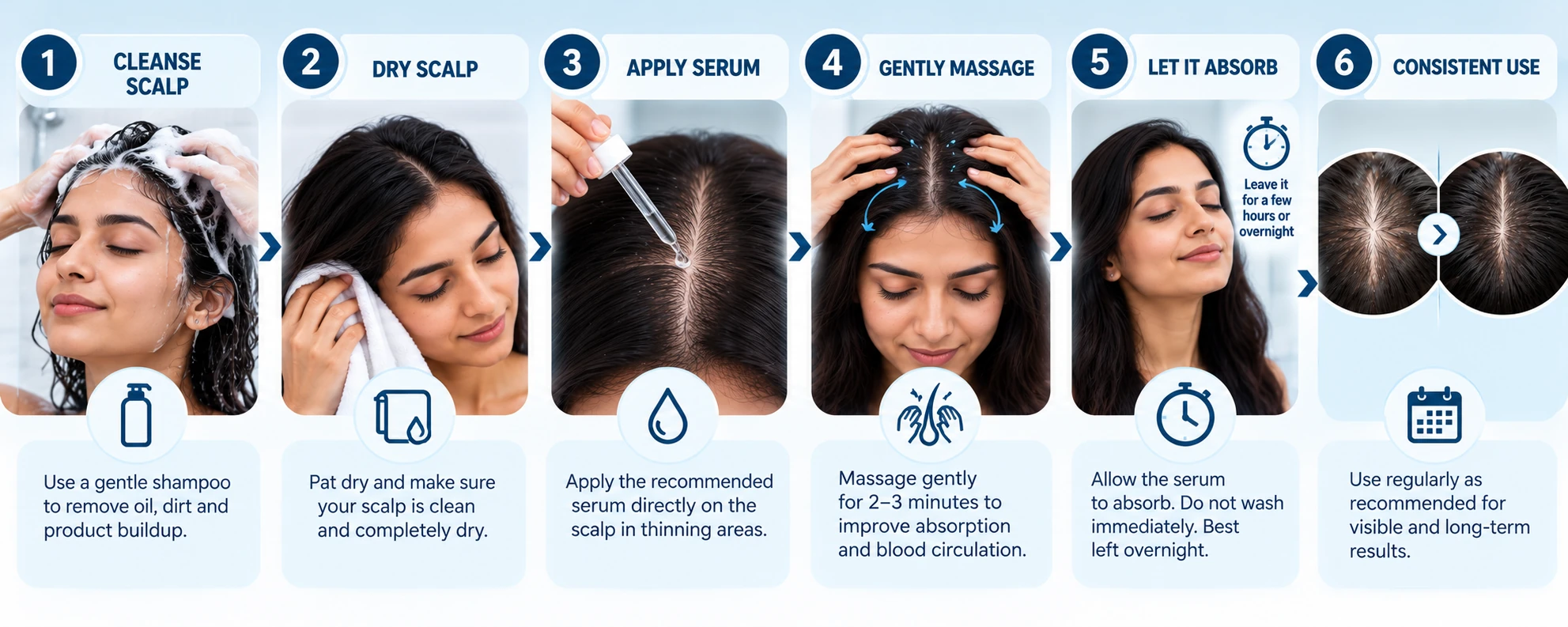
AI Hair Test to explore your pattern.
Sudden/patchy loss or scalp issues → see a doctor.
A serum supports; it isn't a treatment or Rx replacement.
Doctor for anything unclear.
Compare specific Procapil/Redensyl serums.
Especially if your scalp is sensitive.
More actives don't guarantee more results.
Use a tolerated serum you'll keep using.
Use exactly as the product directs.
Any benefit takes months, if at all.
Irritation → pause & reassess.
No cure or guaranteed regrowth.
Address the real cause; a serum is adjunct only.
Use the progress tracker.
Reassess with a doctor over time.
Discuss medical options if loss progresses.
Cosmetic serums act slowly and modestly if at all, so logging shedding, density, tolerance and consistency over months gives you and your doctor an honest picture — and flags if it's irritating you or not helping.
"Procapil and Redensyl come up a lot, usually framed as 'which one works better'. I try to reset that question. They're cosmetic actives in serums, not medicines, and the evidence behind them is limited compared with the prescription options people sometimes assume they replace. They can have a place as gentle, cosmetic support for someone with realistic expectations, but I never want a serum standing in for a proper diagnosis or for a treatment that pattern hair loss might actually need. So I look at the cause first. If the formulation suits your scalp and you tolerate it, fine, use it consistently and track it honestly. But if your hair loss is sudden, patchy, unexplained or progressing, that's a conversation about diagnosis and real options, not about which serum active has the nicer name."
Not sure a serum is right for you? Get the cause checked before relying on one.
Consult Dr. Amit's Team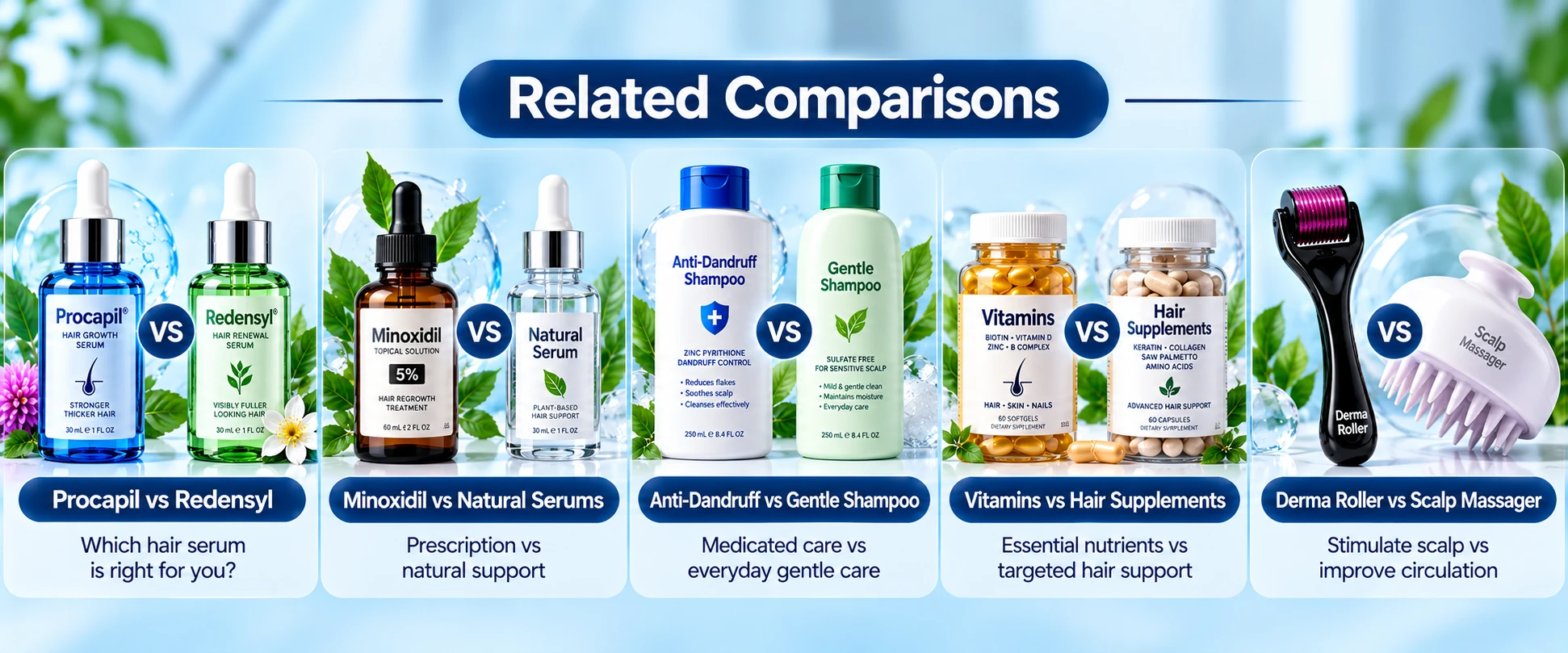
These references are provided for patient education and do not replace a dermatologist’s diagnosis or individual medical advice.
Dermatologist-led overview of how hair loss is evaluated and the evidence behind common treatments.
View AAD reference ›Patient-education summary of common causes of hair loss and when to seek medical care.
View MedlinePlus reference ›Searchable index of peer-reviewed research on cosmetic topical hair-growth actives.
Search PubMed ›Independent systematic reviews assessing the evidence behind hair-loss interventions.
View Cochrane Library ›
Question not answered here? Ask Dr Amit for general guidance, or book a consultation.
Ask Dr AmitConsult a DoctorGuidance, not a prescription. Because both are cosmetic actives with limited evidence, choose on formulation, tolerance and doctor advice — and when the cause is unclear, get a diagnosis first. Results vary.
If hair fall is mild, early, non-progressive, cosmetic, or you're unsure, either Procapil or Redensyl may serve as gentle cosmetic support — pick a tolerated formulation and keep expectations realistic. A serum won't fix an underlying cause. If your diagnosis is unclear, take the AI Hair Test first and consider a doctor.
For moderate shedding, thinning, weak hair, crown thinning, female- or male-pattern thinning, or doctor-confirmed pattern hair loss, a cosmetic serum is at most an adjunct, not the treatment. Pattern loss needs a doctor-guided plan, which may involve medical options a serum cannot replace. Confirm the cause; benefit isn't guaranteed.
See a doctor before relying on a serum if you have any of: sudden hair fall; patchy hair loss; scalp redness, pus, pain or crusting; severe dandruff or infection; pregnancy or breastfeeding; teenagers; thyroid symptoms; PCOS symptoms; heavy periods or suspected anaemia; side effects from previous products; or an unclear diagnosis. Assessment comes first.
Explore doctor-reviewed categories suited to your needs and gender. Confirm the cause first; cosmetic serums don't cure hair loss, guarantee regrowth or replace prescription treatment.
Unsure where to start? Screen your pattern and whether a serum is even a reasonable option — not the active name — then talk to a doctor. It's a screening aid, not a diagnosis or endorsement.

Both are cosmetic hair-serum actives with limited evidence, so neither is universally better — the sensible basis for choosing is the specific serum's formulation, how your scalp tolerates it, preference and your doctor's advice. But the bigger point is that neither is a medicine, neither cures hair loss or guarantees regrowth, and neither is a replacement for prescription treatment or a diagnosis. So first understand why you're losing hair — ideally with a doctor — then decide whether a cosmetic serum adds value as gentle support. Take the AI Hair Test to screen your pattern, and see a doctor for sudden, patchy or unexplained loss, scalp infection, thyroid or PCOS symptoms, suspected anaemia, or in pregnancy. Results vary.
A balanced, dermatologist-reviewed guide to telling Procapil and Redensyl — a balanced, dermatologist-reviewed comparison based on evidence and safety, with no fabricated ratings or guaranteed-regrowth claims.
Signs overlap and can coexist — only a clinician can confirm which you have.
Comparison visual slot · 720×520 WebP
A cosmetic serum active (a biotinyl-GHK, apigenin and oleanolic acid blend).
A cosmetic serum active (a DHQG and EGCG2 blend).
Both are cosmetic serum actives marketed for hair support; evidence is formula-dependent, and neither equals Minoxidil or Finasteride.
Choose Procapil if a Procapil-based serum fits your routine and budget; choose Redensyl if a Redensyl-based serum fits your routine and budget.
Reviewed by: Dr. Amit Agarkar, MD Dermatology
Medical focus: Dermatology, trichology, hair loss, scalp disorders and hair restoration.
Last reviewed: 1 June 2026
Editorial promise: This guide helps you understand the difference; it does not replace a clinical diagnosis.
The Hairsncares editorial team, medically reviewed by a dermatologist experienced in hair and scalp disorders.
Checked for accurate, balanced descriptions of both conditions and clear safety guidance.
To help you understand whether your signs fit Procapil or Redensyl, and when to get a diagnosis.
| Parameter | Procapil | Redensyl |
|---|---|---|
| What it is | A cosmetic serum active (a biotinyl-GHK, apigenin and oleanolic acid blend) | A cosmetic serum active (a DHQG and EGCG2 blend) |
| Evidence level | Cosmetic; formula-dependent | Cosmetic; formula-dependent |
| Best for | A supportive serum step in a routine | A supportive serum step in a routine |
| Key cautions | Not a medicine; not equal to Minoxidil/Finasteride | Not a medicine; not equal to Minoxidil/Finasteride |
| Doctor guidance | Optional | Optional |
Cosmetic options carry fewer risks than medicines, but medicines have stronger evidence for pattern loss. Prescription items should always be doctor-guided.
For persistent, sudden, patchy or unexplained hair loss, a dermatologist diagnosis matters more than the product choice.
Both are cosmetic serum actives marketed for hair support; evidence is formula-dependent, and neither equals Minoxidil or Finasteride.
Neither is automatically better. The right choice depends on your diagnosis, evidence needs, routine and budget. Choose Procapil if a Procapil-based serum fits your routine and budget; choose Redensyl if a Redensyl-based serum fits your routine and budget.
Sometimes, but it depends on the products, your scalp and your diagnosis. Check with a doctor before combining, especially where a medicine is involved.
Cosmetic options carry fewer risks than medicines, but medicines have stronger evidence for pattern loss. Prescription items should always be doctor-guided.
For persistent, sudden, patchy or unexplained hair loss, yes — a dermatologist diagnosis matters more than the product choice.
| Factor | Procapil | Redensyl |
|---|---|---|
| Type | Cosmetic serum active | Cosmetic serum active |
| Status | Not a regulated medicine | Not a regulated medicine |
| Evidence | Limited / early-stage | Limited / early-stage |
| Role | Supportive cosmetic care | Supportive cosmetic care |
| Replaces Rx treatment? | No | No |
This matrix is educational and helps you understand which direction may fit your situation. It does not replace a dermatologist diagnosis. Results vary.
Procapil and Redensyl are cosmetic serum actives, not regulated hair-loss medicines. Evidence for both is limited and largely early-stage, so they are best viewed as supportive cosmetic care rather than a substitute for treatments a doctor might prescribe for an actual hair-loss condition. Neither is proven equivalent to a medicine, and neither cures hair loss.
If you have genuine, progressing hair loss, the priority is a diagnosis, not a serum-versus-serum debate. Screen with the AI Hair Test, browse hair serums, and for medical loss ask a doctor.
Plan a routine via hair-fall-control routine and read more in Learn.
Screening tools and product links are for education and discovery. They do not diagnose, prescribe or guarantee results, and they do not replace a doctor.
Your cart is empty