Post Hair Transplant Routine: Surgeon-Guided Morning, Night & Weekly Aftercare Plan
Post-hair-transplant care must be phase-based — what is safe in month three may not be safe in week one. Fresh grafts, donor-area healing, crusting, itching, redness, the shedding phase and the growth phase all need different care. This is a structured educational guide, but your transplant surgeon's instructions come first. Do not apply shampoo, oil, serum, Minoxidil, tonic, lotion, exfoliator or spray on fresh grafts unless your surgeon approves. Results vary.
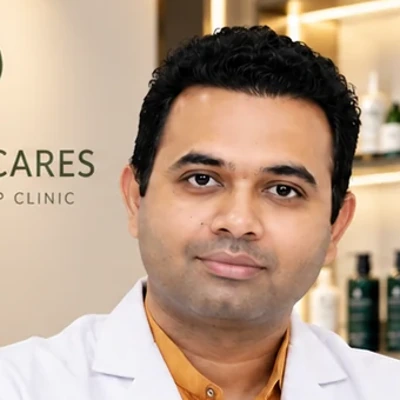
Reviewed by Dr. Amit AgarkarMD Dermatology · Dermatologist & Hair Specialist
Illustrative sample. The goal is manageability, scalp comfort and photo-readiness, not guaranteed density, shine or wedding-date results. AI tools screen and do not diagnose; results vary.
🩺
Surgeon-firstprotocol priority
🧲
Phase-basedday 0 → month 12
📷
Recovery trackingcrusting / growth
⚠️
Emergency claritywhen to call
🚚
India-widedelivery
Quick Answer
What does safe post-transplant aftercare include?
Following your surgeon's protocol first, protecting fresh grafts (no touching, rubbing, scratching or picking crusts), gentle surgeon-approved washing only when allowed, donor-area care with approved products only, and patience through the shedding and growth phases. No shampoo, oil, serum, Minoxidil, tonic, lotion, exfoliator or spray goes on fresh grafts unless your surgeon approves, and Minoxidil restart timing is surgeon-decided. Anti-dandruff shampoos, exfoliators and styling products are reintroduced only after healing with approval. Track recovery with photos. Contact your clinic urgently for bleeding, pus, fever, severe or spreading swelling, worsening pain, a dislodged/traumatised graft or unusual discharge. Results vary.
Your transplant surgeon's instructions come first.Do not apply shampoo, oil, serum, Minoxidil, tonic, lotion, exfoliator, hair spray or any active product on fresh grafts unless your surgeon has approved it. What is safe in month three may be unsafe in week one. Avoid touching, rubbing, scratching or picking the grafts, and avoid tight caps and friction early. Contact your clinic urgently if you notice bleeding, pus, fever, severe or spreading swelling, worsening pain, graft trauma or dislodgement, unusual discharge, scalp blisters or spreading redness. AI suggestions are education, not diagnosis, and never override your surgeon.
Surgeon-first aftercare routine. Do not apply products to fresh grafts unless approved by your transplant surgeon.
AI Summary
The Post-Transplant Routine in Simple Terms
The Post-Transplant Routine. Phase-based aftercare guidance you follow only as your surgeon approves; the surgeon's protocol comes first and products do not improve graft survival.
The right routine depends on your hair-fall pattern, scalp symptoms, hair type, product history, styling exposure, medical history and whether the concern is root-related, scalp-related or hair-shaft-related.
Bottom line: follow your surgeon's instructions first. Use this page to understand recovery phases, and ask your clinic before adding any product. Results vary.
Who It Suits
Who This Routine Suits
✓
After FUE / DHI / MHI / FUT transplant
✓
First-wash planning
✓
Crusting-phase care
✓
Donor-area care
✓
Shedding-phase support
✓
Growth-phase support
✓
Long-term maintenance after transplant
✓
Patients needing recovery tracking
When a Routine Is Not Enough
Not Suitable For / Doctor Red Flags
This routine is not enough — contact your clinic — if there is bleeding, pus, fever, severe or spreading swelling, severe or worsening pain, graft dislodgement or trauma, spreading redness, an allergy, signs of infection, severe itching, scalp blisters or unusual discharge. These need urgent attention from your transplant clinic, not a product.
Any of these apply? A routine is not a substitute for diagnosis.
Avoid touching, rubbing or scratching the graft area, and check redness, swelling, pain and discharge.
Why: Protects fresh grafts
⚠️ Avoid: Scratching the graft area
3
Cleanse only if approved
Use a gentle, surgeon-approved shampoo only when allowed. Do not use anti-dandruff shampoo, an exfoliator or harsh actives early unless surgeon-approved.
Product: Surgeon-approved gentle shampooCaution: Only when allowed
Wash, mask and plan salon work early — never experiment near the date.
1
Week 1: graft protection
Graft protection, surgeon-guided wash only, and no random products.
Phase: Day 0–7
⚠️ Avoid: Adding products in week 1
2
Week 2: crust management
Manage crusts only as the surgeon advises, avoid picking crusts, and track redness / itching.
Phase: Day 8–14
⚠️ Avoid: Picking crusts
3
Week 3–4: shedding may begin
Shedding may begin — do not panic. Ask the surgeon before restarting Minoxidil or actives.
Phase: Week 3–4Note: Shock loss is common
⚠️ Avoid: Restarting Minoxidil too early
4
Month 1–6+: growth phase
Month 1–3: shock-loss support, gentle care, photos. Month 3–6: early growth support if healing is complete and doctor-approved. Month 6–12: growth monitoring, maintenance products, density tracking.
Phase: Month 1–12Action: Doctor-guided products only
Curated kits for this routine. Patch-test new products and avoid new strong actives without guidance. Prices, stock and ratings load from the catalogue.
🎁
Kits coming soon
Curated kits for this concern aren't ready just yet. Browse the full Hairsncares shop to build the routine that fits your needs.
Product image, name, category, recovery-phase suitability, surgeon-approved badge, avoid-before-day badge, price, stock, ratings and reviews are dynamic placeholders from the official label and database — we do not fabricate product data. Nothing is applied to fresh grafts without surgeon approval; Minoxidil restart timing and strength are surgeon-decided and never invented. Add-to-cart and add-to-routine wire to the backend.
Why These Ingredients
Bridal ingredients focus on smoothness, shine, scalp comfort and breakage support — introduced early and patch-tested, never as last-minute strong actives.
✓
Mild surfactants
Gentle cleansing after approval for the early wash phase.
May support: Early wash phase (approved)Evidence: GentleAvoid if: Fresh grafts before surgeon approval
Record photos and track swelling, crusting, redness, itching and pain early on, then shedding, growth and density at 2 weeks, 6 weeks, 3 months and 6 months. It supports self-monitoring — it does not diagnose or replace your surgeon.
Shop Products for Your Post Hair Transplant Routine
Shop gentle products to build a post-transplant routine — mild cleansing, soothing care and maintenance. Always follow your transplant surgeon's specific aftercare plan; timing for washing, actives and minoxidil is decided by your surgeon, not general advice. Results vary.
🧴
Products coming soon
We're curating the right supportive products for this concern. In the meantime, browse the full Hairsncares shop or take the AI Hair Test for a tailored match.
Suggested bundles around this topic. Final recommendations should be personalised using the AI Hair Test, scalp photos, medical history and dermatologist review where needed. Prices, stock and prescription status load from the product database.
🎁
Bundles coming soon
Value bundles for this concern aren't ready just yet. Browse the full Hairsncares shop to build the routine that fits your needs.
Doctor-reviewed guidanceProduct selection should follow symptoms, age, pregnancy status and scalp condition.
Secure checkoutPayment, invoice and order tracking ready.
Prescription safetyPrescription products must follow dermatologist approval where required.
India deliveryPincode-based availability and refill reminders.
Delivery Check
Check Delivery Availability
Enter your pincode to check medicine, haircare product and bundle delivery availability in your area.
Refill Plan
Never Miss Your Haircare Routine
Routines only work when you stick to them. Add eligible masks, serums and shampoos to a monthly refill plan with reminders — active and prescription refills always follow dermatologist approval.
"As a dermatologist and hair transplant surgeon, I always remind patients that transplant aftercare is phase-based. Fresh grafts need protection, not random products. Follow your surgeon's protocol first, track your recovery, and add products only when the healing stage allows it. And please call your clinic for bleeding, pus, fever or severe swelling — we would always rather hear from you early than have a problem go unaddressed."
Reviewed by Dr. Amit Agarkar, MD DermatologyDermatologist & Hair Specialist · Last reviewed 1 June 2026
Bleeding, pus, fever, severe swelling, worsening pain or graft trauma? Contact your clinic now.
Hairsncares follows a who-how-why editorial process so you can see who stands behind this guidance and how it was checked.
🩺
Who created this guide?
Prepared by the Hairsncares editorial team and medically reviewed by Dr. Amit Agarkar, MD Dermatology, a dermatologist and hair specialist.
⚖️
How was it reviewed?
Checked for honest claims (support, not cure or guaranteed regrowth), correct ingredient role, red-flag escalation to a doctor, prescription-active warnings, and suitability for Indian haircare users.
💡
Why was it created?
To help you follow a safe, realistic routine, understand honest timelines, and know when a dermatologist's assessment matters more than self-treating.
🩺
Last medically reviewed: 1 June 2026Dr. Amit Agarkar, MD Dermatology · Dermatologist & Hair Specialist · Reviewed against the live guidance
Phase-based, surgeon-approved recovery support after a transplant
Improving routine consistency
Supporting scalp comfort, hair-shaft appearance or product fit where relevant
Tracking progress at 2 weeks, 6 weeks, 3 months and 6 months
⛔ Cannot Promise
Guarantee graft survival or improve graft take
Replace your surgeon's aftercare protocol or timeline
Make it safe to apply products to fresh grafts without approval
Substitute for urgent clinic contact when red-flag symptoms appear
Guarantee regrowth of transplanted or native hair
Medical References
When to See a Doctor & Trusted Sources
A routine supports comfort, appearance and consistency — it does not replace diagnosis. For red-flag symptoms or no improvement, rely on assessment rather than only changing routines.
External links open in a new tab and are provided for general education; they are not endorsements and do not replace personalised medical advice.
Questions
Frequently Asked Questions
What is the best post-hair-transplant routine?
The best post-hair-transplant routine is phase-based and led by your surgeon's protocol: protecting fresh grafts, gentle surgeon-approved washing when allowed, careful crust and donor-area care, patience through the shedding phase, and adding products only as healing permits. The best routine is not a fixed product list but a staged plan that follows your surgeon, protects the grafts early, tracks recovery, and introduces shampoos, actives or Minoxidil only when your surgeon approves. Results vary.
When can I wash my hair after a transplant?
The timing and method of the first wash after a transplant are set by your surgeon and vary between clinics and techniques, often starting gently within the first days under specific instructions. Follow your clinic's first-wash instructions on when and how to wash, since early washing must be gentle and graft-safe. Results vary.
Which shampoo is best after a hair transplant?
The best shampoo after a transplant is the gentle, surgeon-approved one your clinic recommends for the early phase, used exactly as instructed, with regular or anti-dandruff shampoos reserved for later once healing allows and the surgeon approves. Use only what your surgeon advises for your stage. Results vary.
When do crusts fall after a hair transplant?
Crusts usually form in the first days and typically come away over the following week or two with the gentle washing your surgeon advises, and they should not be picked off, since picking can disturb grafts. Let crusts come away naturally with surgeon-guided gentle washing, and contact your clinic if there is pain, pus or bleeding. Results vary.
Can I apply oil after a hair transplant?
You should not apply oil to fresh grafts; oil and other products are kept off the transplanted area until your surgeon says healing allows it. Avoid oil on the grafts in early recovery, and only consider oiling later, on the surgeon's advice, when healing is complete. Results vary.
Can I use Minoxidil after a hair transplant?
Minoxidil is often part of long-term care after a transplant, but it is not applied to fresh grafts and the restart timing must be approved by your surgeon. You may well use Minoxidil after a transplant, but only when and how your surgeon approves, because the timing relative to graft healing matters. Results vary.
When can I restart Minoxidil?
The timing to restart Minoxidil after a transplant is decided by your surgeon and depends on graft healing, so it is not a fixed date and should not be self-judged. Ask your surgeon when to restart Minoxidil rather than guessing. Results vary.
Can I use anti-dandruff shampoo after a transplant?
Anti-dandruff shampoo is usually avoided in early recovery and reintroduced only after healing and with surgeon approval. Do not use anti-dandruff shampoo on fresh grafts; wait until your surgeon confirms healing allows it, and mention dandruff to your clinic. Results vary.
What should I do for itching after a transplant?
Itching is common as the scalp heals after a transplant, but you should not scratch, since scratching can disturb grafts. Manage post-transplant itching by avoiding scratching and following your clinic's advice on gentle care, and contact them if itching is severe or accompanied by redness, pus or pain. Results vary.
Is shedding normal after a transplant?
Yes, shedding of the transplanted hairs in the weeks after surgery, often called shock loss, is a normal and expected part of the process, with the roots remaining and new growth coming later. Do not panic if transplanted hairs shed in the first weeks to months; continue your surgeon's aftercare and track progress rather than assuming the transplant has failed. Results vary.
When does transplanted hair grow?
After the early shedding phase, transplanted hair usually starts to grow over the following months, with noticeable growth often from around three to four months and continued improvement up to a year or more. Expect a waiting period after the initial shedding, with growth becoming visible over several months and density building towards a year. Results vary.
What should I avoid after a transplant?
After a transplant you should avoid touching, scratching or picking the grafts, oils, styling products, sprays and Minoxidil on fresh grafts, anti-dandruff shampoos and exfoliators early, tight caps and friction, and anything your surgeon has not approved. In early recovery, protect the grafts and avoid all non-approved products and physical trauma, following your surgeon's list of dos and don'ts. Results vary.
What if grafts are touched accidentally?
A light accidental touch early on is often fine, but firm rubbing, scratching or knocking can dislodge fresh grafts. If you accidentally touch the grafts gently, avoid further contact and continue careful aftercare, while contacting your clinic if there is bleeding, a dislodged graft or trauma. Results vary.
What if there is redness or pus?
Some redness is expected early in healing, but pus, spreading redness, increasing pain, swelling or fever can signal infection or a problem and need urgent contact with your clinic. Contact your transplant clinic urgently for pus, spreading redness, worsening pain, swelling or fever, since these may need prompt medical attention. Results vary.
Can supplements help after a transplant?
Supplements may help where there is a genuine nutrition need and your doctor approves, supporting general recovery, but they are not a substitute for surgeon-guided aftercare. Consider supplements only if your doctor advises them for a real need, since aftercare and graft protection matter far more than supplement use. Results vary.
Can I use a hair serum after a transplant?
A hair serum should not be used on fresh grafts and is only introduced after healing if your surgeon approves. Avoid serums on the transplanted area in early recovery, and only use a scalp serum later with surgeon approval once healing is complete. Results vary.
When can I use styling products?
Styling products like gels, sprays and waxes are avoided in early recovery and reintroduced only once the surgeon confirms healing allows it. Wait until your surgeon says it is safe before using styling products on the transplanted area, and reintroduce them gradually as advised. Results vary.
Can the AI tool build my recovery routine?
The AI Routine Builder can structure a phase-based aftercare routine for your recovery day with graft-safety reminders and a surgeon-consult flag, but it is an education aid that does not override your surgeon's protocol, which always comes first. Your transplant surgeon's specific instructions take priority, and anything uncertain should be checked with your clinic rather than the tool. Results vary.
When should I contact my surgeon?
You should contact your surgeon or clinic urgently for bleeding, pus, fever, severe or spreading swelling, worsening pain, a dislodged or traumatised graft, unusual discharge, spreading redness, scalp blisters or signs of infection, and for any uncertainty about your recovery. Treat these as reasons to call your clinic promptly rather than waiting or self-treating. Results vary.
How do I track transplant progress?
You track transplant progress with the Progress Tracker by recording photos and noting swelling, crusting, redness, itching and pain early on, then shedding, growth and density month by month at 2 weeks, 6 weeks, 3 months and 6 months. Regular, consistent photo and symptom tracking gives a clear record of healing, the shedding phase and regrowth. Results vary.
Question not answered here? Ask Dr Aria for general guidance, or book a consultation.
Transplant aftercare works best when it is phase-based and led by your surgeon: protect fresh grafts, wash gently only when approved, avoid all non-approved products early, support the shedding and growth phases, and track recovery. Add shampoos, actives or Minoxidil only when your surgeon approves for your stage, and contact your clinic urgently for warning signs. Build your phase-based routine, track at 2 weeks, 6 weeks, 3 months and 6 months. Results vary.
Medical disclaimer. This is educational content reviewed by a dermatologist and hair transplant surgeon. The AI Routine Builder, AI Hair Test and Hair Transplant Progress Tracker help you structure and monitor recovery and flag when to contact your clinic, but do not diagnose, prescribe, override your surgeon's protocol, or replace your transplant surgeon, whose instructions always come first. Post-transplant care is phase-based; what is safe in month three may be unsafe in week one.Do not apply shampoo, oil, serum, Minoxidil, tonic, lotion, exfoliator, hair spray or any active product on fresh grafts unless your surgeon has approved it, and Minoxidil restart timing must be surgeon-approved. Contact your clinic urgently for bleeding, pus, fever, severe or spreading swelling, worsening pain, graft trauma or dislodgement, unusual discharge, scalp blisters or spreading redness. Product price, stock, ratings and reviews are dynamic placeholders from the official label and database. Results vary.