Tea Tree Oil for Scalp in India: Dandruff Support, Oily Scalp, Benefits, Side Effects & Safety Guide
Limited evidenceScalp-care essential oilUse diluted only
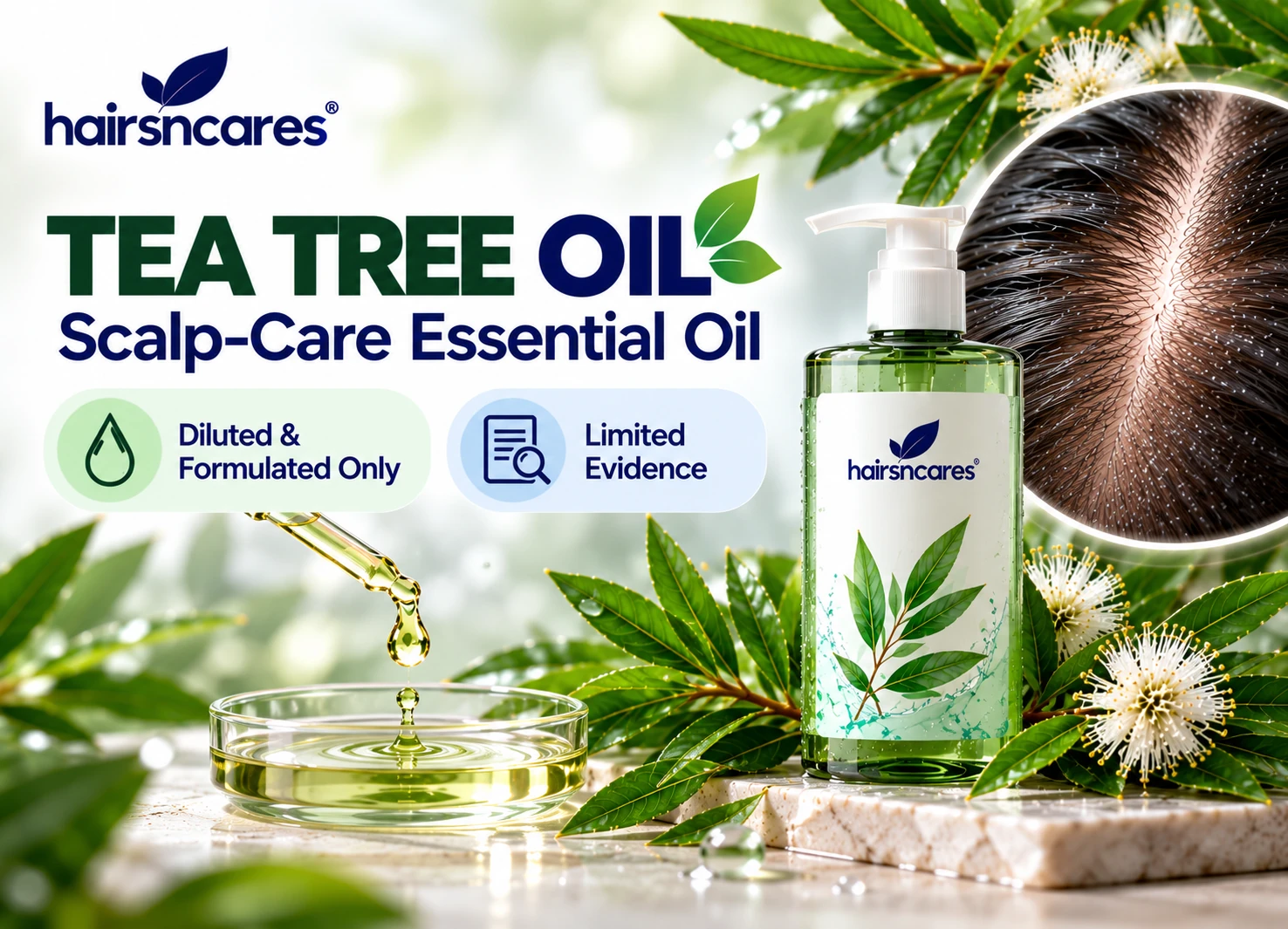
Tea Tree Oil is an essential oil used in some scalp-care, anti-dandruff and oily scalp products. It may support scalp freshness and cosmetic dandruff-care routines in selected users, but it can irritate the scalp if used undiluted or too frequently. Safe formulation, dilution and scalp diagnosis are essential, and it is not a substitute for Ketoconazole or doctor-guided treatment. Screen your scalp first with the AI Scalp Test. Results vary.
Doctor guidanceFor severe / sensitive / painful scalp
Illustrative summary only. This is education, not a diagnosis or prescription; results vary and depend on your situation.
🩺
Doctor-reviewedMD Dermatology
⚡
AI Scalp Testfree
🌿
Scalp essential oildiluted & formulated
⚠️
Irritation risknever neat; patch test
🚚
India-widedelivery
Quick Answer
Is Tea Tree Oil good for dandruff?
Tea Tree Oil may support some dandruff-prone or oily scalp routines when used in properly formulated products, but it should not be applied undiluted directly to the scalp. It can cause irritation, burning or allergy in sensitive users. Severe dandruff, thick plaques, pus, pain, patchy hair loss or a child's scalp scaling needs dermatologist evaluation. As an essential oil, it is potent: it belongs in a diluted, well-formulated shampoo or scalp product, never neat, and it is not a substitute for an antifungal like Ketoconazole or doctor-guided treatment when those are needed, and it does not regrow hair. So it may help mild, dandruff-prone or oily scalps as part of a formulated product for some people, but proper dilution, a patch test and scalp diagnosis matter, and a struggling or painful scalp should be assessed rather than treated with more essential oil. Screen with the AI Scalp Test, and see a doctor for red flags. Results vary.
⚠️ Essential oil — never apply undiluted to the scalp. Neat Tea Tree Oil can cause burning, stinging, redness, contact dermatitis or allergy. Use it only in properly formulated, diluted products, and patch test first. Avoid the eyes, eyebrows, broken skin, an inflamed scalp, a child's scalp, and a fresh hair transplant unless your surgeon approves; take care with asthma or fragrance sensitivity and essential-oil allergy. It is not a substitute for Ketoconazole or doctor-guided treatment, and it does not regrow hair.Stop and seek advice if you get burning, swelling, a rash or worsening symptoms.See a doctor for severe or recurrent dandruff, thick plaques, pus, pain, crusting, patchy hair loss, suspected fungal infection or a child's scalp scaling.
Tea Tree Oil is an essential oil used in hair and scalp-care products, commonly marketed for oily scalp, dandruff, itching and scalp freshness.
It should generally be used in properly formulated products rather than undiluted, and it is different from medicated dandruff treatment.
As an essential oil it is potent and can irritate if misused. So it sits at the limited / cosmetic scalp tier with an irritation caution: it may support some oily or dandruff-prone routines when diluted and formulated, but it is not a medicine and not something to apply neat to the scalp.
Mechanism
How Tea Tree Oil Works
In a formulated product, it may support scalp freshness and oil-control routines and help selected users with a mild dandruff-prone scalp.
It does not treat every scalp infection or inflammatory condition, and it does not regrow hair.
Its irritation risk limits its use in sensitive scalp, and an irritated scalp can flake and itch more. So it is a cosmetic, scalp-comfort action at best, dependent on dilution and tolerance, not a reliable dandruff treatment. Results vary.
Evidence
How Strong Is the Evidence?
Limited evidence Tea Tree Oil
Best supported for
Mild oily scalp support, mild dandruff-prone scalp support, scalp-freshness products and shampoo-based routines — for non-sensitive users who tolerate essential oils, in properly formulated, diluted products.
Not proven to
It is not a substitute for Ketoconazole or doctor-guided treatment, not a hair regrowth ingredient, and not a treatment for severe dandruff, fungal infection, psoriasis, scarring conditions or patchy hair loss.
Doctor guidance
For severe or recurrent dandruff, thick plaques, pus, pain, crusting, patchy loss, suspected tinea capitis/psoriasis/folliculitis, a child's scalp, or any reaction to a product — see a doctor rather than using essential oil.
Suitability
Best For
✅
Mild oily scalp support
Oil-control and freshness for a tolerant, oily scalp.
✅
Mild dandruff-prone scalp
Cosmetic support for mild, dandruff-prone routines.
✅
Scalp-freshness products
A fresh feel within a formulated scalp product.
✅
Shampoo-based routine
Diluted within a well-formulated tea tree shampoo.
Do NOT apply undiluted Tea Tree Oil directly to the scalp
Use properly formulated products
Patch test first
Avoid eyes, eyebrows, broken skin and inflamed scalp
Avoid combining with multiple exfoliating or active scalp products
Stop if burning, itching, rash, swelling or worsening occurs
Consult a doctor if symptoms are severe or recurrent
Usage
How to Use Tea Tree Oil Safely
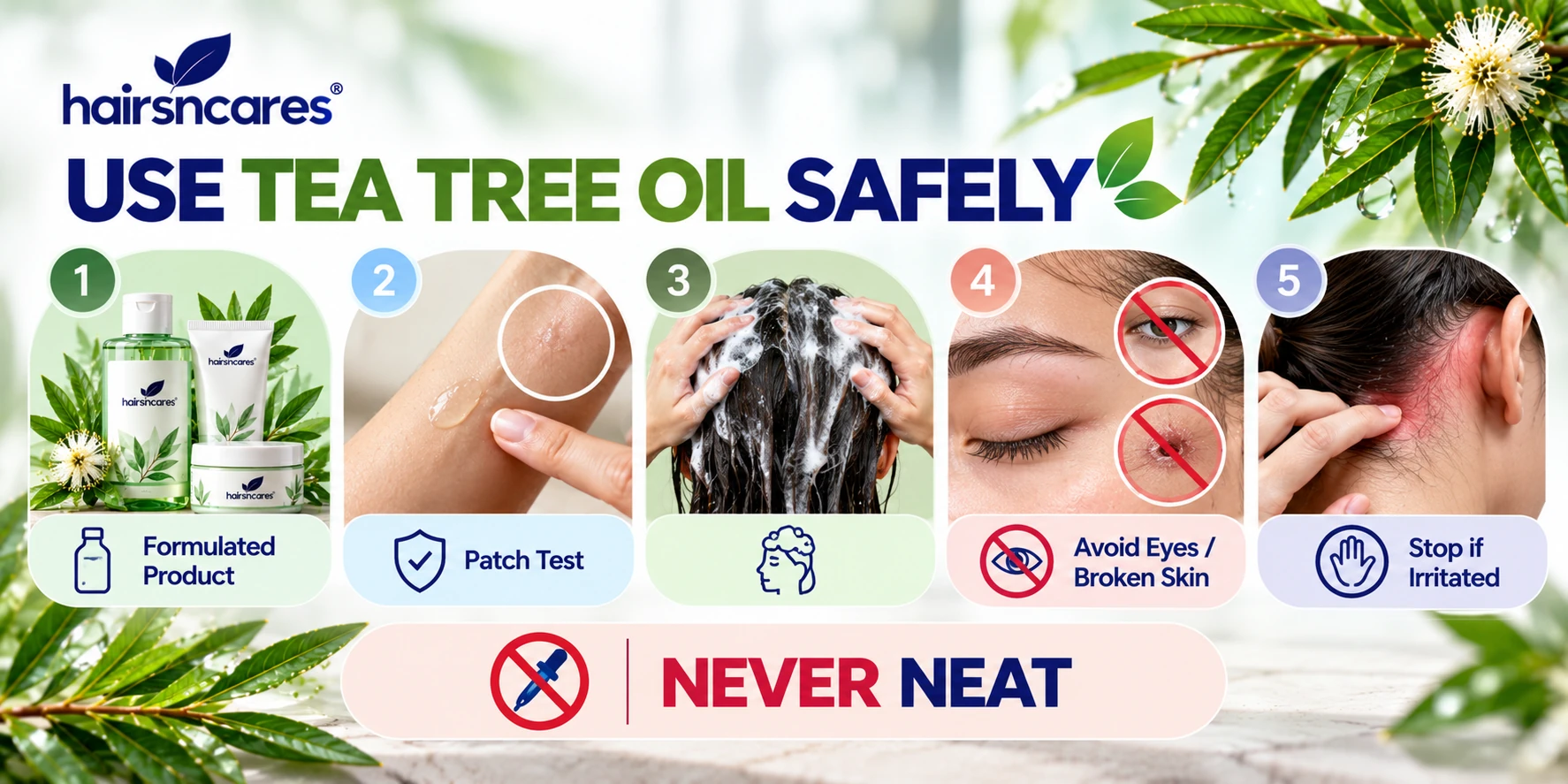
Do not apply undiluted Tea Tree Oil directly to the scalp. Use properly formulated, diluted products and patch test first. Avoid the eyes, eyebrows, broken skin and an inflamed scalp, and avoid combining it with multiple exfoliating or active scalp products at once, which raises irritation risk. Stop if burning, itching, a rash, swelling or worsening occurs, and consult a doctor if symptoms are severe or recurrent rather than persisting with an essential oil on a struggling scalp.
Not sure if this ingredient fits your situation? Screen the cause first.
Tea Tree Oil is a potent essential oil, so irritation and allergy are real risks, especially undiluted, overused, or on a sensitive or inflamed scalp.
BurningStingingItchingRednessContact dermatitisDrynessWorsening irritationEye irritationFragrance sensitivityAllergyScalp barrier disruption if overused
Because it is a concentrated essential oil, neat or overuse can cause burning, stinging, redness, contact dermatitis, dryness or allergy, and it can disrupt the scalp barrier if overused. Use only diluted, formulated products, patch test, and keep it off the eyes, broken skin and inflamed scalp. Stop and seek advice if you get burning, swelling, a rash or worsening symptoms rather than continuing.
Shop
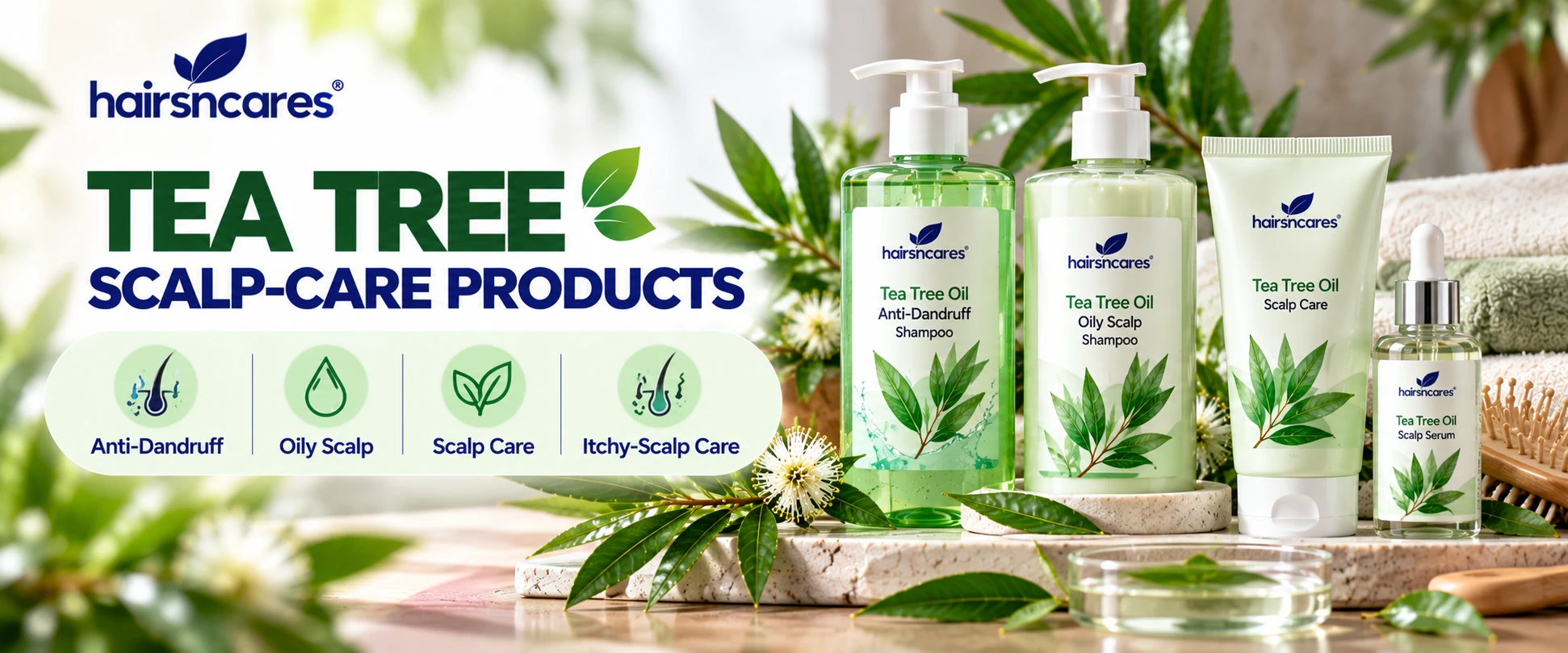
Tea Tree Oil Scalp-Care & Anti-Dandruff Products
Anti-dandruff, oily-scalp and scalp-care products that may feature tea tree oil in a properly formulated, diluted base. Concentration, prices, ratings and stock are dynamic placeholders from the database and official label.
Tea Tree Oil belongs in properly formulated, diluted products — never neat on the scalp. It is a cosmetic scalp-care essential oil with limited evidence and a real irritation risk, not a substitute for Ketoconazole or doctor-guided treatment, and it does not regrow hair. Patch test, and choose sensible formulation over the highest concentration. Severe or painful scalp symptoms, thick plaques, patchy loss, a child's scalp or any reaction need a doctor — not more essential oil. We do not fabricate prices, concentrations, ratings, stock or reviews; these are dynamic placeholders from the official label and database. Results vary.
Want products matched to you? Use the finder or screen first.
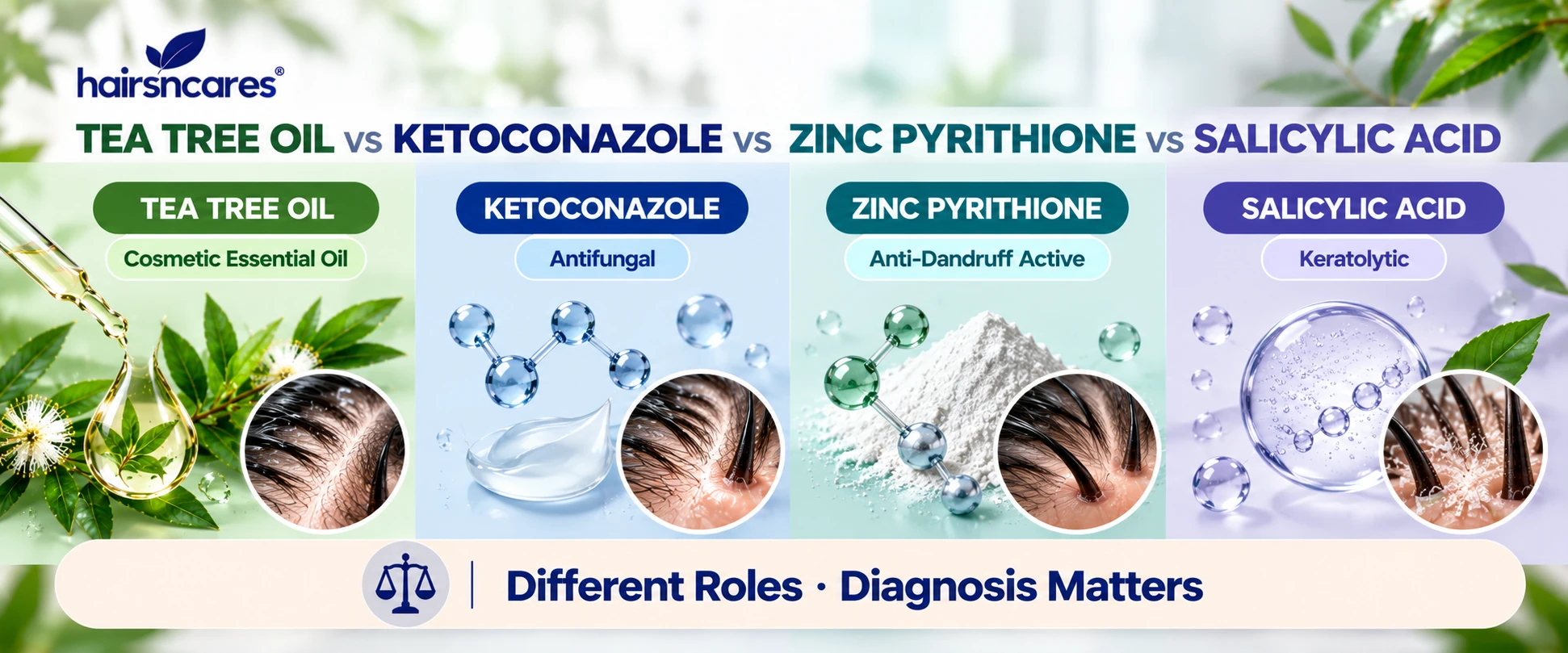
Tea Tree Oil vs Ketoconazole vs Zinc Pyrithione vs Salicylic Acid
How this ingredient compares with similar options. It points to a pathway; it is not a diagnosis.
Feature
Tea Tree Oil
Ketoconazole
Zinc Pyrithione
Salicylic Acid
Category
Essential oil
Antifungal
Anti-dandruff active
Keratolytic (BHA)
Medicine or cosmetic
Cosmetic
Medicine
Anti-dandruff active
Cosmetic / keratolytic
Main role
Scalp freshness (diluted)
Antifungal dandruff control
Flake / oil control
Exfoliates flakes / scale
Best for dandruff
Mild (cosmetic)
Yes (established)
Yes
Scaling / buildup
Best for oily scalp
Some (formulated)
Some
Yes
Yes
Irritation risk
Higher (essential oil)
Lower
Lower
Can dry / irritate
Sensitive scalp caution
High
Moderate
Moderate
Moderate
Use format
Diluted / formulated only
Shampoo / as directed
Shampoo
Shampoo / scalp product
Doctor guidance
For severe / sensitive scalp
For persistent dandruff
For persistent dandruff
For thick plaques
Pathway
Anti-dandruff / scalp
Anti-dandruff
Anti-dandruff
Scalp exfoliation
At a Glance
Coconut Oil vs Castor Oil vs Tea Tree Oil vs Saw Palmetto: Which Ingredient Fits Your Concern?
Coconut Oil and Castor Oil are mainly cosmetic hair oils for dryness, frizz, coating and grooming. Tea Tree Oil is an essential oil used in selected scalp-care products but has irritation risk. Saw Palmetto is a DHT-support ingredient with supplement and hormonal safety cautions. None should replace diagnosis for progressive, sudden, patchy or medically complex hair loss.
Useful in Some Products — but Essential Oils Can Irritate
"As a dermatologist, I am cautious with Tea Tree Oil because essential oils can irritate the scalp. It may be useful in selected, well-formulated products, but undiluted application, a sensitive scalp, severe dandruff, a child's scalp scaling or painful scalp symptoms need medical guidance. I see patients make a struggling scalp worse by dabbing on neat oil. If your scalp is mild and tolerant, a formulated product may suit; if it is severe, sensitive or painful, that needs me to look, and often an established treatment rather than an essential oil."
Reviewed by Dr. Amit Agarkar, MD DermatologyDermatologist & Hair Specialist · Last reviewed 1 June 2026
Severe or recurrent dandruff, a painful or sensitive scalp, patchy loss, or a child's scalp? Get assessed.
Tea Tree Oil is an essential oil used in some hair and scalp-care products, commonly marketed for oily scalp, dandruff, itching and scalp freshness. It should generally be used in properly formulated products rather than undiluted, and it is different from medicated dandruff treatment. As an essential oil it is potent and can irritate if misused. So tea tree oil is a cosmetic scalp-care essential oil that may support some oily or dandruff-prone routines when properly formulated and diluted, rather than a medicine or something to apply neat to the scalp. Results vary.
Is Tea Tree Oil good for dandruff?
Tea Tree Oil may support some dandruff-prone or oily scalp routines when used in properly formulated products, but it should not be applied undiluted directly to the scalp, and it can cause irritation, burning or allergy in sensitive users. It is not a substitute for an antifungal like ketoconazole or doctor-guided treatment when those are needed. So it may help mild, dandruff-prone scalps as part of a formulated product for some people, but severe dandruff, thick plaques, pus, pain, patchy hair loss or a child's scalp scaling needs dermatologist evaluation rather than an essential oil. Results vary.
Is Tea Tree Oil good for oily scalp?
Tea Tree Oil is often included in oily scalp and scalp-freshness products, where in a properly formulated, diluted base it may support an oily, dandruff-prone scalp routine and a fresh feel for some users. As an essential oil, it must be diluted and not used neat. So it may suit a mild oily or dandruff-prone scalp as part of a formulated product, but it is a cosmetic support rather than a treatment, sensitive scalps may not tolerate it, and persistent oiliness with heavy flaking or irritation is worth assessing. Results vary.
Can Tea Tree Oil stop hair fall?
Tea Tree Oil is a scalp-care essential oil, not a hair-loss treatment, so it does not stop hair fall. A fresher, less itchy scalp may feel more comfortable, but that is not the same as treating the causes of hair loss. So if you are losing noticeable amounts of hair, especially suddenly, in patches or progressively, the priority is to find the cause with the AI Hair Test or AI Scalp Test and a doctor. Results vary.
Can Tea Tree Oil regrow hair?
Tea Tree Oil does not regrow hair. It is a cosmetic scalp-care essential oil that may support scalp freshness or mild dandruff-prone routines, but it does not stimulate growth at the follicle or restore hair in bald or scarred areas, and irritating the scalp with it can be counterproductive. Seek diagnosis and doctor-guided options if genuine regrowth from hair loss is the goal. Results vary.
Can I apply Tea Tree Oil directly to scalp?
No, you should not apply undiluted Tea Tree Oil directly to the scalp, because as a concentrated essential oil it can cause burning, stinging, redness, irritation, contact dermatitis or allergy. It should be used in properly formulated products or appropriately diluted, never neat. Patch test first, and stop if any irritation occurs. Results vary.
Should Tea Tree Oil be diluted?
Yes, Tea Tree Oil should be diluted and used in properly formulated products rather than applied neat, because it is a potent essential oil that can irritate or trigger allergy when undiluted. Using it within a well-formulated shampoo or scalp product, or appropriately diluted, reduces the risk. You should never apply the neat oil to the scalp, and stop and seek advice if even a formulated product causes burning or a reaction. Results vary.
Can Tea Tree Oil irritate scalp?
Yes, Tea Tree Oil can irritate the scalp, causing burning, stinging, itching, redness, contact dermatitis or an allergic reaction, particularly when used undiluted, too frequently, or on a sensitive, dry or already inflamed scalp. Patch testing, using diluted formulated products and avoiding broken or inflamed skin reduce this risk. Stop and seek advice if you get burning, a rash, swelling or worsening symptoms. Results vary.
Can Tea Tree Oil worsen dandruff?
While tea tree oil is marketed for dandruff-prone scalps, in some people it can worsen scalp symptoms if it causes irritation or an allergic reaction. This is more likely with undiluted use or on a sensitive scalp. Stubborn, severe or worsening dandruff should be assessed by a doctor rather than treated with more essential oil. Results vary.
Is Tea Tree Oil better than Ketoconazole?
No, Tea Tree Oil is not better than Ketoconazole for dandruff; they are different. Ketoconazole is an antifungal with established use for dandruff and seborrheic dermatitis, while tea tree oil is a cosmetic essential oil with limited evidence and a meaningful irritation risk. So tea tree oil may be a cosmetic adjunct for mild, tolerant scalps, but it is not a replacement for ketoconazole or medical treatment. Results vary.
Is Tea Tree Oil better than Zinc Pyrithione?
Neither is simply better; Tea Tree Oil and Zinc Pyrithione are different anti-dandruff approaches. Zinc pyrithione is a well-established anti-dandruff ingredient, while tea tree oil is a cosmetic essential oil with limited evidence and irritation risk. For reliable dandruff control, established ingredients like zinc pyrithione or ketoconazole are usually more dependable. Results vary.
Can sensitive scalp use Tea Tree Oil?
A sensitive scalp should be cautious with Tea Tree Oil, because as a potent essential oil it is more likely to cause stinging, burning, redness or an allergic reaction on sensitive or reactive skin. If used at all, it should be in a gentle, well-diluted formulated product, with a patch test first, and stopped if it irritates. Gentler approaches may suit a sensitive scalp better. Results vary.
Is Tea Tree Oil safe during pregnancy?
If you are pregnant or breastfeeding and unsure, it is best to check with your doctor before using tea tree oil scalp products, since advice on essential oils in pregnancy can vary. Never use neat essential oil, and favour gentle alternatives if advised by your doctor. When unsure, ask first. Results vary.
Is Tea Tree Oil safe for children?
Essential oils like tea tree oil need particular caution in children, and you should not use tea tree oil on a child's scalp without a doctor's guidance, since children's skin can be more sensitive and a child with scalp scaling or symptoms may have a condition like tinea capitis that needs proper diagnosis. Results vary.
Can Tea Tree Oil be used after hair transplant?
After a hair transplant the scalp is healing and sensitive, so you should not apply tea tree oil or any essential oil to the treated area without your surgeon's specific approval, as essential oils can irritate healing skin and interfere with recovery. Your surgeon's aftercare instructions take priority. Results vary.
Can Tea Tree Oil be used on eyebrows?
Tea Tree Oil should not be applied near the eyes or on the eyebrows in a way that risks eye contact, because as a potent essential oil it can cause significant eye and eyelid irritation. Keep it away from the eye area entirely, use only suitable formulated scalp or hair products as directed, and seek advice for any eyebrow concern. Results vary.
What should I avoid with Tea Tree Oil?
With Tea Tree Oil, avoid applying it undiluted to the scalp, getting it in the eyes or on the eyebrows, using it on broken, inflamed or painful scalp, and combining it with multiple exfoliating or active scalp products at once. Also avoid it if you have a known essential-oil allergy or significant fragrance or asthma sensitivity. Patch test, use diluted formulated products, and stop and seek advice if it irritates. Results vary.
Can the AI Scalp Test suggest Tea Tree Oil?
The AI Scalp Test can help explore whether a properly formulated tea tree oil product might suit a mild oily or dandruff-prone scalp, or whether your scalp is sensitive or reactive where an essential oil may irritate, and whether scalp red flags mean you should see a doctor. It reinforces that tea tree oil should never be used undiluted, and is a screening aid, not a diagnosis. Results vary.
When should I consult a dermatologist?
You should consult a dermatologist if you have severe or recurrent dandruff, thick plaques or suspected psoriasis, scalp redness, pain, pus, crusting or bleeding, a possible fungal infection such as tinea capitis, folliculitis, patchy hair loss, a child with scalp scaling, or if a tea tree oil product causes burning, swelling or an allergic reaction, or your diagnosis is unclear. Results vary.
Which Tea Tree Oil product should I choose?
Which Tea Tree Oil product suits you depends on your scalp and tolerance: a well-formulated, diluted tea tree shampoo or scalp product is far safer than neat essential oil, and an oily or mildly dandruff-prone, non-sensitive scalp is the best candidate, with a patch test first. Avoid neat oil and choose products with sensible formulation. Product prices, concentrations, ratings and stock on our pages are dynamic placeholders from the official label and database. Results vary.
Question not answered here? Ask Dr Aria for general guidance, or book a consultation.
A Cosmetic Scalp Adjunct — Used Diluted, With Care
Tea Tree Oil can be a pleasant cosmetic scalp-care ingredient for mild, tolerant oily or dandruff-prone scalps, used in properly formulated, diluted products. But it is an essential oil with a real irritation risk, it must never be applied neat, and it is not a substitute for Ketoconazole or medical treatment — nor does it regrow hair. The smart move is to use it diluted and patch tested, keep it off the eyes and broken skin, and see a doctor for severe, recurrent, painful or patchy scalp problems, a child's scalp, or any reaction. Use the AI Scalp Test to clarify your situation. Results vary.
Medical disclaimer. This is educational content reviewed by a dermatologist. The AI Scalp Test helps explore whether a formulated tea tree oil product may suit a routine and flags when a doctor is needed, but does not diagnose, prescribe, confirm a product is right for you, endorse a brand, or replace a dermatologist. Tea Tree Oil is a cosmetic scalp-care essential oil with limited evidence and a real irritation risk, not a medicine, not a substitute for Ketoconazole or doctor-guided treatment, and it does not regrow hair.It should never be applied undiluted to the scalp, and should be avoided near the eyes, eyebrows, broken skin, an inflamed scalp, a child's scalp and a fresh hair transplant unless a clinician approves. Take care with asthma or fragrance sensitivity and essential-oil allergy. It should not be used as sole care for severe dandruff, seborrheic dermatitis, psoriasis, fungal infection, patchy hair loss or any painful scalp condition — these need diagnosis. Side effects can include burning, stinging, itching, redness, contact dermatitis, dryness and allergy. See a doctor for severe or recurrent symptoms, a child's scalp, or any reaction. Product price, concentration, stock, ratings and reviews are dynamic placeholders from the official label and database. Results vary.
Doctor-Reviewed Haircare Ingredient Guide
Tea Tree Oil: Evidence, Safety & Best Use
A clear, dermatologist-reviewed summary of where Tea Tree Oil fits in hair fall, scalp care, hair-growth support or product selection — without exaggerated regrowth claims.
Reviewed by DermatologistEvidence-TieredSafety-FirstIndia-Focused
Safety and suitability depend on diagnosis and user profile.
📋
Routine compatibility matters more than random product use.
Quick Answers
Quick Answers About Tea Tree Oil
Is Tea Tree Oil good for hair growth?
Tea Tree Oil may help in selected situations depending on its evidence level, diagnosis, formulation and consistency. It should not be treated as a guaranteed regrowth solution for every type of hair loss.
How long does Tea Tree Oil take to work?
Timelines vary. Medicines and deficiency-based treatments may take months, while cosmetic oils or hydration ingredients may mainly improve feel, shine or manageability sooner.
Can I use Tea Tree Oil without a diagnosis?
Cosmetic ingredients may be used carefully, but medicines, persistent hair fall, patchy loss, scalp disease or sudden shedding need dermatologist evaluation.
Can Tea Tree Oil be combined with other ingredients?
Combination depends on scalp sensitivity, diagnosis, product type and whether the ingredient is cosmetic, supplement-based or prescription-guided.
Who should avoid Tea Tree Oil?
People with allergies, irritation, active scalp disease, unclear diagnosis, pregnancy, breastfeeding or prescription-medicine concerns should check suitability before use.
Essential oil with limited cosmetic support and irritation risk. Must be diluted or used in a proper formulation.
AI Summary
Tea Tree Oil for Hair and Scalp in Simple Terms
Tea Tree Oil is an essential oil used in cosmetic hair/scalp products.
It may help with cosmetic support for some dandruff-prone scalps, diluted — but it should not be treated as a cure for every hair or scalp concern.
Bottom line: use this guide to understand evidence, safety and product suitability, then take the AI Hair Test or consult a dermatologist. Results vary.
Ingredient Type
Is Tea Tree Oil a Medicine or an Essential Oil?
Tea Tree Oil is an essential oil used in cosmetic hair/scalp products. It must be diluted or properly formulated and should not be used as a medicine.
Evidence-Safe Summary
What Tea Tree Oil Can and Cannot Do
May Help With
Cosmetic support for some dandruff-prone scalps, diluted
Use within a properly formulated product
A gentle adjunct, with realistic expectations
Cannot Promise
Ketoconazole-level antifungal treatment
Safety if used undiluted
Suitability for inflamed, sensitive or child scalp
Treating medical scalp disease
Essential Oil Safety
Never Apply Tea Tree Oil Undiluted on the Scalp
Tea Tree Oil may irritate the scalp, especially if used undiluted or on inflamed, sensitive, dandruff-prone, acne-prone or broken skin.
Use only diluted or in a properly formulated product.
Avoid eyes, brows, broken skin and child scalp unless advised.
Be careful with fragrance allergy, asthma or sensitivity.
Do not use as a replacement for Minoxidil, Ketoconazole or doctor-guided treatment.
Not Ketoconazole
Tea Tree Oil Is Not a Ketoconazole Replacement
Tea tree oil has mild antimicrobial properties and may offer some cosmetic support for dandruff-prone scalps, but the evidence is limited and it is not a substitute for ketoconazole or doctor-guided treatment of seborrhoea, fungal infection or scalp disease. It is also a common irritant and fragrance allergen, so it must be diluted or properly formulated.
This guide is educational. For sudden, patchy, progressive or unexplained hair loss, or scalp pain, pus, crusting or thick plaques, screen with an AI tool or see a dermatologist.
 Tea Tree Oil