Breakage: short pieces
Short, uneven broken strands collecting on surfaces.
Telling hair breakage vs hair fall apart changes everything you do next. Hair fall means the whole strand sheds from the root, often with a tiny white bulb on one end. Breakage means the strand snaps along its length, leaving short, uneven pieces with no bulb. One needs a repair-and-protect approach; the other needs cause-based assessment.
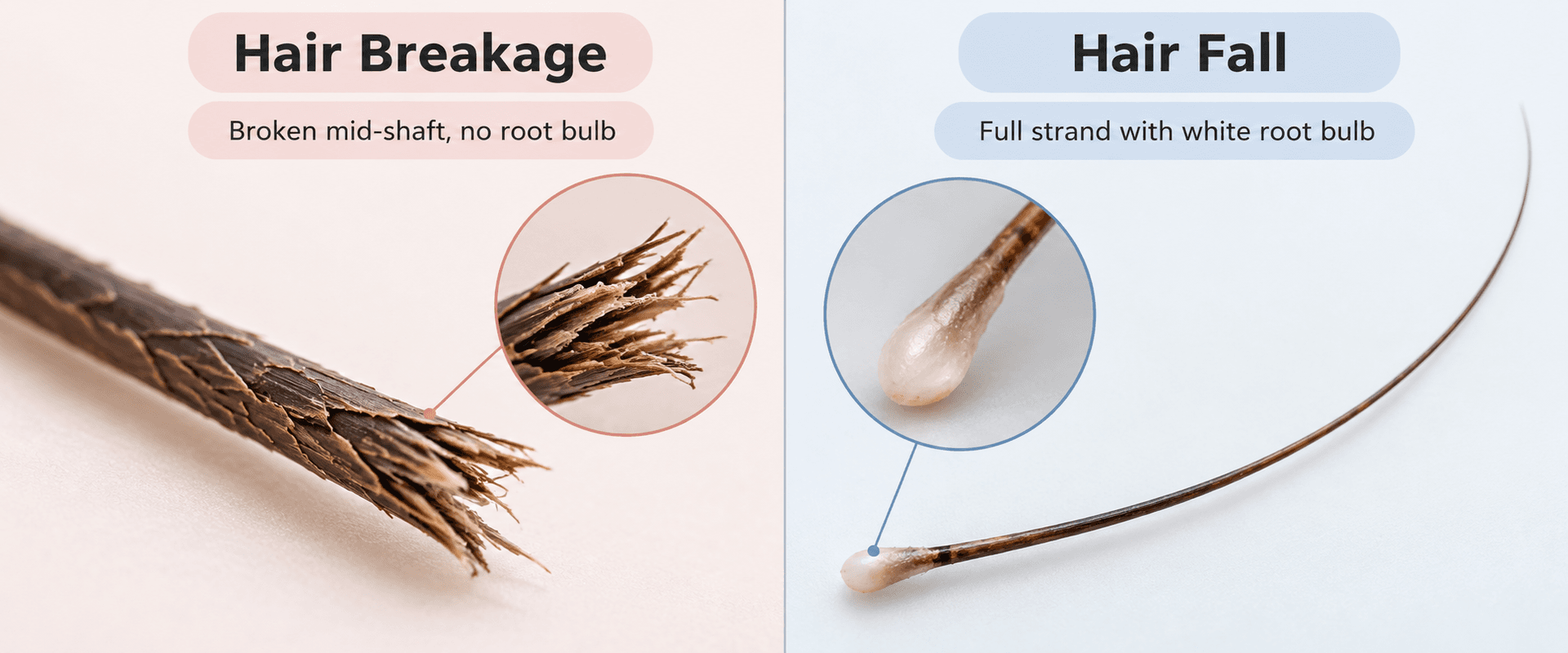
Breakage is a hair-shaft issue; root shedding is a hair-cycle issue. They need different product and medical pathways.
Hair Breakage vs Hair Fall is a symptom, not a final diagnosis. It may be related to root shedding, hair-shaft breakage, scalp inflammation, pattern thinning, patchy hair loss, product irritation or medical triggers.
The right next step depends on amount, duration, pattern, scalp symptoms, hairline, crown or parting changes, medical history, stress, illness, diet, hormonal clues and current products.
Bottom line: use this page to understand what the symptom may mean, what to track and which red flags matter, then take the AI Hair Test or ask a dermatologist if it is severe, progressive or unclear. Results vary.
Hair breakage and hair fall are not the same. Hair fall usually means the full strand sheds from the root and may have a small white bulb at one end. Hair breakage means the strand snaps along the shaft, often leaving short, uneven pieces without a bulb. Breakage needs repair and protection; root hair fall needs cause-based assessment. A quick AI Hair Test can help if you see a mix of both.
Hair fall from the root means a whole strand has detached from the follicle, usually at the end of its natural cycle — which is why it often carries a small white bulb. It points to scalp-wide or follicle-level causes: shedding triggers, hormones, nutrition, pattern loss or scalp conditions.
Hair breakage means the strand snaps somewhere along its length, leaving a short, blunt or jagged piece with no bulb. It is a shaft problem — damage from heat, chemicals, friction or dryness — and it responds to repair and protection rather than cause-based medical assessment.
Pick up a few fallen strands and look at the ends. A pale, slightly swollen bulb on one end means root shedding. A blunt or frayed end with no bulb, especially on a short piece, means breakage.
You can have both at once — many people do — which is exactly when the AI Hair Test helps you work out which is the bigger problem to tackle first.
| Sign | Hair Breakage | Hair Fall |
|---|---|---|
| Strand end | Broken / uneven | White bulb may be present |
| Strand length | Often short pieces | Often full-length strand |
| Main cause | Heat, chemical, friction, dryness | Root shedding, hormonal, medical, scalp |
| Density loss | Usually less unless severe | May reduce scalp density |
| Best first step | Repair routine | Cause-based diagnosis |
| Product direction | Conditioner, mask, serum, repair | Hair fall products, scalp care, diagnosis-led plan |
A quick way to weigh which pattern fits your hair right now.
Short, uneven broken strands collecting on surfaces.
Split ends, frizz, rough texture and dryness along the lengths.
Hair snapping during combing, with heat or chemical-treatment history.
Full-length strands, often with a white bulb at one end.
Reduced density, widening partition or crown thinning.
Excess shedding after illness, stress or delivery, or with scalp symptoms.
You are unsure whether it is breakage or shedding, shedding is heavy or persistent, you notice density loss, a widening partition, crown thinning or bald patches, or scalp symptoms accompany the hair fall.
Educational, category-level directions matched to this symptom — not a bestseller list. Product availability is populated dynamically from the Hairsncares catalogue.
For breakage — ceramides, proteins and conditioning repair.
Explore category →Reduces friction and tangling that cause breakage.
Explore category →Leave-in slip and strand support for fragile hair.
Explore category →Gentle cleansing that keeps hair softer and less brittle.
Explore category →For genuine root-level shedding.
Explore category →Biotin, iron and vitamin D where deficiency exists.
Explore category →Product category suggestions are educational. Breakage responds to a repair-and-protect routine; root-level or pattern shedding needs cause-based assessment. If you see both, start with the AI Hair Test or a dermatologist. Prescription-related products require valid medical guidance where applicable. Results vary.
Cautious, evidence-led language applies: "may support", "where suitable", "where deficiency exists". Results vary; doctor guidance is recommended.
Many people have a mix of breakage and shedding. The AI Hair Test factors in strand appearance, scalp condition and history to point you toward the right primary fix and a dermatologist-reviewed next step.
For breakage, the Routine Builder sequences gentle cleansing, conditioning, masks and heat protection into a weekly plan.
Log photos and check-ins so you can see whether repair (for breakage) or cause-based care (for shedding) is working.
"The single most useful thing I can teach someone worried about their hair is to look at the fallen strand. A full-length hair with a tiny pale bulb has shed from the root — that is hair fall, and the question becomes why. A short, blunt or jagged piece with no bulb has snapped — that is breakage, a shaft problem from heat, chemicals, friction or dryness. They feel identical in the hand and on the bathroom floor, but they lead to completely different plans. When people treat breakage as if it were root loss, or vice versa, they spend months on the wrong fix."
A symptom needs context and does not confirm a diagnosis. Sudden, severe, patchy or progressive loss, or a painful, pus-filled, crusted or bleeding scalp, needs prompt medical review.
External links open in a new tab and are provided for general education; they are not endorsements and do not replace personalised medical advice.
Look at the strands: full-length hairs, sometimes with a small white bulb, suggest shedding from the root; short, uneven pieces without a bulb suggest breakage. Breakage often comes with split ends and frizz; shedding often comes with density changes.
A small white or translucent bulb is the club hair — the base of a strand that completed its growth cycle and shed naturally. It indicates root-level shedding, not that your root has been destroyed. Occasional bulb-tipped strands are normal.
Yes — a pile of broken pieces can look alarming and be mistaken for hair loss. The clue is strand length and ends: short, blunt, bulb-free pieces point to breakage rather than root shedding.
Severe, ongoing breakage can reduce length and apparent volume, so hair looks thinner, but it does not reduce the number of follicles. True density loss points more to root-level or pattern causes that need assessment.
Heat styling, chemical treatments (colour, bleach, straightening), rough brushing, tight styles, friction and dryness weaken the shaft and cause it to snap. A repair-and-protect routine usually helps.
Root-level shedding can come from telogen effluvium, nutritional deficiency, hormonal and thyroid changes, postpartum shifts, pattern hair loss or scalp inflammation. Because causes vary, assessment is the key step.
Repair-focused products — conditioners, masks, leave-in serums with proteins, ceramides and conditioning agents — plus heat protection and gentler handling. The aim is to strengthen and protect the existing shaft.
For root shedding, category-level options include hair fall control products, scalp care, supplements where deficiency exists, and pattern-focused options where suitable — but the cause should guide the choice. Try the AI Hair Test.
Supplements help mainly where a genuine deficiency exists (such as iron or vitamin D). Taking them blindly is not advisable; testing is more useful than guessing, and overlapping supplements should be avoided without advice.
See a dermatologist if you are unsure whether it is breakage or shedding, if shedding is heavy or persistent, if you notice density loss, a widening partition, crown thinning or bald patches, or if scalp symptoms accompany the hair fall.
If strands snap mid-length rather than shedding from the root, the fix is repair and gentleness, not growth actives. These categories target breakage; the AI Hair Test confirms whether true shedding is also present.
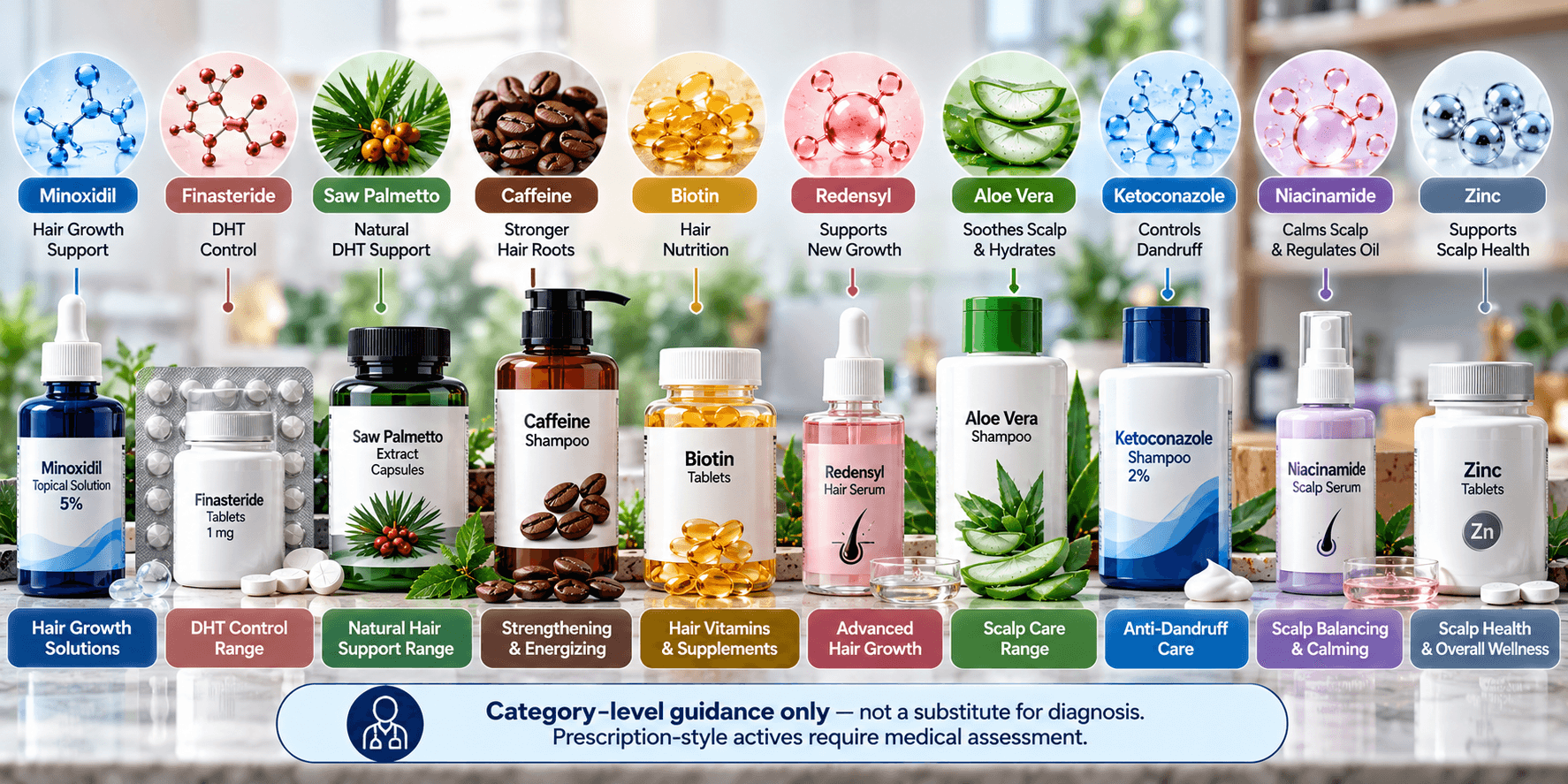
Bond-supporting masks and serums for dry, snapping, mid-shaft breakage.
Mild sulfate-free washing and conditioning to cut mechanical damage.
Not sure if it's breakage or root-level fall? The AI Hair Test helps tell them apart.
Your cart is empty