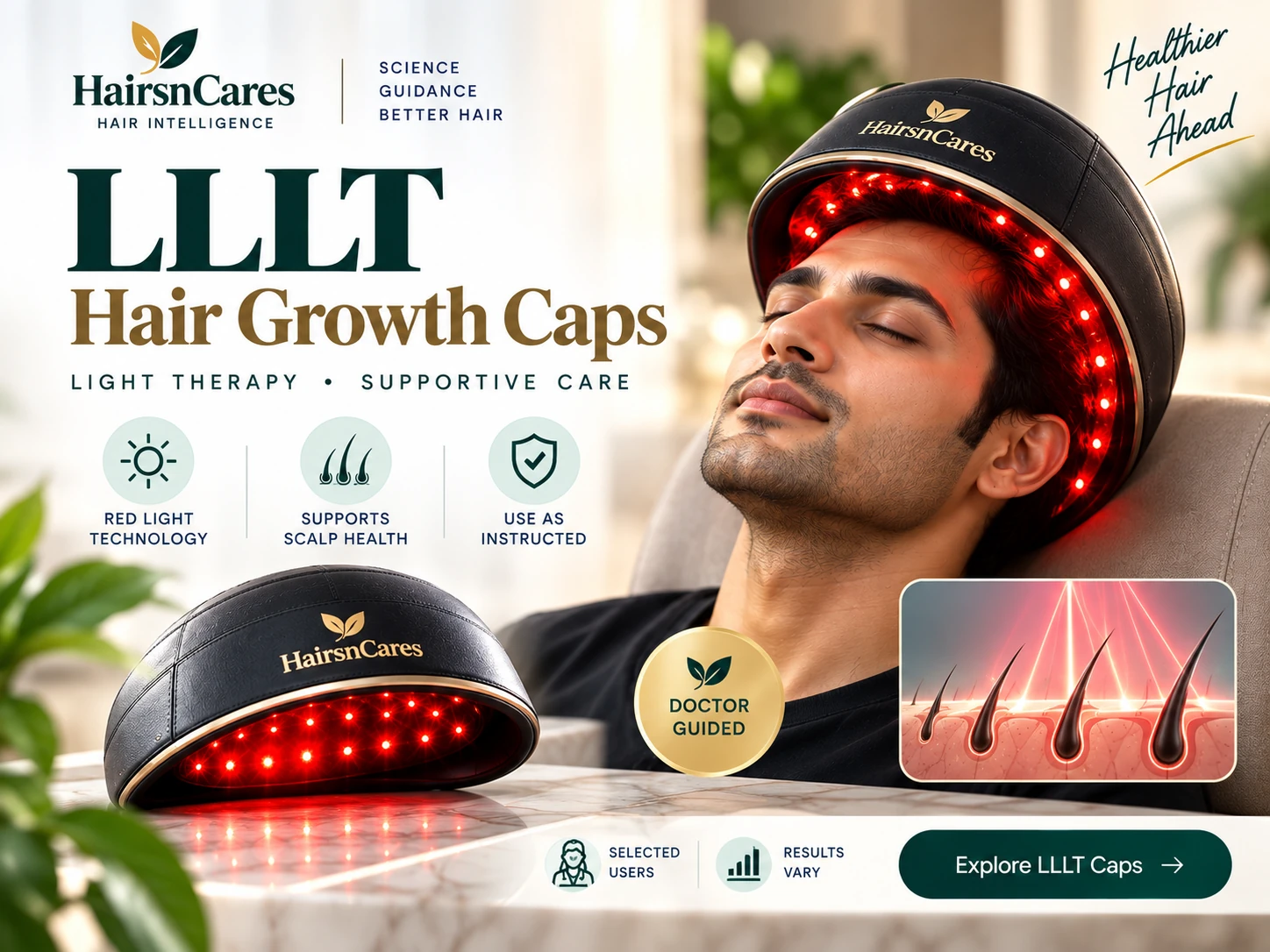
LLLT Hair Growth Caps
Low-level light therapy caps used as supportive hair growth devices in selected users. Results depend on diagnosis, consistency and correct usage. Not a guaranteed regrowth device.
Explore advanced hair appliances including LLLT caps, laser combs, scalp massagers, scalp brushes,dermarollers, scalp analysers, steamers and heat-styling safety tools — chosen by concern, safety and treatment logic.
Educational product-selection guidance only. Hair appliances do not replace dermatologist diagnosis, medicines or hair transplant. Advanced devices should be used only as instructed. Results vary.
Choose LLLT caps or laser combs for device-assisted hair growth support when suitable. Choose scalp massagers or scalp brushes for massage, cleansing and comfort support. Choose scalp analysers for tracking scalp and hair changes. Microneedling tools should be doctor-guided because incorrect use can irritate or injure the scalp. Heat styling appliances are for styling, not medical hair treatment.
Find My Hair ApplianceFilter by device type, treatment goal, scalp condition and safety level.
18 device categories — from LLLT growth-support to post-transplant guidance. Advanced devices require doctor guidance.
Low-level light therapy caps used as supportive hair growth devices in selected users. Results depend on diagnosis, consistency and correct usage. Not a guaranteed regrowth device.
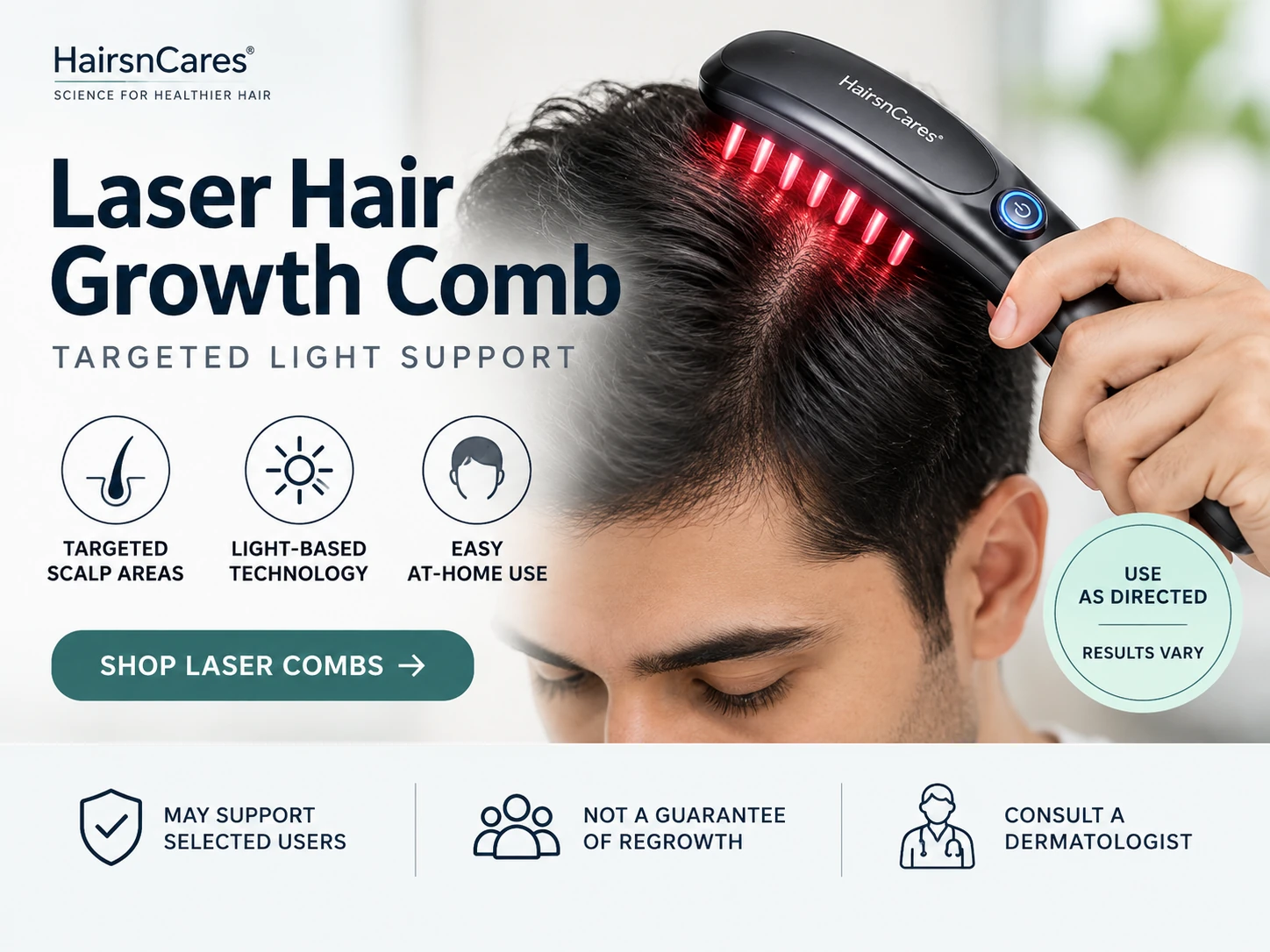
Handheld light-based devices for targeted scalp areas. Use as directed. Results vary; these may support selected users but do not guarantee regrowth.
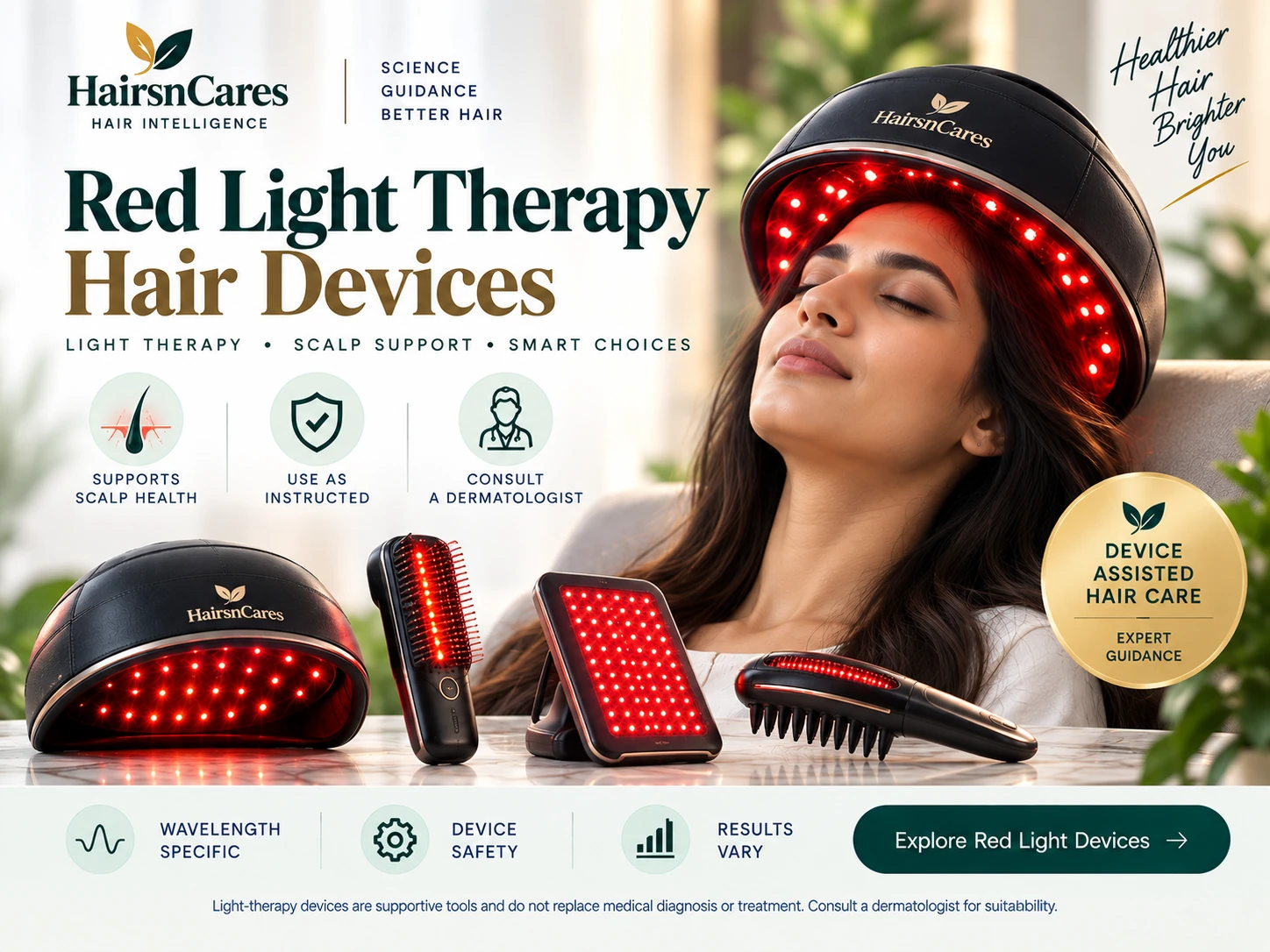
Light-therapy support routines with wavelength-specific protocols. Device safety and wavelength guidance vary. Consult dermatologist for suitability and usage protocol.
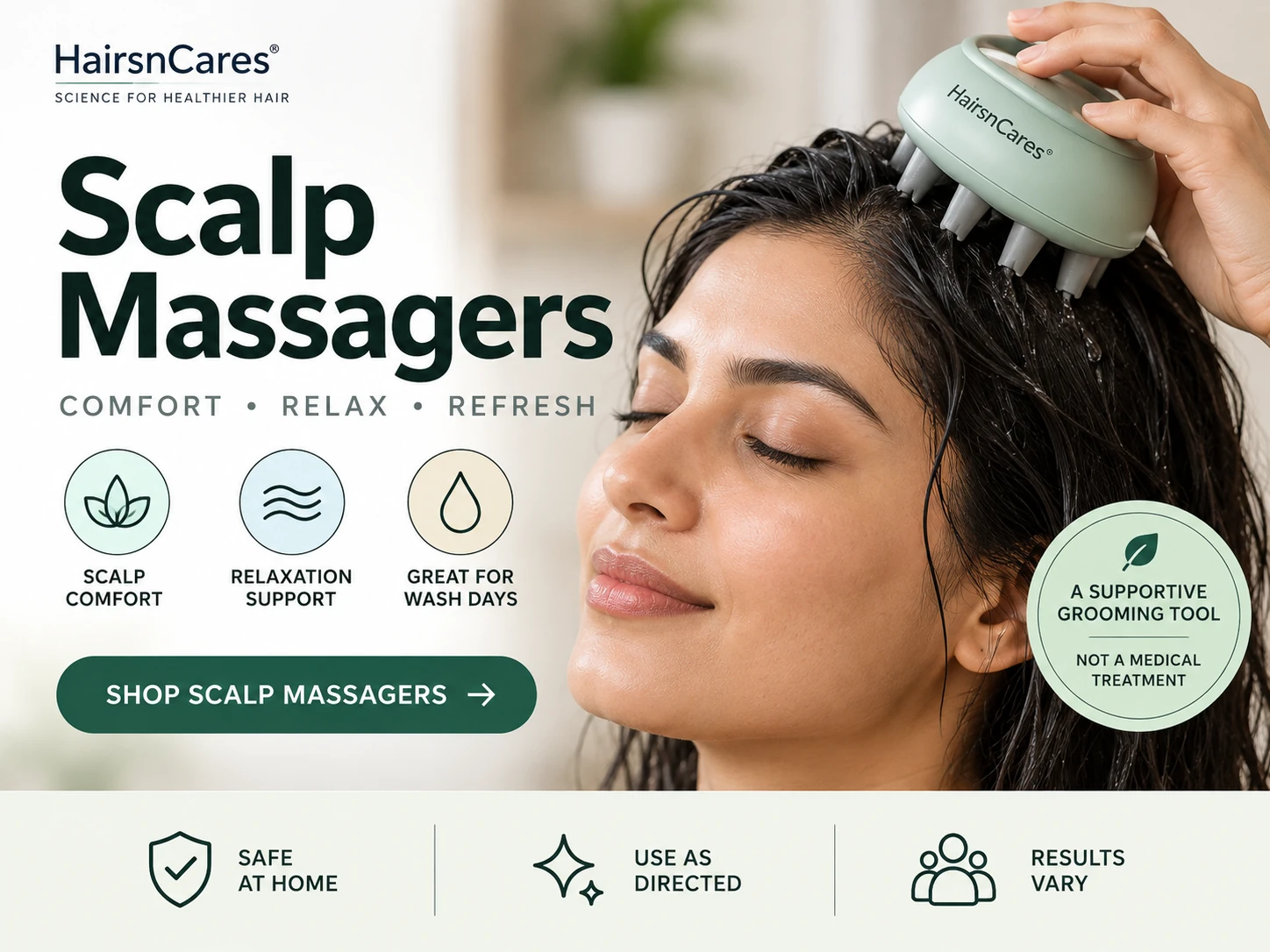
Manual or electric scalp massage tools for comfort, relaxation and wash-day support. Supportive grooming tools — not medical hair loss treatment.
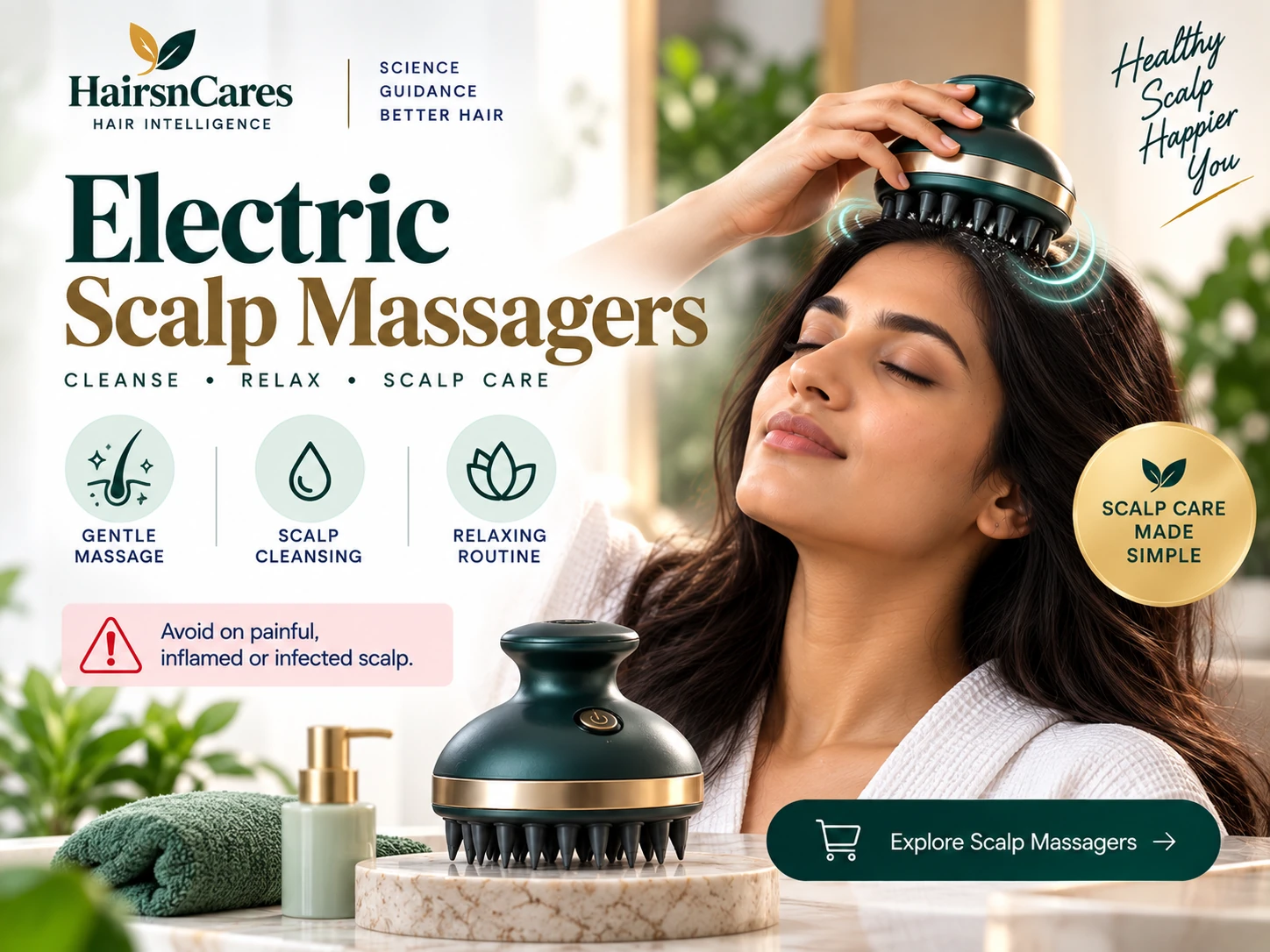
Gentle vibration or rotating massage routines for scalp comfort and cleansing. Avoid on painful, inflamed or infected scalp.
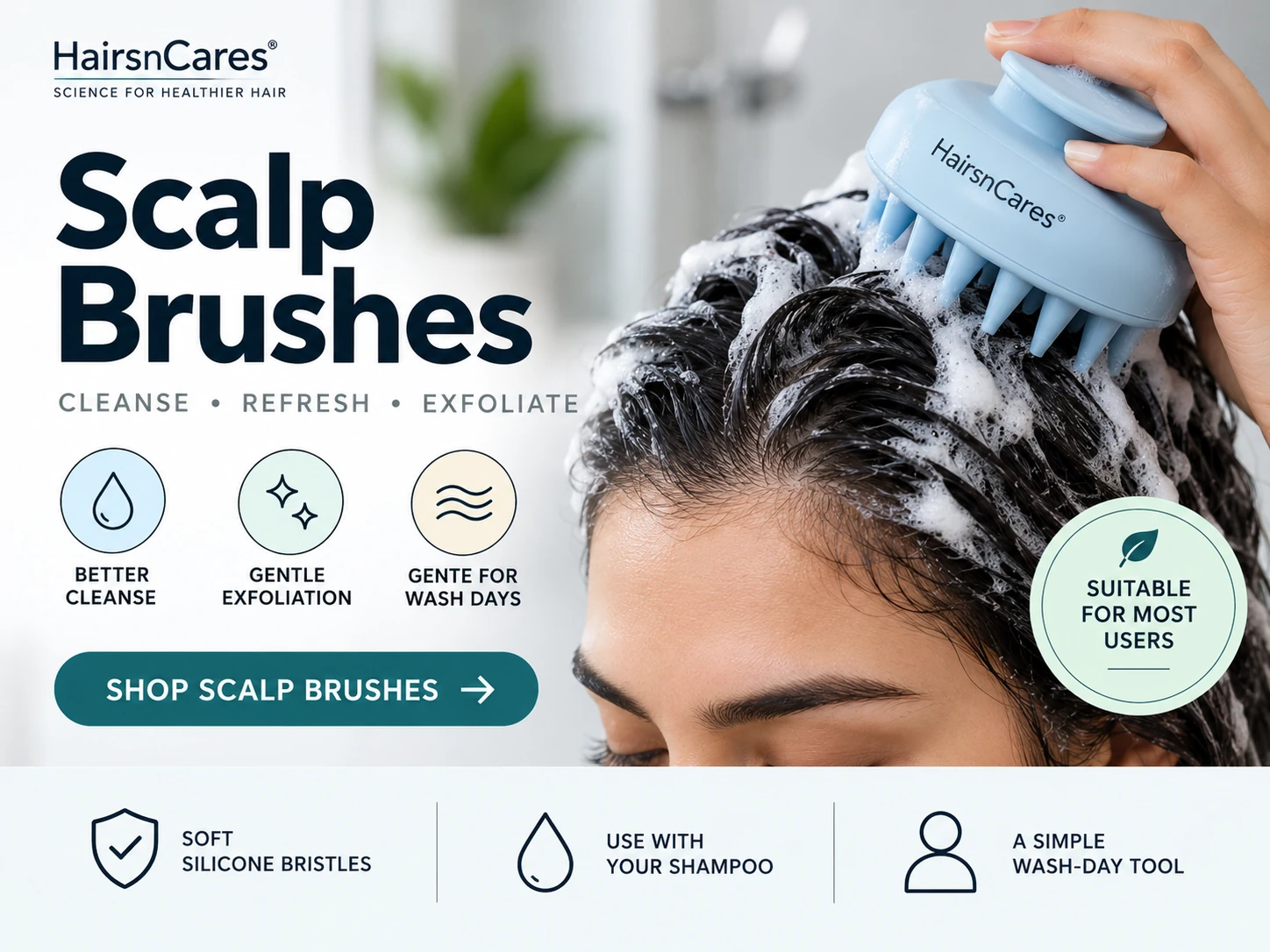
Silicone scalp brushes for shampoo application, cleansing support and mild exfoliation. Suitable for most users as a wash-day routine tool.
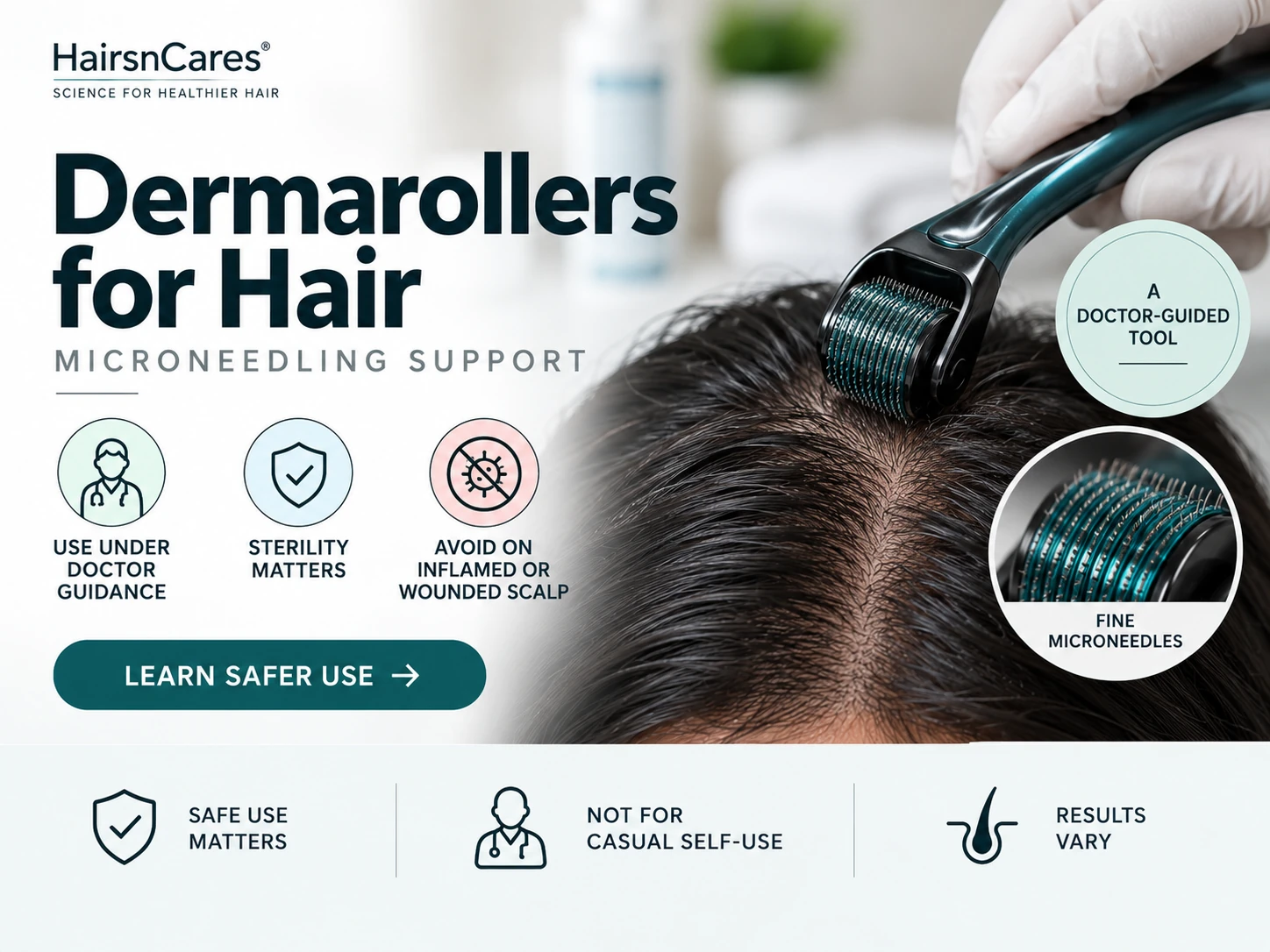
Microneedling tools requiring strong safety guidance. Must be used under doctor guidance, not casual self-use. Sterility is critical. Avoid on infected, inflamed or wounded scalp.
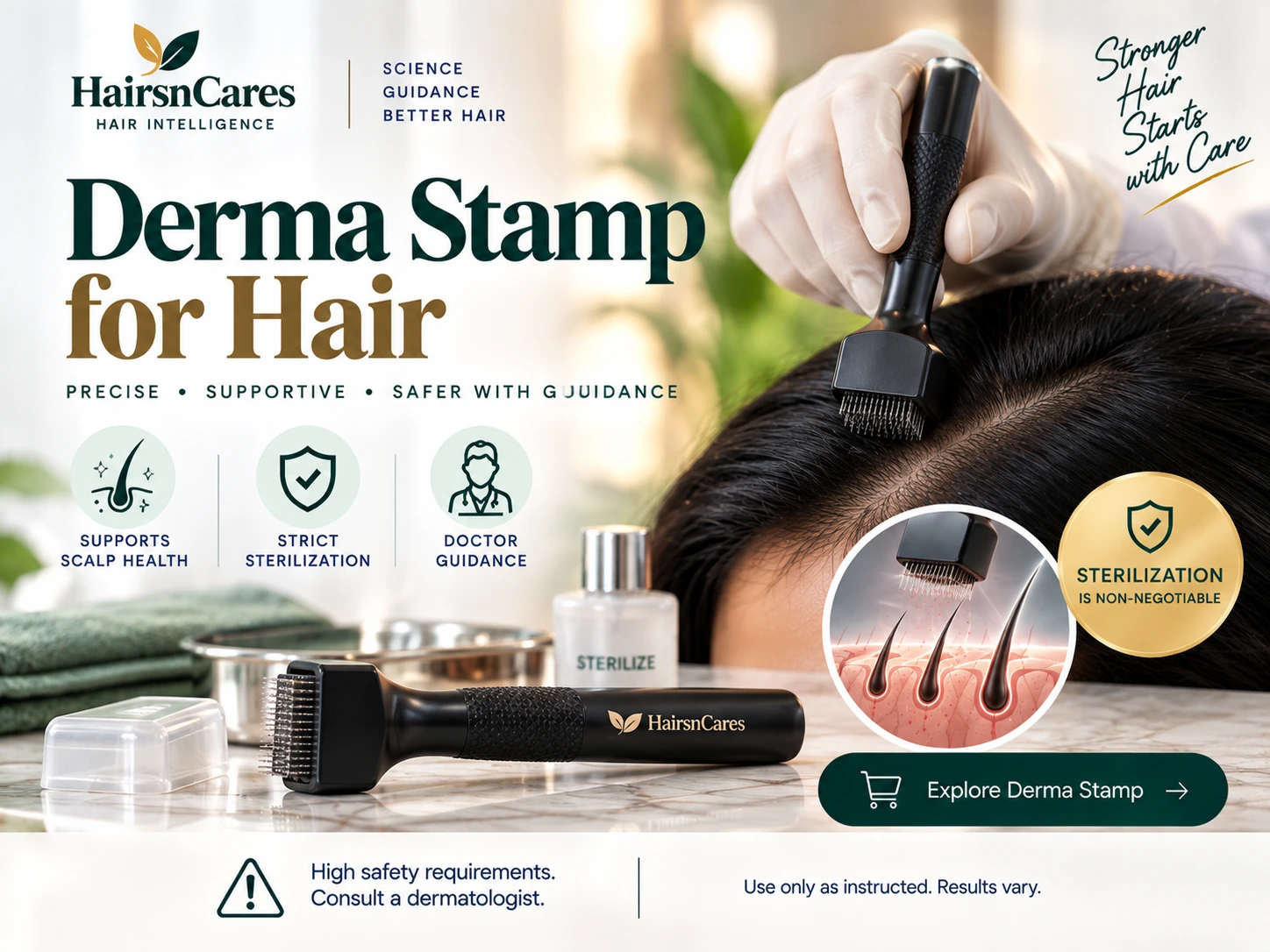
Precision microneedling support tool with high safety requirements. Sterilization is non-negotiable. Doctor guidance recommended before and during use.
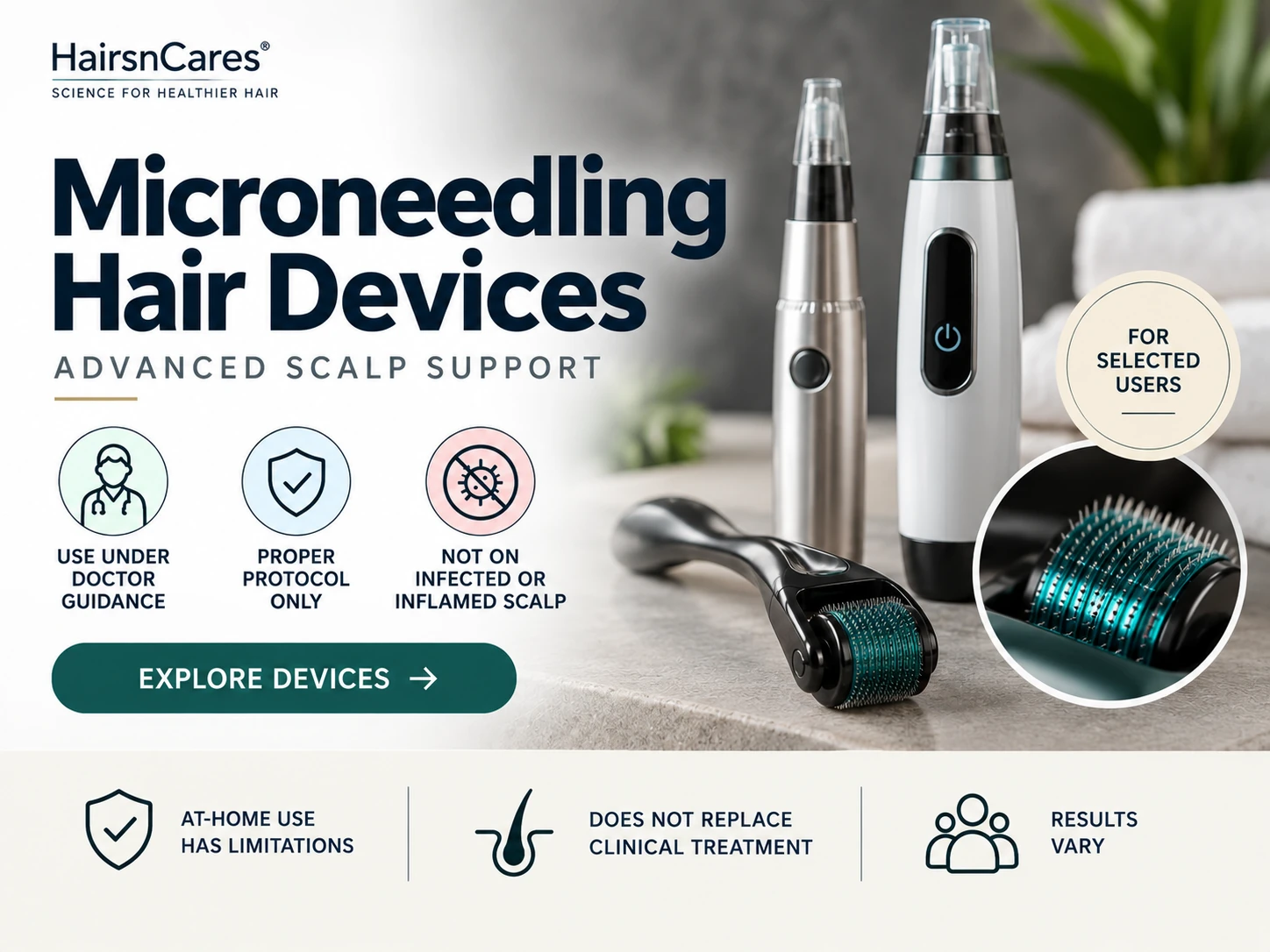
Advanced device category for selected users under proper protocol only. Must not be used on infected or inflamed scalp. At-home microneedling does not replace clinical treatment.
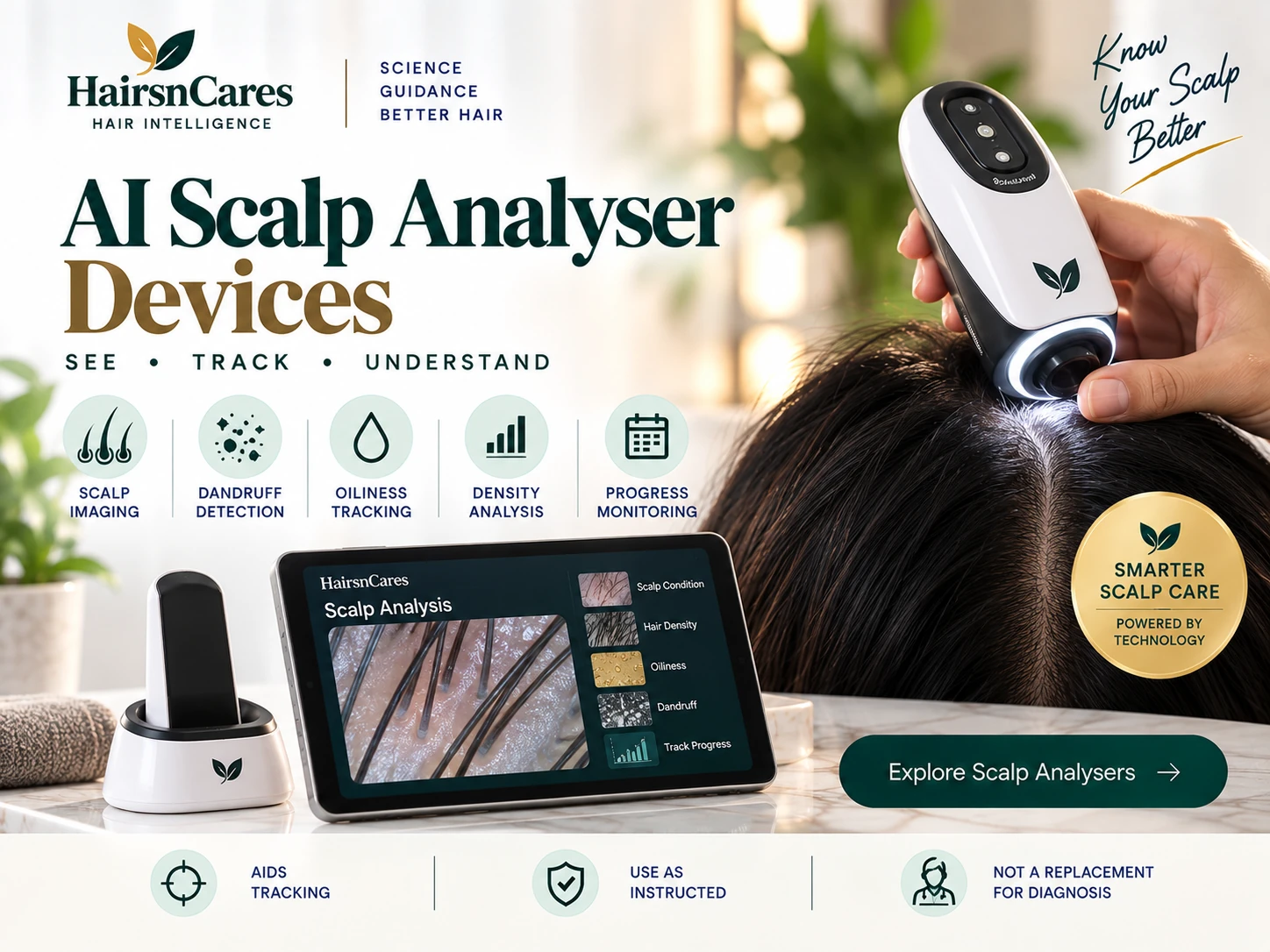
For scalp imaging, dandruff detection, oiliness tracking, density analysis and monthly progress monitoring. Aids structured tracking, not diagnosis replacement.
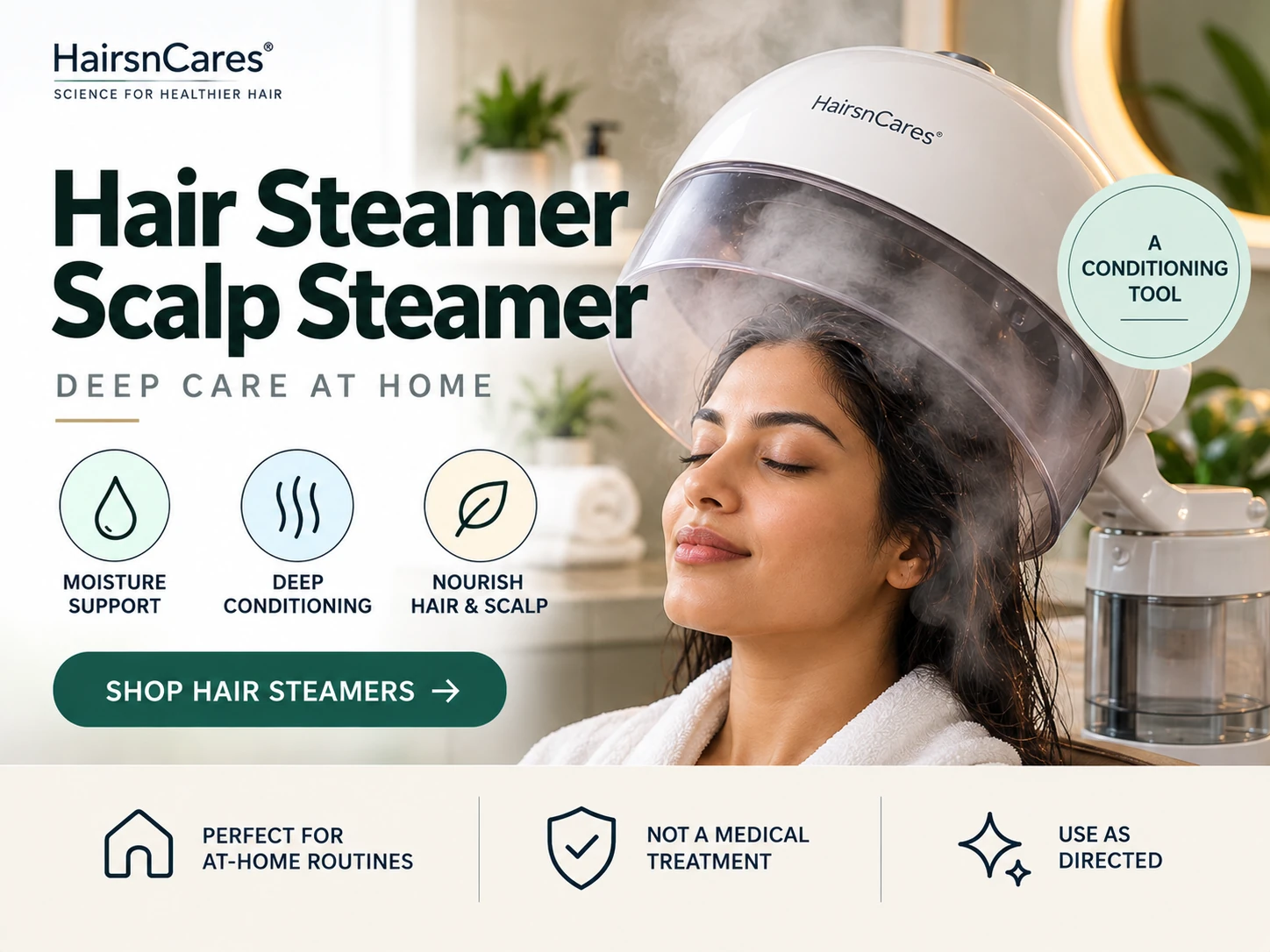
For moisture rituals, deep conditioning support and hair-care routines. A conditioning and nourishment tool — not a medical hair-loss treatment device.
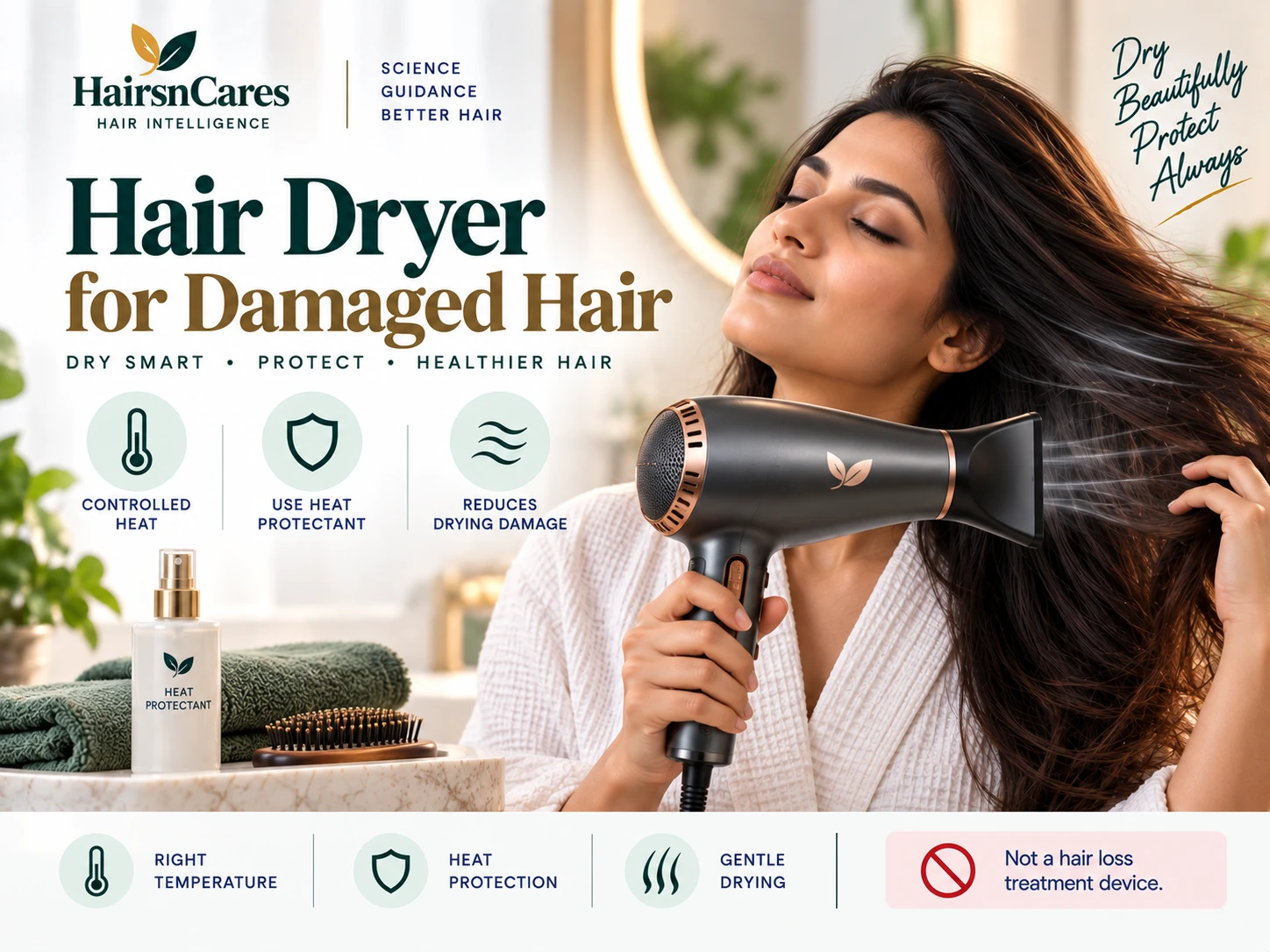
For controlled drying with heat management features. Heat protection and correct temperature settings reduce drying damage. Not a hair loss treatment device.
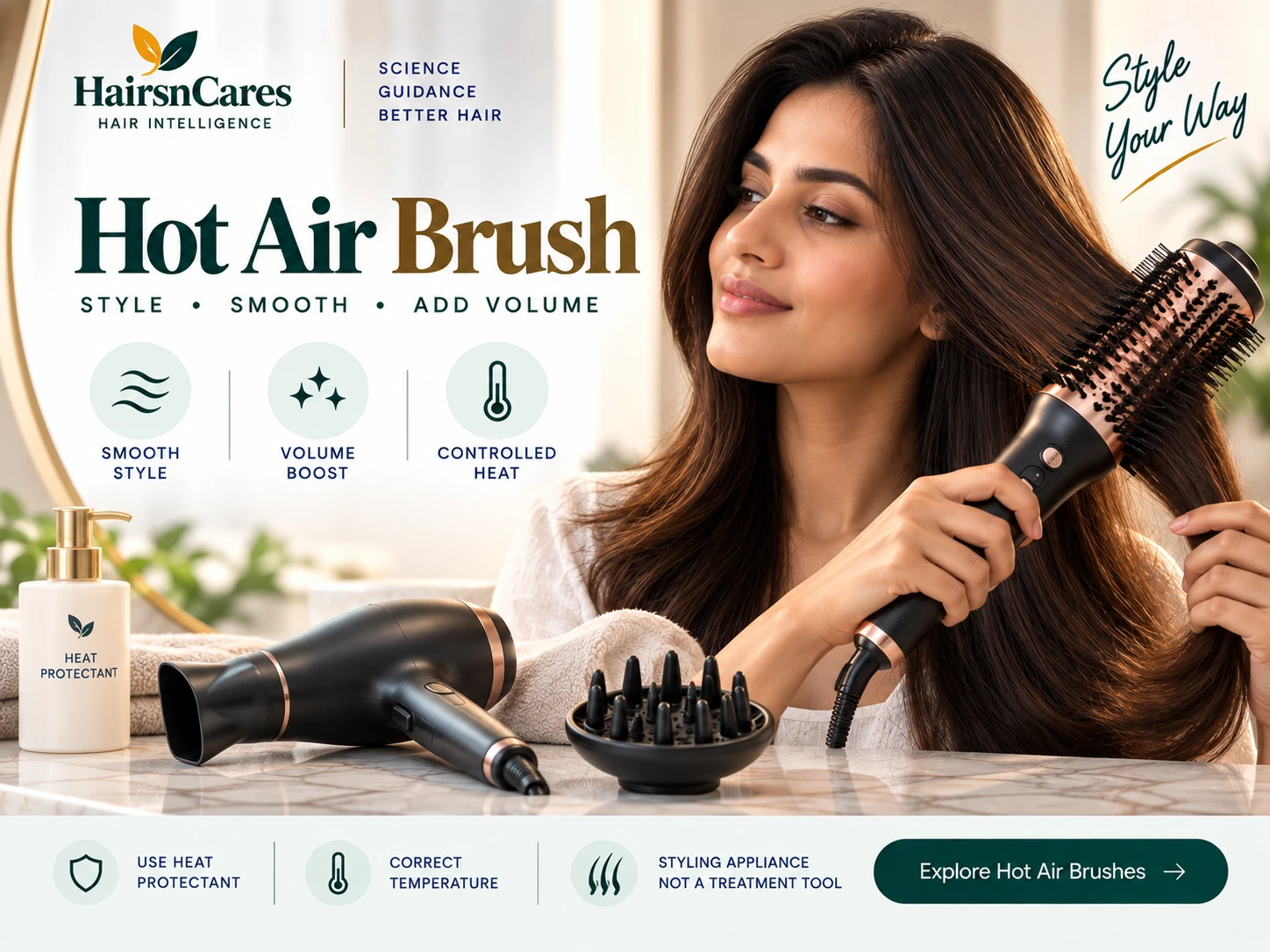
For smoothing, volume and styling. Positions as a styling appliance — not a treatment tool. Pair with heat protectant for best results.
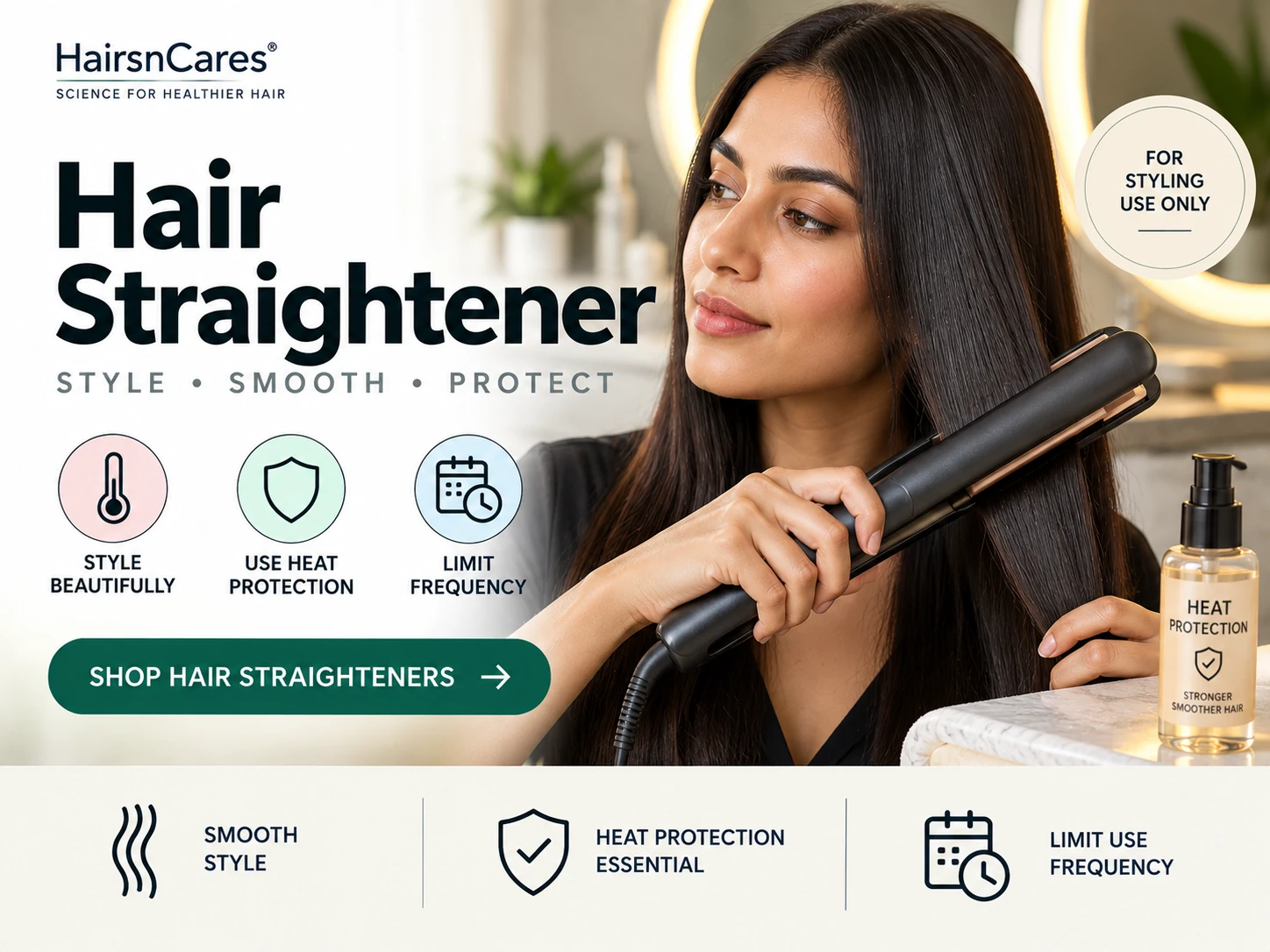
For styling and smoothing. Heat protection serum essential. Limit use frequency to reduce heat-related breakage risk. Styling use only, not hair treatment.
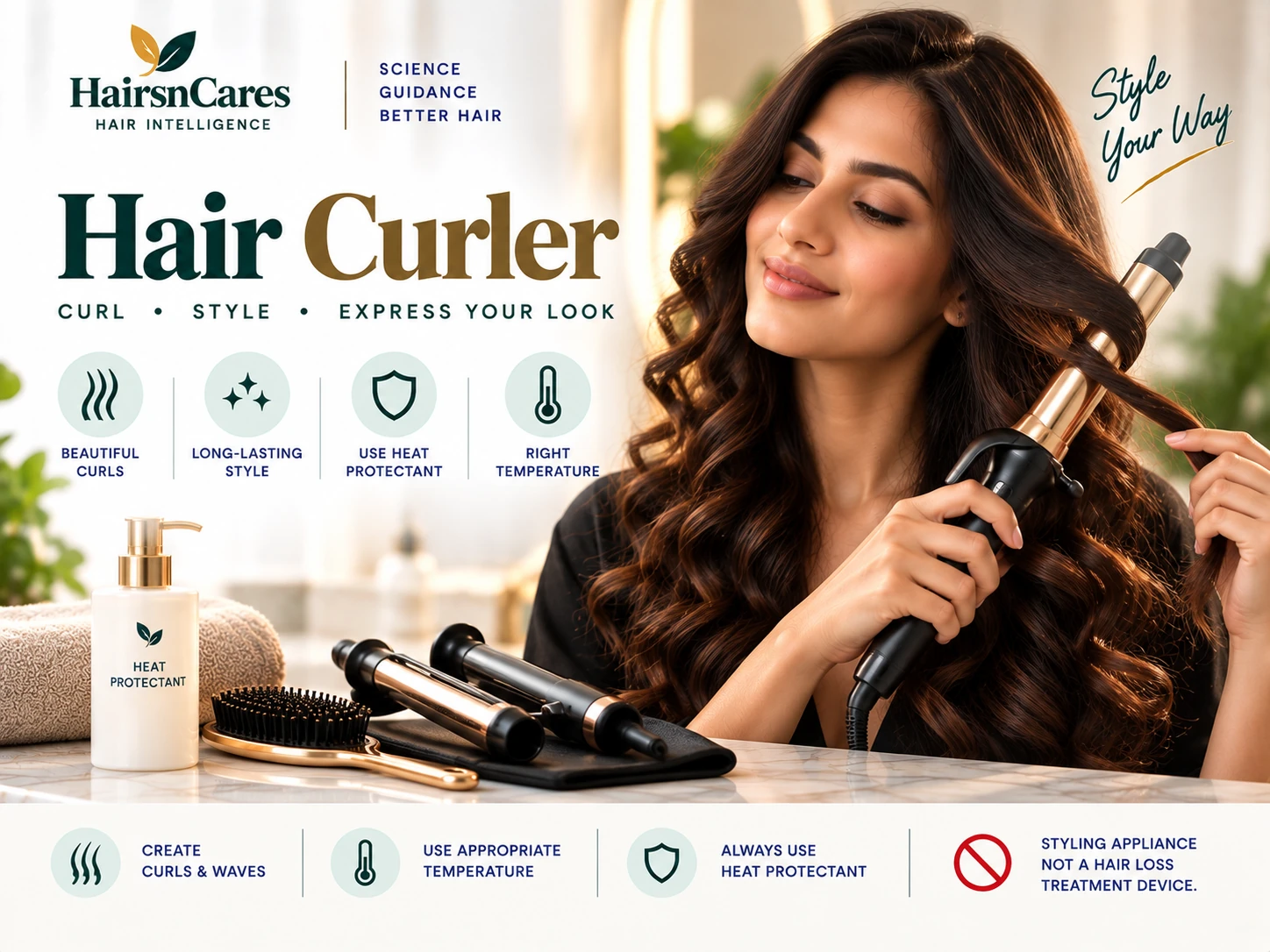
For curls and waves. Heat damage prevention guidance applies. Temperature control and conditioning routine reduce long-term breakage from repeated heat use.
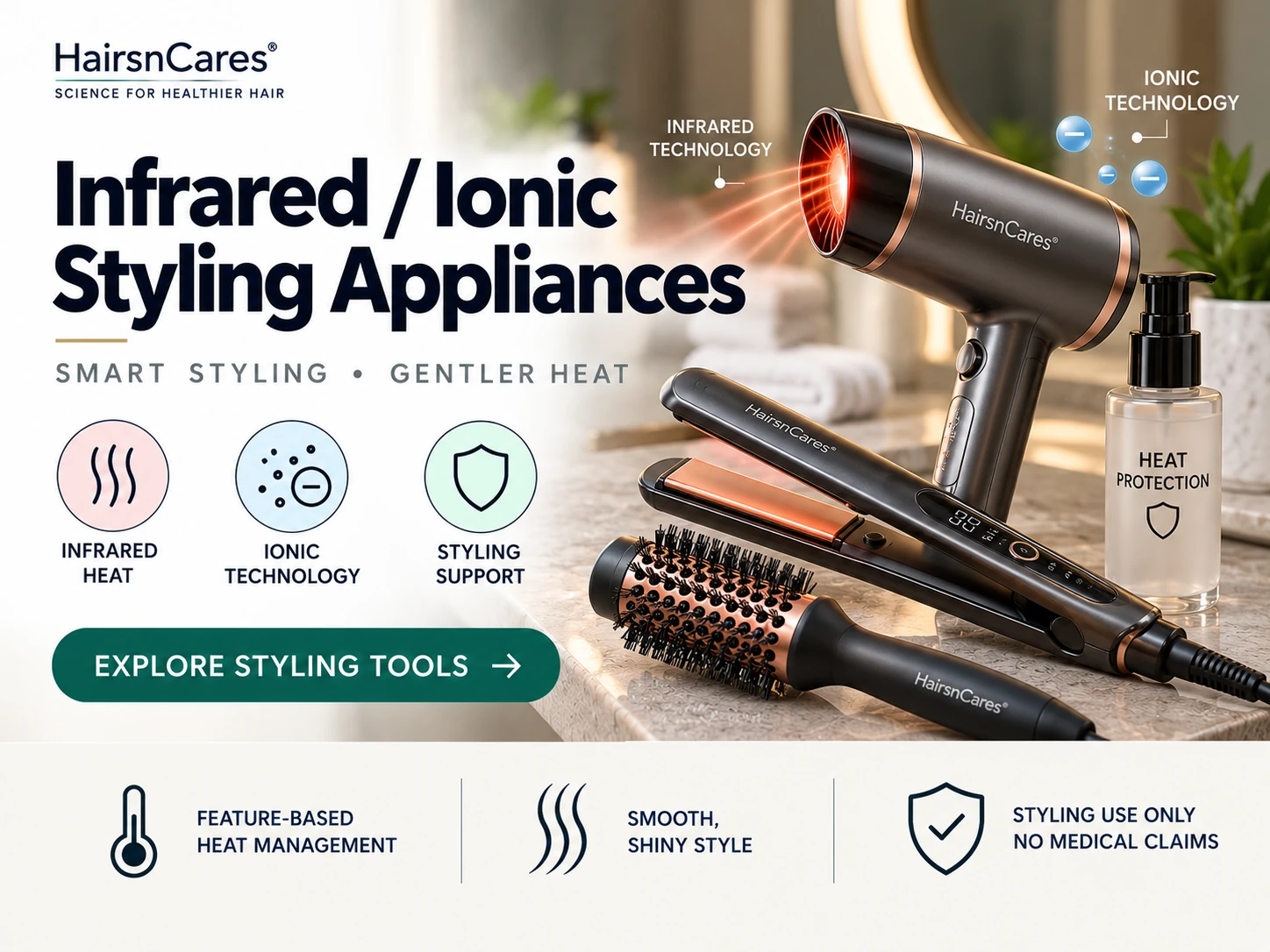
Styling tools with infrared or ionic technology for feature-based heat management. Feature-based styling support only — no unverified medical hair claims made.
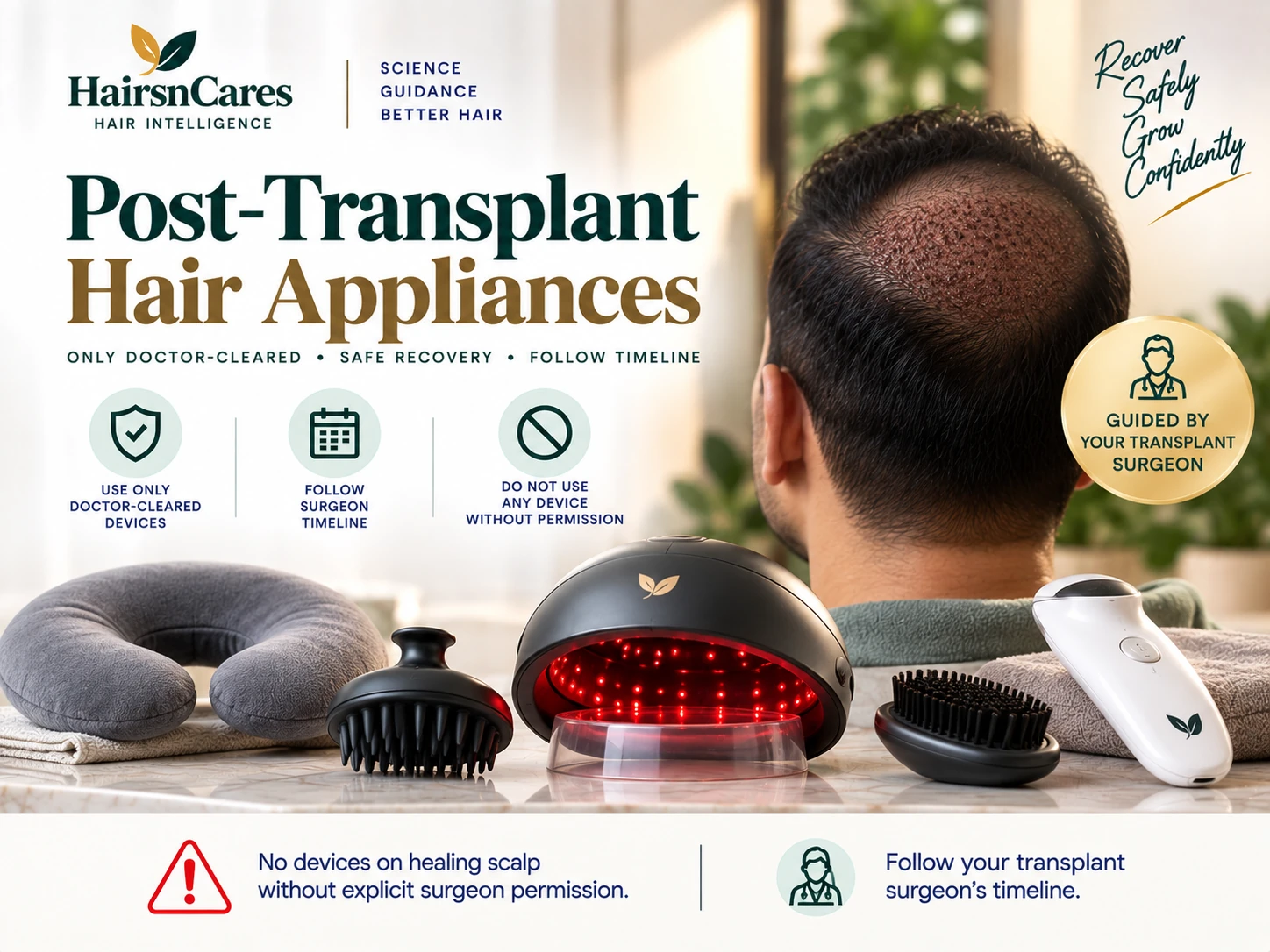
Only doctor-cleared appliances for recovery phase patients. No devices should be used on healing scalp without explicit surgeon permission. Follow transplant surgeon timeline strictly.
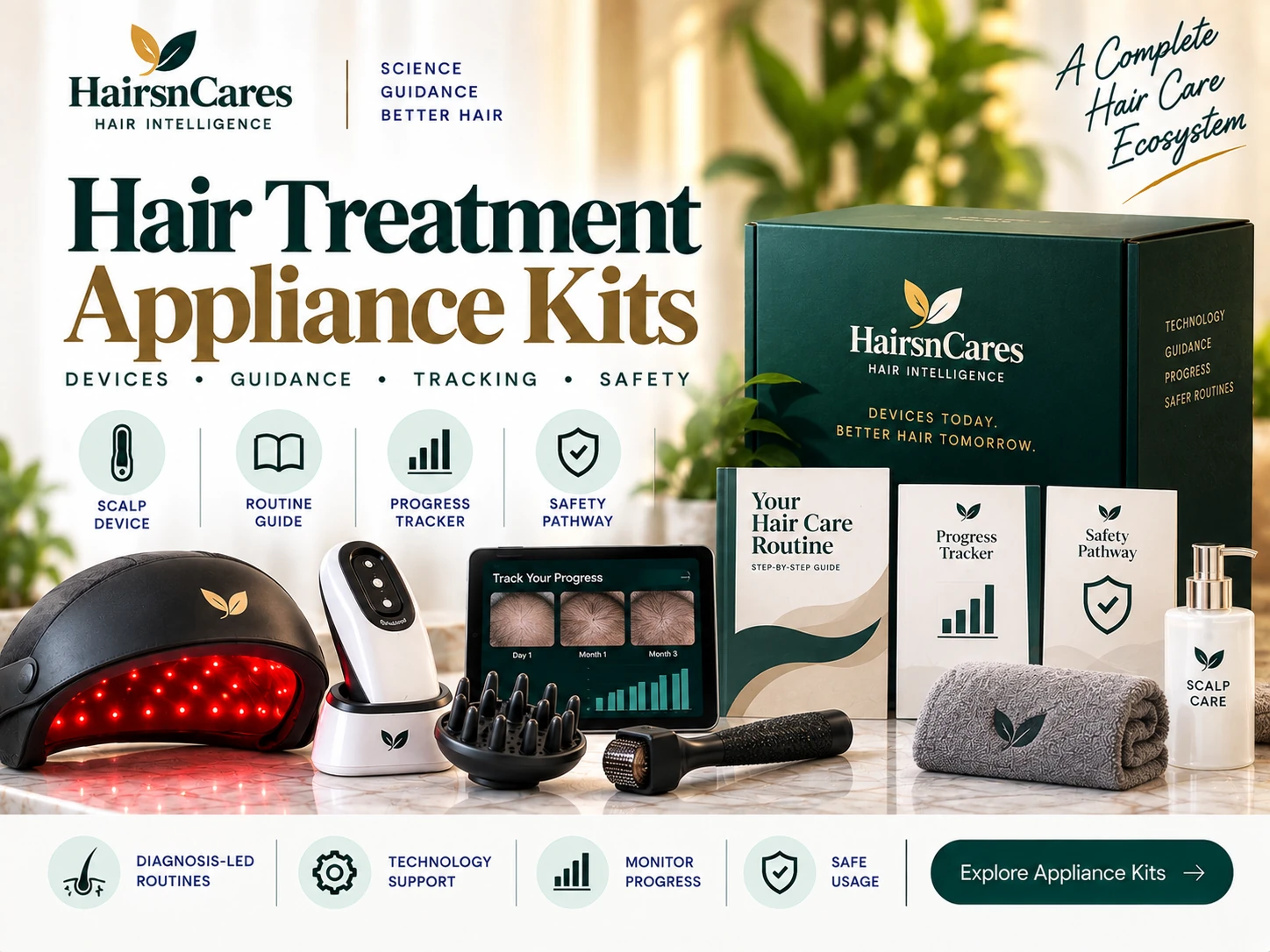
Structured bundles combining scalp device, routine guide, progress tracker and safety pathway. Complete device kit for diagnosis-led, technology-supported hair routines.
Match the right device category to your hair concern and scalp profile.
Doctor-guided selection — results vary. Prices and stock updated from backend.
We're curating the right supportive products for this concern. In the meantime, browse the full Hairsncares shop or take the AI Hair Test for a tailored match.
Browse all productsStructured bundles combining devices, routine guides, safety checklists and progress tracking. Caution bundles require doctor guidance before purchase.
Value bundles for this concern aren't ready just yet. Browse the full Hairsncares shop to build the routine that fits your needs.
Browse all productsDevice-assisted routines support — they do not replace diagnosis, medicines or hair transplant.
Choose the right device by goal, diagnosis and safety — not by marketing claims. Three phases: discover, check, execute.
Growth support, scalp massage, dandruff monitoring, microneedling support, styling safety or post-treatment tracking? Each goal maps to a distinct device category — define this before browsing.
Pattern hair loss, dandruff, oily scalp, dry scalp, sensitivity, breakage or post-transplant stage? Diagnosis determines which device category is appropriate — not what looks good online.
LLLT for growth-support routines · scalp massager for massage and cleansing · scalp analyser for monitoring · steamer for conditioning · microneedling only under doctor protocol · styling tools for heat safety.
Cosmetic grooming tools (scalp brush, massager) are fundamentally different from advanced treatment-support devices (LLLT, microneedling). Understand which risk tier a device sits in before purchasing.
Avoid devices on infected, painful, wounded or inflamed scalp. Consider pregnancy, implanted electronic devices, photosensitivity and relevant medical conditions before any advanced device use.
Follow manufacturer frequency, duration and technique guidelines exactly. Do not overuse devices assuming more is better — overuse can cause irritation, breakage or poor outcomes.
Monitor shedding, scalp symptoms, irritation, photos and routine consistency monthly. No improvement after 3–6 months, or any new symptoms — return to dermatologist immediately.
Device-specific safety protocols — always follow manufacturer instructions and doctor guidance.
Side-by-side guide to help you choose between similar device categories.
| Feature | LLLT Hair Growth Cap | Laser Hair Growth Comb |
|---|---|---|
| Coverage | Hands-free, broader scalp coverage per session | Targeted, manual — specific sections per pass |
| Ease of Use | Wear and wait — minimal technique required | Requires manual movement across scalp sections |
| Best For | Users seeking consistent full-scalp light therapy | Users targeting specific thinning zones |
| Doctor Guidance | Recommended for selecting suitable users | Recommended for correct technique and frequency |
| Results | Results vary — months of consistent use required | Results vary — consistency and technique matter |
| Feature | Scalp Massager | Scalp Brush |
|---|---|---|
| Primary Role | Comfort, relaxation and gentle scalp stimulation | Shampoo distribution and wash-day cleansing |
| Use Timing | Dry or wet scalp, before or during wash | During shampoo on wet scalp |
| Exfoliation | Mild depending on device type | Mild scalp exfoliation with silicone tips |
| Safety | Avoid inflamed or painful scalp | Avoid scalp wounds or active infections |
| Medical Role | Supportive grooming — not hair loss treatment | Cleansing support — not hair loss treatment |
| Feature | Dermaroller | Derma Stamp |
|---|---|---|
| Mechanism | Rolling microneedling — covers areas via rolling motion | Stamping action — more targeted, precise coverage |
| Technique Sensitivity | Higher — rolling angle and pressure affect outcome | Slightly lower — but still requires correct protocol |
| Safety Level | High caution — doctor guidance strongly required | High caution — doctor guidance strongly required |
| Sterility Requirement | Critical — must sterilise before each use | Critical — must sterilise before each use |
| When to Avoid | Infected, inflamed, wounded or irritated scalp | Infected, inflamed, wounded or irritated scalp |
| At-Home Use | Only with dermatologist-defined protocol | Only with dermatologist-defined protocol |
| Feature | AI Scalp Analyser Device | Progress Tracker Tool |
|---|---|---|
| Function | Captures scalp and hair visuals — density, oiliness, dandruff, follicle appearance | Organises monthly photos, symptoms and routine adherence logs |
| Output | Image-based scalp data for monitoring and sharing with doctor | Trend overview — not a diagnostic image capture device |
| Medical Use | Supports dermatologist review — not a diagnostic device | Tracks routine compliance and self-reported changes |
| Feature | Hair Appliance | Hair Treatment Product |
|---|---|---|
| Type | Physical device used as part of a routine | Topical, oral or scalp product with active ingredients |
| Examples | LLLT cap, scalp massager, dermaroller, steamer, dryer | Minoxidil, shampoos, serums, supplements, prescription medicines |
| Medical Role | Supportive device-assisted routine tool | Active ingredient-based treatment or support |
| Replaces Each Other? | No — devices and products serve different roles in a diagnosis-led hair routine | |
Common misconceptions about hair devices — cleared with medically safe guidance.
Laser caps guarantee hair regrowth for anyone with hair loss.
LLLT devices may support selected users in growth-support routines, but results vary significantly. Suitability depends on hair loss type, diagnosis and consistent correct use over months — not days.
Scalp massagers stop hair fall.
Scalp massagers can support wash-day comfort and relaxation but do not treat or stop medically-driven hair fall. Hair loss caused by pattern baldness, hormonal conditions or deficiencies requires diagnosis and appropriate medical care.
Dermarollers are safe for everyone to use at home.
Microneedling devices can cause scalp irritation, infection, scarring or worsened hair loss when used incorrectly. They should only be used under a dermatologist-defined protocol with proper sterility and technique guidance.
Using more device sessions gives faster hair regrowth results.
Overuse of LLLT, microneedling or scalp devices can cause irritation, breakage or poor compliance. Correct frequency as per device instructions — not maximum frequency — is what matters.
Expensive heat appliances are safe to use daily without protection.
Any heat tool — regardless of price — can cause hair shaft damage, breakage and long-term structural harm if used daily at high temperatures without heat protectant or rest days.
Hair appliances can replace minoxidil, medicines or hair transplant.
Devices may support a diagnosis-led routine but do not replace pharmaceutical treatment where it is needed. Pattern hair loss, medical hair loss and advanced thinning often require medicines or surgical intervention that no device can substitute.
If any of these apply to you, consult a dermatologist before using any hair appliance — especially advanced devices.
Always read device instructions, avoid sharing scalp devices and stop use immediately if pain, redness, swelling, pus, burning or worsening hair fall occurs.
AI tools are educational and do not replace dermatologist diagnosis or manufacturer safety instructions.
The recommended pathway for choosing, starting and monitoring a hair appliance routine safely.
Hair fall, thinning, scalp issues, post-transplant care or styling damage — identifying the correct concern prevents wrong device selection.
Use Hairsncares AI tools to map your concern, scalp type and device safety compatibility before browsing appliances.
For advanced device suitability — scalp photos can support doctor review and improve device recommendation accuracy.
Match your concern and scalp profile to the correct device category — LLLT, scalp massage, analyser, steamer, styling safety or microneedling (doctor-only).
Use the Device Safety Checker and review the contraindication list before proceeding. Stop if any red flag applies.
Advanced devices — LLLT, microneedling, post-transplant tools — should be reviewed by a dermatologist before beginning any home routine.
Select your device through the AI Product Finder or doctor recommendation — not marketing claims or peer pressure.
Build a structured routine using the Routine Builder — device session timing, frequency and pairing with treatment products where appropriate.
Log device sessions, hair photos and scalp symptoms using the Progress Tracker. Consistency and documentation matter for meaningful review.
Return to dermatologist review if irritation occurs, if shedding worsens, or if there is no observable improvement after the expected protocol timeline.
Navigate to treatment products, appliance subcategories, education resources and AI tools.
Authority sources for hair loss, device safety and patient education. External links open in a new tab.
28 medically safe answers covering hair growth devices, scalp tools, microneedling caution, post-transplant guidance and styling safety.
Hair appliances can support your routine, but the wrong device or wrong technique can irritate the scalp, worsen breakage or delay proper diagnosis. Let Hairsncares guide you by hair concern, scalp condition, safety level and treatment goal.
Your cart is empty