Hair Follicle Blood Supply: How Nutrients Reach the Hair Bulb
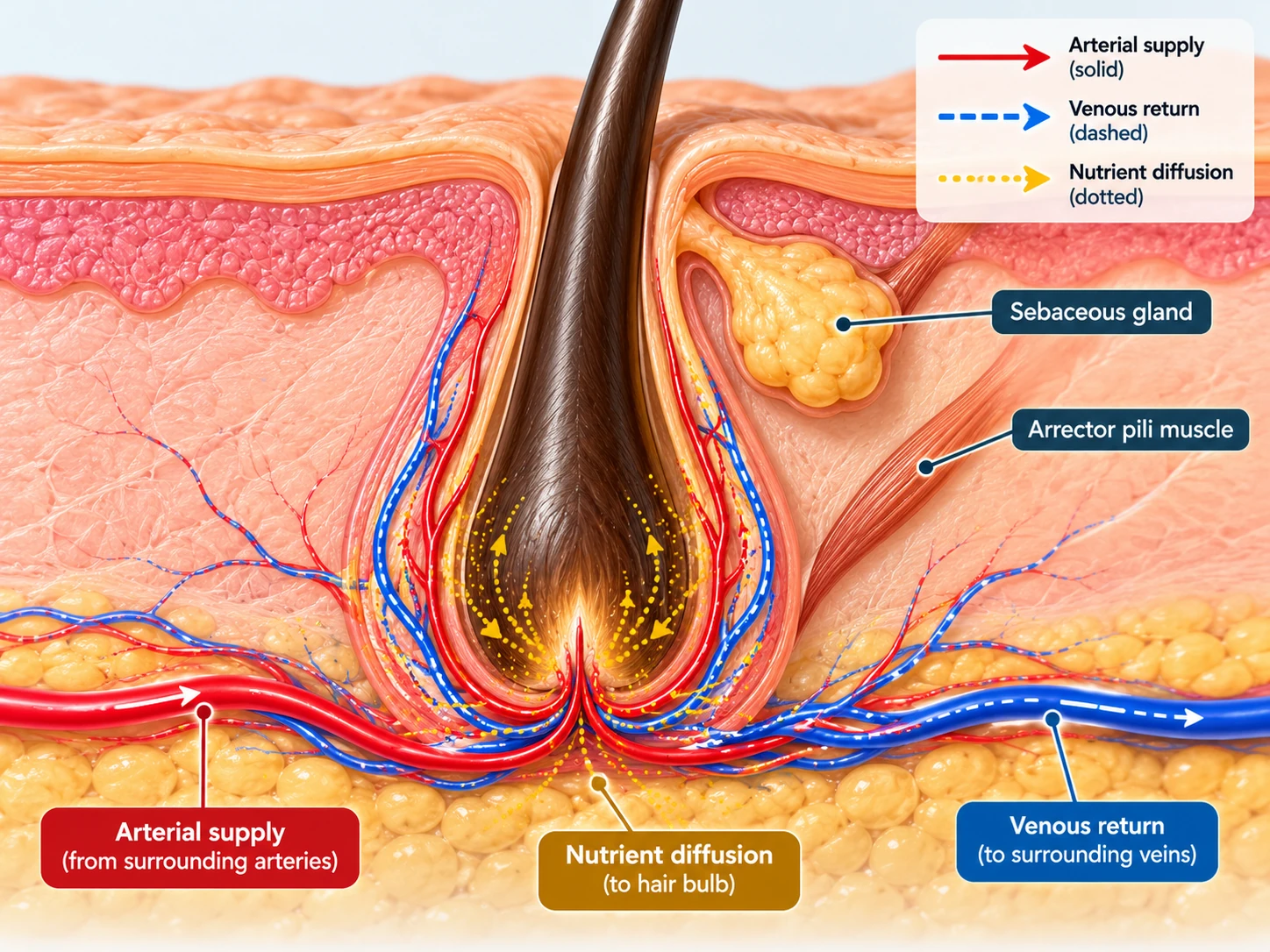
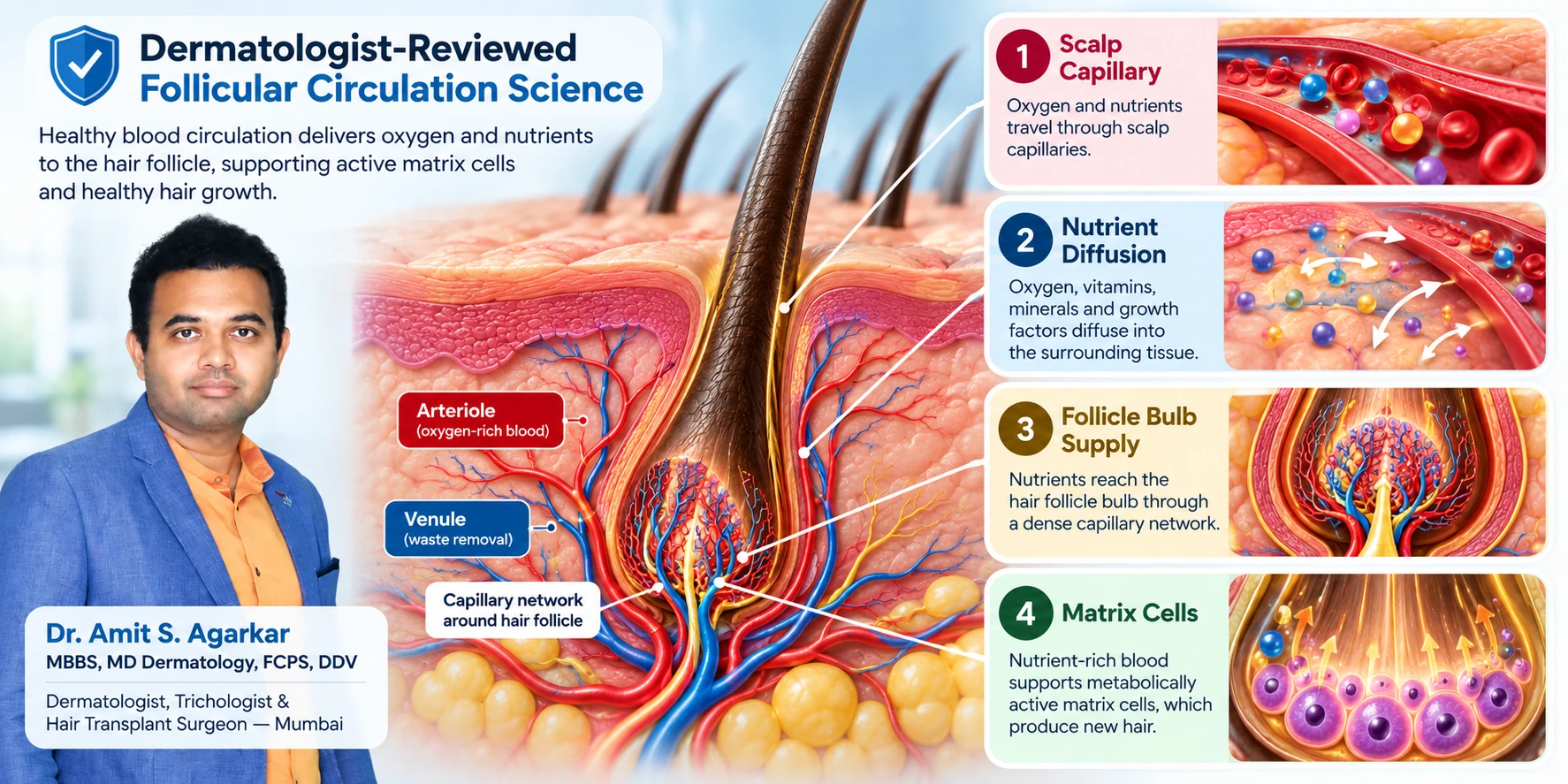
The visible hair shaft contains no blood vessels. Oxygen, glucose, amino acids and other circulating molecules reach living follicular cells through the microvascular network surrounding the hair bulb and dermal papilla.
Educational content. This page does not diagnose anaemia, nutritional deficiency, vascular disease or the cause of hair loss, and it does not recommend supplement doses.
Arterial supply (solid), venous return (dashed) and nutrient diffusion (dotted) around the bulb — and nothing inside the shaft.
Reviewed by Dr. Amit S. Agarkar
Necessary, not sufficient
Quick Clinical Answer
How do nutrients reach the hair bulb?
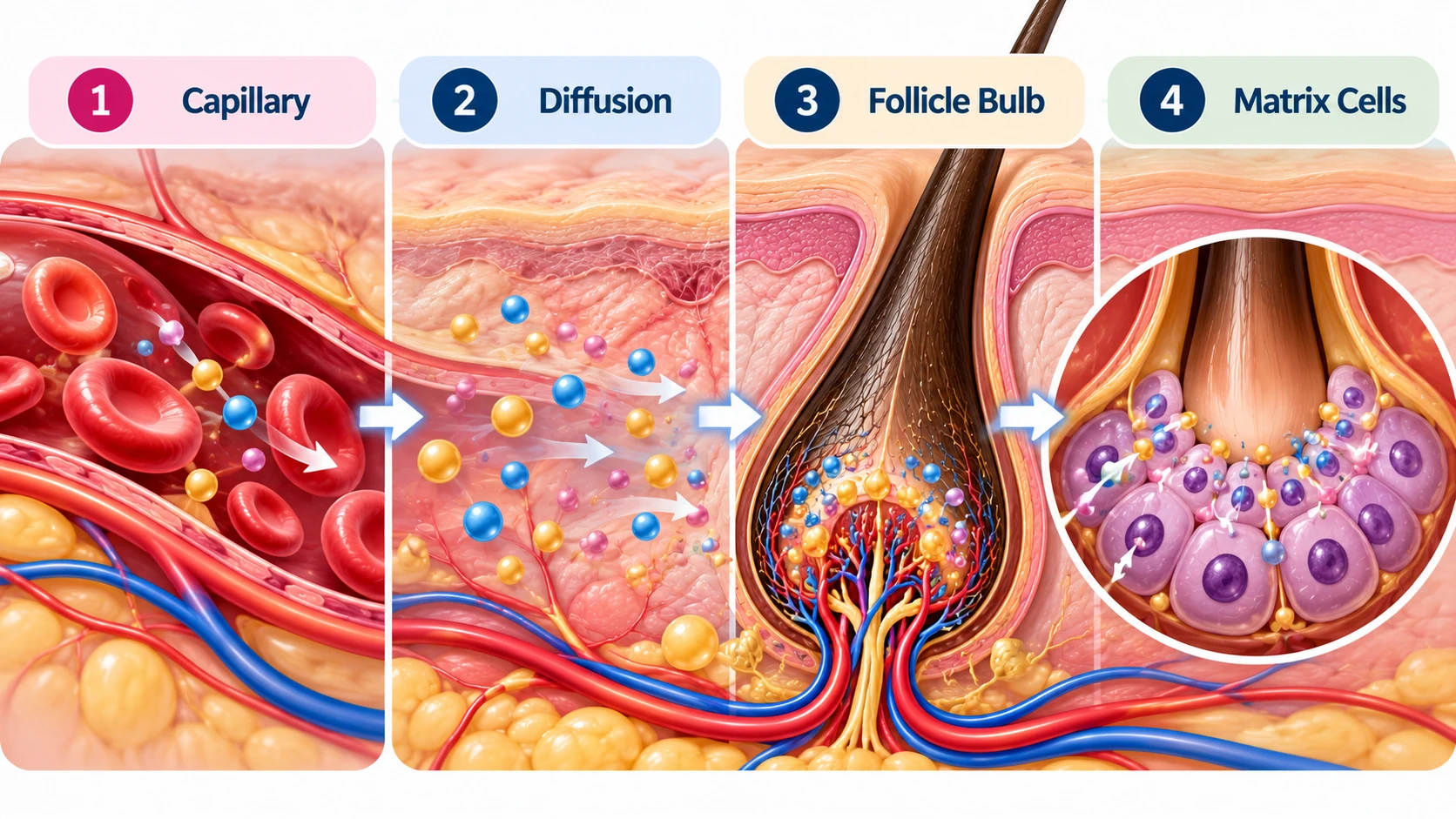
Nutrients reach the hair bulb through small blood vessels in the surrounding skin. Oxygen and circulating molecules leave the capillary network, enter the local tissue fluid and diffuse toward living cells within and around the lower follicle. The visible hair shaft itself contains no functioning blood vessels.
Nothing flows in the strandThe shaft is keratinised material. There is no vein, artery or capillary anywhere along it.
Delivery is by exchangeSubstances cross the capillary wall into tissue fluid, then move toward cells. Blood does not pour into matrix cells.
High demand during anagenRapidly dividing matrix cells need continuous oxygen, energy, amino acids and micronutrients.
Necessary, not sufficientAdequate supply is required for growth. It does not by itself produce more hair.
AA
Medically reviewed by Dr. Amit S. Agarkar — MBBS, MD Dermatology, FCPS, DDV · Reviewed 26 July 2026 · Next review July 2027
What you'll learn on this page
Where the vessels around a follicle sit — and why none enters the hair itself
How oxygen travels from the lungs to a matrix cell, in eight steps
How nutrients leave a capillary and reach a cell, and why that route matters
What the dermal papilla's relationship with nearby capillaries actually is
Why the growing bulb has such high metabolic demand
Eleven nutrients used in follicular biology, with the caveats that belong to each
Why deficiency correction and high-dose supplementation are different strategies
How iron, ferritin and haemoglobin differ, and why one value settles nothing
Why poor circulation does not explain most hair loss
What scalp massage can and cannot demonstrate
How topical and oral delivery differ, and what each route can reach
How transplanted grafts establish a blood supply — and how they survive before they do
Eight circulation claims translated, and fourteen myths corrected
01
Overview
The hair shaft has no blood supply. The living follicle is supported by the circulation around its base.
Small blood vessels within the surrounding skin deliver oxygen and circulating nutrients to living tissues near the hair bulb and dermal papilla. These substances then move through the local tissue environment to support metabolically active follicular cells.
Almost every claim about feeding, nourishing or oxygenating hair depends on getting this geometry wrong. There is no channel running up a strand. The living tissue is below the skin, the supply arrives there through the dermis, and everything above the scalp is a finished product that cannot take anything up.
The second idea does the rest of the work on this page: a requirement is not a cause. Follicular cells need oxygen and nutrients the way they need a body temperature — indispensably, and without that being the thing holding growth back in most people. Recognising the difference between necessary and limiting is what separates useful nutrition advice from expensive guesswork.
Hair is not fed through the strand. It is formed by living cells supported from beneath the scalp. The premise of this guide
Ten regions, selectable from the list. Choosing one highlights it in the diagram and reports its location, role, what travels through it, whether it holds living cells, how it relates to fibre production, what marketing gets wrong about it, and which treatment route can reach it.
The three core stages
Along the route
Use Tab to move through the list and Enter or Space to select. Arterial, venous and diffusion routes are distinguished by line pattern as well as tone, and every region is described in the list below the readout.
Proportions are drawn for clarity. Line pattern carries the same information as tone, so the diagram remains readable without colour perception.
Stage 02 · core stage
Capillary network
The fine vessels surrounding the lower follicle. This is where blood comes closest to the living structures that build a hair, and where oxygen and circulating molecules leave the circulation.
Location
In the dermis around and beneath the hair bulb, close to but never inside the follicle itself.
Main biological role
To bring oxygenated blood within diffusion distance of metabolically active tissue, and to carry metabolic products away.
What travels through it
Red blood cells carrying oxygen, plasma with glucose, amino acids, micronutrients and hormones, and dissolved waste on the return.
Living cells?
Yes — living
Relation to fibre production
Supportive rather than instructive. It supplies the conditions for production without determining what is produced.
What marketing misunderstands
That increasing flow here increases hair. Supply is necessary; it is rarely the factor limiting growth.
Clinical factors
Significant anaemia, smoking, vascular disease and inflammation may affect tissue support, though none of these is a standalone explanation for hair loss.
Which route reaches it
Systemic — oral medicines and nutritional correction arrive here through the circulation. Some injected procedural treatments act on this environment.
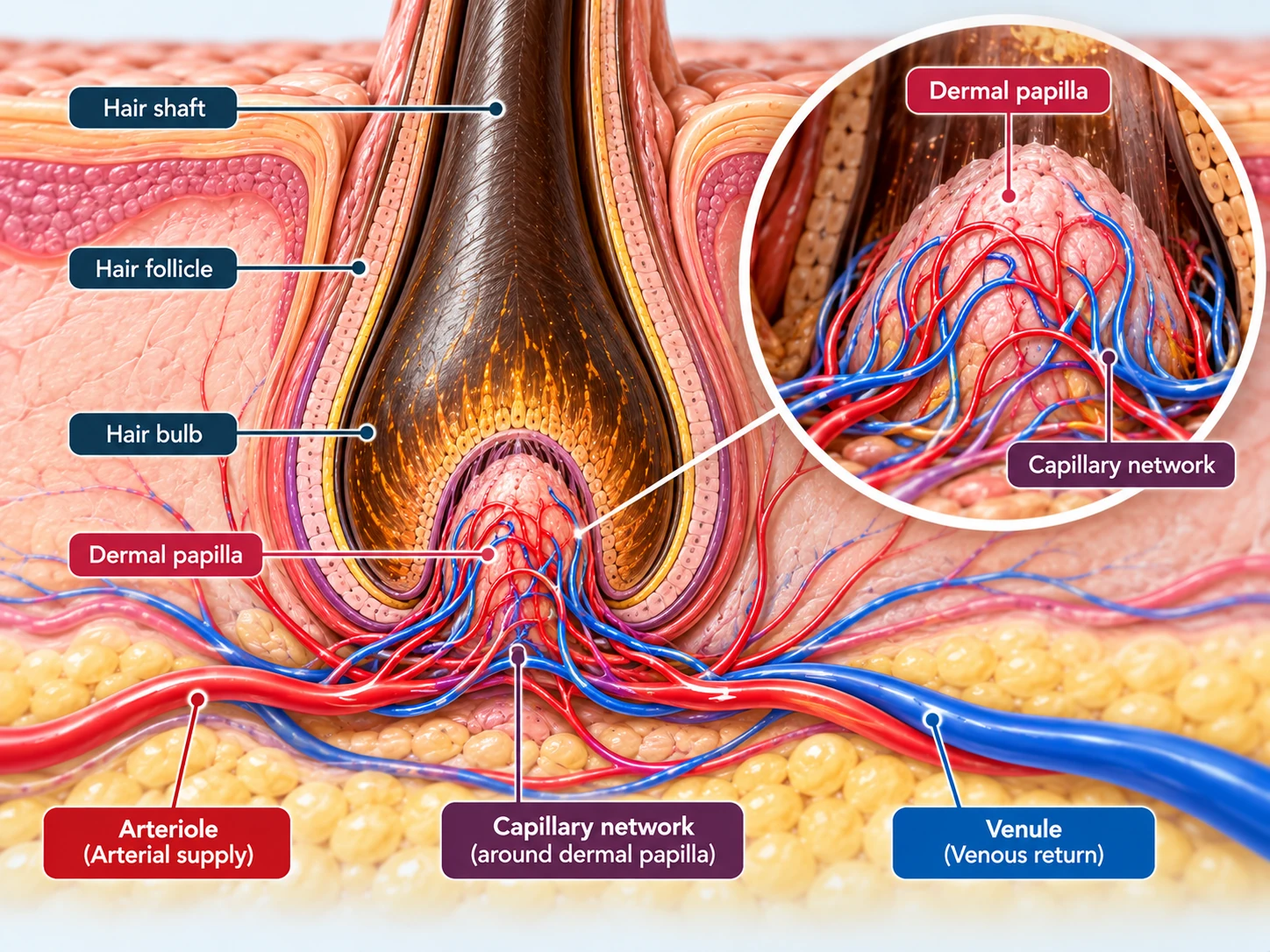
01 Small arteriole — the supplying vessel branching from the scalp's arterial network into capillaries.
02 Capillary network — the fine loops around the lower follicle where exchange happens.
03 Red blood cells — the oxygen carriers, held within vessels at all times.
04 Vessel wall — the selective boundary molecules must cross or be transported across.
05 Interstitial space — the fluid between cells through which substances travel to reach tissue.
06 Dermal papilla — connective tissue inside the bulb, supported by the nearby vessels, not filled with blood.
07 Hair matrix — the rapidly dividing cells that consume the delivered oxygen and nutrients.
08 Developing fibre — the shaft being built and keratinised inside the follicle.
09 Venous return — the outward route for carbon dioxide and metabolic products.
10 Visible hair shaft — above the scalp, avascular, and incapable of absorbing anything.
Where is the hair follicle's blood supply located?
The hair follicle is surrounded by a network of small blood vessels within the skin. During active growth the lower follicle extends deep into the dermis or superficial subcutaneous tissue and lies close to a specialised capillary network supporting the tissues around the dermal papilla and bulb.
The word to hold onto is around. The vessels approach the follicle and surround its lower portion; they do not enter it, and nothing branches into the fibre. Vascular support also changes as the follicle cycles, because a deep active follicle and a short resting one are not the same structure occupying the same space.
The dermal papilla is not a hollow blood-filled structure. It is specialised connective tissue, associated with nearby microvascular support. Circulating substances reach its cells through tissue exchange — blood does not pour into matrix cells, and the visible hair has no central vessel.
AA
Claim: “each hair has a vein running through it”The growing follicle is supported by nearby microvessels, but the keratinised hair shaft contains no functioning vein, artery or capillary. The image people have in mind — a strand plumbed into the bloodstream — would make almost every haircare claim plausible. Because it is wrong, most of those claims are not.
Eight steps from a breath to a dividing matrix cell. The route matters because it shows where the process can be influenced — and where it cannot.
Oxygen enters the bloodGas exchange occurs in the lungs.
Haemoglobin carries itOxygen binds to haemoglobin within red blood cells for transport.
Circulation reaches scalp tissueOxygenated blood is delivered to the skin of the scalp.
Vessels branch into capillariesSmall vessels form networks around living follicular structures.
Oxygen leaves the bloodstreamIt moves out according to local concentration gradients.
It travels through tissueOxygen moves through the local environment toward metabolically active cells.
Cells use itOxygen is consumed in energy-producing processes that support division and protein synthesis.
Waste returnsCarbon dioxide and other metabolic products move back toward the circulation.
Four boundaries, not one. Each is a point at which delivery can be limited.
Hair fibres do not breathe. The living cells that form hair require oxygen, but the completed shaft above the scalp performs no respiration. Any product promising to oxygenate your hair is describing something that has no biological counterpart.
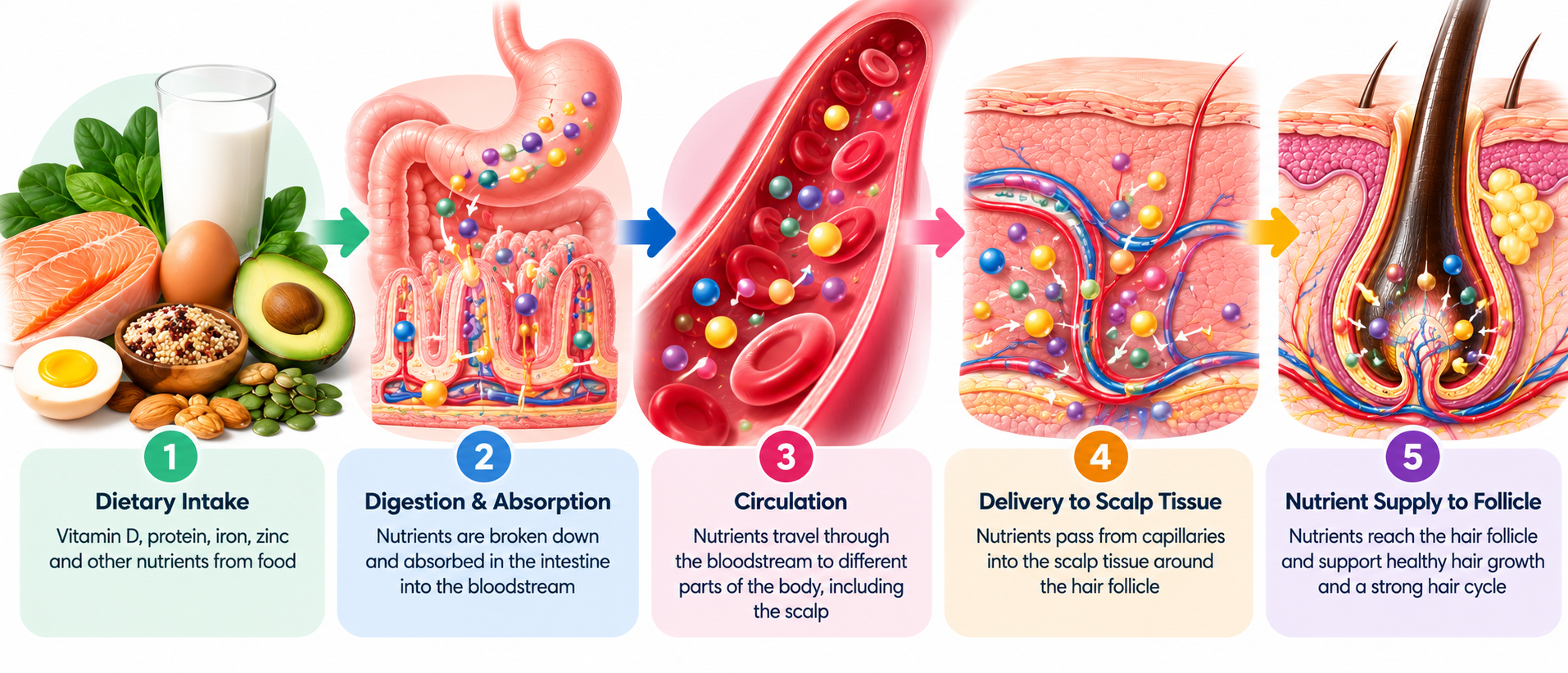
Circulating nutrients do not jump directly from blood into the hair shaft. They move through a controlled biological pathway with several regulated steps.
Nutrients circulate in plasmaOften bound to transport proteins rather than travelling freely.
They cross the capillary wallSmall molecules diffuse; others require specific transport.
They enter interstitial fluidThe fluid occupying the spaces between cells.
They move toward nearby cellsBy diffusion or active transport across a short distance.
Cells take up what they can useUptake depends on specific transporters and cellular demand.
Metabolism determines useWhat happens next depends on the cell's requirements and regulation, not on how much arrived.
Five stages, each with its own losses and controls. Intake is only the first of them.
More nutrient in the bloodstream does not automatically mean more nutrient is incorporated into hair.
Five distinct things that get conflated
Supplement marketing usually treats the first of these as though it settled the last. It does not.
Circulating availability — how much is in the blood
Tissue delivery — how much reaches the local environment
Cellular uptake — how much enters cells
Biological utilisation — how much is actually used
Hair-fibre production — what the follicle ends up making
The factors that determine whether intake becomes output include nutritional status, absorption from the digestive system, blood concentration, transport proteins, tissue requirements, cellular transport, hormonal regulation, inflammation, organ function, genetics, and whether a deficiency existed in the first place. Any one of them can be the constraint.
06
Core Structure
The dermal papilla: signalling beside the follicular lifeline
The dermal papilla sits within the lower hair bulb and participates in signalling relationships that influence follicular growth and cycling. Its local environment is supported by nearby microvessels delivering oxygen and circulating molecules to the surrounding tissue.
Close to the supply, and separate from it. The papilla signals; it does not store or distribute.
Four things the dermal papilla does not do
Become the visible hair fibre
Act as a reservoir for unlimited nutrients
Absorb product delivered along the hair shaft
Respond reliably to every ingredient that performed well in a laboratory
Claim audit
“Targets dermal papilla cells”
Dermal papilla cells are a legitimate research target, and a great many ingredients have been tested on them. Six questions establish whether a particular claim has travelled from a dish to a human head.
Was the research performed in isolated cells?
Was the ingredient placed directly into cell culture?
Was the same concentration delivered through human scalp skin?
Was the final marketed formulation tested?
Did a controlled human study show visible benefit?
Was the outcome hair count or diameter — or only a molecular marker?
A molecular marker moving in the right direction is a reason to keep researching, not a reason to buy.
Why the growing hair bulb has high metabolic demand
During anagen, matrix cells divide rapidly and contribute to the formation of the hair shaft and inner root sheath. Rapid cell activity requires continuous access to oxygen, energy substrates, amino acids and essential micronutrients.
Cell division and DNA synthesis
Protein synthesis and keratin production
Pigment incorporation
Energy metabolism
Antioxidant systems and enzyme function
Cell differentiation into the layers of the fibre and its sheath
The follicle does not have priority over every organ. Hair production is biologically demanding but not essential for immediate survival, so during nutritional stress or systemic illness the body may alter follicular cycling. That is a sensible triage rather than a malfunction — and it explains why shedding often follows illness, surgery or severe dietary restriction.
Demand changes across the cycle
Anagen
Metabolic activity is high. The lower follicle is developed, matrix cells divide, and demand for oxygen and substrates is continuous.
Catagen
Activity declines as division stops and the lower follicle regresses. Demand falls with it.
Telogen
The follicle rests with no active fibre production, and metabolic requirements are correspondingly reduced.
Eleven nutrients that participate in normal human biology relevant to hair. Using a nutrient is not the same as needing to supplement it — and for several of these, excess is a documented problem rather than a neutral one.
Protein and amino acids
Deficiency uncommon
Role: Structural protein synthesis, keratin production, and enzyme and cellular functions throughout the follicle.
More protein does not automatically cause faster hair growth when intake is already adequate. Severe restriction is a different matter, and is worth discussing clinically.
Iron
Assess first
Role: Haemoglobin formation, oxygen transport and the function of many cellular enzymes.
Low iron stores may be relevant in selected patients, but supplementation should follow appropriate assessment. Unnecessary iron can be harmful, and it should not be started simply because hair is shedding.
Zinc
Harmful in excess
Role: Enzyme function, DNA and protein synthesis, cellular division and immune function.
Both deficiency and excessive intake may create problems, and excess zinc can interfere with copper status. Testing and clinical context matter more than a default supplement.
Vitamin D
Assess first
Role: Cellular and immune regulation, with ongoing research interest in follicular biology specifically.
An association between low levels and some hair conditions does not mean supplementation treats every form of hair loss. Correction is a reasonable goal on its own health merits.
Vitamin B12 and folate
Assess first
Role: Red-blood-cell formation, DNA synthesis and cellular metabolism.
Correction is most relevant when a deficiency actually exists. Both are worth assessing in someone with restrictive eating patterns or relevant symptoms.
Biotin
Deficiency uncommon
Role: An enzyme cofactor in normal metabolism.
True biotin deficiency is uncommon, and high-dose biotin is not a universal hair-growth treatment. It can also interfere with several laboratory tests, including some thyroid and cardiac assays — worth telling any doctor ordering blood work.
Selenium
Harmful in excess
Role: Selenoprotein function, antioxidant systems and thyroid-related biology.
Excess selenium may itself contribute to hair loss. The margin between adequate and excessive is narrower than for most nutrients, so casual supplementation is unwise.
Copper
Harmful in excess
Role: Enzyme activity, and connective-tissue and pigment-related processes.
Routine supplementation without an indication is not appropriate, and copper status interacts with zinc intake. This is a reason to be careful with multi-mineral products.
Essential fatty acids
Deficiency uncommon
Role: Cell-membrane composition, signalling molecules and general skin biology.
Evidence for isolated supplementation improving hair growth varies. Dietary adequacy is a more defensible target than a specific product.
Vitamin A
Harmful in excess
Role: Cellular differentiation across many tissues.
Excessive vitamin A intake may contribute to hair shedding. This is one of the clearest examples of a nutrient where more is actively worse, and it is present in many combination supplements.
Vitamin C
Deficiency uncommon
Role: Collagen biology, antioxidant function and support of non-haem iron absorption.
It does not directly become hair fibre. Its relevance here is mostly indirect, through iron absorption and general tissue biology.
Deficiency correction and high-dose supplementation are not the same strategy.
No doses appear on this page, deliberately. Appropriate intake depends on your diet, test results, medical history, other medicines and pregnancy status, and several of the nutrients above can cause harm in excess. Supplements also interact with medicines and with laboratory tests. Decisions about supplementation belong in a consultation, not in an article.
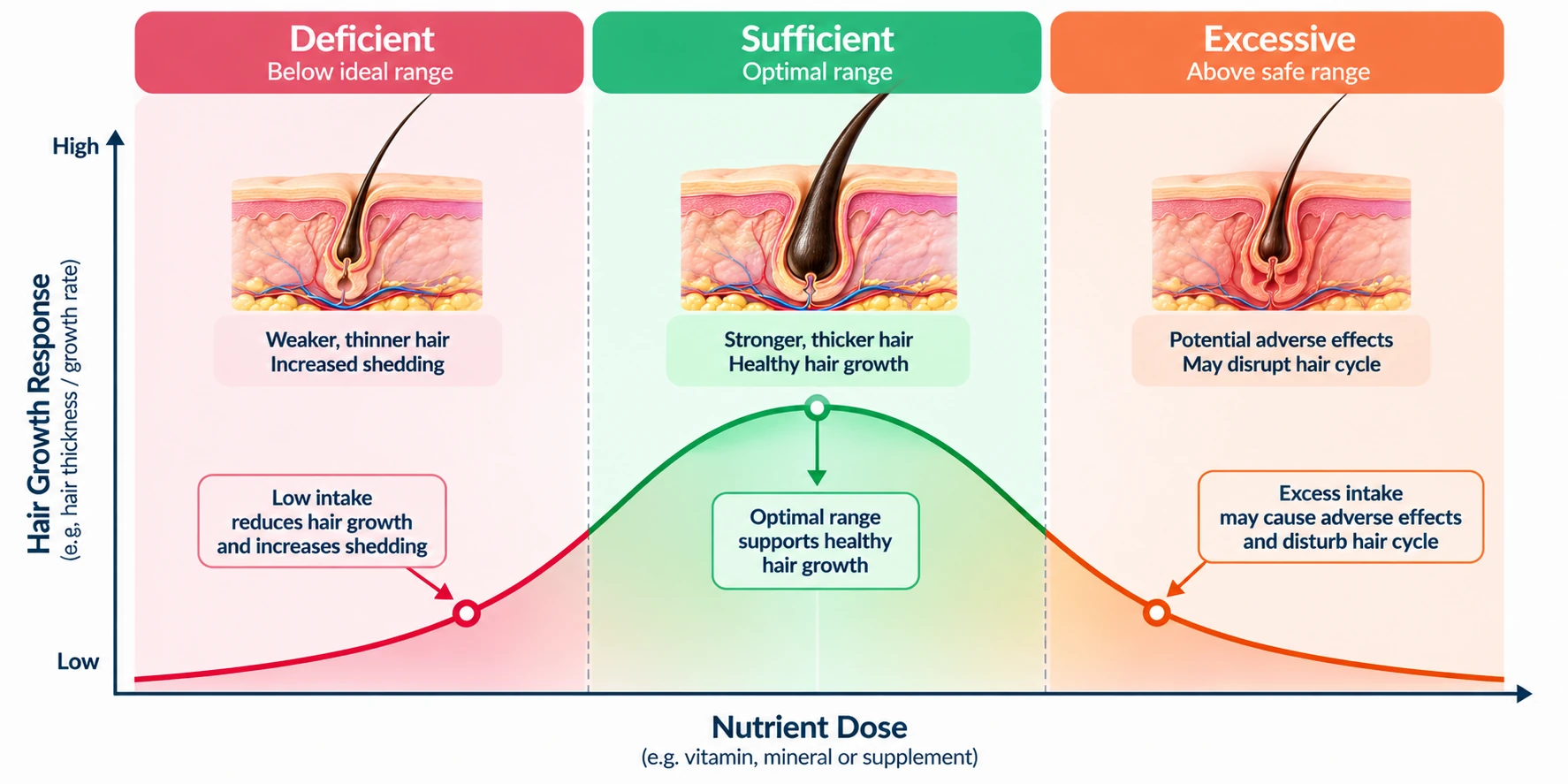
Does taking more nutrients send more to the hair bulb?
Not necessarily. Nutrient biology is not linear: correcting a shortfall can restore normal function, while adding more on top of sufficiency usually does nothing and sometimes does harm.
The plateau is the point. Past sufficiency the curve stops rising, and eventually turns down.
Zone one
Deficient
Normal biological function may be impaired
Correction may be clinically appropriate
Hair may be one of several affected tissues
Diagnosis rests on testing plus context, not on hair alone
Zone two
Sufficient
Normal requirements are already met
Additional intake may provide little or no extra benefit
Hair loss here usually has a different cause
This is where most people taking hair supplements actually sit
Zone three
Excessive
Toxicity is possible for several nutrients
Interactions with medicines may occur
Laboratory tests may be distorted
Hair or general health may worsen rather than improve
Hair loss can also persist despite entirely normal nutrient levels, because the cause may be genetic, hormonal, inflammatory, autoimmune or scarring. Nutrition is one input among several, and treating it as the whole answer delays finding the real one.
Evidence checklist
Before accepting a supplement claim
Ten questions. A product does not need a perfect score, but a claim that cannot answer most of these is a marketing position rather than a clinical one.
Was deficiency confirmed before treatment?
Was the study in people with deficiency, or in a general population?
Did the final product undergo clinical testing?
Were objective hair outcomes measured — count, diameter, photographs?
Were other treatments used at the same time?
Was the dose within safe limits?
Was the duration long enough for the hair cycle to respond?
Were side effects reported at all?
Was the study independent of the seller?
Are any ingredients present above recommended limits?
The last question matters most for combination products, where several ingredients each near their upper limit can add up.
Iron contributes to haemoglobin and to many cellular processes. Iron deficiency may be associated with diffuse hair shedding in some individuals, but interpretation requires more than one isolated laboratory value.
Six Terms That Are Not Interchangeable
Iron-related measures and what each one actually describes
Term
What it describes
What it does not tell you
Haemoglobin
The oxygen-carrying protein in red blood cells; whether anaemia is present
Whether iron stores are low, since anaemia has several causes
Ferritin
A marker of stored iron
Whether the value is genuine — inflammation can raise it independently of iron status
Circulating iron
Iron present in blood at the moment of sampling
Longer-term status, since it fluctuates with intake and time of day
Transferrin saturation
How much of the transport capacity is occupied
Anything definitive on its own; it is interpreted alongside other measures
Iron deficiency
Depleted iron stores, with or without anaemia
The reason for the depletion, which is the clinically important question
Iron-deficiency anaemia
Deficiency severe enough to reduce haemoglobin
Whether hair changes are caused by it rather than coinciding with it
There is no universal hair-growth ferritin target that applies to every person, and this page deliberately quotes none. Ferritin can be raised by inflammation, laboratory interpretation depends on clinical context, iron should not be started solely because hair is shedding, and unnecessary iron can cause side effects and toxicity.
What proper evaluation usually considers
Iron deficiency is a finding, not a diagnosis. The question that matters is why it is there.
Is poor scalp circulation the main cause of hair loss?
Usually not. Adequate tissue perfusion is necessary for living follicles, but most common hair-loss conditions cannot be reduced to poor circulation.
A biological requirement is not automatically the rate-limiting cause. Oxygen is necessary for follicular cells — and producing more scalp redness does not demonstrate that oxygen delivery was the missing factor. Almost every part of your body requires oxygen without oxygen being the reason anything is going wrong there.
Mechanisms that actually account for most hair loss
Genetic susceptibility and androgen signalling
Autoimmune activity
Inflammation
Growth-cycle disruption
Nutritional deficiency, where genuinely present
Endocrine disease, including thyroid disorders
Scarring processes
Medicines
Severe systemic illness
Traction or mechanical damage
Five statements this page will not make: that all thinning comes from blocked blood flow; that tight scalp skin starves follicles; that massage reverses genetic miniaturisation; that a tingling serum proves increased nutrient delivery; or that redness proves new capillary growth. Each is repeated widely and supported poorly.
Can scalp massage improve follicular blood supply?
Massage may temporarily alter local skin blood flow, create warmth, aid relaxation and provide a sense of scalp comfort. Whether that translates into hair growth is a separate and much harder question.
Five things that get treated as one
Demonstrating the first does not demonstrate any of the others, and most claims stop at the first.
Temporary surface blood-flow change
Long-term microvascular adaptation
Follicular signalling change
Increased hair-shaft thickness
Clinically meaningful improvement in hair density
Reasonable benefits
Relaxation
Scalp awareness
Product distribution
Gentle loosening of scale before washing
Temporary sensory comfort
Genuine risks
Excess friction and hair breakage
Scalp irritation
Scratching damage
Traction on the fibres
Worsening of inflamed conditions
Overuse of massage devices
AA
How I frame it in clinicSmall studies and short-term measurements should not be presented as proof that massage reverses pattern hair loss. Massage may be a pleasant and supportive grooming practice, and it should not replace diagnosis or evidence-based treatment. Where I do raise a concern is vigorous daily massage on hair that is already fragile — the breakage can outweigh anything else it achieves.
13
Delivery
Can a topical product reach the hair bulb?
Topical delivery depends on far more than placing an ingredient on the scalp. Twelve variables decide whether anything arrives, and in what quantity.
Molecular size
Lipid and water solubility
Ionisation
Vehicle and formulation stability
Concentration
Contact time and frequency
Scalp-barrier condition
The follicular route itself
Metabolism within the skin
What each product category can realistically reach
Category, Primary Site Of Action And Evidence Requirement
Topical categories and how far each realistically acts
Controlled human study with objective hair outcomes using the final formulation
Topical medicine
A specific active, dose, vehicle and treatment purpose
Already established for its licensed indication; suitability still individual
Injectable or procedural
Local tissue, bypassing part of the surface barrier
Evidence, diagnosis, sterility and appropriate technique — bypassing the barrier is not the same as working
Four inferences that do not follow. Follicular penetration does not mean delivery to the dermal papilla at an effective concentration. Laboratory penetration does not prove clinical growth. Detection in a follicular canal does not prove matrix-cell activity. And a tingling or warming effect does not prove deep delivery of anything.
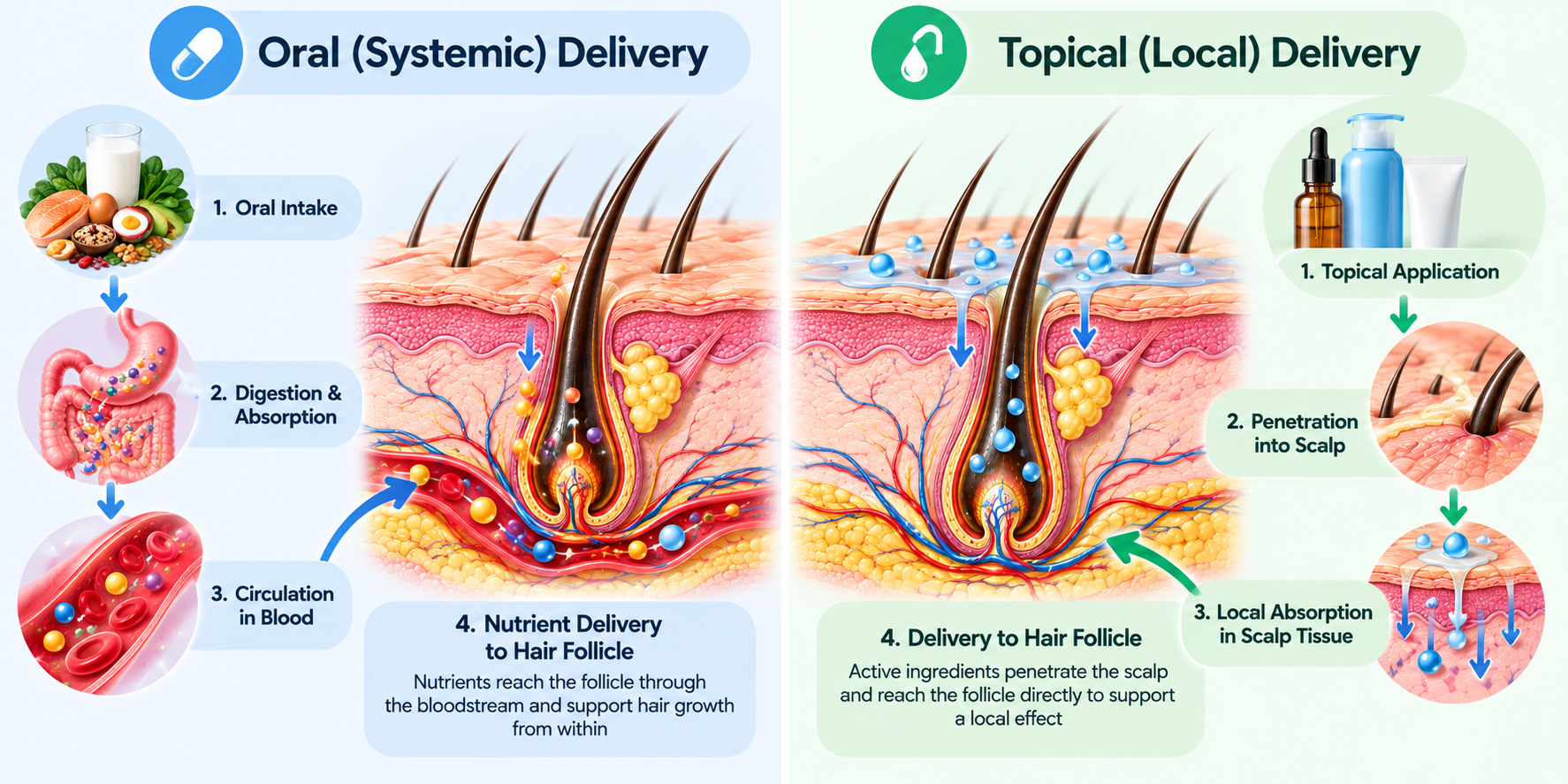
How oral and topical treatments reach their targets differently
Two routes, two sets of trade-offs. Neither is automatically superior, and the right one depends on the diagnosis rather than on preference.
Two routes to the same tissue, each losing something different along the way.
Route one · systemic
Oral
Swallowed
Absorbed from the digestive system
Processed through the systemic circulation
Distributed throughout the body
Reaches scalp tissue through blood flow
Acts only where biological targets and sufficient exposure exist
Advantages
Genuine systemic delivery
Potential access to deeper tissues
Limitations
Systemic side effects
Drug interactions
Variable absorption
First-pass metabolism
Suitability restrictions
Route two · local
Topical
Applied to the scalp
Interacts with the scalp surface
May penetrate through the barrier or via follicles
Reaches local tissue to a formulation-dependent extent
Advantages
Local application at the site of interest
Lower systemic exposure for some products
Limitations
Barrier penetration is the hard problem
Irritation
Application technique matters
Cosmetic acceptability and adherence
Variable local delivery
The correct route depends on diagnosis, treatment target, evidence, safety, patient suitability, formulation and adherence. In practice adherence is often the deciding factor: a route someone will actually use consistently outperforms a theoretically better one they abandon.
The follicle is not a fixed structure, so its relationship with the surrounding vessels is not fixed either. Support reorganises as the follicle grows, regresses and rebuilds.
Anagen
A deep, active follicle with a developed lower portion, high metabolic demand, close vascular support and sustained fibre production. This is the phase in which supply matters most.
Catagen
Matrix activity stops and the lower follicle regresses. Tissue relationships reorganise as the structure withdraws upward, and metabolic demand decreases with it.
Telogen
A shortened resting follicle with no active fibre elongation and reduced lower-follicle activity. The follicle remains biologically present throughout.
Early anagen
Lower follicular structures redevelop, matrix activity resumes, and vascular and signalling relationships become active again as the next fibre begins.
The accurate verbs here are remodel, reorganise, increase and decrease. Vessels do not simply vanish in telogen and reappear in an identical pattern — the network adapts to a structure that is itself changing shape, which is a more interesting and less tidy picture than most diagrams suggest.
How general health may influence follicular support
Hair follicles exist within the same systemic environment as every other tissue. Several conditions may influence that environment — none of them as a standalone explanation for an individual's hair loss.
Smoking
May influence vascular function, oxidative stress, tissue oxygenation and inflammatory biology. Relevant to skin and follicles — and not, on its own, the cause of any particular person's hair loss.
Severe anaemia
May reduce oxygen-carrying capacity and contribute to symptoms including fatigue and, in some contexts, hair shedding. It is diagnosed and treated on its own merits.
Thyroid disorders
May alter metabolism and follicular cycling. The mechanism is metabolic and hormonal rather than simply a reduction in scalp blood flow.
Severe illness
May shift follicles into altered growth-cycle patterns, which is why shedding commonly follows a significant illness by some weeks or months.
Rapid weight loss
May reduce nutrient availability and act as a physiological stressor at the same time. Both routes are relevant.
Chronic inflammatory disease
May affect nutrient utilisation, metabolism or follicular cycling, and can also distort laboratory markers such as ferritin.
Vascular disease
May influence tissue health generally. Scalp hair loss still requires cause-specific evaluation rather than being attributed to it by default.
AA
The honest versionImproving general health supports normal biology, and it is worth doing for its own sake. It does not guarantee reversal of every hair-loss condition, and I am careful not to imply otherwise — because someone who stops smoking, eats well and still has pattern hair loss has not failed at anything. They have a genetically driven condition that was never a lifestyle problem.
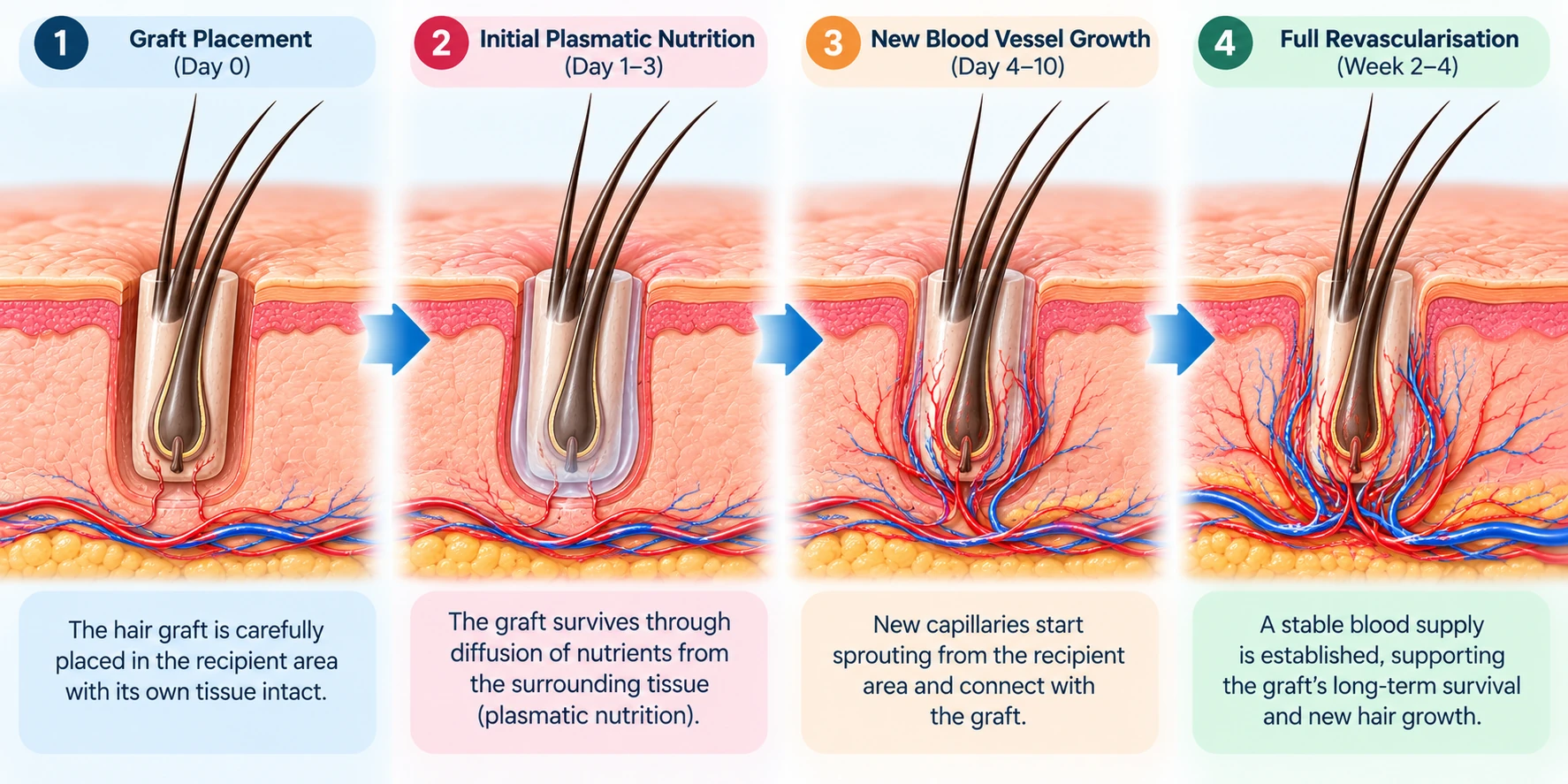
How transplanted follicles establish a new blood supply
During transplantation, follicular units are moved from the donor area and placed into recipient sites. Initially, graft survival depends on careful handling, tissue fluid and diffusion. Over time, the grafts establish vascular connections with the surrounding recipient tissue.
Harvest and handling
Follicular units are removed from the donor area. Dehydration and mechanical trauma during this window are among the main threats to survival, which is why handling technique matters so much.
Placement and diffusion
Once placed in recipient sites, grafts are supported initially by tissue fluid and diffusion rather than by their own circulation. There is no vascular connection yet.
Vascular integration
New capillary connections develop with the surrounding recipient tissue over the following period, gradually establishing ordinary support.
Shedding then regrowth
The visible shafts commonly shed while the follicles remain in place. Follicles then pass through a resting interval before entering new growth, and emergence is staggered rather than simultaneous.
Transplanted follicles are not connected to a new artery one by one. They become supported through the local tissue environment and developing microvascular integration. This is exactly why the early postoperative period has the protocols it does — the grafts are at their most vulnerable before that integration exists.
Support before supply. The first phase depends entirely on diffusion and careful handling.
Six things this section does not claim: instant full blood supply; guaranteed graft survival; that massage improves early graft vascularisation; that bleeding proves excellent circulation; that more densely packed grafts always survive better; or that supplements guarantee graft growth. Follow your operating clinic's protocol rather than anything you read online.
Translate scalp-circulation marketing into biology
Eight phrases that trade on the circulation. Open each one for what it can legitimately mean, and what would have to be shown for it to mean more.
Local blood flow genuinely can be changed by several things, so this is measurable in principle. The problem is that it is usually neither measured nor connected to a hair outcome.
Was blood flow directly measured, or inferred from sensation?
Was the change temporary or sustained?
Was it measured at the skin surface or around the follicles?
Did hair density improve as a result?
Was the final product tested?
Was there a controlled comparison?
A topical product may deliver selected molecules into scalp tissue — that much is a real formulation question with real answers. But it does not deliver dietary nutrients generally, and the specific molecule, route and evidence all need naming before the claim means anything.
Oxygen is delivered through blood, bound to haemoglobin, to tissue that consumes it. A cosmetic should not imply that it directly carries oxygen to follicles without credible evidence, and the completed hair shaft performs no respiration for anything to be delivered to.
Living follicular cells receive circulating nutrients through the surrounding tissue environment, not from anything applied to the strand. If a product genuinely delivers something useful to that environment, the ingredient, the delivery route and the evidence should all be specified — and usually they are not.
Follicular inactivity, telogen and miniaturisation are biologically different states with different prospects. A resting follicle will restart on its own schedule; a miniaturising one is producing a finer fibre by design; a scarred one will not restart at all. Temporary increased skin flow does not demonstrate reactivation of any of them.
Tingling may result from menthol, alcohol, capsaicin-like ingredients, fragrance — or from irritation. Sensation is not a measure of follicular perfusion. It is worth noticing that no medicine relies on how much it tingles to demonstrate that it works.
Redness may indicate vasodilation, or it may indicate irritation, and the two look similar from outside. Either way it does not establish hair-growth efficacy — and if it is irritation, continuing is actively counterproductive.
Massage may temporarily change local blood flow and provide relaxation, both of which are real. But nutrient delivery is governed by systemic and cellular biology — what is available in the blood, what crosses into tissue, and what cells take up. Mechanical pressure at the surface does not add nutrients that were not already circulating.
Almost all of these follow from one wrong picture: a strand plumbed into the bloodstream. Correct the geometry and the myths lose their footing.
Myth
“Blood flows through the centre of every hair.”
Reality
The visible hair shaft contains no functioning blood vessels of any kind. It is keratinised material with no living cells and no circulation.
Myth
“A white root on a shed hair is a blood vessel.”
Reality
It is commonly a club-shaped root structure formed during catagen and retained through telogen — not a vein, artery or capillary.
Myth
“Poor circulation causes all hair loss.”
Reality
Most hair-loss disorders involve more specific genetic, hormonal, immune, inflammatory or cycle-related mechanisms. Perfusion is necessary without being the usual constraint.
Redness may reflect temporary vasodilation or irritation. Neither establishes that more nutrient reached a follicular cell.
Myth
“Tingling means a serum has reached the bulb.”
Reality
Tingling is a sensory effect from cooling or irritant ingredients. It does not confirm depth of delivery, concentration or biological activity.
Myth
“Massage can reverse every miniaturised follicle.”
Reality
Evidence is limited, and pattern hair loss requires mechanism-specific management. Vigorous massage on fragile hair can also cause breakage.
Myth
“Hair oil travels down the shaft to feed the root.”
Reality
The visible shaft is not a nutrient-delivery channel. There is nothing living in it to transport anything anywhere.
Myth
“Taking more vitamins forces follicles to grow faster.”
Reality
Correction helps primarily when a relevant deficiency exists. Beyond sufficiency, extra intake may be ineffective — and for vitamin A and selenium, actively harmful.
Myth
“Iron should be taken whenever hair sheds.”
Reality
Iron treatment requires appropriate clinical and laboratory context, including why any deficiency is there. Unnecessary iron carries real risks.
Myth
“More blood always means more hair.”
Reality
Blood supply is necessary, but follicular output also depends on genetics, signalling, cycle status and overall health. Adding supply to a system limited by something else changes nothing.
Myth
“A warm scalp proves follicles are active.”
Reality
Surface warmth reflects skin blood flow and ambient conditions, not matrix-cell division several millimetres below.
Myth
“Topical products enter the bloodstream and target only hair.”
Reality
Absorption and distribution vary considerably, and some topicals have local effects, some systemic. Selective targeting of hair alone is not how topical pharmacology works.
Myth
“Transplanted grafts are immediately connected to blood vessels.”
Reality
Early support occurs through the tissue environment and diffusion before microvascular integration develops. That vulnerable window is why postoperative protocols exist.
Myth
“Every nutrient found in hair should be supplemented.”
Reality
Hair analysis does not establish dietary need, deficiency or treatment benefit. Detecting an element in a fibre says nothing about whether taking more of it helps.
"This guide explains how blood vessels, oxygen and circulating nutrients support living tissues around the hair bulb. It cannot identify the cause of an individual's hair loss. The most common conversation I have on this subject is with someone who has been taking several supplements for months without ever being tested — and whose actual diagnosis had nothing to do with nutrition."
Reviewed: 26 July 2026 · Last updated: 26 July 2026 · Next scheduled review: July 2027
Follicular Blood Supply completes the five core subjects. Together they cover the fibre, the organ that makes it, its rhythm, the skin it sits in and the circulation that supports it.
Independent medical resources covering anaemia, iron, vitamins and hair loss. Detailed microvascular and follicular material is drawn from dermatology reference texts.
External links open in a new tab and lead to independent organisations whose content HairsnCares does not control, and no link implies endorsement or partnership. [ADD APPROVED TEXTBOOK CITATIONS — perifollicular vasculature, anagen-associated angiogenesis, graft revascularisation]
Short, medically responsible answers about vessels, delivery, nutrients, circulation claims and general health. No doses, and no diagnosis.
The living follicle does; the visible hair does not. Small blood vessels in the surrounding skin support the living tissues around the lower follicle, while the keratinised shaft above the scalp contains no functioning vessels of any kind.
No. The shaft is keratinised material with no living cells, no circulation and no capacity for exchange. Nothing flows along it in either direction.
Small arterioles in the dermis branch into a capillary network around the lower follicle. During active growth the follicle extends deep into the dermis and lies close to that network, which supports the tissues around the bulb and dermal papilla.
Nutrients circulate in plasma, cross or are transported across capillary walls, enter the interstitial fluid, and then move toward nearby living cells, which take up what they can use through specific transport mechanisms. Delivery is by tissue exchange rather than direct injection into cells.
The dermal papilla is specialised connective tissue, not a blood-filled cavity. Its local environment is supported by nearby microvessels, and circulating substances reach its cells through the surrounding tissue rather than pouring directly into it.
Oxygen is carried by haemoglobin in red blood cells to scalp capillaries, leaves the bloodstream according to local gradients, and moves through the tissue environment toward metabolically active cells, which use it in energy-producing processes. Carbon dioxide travels back the other way.
Follicular cells use the same nutrients as other rapidly dividing tissue: amino acids for protein synthesis, energy substrates, iron, zinc, B vitamins including B12 and folate, vitamin D, selenium, copper, essential fatty acids and antioxidant support. Using a nutrient in normal biology is not the same as needing to supplement it.
Not directly. Dietary protein is digested into amino acids, absorbed, and then used by cells throughout the body, including follicular cells that synthesise keratin. Eating more protein than you need does not accelerate that synthesis.
Adequate tissue perfusion is necessary for living follicles, but most common hair-loss conditions are not explained by poor circulation. Genetic susceptibility, androgen signalling, autoimmune activity, inflammation, growth-cycle disruption, endocrine disease, medicines and scarring are far more usual mechanisms.
Massage may temporarily alter local skin blood flow and provide relaxation, product distribution and scalp comfort. Evidence that it reverses pattern hair loss is limited, and it should not replace diagnosis or evidence-based treatment.
Redness may reflect temporary vasodilation, or it may reflect irritation. Neither establishes improved follicular nutrition or hair-growth efficacy, and persistent redness is a reason to reconsider a product.
Massage during application may temporarily change surface blood flow, and oils provide emollience and reduce friction. Oil does not travel down the shaft to feed the root, because the visible hair is not a delivery channel.
Delivery depends on molecular size, solubility, ionisation, vehicle, concentration, contact time, barrier condition and frequency. Some molecules do enter scalp tissue, but follicular penetration does not automatically mean delivery to the dermal papilla at an effective concentration, and it does not prove clinical benefit.
They are absorbed from the digestive system, enter the systemic circulation, are distributed throughout the body, and reach scalp tissue through blood flow. They then act only where a relevant biological target and sufficient exposure exist.
No. Biotin is an enzyme cofactor in normal metabolism and has no established role in improving circulation. True biotin deficiency is uncommon, high-dose biotin is not a universal hair-growth treatment, and it can interfere with several laboratory tests including some thyroid and cardiac assays.
Iron deficiency may be associated with diffuse shedding in some individuals. Interpretation requires more than one isolated laboratory value and appropriate clinical context, and iron should not be started simply because hair is shedding, since unnecessary iron can cause side effects and toxicity.
Haemoglobin is the oxygen-carrying protein in red blood cells and reflects whether anaemia is present. Ferritin is a marker of stored iron, and it can be raised by inflammation independently of iron status. They answer different questions and are interpreted together with clinical context.
Yes, in some cases. Excessive vitamin A intake may contribute to shedding, and excess selenium may too. More is not safer, supplements can interact with medicines and laboratory tests, and deficiency correction and high-dose supplementation are not the same strategy.
A response has to pass through cycle change, new fibre formation, lengthening below the surface and emergence before density looks different. That sequence is governed by follicular biology and cannot be shortened by increasing blood flow or nutrient intake.
Immediately after placement, graft survival depends on careful handling and on diffusion from tissue fluid in the recipient site. Over the following period the grafts establish microvascular connections with the surrounding tissue. They are not each connected to an artery.
Smoking may influence vascular function, oxidative stress, tissue oxygenation and inflammatory biology, all of which are relevant to skin and follicles. That does not make it the sole cause of any individual's hair loss, which still requires cause-specific assessment.
Significant anaemia reduces oxygen-carrying capacity and may contribute to symptoms including fatigue and, in some contexts, hair shedding. It is diagnosed and treated on its own merits rather than inferred from hair changes.
No. The shaft has no living cells and no transport mechanisms, so it cannot take up or use nutrients. Products applied to it can coat, lubricate and condition the surface, which is a genuinely different benefit.
No. Cutting affects only the visible shaft, several centimetres from any living tissue. It has no effect on circulation, follicular activity or growth rate, though removing damaged ends does help hair retain the length it grows.
Cold causes temporary surface vasoconstriction, but there is no good evidence that ordinary cold exposure meaningfully slows scalp hair growth. Seasonal variation in shedding is reported, and its mechanisms are not simply a matter of surface blood flow.
No. Tingling commonly comes from menthol, alcohol, capsaicin-like ingredients or fragrance, and sometimes from irritation. Sensation is not a measure of follicular perfusion or of delivery to living tissue.
No. Follicular openings can accumulate sebum, keratin and residue at the surface, but that has no bearing on the blood vessels in the dermis around the lower follicle. Surface build-up and vascular supply are separate matters.
Exercise supports cardiovascular and general health, which supports normal biology throughout the body. It should not be presented as a treatment for hair loss, and no evidence shows that exercise-related circulatory change reverses a specific hair-loss condition.
No matching question yetTry a different word, or clear the filter to see all 28 answers. If your question isn't here, ask it directly.
Taking supplements without knowing whether you need them?
Testing answers that question in a way no article can. It also often finds the reason the supplements were not working.
Understand delivery before believing a hair-nutrition claim
The living follicle is supported by the body's circulation, but nutrient availability, cellular signalling, genetics and growth-cycle status all influence what the follicle produces. More blood flow or more supplements do not automatically create more hair.
Medical Disclaimer: This page provides general educational information about follicular blood supply and nutrient delivery. It does not diagnose anaemia, nutritional deficiency, vascular disease or the cause of hair loss. No supplement doses, nutrient targets or laboratory thresholds are given, because appropriate values depend on individual history, examination and testing. Supplements and medicines should be selected using appropriate medical history, examination and testing where indicated, and several nutrients discussed here can cause harm in excess. Transplantation content describes biological processes only and is not a prediction of outcome. Individual results vary.
Hair Loss Treatment India — Free AI Hair Diagnosis & Dermatologist-Recommended Products
Minoxidil India — CDSCO-Approved Hair Regrowth Treatment
Free AI Hair Loss Diagnosis by Qualified Dermatologists
Best Anti Hair Fall Shampoo, Oil & Supplements in India
Male Pattern Baldness Treatment — Minoxidil & DHT Blocker Protocol